This Small Rhode Island City Is The “Sailing Capital Of The World” With Gilded Age Mansions Around Every Corner
A summer house with 70 rooms. The wealthy folks who built it called it a cottage. I call my apartment cozy, so clearly we use different dictionaries.
That cottage sits in a small Rhode Island city that also loves boats. For more than fifty years, it hosted the most famous sailing race on the planet.
Harbors filled with yachts. Streets filled with sailors. Even a downtown avenue got named after the race.
This little seaside spot has two big obsessions. One is giant houses. The other is wind and water.
I came for the mansions, honestly.
Now I’m wondering if I need a sailing hat to match.
Welcome To The Town That Treats Sailing Like A Sport And A Lifestyle
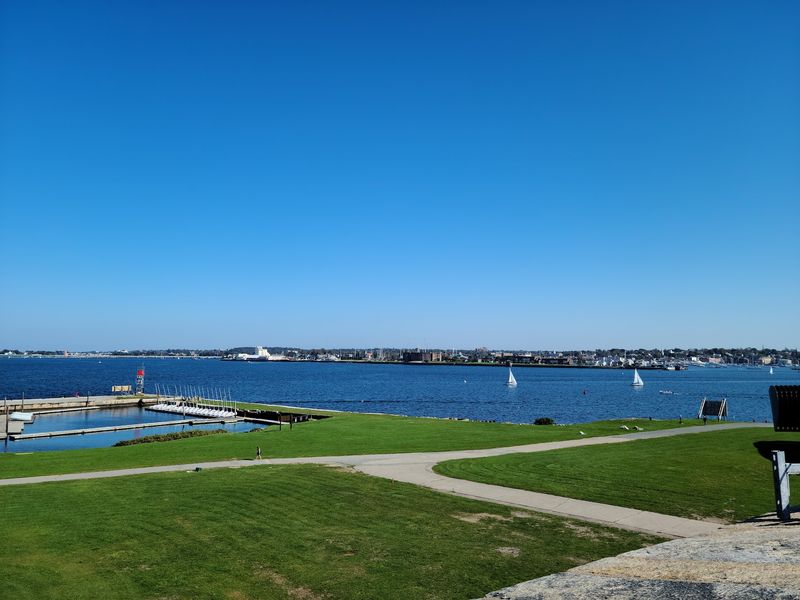
Newport, Rhode Island, has a maritime history stretching back to its founding in 1639. Its sheltered harbor helped it develop into a busy trading center.
By the 1700s, it ranked among the five leading seaports in colonial America. Maritime commerce shaped the city’s economy, architecture, and waterfront neighborhoods.
Fast forward to today, and boats remain a defining feature of the harbor. Newport proudly carries the nickname Sailing Capital of the World, reflecting its long association with international yacht racing.
Geography gets a big share of the credit. The city occupies the southern portion of Aquidneck Island, with Narragansett Bay to the west and the Atlantic coastline to the south and east.
Its harbor provides sheltered waters, while the surrounding bay offers opportunities for recreational sailing and competitive racing.
The main sailing season runs from late spring into early fall, although activities vary according to weather and individual operators.
Even if you’ve never touched a sailing rope, you’ll notice the city’s maritime character. Masts rise above the harbor, and nautical shops occupy streets near the waterfront.
The America’s Cup Left A Mark You Can Still Drive Down
For 53 years, Newport was the home of one of the most prestigious competitions in sailing. The city hosted America’s Cup races between 1930 and 1983.
That long run turned the city into a global sailing hub. Crews, spectators, and impressive yachts arrived from around the world.
When an Australian team won the competition in 1983, Newport began another chapter in its sailing history. Sail Newport emerged that same year as a nonprofit organization dedicated to expanding public access to the sport.
Today, its sailing center in Fort Adams State Park offers lessons, boat rentals, and recreational sailing programs, giving everyday people opportunities to experience the waters of Rhode Island.
Want proof of how much the race mattered? Downtown has a street called America’s Cup Avenue, named after the famous competition.
Sailing clubs also have deep roots here. The New York Yacht Club held its first annual regatta in Newport in 1883 and later established a clubhouse.
The Newport Yacht Club formed in 1893, followed by the Ida Lewis Yacht Club in 1928.
You Haven’t Seen Big Until You’ve Seen The Breakers
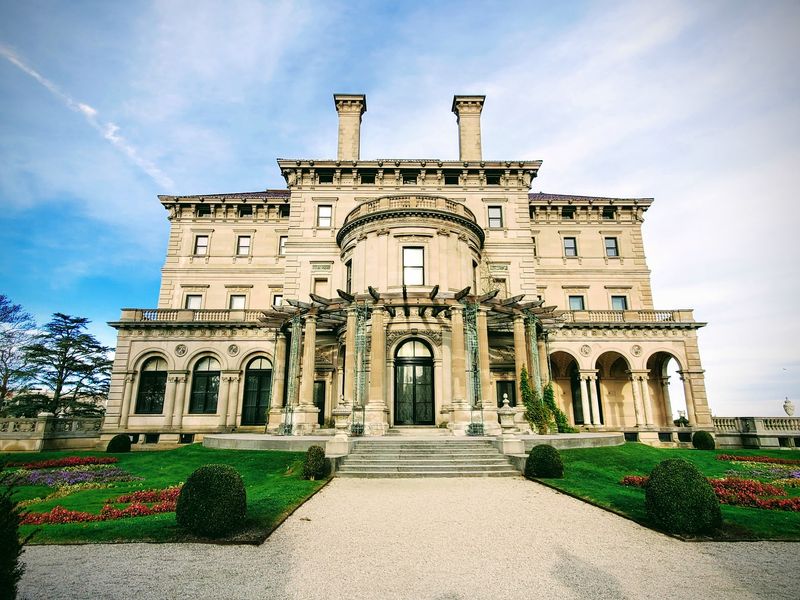
Seventy rooms. One family. And yes, they used it as a summer home.
The Breakers is Newport’s largest Gilded Age mansion. It was built between 1893 and 1895 for Cornelius Vanderbilt II, whose family’s fortune came largely from railroads.
The design follows an Italian Renaissance style, and the scale is difficult to wrap your brain around. The mansion is now a National Historic Landmark.
Among its 70 rooms are 48 bedrooms originally intended for family members and household staff. Its enormous Music Room was constructed in France before being shipped across the Atlantic and reassembled inside the mansion.
You’ll find the property at 44 Ochre Point Ave, Newport, RI 02840. The Preservation Society of Newport County operates it, offering self-guided audio tours and additional guided experiences.
The back terrace is undergoing restoration through November 2026, while the surrounding gardens and rear lawn remain accessible.
Holiday decorations fill the mansion from November 21, 2026, through January 3, 2027. Outdoor illuminated displays also transform the grounds on selected evenings through December 27.
Marble Lovers, Your Dream House Is On Bellevue Avenue
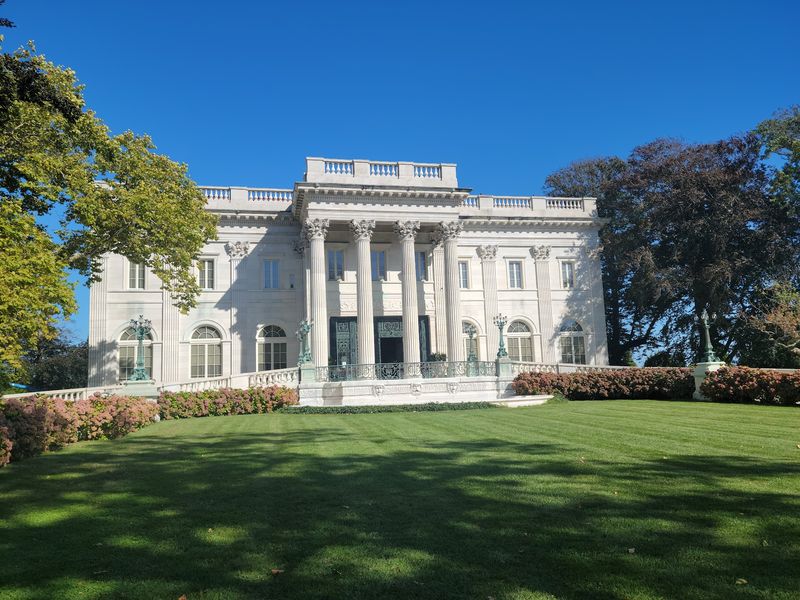
Approximately 500,000 cubic feet of marble reportedly went into one house. That’s not a typo, and it certainly explains the building’s name.
Marble House was constructed between 1888 and 1892 for William Kissam Vanderbilt and his wife, Alva. Its Beaux-Arts architecture feels grand, polished, and remarkably similar to a European palace.
Architect Richard Morris Hunt drew inspiration from classical French architecture, creating a residence intended to reflect the family’s prominent social position.
Bellevue Avenue is where many of these Gilded Age showpieces cluster. During the late nineteenth and early twentieth centuries, prosperous American families built increasingly elaborate summer residences here.
They called them cottages, which is adorable. These were enormous displays of wealth, art, and architectural ambition.
Marble House also has a surprise on its grounds. A Chinese Tea House, completed in 1914, overlooks the Atlantic Ocean.
Alva used the pavilion for social gatherings and events supporting women’s voting rights, giving this unusual structure an important place in American history.
Both buildings illustrate how international architectural influences found their way into Rhode Island.
Ballrooms, Servants, And Secret Tech Await Inside These Two
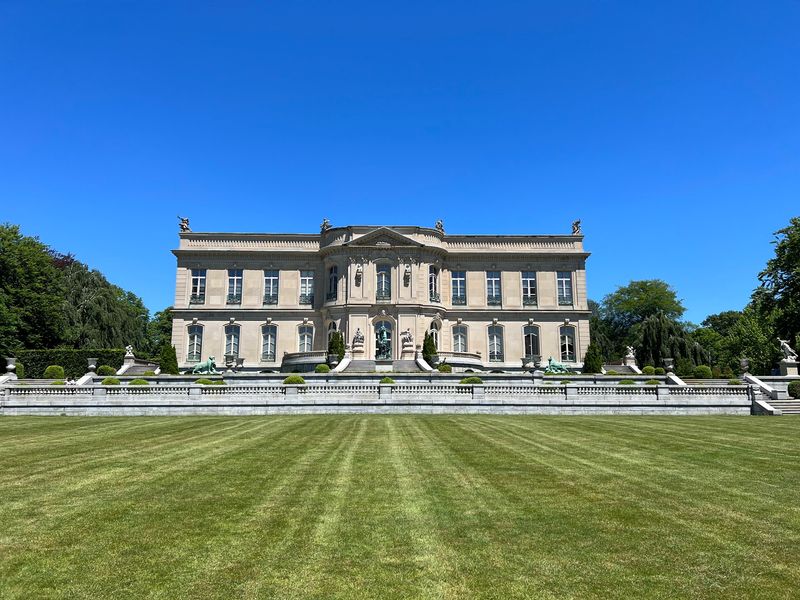
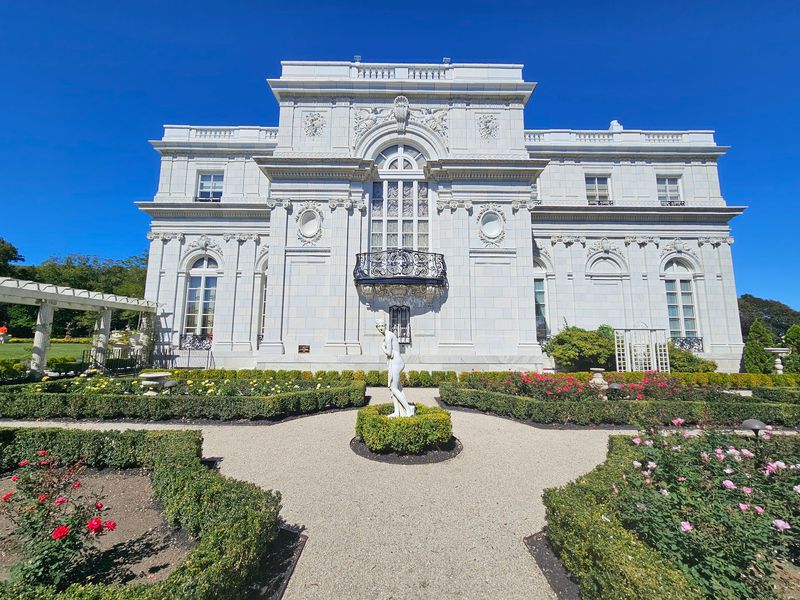
Ballroom dreams come true at Rosecliff. Completed in 1902 for Theresa Fair Oelrichs, it was modeled after the Grand Trianon at Versailles.
Its elegant ballroom is the largest in Newport, and the mansion appeared in the 1974 film adaptation of The Great Gatsby. A heart-shaped staircase adds another memorable architectural detail.
Rosecliff also hosts the annual Newport Flower Show, with the next edition scheduled for June 18 through 20, 2027.
A short distance away stands The Elms, a French-inspired mansion completed in 1901 for Edward Julius Berwind. Its design incorporated advanced technology available during the Gilded Age.
Think of it as a smart home before anyone used that phrase.
The Elms also offers a guided Servant Life Tour. It introduces visitors to the working areas and daily responsibilities of the household staff who maintained the enormous property.
On November 16, 2026, the mansion reopened with a new multisensory experience requiring timed admission.
Its grounds feature formal gardens, fountains, sculptures, and decorative pavilions inspired by European landscapes.
Before The Big Mansions, These Houses Started The Trend
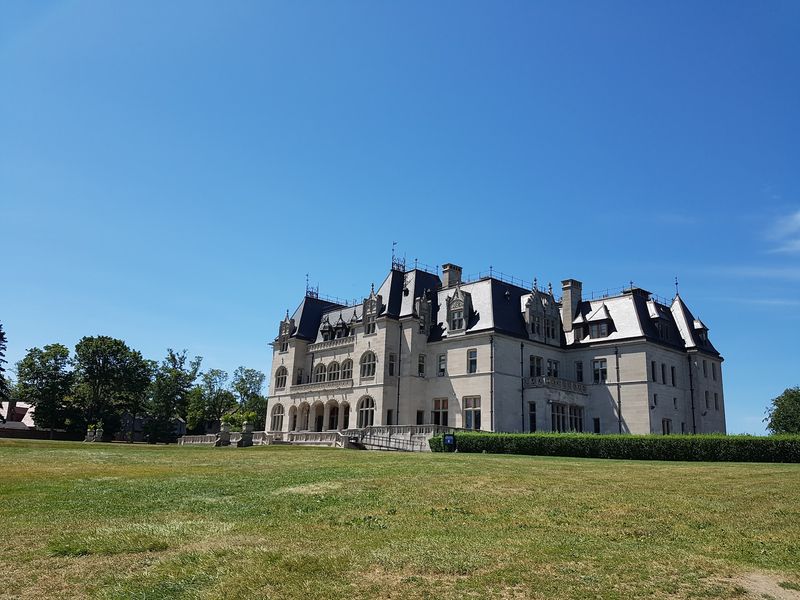
Every trend has a beginning, and Newport’s mansion craze has a few. Kingscote, a Gothic Revival landmark constructed between 1839 and 1841, helped launch the city’s cottage boom.
Its decorative arches, distinctive rooflines, and carefully preserved family collections make it particularly interesting. Kingscote is closed for the remainder of the 2026 season.
Next came Chateau-sur-Mer in 1852. Its impressive scale anticipated Newport’s later Gilded Age mansions, while subsequent renovations introduced elaborate High Victorian interiors.
Holiday fans, take note. Chateau-sur-Mer reopened on November 21, 2026, and welcomes visitors on Saturdays and Sundays through January 3, 2027.
Then there’s the Isaac Bell House, designed in 1883 by the architectural firm McKim, Mead & White. It’s a standout example of American Shingle-style architecture.
Here’s a clever twist: the furnishings are kept sparse. That allows visitors to concentrate on its open interior layout, natural materials, and architectural craftsmanship. The property is currently closed for the season.
Rough Point adds another layer of history. Originally built for Frederick and Louise Vanderbilt, it later became the Newport residence of philanthropist and collector Doris Duke.
Today, it operates as a museum with seasonal visiting arrangements.
Lace Up For A Walk With Ocean On One Side And Mansions On The Other
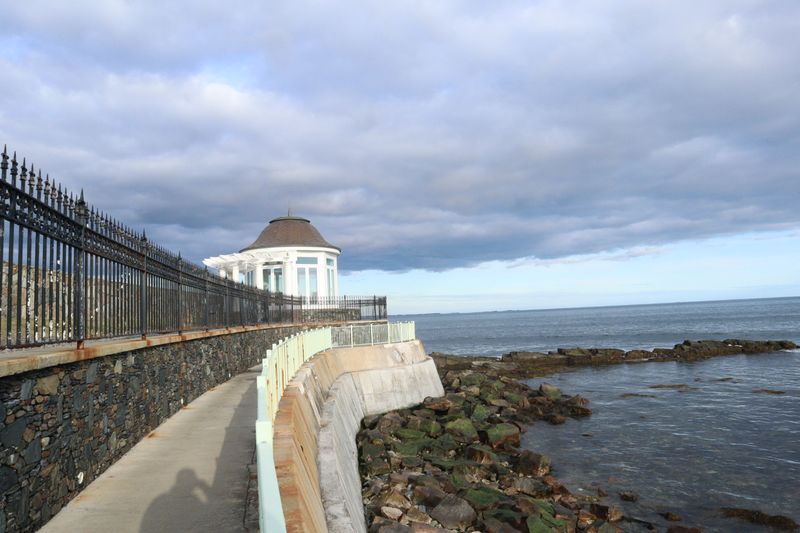
Oceanfront views of millionaire backyards? Yes, please.
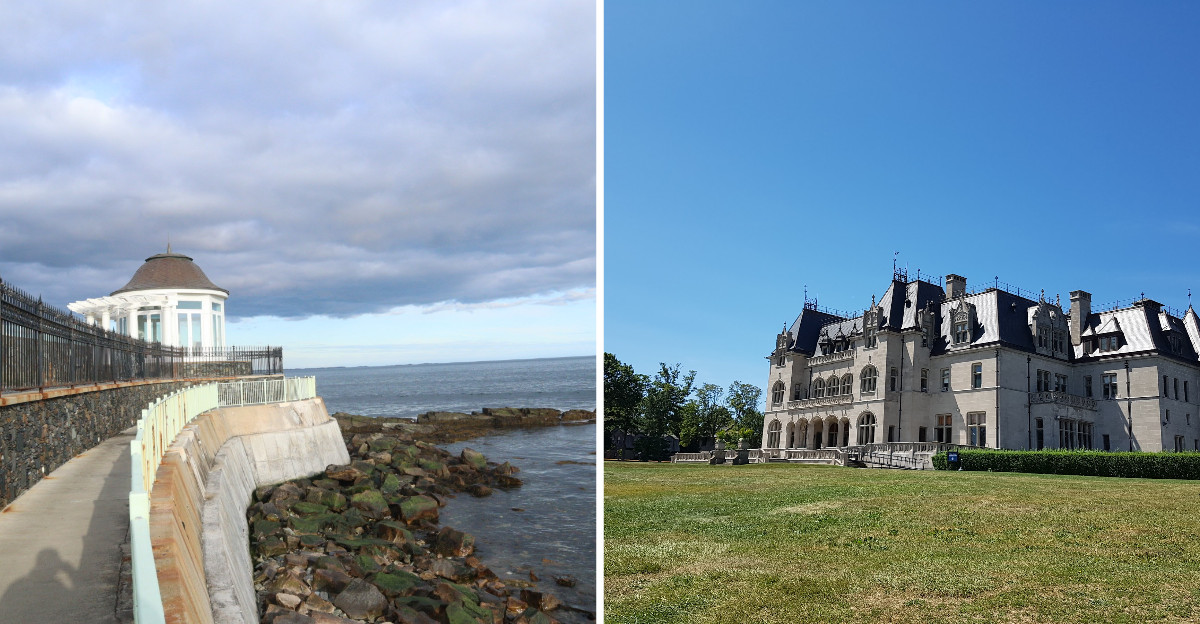
The Cliff Walk is a public path that stretches approximately 3.5 miles along Newport’s Atlantic shoreline. On one side, waves wash against the rocky coast.
On the other, you’ll spot several famous Gilded Age mansions, along with landscaped grounds and historic architectural features.
The northern portion includes relatively accessible paved sections, while parts of the southern route cross uneven natural rock. Sturdy walking shoes are a better choice than sandals.
Bring drinking water, particularly on warm summer days.
There’s one important detail before you go. A section between Narragansett Avenue and Webster Street remains closed following structural damage in 2022.
Follow the designated detour signs, which direct pedestrians around the restricted section. The remaining accessible portions continue offering coastal scenery.
For a shorter outing without encountering that detour, start near Narragansett Avenue and head north toward Easton’s Beach.
The famous Forty Steps, near the eastern end of Narragansett Avenue, provide another recognizable feature along the route.
History Fans Get Cobblestones, Colonial Homes, And Guided Strolls
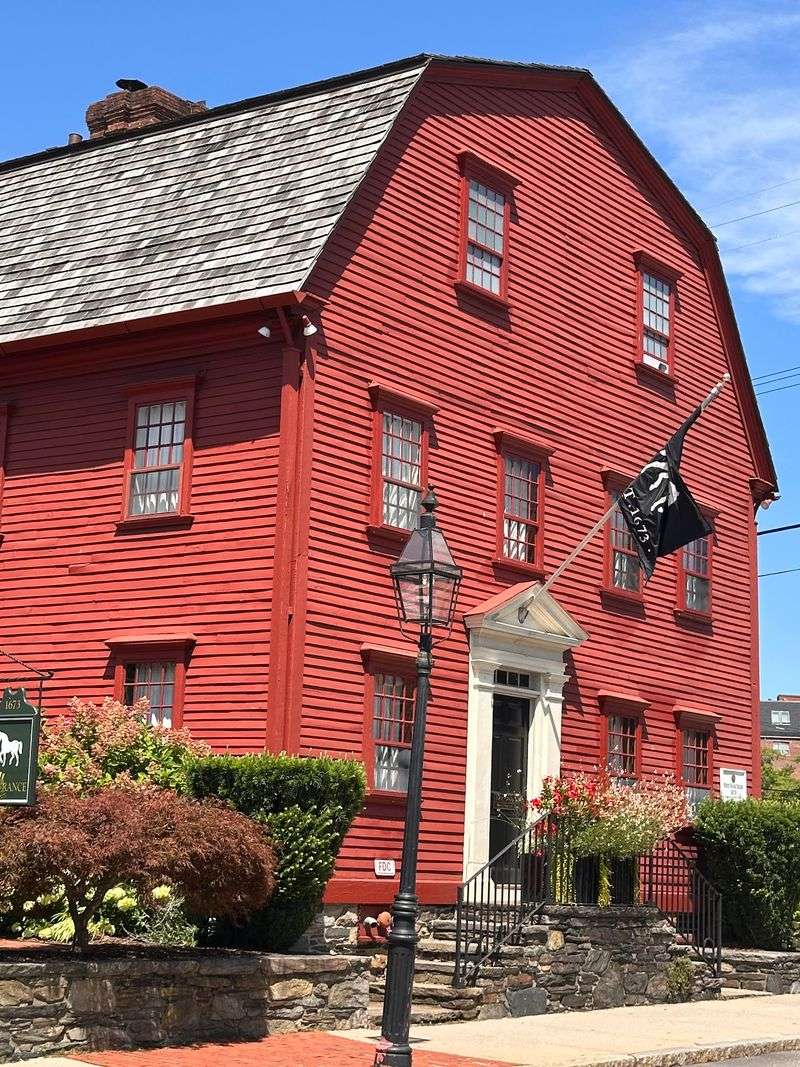
Mansions grab headlines, but colonial Newport deserves equal attention. The city’s historic center contains an exceptionally concentrated collection of surviving colonial properties.
That’s a lot of history packed into a small space. Historic streets and carefully preserved eighteenth-century buildings make the downtown area interesting to explore.
Want someone to explain what you’re seeing? The Newport Historical Society offers guided walking tours through town.
Chartered in 1854, the society preserves historical objects, manuscripts, photographs, and documents connected to Newport’s development. Its headquarters occupy 82 Touro Street, Newport, RI 02840.
Guided walking tours depart from the historic Colony House in Washington Square.
Different routes explore colonial architecture, maritime commerce, and the history of neighborhoods such as the Point, where craftspeople and merchants once lived.
The waterfront adds even more character. Nautical shops, art galleries, independent businesses, and restaurants occupy streets near the harbor.
Mixing historical sightseeing with browsing makes for a relaxed afternoon. You can learn about an eighteenth-century building, then explore a nearby gallery a few minutes later.
Between its sailing traditions, colonial streets, and extraordinary summer residences, Newport offers several centuries of Rhode Island history within one coastal community.