This Small State Park In California Will Melt All Your Stress And Worries Away
Escaping the noise of everyday life feels harder than ever. That’s what makes this stretch of California coastline hit so differently.
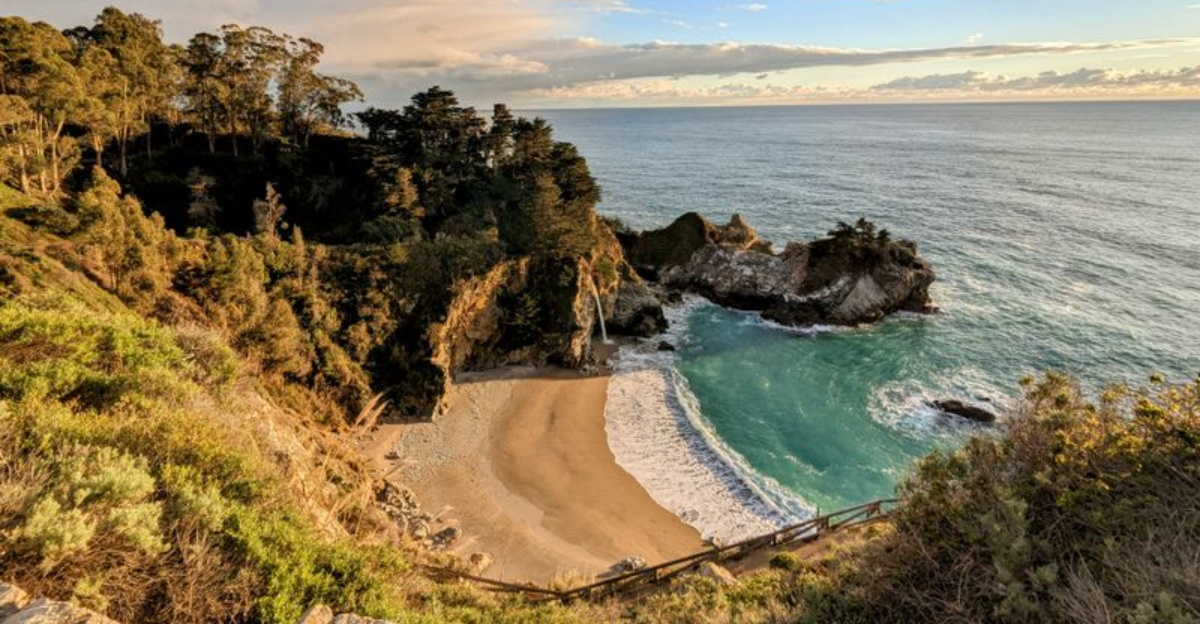
Tucked along the legendary cliffs of Big Sur sits a park where stress fades almost instantly. Towering redwoods rise overhead. Waves crash far below. Salt air mixes with forest mist in a way that feels grounding from the first breath.
Julia Pfeiffer Burns State Park delivers a rare kind of reset. One where dramatic scenery and deep calm exist in the same frame.
Waterfalls spill straight into the Pacific. Ancient groves form cathedral-like corridors of silence. Wildlife moves through protected habitats largely untouched by development.
Despite spanning thousands of acres, the park feels surprisingly approachable. Scenic overlooks require minimal effort. Wheelchair-accessible viewpoints open the coastline to more visitors. Deeper trails reward those who want solitude and sweeping canyon views.
History lingers too, from early homesteads to ongoing conservation work that protects this fragile landscape.
California is packed with coastal icons, but few condense this much beauty, biodiversity, and emotional impact into one place.
It’s not just scenic. It’s restorative. The kind of destination where perspective returns, breathing slows, and nature does what it does best – quietly putting everything back into balance.
1. McWay Falls Cascades Into The Ocean
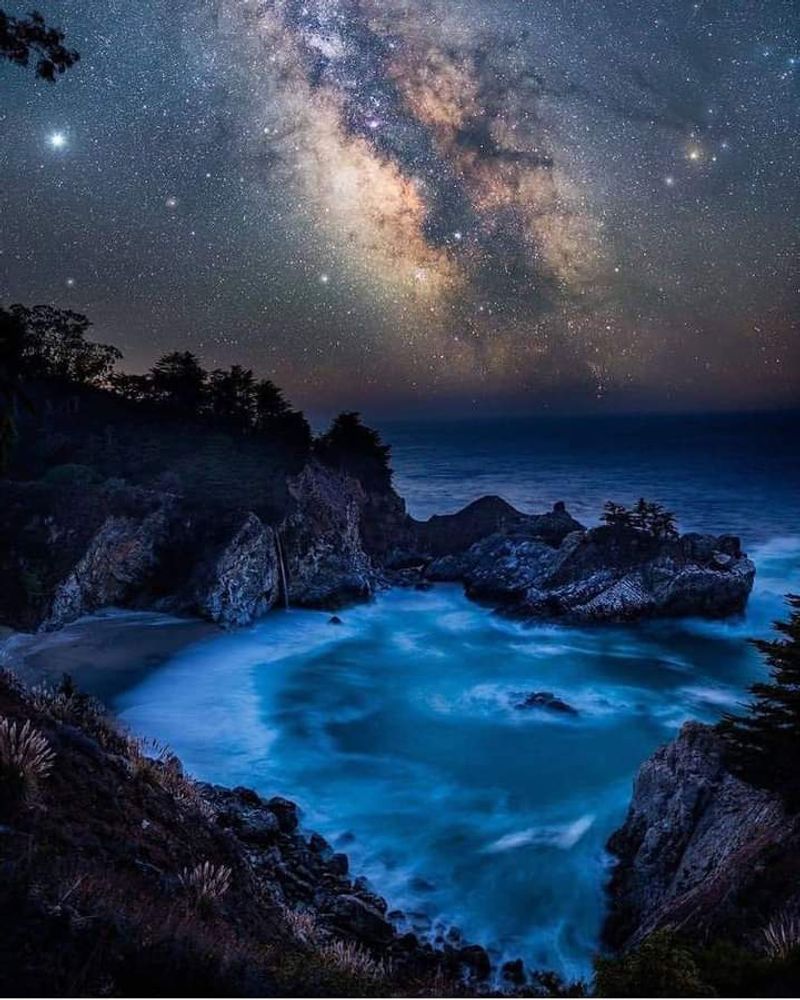
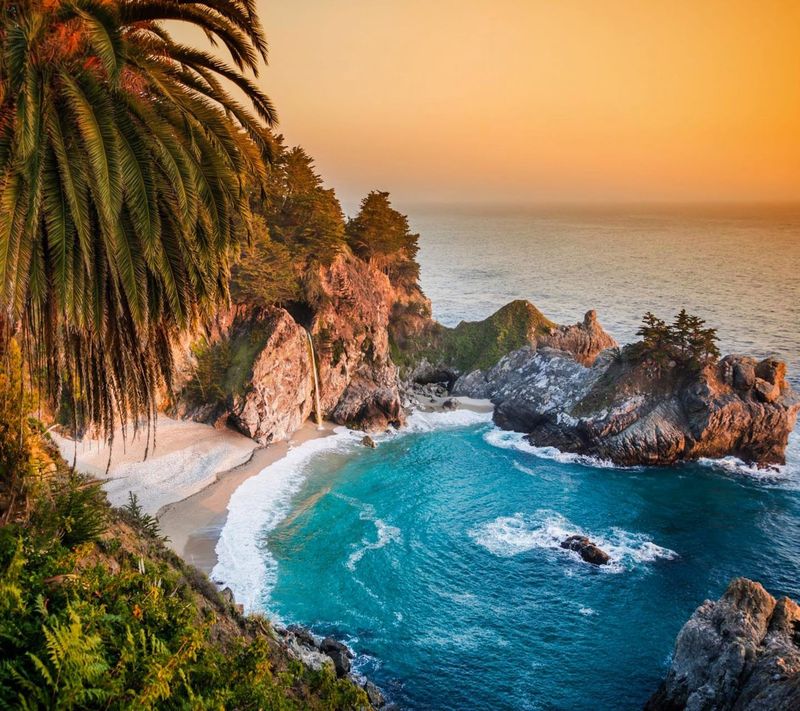
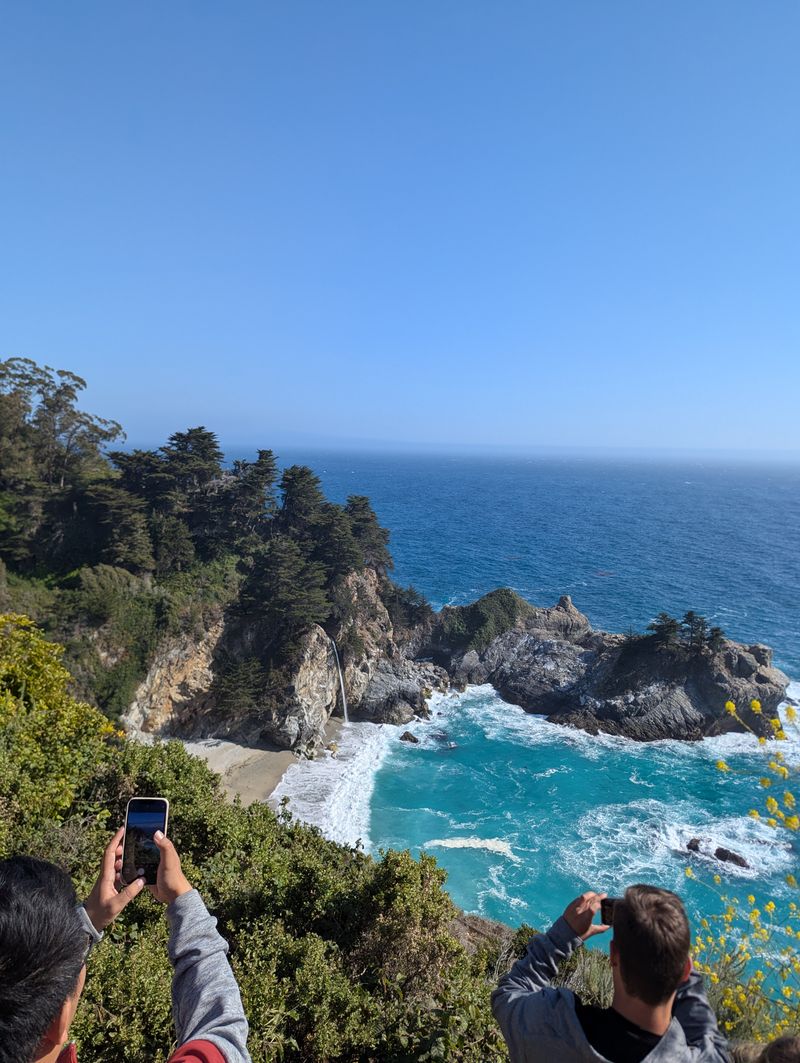
McWay Falls drops 80 feet from weathered granite cliffs straight into the Pacific Ocean below.
This tidefall ranks as one of only two in California where freshwater meets saltwater in such dramatic fashion. The falls remain visible year-round regardless of season or tide conditions.
Viewing platforms provide unobstructed sightlines without requiring visitors to descend steep paths or navigate rocky terrain. Turquoise water pools at the base of the falls before merging with deeper ocean currents.
The contrast between white foam, blue-green water, and dark rock creates a color palette that shifts throughout the day as sunlight angles change.
Photographers arrive at different times seeking specific lighting conditions. Morning light illuminates the falls from the side while late afternoon sun casts golden tones across the entire cove.
The sound of falling water carries across the viewing area even when crowds gather during peak visiting hours. Benches along the trail allow extended observation without time pressure.
McWay Falls flows consistently even during California drought years thanks to underground springs.
The waterfall serves as the park’s most recognizable feature and appears in countless travel guides focused on coastal destinations.
2. Named After A Big Sur Pioneer Woman
Julia Pfeiffer Burns grew up as the daughter of the first permanent European settlers in Big Sur during the late 1800s.
Her family established roots in an area that remained largely inaccessible to outsiders due to rugged terrain and limited road access. She married John Burns in 1914 and spent her entire life contributing to the local community.
Neighbors remembered her as a respected figure who understood the land and its rhythms better than most newcomers ever would. The park received its name in 1962 when California State Parks established the protected area.
Naming the park after Burns honored her deep connection to the region and recognized the contributions of early settlers who lived lightly on the land.
Historical markers throughout the park reference Burns and other pioneers who shaped Big Sur before tourism arrived.
These plaques provide context for visitors curious about human history in an area now celebrated primarily for natural features.
Burns witnessed tremendous change during her lifetime as Highway 1 opened Big Sur to increased traffic.
The park bearing her name now protects landscapes she knew intimately from the development pressures that accompanied easier access.
3. Ancient Redwoods Over 2,500 Years Old
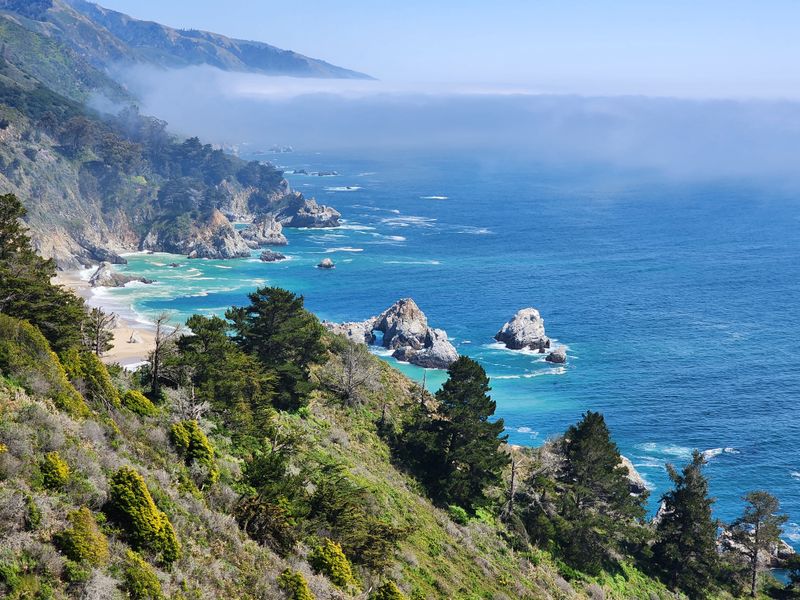
Coast redwoods growing within park boundaries have stood for more than 2,500 years. These trees were already centuries old when Rome fell and continued growing through every major human civilization since.
Walking among old-growth redwoods creates an atmosphere unlike any other forest experience. The trees rise so high that their canopies disappear into mist on foggy mornings while their massive trunks dwarf even the tallest adult visitors.
Bark on ancient redwoods grows thick and fibrous with deep furrows that provide texture and character.
The soft reddish-brown bark feels spongy to the touch and contains tannins that protect against fire damage and insect infestation.
Shade beneath the redwood canopy remains cool even on hot summer days. Filtered light creates dappled patterns on the forest floor where ferns and sorrel grow in the nutrient-rich soil.
Silence settles differently in old-growth forests compared to younger tree stands. The density of ancient trunks absorbs sound and creates pockets of quiet that amplify the sensation of stepping back in time.
Redwood groves within the park survived logging operations that cleared other areas along the coast.
Protection efforts ensure these living monuments will continue growing for thousands of years to come.
4. Trails For Every Skill Level
Here’s your rewritten version focused only on Ewoldsen Trail and Partington Cove Trail, with the same informative tone but accurate to those two routes:
Trail options within the park range from scenic forest loops to steep coastal descents that reward visitors with dramatic views.
The Ewoldsen Trail provides one of the most immersive hiking experiences, guiding visitors through towering redwoods before climbing to sweeping vistas above the Big Sur coastline.
This loop gains elevation steadily through switchbacks rather than abrupt ascents, making the climb manageable for hikers with moderate fitness levels.
Benches placed at intervals offer opportunities to rest while taking in forest and ocean views from varying heights.
Trail surfaces shift between packed dirt, leaf litter, and exposed roots, so sturdy footwear becomes especially important after rainfall when sections can turn muddy or slick.
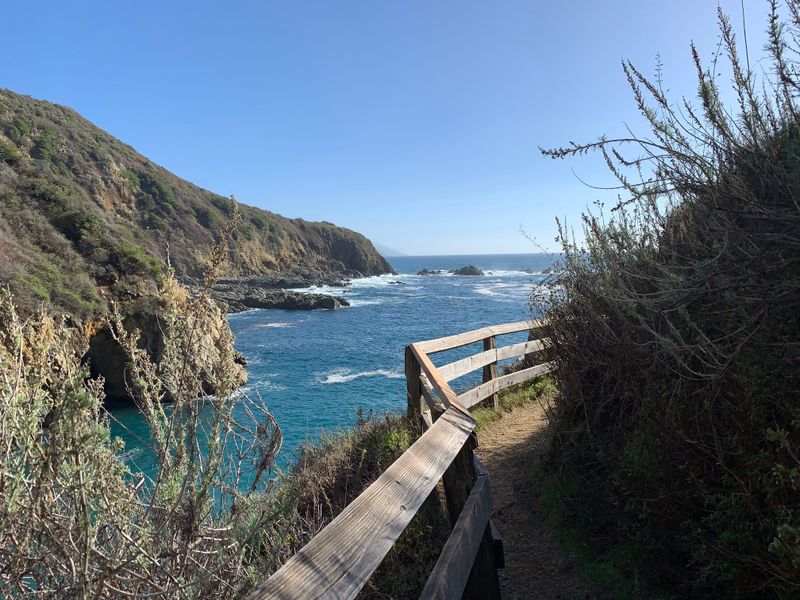
For those drawn to historic coastal scenery, the Partington Cove Trail offers a shorter but steeper adventure.
The route descends along a narrow canyon to a hand-carved tunnel blasted through solid rock in the early 1900s.
Passing through the cool, dim passage opens onto a secluded cove where waves surge against the rocky shoreline.
The descent requires careful footing on uneven terrain and stone steps, particularly on the return climb uphill.
While less physically demanding than longer backcountry hikes, the trail still rewards preparation and a measured pace.
Signage at trailheads indicates distances and difficulty levels for both routes, helping visitors plan based on available time and physical ability.
Maps available at the entrance station provide additional guidance for navigating these trails and understanding how they fit within the broader park landscape.
5. Environmental Campsites In The Backcountry
Two walk-in environmental campsites provide overnight accommodation for visitors wanting extended immersion in the park.
These sites require hiking in with all necessary gear since no vehicle access exists beyond the parking area. Advance reservations become necessary during popular months when demand exceeds availability.
The reservation system opens several months ahead allowing early planning for those determined to secure a spot. Campers must pack out all trash and leave no trace of their stay.
This policy maintains the pristine condition of backcountry areas and prevents wildlife from becoming habituated to human food sources.
Basic amenities include designated tent pads and access to pit toilets but no running water or electrical hookups.
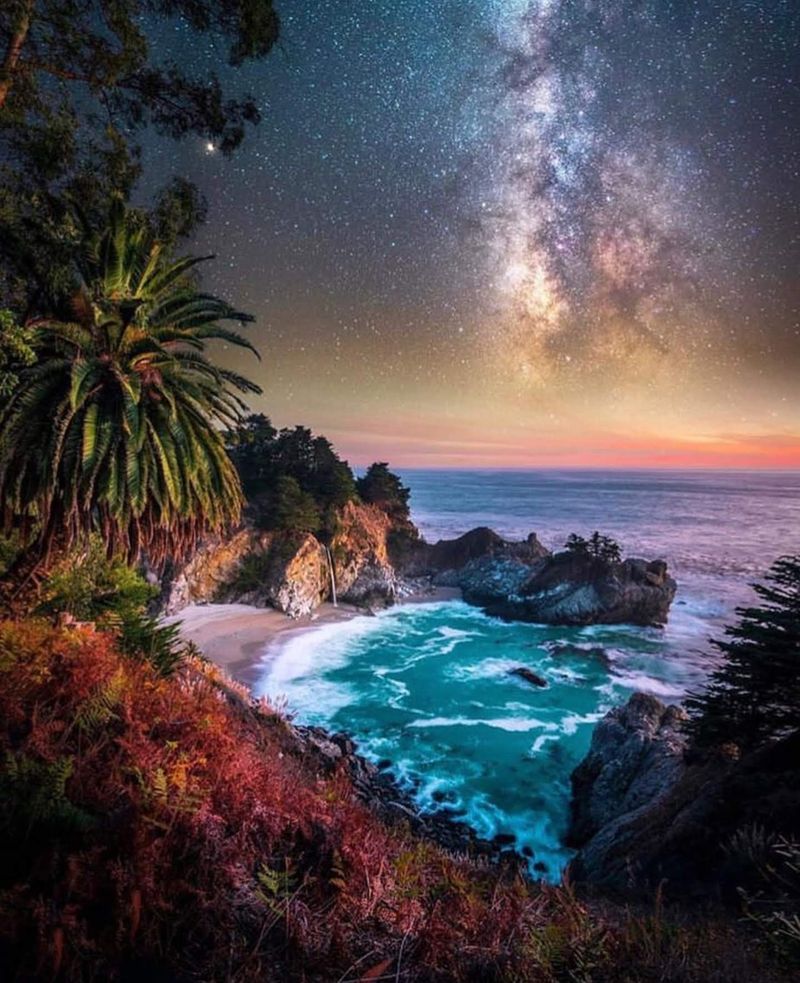
Visitors bring their own water or treatment systems for purifying natural sources. Nighttime in the backcountry reveals star fields rarely visible near populated areas.
The absence of light pollution allows clear views of the Milky Way and individual constellations that shift position as hours pass.
Morning fog often settles into valleys creating ethereal conditions as sunlight gradually burns through the mist.
Birdsong begins before dawn and builds to a chorus as different species wake in succession throughout the forest canopy.
6. Protected Marine Underwater Area
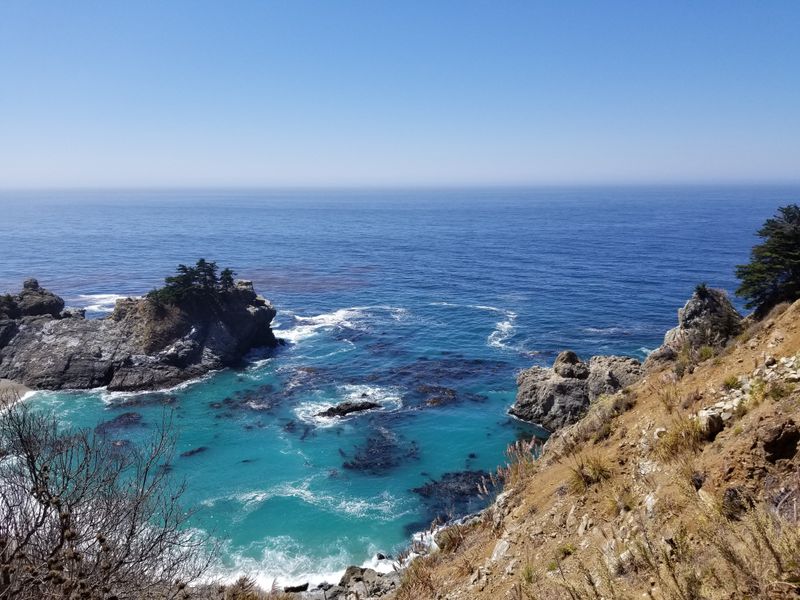
The Julia Pfeiffer Burns Underwater Area extends from Partington Point to McWay Creek as a designated marine protected zone.
California established this protected status in 1970 making it one of the earlier conservation efforts focused on coastal ecosystems.
Scuba diving requires obtaining a special-use permit before entering the water. The permit system controls the number of divers and ensures visitors understand regulations designed to minimize impact on sensitive habitats.
Kelp forests sway in the currents offshore creating underwater structures that support diverse marine communities.
Fish species dart between kelp fronds while invertebrates cling to holdfasts anchoring the algae to rocky substrate.
Water temperature remains cold year-round due to upwelling currents that bring nutrient-rich water from deeper zones.
Divers wear thick wetsuits or drysuits to maintain comfort during extended underwater exploration. Visibility varies depending on recent weather patterns and wave action that stirs sediment.
Calm periods following storms often provide the clearest conditions for observing marine life in detail.
The protected status prohibits taking any living organisms including shells and prevents disturbing the natural arrangement of underwater features.
These restrictions allow ecosystems to function without human interference beyond passive observation.
7. Gray Whale Migration Viewing
Gray whales pass close to shore during annual migrations between Alaska feeding grounds and Baja California breeding lagoons.
The park’s elevated viewpoints provide excellent vantage points for spotting whales without requiring boat trips.
Southbound migration occurs from December through February as whales travel toward warmer waters.
Northbound return migration happens from March through May when whales often move closer to shore and travel at a more leisurely pace.
Whale spouts appear as vertical puffs of mist when the animals surface to breathe.
Experienced observers can estimate whale size and species based on spout height and shape even from considerable distances. Binoculars enhance viewing experiences by allowing detailed observation of whale behavior.
Breaching, tail slapping, and spy-hopping behaviors occur periodically when whales seem especially active or curious about their surroundings.
Patient observers who spend extended time scanning the horizon typically spot more whales than those making quick stops.
Whales surface at irregular intervals making it impossible to predict exactly when and where the next sighting will occur. Volunteer naturalists sometimes staff the overlook areas during peak migration periods.
These knowledgeable individuals help visitors identify whales and share information about migration patterns and whale biology.
8. Sea Otters And Harbor Seals
Sea otters float on their backs in kelp beds just offshore using the algae as anchors while they rest and groom.
These marine mammals spend most of their lives in the water and rarely come ashore except during storms.
Watching sea otters crack open shellfish using rocks as tools provides entertainment for visitors of all ages.
The otters place flat stones on their chests and repeatedly smash hard-shelled prey against the rock until the shells break. Harbor seals haul out on rocky outcrops and beaches to rest between feeding sessions.
Their mottled gray and brown coloring provides camouflage against the rocks making them easy to overlook until movement catches the eye. Seal pups appear during spring months when females give birth to single offspring.
Mothers remain attentive and protective during the nursing period that lasts several weeks before pups become independent.
Binoculars allow observation of seal behavior without approaching close enough to cause disturbance.
Federal regulations prohibit approaching marine mammals within certain distances to prevent stress and disruption of natural activities. Both otters and seals face predation pressure from great white sharks that patrol the coastal waters.
Observant visitors occasionally spot sharks cruising near seal colonies though attacks remain relatively rare events.
9. Partington Cove Historic Tunnel
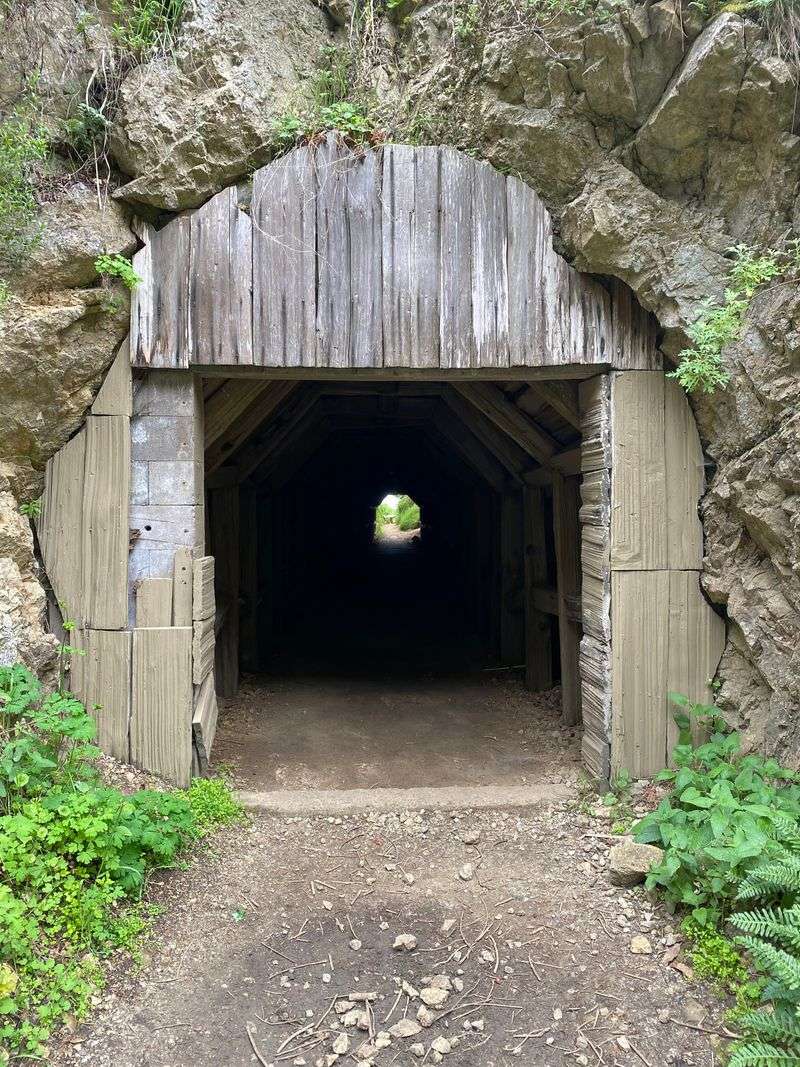
A short but steep trail descends to Partington Cove where a historic tunnel carved through solid rock provides access to a sheltered inlet.
Workers blasted this passage in the early 1900s to facilitate loading lumber onto ships anchored in the protected cove.
The tunnel remains cool and dark requiring a moment for eyes to adjust when entering from bright sunlight.
Moisture seeps through the rock in places creating damp patches and supporting moss growth on the tunnel walls.
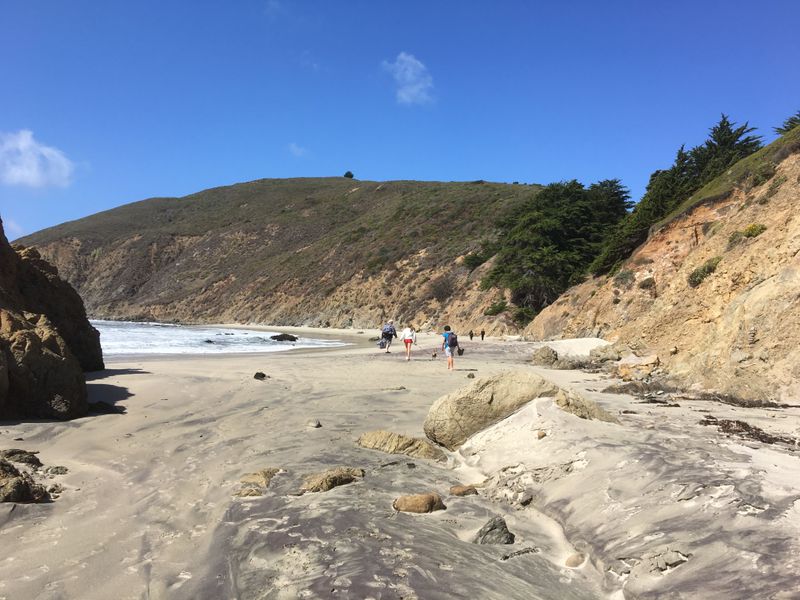
Emerging from the tunnel reveals a dramatic change in atmosphere as the confined passage opens onto a small rocky beach.
Waves surge into the cove and retreat with rhythmic regularity creating constantly changing patterns in the shallow water.
Photographers favor this location for its unique combination of natural and human-made features. The tunnel frames views of the cove creating natural composition elements that enhance images.
Tide conditions significantly affect access to different areas of the cove. High tides limit the amount of exposed beach while low tides reveal tide pools and additional exploration opportunities.
The trail to Partington Cove sees less traffic than the McWay Falls overlook making it appealing for visitors seeking quieter experiences. The descent requires careful footing on uneven stone steps built into the hillside decades ago.
10. Wheelchair Accessible Ocean Views
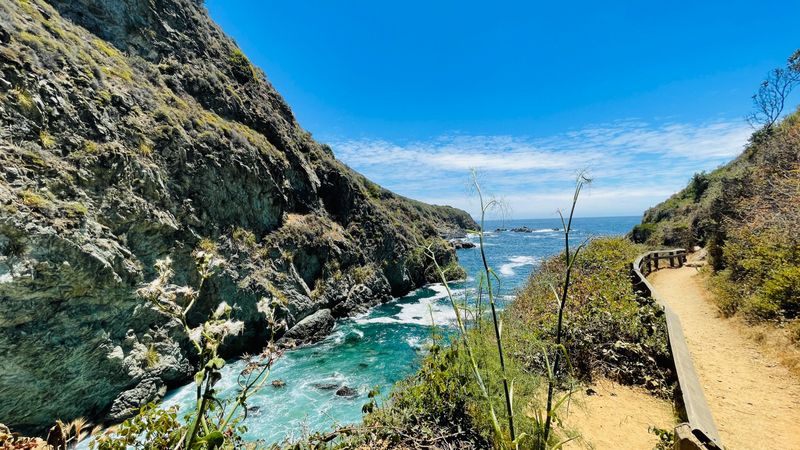
The Overlook Trail to McWay Falls maintains wheelchair accessibility throughout its entire length, but it is closed for repair so check whether the status has changed in the meantime.
Smooth pavement eliminates obstacles and the gentle grade never exceeds standards for accessible routes.
Viewing platforms include level areas where wheelchairs can position for unobstructed sightlines toward the falls and ocean. Railings provide safety barriers without blocking views for seated visitors.
Accessible parking spaces near the trail head minimize the distance users must travel before reaching the paved path. Signage clearly marks accessible routes and facilities to prevent confusion at the entrance area.
Benches positioned along the trail offer rest opportunities for visitors who tire easily or want extended time enjoying specific viewpoints.
The spacing of these benches allows frequent breaks without requiring long distances between stopping points.
Restroom facilities near the parking area meet accessibility standards with appropriate door widths and interior layouts.
These facilities remain open during park operating hours though winter months may see reduced service.
The accessible design allows visitors with mobility limitations to experience the park’s primary attraction without missing key features.
Families traveling with elderly members or young children in strollers also benefit from the smooth surfaces and gentle terrain.
11. Location And Visitor Information
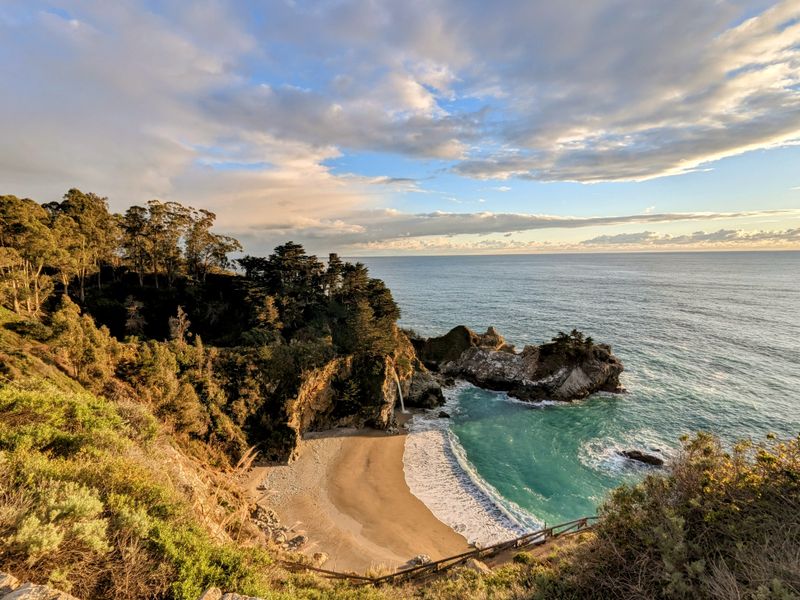
Julia Pfeiffer Burns State Park sits 37 miles south of Carmel along Highway 1 in the Big Sur region.
The entrance appears on the ocean side of the highway marked by state park signage visible to southbound and northbound drivers.
Day-use parking fees apply upon entry with payment collected through self-service stations since no ranger remains on duty at the park.
Fee amounts and accepted payment methods appear on posted notices at the entrance kiosk. Highway 1 through Big Sur experiences periodic closures due to landslides and storm damage.
Checking current road conditions before departure prevents wasted trips when sections of highway remain impassable.
Weather along the coast changes rapidly with fog rolling in during afternoon hours even on otherwise clear days.
Layered clothing allows adjustment to shifting conditions without requiring return trips to vehicles for additional gear. Cell phone coverage remains spotty throughout the Big Sur area making advance planning essential.
Downloading maps and saving important information before leaving areas with reliable service prevents frustration when signals disappear. The park attracts steady visitation year-round though summer weekends see the heaviest crowds.
Arriving early in the day or visiting during weekday periods improves chances of finding parking and enjoying trails without congestion.