This Small Town In California Hides One Of The Most Breathtaking Natural Wonders
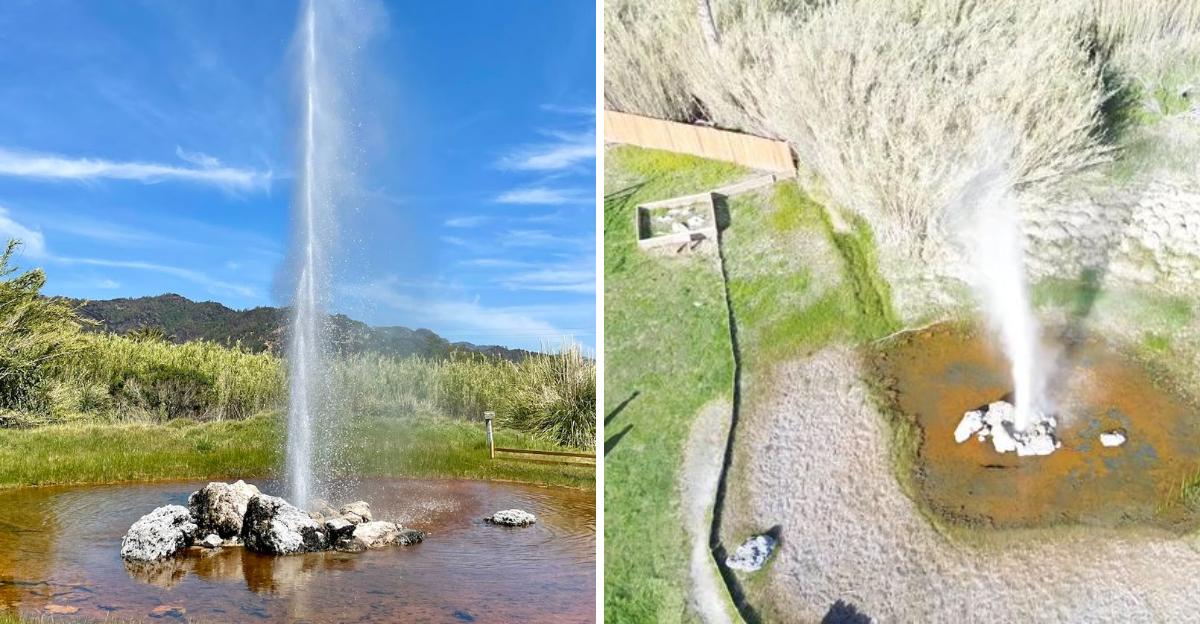
Some natural wonders hide in the most unexpected places. Quiet fields. Country roads. A landscape that looks calm until the earth suddenly reminds everyone what lies beneath it.
Visitors often arrive expecting vineyards and scenic drives. Then the ground rumbles slightly and a column of steaming water bursts into the sky.
California has a place where a geyser erupts like clockwork in the middle of Napa Valley, and most travelers drive right past it without realizing what they’re missing.
The eruption sends hot water soaring high above the surrounding hills, creating a spectacle that feels both surprising and strangely mesmerizing. Watching it happen never really gets old, even for people who have seen it before.
The phenomenon is powered by geothermal forces that have shaped this part of Northern California for thousands of years.
Beneath the surface, volcanic heat still fuels bubbling mineral springs, steaming vents, and one of the most reliable geysers in the country.
Regular Eruptions That Keep A Steady Schedule
Watching a geyser erupt on a predictable schedule feels almost magical, like nature decided to set an alarm clock.
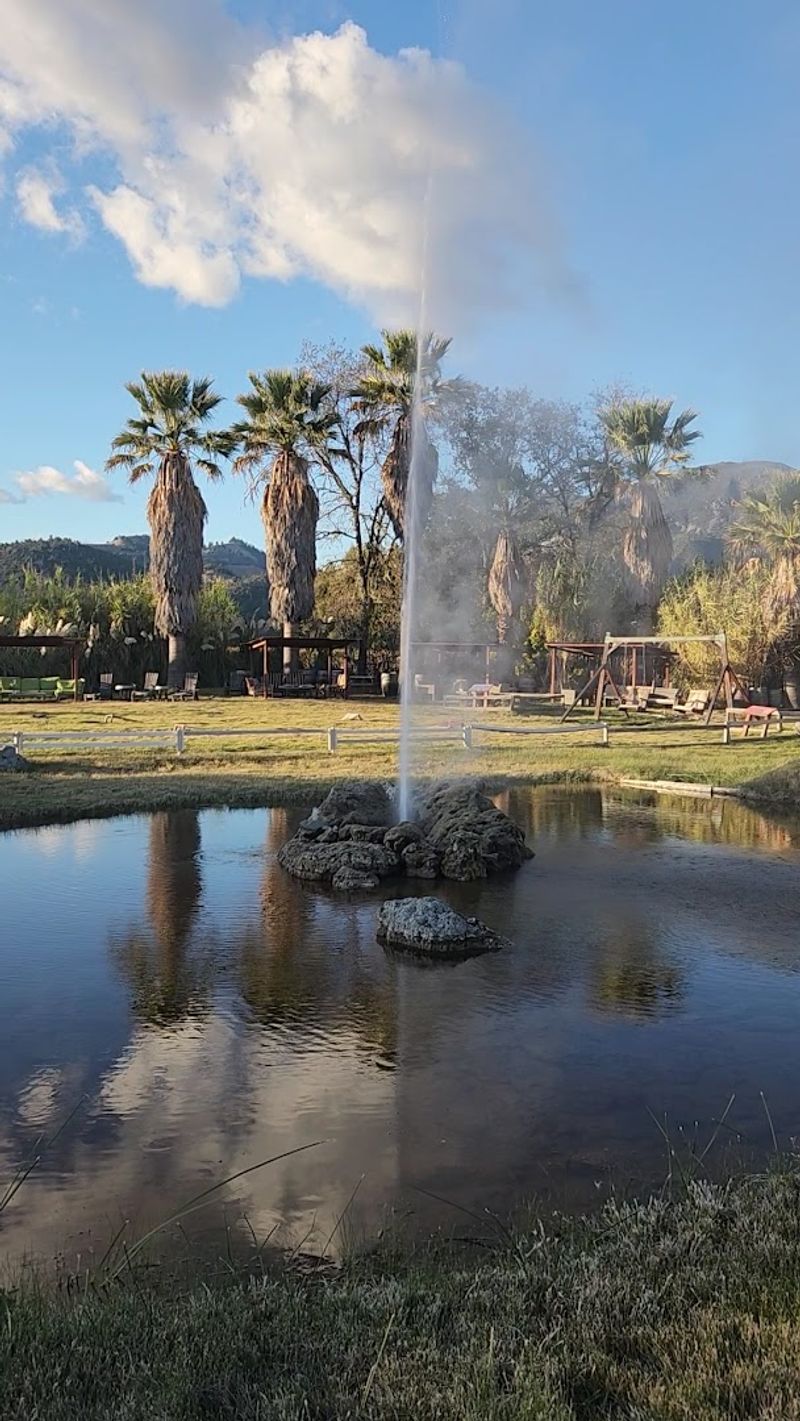
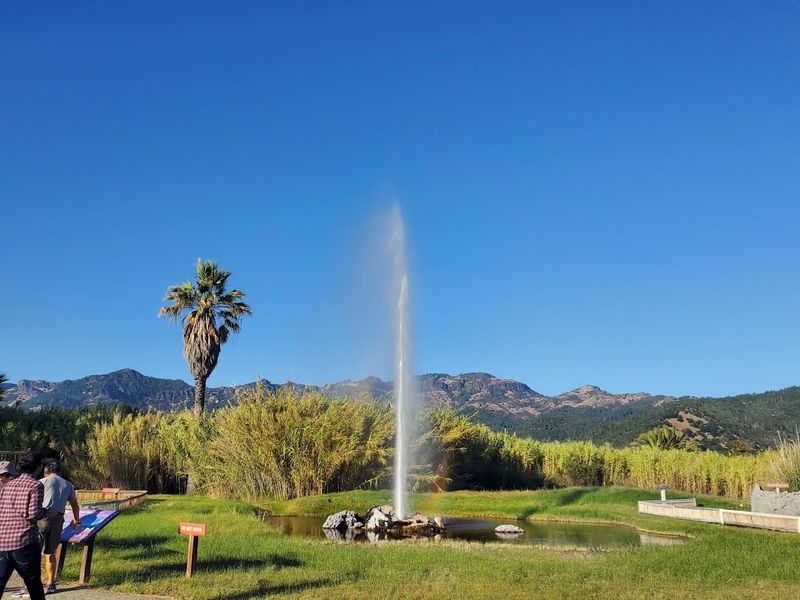
The Old Faithful Geyser of California erupts approximately every 30 to 40 minutes, sending boiling water between 30 and 80 feet into the air during each burst.
That kind of consistency is rare in the natural world, and it is a big part of what draws visitors back year after year.
Most geysers around the world erupt unpredictably, making it hard to plan a visit around actually seeing one go off.
At 1299 Tubbs Ln, Calistoga, CA 94515, the wait is short enough to feel exciting rather than frustrating.
Visitors can settle onto the surrounding benches or spread out on the grass while anticipating the next eruption.
The sound of the geyser building pressure before it erupts adds to the experience, creating a low rumble that signals something impressive is about to happen.
Each eruption lasts roughly four minutes and produces a column of steam that lingers in the air long after the water falls back down.
For families with kids, the countdown to the next eruption keeps energy and excitement high throughout the visit.
One Of Only Three Faithful Geysers In The World
Not every geyser earns the title of faithful, and the distinction matters more than most people realize.
Early in the history of the National Geographic Society, researchers identified only three geysers worldwide that erupted with enough regularity to be called faithful.
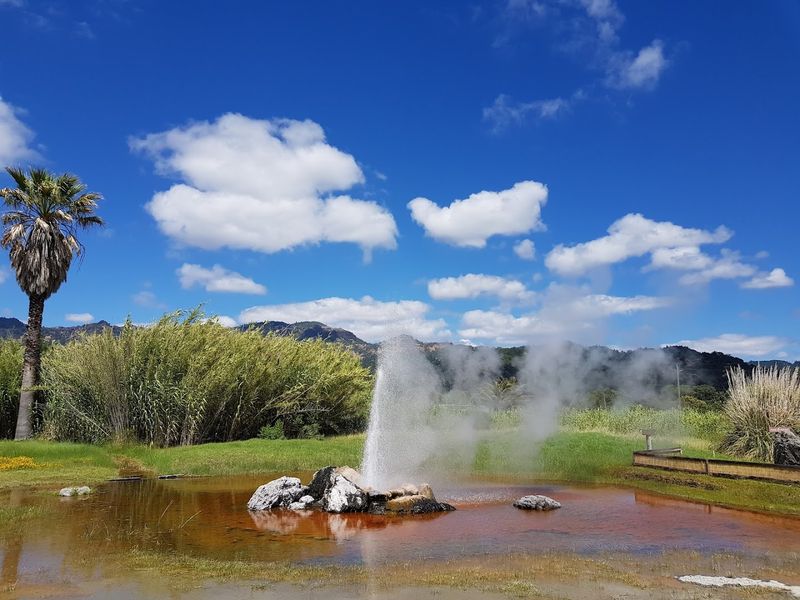
The Old Faithful Geyser of California in Calistoga is one of those three, placing it in rare company alongside geysers in Yellowstone National Park and one in New Zealand.
That classification speaks to the geological stability beneath this particular patch of Napa Valley land.
The conditions required to produce such consistent eruptions are remarkably specific, involving the right mix of underground water supply, heat source, and channel structure beneath the surface.
Most geothermal vents lack the precision needed to maintain that kind of rhythm.
Visitors who have seen the famous Old Faithful in Wyoming often express surprise at finding a comparable experience tucked inside a small California town of Calistoga. The scale may differ slightly, but the reliability is just as impressive.
Knowing that only three places on Earth can claim this distinction tends to shift how people feel while standing at the edge of the viewing area, turning a casual stop into something genuinely memorable.
A Geyser That May Predict Earthquakes
Few natural attractions come with a built-in geological warning system, but the Old Faithful Geyser of California has a well-documented pattern that researchers and staff have tracked for decades.
When the geyser’s eruption intervals slow down or become irregular, historical observation suggests that an earthquake could follow within the next couple of weeks somewhere within a 500-mile radius.
The connection between geyser behavior and seismic activity is tied to shifts in underground pressure.
Changes in the tectonic environment beneath the surface can alter the flow of the underground water source that powers the geyser, disrupting its usual rhythm before a quake occurs.
Staff at the site actively monitor eruption timing and keep records that help identify these pattern changes.
This predictive quality gives the geyser a layer of scientific significance that goes beyond being a pretty spectacle.
Seismologists and geologists have studied the relationship between geothermal vents and earthquake activity across California and other tectonically active regions.
For curious visitors, learning about this connection adds real depth to what might otherwise feel like a straightforward sightseeing stop.
It is a reminder that the ground beneath California is very much alive and constantly in motion beneath everyday life.
Powered By Underground Rivers
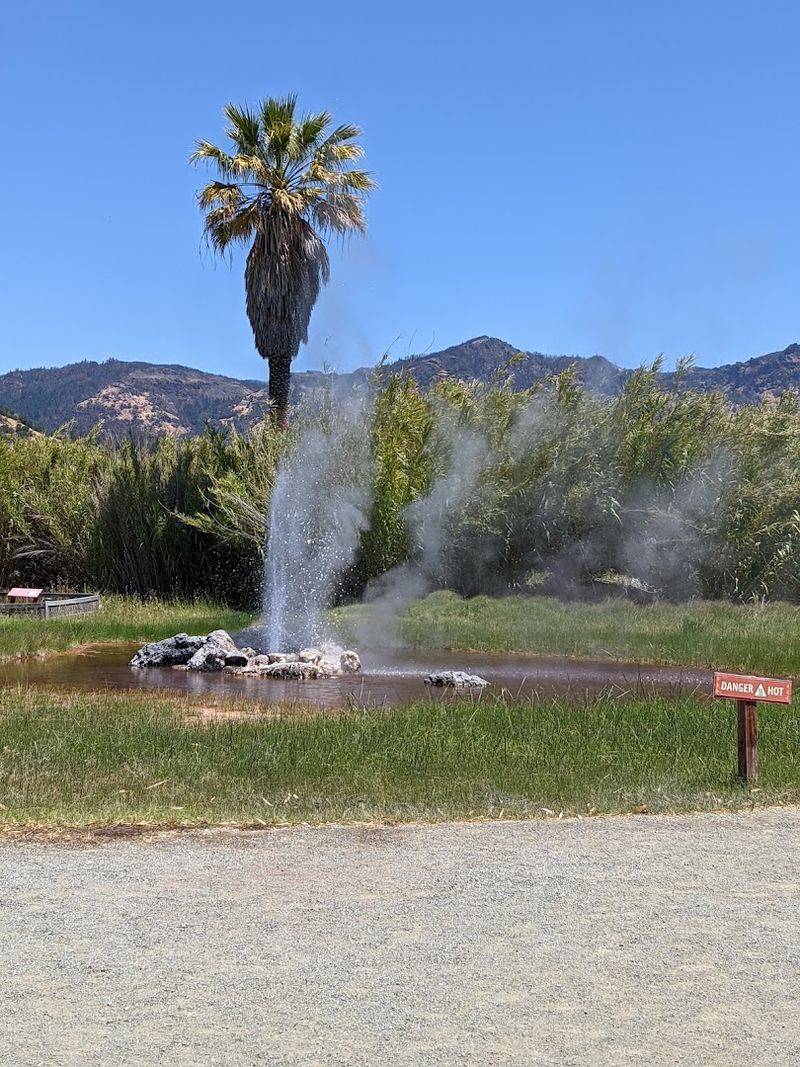
The science behind the geyser is just as fascinating as the eruption itself. Beneath the surface of Calistoga, an underground river flows through a network of rock channels deep below ground.
Groundwater is heated by geothermal energy at depth, builds pressure, and vents through cracks to the surface.
Napa Valley sits in a region with a long history of volcanic activity, and the geothermal energy beneath Calistoga is a direct result of that history.
The same forces that once shaped the mountains and valleys of Northern California continue to generate heat far below the surface today.
That heat is not just responsible for the geyser but also for the natural hot springs that made Calistoga famous as a spa destination.
Understanding the mechanics makes each eruption feel more impressive rather than less.
Watching thousands of gallons of water launch skyward because of pressure built up over thousands of feet underground puts the raw power of the Earth into perspective.
For younger visitors especially, seeing the science play out in real time tends to spark genuine curiosity about geology and how the planet continues to shape itself from the inside out.
Visitor Amenities That Make The Wait Enjoyable
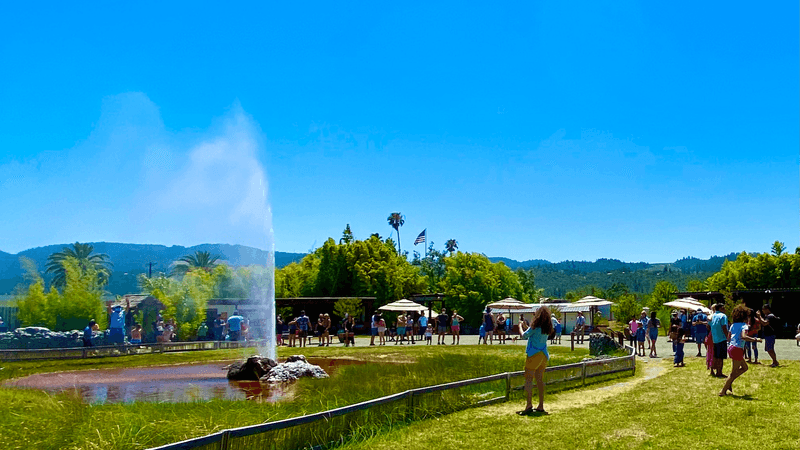
Waiting between eruptions could feel dull at some natural attractions, but the Old Faithful Geyser site in Calistoga keeps visitors genuinely entertained between shows.
The property includes picnic areas where families can spread out and have a meal while watching the steam vent between eruptions.
There is also a petting zoo on site that features llamas, goats, and a handful of other animals that younger visitors tend to gravitate toward immediately.
The combination of a natural spectacle and hands-on animal interaction makes the site work especially well for families with children of different ages.
While adults relax on the benches near the geyser, kids can spend time in the petting area without anyone feeling rushed or bored.
The pace of the visit naturally stretches out in a pleasant way because there is always something to do between eruptions.
Bocce ball is another activity available on the grounds, giving adults and older kids a low-key game to enjoy while waiting.
The overall atmosphere is relaxed and unhurried, more like a peaceful afternoon outdoors than a typical tourist stop.
Bringing a picnic lunch is a practical and enjoyable option for visitors who want to spend a full morning or afternoon exploring everything the property has to offer.
Admission Fees And Visitor Discounts
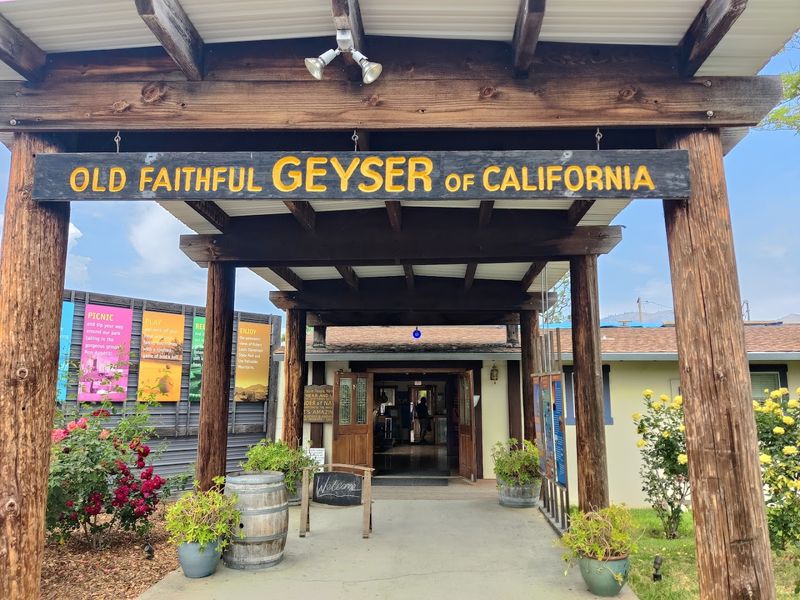
Getting into the Old Faithful Geyser of California is reasonably priced compared to many California attractions, making it an accessible option for a range of budgets.
As of recent information, adult admission is $15, with discounts available for seniors, military personnel, students, and children.
Pricing can change over time, so checking the official site before visiting is always a smart move to avoid surprises at the entrance.
The attraction sits at 1299 Tubbs Lane, Calistoga, CA 94515, reachable from California State Routes 29 and 128.
The location is straightforward to find with a GPS and has parking available on site, which makes the logistics of the visit fairly simple.
Arriving on a weekday tends to mean smaller crowds, which can make the experience feel more personal and less rushed.
For families, the tiered pricing structure helps keep the total cost manageable, especially when visiting with multiple children.
Groups and school trips may also have access to special rates, so reaching out in advance is worthwhile for larger parties.
The value of the experience relative to the admission cost tends to feel fair to most visitors, particularly when accounting for the full range of activities available on the grounds throughout the day.
The Geological History Behind The Napa Valley Region
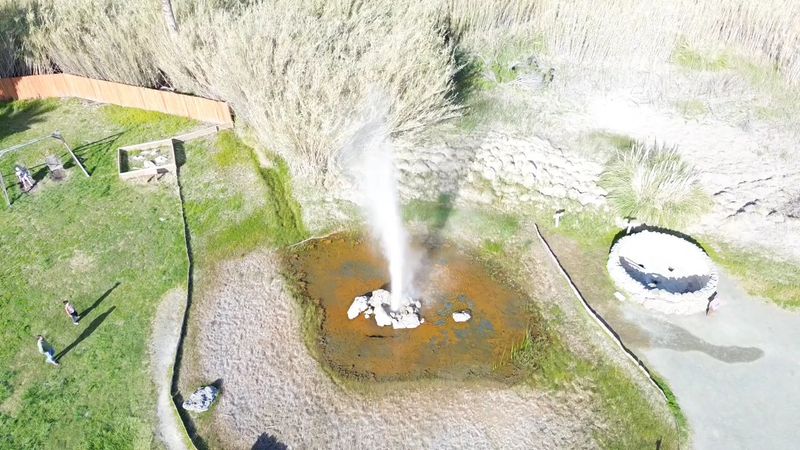
Napa Valley carries a reputation built largely around agriculture and scenery, but the geological story beneath the valley floor is equally compelling.
The entire region sits within a zone of ancient volcanic activity, and the evidence of that history is visible in the landscape around Calistoga.
Volcanic ash deposits, geothermal vents, and natural hot springs all point to a past shaped by significant tectonic movement over millions of years.
The geyser is one of the most visible expressions of that ongoing geothermal energy, but the hot springs scattered throughout Calistoga tell the same story in a quieter way.
The same underground heat that powers the geyser is what warms the spring water that has attracted visitors to the area for well over a century.
Native peoples in the region recognized the significance of these hot springs long before European settlers arrived and built the town.
Geologists continue to study the Napa Valley region because it offers a relatively accessible window into active geothermal processes.
The mix of volcanic soil, underground water systems, and proximity to fault lines creates conditions that are scientifically interesting on multiple levels.
For visitors curious about Earth science, a trip to the geyser can feel like a field trip that requires no classroom preparation to appreciate and enjoy.
The Small Geology Museum On Site
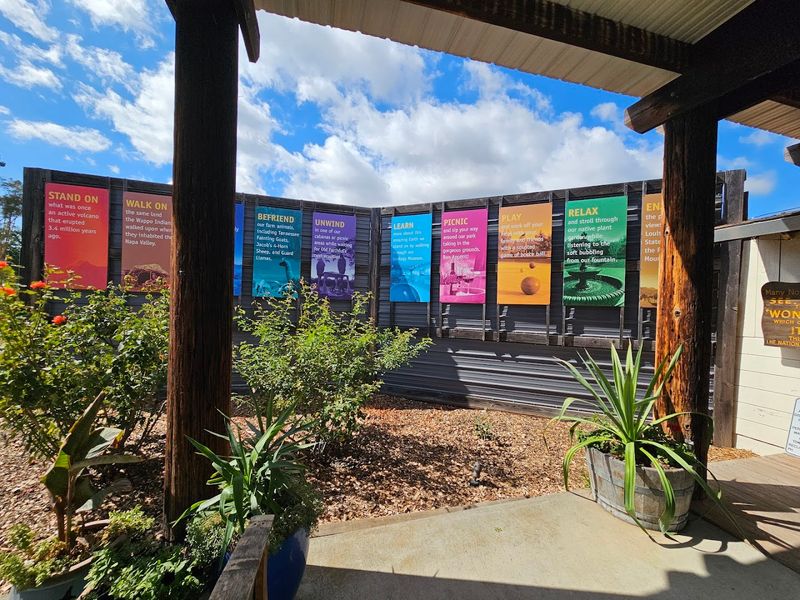
A small geology museum sits on the grounds of the Old Faithful Geyser site, and it offers more than most visitors expect from a roadside attraction.
The exhibits inside cover the volcanic history of the Napa Valley region, explaining how the landscape formed over millions of years and what continues to drive the geothermal activity beneath the surface today.
Rock samples, diagrams, and educational panels give the museum a hands-on quality that holds attention without overwhelming younger visitors.
For anyone who wants context before watching the geyser erupt, spending a few minutes in the museum first tends to make the experience more meaningful.
Understanding what is happening underground shifts the eruption from a cool visual moment into something that connects to a much larger story about the planet.
Teachers, parents, and curious adults often find the information more detailed than expected for such a compact space.
The museum also touches on the history of geyser science and how researchers have studied predictable eruptions around the world.
Displays that explain the relationship between underground pressure, water flow, and volcanic heat give visitors a solid foundation for understanding what they are about to witness outside.
The exhibits are accessible enough for middle school students while still offering enough depth to engage adults with a genuine interest in earth science.
A Family-Friendly Destination With Broad Appeal
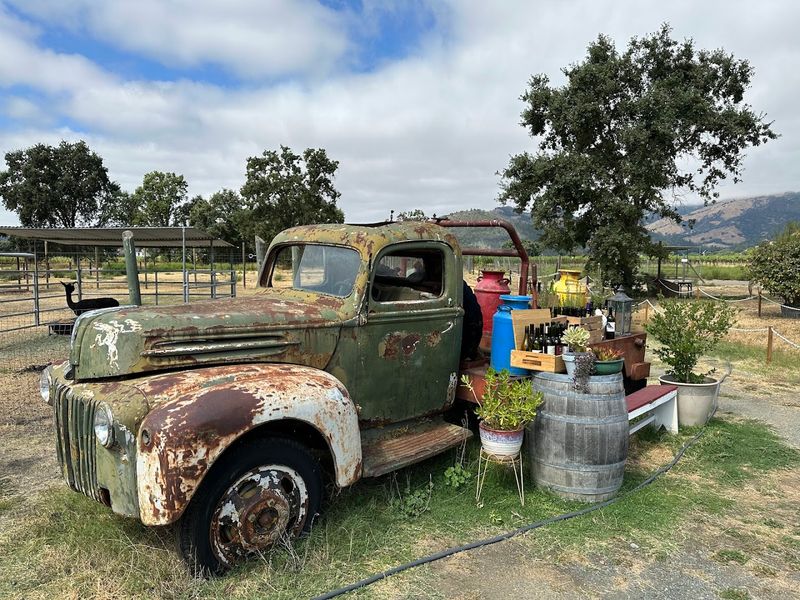
Not every natural attraction manages to hold the attention of both a curious eight-year-old and a retired science teacher at the same time, but the Old Faithful Geyser of California pulls it off consistently.
The combination of an erupting geyser, a petting zoo, open picnic space, and a geology museum means there is a genuine point of connection for visitors at almost every age and interest level.
The grounds feel relaxed and unstructured enough that families can move at their own pace.
Children who might struggle to stay engaged at a museum or a historic site tend to respond enthusiastically to the geyser because the payoff is visual, loud, and happens on a schedule short enough to hold their attention.
The anticipation of the next eruption gives the visit a natural rhythm that keeps energy up without requiring constant stimulation.
Parents often note that kids ask more questions at this site than at many traditional educational attractions.
Accessibility across the grounds is generally manageable for strollers and mobility aids, though visitors with specific needs may want to call ahead to confirm current conditions.
The overall layout is open and easy to navigate, and the unhurried atmosphere makes it comfortable for visitors who prefer a slower pace.
Weekday visits tend to offer more space and a quieter experience overall.
Photography Opportunities And Rainbow Sightings
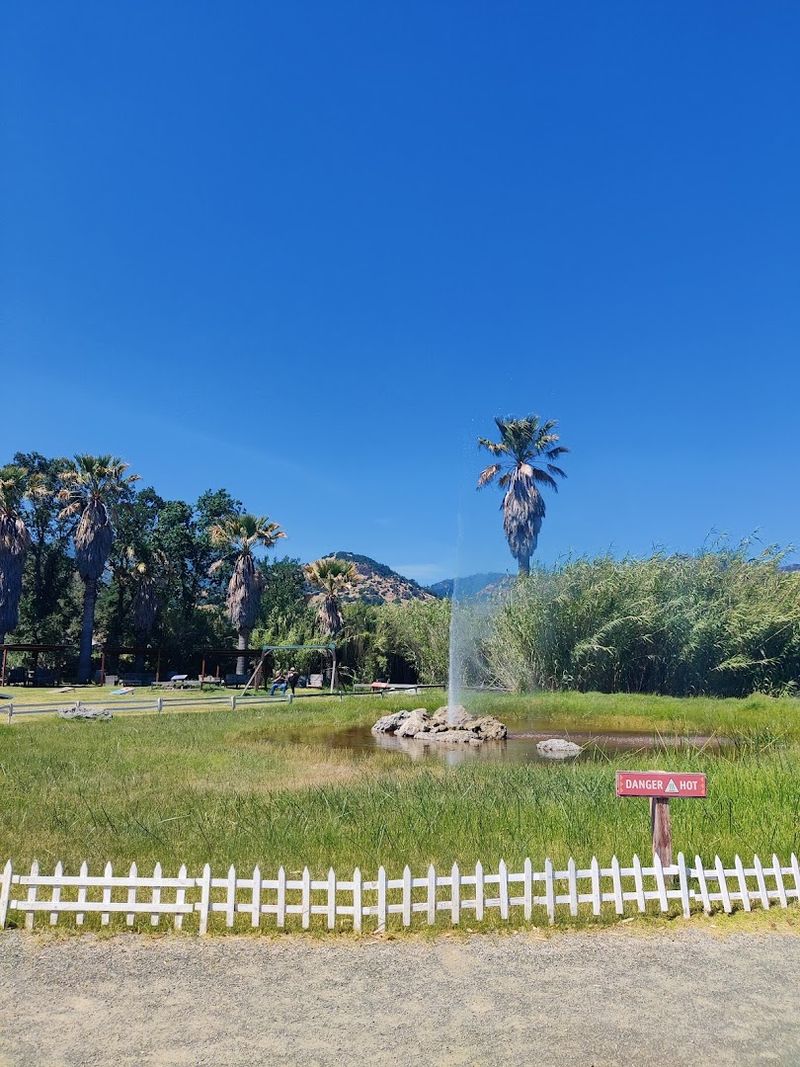
Few natural spectacles offer as reliable a photography opportunity as a geyser that erupts on a predictable schedule.
At the Old Faithful Geyser of California, visitors have the advantage of knowing roughly when the next eruption will happen, giving plenty of time to find the right angle and get the camera ready.
The column of boiling water and steam against a clear Napa Valley sky makes for a striking image that is hard to replicate anywhere else in the state.
On sunny days, the mist produced during an eruption can catch the light at just the right angle to form a rainbow in the spray.
That phenomenon has made the geyser one of the more photographed natural attractions in California, drawing photographers who plan their visits around morning light when conditions are most favorable for rainbow formation.
The effect lasts only briefly but tends to appear reliably during strong eruptions in direct sunlight.
Visitors with smartphones can capture impressive shots from the viewing benches without any specialized equipment.
Those with longer lenses can capture the full height of the water column from slightly further back.
Early morning visits on clear days tend to offer the best light quality and the highest chance of seeing the rainbow effect, making timing a worthwhile consideration when planning the trip.
How The Geyser Compares To Yellowstone’s Old Faithful
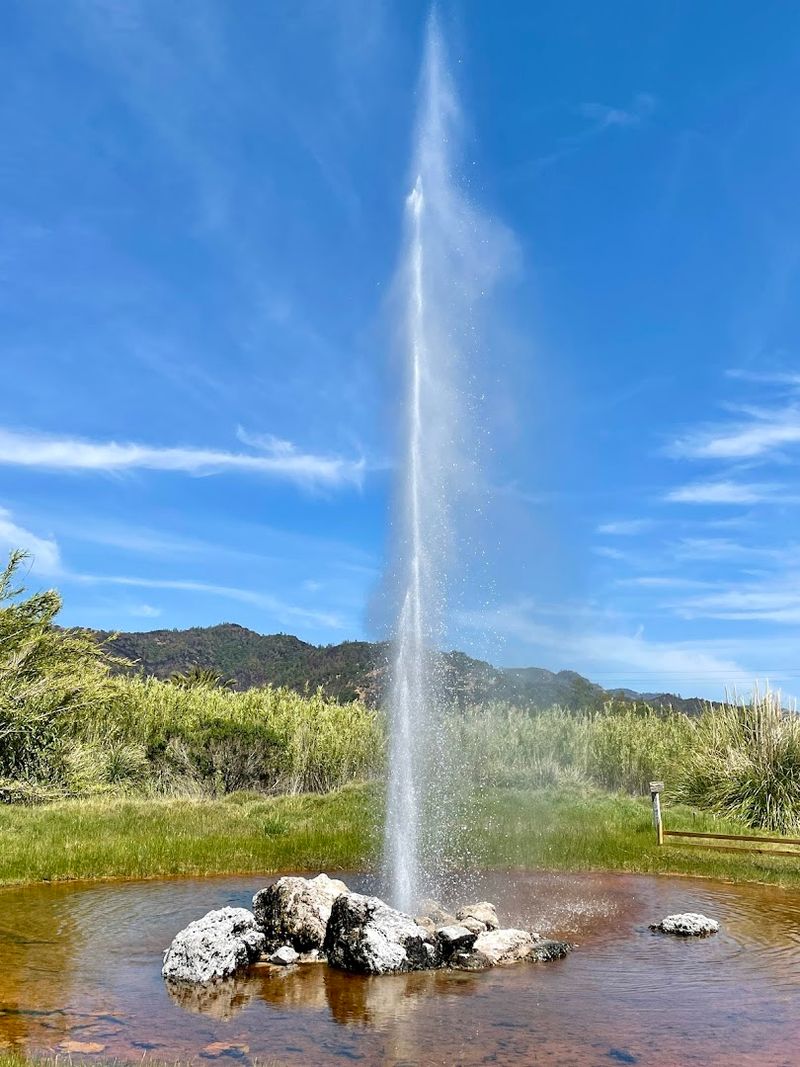
Yellowstone’s Old Faithful is arguably the most famous geyser in the world, drawing millions of visitors each year to Wyoming’s volcanic plateau.
The California counterpart in Calistoga carries the same name for the same reason, which is its remarkably consistent eruption schedule, a trait shared by only three geysers on the planet.
Comparing the two offers a useful way to appreciate what makes each one geologically significant in its own right.
Yellowstone’s Old Faithful erupts roughly every 60 to 110 minutes and shoots water as high as 185 feet, making it a larger and more dramatic spectacle in terms of raw scale.
The California version erupts more frequently, roughly every 30 to 40 minutes, though its water column reaches a more modest height of 30 to 80 feet.
The shorter wait time between eruptions is something many visitors actually prefer, especially those traveling with children. The setting also differs considerably between the two.
Yellowstone surrounds its geyser with an expansive thermal basin and thousands of acres of wilderness, while Calistoga offers a more intimate and accessible experience within a compact private property.
Both are worth visiting for different reasons, and the California geyser tends to surprise visitors who arrive expecting something less impressive than what they actually find.
Planning A Visit To Calistoga And The Geyser
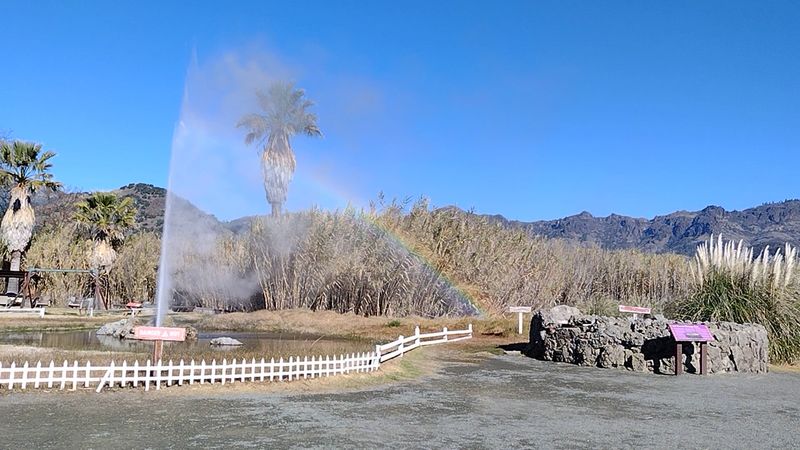
Calistoga sits at the northern tip of Napa Valley, roughly 75 miles north of San Francisco, making it a manageable day trip from the Bay Area or a natural stop along a longer Northern California road trip.
The town itself has a relaxed, small-town atmosphere that feels noticeably different from the more polished southern end of the valley.
Spending a few hours at the geyser and then exploring Calistoga’s main street gives the visit a well-rounded shape.
The geyser property is located at 1299 Tubbs Lane, Calistoga, CA 94515, and is reachable via California State Routes 29 and 128.
Parking is available on site and is generally easy to manage even on busier weekend days.
The site tends to be most crowded on summer weekends, so a weekday visit in late spring or early fall may offer a more comfortable and uncrowded experience.
Bringing layers is a practical choice since the steam from the geyser can make the immediate viewing area feel cooler than the surrounding grounds.
Comfortable walking shoes are recommended because the property involves some uneven terrain around the geyser and petting zoo areas.
Checking current hours and admission prices on the official website before arriving ensures the visit goes smoothly without any unexpected changes to the schedule.