This South Carolina Island Looks Like A Caribbean Escape Without Leaving The State
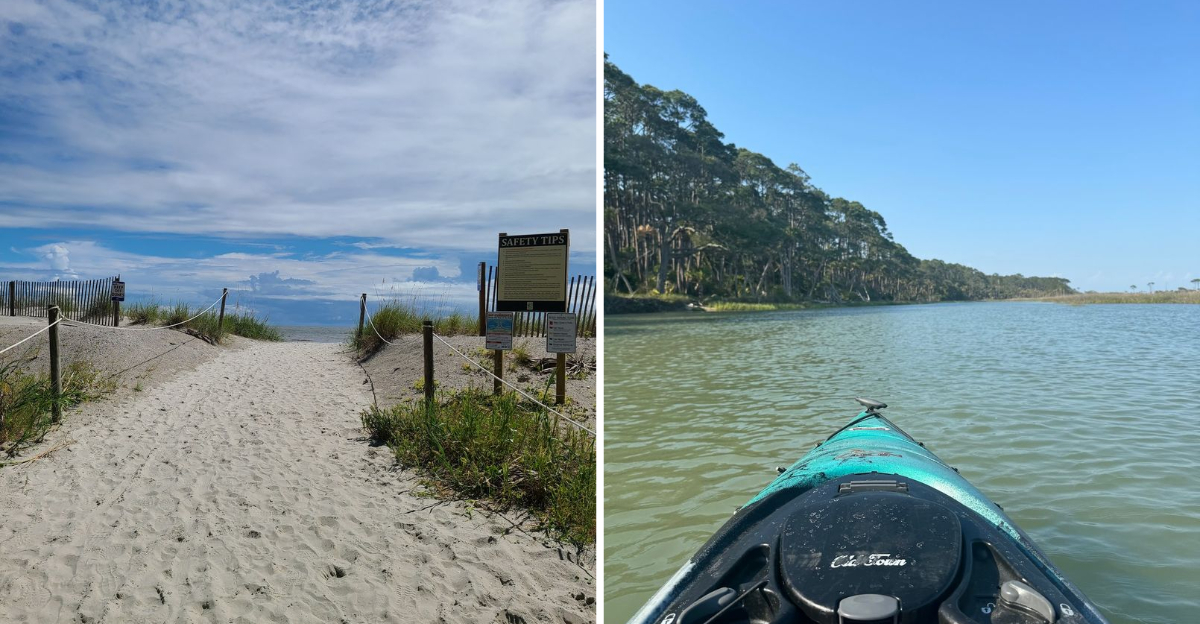
I would believe you if you told me these photos came from somewhere much farther south. That is what makes this island so fun.
South Carolina gets surprisingly tropical here, with palmettos, broad beaches, lagoons, wildlife, and warm coastal scenery all packed into one escape.
The beach can easily fill the day, but there is plenty beyond the towel. A lighthouse, trails, fishing spots, and wildlife areas give curious visitors more reasons to keep moving. Or not.
I could just as easily spend half the afternoon near the water and call that a successful trip.
This is one of those places where doing less still feels like seeing plenty.
A Semi-Tropical Barrier Island Awakens
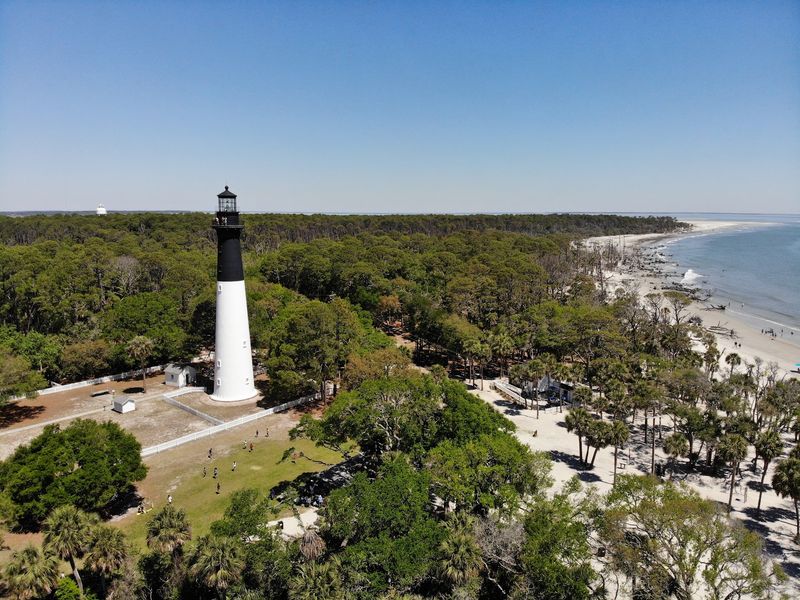
My first impression came before I even parked. The entrance road tunnels through thick green growth, and it honestly feels prehistoric.
Hunting Island State Park spreads across roughly 5,000 acres of semi-tropical barrier island. Five miles of beach meet the Atlantic Ocean on one side. Wide salt marshes ripple on the other, catching the coastal breeze.
Beach, salt marsh, maritime forest, a saltwater lagoon, and ocean inlet all share this barrier island, which explains the constant change in scenery.
One minute I walked beneath towering pines. Ten minutes later I stood on open sand with nothing but water ahead.
More than a million visitors come each year, making Hunting Island South Carolina’s most-visited state park. Even so, the sand never felt crowded during my morning walk. People spread out naturally along that long shoreline.
What surprised me most was the shifting coast. Erosion reshapes the beach constantly, so the view changes season by season. Two trips here will never look exactly alike.
Set your GPS for 2555 Sea Island Pkwy, St Helena Island, and prepare to feel pleasantly far from ordinary life.
Hunting Grounds Turned Public Treasure
Names usually carry stories, and this one does too. Long ago the area was counted among a group called the Hunting Islands.
Before becoming a state park, Hunting Island was part of a Lowcountry landscape long used for hunting and other coastal activities.
Deer roamed freely, and few outsiders ever set foot here. That exclusive past explains why the forest stayed so undeveloped.
Everything shifted during the Great Depression. The Civilian Conservation Corps arrived and built much of the early infrastructure. Thousands of men found steady work, and the island slowly opened to the public.
CCC crews helped develop Hunting Island State Park in the 1930s, building infrastructure that made the area more accessible to visitors. Suddenly families could reach the sand without a boat. That single connection changed the island’s future entirely.
I kept thinking about that as I walked the shaded roads. Paths I strolled casually were shaped by hard labor nearly a century ago.
Today it is South Carolina’s most-visited state park, drawing more than a million visitors a year. The wild character survived because protection came early enough to matter.
Hunting Island State Park now belongs to everyone, not just a handful of landowners.
Climbing 167 Steps Skyward
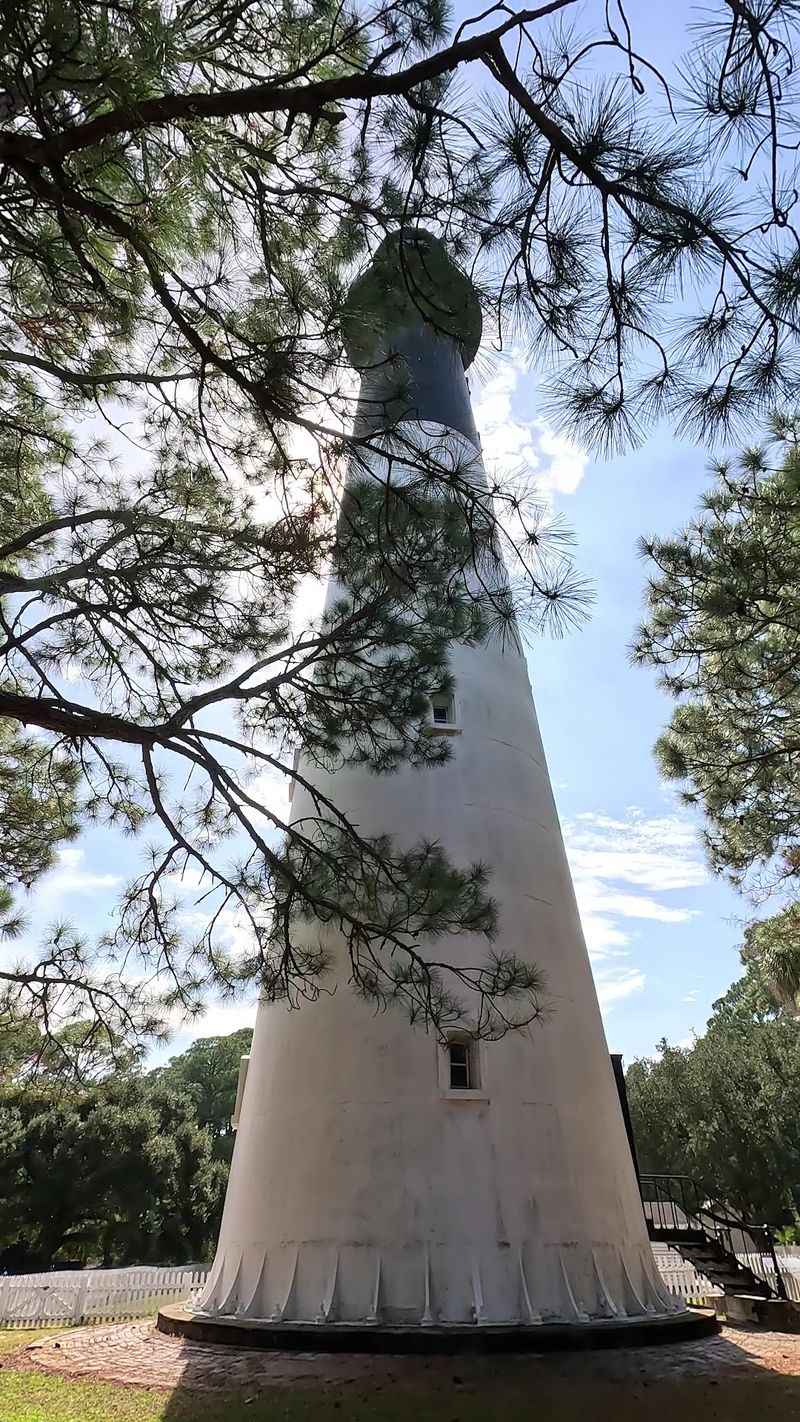
Legs burning, lungs working, view worth every single step. That sums up my climb up the island’s most famous landmark.
The historic lighthouse is the only publicly accessible lighthouse in South Carolina, and visitors can climb its 167 steps. Its 167 steps rise in sections, with generous landings every 20 to 30 steps. Those pauses gave me time to catch my breath and cool down.
At the top, the observation deck reveals the whole picture. The Atlantic stretches endlessly east, while marsh channels wind silver through green grass westward. Cameras come out immediately, and nobody rushes back down.
The structure’s backstory impressed me nearly as much. First built in 1859, it was destroyed during the Civil War by Confederate forces. Rebuilding came in 1875 with interchangeable cast-iron sections designed to be taken apart.
That clever engineering saved it. When erosion threatened the tower, crews moved the entire lighthouse 1.3 miles inland in 1889.
Although the lighthouse no longer serves its original navigational role, it remains one of the park’s defining historic landmarks. Watching that beam from the beach felt oddly comforting.
Boneyard Beach At Sunrise
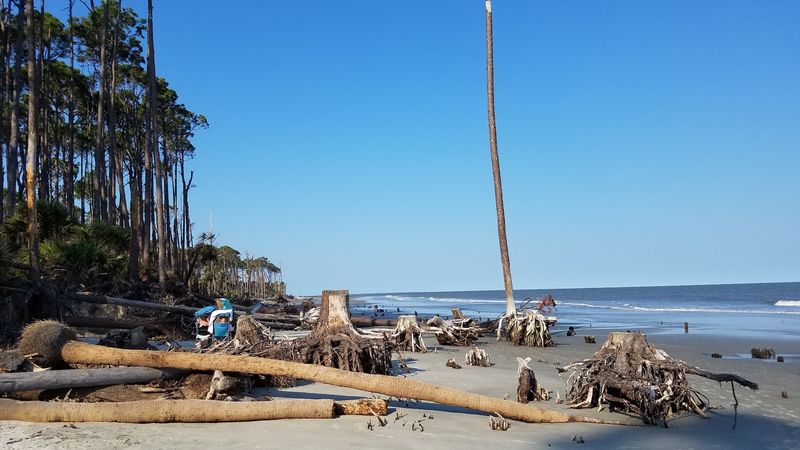
Photographers set alarms for 4 a.m. because of this place, and I finally understand why. The Boneyard Beach area near Little Hunting Island is one of the park’s most dramatic stretches of shoreline.
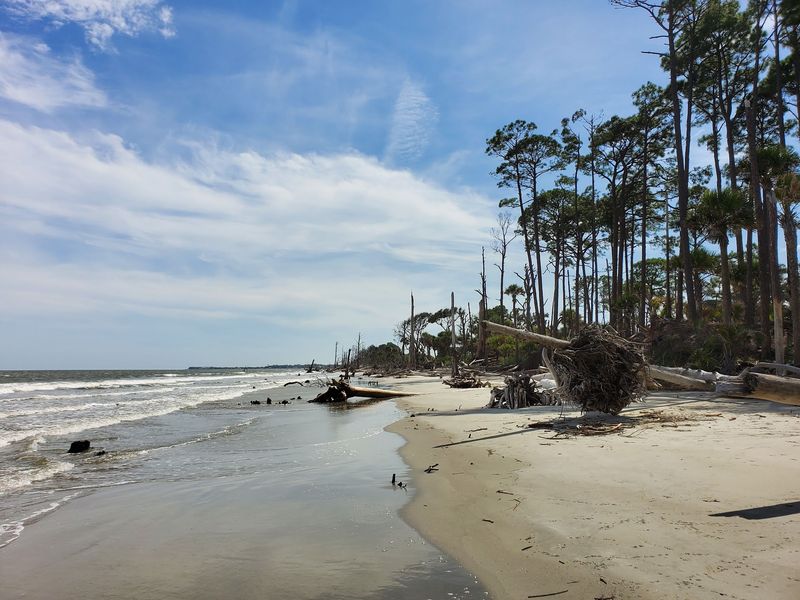
Erosion has eaten into the forest edge over decades. Fallen pines and palmettos now lie across the sand with roots reaching skyward, bleached pale by salt and sun.
At sunrise the light turns those trunks gold, and wet sand mirrors everything. I walked south from the main beach lot and had long stretches entirely to myself.
Timing matters more here than anywhere else in the park. Check the tide forecast before setting out, because rising water can shrink your walking route quickly. I turned back sooner than I wanted and still barely kept dry feet.
The Nature Center Scenic Trail provides access toward Little Hunting Island, where visitors can continue exploring Boneyard Beach. Either approach requires real walking, so wear proper shoes and carry water.
Early mornings generally bring cooler temperatures and fewer visitors. Gates open at 6 a.m., which gives sunrise chasers a perfect window. No souvenir stands, no umbrellas, just driftwood sculptures shaped by weather.
Under The Maritime Forest Canopy
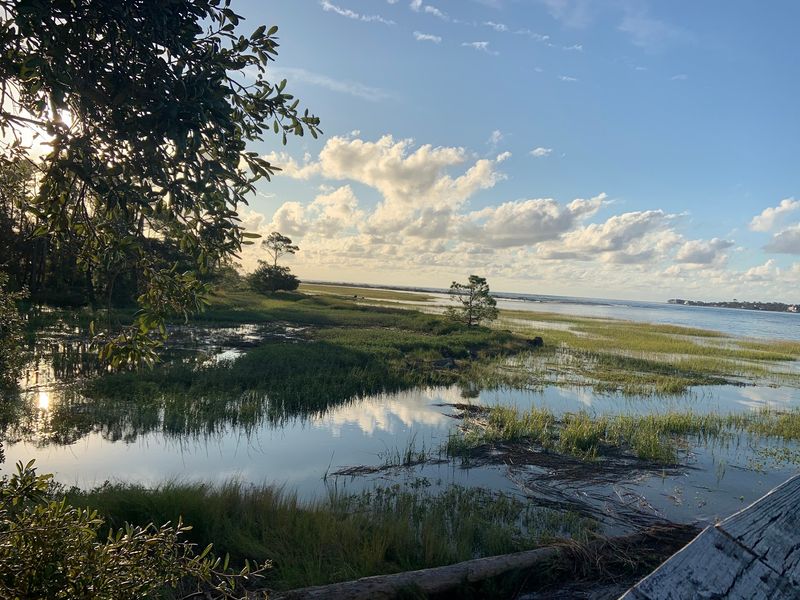
Jungle vibes on the drive in are not an exaggeration. Visitors mention it constantly, and the reason becomes clear immediately.
The park’s upland areas contain one of South Carolina’s best examples of semi-tropical maritime forest. Ancient sand dunes now support slash pines, live oaks, and cabbage palmettos, South Carolina’s state tree.
Shade drops the temperature noticeably, which I appreciated on a humid afternoon. Filtered light spills through the canopy and dapples the forest floor.
Wooden boardwalks thread through these dense groves, connecting shaded trails to open sand. Crossing one felt like moving between two completely separate worlds in under a minute.
Some lesser-known paths branch off the main routes. Those quieter trails rewarded me with birdsong, fiddler crabs, and zero foot traffic.
Photographers should bring a lens that handles low light. Morning fog through the palmettos creates images that look almost unreal.
Bug spray belongs in your bag, especially in warmer months near the forest edges. Long sleeves helped me more than I expected on the inland trails. Roots cross the paths in places, so watch your footing while gawking upward.
Turtles, Gators And Painted Buntings
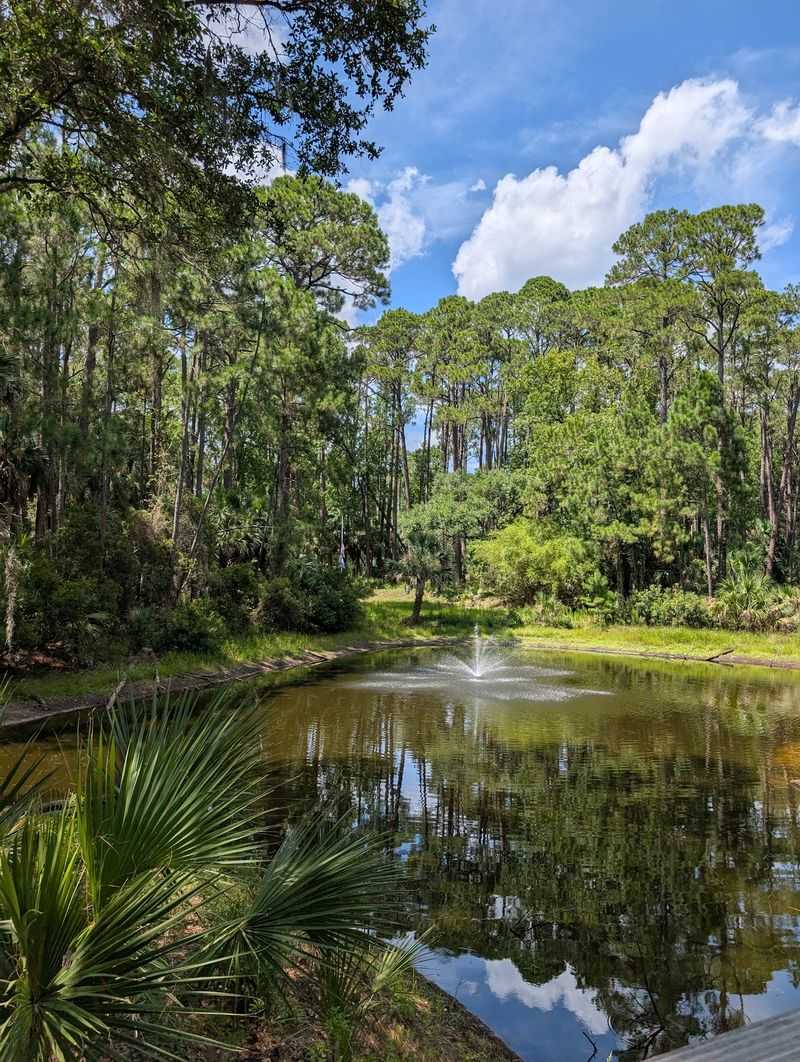
Wildlife here does not wait politely for your attention. A white-tailed deer stepped onto the road within ten minutes of my arrival.
Loggerhead sea turtles nest on Hunting Island during the warmer months, with nesting and hatching activity concentrated through summer.
Rangers mark nests carefully, and visitors are asked to stay clear and keep lights off after dark. Hatchlings navigate by natural light, so a stray flashlight can send them the wrong way.
Inland ponds hold American alligators, often half-hidden under a green blanket of duckweed. I spotted one from a safe distance and kept moving, which is exactly what rangers recommend.
Hunting Island even has a named white-tailed deer subspecies associated with the island. Bird lovers do well too, with hundreds of species recorded. Great blue herons, egrets, pelicans, and brilliantly colored painted buntings all make appearances.
The saltwater lagoon, formed by sand dredging, holds a few surprises of its own. Seahorses and barracuda have both turned up in those waters.
Raccoons are bold and clever, especially around campsites. Store food securely and put trash in designated bins.
Trails, Pier And Paddling Fun
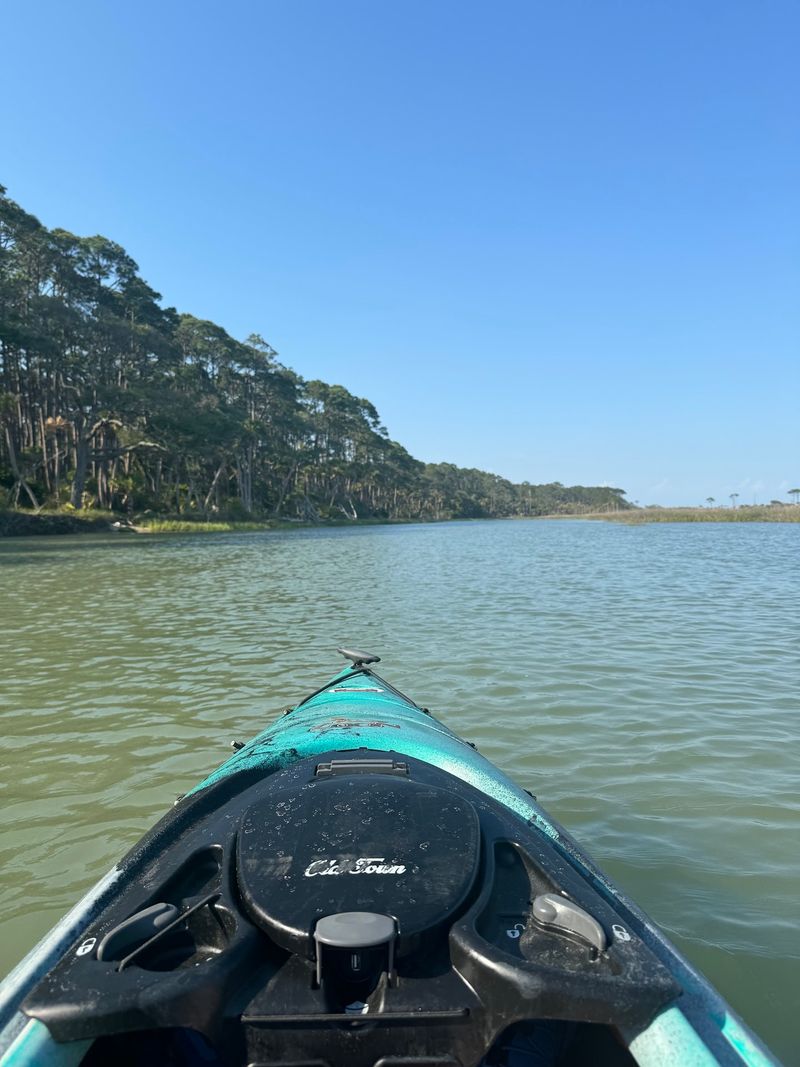
Restless travelers will not run out of options here. My day filled up faster than planned.
A network of hiking and biking trails crosses the island, including routes through maritime forest and along the lagoon. Flat terrain makes it manageable for most fitness levels, though sandy patches slow narrow tires.
Shorter routes suit slower mornings. The Marsh Boardwalk Trail extends about a quarter mile through the salt marsh and ends at a dock suited to wildlife watching and sunset views.
Anglers get real variety. Lines drop from the beach, the lagoon, or the 950-foot fishing pier reaching into Fripp Inlet.
Forgot your gear? The Nature Center runs a tackle loaner program, which removes every excuse for skipping a cast.
Paddling is allowed in the park’s waterways, and a public boat ramp at the south end provides access to Harbor River and Fripp Inlet.
Shell collectors and shark tooth hunters comb the sand endlessly. I found two small teeth by walking slowly along the tide line and watching for dark triangles.
Nature Center Hands-On Discoveries
Rainy hour? Curious kids? The renovated Nature Center saved my afternoon.
The Nature Center features live reptiles, including turtles, snakes, and juvenile American alligators used in educational programs. Seeing a gator’s scales that clearly changed how I understood the ponds outside.
Interpretive rangers run hands-on activities and answer questions with real enthusiasm. Staff throughout the park seemed happy to talk about anything from tides to bird identification.
Gullah artwork decorates the walls, grounding the building in Lowcountry culture. That detail gave the space a strong sense of place rather than generic displays.
Scheduled programs rotate through the year. Walk with a Naturalist hikes, Serpent Exploration sessions, and Gator Gab talks all offer different angles on island life.
The Visitor Center handles practical needs, stocking maps and current information. Murals there illustrate each ecosystem found across the island, which helped me plan where to explore next.
A gift shop near the lighthouse carries merchandise for anyone wanting a keepsake. New items appear regularly, so repeat visitors keep browsing.
Programs suit mixed-age groups nicely, so grandparents and grandkids can share the same activity.