This Stunning California Lake Town Might Be The Most Beautiful In The Eastern Sierra
Some mountain towns impress you slowly. This one hits almost immediately.
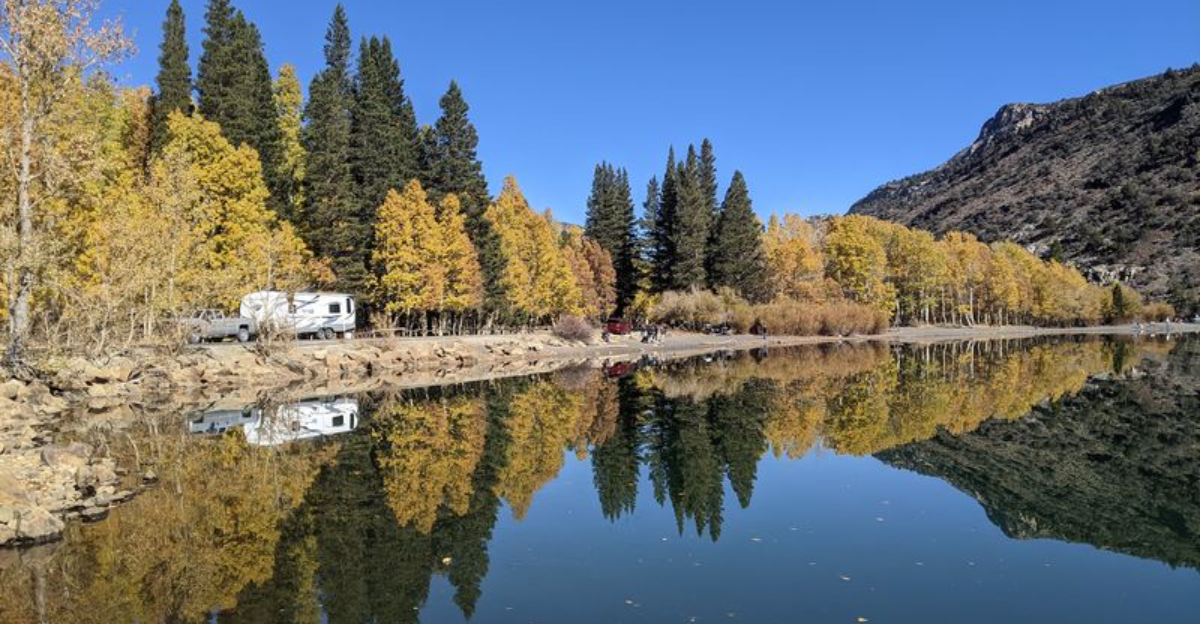
Blue water flashes between the pines, steep Sierra peaks rise behind it, and suddenly every direction looks like somebody composed it for a calendar.
The town itself stays small enough that the scenery never has to fight for attention.
Few places in California make a simple lake stop feel this cinematic.
Give yourself room to wander without turning the day into a checklist. Follow the shoreline. Pull over when the view opens up.
Grab something warm in town if the air turns cool, then head back outside before the light changes.
The real question is not whether the setting is beautiful. It is how long you can stay before the rest of your Eastern Sierra plans start feeling less important. June Lake has that effect.
The View From Oh Ridge Makes A Serious First Impression
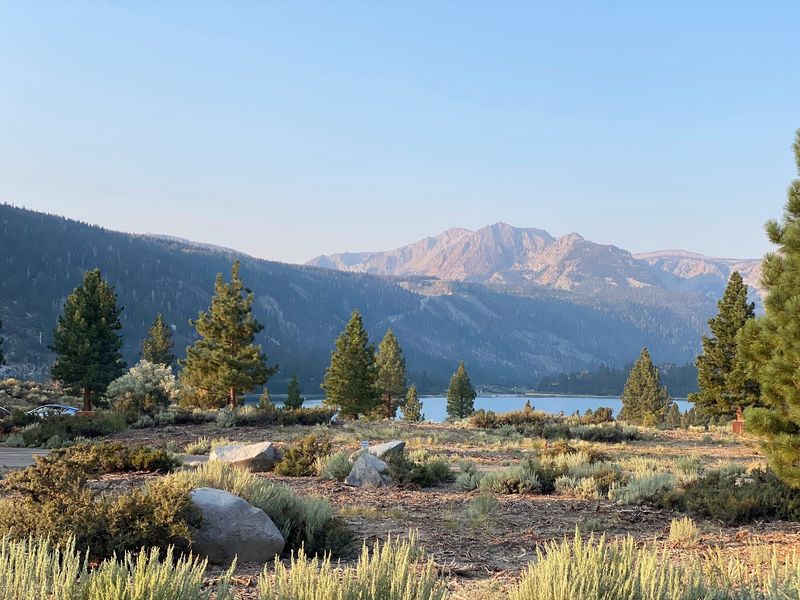
Few first views in the Eastern Sierra land as hard as the one from Oh Ridge.
The overlook sits above the eastern side of the lake and delivers a wide look at intensely blue water pressed against jagged Sierra peaks.
Mono County describes the vantage point as exceptionally photogenic, and pictures taken here have shown up in calendars and car commercials over the years.
Part of what makes the scene work is elevation.
Standing above the shoreline lets the whole glacially carved canyon spread out at once, so the water, the beach, and the mountain wall all read as a single composition instead of separate pieces.
Morning light tends to be softer and the air calmer, which helps if photos are the goal. Afternoon wind is common at this altitude, and the surface of the water can turn choppy enough to lose those mirror reflections.
Getting there is simple since Oh Ridge also serves as a main access point to the lake’s eastern edge. Wear layers, because even in July the breeze up on the ridge can feel cooler than expected.
Give the stop more than five minutes. Sitting still for a while lets the scale of the canyon actually sink in, and that slower pace is a big part of the appeal here.
Yes, There Is Actually A Sandy Beach Up Here
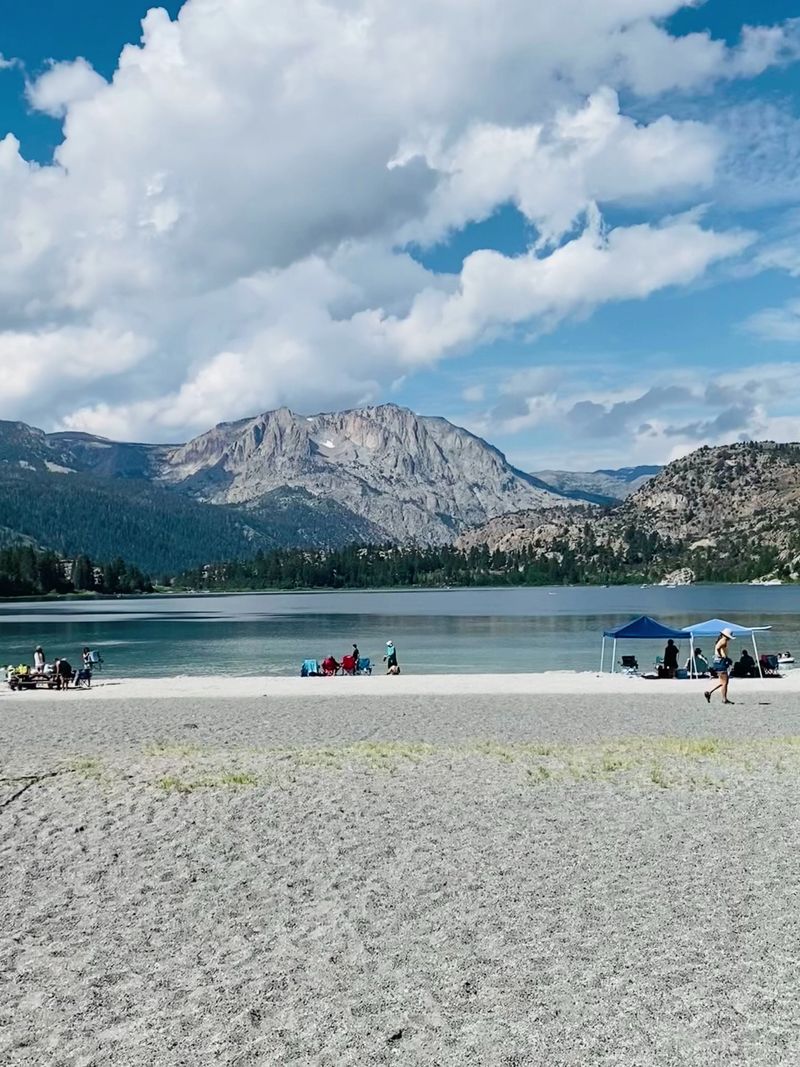
A soft-sand beach at roughly 7,600 feet sounds like a stretch until the shoreline comes into view.
Along the eastern shore sits a designated swimming area backed by real sand, with turquoise water and mountain views filling the background.
Mountain beaches are rare in this part of California, which is exactly why the spot surprises so many first-time visitors.
The water comes from snowmelt, so temperatures stay chilly even in midsummer, often in the low 60s Fahrenheit. Swimmers still get in, though most people ease in slowly rather than sprinting through the shallows.
Accessibility is better here than at many mountain lakes. A wheelchair-friendly mat pathway runs toward the water, and accessible vault toilet bathrooms are available near the beach area.
A day-use parking fee is typically required, and the lot fills quickly on summer weekends. Arriving before mid-morning makes a noticeable difference, especially on holidays.
Sand plus altitude means sun exposure adds up fast, so shade and sunscreen matter more than they would at sea level. A folding chair, a hat, and extra water go a long way.
Weekdays tend to feel calmer, with quieter stretches of shoreline and more room to spread out a towel without shuffling around other groups.
One Little Mountain Town Comes With Four Lakes
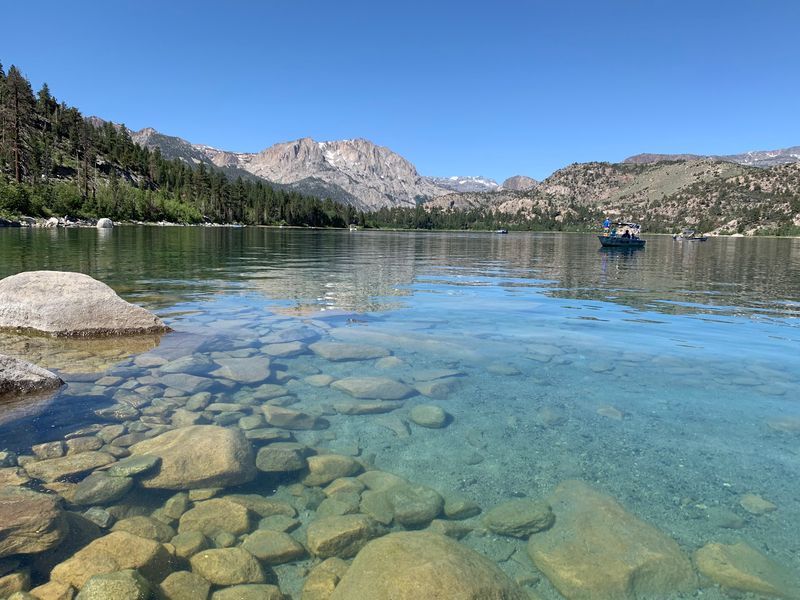
Most mountain towns build their reputation on a single body of water, but here the count is four.
The recreational corridor links June Lake, Gull Lake, Silver Lake, and Grant Lake, all of them glacially formed and tucked into the same dramatic canyon.
Each one carries a slightly different personality, which keeps a multi-day visit from feeling repetitive.
Gull Lake is the smallest of the group and sits closest to the village, making it an easy walk-up option for a quiet afternoon.
Silver Lake stretches beneath steep rock walls and aspen stands that put on a serious show in autumn.
Grant Lake anchors the northern end and feels more open and windswept than the others, with fewer trees crowding the shoreline.
June Lake itself holds the beach, the marina traffic, and most of the summer energy.
Because everything sits within a few miles, a single day can include time at more than one lake without long drives between stops.
Pacing works better than rushing. Picking two lakes in a day, rather than all four, leaves room to actually sit down, eat lunch, and watch the light change on the water.
Bring a paper map or download directions ahead of time, since cell service in the canyon can be spotty.
The Entire June Lake Loop Is Only About 15 Miles
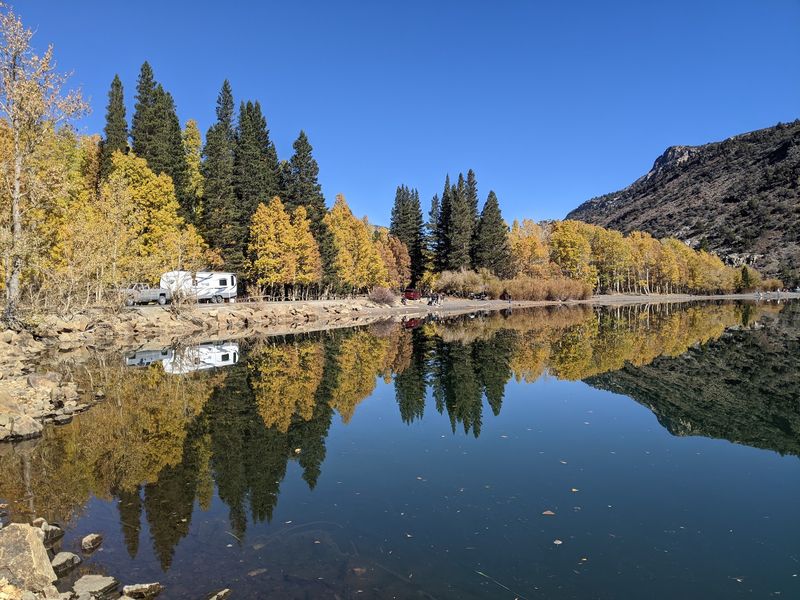
Fifteen miles does not sound like much of a road trip, and yet this stretch packs in more scenery than routes ten times longer.
Highway 158 forms the June Lake Loop, a drive of roughly 14 to 16 miles that curls through a horseshoe-shaped canyon carved by ancient glaciers.
The road connects all four lakes, the village, and a steady run of mountain views before rejoining Highway 395.
Driving it end to end without stopping takes well under an hour. Almost nobody does that, because pullouts and shoreline access points keep interrupting the plan in the best way.
The compact length makes the loop friendly for travelers short on time. A morning stop on the way to Yosemite’s eastern gate or Mammoth is realistic without wrecking a schedule.
Road conditions change with the seasons, and portions of the loop may close during heavy winter storms. Checking current conditions before setting out is a smart habit in this region.
Turnouts are the key to enjoying the drive safely, since the two-lane road has curves and limited shoulders in places.
Driving the loop in both directions reveals different angles, and the canyon genuinely looks unfamiliar depending on which way the car is pointed.
The Village Is Small Enough To Still Feel Like A Mountain Escape
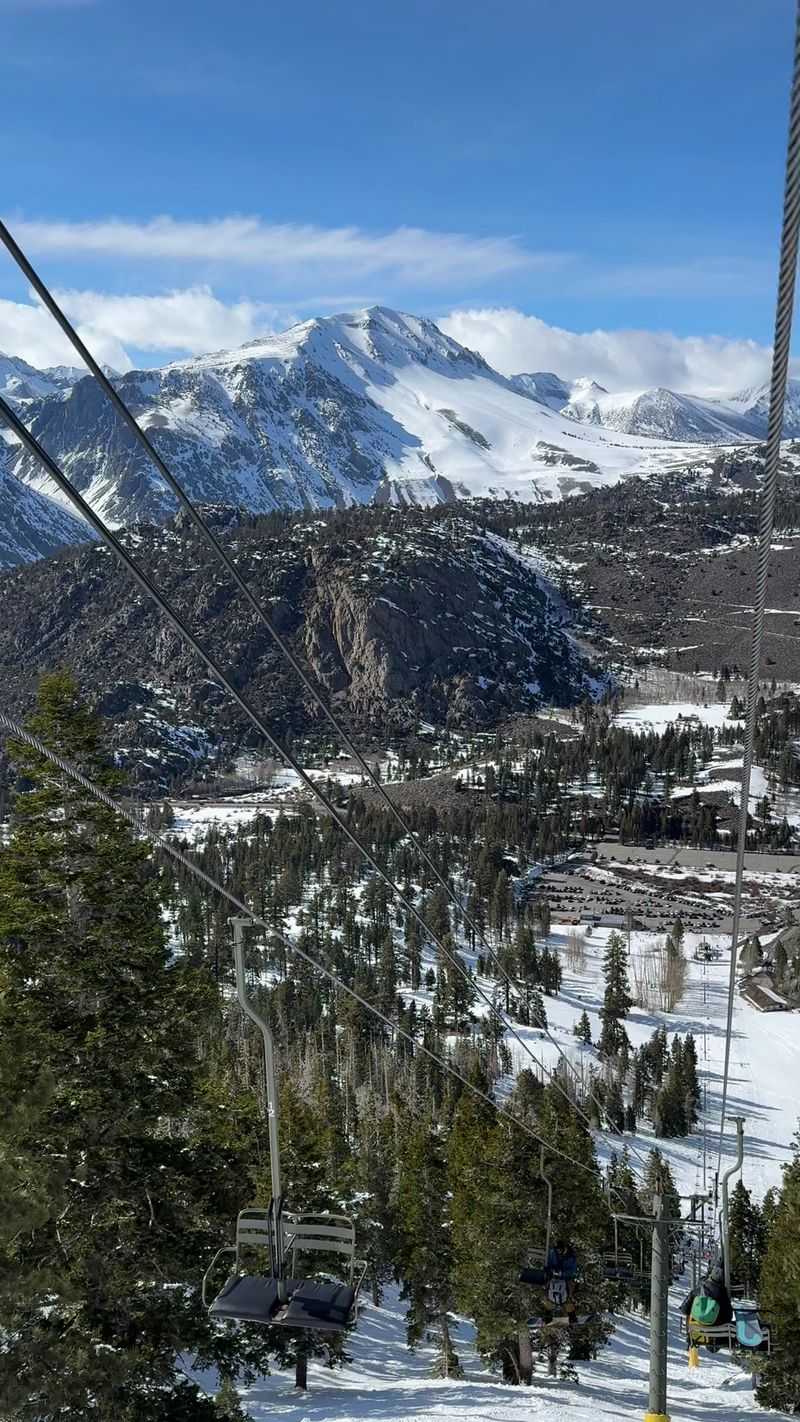
Small towns can feel like waiting rooms for the real attraction, but that is not the situation in this canyon.
Mono County describes June Lake as an intimate lakeside mountain village, and the description fits.
The community sits on the west side of the lake and functions as both a home base and a destination worth slowing down for.
Walking is realistic here. The commercial stretch is compact enough that parking once and covering the area on foot makes more sense than moving the car repeatedly.
The scale keeps things quiet. There are no sprawling resort complexes or long strips of chain development competing with the mountain backdrop, which helps the place hold onto its character.
Businesses are locally run and hours can shift with the seasons, particularly during shoulder periods in spring and late fall. Calling ahead is worth the effort if a specific stop matters.
Weekends and holiday periods bring noticeably more foot traffic, while midweek visits often feel almost sleepy.
Altitude deserves respect in the village too. Sitting at roughly 7,600 feet, the air is thinner than most visitors are used to, and taking the first afternoon easy helps prevent headaches or fatigue later in the trip.
The Water Is Made For More Than Looking At
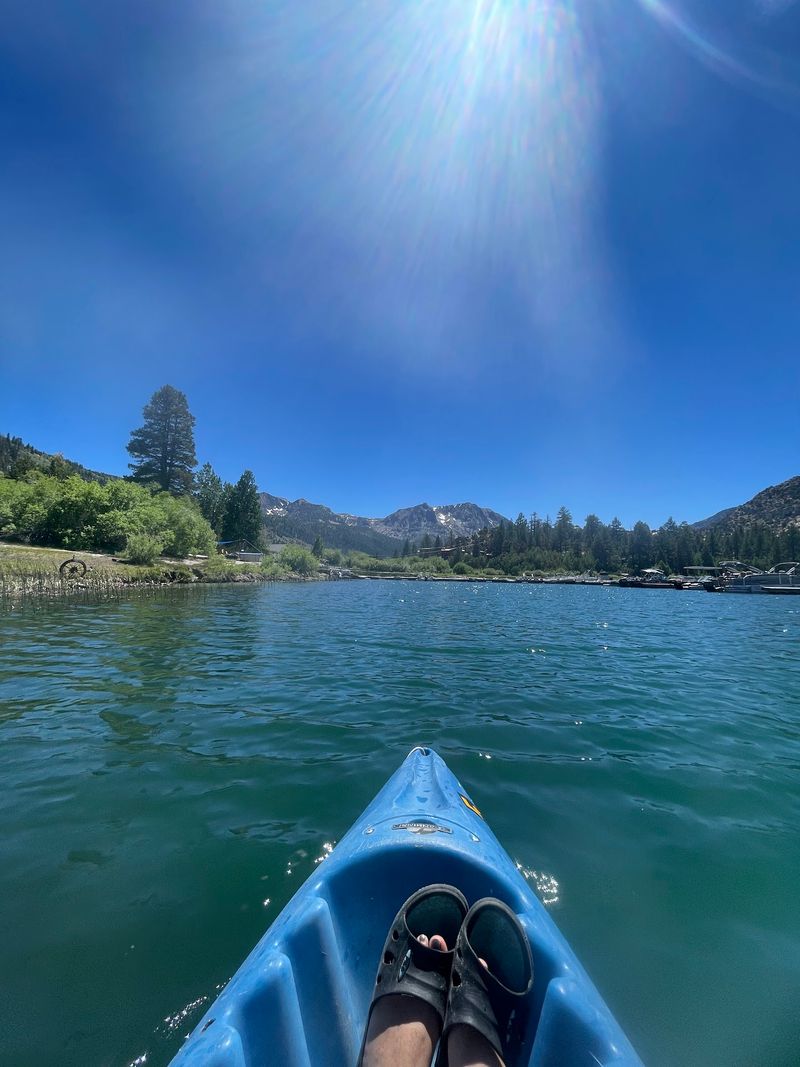
Staring at the water eventually gets old, and around here it is easy to trade the shoreline for a seat on the surface.
Kayaking, canoeing, sailing, swimming, and boating are all popular on June Lake. Marinas on both June Lake and Gull Lake provide rentals and access points, which lowers the barrier for anyone who did not arrive towing a boat.
Mornings are usually the calmest window. Afternoon winds pick up in this canyon with real consistency, and paddlers who launch late sometimes work harder than planned on the way back.
A life jacket is non-negotiable given how cold snowmelt water stays through the summer. Cold shock is a genuine risk even on a warm afternoon.
Paddling changes the perspective completely. From the middle of the lake, the surrounding peaks feel taller and the shoreline noise fades to almost nothing.
Rental availability varies by season and demand, so weekend visitors benefit from arriving early or checking ahead.
Sun reflecting off the surface intensifies at altitude, meaning sunglasses, sunscreen, and a brimmed hat are practical rather than optional.
Bringing a dry bag for a phone and snacks keeps a two-hour paddle comfortable instead of stressful.
Trout Fishing Is A Big Deal Around The Loop
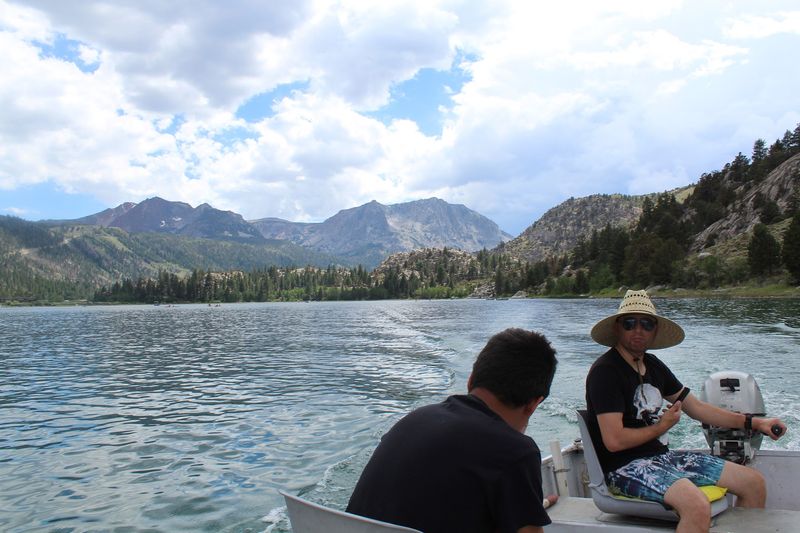
Ask around the Eastern Sierra about trout and the conversation lands on this loop pretty quickly.
All four lakes offer trout fishing, and June Lake in particular has a reputation for trolling and for producing consistent results. Anglers here may pursue rainbow, brown, brook, and cutthroat trout.
Catching all four species in a single day earns what locals call a Sierra Grand Slam, and this stretch of water is considered one of the better places in the state to attempt it.
Early mornings and evenings usually bring the most productive conditions, partly because the water is calmer and partly because the light is lower.
A valid California fishing license is required, and regulations can differ by water body and season. Checking current rules before casting saves trouble later.
Boat rentals from the marinas make trolling accessible for visitors without their own gear, though shoreline fishing works too, especially near inlets and drop-offs.
Opening weekend of the general season brings a noticeable crowd to the loop, with parking and lodging both tighter than usual.
Patience matters more than fancy equipment in these lakes. Plenty of anglers do well with simple setups, a thermos, and a willingness to sit still while the sun comes over the ridge.
Parker Lake Gives Hikers Another Completely Different View
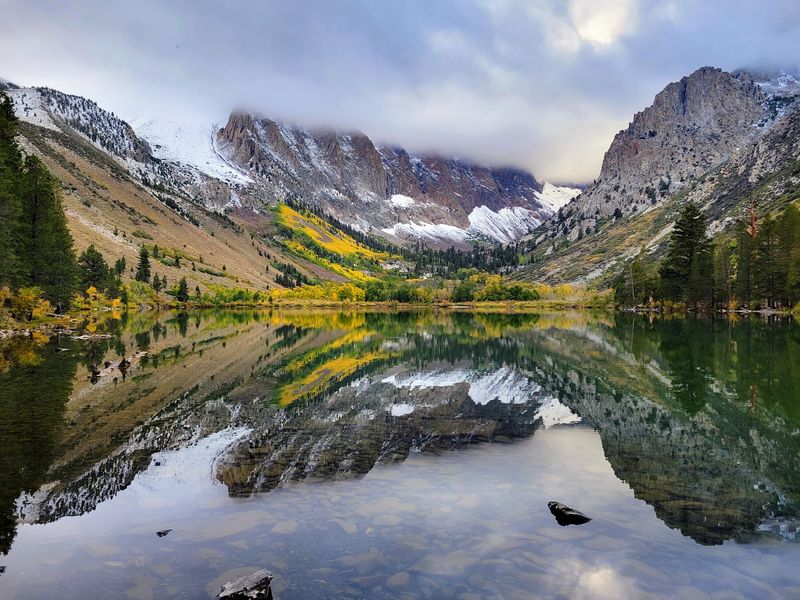
A short drive past the northern end of the loop opens up a trail that feels worlds away from the beach scene.
The Parker Lake Trail climbs toward a high-alpine lake tucked beneath the Sierra Crest, following an aspen-lined creek for much of the route.
Views back toward Mono Lake appear at certain points, adding a stark desert contrast to the green canyon ahead.
Distance runs roughly 3.6 to 3.8 miles out and back, with most of the elevation gain packed into the first mile. After that early push the grade mellows out considerably.
Trail traffic tends to be lighter than on more famous Eastern Sierra hikes, largely because the trailhead sits off the main loop and requires a short detour on a dirt access road.
Aspens along the creek turn brilliant in autumn, which makes September and October especially rewarding for this particular walk.
Altitude is the real difficulty factor rather than technical terrain. Starting slow, carrying more water than feels necessary, and taking breaks in the shade all help.
Afternoon thunderstorms build quickly over the Sierra in summer, so an early start is the safer plan. Sturdy shoes handle the loose, rocky sections better than sneakers.
Yost Creek Is The Hike For Readers Who Want More Of A Challenge
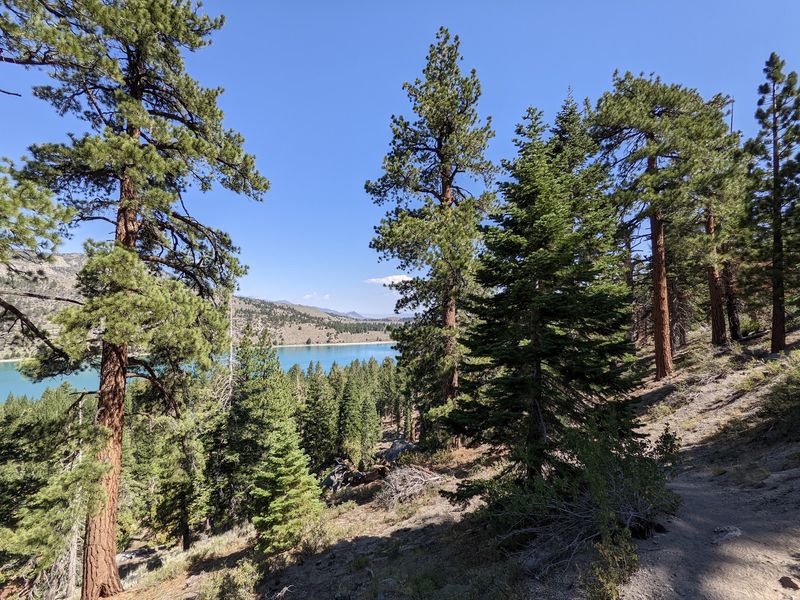
Hikers looking for burning calves rather than a stroll will find what they want on the Yost Creek route.
The trail ascends steeply above the June Lake Loop into higher mountain terrain, running roughly 3.8 miles each way to Yost Lake.
Demanding inclines show up early and keep coming, with the path alternating between shaded forest and exposed sun.
The trailhead is marked off Highway 158 near the Double Eagle Resort and Spa, located at 5587 Highway 158, June Lake, CA 93529. Parking near the trailhead is limited, so arriving early helps.
About 1.5 miles in, an optional branch leads toward Fern Lake for hikers who want a different destination or a longer day.
A creek crossing near the beginning requires caution, especially during May and June when snowmelt runs high and rocks stay slick.
Overnight permits are required for backpacking in the area, so day hikers and campers should plan accordingly.
Trekking poles earn their keep on the descent, and a headlamp is smart insurance if the return takes longer than expected.
The payoff is solitude. Yost Lake sits quietly in the trees, and the effort required to reach it keeps the crowds thin most days.