This Virginia Peaceful Mountain Town Is Filled With Historic Springs And Gorgeous Views
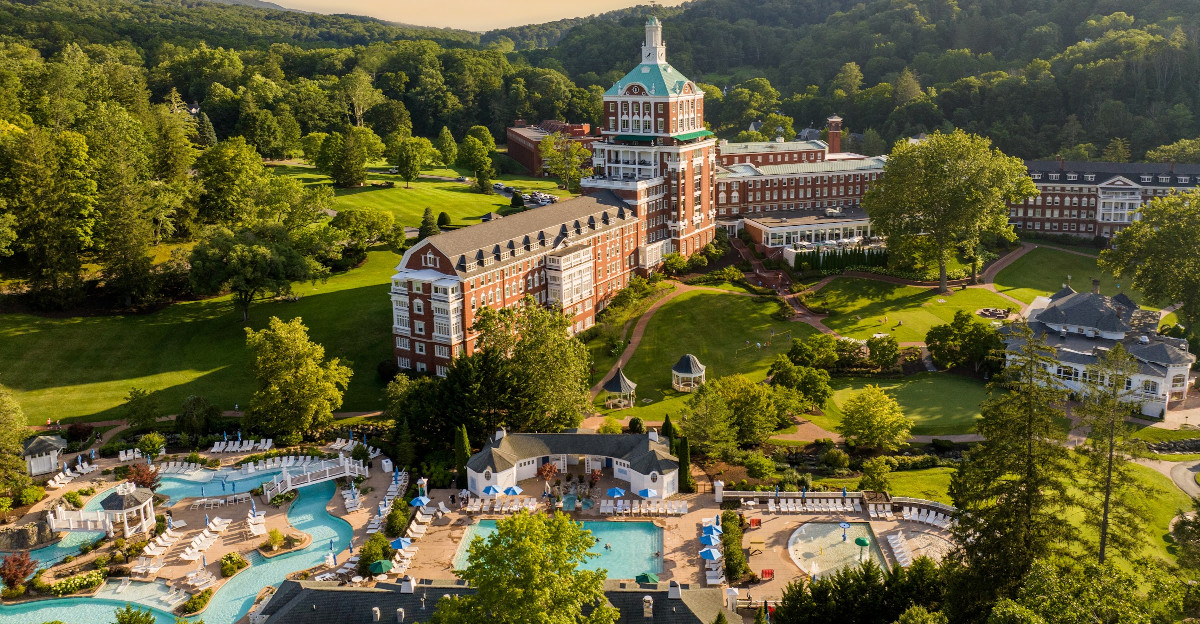
Warm mineral water, mountain air, and a resort with presidential bragging rights make this Virginia escape dangerously easy to romanticize.
A quick soak can turn into a weekend plan fast.
The springs have drawn visitors for centuries, and the resort has been welcoming guests since 1766. That history gives the place plenty of character without making it feel stuck in the past.
You can slow down, explore the grounds, and let the mountain setting do its work. No complicated itinerary is required.
The real temptation comes when an afternoon soak starts sounding like a very good reason to stay longer.
America’s First Resort Story
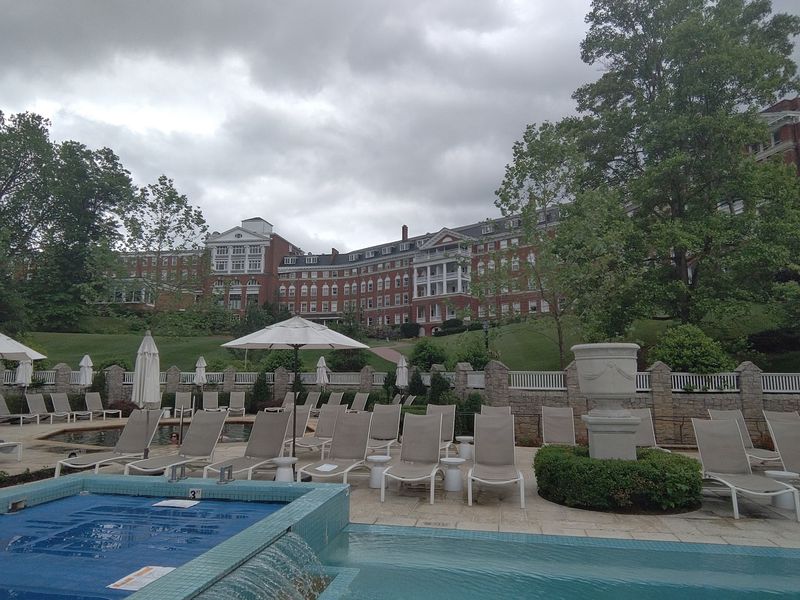
Long before modern mountain vacations took shape, travelers were coming here for the mineral springs.
The first Homestead inn opened in 1766, giving the property a resort tradition that reaches back more than 260 years.
The present hotel arrived much later. Major rebuilding began in 1902, followed by additional wings and public spaces through the early twentieth century.
That layered history eventually earned The Homestead National Historic Landmark status in 1991. The resort’s guest list has also included 24 U.S. presidents.
A daily history tour gives the dates and architecture more context. Old photographs and changing sections of the hotel make it easier to see how the property grew.
The resort completed a major property-wide renovation in 2023, refreshing all 483 guest rooms along with public spaces while retaining historic architectural details.
You can find the main resort at 7696 Sam Snead Hwy in Hot Springs.
Columns, Copper, And The Great Hall
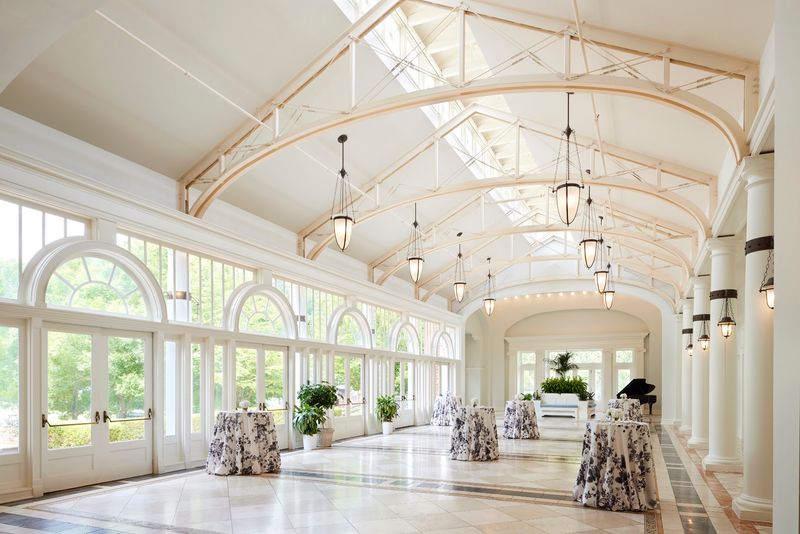
The Great Hall makes the scale clear immediately. Sixteen two-story Corinthian columns line the long interior, while coffered ceilings and tall windows give the room its formal rhythm.
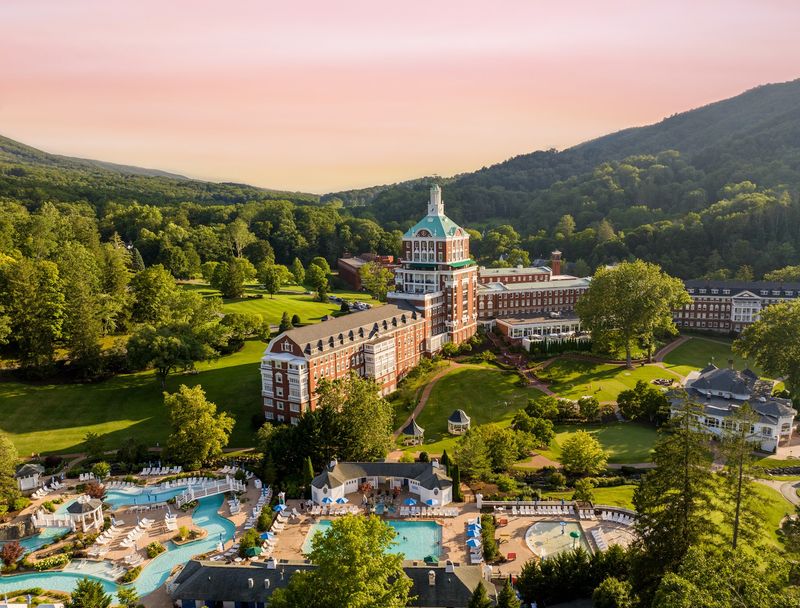
The central section of the hotel dates to 1902. Its architecture draws from Colonial Revival and Georgian Revival traditions, with symmetry, a hipped roof, a projecting central pavilion, and a large columned portico facing the lawn.
The East Wing followed in 1914. The most recognizable addition came in 1929, when the ten-story tower gave the resort the skyline profile seen in so many photographs.
That tower rises above a sprawling group of connected sections rather than one single-period building. The differences become easier to spot after spending time in the public rooms.
The 2023 renovation introduced new carpets, lighting, furnishings, and room finishes while keeping the historic character at the center of the design.
Guest rooms now use distinct palettes from wing to wing, while suites add more space and, in select layouts, sun porches, balconies, or separate living areas.
Even a rainy afternoon has plenty to work with here. The building itself can easily become part of the itinerary.
Soaking In Ancient Warm Waters
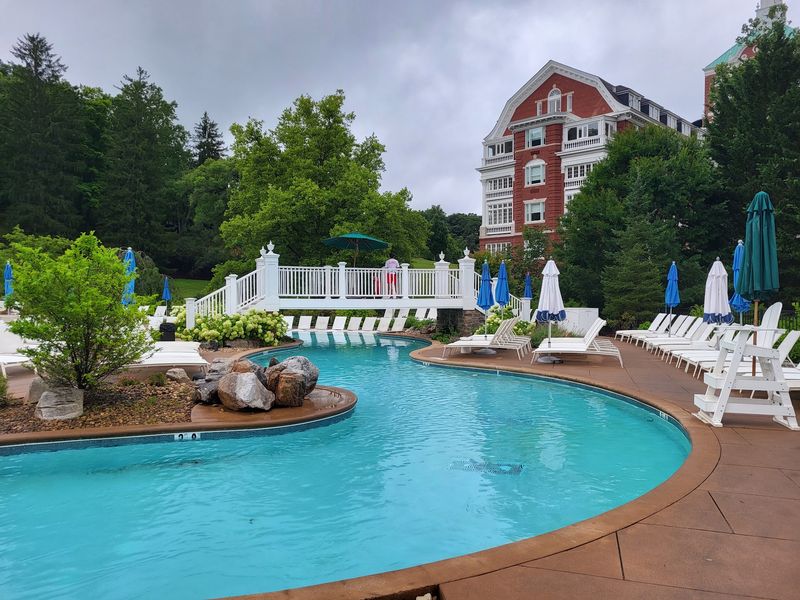
The Warm Springs Pools are the clearest reason the area’s name makes sense. They sit just over five miles from the resort and remain fed by naturally warm mineral water throughout the year.
The oldest feature is an octagonal stone basin dating to about 1761. The wooden structure above it came later, in the 1820s, while the Ladies’ Bathhouse dates to the mid-1870s.
Both bathhouses underwent a careful rehabilitation before reopening in 2022. Their wooden forms still surround open-air pools supplied by springs that stay around 98 to 99 degrees.
About 1.7 million gallons move through the springs each day, keeping the water constantly refreshed.
The groundwater spends at least about twenty years below the surface before returning warm. Its mineral content includes magnesium sulfate, iron, silica, and other naturally occurring elements.
Thomas Jefferson spent several weeks using the springs in 1818, adding another historic layer to a place already old by that point.
Back at the main hotel, the spa includes an indoor pool, treatment spaces, and an adults-only Serenity Garden centered on mineral-spring water. The historic pools and modern spa offer two different versions of the same local tradition.
Mountain Views Worth The Drive
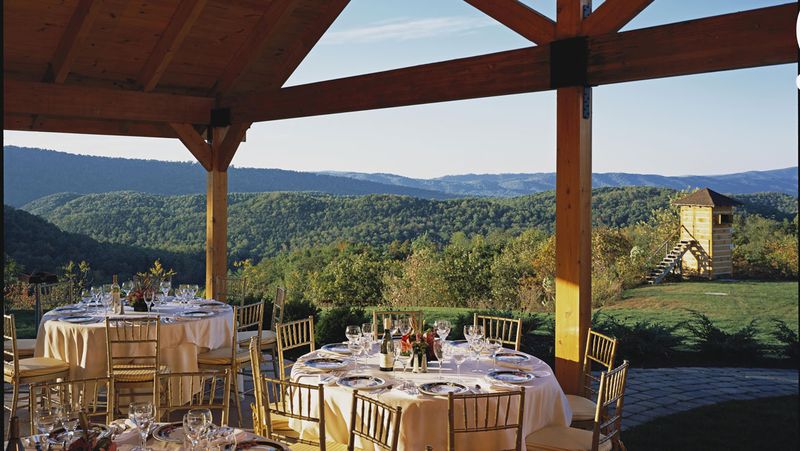
Road trips around Bath County unfold through long ridges, forested slopes, and small communities rather than commercial corridors. Much of the surrounding landscape belongs to public or protected land.
One standout is Falling Spring Falls, an 80-foot cascade beside US Route 220. A short paved path leads from the parking area to the overlook, making it easy to add to a scenic drive.
Farther north, Dan Ingalls Overlook provides access to Warm Springs Mountain Preserve. The 2.4-mile round-trip trail climbs past rock formations to broad views across the Cowpasture River Valley and toward Shenandoah Mountain.
The preserve protects more than 9,000 acres on and around Warm Springs Mountain. Three public trails give hikers different ways to see the ridgeline and its forest communities.
One quirky local fact remains true: Bath County has no traffic lights. That suits a place where most roads seem designed for scenery rather than speed.
Cell service can thin out in the mountains, so downloading maps before leaving the resort is practical.
Western Virginia does not need a roadside attraction at every turn here. The roads, overlooks, forests, and long open stretches already provide plenty to look at.
Golf Greens With Old Roots
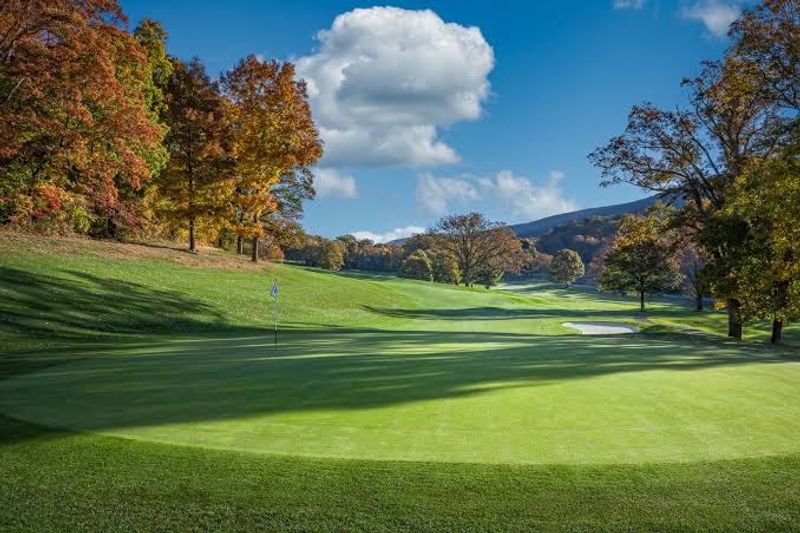
Golf here reaches back to 1892, when the Old Course began as a six-hole layout. It later expanded, and the first tee now carries a rare distinction as the oldest first tee in continuous use in the United States.
The course has changed repeatedly. Donald Ross contributed to an early twentieth-century redesign, while later work by William S. Flynn and other architects continued shaping the layout.
Today the Old Course plays as an 18-hole, par-72 course with six par 3s, six par 4s, and six par 5s.
The Cascades Course adds another historic option. Work began in 1923 under William S. Flynn, and the course developed a long championship history.
Eight USGA championships have been played there, along with numerous state and collegiate events. Its mountain setting keeps the scenery tied closely to the game.
Local golf history also runs through Sam Snead, who grew up nearby and spent years connected to the resort’s golf operation.
For something considerably less serious, Mini Cascades offers 18 holes inspired by the larger course. Nobody needs a perfect swing to enjoy the mountain backdrop.
Falcons, Horses, And Zip Lines
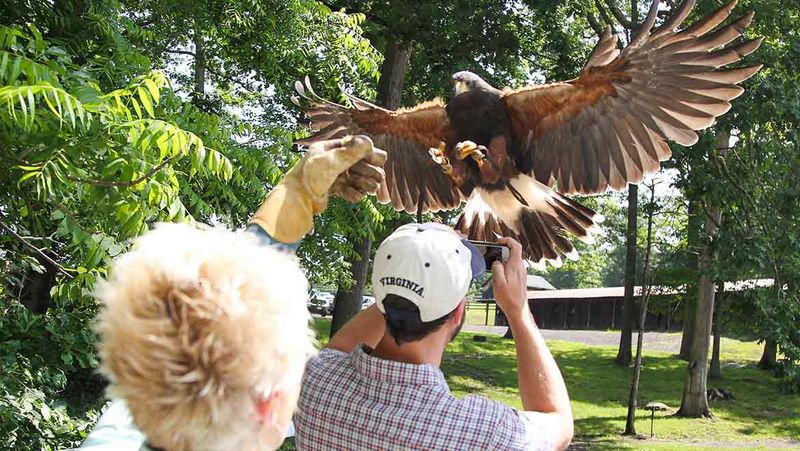
This Virginia resort’s activity list extends far beyond the golf courses. Falconry introduces visitors to trained birds of prey in sessions led by experienced handlers.
Horseback trail rides and carriage rides provide a slower route through the property. Beginners can also choose hand-led rides.
The Ridge Runner Zip Line Canopy Tour stretches more than 4,000 feet through the trees. Nine zip lines create views across several surrounding mountains.
Fly fishing, kayaking, hiking, archery, tennis, and lawn games add more choices during warmer weather. Some require advance reservations.
Winter changes the menu rather than ending it. The ski area has nine trails, with snowboarding and snow tubing offered alongside seasonal ice skating.
Updated snowmaking equipment helps extend winter recreation when natural conditions vary.
Packing the schedule too tightly would miss the point. Choosing one larger activity and leaving room for the grounds, pools, or Great Hall usually creates a more relaxed day.
Splashy Fun For Families
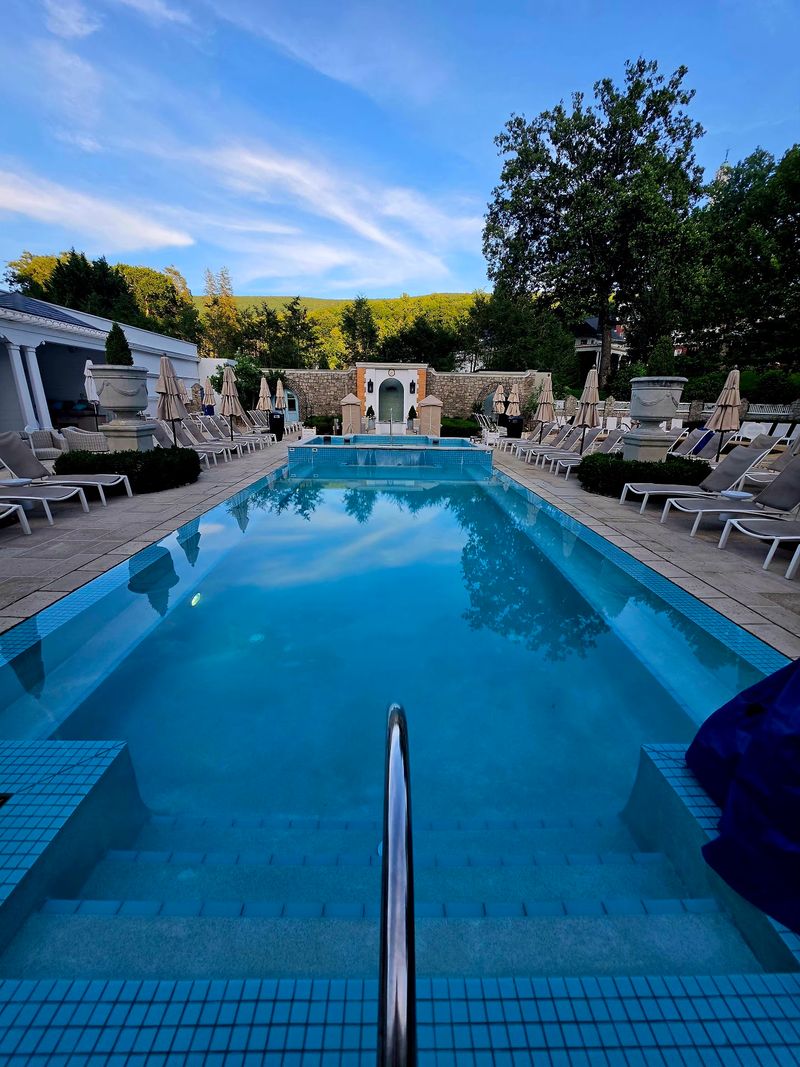
Allegheny Springs gives families a completely different side of the property.
The two-acre water park includes two 100-foot slides, a 400-foot lazy river, a family pool, and a water play area for younger children.
There is also an indoor pool that stays open around the clock for resort guests. That keeps swimming available when mountain weather changes the outdoor plan.
The DownTime game room adds mini bowling, arcade games, and a multi-sport simulator. Theater 1923 screens movies nightly.
Children ages five through ten can join scheduled Adventure Kids programming with crafts, scavenger hunts, archery, games, and other supervised activities. Older children can participate in some sessions as well.
The resort welcomes registered dogs in select areas, including designated lawns and certain paths, though access rules vary around dining, spa, pool, and golf spaces.
Woody’s remains a casual option for soups, sandwiches, Italian-inspired dishes, and craft pizzas. Other dining rooms range from quick meals to longer sit-down service.
Outdoor s’mores, lawn games, and seasonal activities fill in the smaller spaces between major plans.
A family stay here can be busy, but it does not have to feel scheduled down to the minute.
Picking Your Perfect Season
Timing changes the experience more than the basic appeal. Spring brings wildflowers, greener trails, and comfortable temperatures for exploring the surrounding mountains.
Summer puts the pools, golf courses, zip lines, riding programs, and water activities at the center of the day. Longer daylight makes it easier to combine a resort activity with an overlook or waterfall drive.
Autumn brings strong foliage across the Allegheny ridges. Warm Springs Mountain Preserve is especially appealing when the hardwood forests begin shifting color.
Winter brings skiing, snowboarding, tubing, indoor swimming, spa time, and warm mineral soaks. The contrast between cold mountain air and 98-degree spring water gives the colder season its own appeal.
Pack layers in every season because conditions can change quickly with elevation.
The Omni Homestead Resort & Spa works year-round because the property is not dependent on one attraction. Virginia mountain scenery, historic architecture, mineral springs, golf, and seasonal recreation all overlap here.
Hot Springs stays quiet enough to make slowing down feel natural. The challenge is not finding something to do. It is leaving enough empty space to enjoy where you already are.