This Virginia Town Is Quietly Known As The Data Center Capital Of The World
Your last video stream probably took a quick trip through a quiet suburb.
Roughly 70 percent of the world’s internet traffic is estimated to pass through this one region every single day.
That’s a big job for a place in northern Virginia that started out as farmland.
The buildings doing the work look like plain, windowless warehouses. Inside, they hold the servers that keep apps, emails, and online games running.
Now consider this: Data centers here paid about 1.2 billion dollars in property taxes in a single fiscal year.
That covered roughly 39 percent of the local county budget. Not bad for a bunch of boxes.
The Internet Has A Home Address, And It Looks Like Farm Country
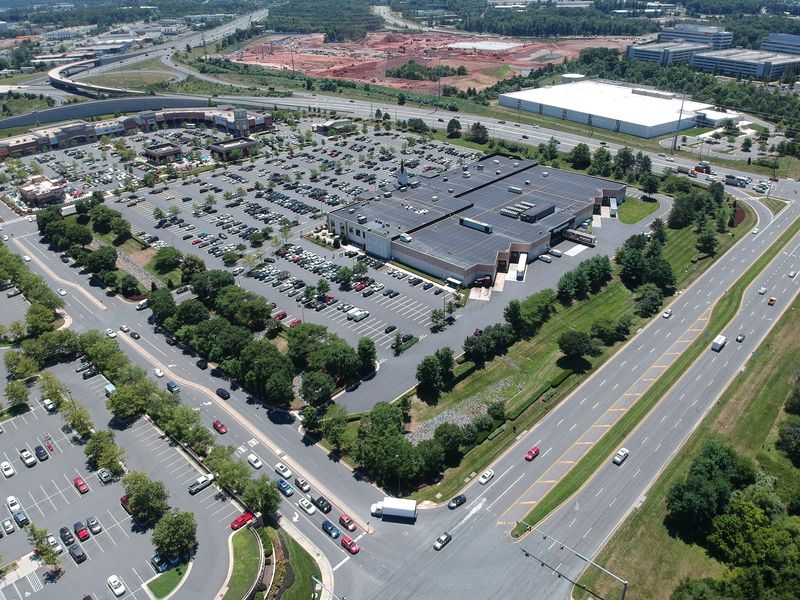
Ashburn, Virginia, is an unincorporated community in Loudoun County with a nickname that sounds like a science-fiction movie. People call its stretch of server buildings Data Center Alley.
Loudoun County has the largest concentration of data centers in the world. As of March 2026, it counted about 233 buildings, representing approximately 56.5 million square feet either built or in various stages of construction.
That number is hard to picture. It’s roughly the floor area of 980 American football fields, although the actual buildings can rise across several stories.
Ashburn sits about 30 miles northwest of Washington, D.C. Its population reached 46,349 in the 2020 census.
This was once a landscape of farms and a railroad-centered village. Today, residential neighborhoods, shopping areas, and technology campuses share the same general region.
Yet a video call, cloud-based document, or online purchase may depend on equipment operating behind those plain walls. That’s a remarkably quiet way for one community to play an enormous digital role.
A Mail Mix-Up Gave The Town Its Name
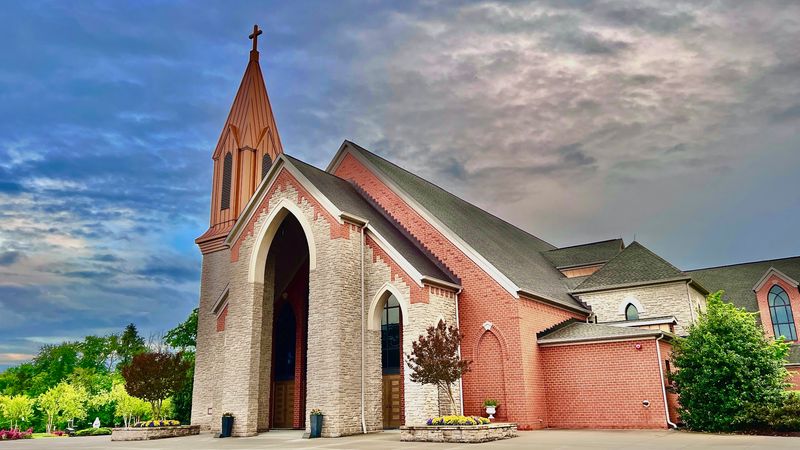
Long before servers hummed here, the community was known as Farmwell or Farmwell Station. Ashburn Farm provided the name that eventually replaced it.
The nineteenth-century property was associated with local lawyer John Janney, although the precise origin of the word Ashburn has several competing historical explanations.
So why change the village name at all? Blame the post office.
Farmwell looked too much like Farmville, another community with an established post office. The confusion led postal officials to adopt Ashburn in 1896.
It’s a funny origin for a place now famous for delivering information. A community that once needed a clearer mailing address became a major crossroads for digital connections.
The older village survives in the Ashburn Historic District, where buildings recall its commercial and agricultural beginnings.
Rail service encouraged dairy production, and the former railway corridor is now part of the Washington and Old Dominion Trail.
This was a transportation hub long before anyone thought of moving information through fiber-optic cables.
Blame It All On A Little Exchange Point From 1992
Every big story has a spark. For Ashburn, that spark arrived in 1992 just down the road.
Engineers connected computer networks in a parking garage in Vienna, Virginia, helping establish MAE-East, an early commercial internet exchange point. It allowed different network operators to exchange data in one place.
In 1996, America Online opened its global headquarters in Ashburn. Another major internet provider, UUNet, established headquarters there in 1998, bringing additional fiber infrastructure and technical expertise.
Equinix opened its first Ashburn data center in July 1999. Its carrier-neutral model allowed competing networks and customers to connect within the same facility.
Local land-use rules helped the industry expand. Beginning in 2000, data centers could be treated like office buildings in many permitted locations, allowing new campuses to spread through existing business parks.
A suburban crossroads, a concentration of fiber, and a few early internet businesses had collectively created something far bigger than their original plans.
Underground Cables Are The Real Celebrities Here
Forget skyscrapers. Some of Ashburn’s most important infrastructure runs beneath the streets.
Fiber-optic cables carry information using pulses of light. When many separate networks meet in one area, companies can exchange data directly instead of routing it through distant facilities.
That’s the basic appeal of a connection hub. Network providers, cloud companies, and businesses can place their equipment close together, reducing delays and simplifying connections.
Data centers also use multiple network links for resilience. If one route experiences trouble, traffic can often travel along another available path.
The internet isn’t one giant machine with an address. It’s a worldwide network of connected systems, and Ashburn is one particularly important meeting point.
That distinction makes the place more interesting, not less. The warehouses are only the visible part; the real advantage lies in the fiber routes and interconnections that have accumulated over decades.
Spot The Famous Tech Names Behind Those Blank Walls
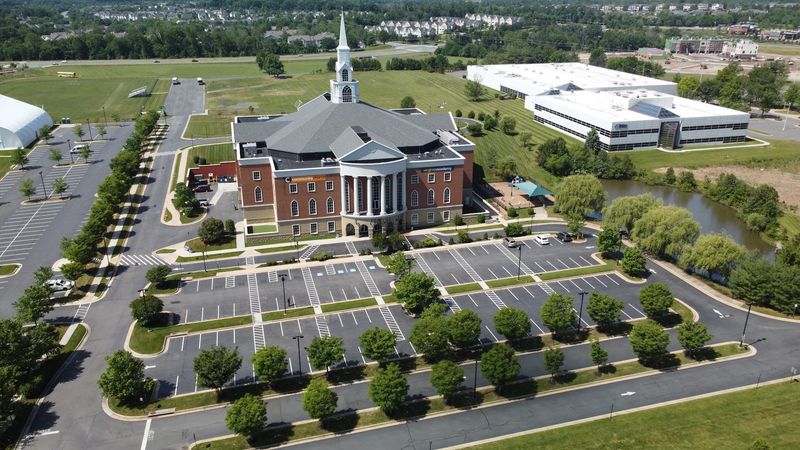
Equinix, Digital Realty, and major cloud providers are part of the sprawling data center ecosystem around Ashburn. Their buildings can look surprisingly ordinary from the roadside.
The interiors are another matter. Rows of server cabinets hold computing equipment, while cooling systems and electrical infrastructure keep everything running around the clock.
Some facilities provide space and connectivity for many separate customers. Others are dedicated to the needs of a single large technology company. Together, they support everything from business databases to streaming platforms.
Security is an important part of the design. Access is controlled, equipment rooms are closely monitored, and public tours are generally unavailable.
A plain exterior can conceal an intricate combination of computers, network links, and backup systems.
These buildings also require people. Technicians maintain equipment, electricians work on power systems, and construction specialists build the facilities that house it all.
Even a largely windowless building needs a remarkable amount of physical work to function.
Your Neighbors Might Thank The Servers At Tax Time
Money talk can get dull, but these numbers are surprisingly interesting. In fiscal year 2026, data centers generated about 1.2 billion dollars in real estate and equipment-related property taxes for Loudoun County.
That represented approximately 39 percent of its overall budget. The adopted fiscal year 2027 budget projects around 1.3 billion dollars, or 40 percent.
Why so much? The buildings have substantial value, but the computers and related equipment inside them also generate personal property tax revenue.
A regional industry study estimated that data centers provide 26 dollars in local tax revenue for each dollar of public services they require. The revenue supports schools, libraries, parks, roads, and other community programs.
It’s also helped county leaders maintain comparatively low real estate tax rates, although individual homeowners’ bills still depend on their property assessments.
The county counts more than 17,000 direct and indirect positions associated with the industry, from specialized trades to technical operations.
All That Computing Needs A Mountain Of Electricity
Servers are hungry, and not for snacks. They need steady electricity, cooling equipment, and dependable connections every hour of the day.
Ashburn developed with access to a strong power grid, but the scale of its industry now creates significant new demand. Additional transmission lines and substations are needed to support existing and planned facilities.
Loudoun County counted 95 existing and proposed electrical substations as of March 2026. These sites step down high-voltage electricity for local use, making them an important part of the technology landscape.
Cooling can also require water, depending on the system. Across Virginia, data center growth has brought renewed attention to electricity supply and resource planning.
In Loudoun, data centers account for about nine percent of average daily drinking-water use, according to county information. Newer closed-loop cooling designs can reuse more water than older systems.
Those substations, cooling systems, and power lines help keep the digital economy switched on.
Growth This Fast Comes With Some Honest Growing Pains
Not everyone enjoys living beside a giant computer warehouse. Rapid growth has brought questions about how the suburban landscape is changing.
Some neighborhoods now sit close to industrial-scale buildings, cooling equipment, and electrical substations. Sound from ventilation systems and backup generators has become a recurring subject at county meetings.
Water supplies, construction traffic, and the appearance of new facilities also matter to nearby communities.
Loudoun County has responded with stricter planning requirements. Since 2025, new data center proposals generally need special-exception approval rather than being permitted automatically in certain office districts.
That process creates an opportunity for public hearings and closer consideration of location, screening, and infrastructure. Work on additional standards continues into 2027.
The county is also trying to balance the benefits of tax revenue against dependence on one rapidly evolving business sector.
Ashburn illustrates a fascinating challenge: a neighborhood can be internationally important while still needing to function as a comfortable place for everyday life.
The Construction Cranes Show No Sign Of Packing Up
Fifteen years and counting. Data center development has remained a steady feature of Loudoun County’s landscape for more than a decade and a half.
The pipeline is still substantial. As of March 2026, approximately 35.7 million square feet of data center space had approval or was moving through the administrative planning process but had not yet been built.
The county also counted 21 applications representing another 20.7 million square feet still seeking approval. Those projects face additional decisions, and not every proposed facility will be built.
Behind everyday roads and business parks lies one of the world’s densest concentrations of digital infrastructure.
So the next time your favorite show loads instantly, remember this community’s remarkable journey. A former Virginia farming village with a mail mix-up history now helps connect people around the planet.