This Wisconsin Cheese Factory Offers One Of The Country’s Best Tours
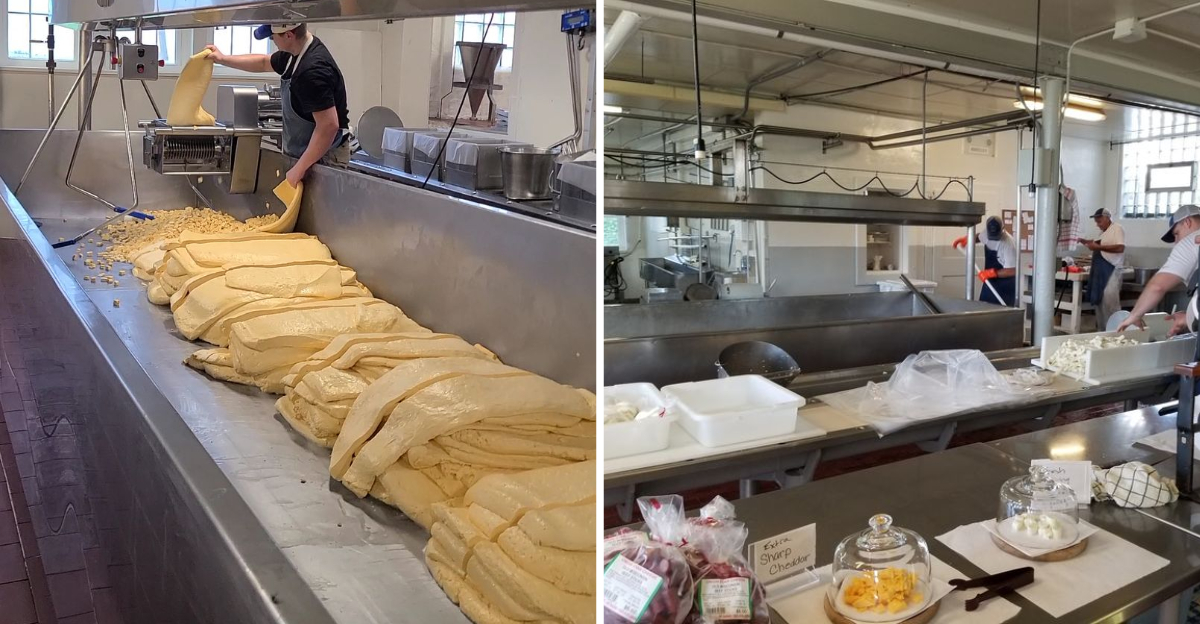
The smell tells you you’ve arrived before the sign ever does.
Inside this beloved Wisconsin cheese factory, visitors can watch skilled cheesemakers transform fresh milk into award-winning wheels while learning techniques perfected over generations.
The tour is fascinating, but everyone knows what comes afterward.
Warm cheese curds. Fresh from production. Still squeaky. One bite explains why people happily drive for hours just to stop here.
It’s simple, authentic, and impossible to recreate anywhere else.
You’ll leave with a bag full of cheese, a camera full of photos, and completely unreasonable expectations for every future cheese shop.
A Legacy In Every Bite
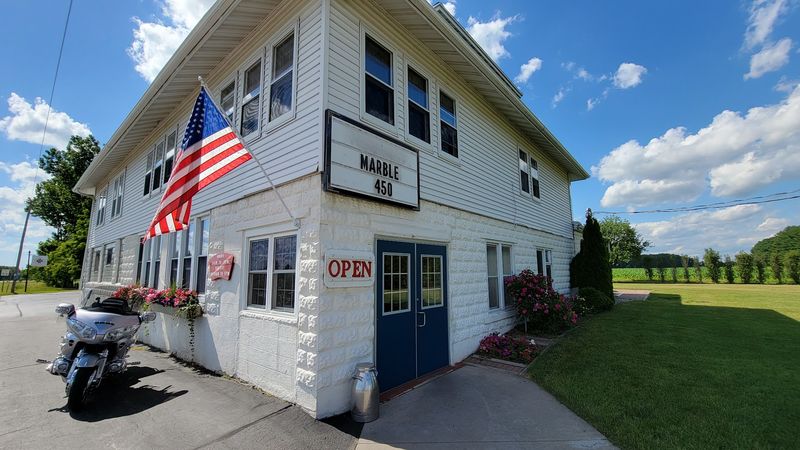
Some places carry history in their walls, and Union Star Cheese Factory is absolutely one of them.
The factory building itself dates back to 1906, with continuous operation beginning in 1911, making it one of the oldest surviving small cheese factories in Wisconsin. That is not just impressive, that is extraordinary.
The origin story starts with thirteen local dairy farmers who felt shortchanged by the Babcock Test, a method used to measure butterfat content in milk and determine payment.
Holstein farmers, whose cows naturally produced lower-butterfat milk, were consistently underpaid.
Frustrated and determined, they banded together to form their own cooperative in Zittau, giving birth to what would eventually become Union Star Cheese Factory.
Henry Metzig purchased full ownership in 1911, launching a family legacy that now spans four generations.
His willingness to work Sundays, previously reserved for church and rest, sealed the original cooperative deal and showed just how committed he was to the community.
You can practically feel it in the air the moment you arrive at 7742 County Rd II in Fremont, where every corner of this modest building tells a story worth knowing.
How Milk Becomes Magic
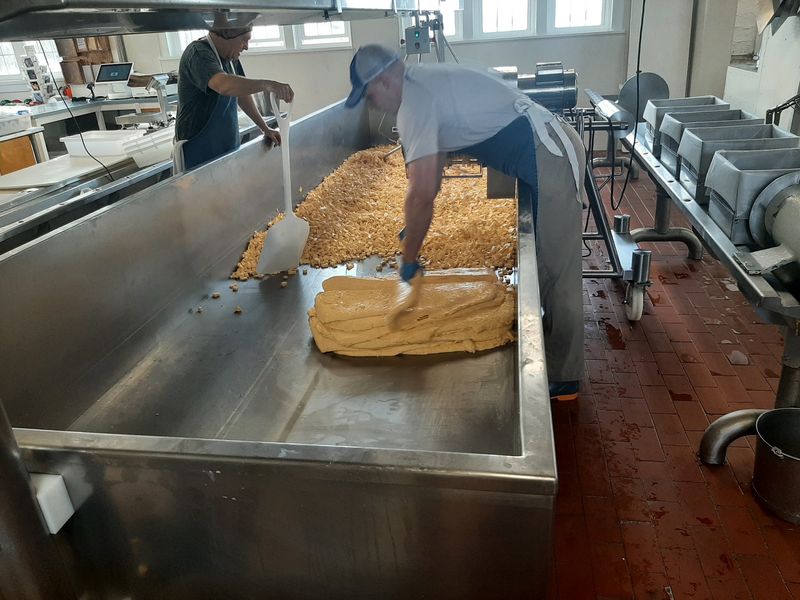
The cheesemaking process at Union Star Cheese Factory kicks off at 4:00 AM, a time when most of us are still deep in sleep.
By the time the average visitor arrives around 8:30 AM, the production is well underway and the factory floor is alive with activity. That early start is not for show, it is pure dedication to freshness.
First, raw milk gets pasteurized at exactly 161 degrees Fahrenheit for 15 seconds, eliminating unwanted bacteria while preserving the milk’s natural qualities.
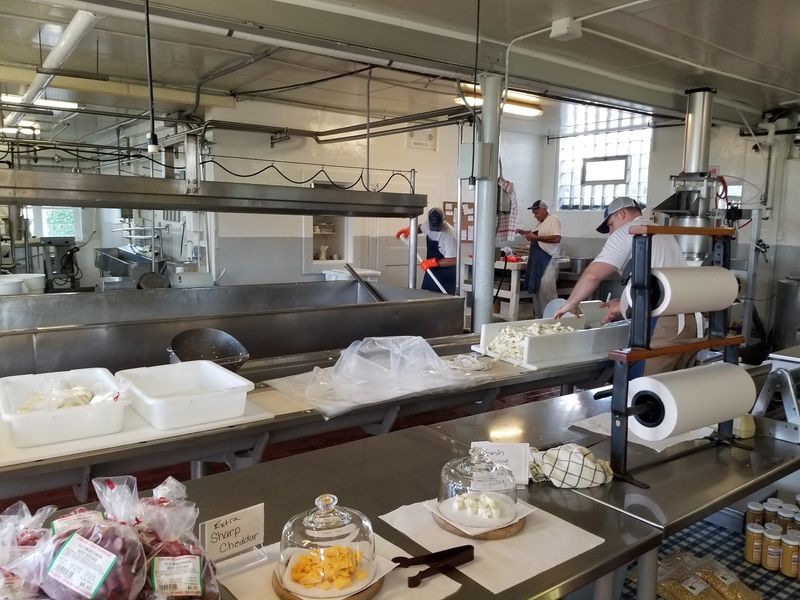
After that, good bacteria cultures and rennet are introduced into large stainless steel vats, triggering a transformation that turns liquid milk into a soft, gel-like mass. Around 6:00 AM, this gel is ready for the next step.
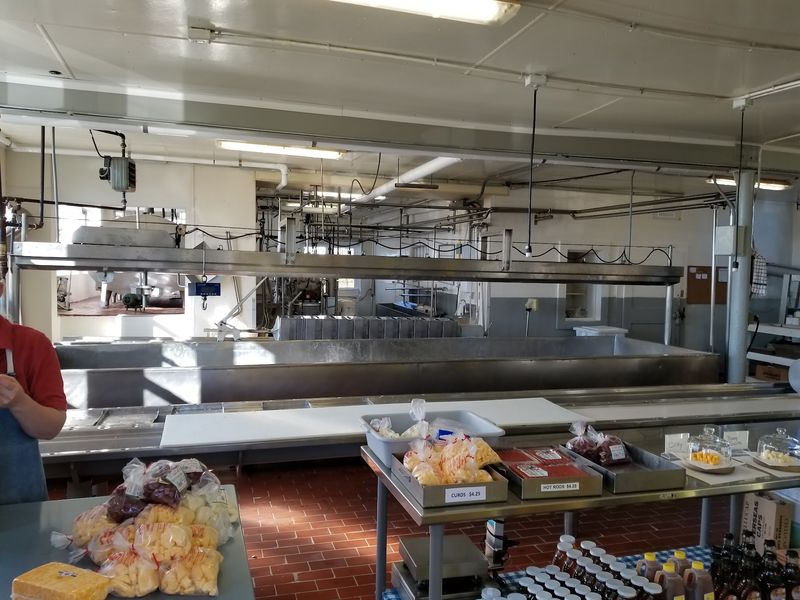
The gel gets cut into precise quarter-inch cubes, separating curds from whey. Cheesemakers then cook and stir the curds carefully, since too much stirring creates a dry product and too little leaves the texture off.
I noticed the quiet focus on the faces of the team during this stage, a kind of calm precision that only comes from years of practice.
Curds, Cheddars, And Beyond
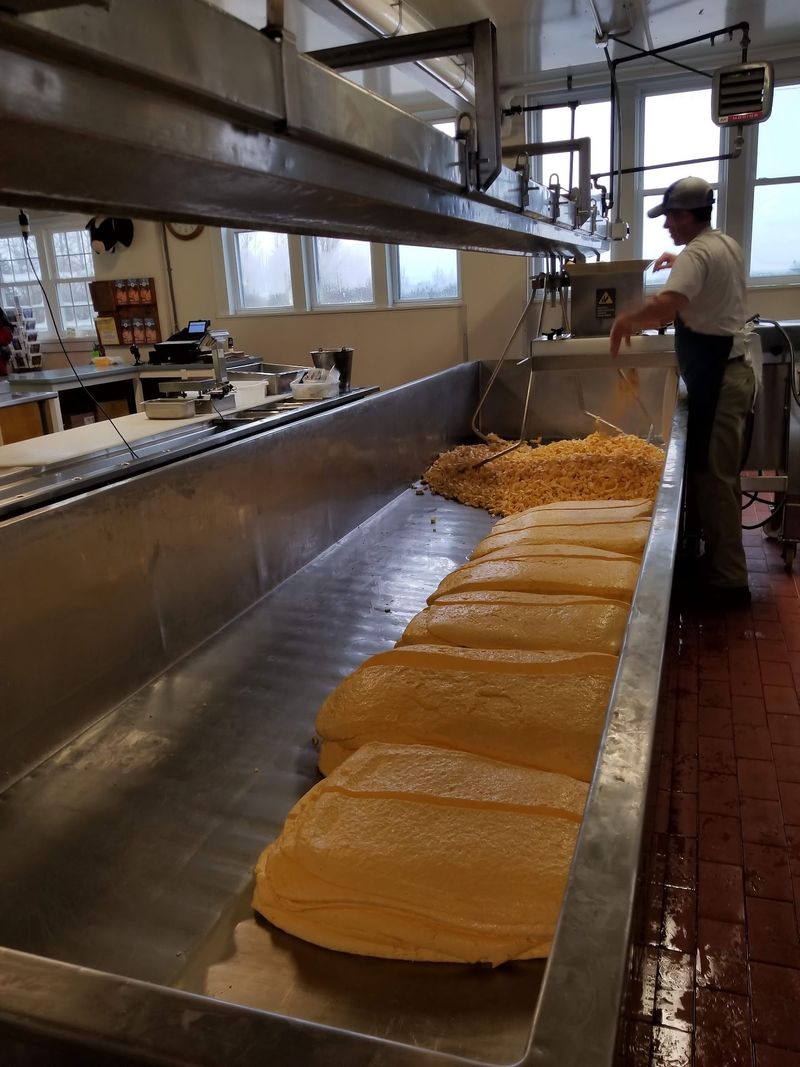
Cheese variety at Union Star Cheese Factory goes far beyond what most people expect from a small-town operation.
Yes, cheddar is a cornerstone, produced on Mondays, Thursdays, Fridays, and Saturdays alongside the legendary fresh cheese curds.
Those curds, squeaky and still warm when bagged straight from the vat, are the kind of thing that ruins all other curds for you permanently.
Tuesdays bring fresh mozzarella string cheese into the rotation, a pull-apart treat that is shockingly satisfying.
Muenster is another specialty here, with flavored varieties adding a creative twist to the classic German-style recipe.
The hickory muenster, in particular, has earned a devoted following among regular visitors who plan their trips around curd-making days. The artisan cheese lineup is where things get genuinely exciting.
Smaller-batch creations like Red Willow, aged 20 to 25 days for a savory, meaty depth, and St. Jeanne, Farmhouse Cheddar, and Dry Jack round out a selection that rivals specialty shops in much larger cities.
The Tour You Cannot Miss
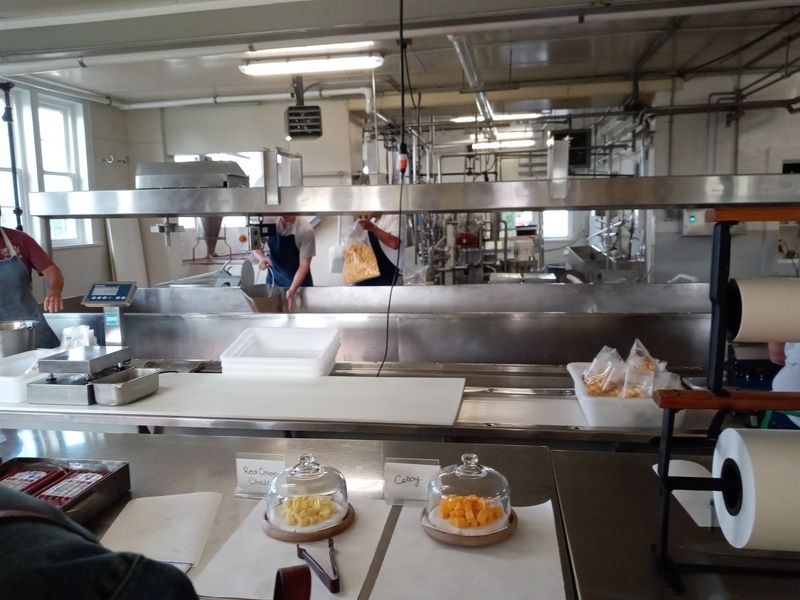
Free tours at Union Star Cheese Factory run every day except Sunday, and the format is refreshingly casual.
There are no timed entry slots, no velvet ropes, and no distant viewing platforms separating you from the action.
Visitors can join a tour at any point during the morning production, which gives the whole experience a relaxed, spontaneous energy that larger operations simply cannot offer.
The best window for arrival is around 8:30 AM, when cheesemaking is in full swing and fresh curds are typically ready for tasting between 9:00 AM and 10:00 AM.
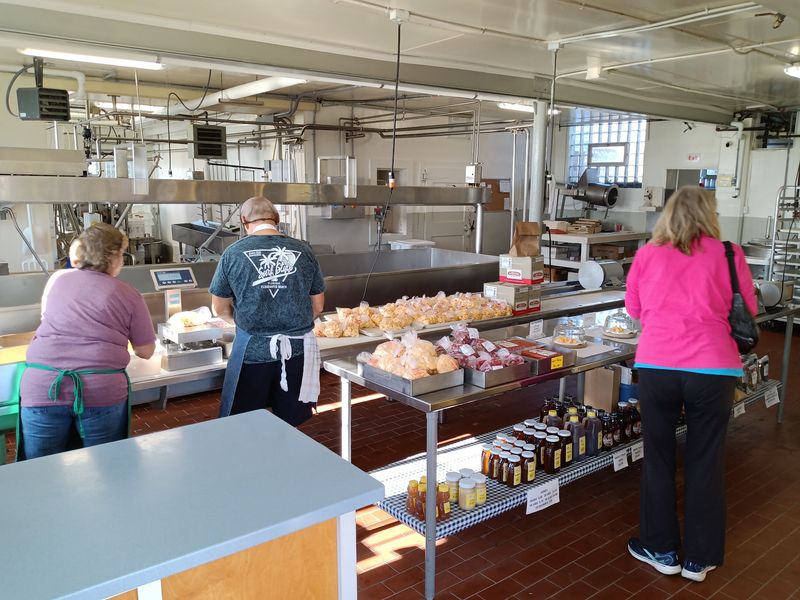
Standing just a few feet from the cheesemakers while they work is genuinely thrilling. You hear the steady hum of equipment, smell the warm dairy air, and watch curds form in real time right in front of you.
The staff are knowledgeable and genuinely enthusiastic about sharing the process, answering questions with the kind of depth that only comes from hands-on expertise.
There is no script-reading or rehearsed performance here, just real people proud of their craft.
Local Farms, Superior Milk
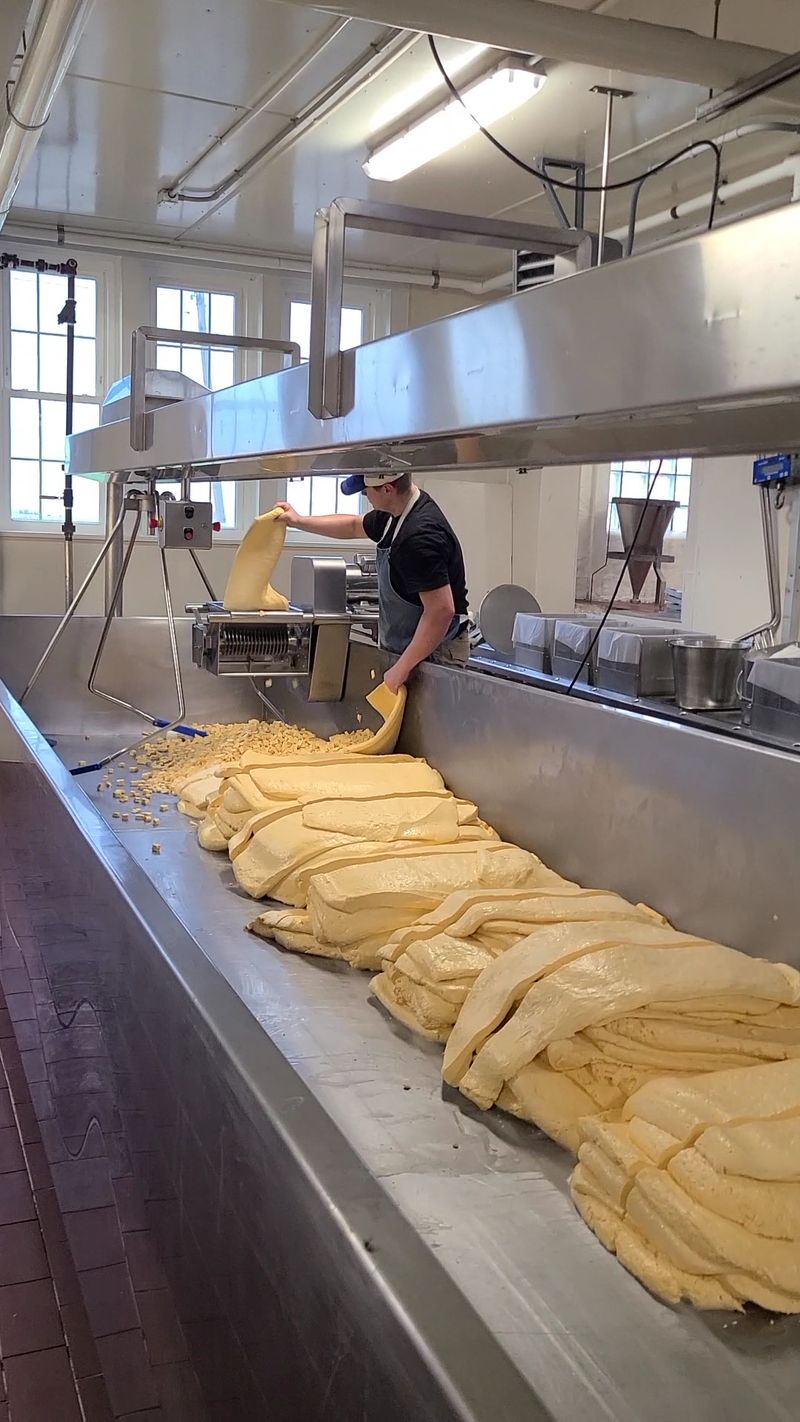
Quality cheese starts long before the vat, and Union Star Cheese Factory understands that better than most.
All milk used in production is sourced directly from local Wisconsin dairy farms, a practice that ensures both freshness and a superior flavor profile that mass-produced alternatives simply cannot match.
Relationships with farms like Silverthorn Farm and the Harness Family Farm keep the supply chain short, transparent, and trustworthy.
Milk deliveries arrive daily, often stored overnight in refrigerated tanks before production begins at dawn. This tight timeline from farm to factory is a key reason why the finished cheese tastes so distinctly alive.
Jon Metzig, a Master Cheesemaker at the factory, has said plainly that Wisconsin produces the best milk in the country, and the evidence is right there in every bite.
Producing one pound of cheese requires approximately ten pounds of milk, which underscores just how much goes into each block, wheel, or bag of curds leaving this factory.
The close connection to local farms also allows cheesemakers to monitor milk quality closely and communicate directly with the farmers when adjustments are needed.
Four Generations, One Passion
Running a cheese factory for over a century takes more than skill, it takes an almost stubborn love for the craft.
The Metzig family has provided exactly that across four generations, each one adding their chapter to the Union Star Cheese Factory story.
David Metzig and his wife Jan took over the factory from Great Aunt Edna in 1980, with David coming from an accounting background but embracing the family calling without hesitation.
Edna herself was a trailblazer, one of the first women in Wisconsin to earn a cheesemaker’s license and work in a factory setting.
Her contribution to the business and to the broader dairy industry deserves far more recognition than it typically receives. She set a standard of excellence that her successors have worked hard to honor.
Jon Metzig, the fourth generation, grew up literally above the factory and was bagging cheese curds by age six on Saturday mornings.
A food science course at UW-River Falls sparked his deeper passion for the chemistry behind cheesemaking, pulling him back to the family business with both heart and academic curiosity.
Last One Standing In Winnebago
Union Star Cheese Factory holds a distinction that is both impressive and a little bittersweet.
It is the last remaining cheese factory in all of Winnebago County, a county that once boasted 45 of them in the early 1900s.
That dramatic decline tells the story of an industry reshaped by consolidation, modernization, and the relentless push toward mass production.
Back in those early days, a cheese factory could be found roughly every 15 miles, the maximum distance milk could travel by horse and wagon without spoiling.
One by one, most of them closed, merged, or were absorbed by larger companies. Union Star survived because the Metzig family refused to compromise on quality or authenticity.
There is something quietly powerful about visiting a place that has outlasted 44 of its neighbors. The factory’s modest building and no-frills presentation are not a weakness, they are a statement.
This is what real Wisconsin cheesemaking looks like when it is protected and passed down with care.
The Master Cheesemaker Standard
Earning the title of Master Cheesemaker in Wisconsin is no small achievement.
The certification program, administered through the University of Wisconsin-Madison, requires at least ten years of licensed cheesemaking experience before a candidate can even apply.
Only two places in the world offer this credential, Wisconsin and Switzerland, which puts the bar in very distinguished company.
Union Star Cheese Factory has not one but two certified Master Cheesemakers in its family lineage. David Metzig earned the designation during his tenure, and Jon Metzig has since achieved it as well, with certifications in both cheddar and colby.
The factory has also earned broader recognition, having been voted one of Wisconsin’s Best by readers of Wisconsin Trails Magazine. Tasting a slice of their aged cheddar after learning about the Master Cheesemaker program puts everything in context.
This is not just good cheese for a small-town factory, this is world-class cheese made by people who have dedicated decades to perfecting every single step of the process. The results speak loudly for themselves.