12 Towns In North Carolina Where You Can Live On A $1,800 Social Security Check
Retirement math feels friendlier when a town is not trying to charge luxury prices for ordinary life.
A fixed income can still stretch in North Carolina, especially in places where housing stays reasonable and daily routines do not feel like a monthly financial obstacle course.
The real appeal is not flashy. It is the breathing room.
A calm street, an easy errand, and a town that lets money last longer can start feeling more valuable than any resort-style promise.
Plenty of places look charming until the bills arrive with an attitude.
These communities make a different argument.
Retirement can stay simple, steady, and comfortable without turning every grocery run into a budget meeting.
1. Laurinburg
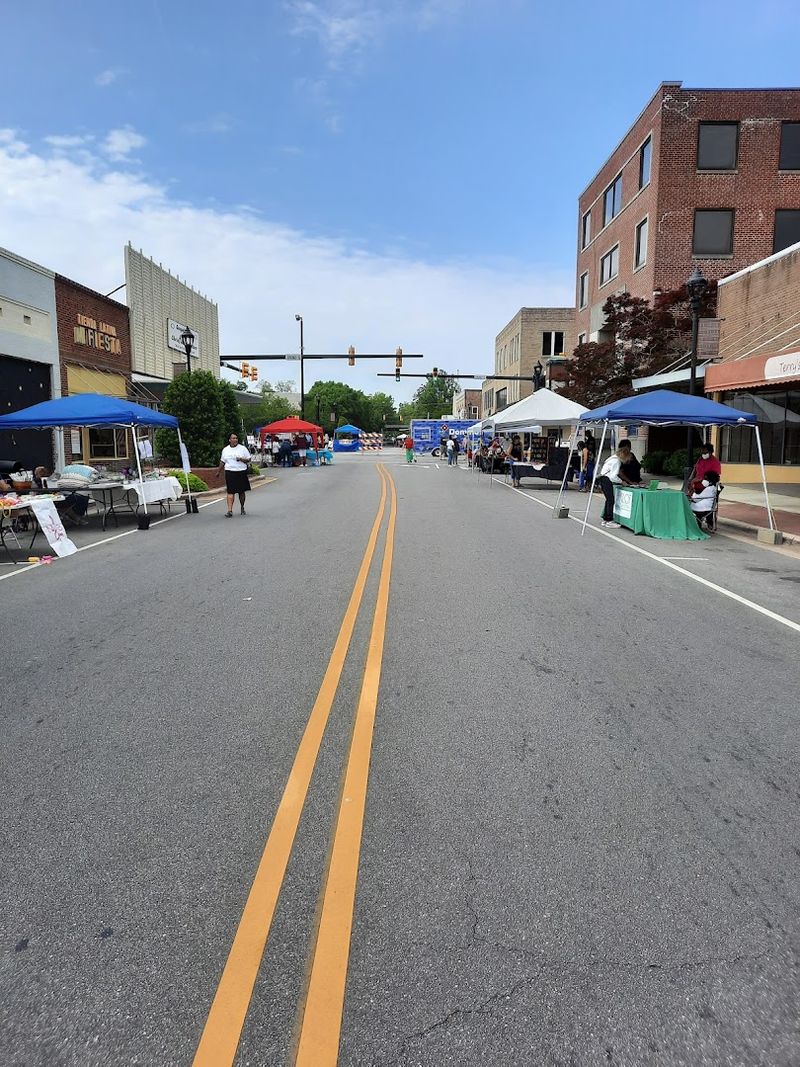
Compared with most retirement-friendly towns people talk about in North Carolina, Laurinburg still looks remarkably grounded.
Zillow reports an average home value of $143,608 as of March 31, 2026, well below the statewide average. Laurinburg’s official site also lists City Hall at 303 West Church Street, underscoring its status as an established town with a defined civic center rather than a dispersed rural area.
Current Zillow rental listings also show that lower-priced options still exist, including a one-bedroom listed at $725, even if the rental market is fairly small.
That combination matters for retirees because a fixed income works better in a place where both ownership and renting remain plausible instead of only one of them being affordable.
A buyer arriving with modest savings, or with equity from selling elsewhere, could see real value here in a way that would be difficult in most mountain or coastal towns.
A renter gets a different advantage: fewer signs of runaway housing pressure and a smaller, quieter market that has not been distorted by vacation demand or prestige pricing.
Laurinburg’s appeal comes down to plain arithmetic more than polished fantasy, which is exactly why it fits this title so well.
2. Eden
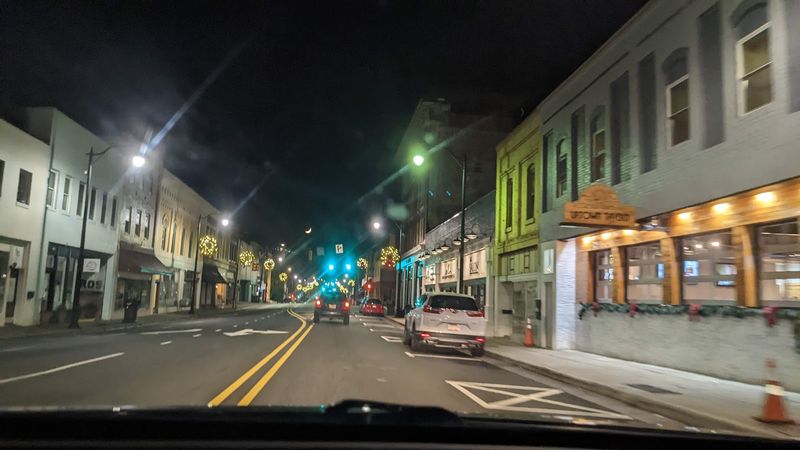
Lower rent is what gives Eden real traction in a budget-focused retirement story. Apartments.com shows average rent at $870 as of April 2026, and Zillow places the average home value at $149,286 as of March 31, 2026.
Official city information also confirms Eden City Hall at 308 East Stadium Drive, which helps frame the town as a practical, service-based community rather than a place selling image first and daily life second.
For someone living on $1,800 a month, rent around $870 leaves more breathing room than the statewide average, and local home values also sit well below what buyers typically face across North Carolina.
Current Zillow rental listings support that picture, with apartments listed around $750 to $875 alongside higher-priced homes. Nothing in those figures suggests a town where affordability is slipping away too fast to matter.
Instead, Eden looks like a place where shelter costs can stay moderate enough to keep the rest of the monthly budget from constantly feeling cornered.
Retirees who want quiet living, simpler costs, and a town that still looks workable on paper as well as in practice should find Eden one of the more believable options in this roundup.
3. Roanoke Rapids
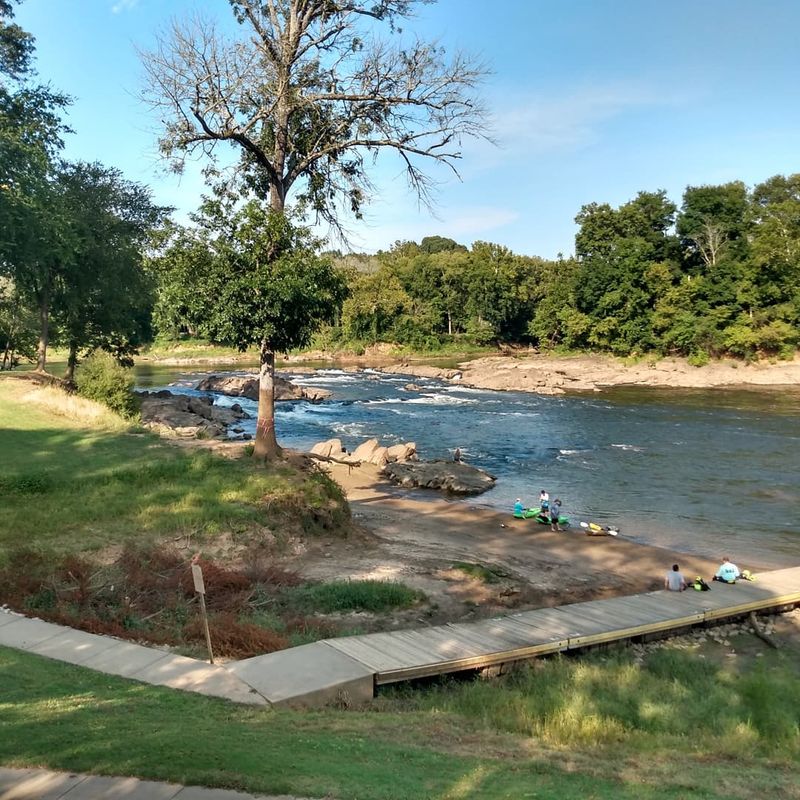
When rent stays this low, an $1,800 monthly check has a much better chance of covering real life instead of only basic survival.
Apartments.com shows average rent in Roanoke Rapids at $659 as of April 2026, while Zillow places the average home value at $121,329 as of March 31, 2026.
Zillow rental listings also show apartments around $803 for two-bedrooms, which reinforces the broader picture of a town where housing remains accessible by current standards. Very few places in North Carolina still pair rent this modest with home values this low.
A renter here would still need to budget carefully, but shelter would leave a far larger share of the monthly check available for utilities, food, medicine, and transportation than in almost any larger city.
A buyer gets an equally strong story, since homeownership remains far more attainable here than in towns riding stronger demand from tourism, second homes, or metro spillover.
Roanoke Rapids is not trying to sell resort scenery or prestige. Its value lies in the fact that the numbers already speak clearly enough on their own.
For retirees or fixed-income households that care most about keeping housing pressure down, few towns on this list make a cleaner case.
4. Kinston
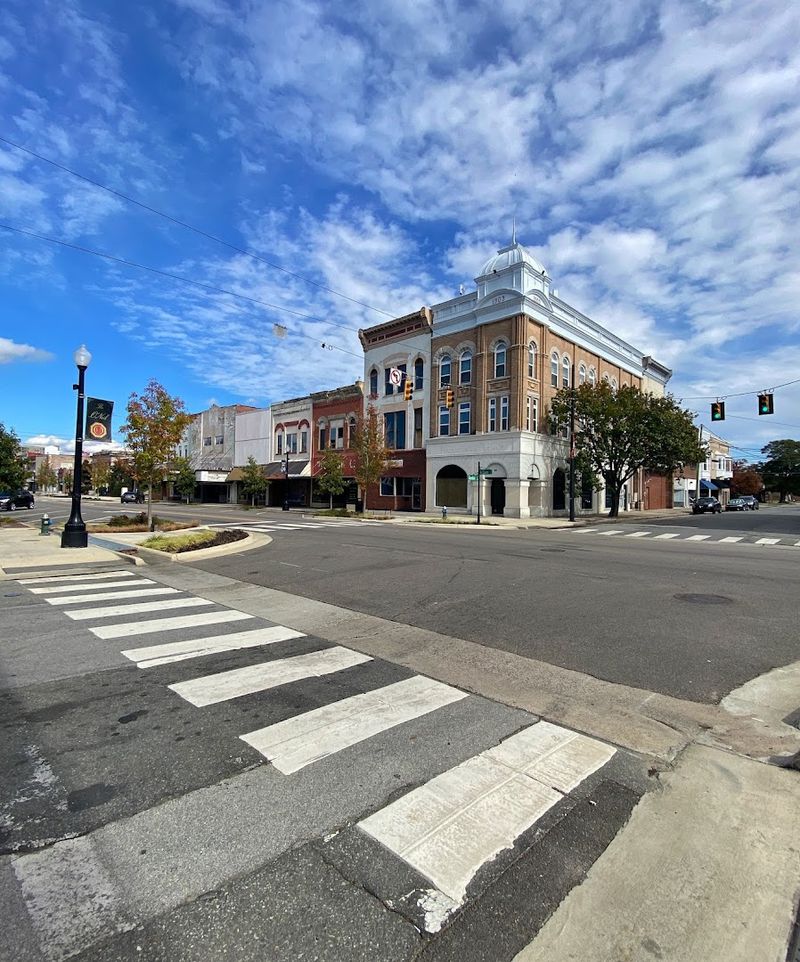
Unlike the smallest towns in this roundup, Kinston offers a bit more scale without losing the affordability angle.
Zillow lists an average home value of $148,090 as of March 31, 2026. Rental listings also show more affordable options, including studios around $749, one-bedroom homes near $700, and two-bedroom units ranging roughly from $825 to $900.
Those numbers matter because a town does not need to be ultra-cheap to work on Social Security. It needs shelter costs that stay below the point where every other expense becomes a problem by the middle of the month.
Kinston clears that bar better than many places with a similar amount of local activity and infrastructure. A retiree who wants more than the quietest possible town may find the trade-off especially appealing here.
Housing stays markedly below state norms, yet the town still feels more substantial than the smallest markets on the list.
Buyers can still look at ownership without confronting prices anywhere near the statewide average, and renters still have evidence of units that do not immediately crowd out the whole budget.
For someone seeking a middle path between tiny-town calm and bigger-city cost, Kinston earns its place convincingly.
5. Rocky Mount
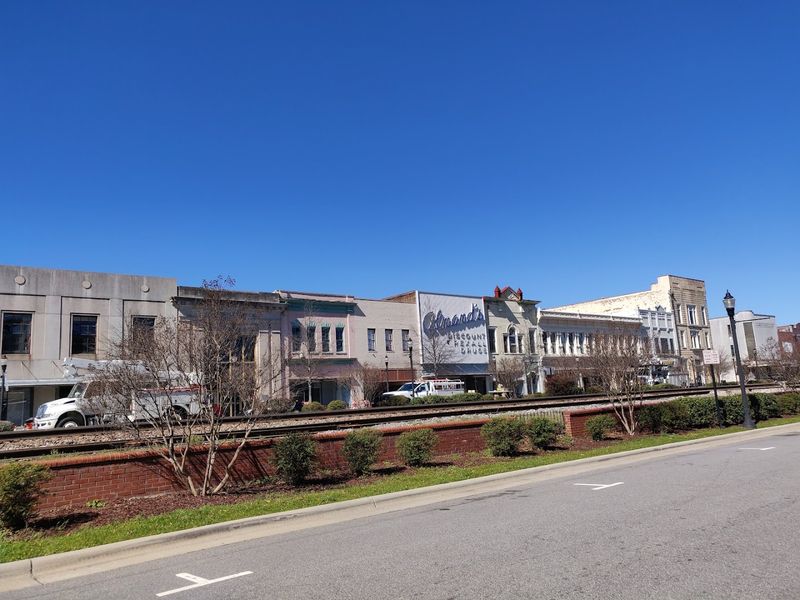
More city structure usually brings more expensive housing, which is exactly why Rocky Mount is worth a careful look.
Average home value sits at $185,887 as of March 31, 2026 according to Zillow. Rental listings currently include a two-bedroom apartment at $895, a two-bedroom house at $900, and a one-bedroom house at $995.
Those numbers are clearly higher than what readers will see in Laurinburg or Roanoke Rapids, yet they still come in below North Carolina’s statewide averages and leave Rocky Mount inside the range of possibility for an $1,800 monthly income. Another reason the town fits here is variety.
Someone who wants more services, more shopping, or a more urban routine does not always have to jump into Raleigh or Charlotte pricing to get it.
Rocky Mount looks like one of the more realistic compromises in the state for retirees who want a bit more going on around them without stepping into a far more punishing market.
Shelter would still require discipline, especially for renters, but the town remains workable in a way many larger places no longer are. That makes Rocky Mount a fair fit for the title even if it is not one of the loosest bargains in the bunch.
6. Tarboro
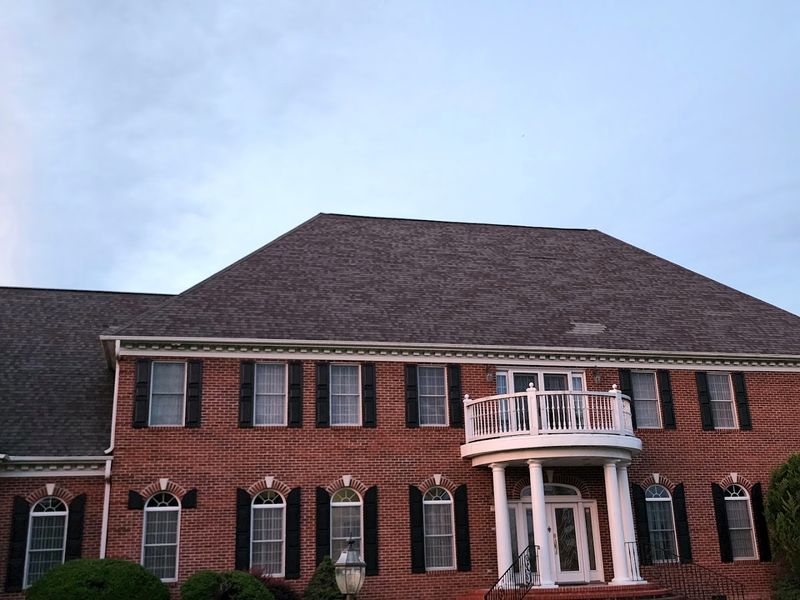
History and affordability do not always stay together, yet Tarboro manages to hold onto both. Zillow places the average home value at $152,776 as of March 31, 2026, and current rental listings show apartments starting around $700 for a one-bedroom and around $875 for a two-bedroom.
Numbers like those keep Tarboro far below statewide housing norms while still allowing the town to retain the kind of older, more established look many retirees appreciate.
Plenty of historic places become expensive simply because charm turns into demand.
Tarboro has not gone that route to the same degree, which is what makes it especially useful in a list about stretching Social Security income.
A renter living on $1,800 a month would still need to manage the rest of the budget carefully, but the town leaves much more room than a prettier, more publicized destination likely would.
Buyers get a similarly attractive setup, since the home-value figure remains less than half the statewide average. Tarboro’s value is not only that it is cheaper than trendier places.
Its real strength is that it still feels like a place with identity and structure while keeping housing inside a range many retirees can still take seriously.
7. Henderson

For retirees who value steadiness over buzz, Henderson makes a practical kind of sense.
Zillow places the average home value at $179,610 as of March 31, 2026, and current rental listings include a one-bedroom at $829 and two-bedroom options at $986.
Those numbers do not turn Henderson into the cheapest place on the list, but they do keep it clearly below broader state housing levels. That distinction matters because fixed-income living does not require the absolute lowest price in North Carolina.
It requires a town where shelter leaves enough room for the rest of the month to function. Henderson still does that.
Buyers see a market that remains well under the statewide home-value average, while renters can point to actual listings that stay below the point where a full Social Security check would be swallowed by housing alone. Another plus is balance.
Henderson looks large enough to feel established and useful without drifting into the kind of cost pressures attached to more in-demand regions.
Readers who are not chasing glamour and simply want a town where day-to-day math remains more manageable should see Henderson as one of the stronger quiet fits in the article.
8. Reidsville

Not every town on this list leaves a wide cushion, and Reidsville is one of the tighter fits. Apartments.com shows average rent at $1,068 as of April 2026, while Zillow places the average home value at $210,647 as of March 31, 2026.
Current Zillow rentals also show a one-bedroom house at $950 and a two-bedroom apartment at $1,075, which supports the idea that modest options still exist even if the town is not ultra-cheap.
For someone living on Social Security alone, Reidsville would demand attention to the rest of the budget, especially as a renter.
Even so, it remains more manageable than many other Piedmont communities and keeps both renting and buying below broader state norms. That is enough to keep it in the conversation.
A buyer with some savings may still find the town more approachable than markets tied more closely to growth corridors, and a renter who values quieter living over maximum leftover cash may still see real appeal here.
Reidsville is not the list’s easiest answer, but it is a credible one for retirees who want a calmer setting without crossing into much higher-cost territory nearby.
9. Shelby
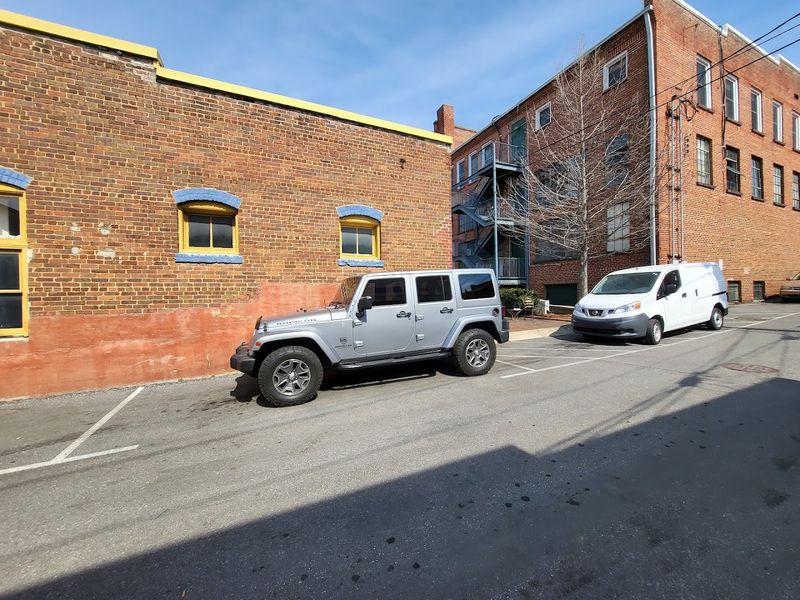
Shelby has a genuine small-city soul, anchored by a beautiful courthouse square and a community that takes pride in its local businesses.
Zillow shows average rent around $1,100, which would leave a limited monthly cushion for other expenses on an $1,800 Social Security check.
The City of Shelby offices at 300 S Washington Street, Shelby, NC 28150 serve a Cleveland County community with a long and proud history in the western Piedmont region.
Average home values sit around $209,740 according to Zillow, which is competitive for a town of Shelby’s character and location.
Earl Scruggs, the legendary bluegrass musician, was born here, and the Earl Scruggs Center celebrates that musical heritage in the heart of downtown.
Free concerts, community festivals, and farmers markets fill the calendar and give residents plenty to enjoy without spending much.
Local restaurants serve classic Southern comfort food at prices that make dining out feel like a genuine pleasure rather than a budget splurge. North Carolina’s mild four-season climate keeps utility costs in Shelby relatively predictable year-round.
Retirees who appreciate a lively but unhurried pace of life will find Shelby to be a deeply satisfying home base.
10. Dunn
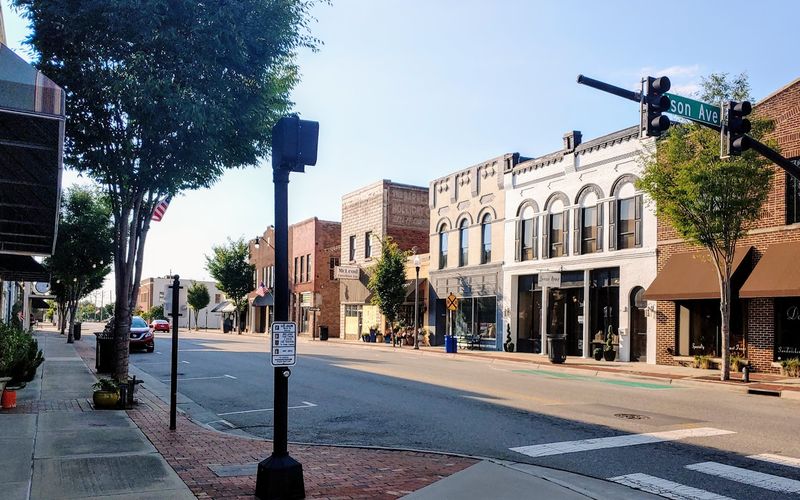
Interstate convenience helps Dunn feel more connected than some of the other towns in this roundup, but the housing math is a little less generous.
Zillow places the average home value at $227,476 as of March 31, 2026, and current apartment and rental listings show two-bedroom options around $1,025 and $1,050, with some listings rising higher.
Those numbers mean Dunn leaves less monthly breathing room than the strongest value plays on the list.
Even so, the town still stays below statewide home-value norms and offers rents that can remain workable for a disciplined household, particularly one that prioritizes a smaller place and keeps other spending tight.
Dunn belongs here as a cautious rather than effortless match. A retiree living on Social Security alone would need to budget carefully, but the town is still materially more plausible than many communities closer to Raleigh’s stronger housing pressure.
Readers who value practical access and are willing to accept somewhat thinner margins may still find it attractive.
Dunn is not the first place to choose for maximum leftover cash, but it can still function as a reasonable base for someone who wants convenience without jumping into a far more expensive market.
11. Rockingham
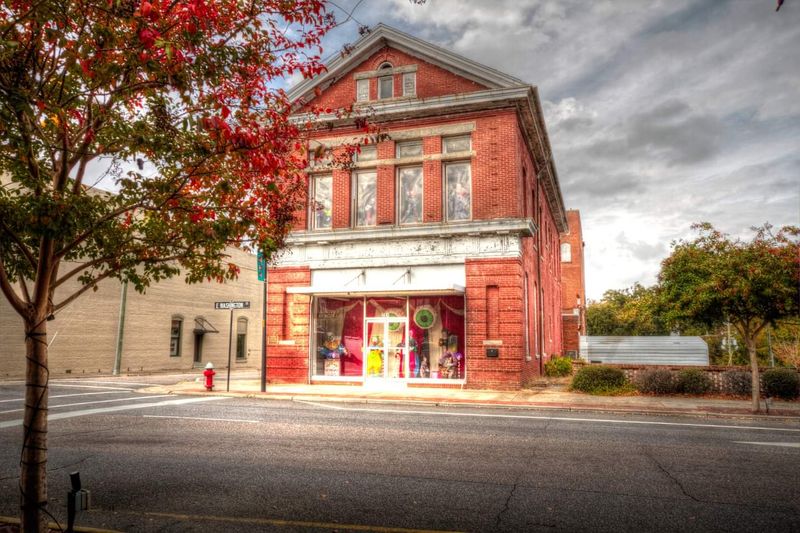
Rockingham is one of those towns where the numbers genuinely surprise you in the best possible way. Apartments.com shows average rent around $808, and Zillow lists average home values around $126,838, which is especially low by current North Carolina statewide standards.
City offices at 514 Rockingham Road, Rockingham, NC 28379 serve a Richmond County community that has been quietly maintaining its affordability while many other towns have seen prices climb.
That combination of low rent and low home values means both renters and buyers have realistic options here on a fixed income.
The Richmond County area offers several parks, and the Uwharrie National Forest is within reasonable driving distance for those who love natural scenery and outdoor activity.
Local diners and small grocery options keep food spending predictable without sacrificing comfort or flavor.
Rockingham Motor Speedway adds a fun local landmark that hosts events drawing visitors from across the Southeast.
North Carolina’s senior services programs are accessible in Richmond County, providing transportation, nutrition, and wellness support.
Retirees who prioritize keeping monthly costs as low as possible will find Rockingham one of the most honest value propositions in the entire state.
12. Ahoskie
Homeownership is what makes Ahoskie especially interesting for retirees trying to keep long-term costs down. Zillow places the average home value at $120,964 as of March 31, 2026, one of the lowest figures in this entire list.
Rental supply looks thin, with Zillow showing only a couple of active listings in the current snapshot, one around $1,150 and another near $1,800. That limited inventory suggests the town may not offer a strong apartment market for renters who need more choice.
Even so, Ahoskie still belongs because buying rather than renting can be the biggest money-saving move of all for the right retiree.
A buyer arriving with some equity or savings could lock in a much lower housing cost than they would find in most of the state, and the typical home value remains far below North Carolina’s broader average. That is a meaningful advantage in 2026.
Ahoskie works best for people open to ownership and less dependent on a deep rental inventory. Framed that way, it becomes one of the more compelling towns in the entire roundup rather than one of the weakest.
Fixed-income living gets easier when the biggest monthly expense is reduced as much as possible, and Ahoskie gives buyers one of the clearest chances to do exactly that.