10 Virginia Pottery Studios Where Beginners Can Try Something Completely New
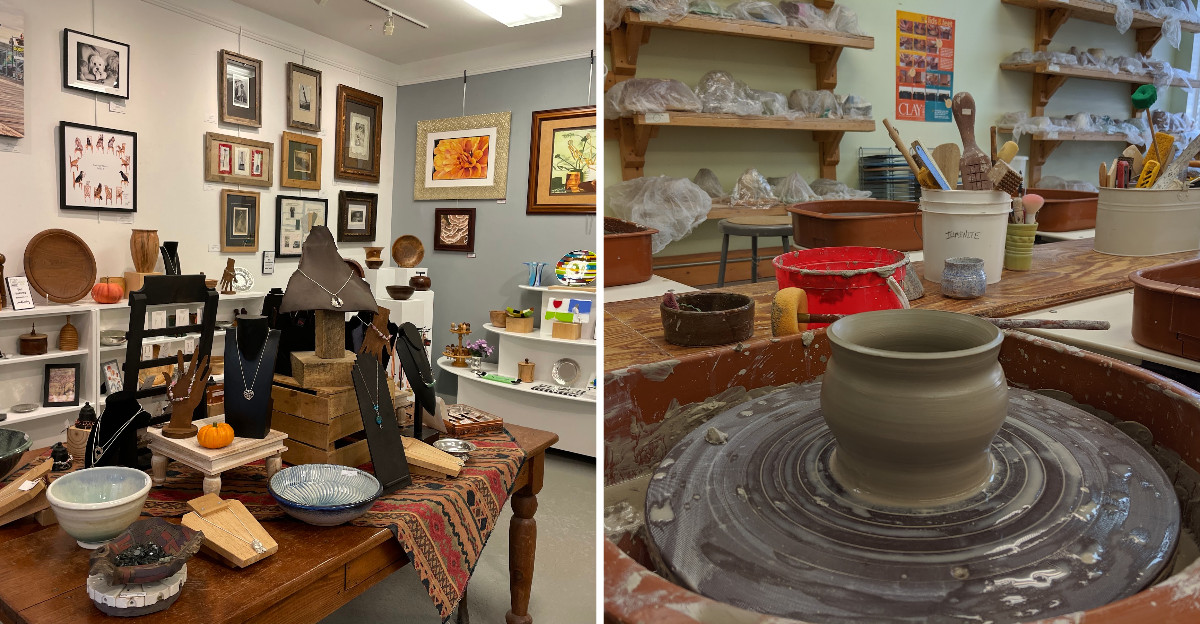
Your first bowl might wobble. It might lean. It might look nothing like a bowl at all, and that is the fun!
Virginia pottery studios make it easy for beginners to get their hands messy without taking the whole thing too seriously. Clay is wonderfully forgiving like that.
One minute you are concentrating like an artist. The next, your masterpiece collapses and everyone starts laughing.
Short classes and beginner sessions make the experience feel approachable, while patient instructors help turn chaos into something you can actually take home.
Who knows? That crooked little mug may become your favorite thing in the kitchen.
1. Alexandria Clay Co-Op, Alexandria
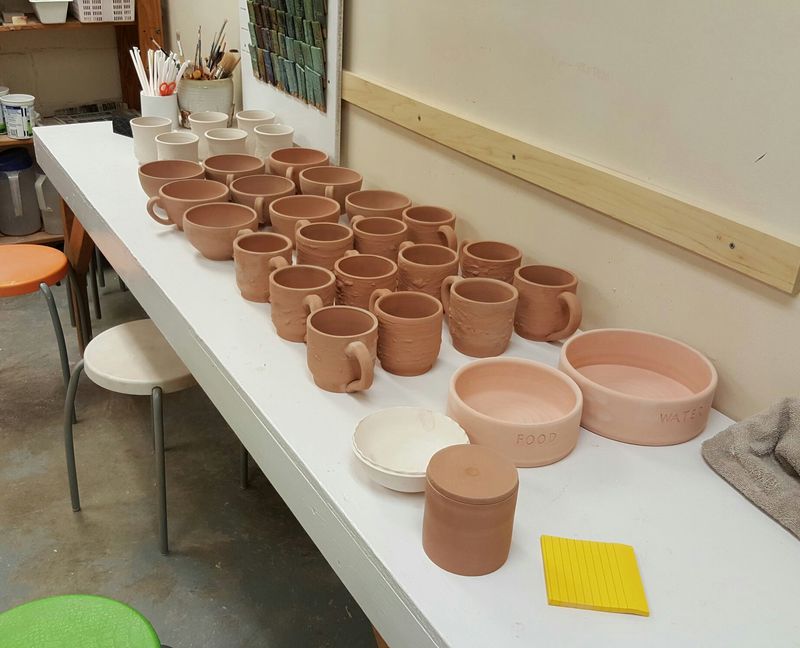
Teamwork and clay make a surprisingly great pair. Imagine a studio run by artists who share tools, space, and big creative energy.
Alexandria Clay Co-Op gives beginners several ways to learn without pretending pottery is easy on day one.
Its adult wheel and handbuilding classes run in nine-week sessions, with three hours of instruction each week.
Classes are kept small, so newcomers can get help with centering, pulling walls, shaping, trimming, and basic glazing as they build confidence.
Anyone curious about the wheel can also watch for the three-hour Try-It sessions.
These single-day classes focus on the basic process from soft clay to a finished pot and give first-timers time to practice several pieces. Space is limited, and current sessions often fill quickly.
The studio itself is well equipped, with twenty pottery wheels, multiple electric kilns, slab rollers, extruders, worktables, communal tools, and a large selection of studio glazes.
That makes it possible to move from wheel work to handbuilding without changing locations.
Membership comes later for potters who can work independently, since formal instruction is not included with that option.
For a first class, comfortable clothes and short fingernails make the hands-on work easier. That structure gives mistakes room to become useful practice.
Find the co-op at 2389 South Dove St. A first pot may wobble, but the process starts with solid instruction.
2. Virginia Beach Art Center Pottery Studio, Virginia Beach
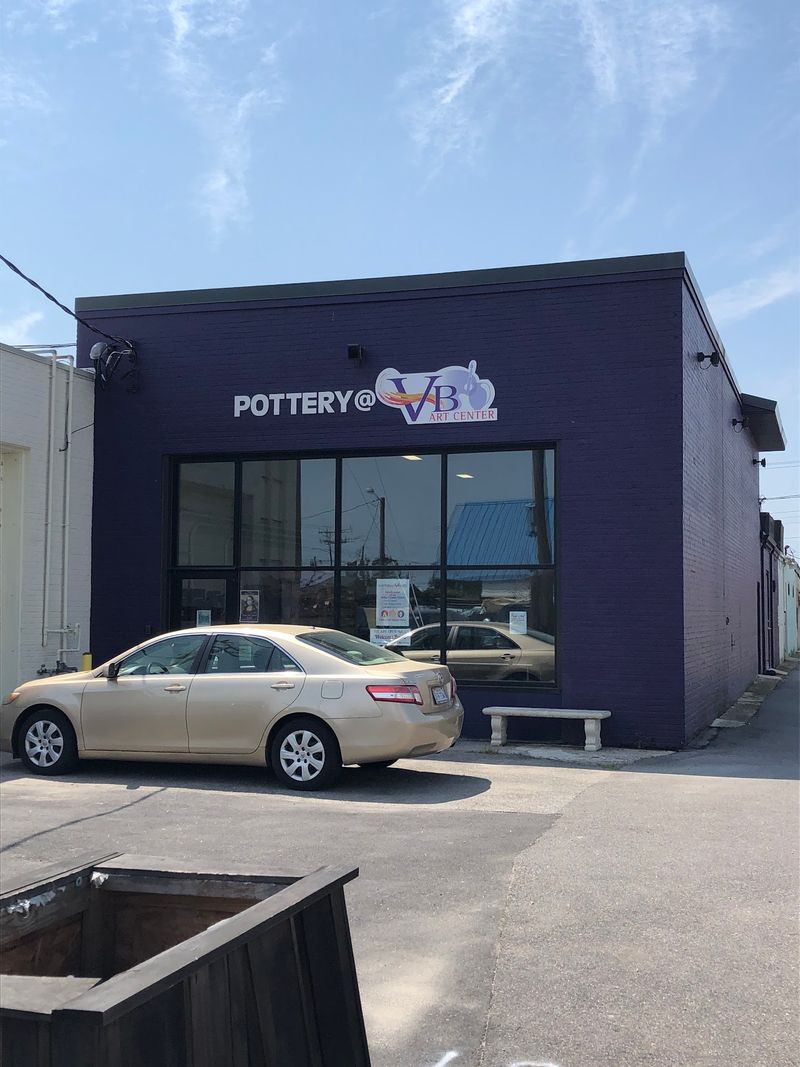
Virginia Beach Art Center’s Bailey Ceramic Studio gives beginners access to a fully equipped community ceramics space.
Along with those ten wheels, the studio has a slab roller, an extruder, handbuilding tools, and electric kilns used for the center’s regular class program.
Classes cover both wheel throwing and handbuilding, with options for different experience levels.
A newcomer can learn how to prepare clay, center it on the wheel, form basic shapes, or build pieces by hand without needing an established ceramics background.
Longer courses also include open-studio time, which gives students a chance to practice between lessons instead of squeezing everything into one class period.
Clay, glazes, and firing are included with class tuition, removing several supply decisions that can confuse first-time potters.
Independent open studio is reserved for people who have already completed a multi-week class and can work safely without instruction.
The wider art center adds another layer to the visit, with rotating exhibitions and resident artists working in other media under the same roof. The building is accessible, and parking is available on site.
The pottery studio is at 532 Virginia Beach Blvd. Beginners can focus on learning the clay process rather than arriving with a long shopping list.
3. Common Clay Pottery, Roanoke
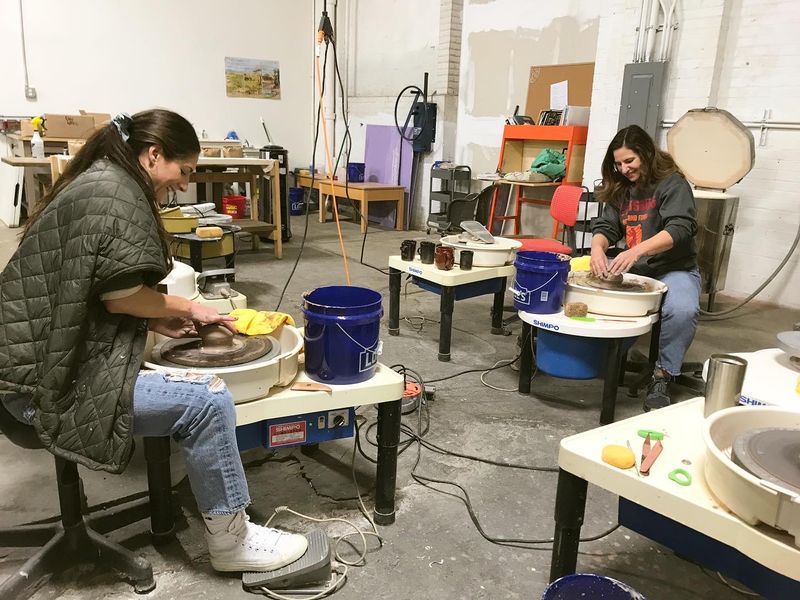
Just imagine for a second making your first pot in a mountain city. The Blue Ridge views alone could inspire a whole collection of mugs.
Common Clay Pottery in Roanoke keeps the entry point flexible for people who are not ready to commit to a long ceramics schedule.
Try-It classes offer a short introduction to wheel throwing or handbuilding, while recurring courses give students more time to develop technique. Current fall sessions include multi-week instruction, materials, and open-studio access.
Wheel classes cover the core skills that make a pot possible, including preparing clay, centering, shaping, and refining basic forms.
Handbuilding takes a different route, using pinching, coiling, rolling, joining, and surface decoration instead of a spinning wheel. Both formats work well for beginners because they reveal how differently the same material can be handled.
Recurring classes are generally for older teens and adults, while Try-It sessions are open to younger participants as well.
The studio also recommends practical preparation such as comfortable clothes, tied-back hair, and trimmed nails for wheel work.
Open-studio hours run through most of the week, giving enrolled students room to practice what they learned in class. Finished Try-It pieces need time to dry and pass through firing cycles before pickup.
Common Clay is at 1111 Shenandoah Ave NW. The first session can stay simple: learn what the clay does, then decide where to go next.
4. Friendly City Clay & Art Center, Harrisonburg
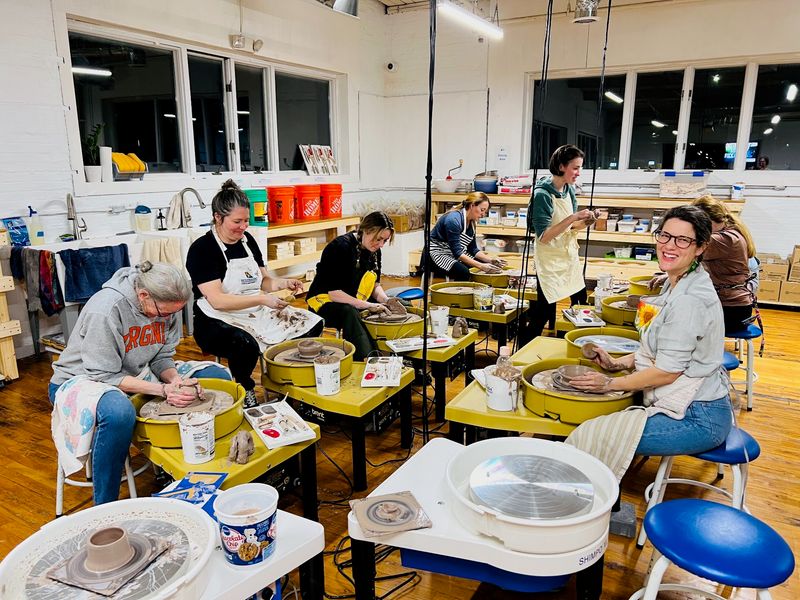
Friendly City Clay & Art Center brings sunny atmosphere to Harrisonburg from a studio filled with wheels, kilns, handbuilding tables, and flexible classroom areas.
The center opened in 2024 and now runs pottery instruction alongside other art classes.
Beginners can start with one-day projects such as handbuilt mugs, seasonal pieces, and other guided workshops. Longer introductory courses in throwing and handbuilding appear throughout the schedule as well.
A handbuilt project can begin with a slab, coil, or simple shaped form, making it approachable for anyone who would rather avoid the wheel at first.
Wheel classes focus on practical fundamentals, including clay preparation, centering, shaping, and finishing.
Class sizes and age requirements vary, so checking the current listing before registering matters. Adult pottery sessions commonly begin at age sixteen, while separate youth art programs welcome children from age six.
The center also offers studio memberships and dedicated workspaces for people who already know how to handle clay independently.
Pottery is only part of the calendar. Drawing, painting, printmaking, metals, mosaic, and other workshops appear throughout the year, making the building useful for mixed-interest groups.
Find it at 1157 South High St, Suite 102. The first project does not need to be polished; learning how clay responds is already a successful start.
5. LibertyTown Arts Workshop, Fredericksburg
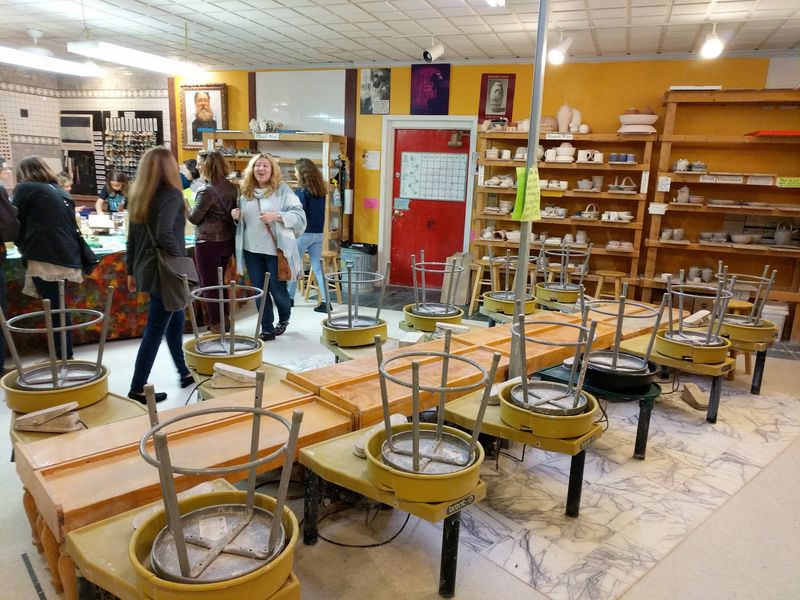
I had to do a double-take at the size of this creative building. Thirteen thousand square feet of art is a lot to take in.
LibertyTown Arts Workshop in Fredericksburg combines a large gallery with more than two dozen working studio spaces and nearly sixty local artists and craftspeople.
Potters share the building with painters, woodworkers, fiber artists, metalworkers, and other makers, so a pottery class begins in a place already full of finished work and active studios.
Current beginner pottery courses require no previous experience. Five-week wheel classes teach centering, opening, pulling walls, trimming, handles, glazing, and basic tool use.
Adult handbuilding classes offer another route, while children have separate wheel and handbuilding programs during selected sessions.
The ceramics room is built for regular use, with twelve wheels, a slab roller, worktables, glazes, underglazes, tools, and other equipment.
Clay, glazing, and firing are included with many beginner class registrations, although students may still need a basic personal tool kit depending on the course.
Walking through the gallery before or after class can make technique feel more concrete. Finished bowls, mugs, sculpture, and mixed-media work show how many directions a simple material can take.
LibertyTown is at 916 Liberty St, within easy reach of historic downtown Fredericksburg. Beginners can start with a structured course, then return with a clearer idea of which techniques they want to practice next.
6. Manna Pottery, Sterling
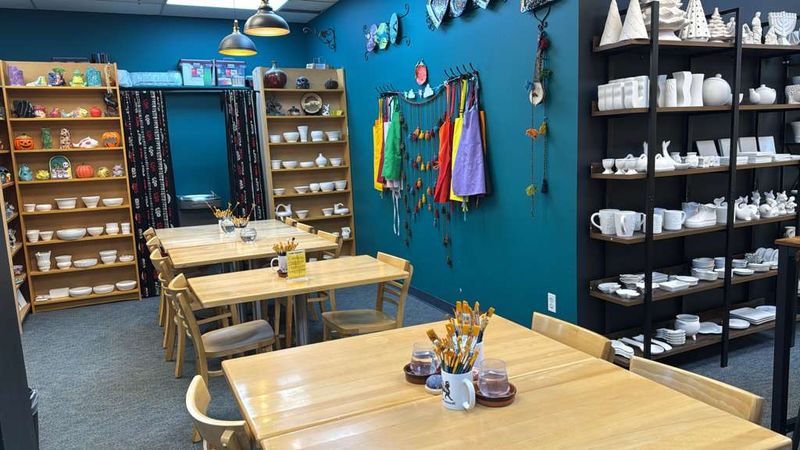
It makes you wonder, doesn’t it, how old traditions find new homes? Sometimes they show up on a hand-painted plate in Northern Virginia.
Manna Pottery in Sterling gives beginners several ways to approach ceramics, including wheel throwing, handbuilding, and pottery painting.
That range helps anyone unsure which process will feel most natural.
The one-day Try-It workshop is the clearest starting point for the wheel. It introduces centering and shaping in a single beginner-friendly session, and two selected pieces can be trimmed and fired afterward.
Students can later return to decorate them or choose a simple finished glaze.
Multi-session handbuilding workshops move away from the wheel and focus on pinch pots, coils, slabs, mugs, and other functional forms.
Pottery painting offers an even gentler entry point: visitors choose a ready-made ceramic piece, add their own design, and leave it for glazing and firing before pickup.
The studio also runs youth programs and seasonal workshops, so the calendar changes throughout the year. Finished work can take time to process because ceramics must dry and pass through the kiln before it is ready.
No elaborate setup is necessary for a first visit. Comfortable clothes and a willingness to work slowly are enough to begin.
Manna Pottery is at 36 Pidgeon Hill Dr. Trying more than one format can help a newcomer discover whether throwing, building, or decorating feels most satisfying.
7. Firebrick Pottery, Lynchburg
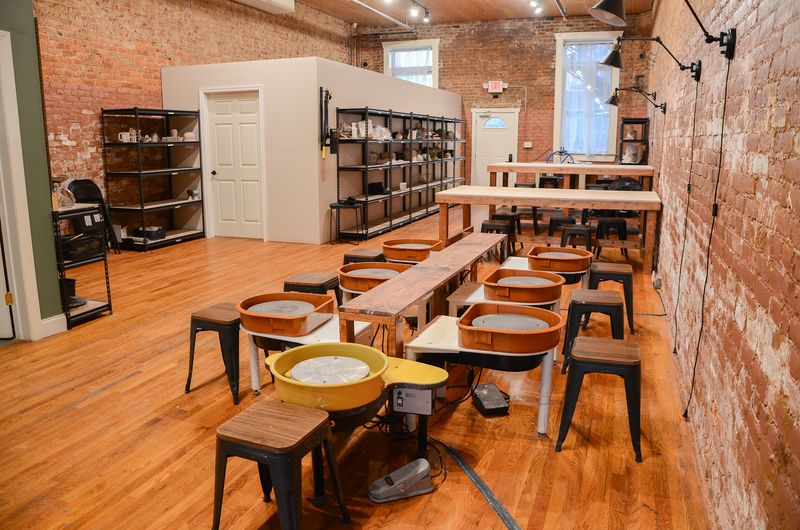
Let’s be real for a second, squishing clay is wonderfully calming. Few things melt stress like soft mud spinning between your fingers.
Firebrick Pottery brings that hands-on focus to downtown Lynchburg, where beginner workshops make it possible to try the wheel without a long course first.
Two-hour wheel-throwing sessions run regularly in 2026 and require no previous pottery experience.
During a beginner workshop, students learn the essentials of centering, shaping, and forming clay on an electric wheel.
Each person can choose a favorite piece for firing and glazing, with pickup later. That keeps the first lesson focused on technique.
For people who want more practice, longer wheel classes build on those same fundamentals. Multi-week sessions add repeated instruction and studio access for more practice. Handbuilding and skill-focused workshops also appear on the calendar.
The studio functions as both a ceramics workspace and a retail destination for handmade pottery. That means beginners can see finished examples nearby without turning the class into a comparison exercise.
Age requirements vary by session, and some beginner workshops allow younger teens when accompanied by an enrolled adult. Clothing that can handle clay splashes is the practical choice.
Firebrick Pottery is at 1105 Main St. A two-hour workshop is enough to learn why centering looks simple from across the room and feels completely different at the wheel.
8. Round Hill Arts Center, Round Hill
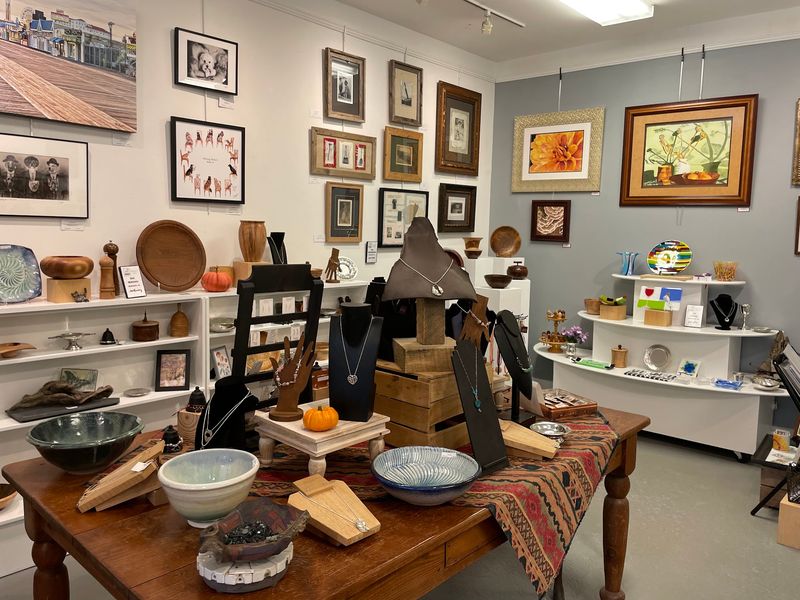
Trust me, pottery fever is real in the Loudoun countryside.
Round Hill Arts Center keeps adult ceramics on a steady schedule, with wheel throwing forming the core of its pottery program and handbuilding appearing regularly alongside it.
Newcomers can join dedicated beginning classes or mixed-level sessions.
Current beginner courses run as multi-week series rather than quick drop-ins.
Wheel instruction starts with practical studio habits and clay preparation before moving into wedging, centering, pulling walls, trimming, tool use, and basic glazing.
Those steps build gradually, giving students repeated chances to correct a leaning cylinder.
Handbuilding courses offer a second path into clay. Slabs, coils, pinching, surface decoration, and other construction methods allow useful or sculptural forms without relying on a spinning wheel.
Open-studio periods are included with some courses, giving students additional practice time between lessons.
The broader arts center also schedules painting, drawing, craft, and youth programs, so pottery is part of a larger community art calendar.
Adult ceramics classes are popular and often fill, making early registration useful when a new session appears.
First-time students receive clay, glaze, and firing through the required materials setup for their course, removing the need to assemble supplies independently.
The center is at 35246 Leesburg Pike, Suite 170. Patience matters more than natural talent here; the wheel usually starts making sense through repetition.
9. Rosewood Pottery Studio, Richmond
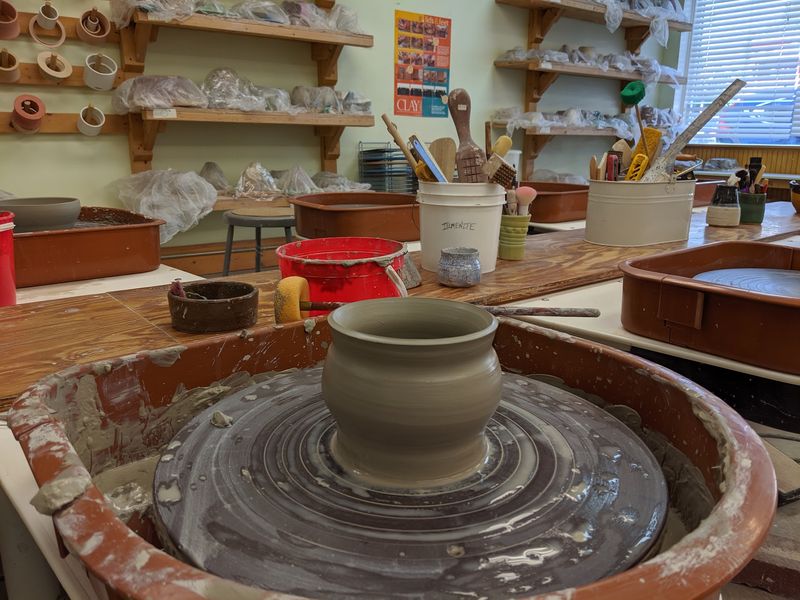
Small classes really do make learning easier. Fewer students means more time with the teacher and fewer frustrated sighs.
Rosewood Pottery Studio in Richmond keeps its wheel classes deliberately small, generally limiting groups to four to ten students with some introductory formats even smaller. The Fan District studio focuses almost entirely on ceramics.
Beginning wheel instruction runs in eight-week cycles.
The introductory intensive is built for people who have never thrown before or who need a full refresher, while the regular Wheel Throwing I curriculum covers centering, pulling, shaping, trimming, basic forms, and simple glazing.
Handbuilding is another beginner option, using slabs, coils, pinching, molds, carving, and surface decoration without requiring a wheel.
Students in longer courses also receive open-studio time, making it possible to repeat techniques outside scheduled instruction. Clay and firing arrangements vary by class, so the current registration details matter before arriving.
For a shorter introduction, Clay Dates provide a two-hour guided session for small groups. An instructor demonstrates the process step by step, and each participant receives the finished piece created during the session.
Rosewood also offers individual instruction for people who prefer a quieter learning format.
Find the studio at 2217 W Cary St. The smaller-group setup is especially useful when the hardest part is figuring out exactly where your hands should go.
10. YMCA At Virginia Tech Pottery Studio, Blacksburg
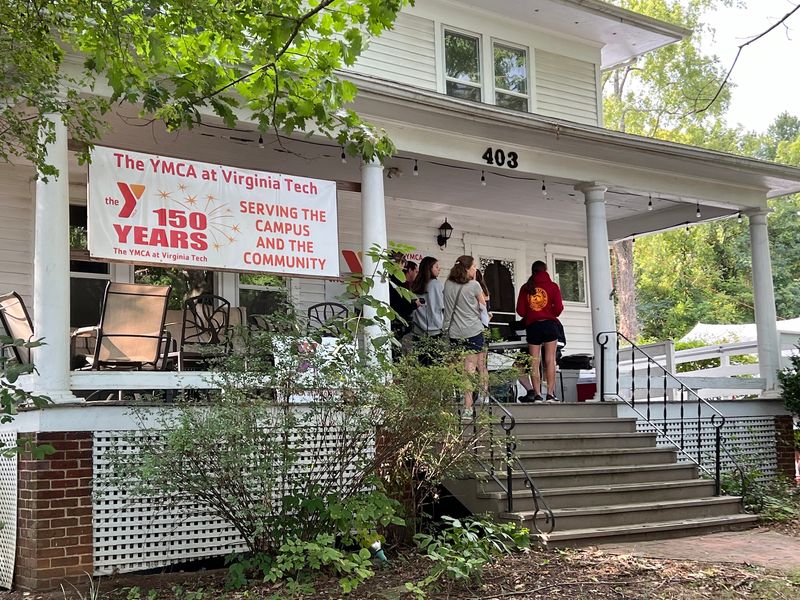
The YMCA at Virginia Tech has operated its community pottery studio since 2011. Classes take place at the Y Center at 1000 North Main St in Blacksburg.
Current eight-week offerings include beginner-friendly wheel throwing, handbuilding, and clay sculpture. Wheel classes introduce wedging, centering, and the basic forms needed for cups and bowls.
Handbuilding covers pinch, coil, and slab construction, while sculpture sessions add clay conditioning, joinery, and additive or subtractive modeling.
Tools and supplies are included with current classes, keeping the first session straightforward.
Most courses welcome students age fourteen and older, with additional supervision requirements for younger teens. Returning students can advance while beginners concentrate on fundamentals.
The studio also supports experienced potters through a membership program, but membership is not the starting point.
Adults must first take a class and demonstrate that they can work independently before joining the member waitlist. Members gain access to wheels, handbuilding space, shared tools, glazes, storage, and firing.
Class schedules change in cycles and popular sessions can fill quickly.
For a first-time student, the eight-week format provides enough repetition to move beyond one lucky bowl and begin understanding why the clay behaves the way it does. That repetition makes early mistakes easier to diagnose.