Visitors Drive From All Over Georgia To Hike This Delightfully Wacky Art Trail
I almost turned back after the first hundred feet. The trail looked ordinary, just dirt and pine needles and the usual quiet.
Then I spotted a rusty spoon glued to a fence post, arranged like it was mid-conversation with a chipped teacup. A few steps later, a row of painted rocks grinned up at me like they knew a secret I didn’t.
My hiking boots kept moving, but my brain couldn’t keep up. Georgia has plenty of trails that promise scenery.
This one promises something stranger, and somehow better. Every bend held another odd little surprise, part folk art, part fever dream, all completely unforgettable.
If you’ve ever wanted a walk that makes you laugh out loud alone in the woods, Georgia just handed you the perfect excuse.
An Art Gallery Made Entirely Of Trash
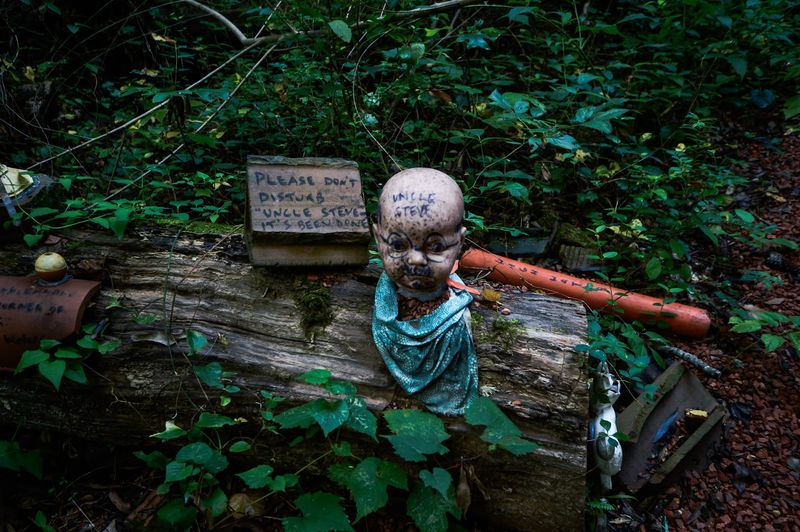
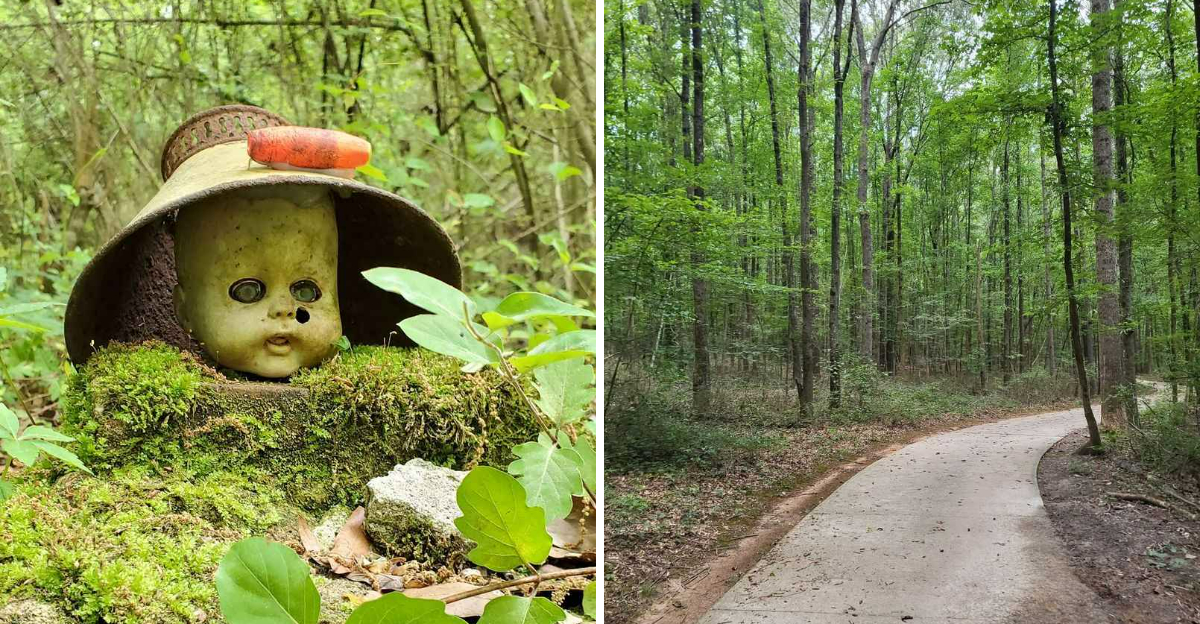
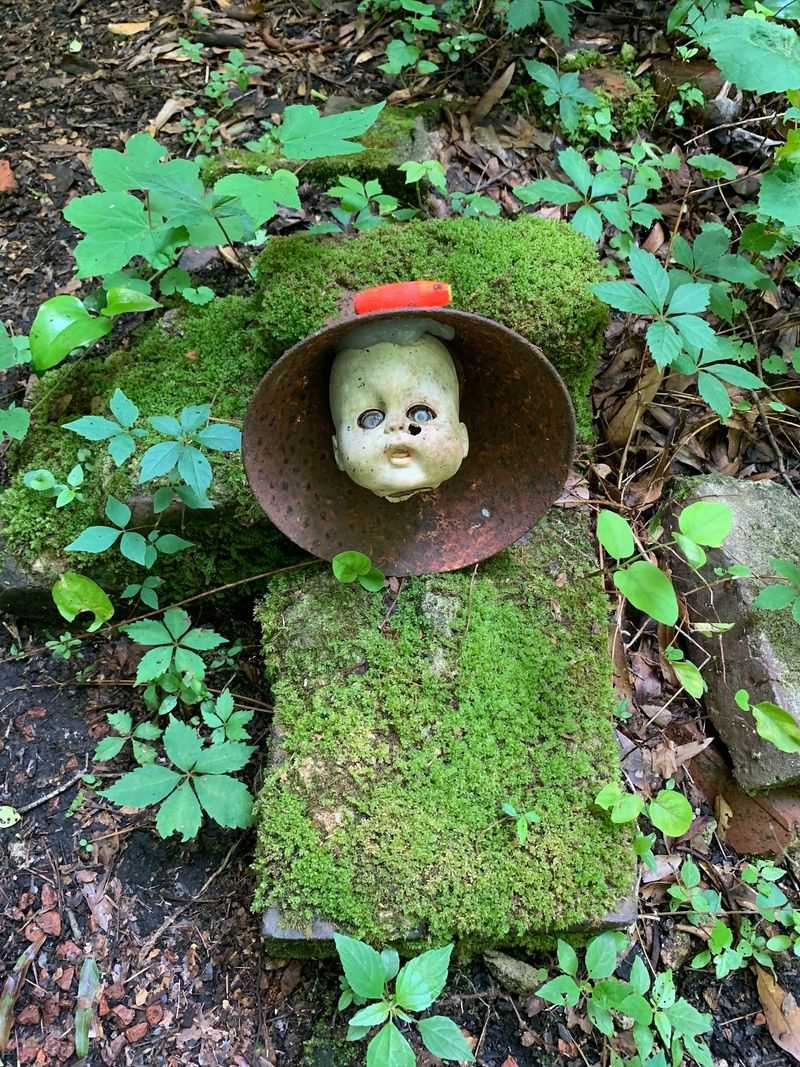
Picture a museum with no walls, no ticket booth, and no guard telling you to stand back. Instead, you get dirt underfoot and old doll faces staring out from between the roots.
Local carpenter Joel Slaton began creating the trail’s found-object installations in 2011. He noticed the park was littered with abandoned objects and decided to turn junk into something worth looking at.
The rule behind the art is refreshingly strict. Everything must be made from items found inside the park itself, nothing carried in from home.
That means you will spot vintage children’s toys, chipped doll limbs, antique bricks, old fishing gear, and even leftover railroad pieces. Each item once had a job, and now it has a second life as sculpture.
Some pieces make you smile. Others make you pause, because the arrangement carries a quiet message about waste and what we throw away.
Walking it feels less like a hike and more like a treasure hunt with a sense of humor. You will find it at Doll’s Head Trail, 1305 S River Industrial Blvd SE, Atlanta, GA 30315.
The Boardwalk Everyone Talks About
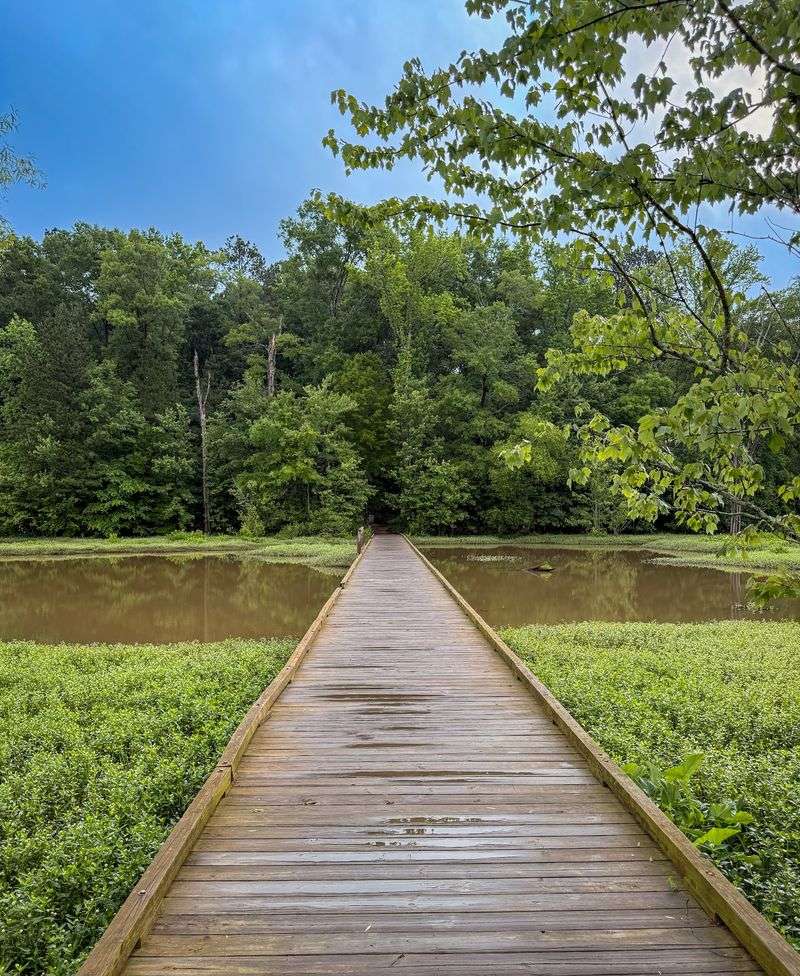
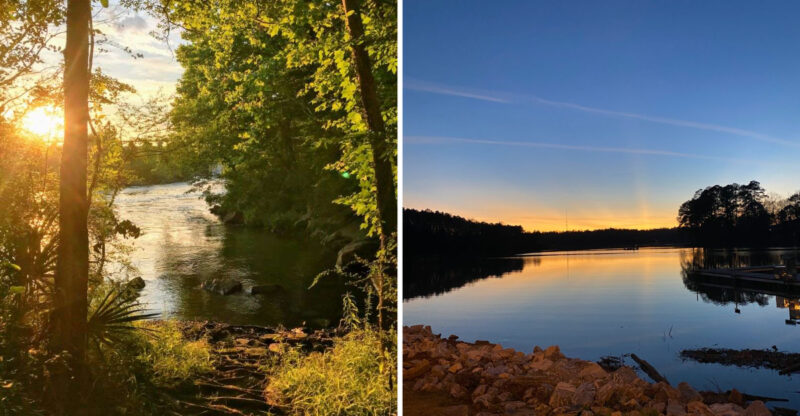
Ask anyone who has walked here what they liked best, and the boardwalk usually wins. It stretches out over the water with trees crowding in on both sides.
The wood planks give a soft thump under your shoes, and the lake below sits still enough to mirror the sky. On a bright morning the reflection looks almost painted.
Turtles like to sun themselves on logs near the edges. Fish flicker just under the surface, and birds cut across the open water without warning.
Sections of the boardwalk collect a layer of dirt and fallen leaves, so watch your footing after rain. Sturdy shoes help far more than sneakers here.
Benches show up at a few points along the route, which makes it easy to sit and just listen. The quiet is real, even though the city hums somewhere beyond the trees.
Plenty of visitors say the boardwalk alone justifies the drive. Pair it with the art loop and you get two completely different moods in under two miles.
Bring a camera. The light over the water changes fast and rewards anyone paying attention.
A Loop Short Enough For Almost Anyone
Distance rarely scares anyone off here. The full loop runs about 1.5 to 1.6 miles and stays close to flat the entire way.
Most people finish in 30 to 45 minutes, though stopping to study the art stretches that out. I would plan for an hour if you want to see everything properly.
The surface changes as you go. Paved stretches near the start give way to packed dirt, then boardwalk, then narrow paths that feel much more remote.
Rain turns some sections soft and muddy, so check the weather before heading out. Waterproof shoes save a lot of complaining later.
The route is generally gentle, but muddy ground, narrow paths, and uneven sections may challenge some visitors.
Signs mark the way, though a few turns double back and can leave you briefly turned around. A phone map clears up confusion in seconds.
The art installations sit right along the trail rather than hidden in the brush. If you are not seeing dolls yet, keep walking.
Red Clay Pits Turned Into Lakes
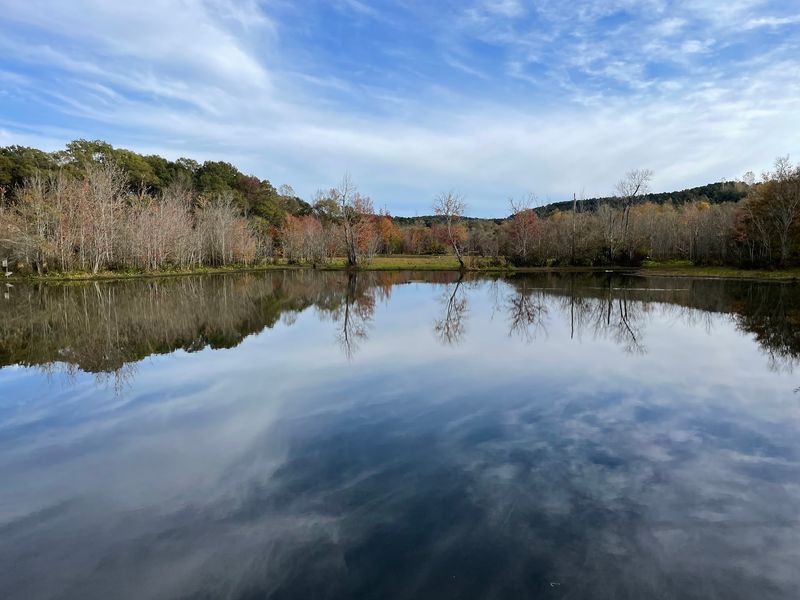
The lakes here were not carved by nature. They started as industrial holes in the ground during the 1800s.
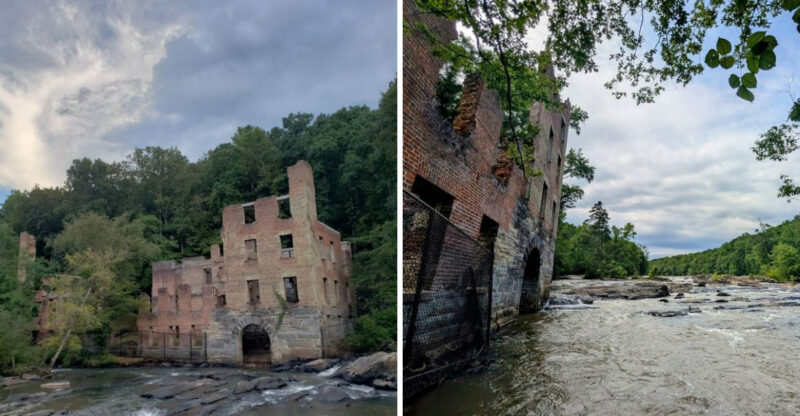
The South River Brick Company once operated on this land, digging deep into Georgia’s famous red clay to make bricks. When the digging stopped, rainwater slowly filled the pits.
What remained became the two Constitution Lakes, now ringed by marsh grass and trees. Knowing that history changes how the water looks.
Old bricks still turn up along the ground, which explains why so many appear in the art installations. Those weathered blocks are literally leftovers from the company that shaped this place.
DeKalb County turned the land into a preserve in 2003, adding trails and boardwalks so people could reach the wetlands safely.
The transformation is remarkable when you think about it. An industrial site became a habitat, then a park, then an outdoor gallery.
Keep an eye out for railroad artifacts too, since tracks run near the northern side. History and art overlap here in a way few parks manage.
Wildlife That Steals The Show
Turtles are the reliable stars. They line up on logs like they are posing for photos, and they rarely disappoint.
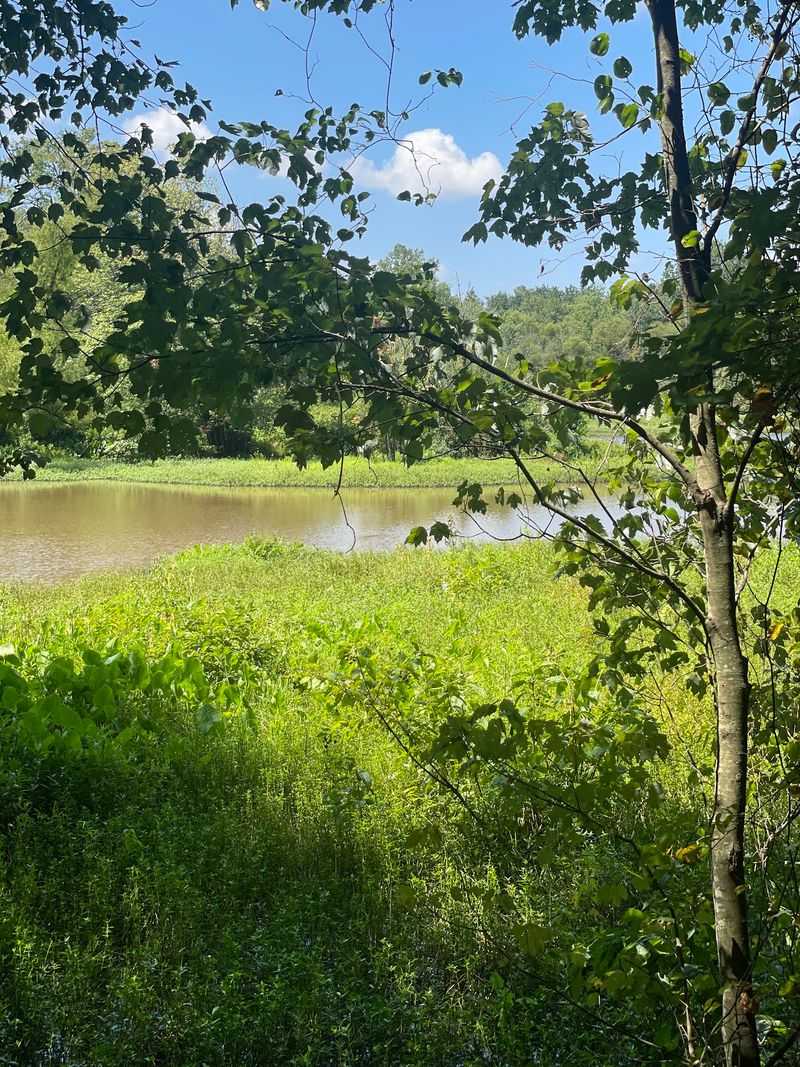
The wetlands provide habitat for turtles, waterfowl, egrets, snakes, and many other species.
Egrets show up too, standing perfectly still until they decide to move. Their white feathers stand out sharply against the green marsh.
Chipmunks and squirrels dart across the path constantly, and various snakes live here as well, so watch where you step.
Then there are the spiders. Orb weavers build enormous webs across the trail, especially on the southern half of the loop.
Oddly enough, those spiders earn their keep. Where the webs are thick, mosquitoes tend to be scarce.
Early morning and late afternoon deliver the best wildlife odds. Move slowly and stop often, since animals notice motion before anything else.
Binoculars are a smart addition to your bag. Many of the birds stay far out over the water where the view is otherwise limited.
Spooky In Spirit Never In Reality
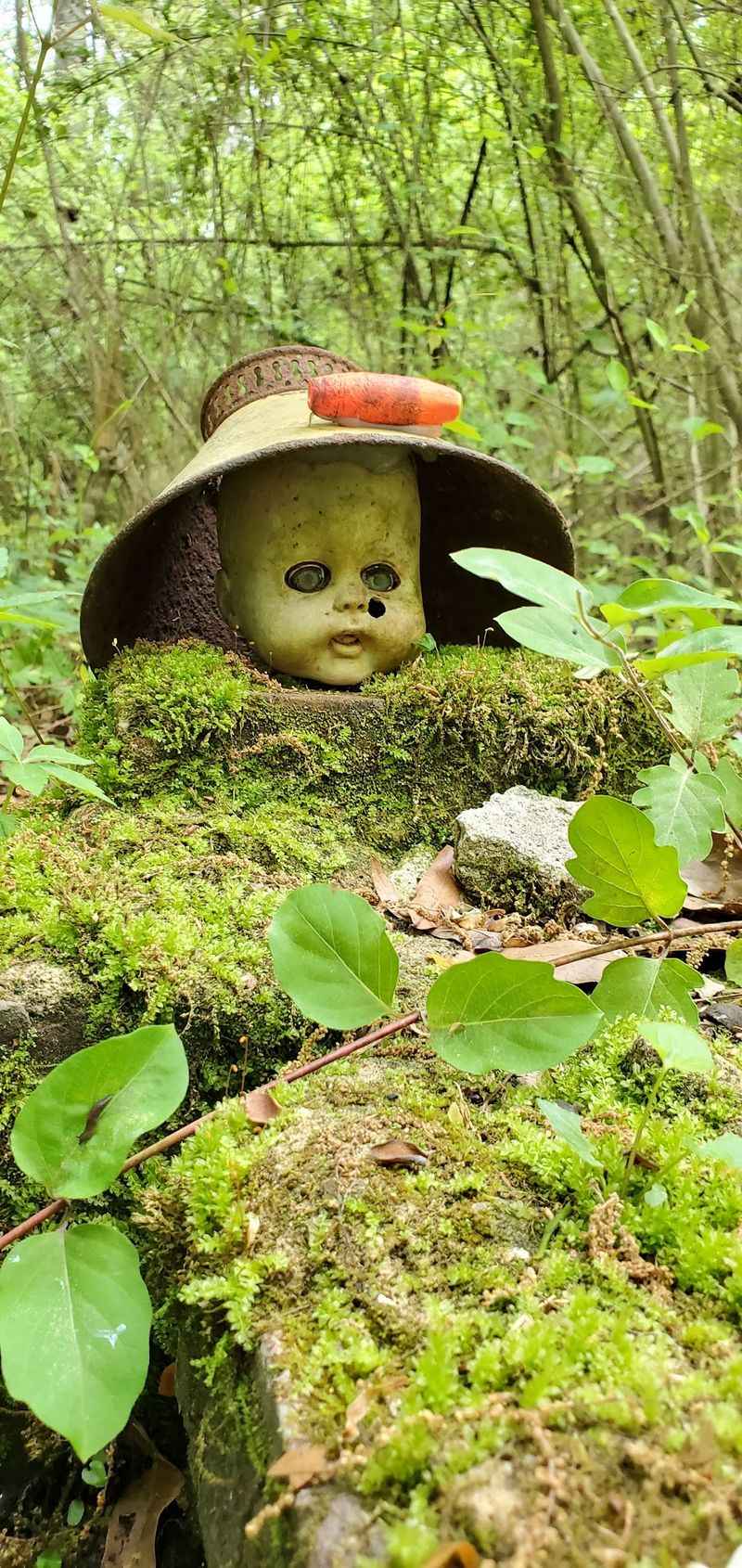
Cracked doll faces in a shadowy forest sound like the opening of a scary movie. In reality, the mood lands somewhere between odd and charming.
Sunlight filters through the trees and softens everything. The installations feel more curious than frightening, especially with families passing by.
Some pieces do carry an eerie edge, particularly where faded doll heads sit half buried in moss. That contrast between plastic and nature is part of the appeal.
Others are clearly playful. Little hand painted signs, arranged toys, and clever groupings show a sense of humor at work.
Fans of certain zombie television shows often mention getting the same atmosphere here. The quiet definitely adds to the effect.
Very young children might find a few displays unsettling, so preview what is ahead if your kid is sensitive. Most handle it fine and treat it like a game.
The overall feeling is whimsy with a slight chill. You leave amused rather than unnerved.
Go with an open mind and the installations reveal actual thought behind them. Several carry quiet messages about waste, memory, and what we discard.
Add Your Own Creation To The Collection
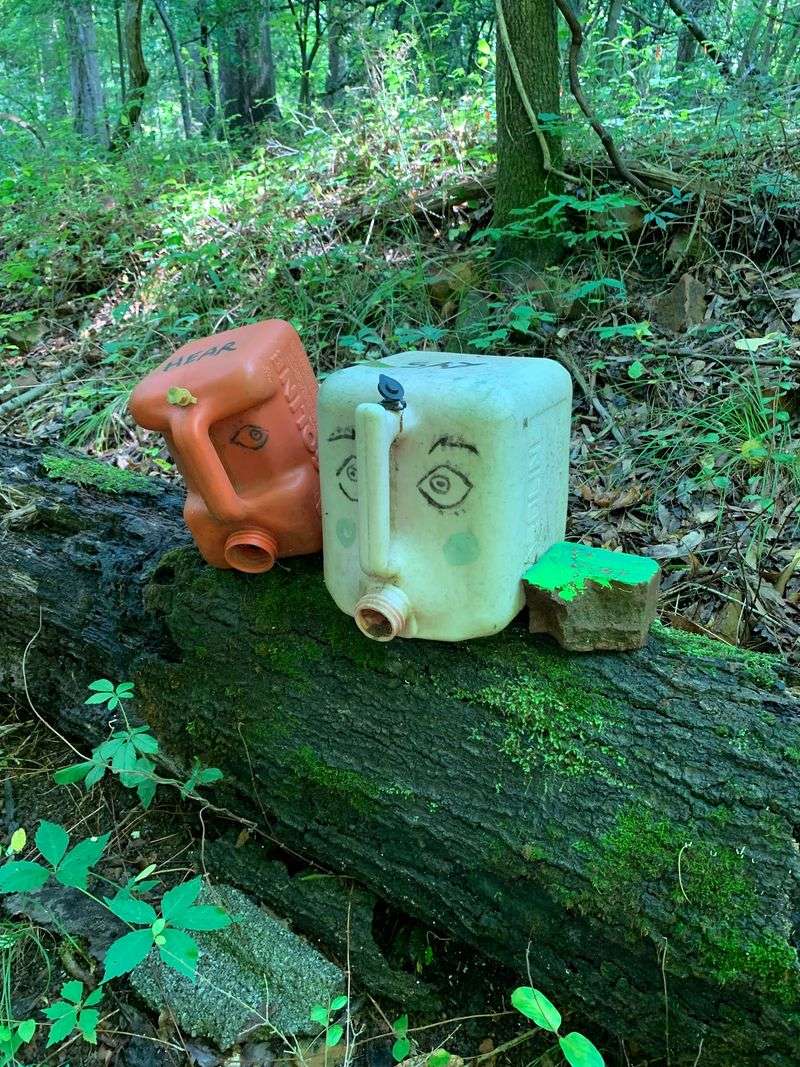
Here is the part that surprises most first timers. Visitors are welcome to build their own installations and leave them behind.
There is one condition, and it matters. Every material must come from inside the park, nothing brought from your house or car.
That single rule keeps the whole project honest. It also turns the walk into a scavenger hunt for old bricks, toy pieces, and stray objects.
Because of the contributions, the gallery never looks the same twice. Come back in six months and new work will have appeared.
Some visitors get creative with stacking, others with arrangement, and a few with short written messages. There is no jury and no fee.
Respecting existing work is the unspoken code. Pieces have been taken or broken over the years, which is a shame for everyone who comes later.
If you build something, keep it small and out of the walking path. Sturdy placement helps it survive Georgia weather.
Volunteers help maintain the trail, and Joel Slaton still pitches in, pulling tires and debris out of the South River.
Dogs Welcome And Bug Spray Recommended
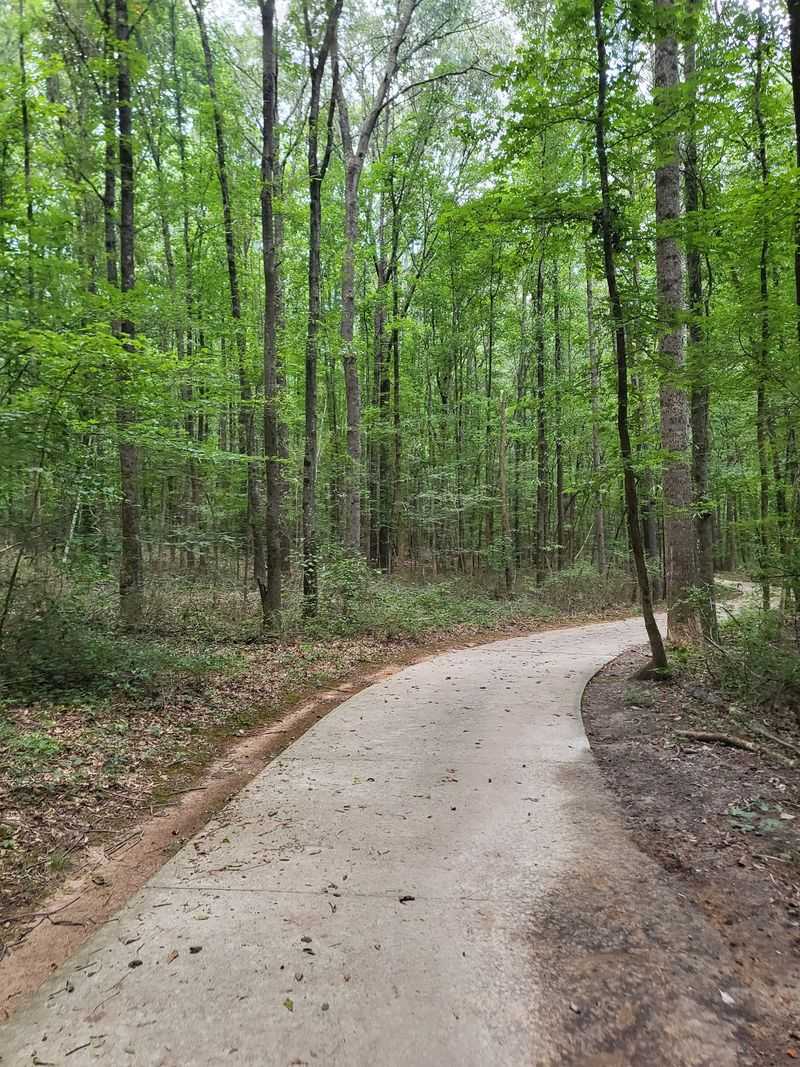
Dogs love this place, and the smells alone explain why. Leashed pups are welcome the entire way around.
The flat terrain suits most breeds, and the shade helps on warm days. Just keep an eye on curious noses near the installations, since some dogs try to taste the artwork.
Water for your pet is essential. There are no fountains, no vending machines, and no snack stand anywhere on the property.
Now for the honest warning. The wetlands mean mosquitoes, and summer visitors describe them as unusually determined.
Bug spray is not optional between late spring and early fall. Long sleeves help too, especially on the narrower sections.
Poison ivy grows in spots where the path narrows, so staying centered on the trail protects your legs.
Restrooms are not available, though a portable toilet has appeared near the parking area at times. Plan accordingly before you arrive.
A parking area is available near the trail entrance, but availability may vary on busy days.
How To Actually Find The Dolls
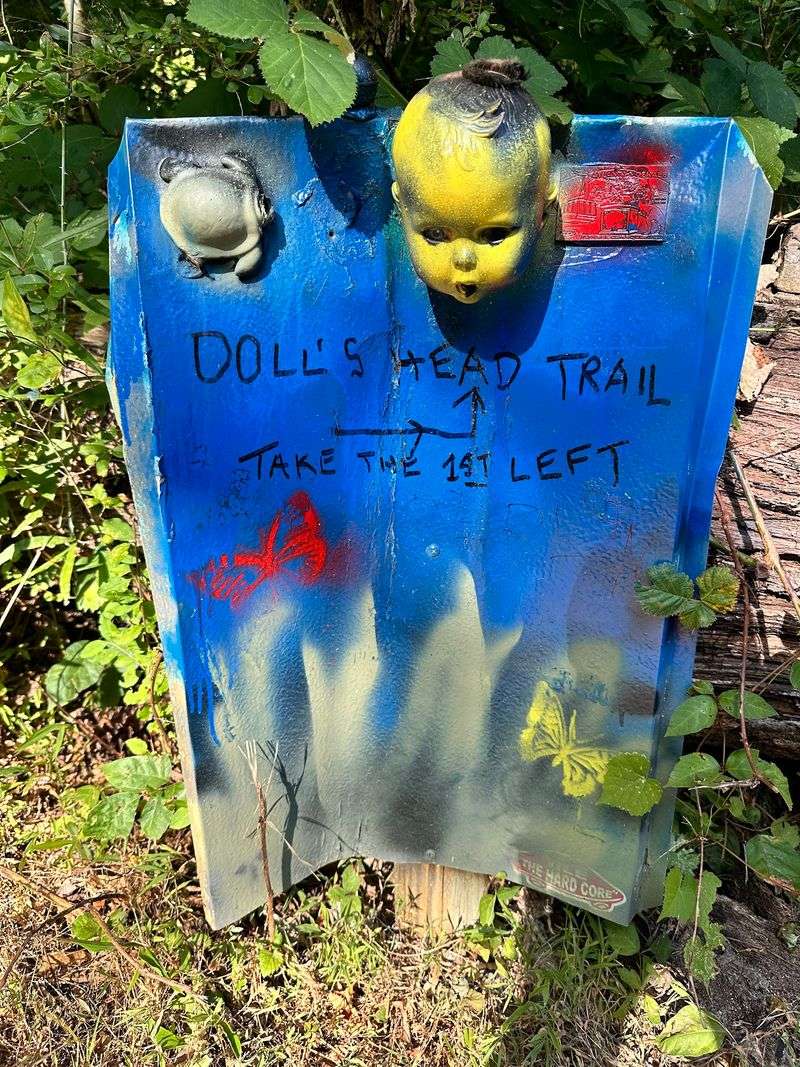
Plenty of visitors reach the parking lot, start walking, and see no dolls at all. Frustrating, but easy to fix.
The art sits on the northern portion of the loop, across the lake from the parking area. Taking the trail entrance farthest from the road puts you on the right track sooner.
Expect a 20 to 30 minute walk from your car before the first installations appear. Patience pays off here.
Once you are in the right zone, everything lines the path. Nothing is hidden deep in the brush, so if you see no toys, you have not arrived yet.
Small hand painted signs point the way, and some include written directions. They are charming but occasionally confusing.
Pulling up a GPS map solves any doubt in a moment. Several turns double back on themselves, which throws off first timers.
Weekday mornings offer the quietest experience and the best light for photos. Weekends stay manageable but slightly busier.
Give yourself at least 90 minutes total. Rushing this walk defeats the entire purpose of coming.