Waterfowl Fill The Sandhills Lakes At This Quiet Nebraska Wildlife Refuge
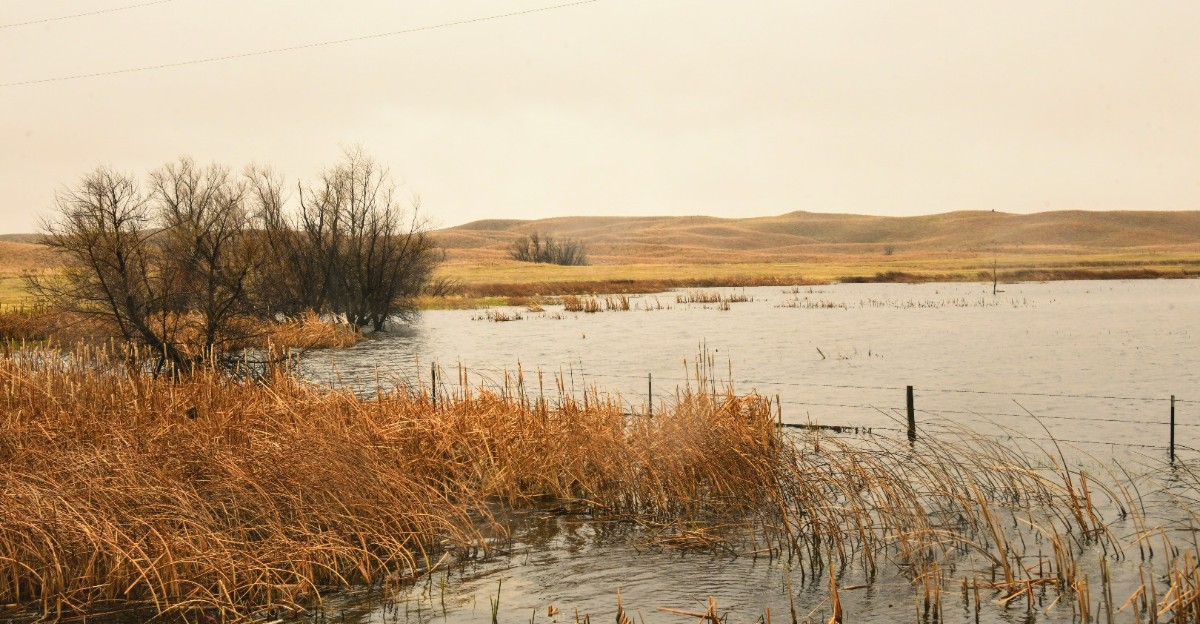
Somewhere in north-central Nebraska, the highway stops being scenery and starts being silence. You crest one grass-covered dune, then another, and suddenly there’s water down in the low spot, shallow and bright, with ducks packed across it like scattered pepper.
There’s no gate, no ticket booth, no gift shop selling stuffed animals, just a gravel road and a hand-lettered sign pointing somewhere. It turns out that the low-key turnoff leads into one of the largest stretches of untouched prairie left on the continent, and the birds figured that out long before anyone else did.
A Refuge Set Deep in Cherry County
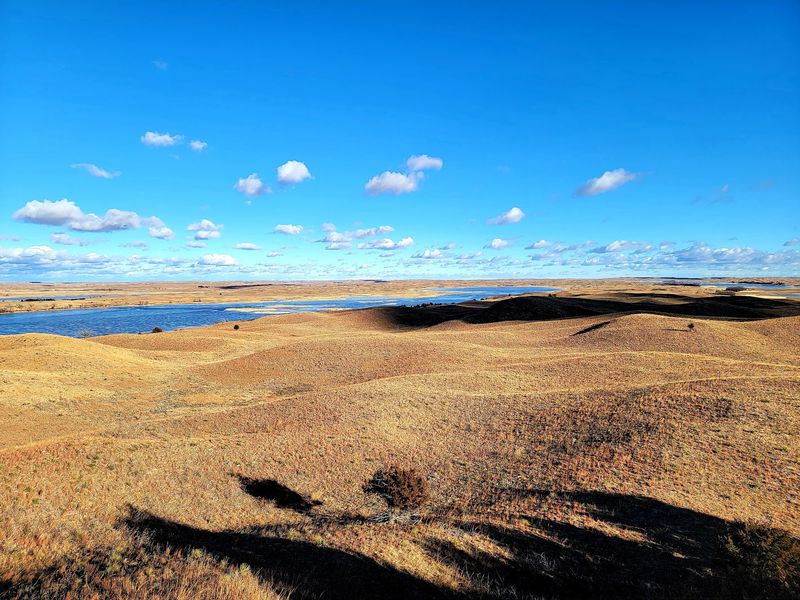
Grass holds the dunes down out here, and barely. Roughly 71,500 acres of rolling sand ridges, shallow lakes, marshes and wet meadows make up Valentine National Wildlife Refuge, spread across Cherry County in north-central Nebraska.
Congress set it aside in 1935 as a breeding ground for migratory birds and other wildlife, and the mission has not drifted much since. What you get is a working piece of prairie rather than a manicured park, managed for the animals first and arranged for people second.
Gravel roads thread between the lakes. Cattle graze certain pastures on purpose.
The land rolls in long swells that block your view of the next valley until you are already in it, which is part of why wildlife sightings arrive without warning here.
Nebraskans who have driven Highway 83 south of Valentine have crossed the edge of it without necessarily realizing how far the boundary extends. It is not a roadside attraction so much as a landscape you enter, one dune at a time, with the sky doing most of the talking.
Dunes, Groundwater, and the Ogallala Aquifer
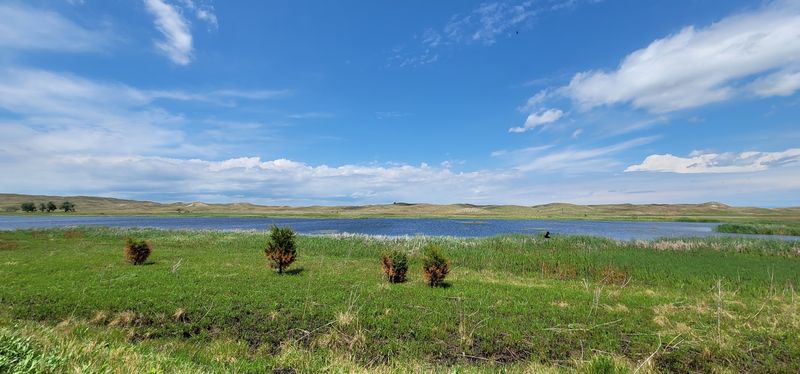
Wind built this place. Over the last 10,000 years, steady prairie winds sculpted an enormous field of sand dunes that grasses eventually anchored in position, creating the largest remaining expanse of mid- and tall-grass prairie in North America.
Underneath sits the Ogallala Aquifer, one of the biggest underground water supplies on the planet. Where the dune valleys dip low enough to meet that groundwater, lakes appear, and they stay filled without a single river feeding them.
That plumbing explains everything odd about the refuge. Dry sand hills and open water sit within a few hundred yards of each other, producing layer after layer of habitat: deep lake, shallow marsh, wet meadow, dry upland, all stacked in one short walk.
Interpretive signs along the trails explain the aquifer story for anyone who wants the geology spelled out. Knowing it changes the drive, though.
Every lake you pass stops looking like a pond and starts looking like the top of something enormous and mostly invisible.
Ducks by the Thousands on the Central Flyway
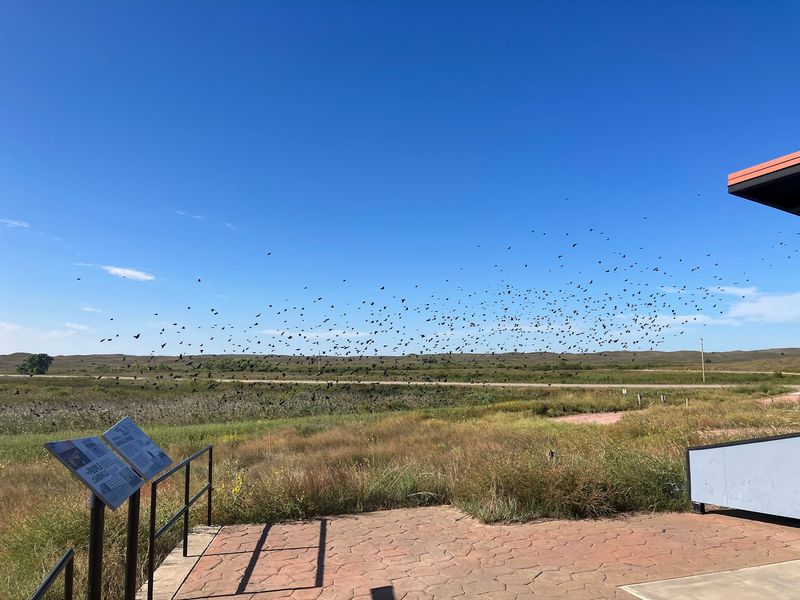
During peak migration, as many as 150,000 ducks can crowd the refuge lakes and wetlands at once. May and October are the heavy months, with fall concentrations building from mid-October through November when ducks and geese stack up before pushing south.
Over 270 bird species use this ground, which places the refuge squarely in the Central Flyway, one of the continent’s main migration corridors.
Blue-winged teal, mallards, canvasback, redheads and ruddy ducks all turn up, some nesting, others just refueling on a long trip. Trumpeter swans matter here too: the refuge provides wintering habitat for the high plains trumpeter swan population, and a white swan against gray November water is hard to miss.
Sandhill cranes pass overhead in spring and fall, their rattling calls carrying farther across open prairie than seems reasonable.
Bring binoculars. From a gravel pullout you can scan several hundred birds at a time, and the mix shifts week to week as different species cycle through on their own schedules.
Grouse Dancing Grounds and Spring Blinds
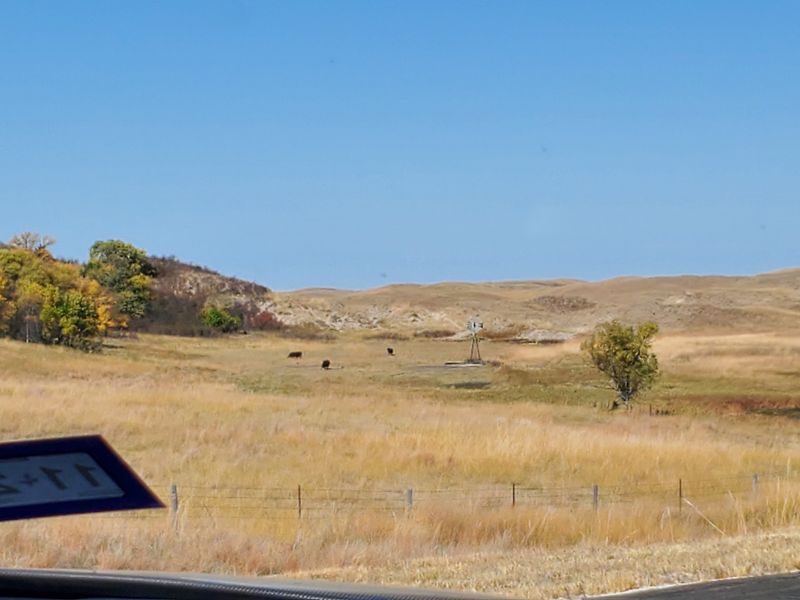
April mornings on the refuge come with a soundtrack most Nebraskans have never heard in person: the hollow booming of greater prairie chickens and the foot-drumming of sharp-tailed grouse on their traditional dancing grounds.
Males gather before sunrise on the same patches of short grass their ancestors used, inflate colored air sacs, stamp their feet and spin in tight circles while hens wander through pretending not to watch.
Observation blinds are available for people who want a close look without breaking up the show. The birds are sharp-eyed and skittish, which is exactly why the blinds exist.
Getting there means an early alarm and a cold drive in the dark, and the display winds down not long after full daylight. Reservations and arrangements should be sorted with the refuge ahead of time rather than on the morning of.
Few wildlife spectacles in the state reward a pre-dawn effort this directly. The grass is silvered with frost, the sky turns pink, and the prairie starts stomping.
The CCC Fire Tower and Nature Trail
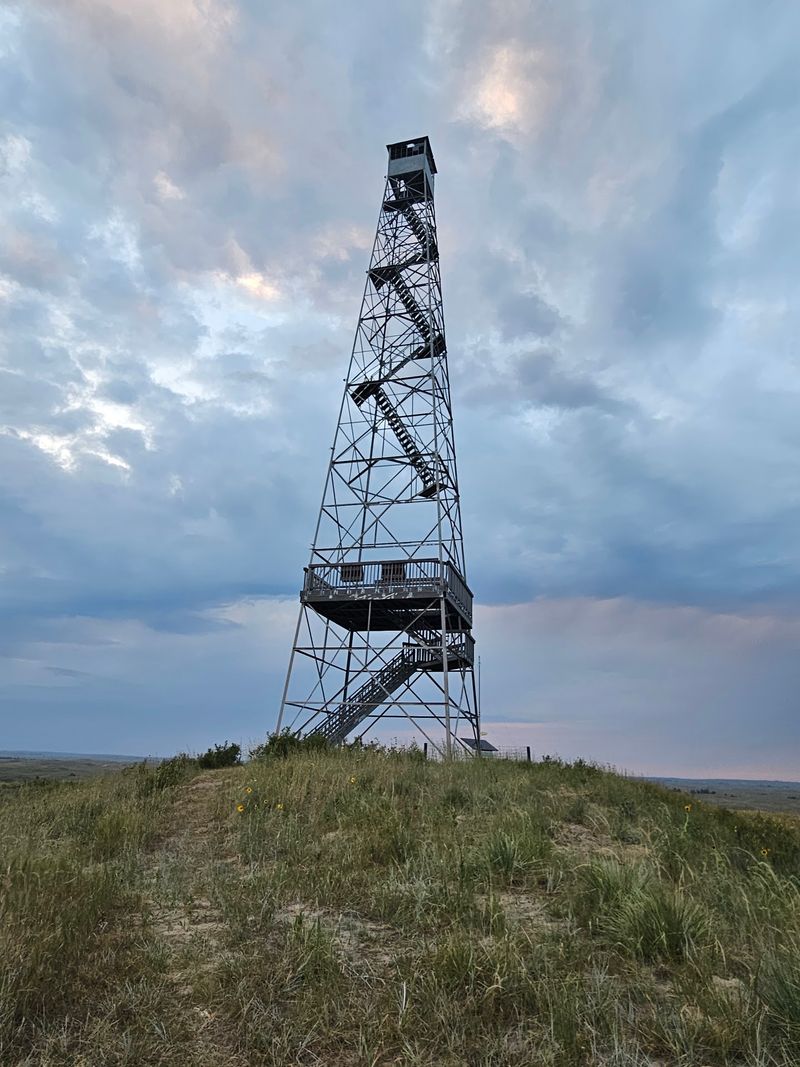
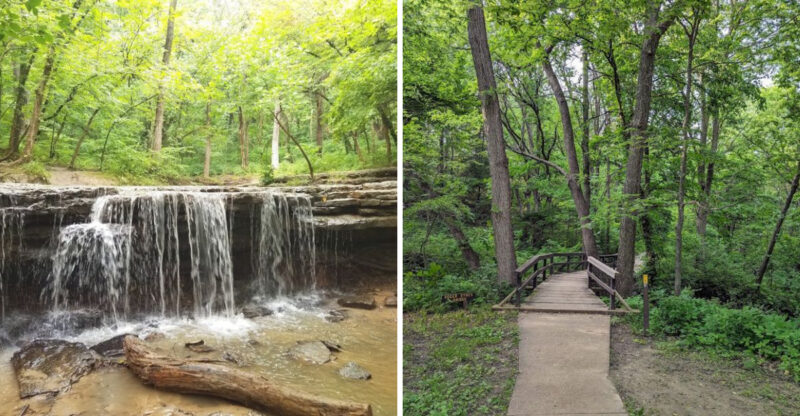
A fire lookout tower in Nebraska sounds like a joke until you are standing under one. The Civilian Conservation Corps Nature Trail runs about a mile out to an old tower whose observation deck opens up an enormous view of dune, lake and sky.
You cannot climb all the way to the top, but the deck delivers plenty. From up there the Sandhills read as waves rather than hills, and the lakes show up as silver slots between them.
The path stays mowed, with benches spaced along it for anyone who wants to sit and listen. Interpretive signs cover the CCC story, the aquifer and Sandhills ecology, so the walk teaches as much as it stretches your legs.
Watch your footing near the trail edges, since small poison ivy plants grow along parts of the route, and the signs say as much.
It makes a strong break from a long highway drive. Twenty minutes out, a long look, twenty minutes back.
Little Hay Road and the Nine-Mile Wildlife Drive
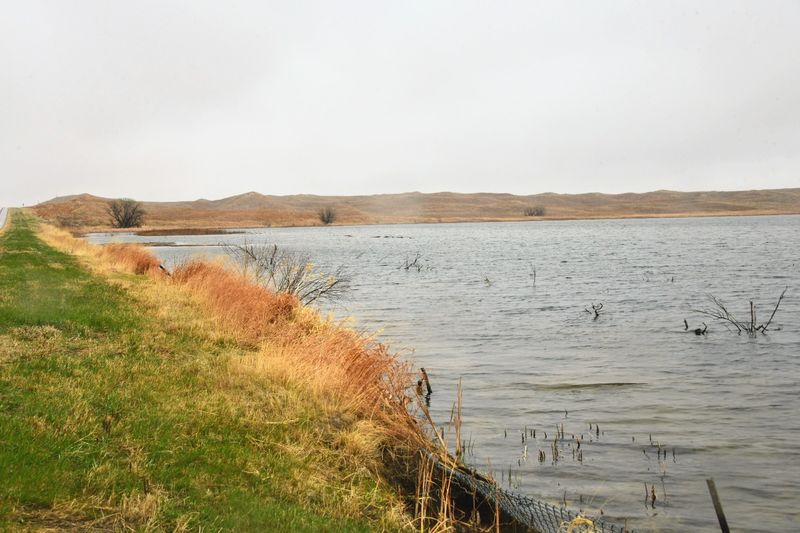
Nine miles of maintained gravel run through the Little Hay valley, past three lakes, tall dunes, hay meadows and marsh edges. Windows down, the drive works as a rolling wildlife blind, since animals tolerate a slow vehicle far better than a person on foot.
Road conditions vary. Most of the graded routes handle an ordinary car fine, though some stretches get rough enough that higher clearance helps, particularly after weather.
The auto tour is effectively single-lane in places, so pulling over to let someone pass is part of the etiquette out here.
Early morning and the last hour before sunset are when the drive pays best. Deer move into the meadows, ducks shuffle between lakes, and low light turns the dune faces gold in a way midday flattens out completely.
Cyclists take the refuge roads in summer, which is a slower and buggier version of the same experience with better sound. Either way, budget more time than the mileage suggests.
Turtles, Grouse Country Mammals, and Winter Eagles
Birds get the headlines, but the mammal list runs long: white-tailed and mule deer, coyotes, beaver, muskrat, mink, raccoons, skunks and weasels all work these valleys.
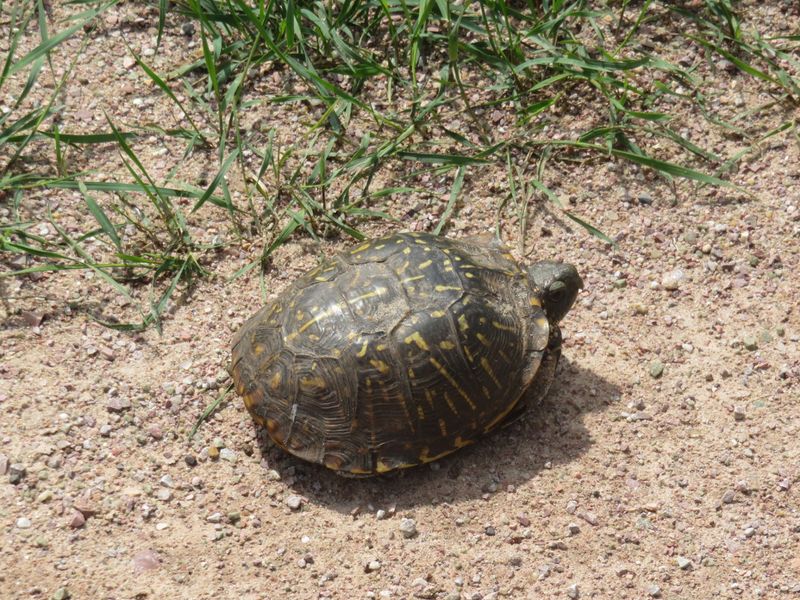
The spotted Blanding’s turtle, a species of special interest, lives in the wetlands and hauls itself up into dry sand to nest, which is how people usually spot one. Snapping turtles turn up too, and they get large.
Spring brings chorus frogs calling from the shallows loud enough to cover conversation. Snakes and lizards work the warm sandy slopes through summer, and grassland songbirds nest low in the prairie grass where you will hear them long before you see anything.
May pulls in herons, terns, pelicans and shorebirds to the marsh edges.
Then winter strips it down. Snow covers the dunes, rough-legged hawks arrive, and bald eagles and golden eagles hunt the open country with almost nothing to block the view.
Cold-weather visits are quiet in a way the other seasons never quite manage.
Fire, Grazing, and Keeping the Prairie Working
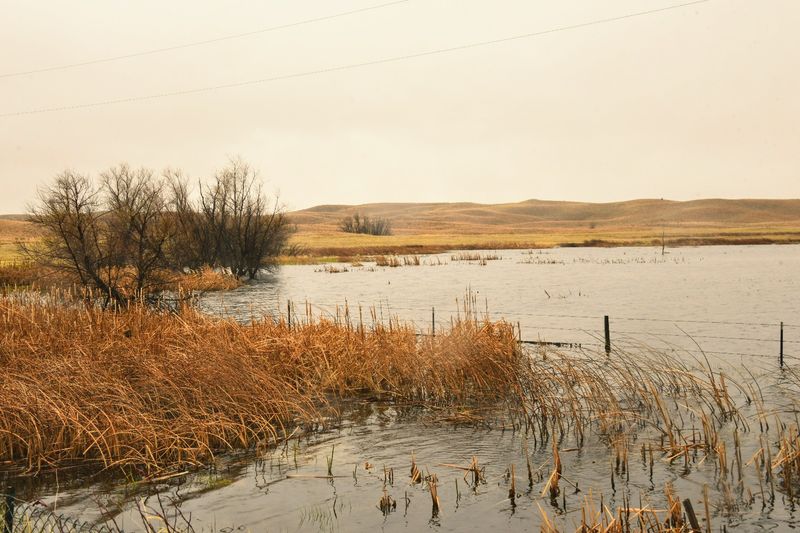
Prairies of this kind developed under two forces: wildfire and heavy grazing by bison and elk. Remove both and the grassland chokes on its own dead material, so the refuge recreates them deliberately.
Prescribed fire and managed cattle grazing stimulate fresh grass growth, return nutrients to the soil and clear out thatch, producing the thick cover nesting waterfowl and grassland birds need. Cedar removal is part of the job too, since invading trees turn open prairie into something else entirely.
Water gets managed with the same intent. Staff can lower levels in a pond to expose mud flats for feeding shorebirds, encourage plant growth on the bare ground, then reflood it so waterfowl arrive to a stocked pantry.
Non-native carp are kept in check because they tear up aquatic vegetation and cut into the food supply the ducks depend on.
None of this announces itself while you drive through. That is rather the point: the prairie looks effortless because someone is working at it year-round.
Planning a Nebraska Sandhills Visit
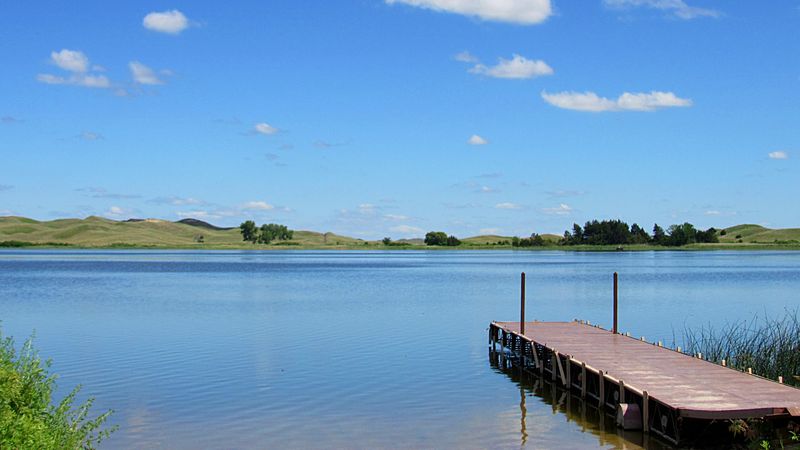
Head about 30 miles south of the town of Valentine on US Highway 83, then a mile east on Pony Lake Road, where a sign marks the turn to the refuge office at 39679 Pony Lake Rd.
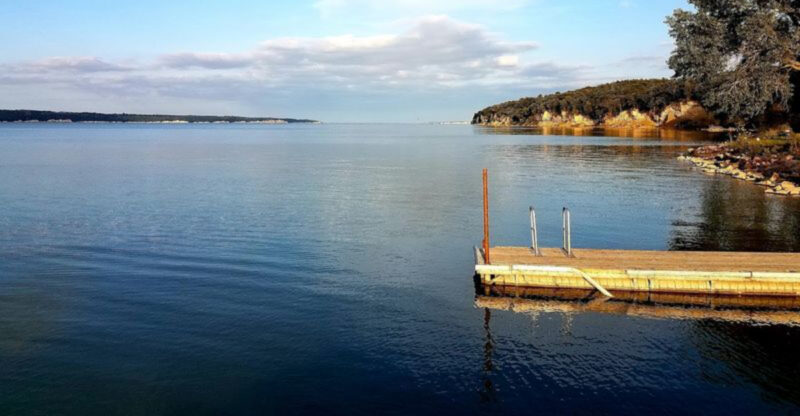
Grounds stay open around the clock, and there is no entrance fee. Facilities are minimal: two short hiking trails, one restroom, docks and boat launches, no picnic shelters or concessions.
Pack water, snacks and insect repellent, because the bugs near the marshes are serious business in warm months.
Gasoline motors are not permitted on the lakes, which keeps the water clean and the noise level near zero. Fishing has been rebuilding since flooding and winter kill hit the lakes in recent years, so check current conditions before hauling a boat out.
Dogs are welcome on leash. Hunting seasons draw crowds in fall, so time a quiet trip around them.
Go for the migration weeks, stay for the silence. Nebraska has few places this wide and this undisturbed.