12 Western North Carolina Attractions Nearly Lost To Hurricane Helene That Are Finally Welcoming Visitors Again
Some mountain places disappear from a road trip map before anyone is ready to let them go.
After Hurricane Helene hit in September 2024, familiar stops across the Blue Ridge suddenly became unreachable while repairs stretched on for months.
Roads had to be rebuilt, trails cleared, and damaged sites carefully restored before visitors could return.
Now, much of Western North Carolina is welcoming travelers back.
The scenery still draws people in, but the recovery adds another layer to every stop.
A reopened gate or repaired bridge now carries a story of persistence behind it. The comeback is real, even if a few access changes remain.
These are the places ready to be part of your next mountain trip again.
12. Chimney Rock At Chimney Rock State Park
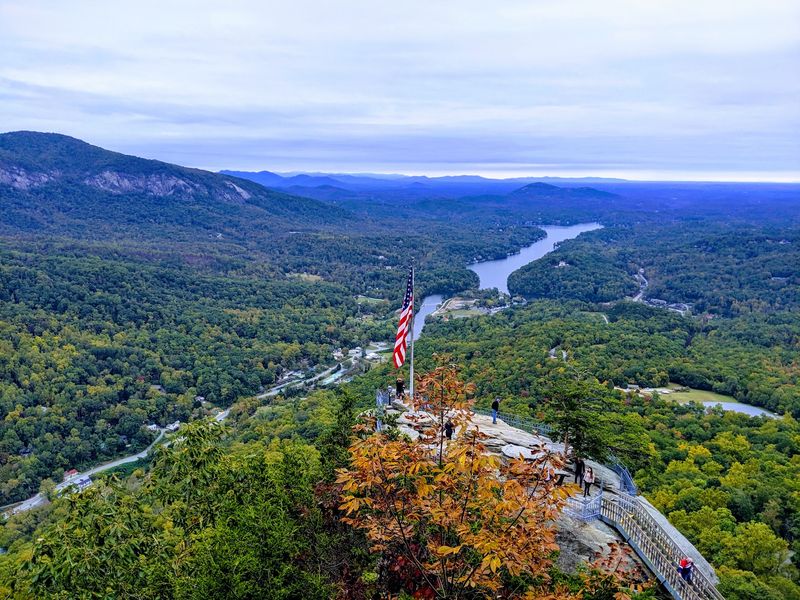
Picture a granite tower rising 315 feet above a forested gorge, with a flag snapping in the breeze at its peak.
For nine long months after Helene, nobody could stand on that famous perch, because floodwaters from the Rocky Broad River tore through the village below and swept away the park’s entrance bridge.
Chimney Rock at Chimney Rock State Park finally reopened on June 27, 2025, and it now welcomes guests every day of the week. Guests cross a temporary bridge just east of the original gates, then follow the winding road up the mountain to 174 Chimney Rock Park Rd.
After parking, you have two choices.
The elevator is running again, whisking riders up through solid rock in about 30 seconds, while the stairs and trails offer a leg-burning but rewarding climb.
From the summit, the view stretches across Hickory Nut Gorge to the blue sparkle of Lake Lure, one of the most famous panoramas in North Carolina.
Recovery work still continues around the property, so some areas may look a little rough around the edges.
Book tickets online ahead of time, and wear shoes with good grip for the stone steps.
11. Lake Lure
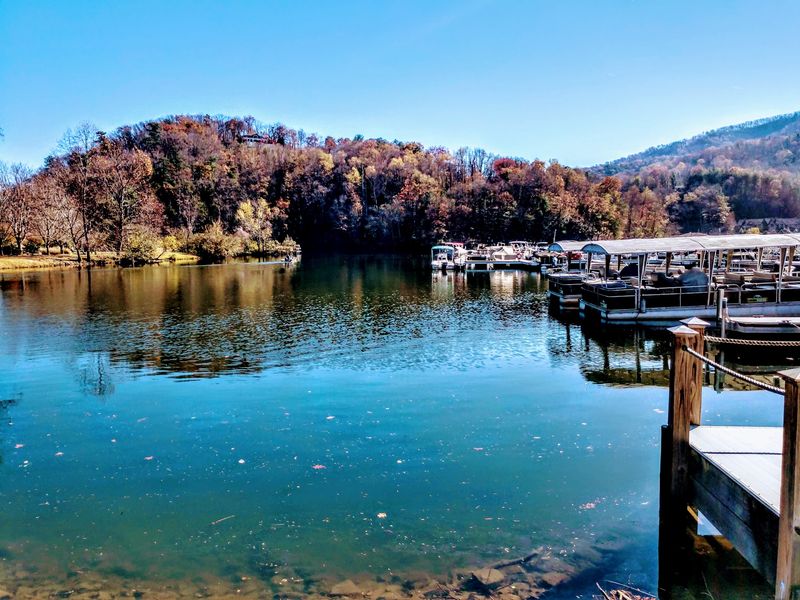
Imagine a mountain lake so clogged with fallen trees, boat parts, and mud that crews had to drain it down just to start cleaning.
That was Lake Lure after Helene, when the storm dumped enormous amounts of debris and sediment into its once glassy water.
Workers spent many months hauling out more than a million tons of material before the lake could fill back up.
Recreational access returned in stages during spring 2026, and the town of Lake Lure threw a cheerful celebration in May to mark the big reopening at the foot of Hickory Nut Gorge. Summer brought even more good news.
The rebuilt Washburn Marina reopened in July, giving boaters a fresh home base for rentals and lake days.
Out on the water, the scenery feels almost unreal.
Rocky cliffs and green ridges rise straight from the shoreline, and on clear mornings the reflection of the mountains looks like a painting you could paddle through.
For the best experience, arrive early when the water is calm and the air smells of pine.
Pack a picnic, find a spot along the shore, and take in a lake that has reopened after one of the largest cleanup efforts in its history.
10. Biltmore Estate

Few places carry Gilded Age glamour quite like the grand French-style chateau George Vanderbilt opened to family and friends in 1895.
When Helene struck, floodwaters surged across the lower parts of the property and the entrance area, forcing the estate to close its gates for more than a month.
After careful repairs and cleanup, Biltmore Estate reopened on November 2, 2024, and it now welcomes guests daily.
The good news is that the house itself suffered very little direct damage, so its treasures are just as dazzling as ever. Plan your arrival through the main gate at 1 Lodge St.
Inside, 250 rooms reveal original Vanderbilt furniture, rare artwork, and surprising Gilded Age gadgets.
Kids usually light up at the indoor swimming pool and the old-fashioned bowling alley down in the basement.
Outside, the gardens designed by Frederick Law Olmsted spill down the hillside in neat rows of color.
The glass Conservatory feels warm and humid even on chilly days, filled with orchids, palms, and the earthy scent of damp soil.
Save time for Antler Hill Village, where you can grab a bite, browse shops, and rest your feet.
Guests with disabilities can receive discounted admission, and free wheelchairs are available for touring the first two floors of the house.
9. WNC Nature Center
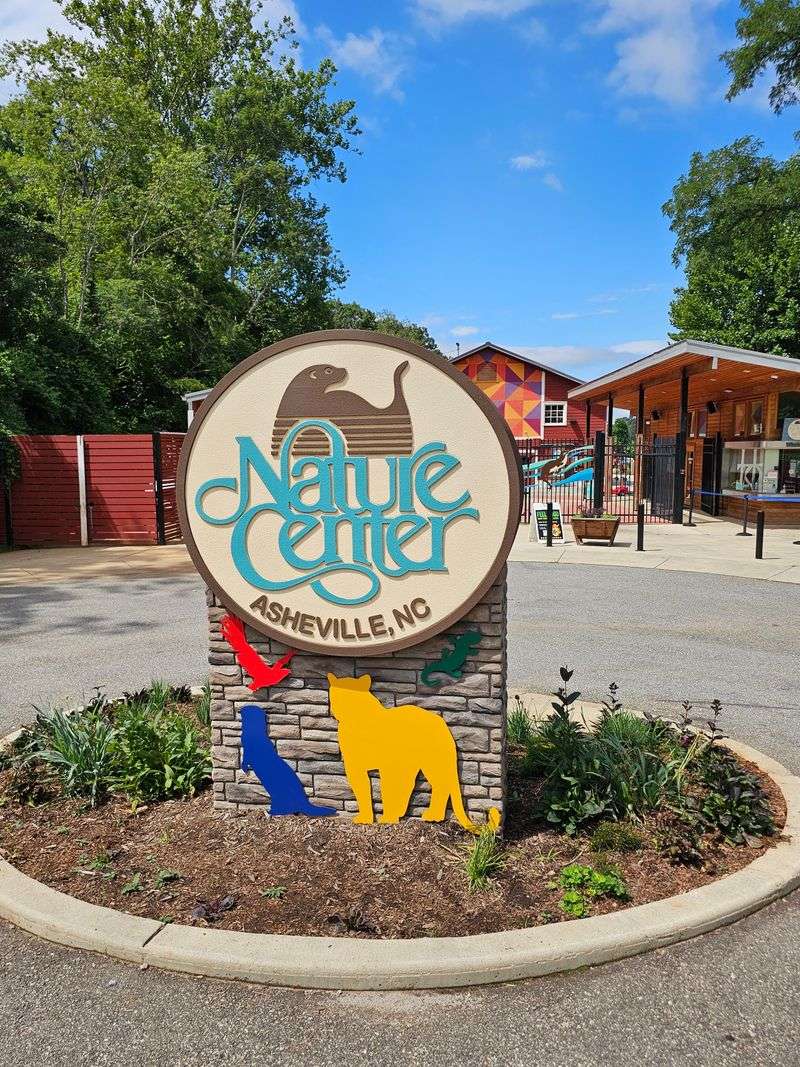
A red wolf pads silently along its fence line while a pair of river otters tumble and splash just a short walk away.
Scenes like that vanished for five and a half months after Helene flooded the Swannanoa River valley, washing out roads and the main bridge that carried visitors to this beloved wildlife park. The WNC Nature Center reopened on March 17, 2025, and now greets families seven days a week.
Because the original Gashes Creek Bridge is still gone, drivers follow an alternate approach along Azalea Road to reach 75 Gashes Creek Rd.
Once inside, you can meet more than 60 species of animals native to the Southern Appalachians.
Black bears lounge on rocky ledges, bobcats peek from shady corners, and gray foxes curl up in the leaves.
Fun fact: the property has served as a place for families to enjoy animals and green space for about a century.
Construction on the Gateway to the Southern Appalachians project continued through the recovery period, and the completed space officially opened in April 2026.
Morning visits usually mean cooler air and more active animals.
Wear comfortable sneakers for the paved hills, bring a snack for the picnic tables, and let younger kids set the pace.
8. Mount Mitchell State Park
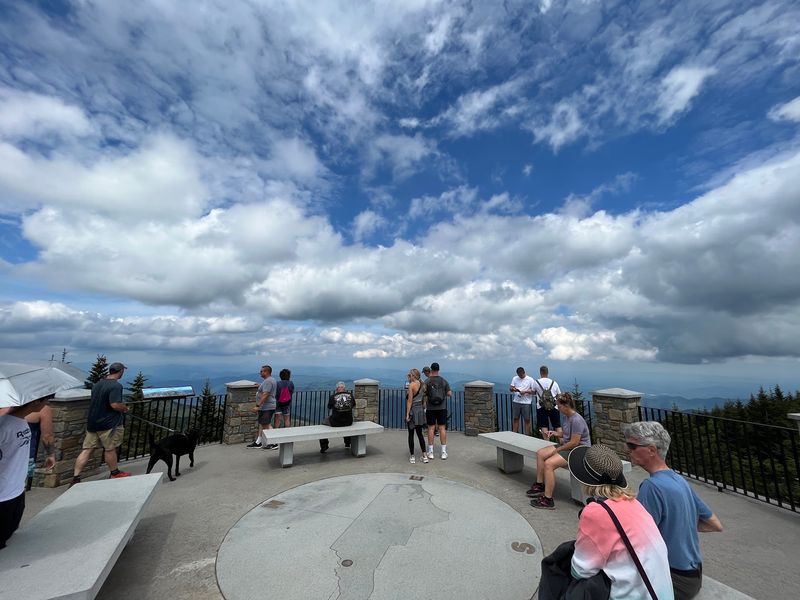
Standing 6,684 feet above sea level, this summit is the highest point east of the Mississippi River.
For almost a year after Helene, however, landslides and damaged roads cut it off from the world, leaving the observation deck empty and the spruce forest silent.
Mount Mitchell State Park reopened on September 15, 2025, and most of its trails are open in 2026.
Set your navigation for the park entrance at 2388 NC-128. Here is the key travel tip.
Right now, access comes only from the Asheville side of the Blue Ridge Parkway, and some surrounding routes remain closed, so check conditions before you leave home.
Established in 1915, this was the very first state park in North Carolina, created to protect these high forests from heavy logging.
Walking the short summit trail, you will smell the sharp, clean scent of Fraser fir and red spruce, and the air often feels ten or twenty degrees cooler than the valleys below.
Pack a warm jacket even in July, because clouds can roll in fast and winds whip across the peak.
On clear days, layers of blue ridges fade toward the horizon, a sight worth every twist of the mountain road.
7. Catawba Falls
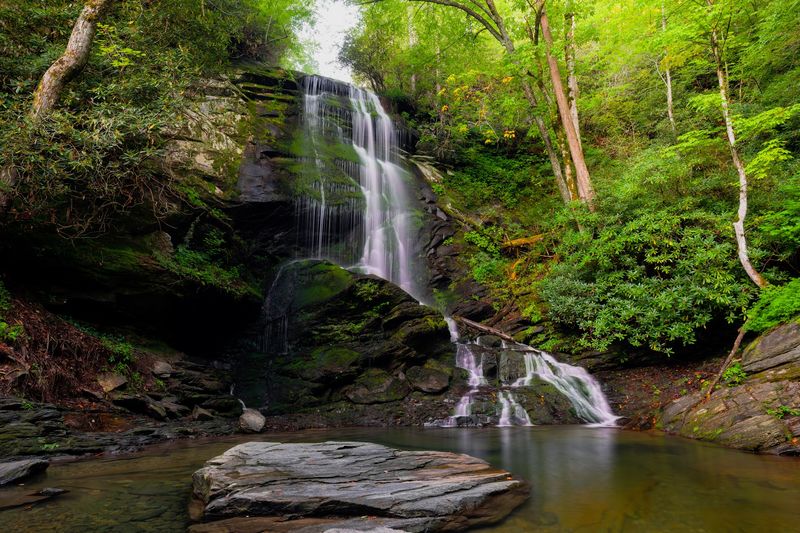
Timing can be cruel.
Crews had just finished a major improvement project on the trails here when Helene rushed down the mountains, tearing at the fresh work and scattering boulders and branches across the path.
Happily, the main route to Catawba Falls reopened in January 2025, and the loop is accessible once again.
The trailhead sits in the Pisgah National Forest just outside the small town of Old Fort, at 3074 Catawba River Rd. The hike itself feels like a walk through a green tunnel.
Rhododendron branches arch overhead, the Catawba River gurgles beside you, and the crumbling remains of an old stone dam peek out along the way.
Then the forest opens, and the lower falls come into view, spilling roughly 100 feet over a wide staircase of dark rock.
Cool spray drifts across the pool, and the roar makes it hard to hear anything else.
Some smaller sections have continued to undergo repairs, so respect any closure signs and stay on marked paths.
Wet rocks near the water are very slippery, and climbing on the falls is dangerous.
After your hike, head into downtown Old Fort for a hearty lunch and a well-earned rest.
6. Linville Falls Trail System
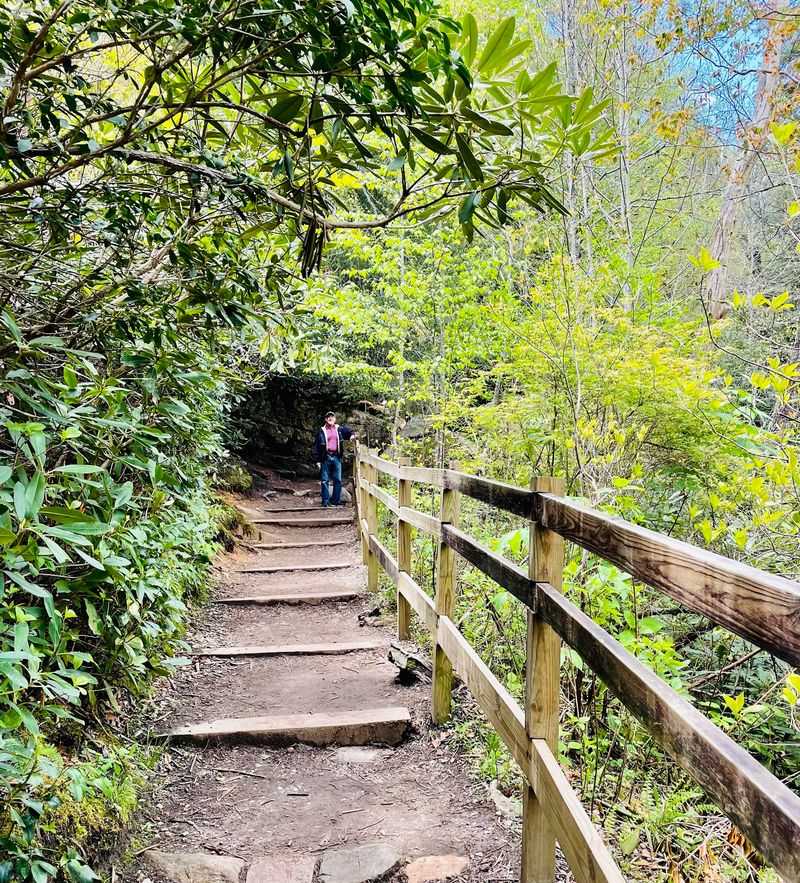
Water thunders through a narrow crack in the rock, then crashes into a deep, swirling pool far below.
Helene hit this dramatic spot hard, damaging trails, roads, and visitor facilities so badly that the whole area stayed off limits for a long stretch.
Direct Parkway access to the Linville Falls Trail System reopened in 2026, which means hikers can once again reach its famous overlooks. The trailhead sits along the Blue Ridge Parkway at Milepost 316.4.
Before you go, know that services are limited.
The trails are open, but the visitor center, campground, and picnic area remain closed, so bring your own water and snacks, and plan restroom stops ahead of time.
Two main routes give very different experiences.
Erwin’s View Trail is a moderate walk that leads to several viewpoints, the last one showing the falls and the rugged Linville Gorge stretching into the distance.
The Plunge Basin Trail is steeper and rockier, dropping you close enough to feel mist on your face.
People often call the gorge the Grand Canyon of the Southern Appalachians, and one look explains why.
Sheer cliffs, twisted pines, and layers of rock glow gold in late afternoon light, making it a favorite spot for photographers of every age.
5. Craggy Gardens Visitor Center & Craggy Pinnacle Trail
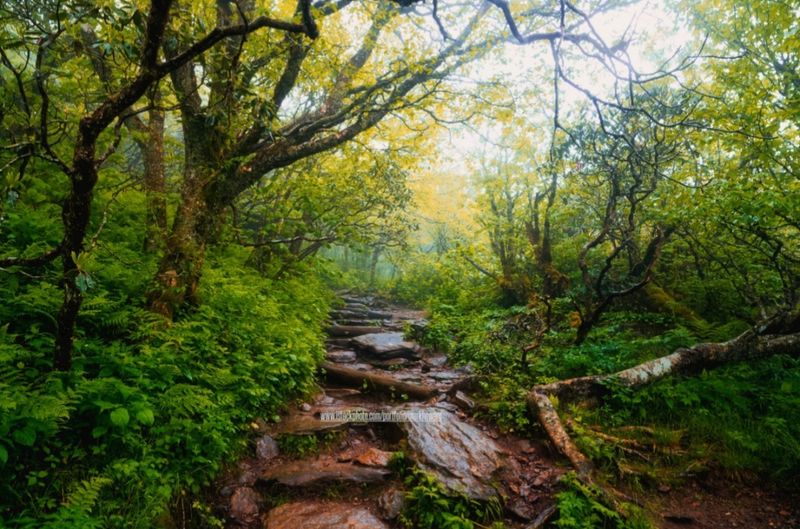
Twisted rhododendrons, wind-stunted trees, and grassy balds give this high perch an almost storybook look.
When Helene damaged long sections of the Blue Ridge Parkway, the road to this wonderland closed, and the mountaintop fell quiet.
Good news arrived on September 15, 2025, when a 26-mile Parkway section from Asheville toward Mount Mitchell reopened.
That restored access to the Craggy Gardens Visitor Center and the Craggy Pinnacle Trail, both found at Blue Ridge Parkway Milepost 364. The trail to the pinnacle is short but steep, about 1.4 miles round trip.
You will climb through a leafy tunnel of rhododendron branches before stepping onto a rocky summit with nearly 360-degree views.
In June, the rhododendrons burst into purple-pink blooms, and the whole ridge seems to glow.
Autumn brings bright red and gold leaves, while summer afternoons stay pleasantly cool at more than 5,000 feet.
Stop by the visitor center to learn about the plants and animals that thrive in this windy world.
Keep in mind that the Craggy Gardens Picnic Area remains closed, so the full complex is not yet completely restored.
Pack your lunch to enjoy at an overlook instead, and bring a light jacket for the breezy summit.
4. The North Carolina Arboretum

Thousands of trees crashed to the ground in a single stormy day, turning peaceful forest paths into tangled mazes of trunks and roots.
Flooding soaked parts of the property too, and for gardeners and nature lovers across the region, the damage felt deeply personal.
The formal gardens at The North Carolina Arboretum began welcoming visitors again in October 2024, though recovery in other areas took much longer. The main entrance is found near the edge of Asheville at 20 Frederick Law Olmsted Way.
Today the grounds are open daily, and previously damaged spots such as the Native Azalea Collection have reopened.
In spring, these wild azaleas light up in shades of orange, peach, and flame red, and their sweet scent floats along the paths.
Surrounded by the Pisgah National Forest, the arboretum covers 434 acres of gardens, trails, and wooded hillsides.
Many guests head straight for the bonsai exhibit, where tiny trees shaped over many years look like miniature forests in pots.
Walking and biking trails wind beside Bent Creek, offering shady spots to rest and listen to the water.
Bring a reusable water bottle, grab a map at the entrance, and give yourself at least two hours to explore without rushing.
3. Grandfather Mountain
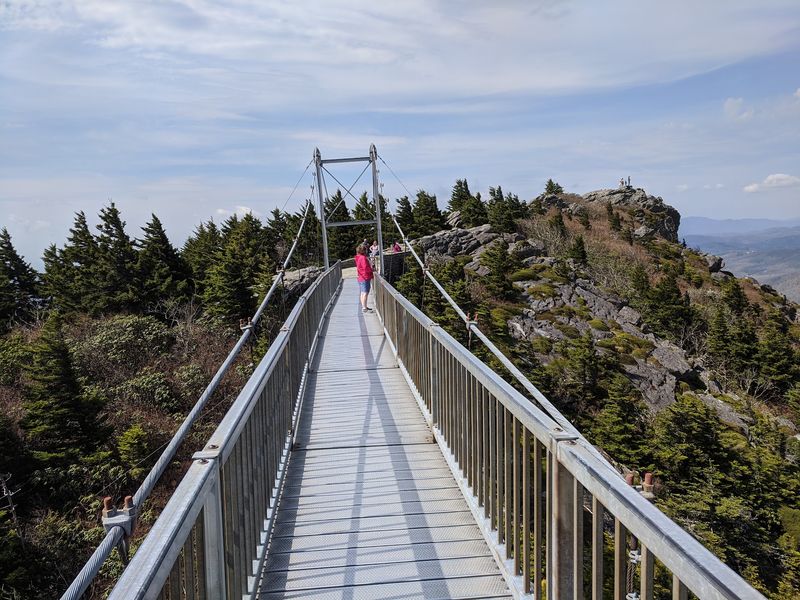
Some attractions close because of damage, but this mountain park shut its gates for a different reason.
Although the park itself escaped with relatively minor harm, Helene knocked out regional power, phone service, and road access, making it impossible to safely welcome guests.
Grandfather Mountain stayed closed from September 26 through October 22, 2024, then reopened on October 23 with fall colors still blazing.
Find the entrance in Linville at 2050 Blowing Rock Hwy.
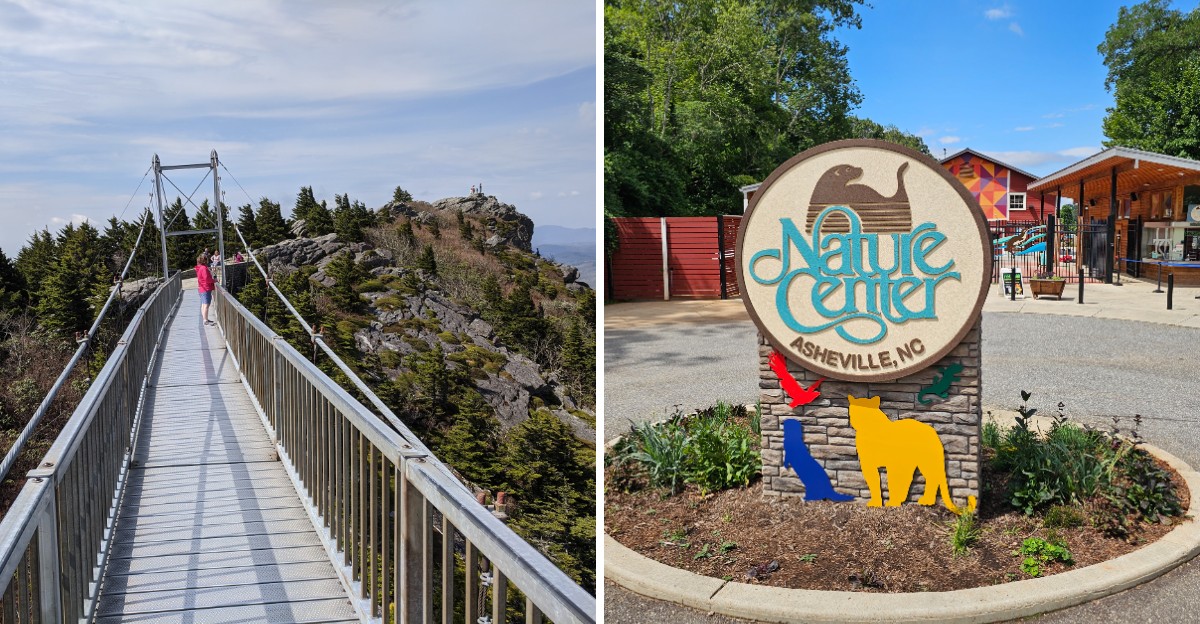
The star attraction is the Mile High Swinging Bridge, a 228-foot suspension bridge first built in 1952. Walking across it, you will feel the wind tug at your jacket and see peaks rolling away in every direction.
Hiking trails range from easy nature walks to rugged climbs with ladders and cables.
Wildlife fans can visit natural habitats where black bears, cougars, elk, and bald eagles live.
The mountain is also recognized as a United Nations International Biosphere Reserve, thanks to its rare plants and rich variety of life.
The park keeps normal 2026 visitor hours and is open every day except Thanksgiving and Christmas, weather permitting.
Buy timed tickets online in advance, especially on autumn weekends.
Pack a picnic, then settle onto a rocky overlook where ravens glide overhead.
2. Linville Caverns
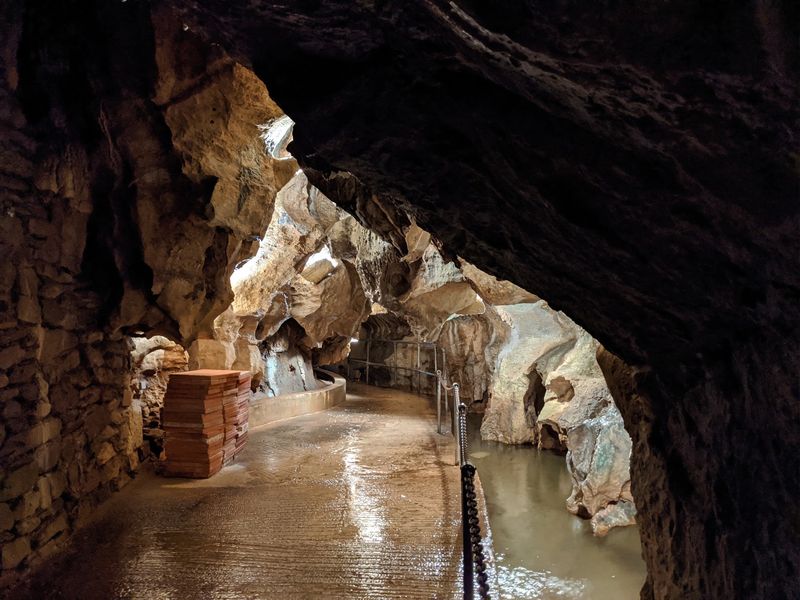
Step out of the summer heat and into a world that stays a crisp 52 degrees all year long.
Deep beneath Humpback Mountain, water has shaped limestone passages and mineral formations over millions of years.
Helene sent floodwaters rushing into Linville Caverns, coating passages with mud and silt and piling nearly a foot of mud inside the gift shop.
After months of debris removal and repairs, the caverns reopened in 2025, and you can find them at 19929 US-221 N.
As the only caverns in North Carolina open for guided tours, this spot offers something truly rare. Guided tours lead groups along about 600 feet of passages, where guides point out stalactites, stalagmites, and glittering rock formations.
Keep an eye on the underground stream, where native trout can sometimes be seen.
Sleepy bats cling to the ceiling in some areas, and at one point the guide may switch off the lights so you can experience total darkness.
Tours run on a regular seasonal schedule, so check hours before driving over.
Wear sturdy shoes because paths can be damp, and bring a light sweater, since that steady chill feels surprisingly refreshing after a hot drive through the mountains.
1. French Broad Adventures
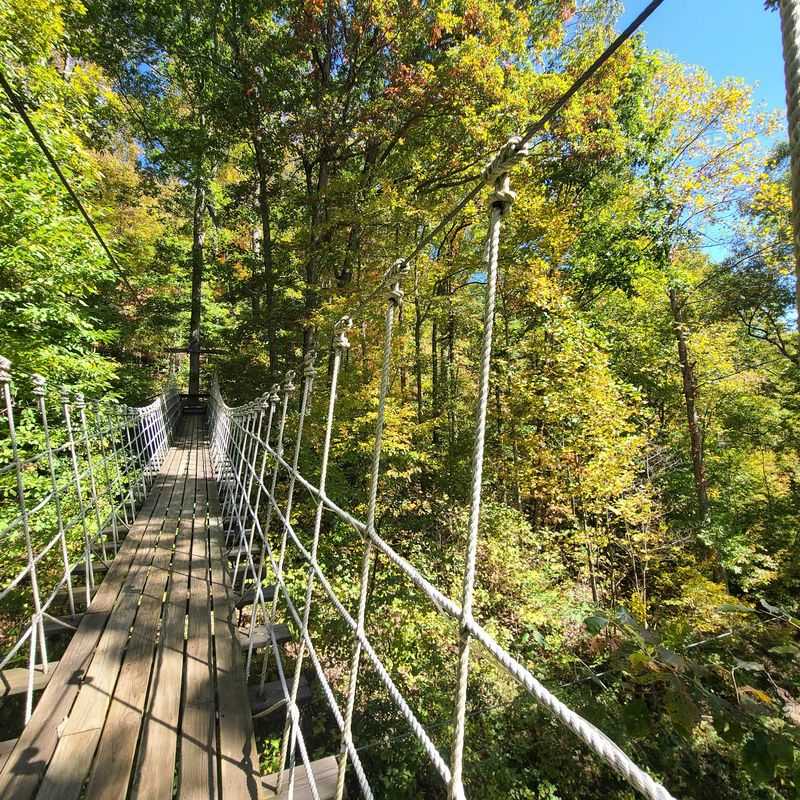
Whoops and laughter echo off the canyon walls as a raft bounces through a frothy rapid, soaking everyone aboard.
Those happy sounds went silent in fall 2024, when Helene forced this outfitter to cancel the rest of its trips for the season.
French Broad Adventures welcomed guests back in March 2025, and the team has been busy on the river ever since. Their base camp sits near the small river town of Marshall, at 12 Good Adventures Ln.
Rafting trips run through October 31, 2026, making late summer and early fall perfect times to plan a visit.
The French Broad is one of the oldest rivers in the world, and paddling it feels like floating through a living history book. Want something different?
Canyoneering adventures let you scramble, slide, and splash through rocky creek beds, while e-mountain biking adds a little battery-powered boost for climbing forested hills.
One quick heads-up: the zipline course is closed for the 2026 season for maintenance and improvements, so don’t plan on flying through the treetops this year.
Pack a change of clothes, a towel, and sunscreen, because you will almost certainly get wet. Afterward, stroll Marshall’s Main Street and grab a warm plate of Southern comfort food.