When This Windmill Factory In Nebraska Closed, Every Tool Stayed Where The Workers Left It
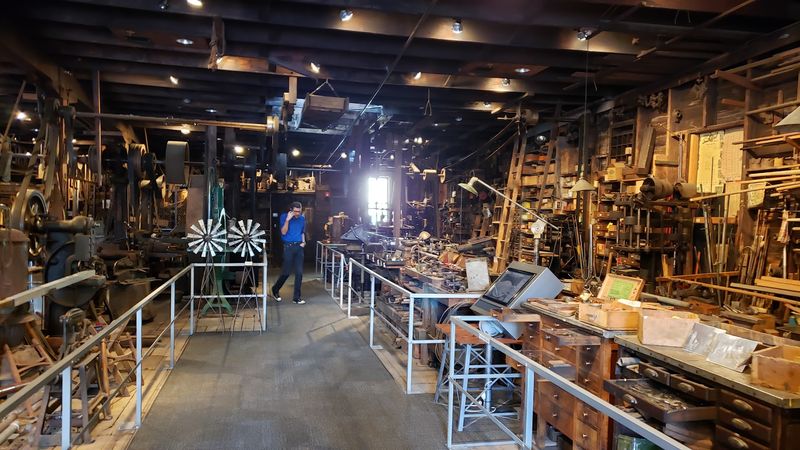
There’s a plain brick building in Nebraska that looks like every other old storefront on a small-town main street, the kind you’d drive past without slowing down. Push open the door, though, and the smell of machine oil and sawdust hits you before your eyes adjust.
Inside, a gear box still sits clamped in a vise, waiting for a repair that never happened, and a coat hangs on a hook like someone meant to come back for it. What started as a five-minute curiosity stop can easily eat up an afternoon.
A Brick Storefront Across From City Hall
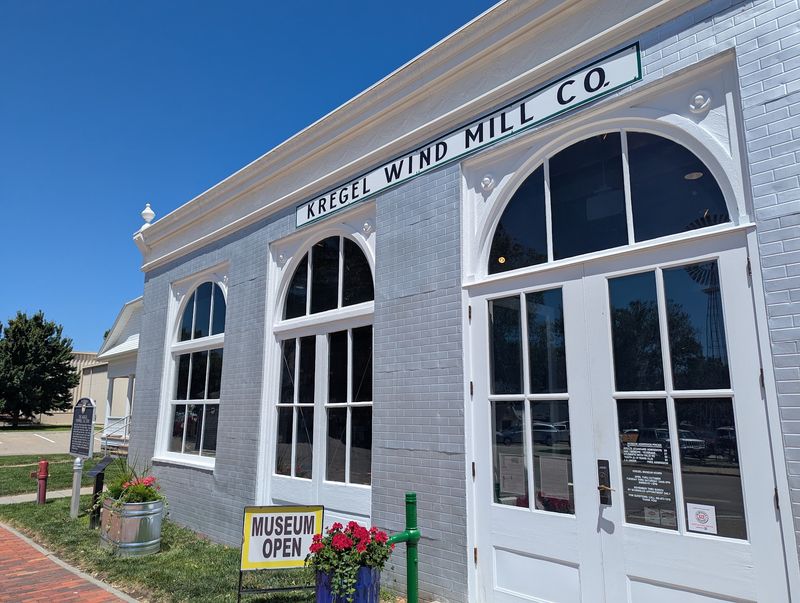
Across the street from Nebraska City’s city hall sits a narrow brick building that gives away almost nothing from the sidewalk. A windmill stands out front.
Otherwise the facade could belong to an insurance office or a shuttered five-and-dime.
Behind that unremarkable front is the Kregel Windmill Factory Museum, and the word museum undersells what’s actually inside. There are no recreated dioramas here, no borrowed artifacts shipped in from somewhere else.
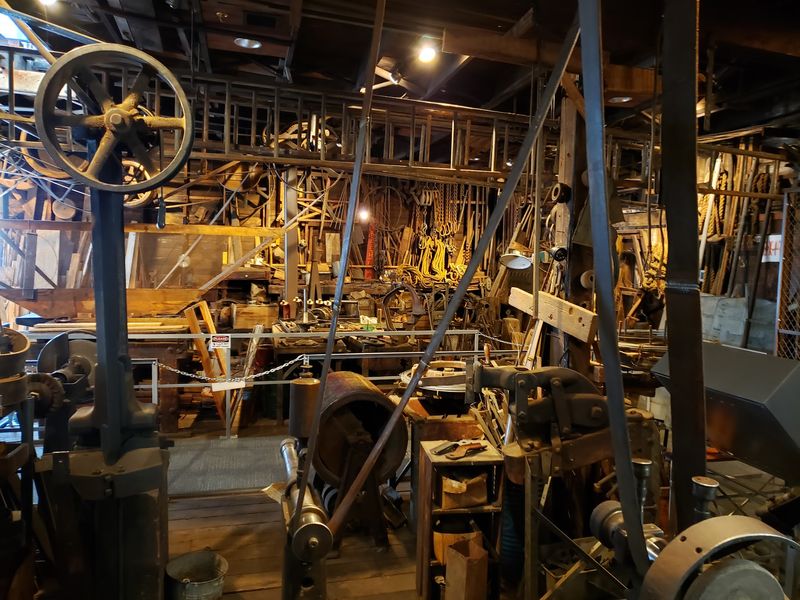
The building is the exhibit, preserved as an entire working factory floor with its original machinery still bolted to the floor where it always was.
Nebraska City sits in Otoe County, down in the southeast corner of the state where the bluffs roll toward the Missouri River. Most people come to this town for the orchards and the tree history.
Very few know that a complete turn-of-the-century manufacturing shop is sitting a few blocks off the main drag, lights on, waiting.
The scale surprises people. It’s one long room of belts, shafts, and workbenches, and once you’re standing in it, leaving quickly stops being an option.
The Friday Lunch Break That Never Ended
Arthur Kregel walked out for lunch on a Friday in 1991, the way he had thousands of times before. He suffered a stroke and never made it back to the shop floor.
A few months later he was gone, and with him went a family manufacturing operation that had been running since 1879.
Nobody cleaned up. Nobody boxed anything.
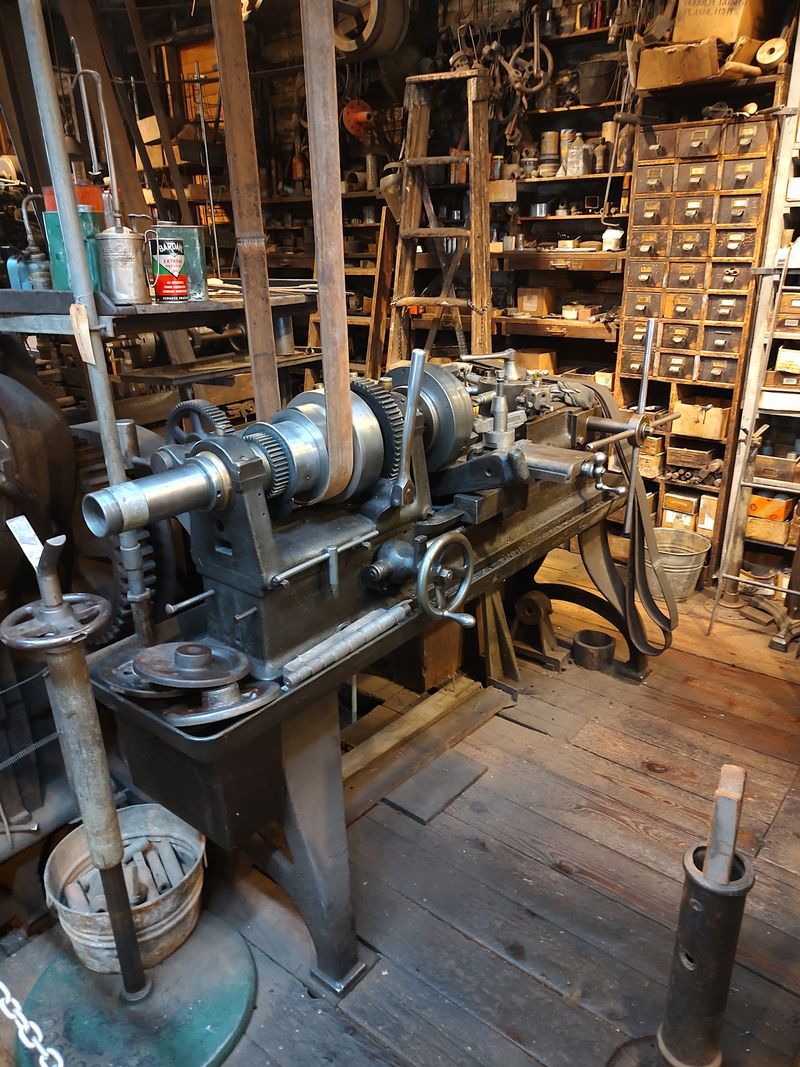
The Dempster gear box he’d been working on stayed clamped in its vise, half repaired, exactly where he’d left it when hunger got the better of him.
Pencil notes still sit on the office desk. An overcoat hangs where it was hung.
Tools rest on benches in the loose, unconsidered arrangement of someone who fully expected to pick them up again within the hour.
In 1993 the Kregel family handed the whole building and everything in it over to the Kimmel and Wirth Foundations. That decision is the only reason this place exists today.
Instead of an auction and a scrapper’s truck, Nebraska got a factory paused mid-sentence.
From George Kregel to the Eli Brand
1879 is the starting line. George Kregel opened shop in Nebraska City when the plains were still filling in with homesteads, and water was the thing standing between a family and a working farm.
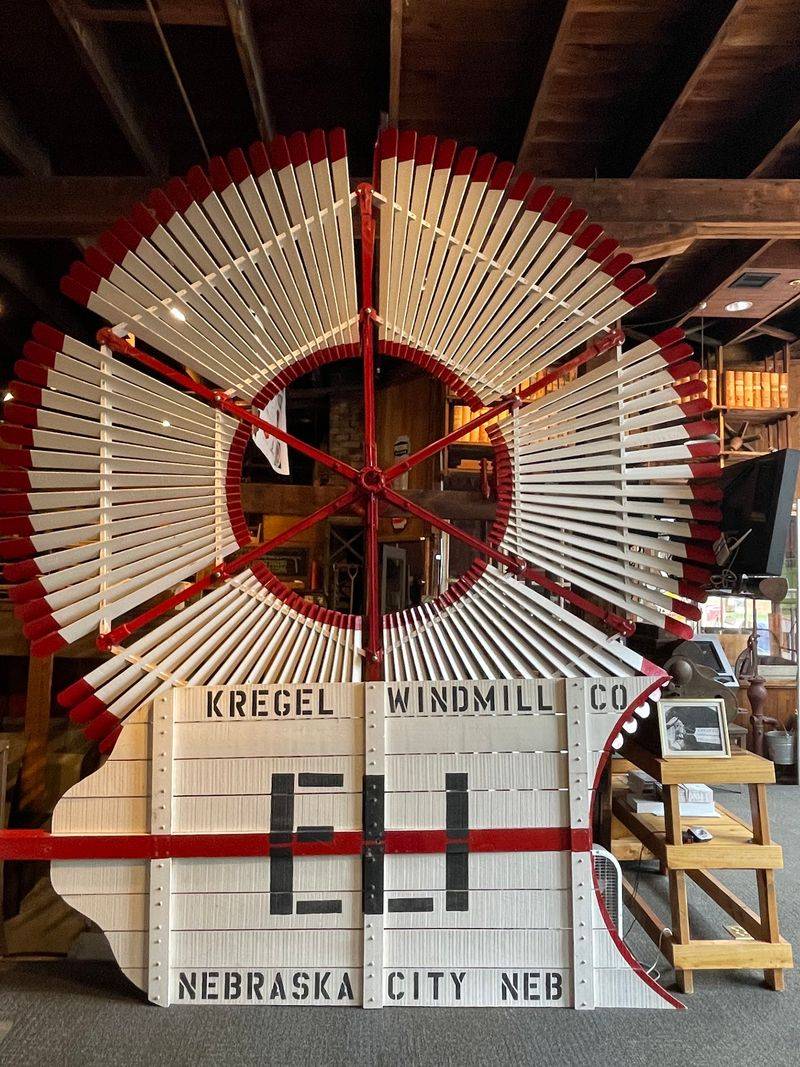
What the Kregels built was the Eli windmill, and over the decades more than 2,000 of them came off this factory floor. Each one pulled water out of the ground for someone’s cattle, someone’s garden, someone’s kitchen pump.
The last new Eli was finished in 1983, more than a century after the first.
Windmill manufacturing didn’t so much end here as fade. Once new production stopped, the shop kept repairing windmills and water pumps for anyone who hauled one in.
The tools and skill sitting in that building were too useful to waste on one product, so it also became a general repair shop for the community. Break something metal in Otoe County and there was a decent chance it came through these doors.
That slow shift from maker to fixer is written all over the equipment.
One of Thirteen Working Line Shafts Left in America
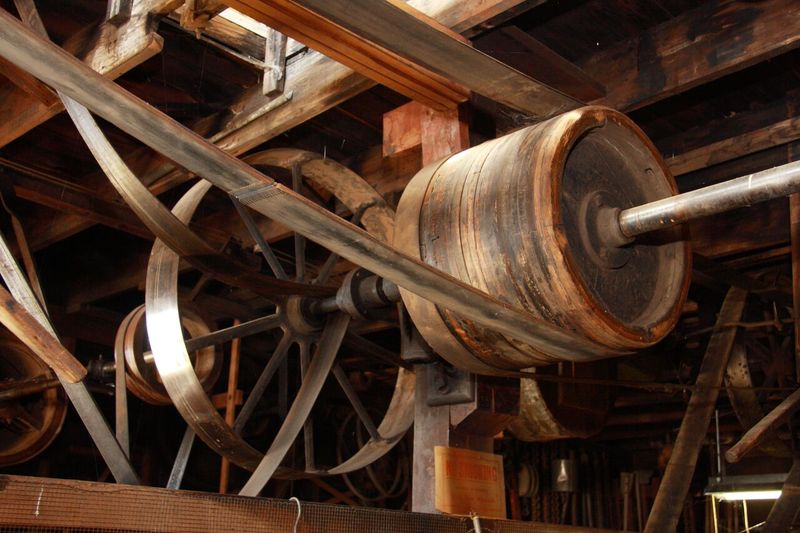
Look up. Running the length of the ceiling is a steel shaft studded with pulleys, with leather belts dropping down to the machines below.
Before every tool had its own motor, that’s how a factory moved power around, one central drive turning everything at once.
Only thirteen operable factory line shafts remain in their original positions anywhere in the United States. This is one of them, and it still turns.
Watching belts slap and machines spin up in sequence explains more about early industry than any placard could. The whole room becomes a single connected mechanism, and you can hear how a workday sounded a hundred years ago.
Some of the machinery here dates to the Civil War era, meaning tools built in the 1860s were still earning their keep well into the twentieth century. Nothing was replaced simply because something newer existed.
Engineers tend to lose track of time in this room. So do people who have never touched a lathe and just want to see how the pieces fit together.
Benches, Vises, and Tools Nobody Put Away
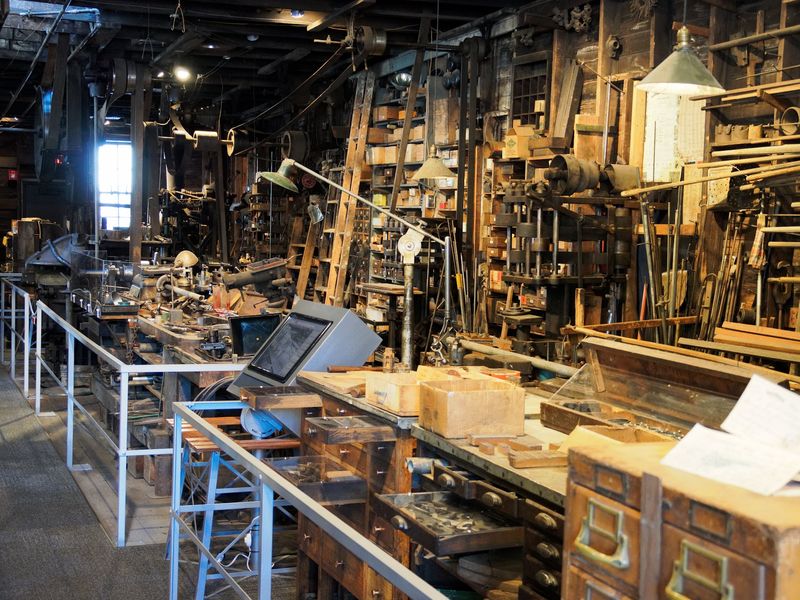
Metal shavings. Oil cans with dented spouts.
Files laid crosswise over a bench because that’s where a hand dropped them.
The detail work is the whole appeal here, and it rewards slowing down. Rows of wrenches hang in the order a worker found convenient rather than the order a curator would choose.
Jigs and patterns lean against walls. Drawers hold parts that only made sense to the person who filed them there.
A guided walk through the space turns clutter into meaning. Point at an odd bent rod and you’ll learn it was a shop-made tool built for one repetitive task, invented on the spot because buying one wasn’t an option.
Homemade fixes show up everywhere once you know what to look for. That inventiveness is arguably the real subject of the museum, more than windmills themselves.
Anyone who has ever organized a garage or inherited a grandfather’s toolbox will recognize the logic instantly. It’s a familiar kind of mess, just scaled up to an entire building and frozen in place.
The Office Where the Paperwork Stopped
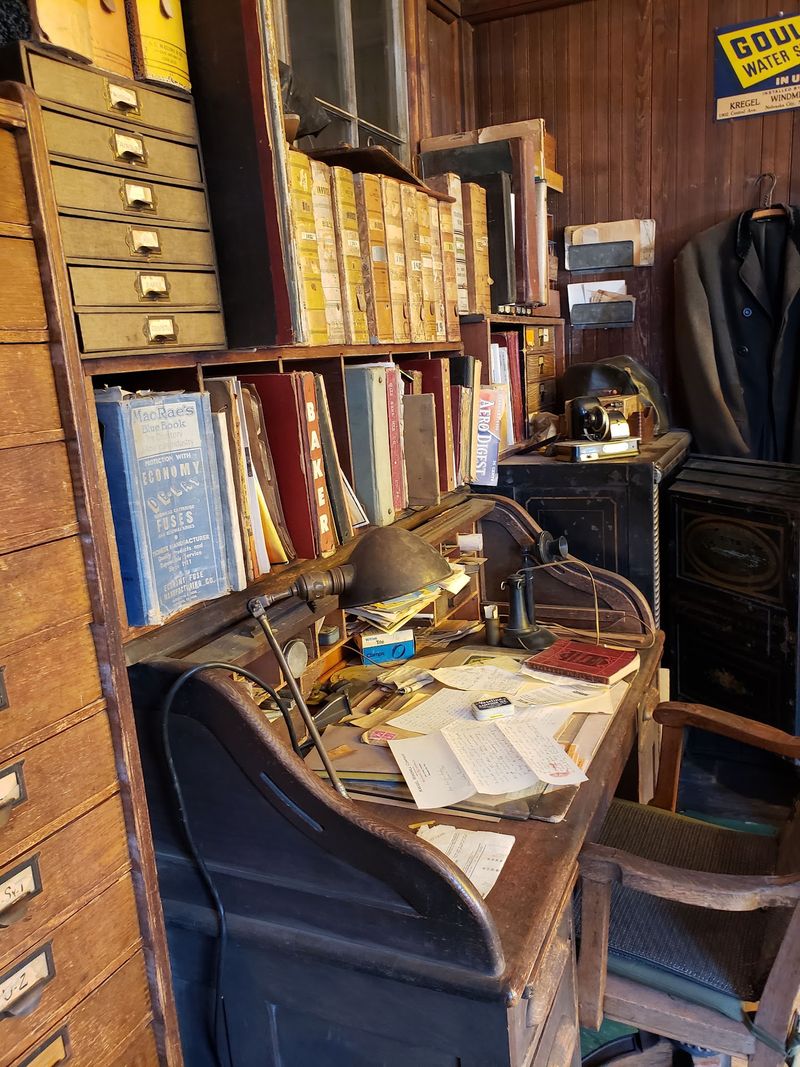
Ledgers, invoices, a desk with pencil marks still legible on the surface. The front office is smaller and quieter than the shop, and somehow it lands harder.
Business ran on paper here, and the paper stayed. Orders for windmill parts, records of repairs, the everyday administrative trail of a family company that outlasted five generations of farm equipment trends.
An overcoat hanging near the door does most of the emotional work in the room. It isn’t staged, and that’s precisely why it stops people.
Patents and inventive drawings figure into the story too. The Kregel operation wasn’t just assembling someone else’s design.
Running a factory for well over a century meant constantly solving problems nobody had solved yet, and the paperwork reflects that.
Families also ran other ventures around town, and the guides will connect those threads if you ask. What starts as a windmill tour drifts into local commerce, family decisions, and how a small Nebraska business kept going through decades that flattened plenty of others.
The office is where those threads meet.
Guides Who Actually Know the Machines
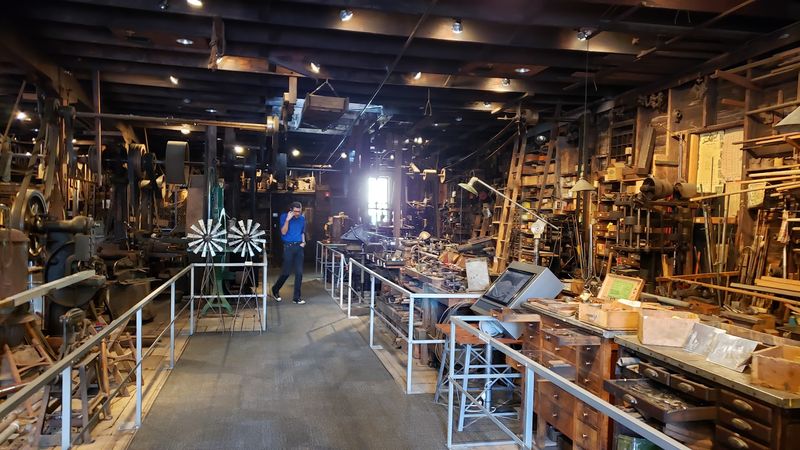
Self-guided tour technology is available, and it’s well done. Still, the building opens up differently when someone who knows it walks you through.
Staff here can tell you which machine made which part, why a belt runs the direction it does, and what a particular scratch on a bench came from. Questions get real answers instead of rehearsed lines.
Dave has guided plenty of groups through and clearly enjoys the subject.
Assistant director Isaiah Yott takes the work seriously, and that attitude runs through the place. Interns have given tours that hold their own against museums many times this size.
Tours adjust to who shows up. Bring a curious eight-year-old and the focus shifts to the miniature Eli windmill and how water actually got pumped.
Bring a retired machinist and the conversation goes somewhere else entirely.
Plenty of people arrive expecting fifteen minutes and a polite nod at some old equipment. They leave having learned about manufacturing, patents, small-town commerce, and the long argument between doing something by hand and doing it by machine.
Why Nebraska Farms Needed These Windmills
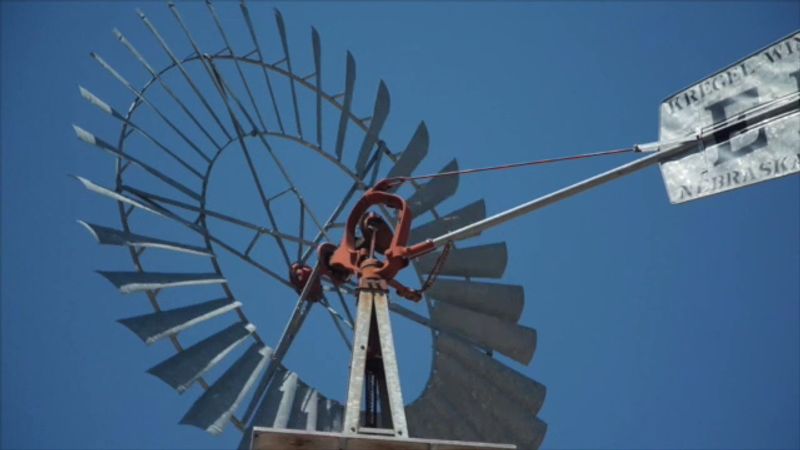
Before rural electricity reached the countryside, a windmill was the difference between land you could use and land you couldn’t. Wind was free, constant on the plains, and it pulled water up from wells no hand pump could keep ahead of.
Cattle drank from tanks filled by these towers. Gardens survived dry Augusts because of them.
Entire stretches of Nebraska became farmable specifically because somebody bolted a wheel to a tower and pointed it at the sky.
Once you’ve spent an hour in the factory, you can’t drive past a windmill without reading it. The vane, the wheel diameter, the tower legs all start meaning something.
Otoe County, the Platte valley, the Sandhills ranches to the northwest, they all ran on this technology for generations. Some of those towers are still turning.
What the museum really preserves is a labor system, not just a product. The hands, the hours, the repair calls, the way a small factory served a region spread out across hundreds of miles of gravel road.
The Outhouse and Other Details Most People Miss
Ask about the outhouse. It dates to the early 1930s, sits out back, and looks sturdy enough to put back into service tomorrow.
Small oddities like that are scattered throughout the property, and they’re easy to walk right past. A guide will point out a shop-built jig, a modification scratched into a machine casting, a spot on the floor worn smooth by one worker standing in the same place for years.
Kids gravitate toward the miniature Eli windmill, which turns and demonstrates the whole principle at a size a child can take in.
Videos fill in gaps the physical space can’t cover, showing the factory in operation and the family behind it. They’re worth sitting through rather than skimming.
There’s a running theme in how staff talk about the place: one visit doesn’t cover it. Between the machinery, the office, the patents, and the family history, most people leave with a mental list of things they want to look at more carefully next time.
That’s an unusual problem for a building on a quiet street.
Who Gets the Most Out of a Visit
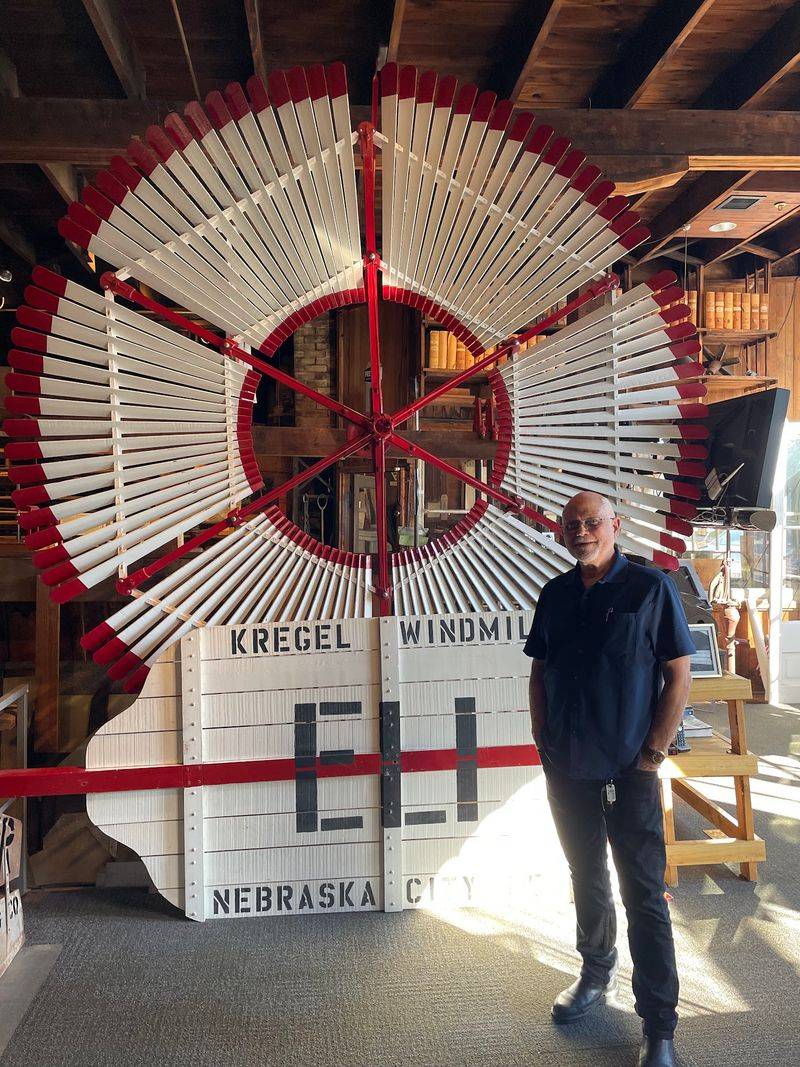
Engineers and machinists have a field day. So do people who grew up on a place with a windmill in the pasture and haven’t thought about it in forty years.
Tweens and younger kids do fine here, especially with a guide steering the tour toward things that move. The miniature windmill is a reliable hit, and the sheer number of strange old tools tends to hold attention better than glass cases ever could.
Rainy afternoons are ideal. The whole experience happens indoors, and an hour passes without anyone checking a phone.
Nebraska Passport participants know this stop, and it makes a strong anchor for a southeast Nebraska day trip. Pair it with the orchards and arboretum grounds elsewhere in town and you’ve filled a comfortable day without much driving.
History-minded travelers who think they’ve seen every small museum in the state should recalibrate for this one. Great Plains history, manufacturing history, and family business history all sit in the same room, and none of it was assembled after the fact.
It simply stayed put.
Getting There and Planning the Stop
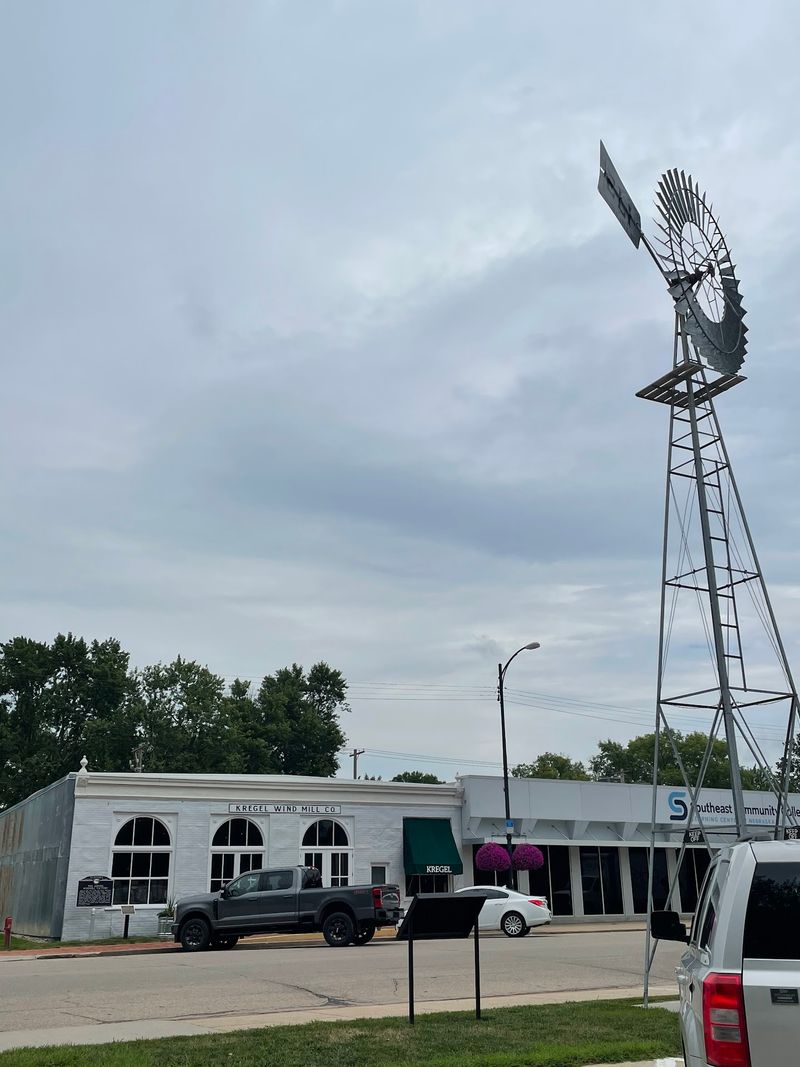
Find it at 1416 Central Ave in Nebraska City, sitting on the main stretch across from city hall. Otoe County, southeast corner of the state, an easy run from Lincoln or the Omaha metro and a reasonable detour off Interstate 29 if you’re coming from the Iowa side.
Doors open mid-morning most days and close in the late afternoon, with a shorter window on Sunday and one day a week when the building stays shut. Hours shift, so a quick check before you drive out saves frustration.
Admission is modest, and the value stacked against what you see is hard to argue with.
Plan on an hour at minimum. Two is more realistic if you take the guided route and ask questions, which you should.
Parking on the street is straightforward. Wear shoes you don’t mind getting dusty, since this is a factory floor rather than a polished gallery, and that’s entirely the point.
Groups larger than a family may want to call ahead.
What Stays With You After the Door Closes
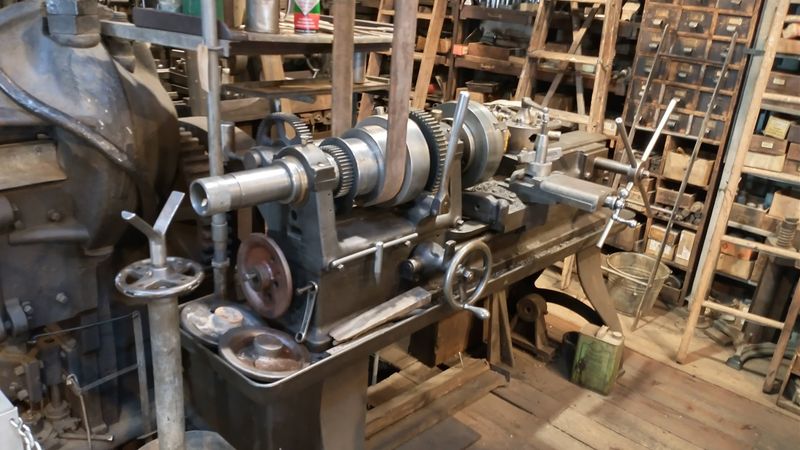
Machine oil has a way of following you out. So does the image of that gear box in the vise, still waiting on a repair that stopped being urgent in 1991.
Nothing about this building performs for you. There’s no soundtrack, no gift-shop reinterpretation of the past, just a room where work happened for well over a century and then quietly didn’t.
As the only intact original windmill factory museum in the country, it holds a position nothing else can claim. The machinery, the line shaft, the paperwork, the coat on the hook, all of it survived because one family chose preservation over profit.
Nebraskans driving between Lincoln and the river bluffs pass through Nebraska City constantly. Most have no idea this is here.
Give it an afternoon. You’ll come out looking at every windmill on every county road a little differently, which is a strange and good thing to carry home from a plain brick building on a quiet street.