Where To Find Alaska’s 11 Most Beautiful Waterfalls
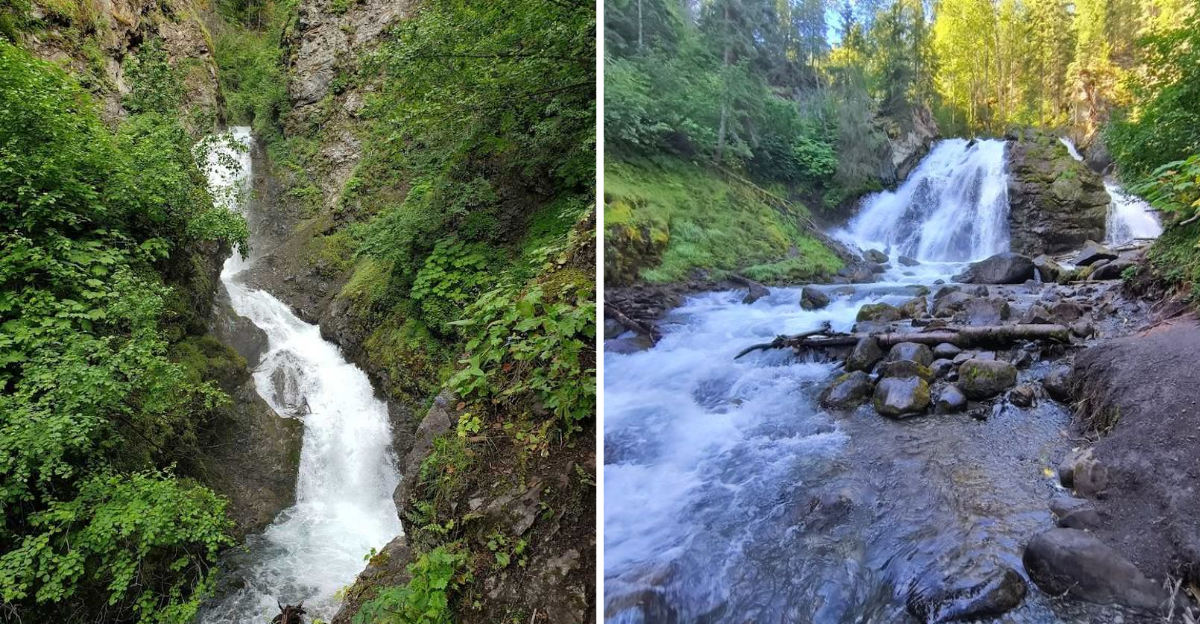
Chasing waterfalls sounds like a total cliche until you finally see these ones up close.
Roaring cascades crash through ancient forests, glacial valleys, and rugged, remote glacial canyons.
Alaska turns waterfall-chasing into an addictive, soggy, absolutely worth-it seasonal summer obsession. A few thunder down beside easy pullouts, a couple hide deep in real wild backcountry.
Bring a good, solid rain jacket, because the cool mist soaks you in the happiest way.
You can hear the deep roar long before the falls ever slide into full glorious view. Wow.
Then you quietly start plotting entire trips around the very next thunderous drop.
1. Nugget Falls, Mendenhall Glacier Recreation Area
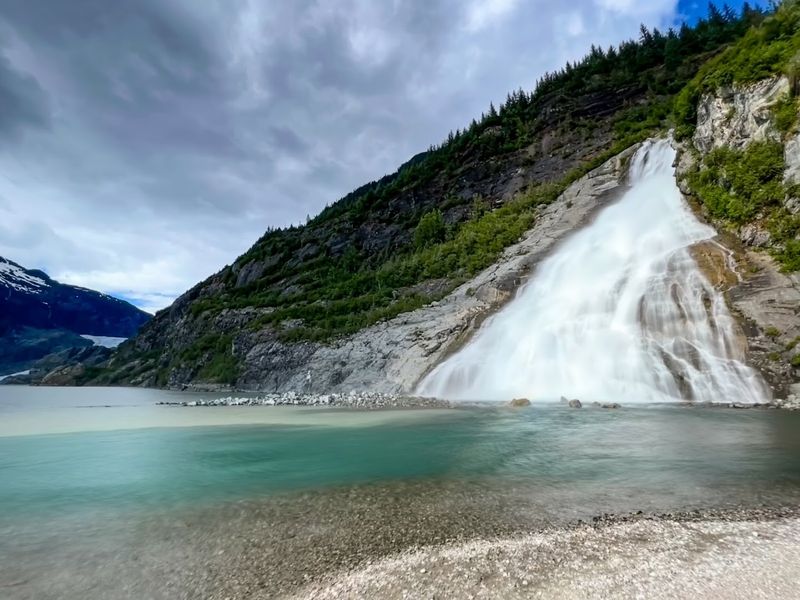
This waterfall has a glacier as its backdrop.
Nugget Falls in the Mendenhall Glacier Recreation Area is one of the most jaw-dropping natural scenes in the entire state. The falls crash down roughly 377 feet into Mendenhall Lake, sending mist floating across the icy blue water.
Getting here is surprisingly easy. A flat, well-maintained trail leads from the Mendenhall Glacier Visitor Center to the base of the falls.
The round trip is about 4 miles, making it totally doable for most fitness levels.
The best time to go is late spring through early fall. During summer, the lake is dotted with small icebergs that have calved off the glacier, making the whole scene feel almost unreal.
Wildlife sightings, including bald eagles and brown bears, are common along the trail.
The roar of the falls grows louder as you get closer, building up the excitement perfectly. This is one of those rare spots where the view actually exceeds the hype.
2. Ebner Falls, Perseverance Trail, Juneau
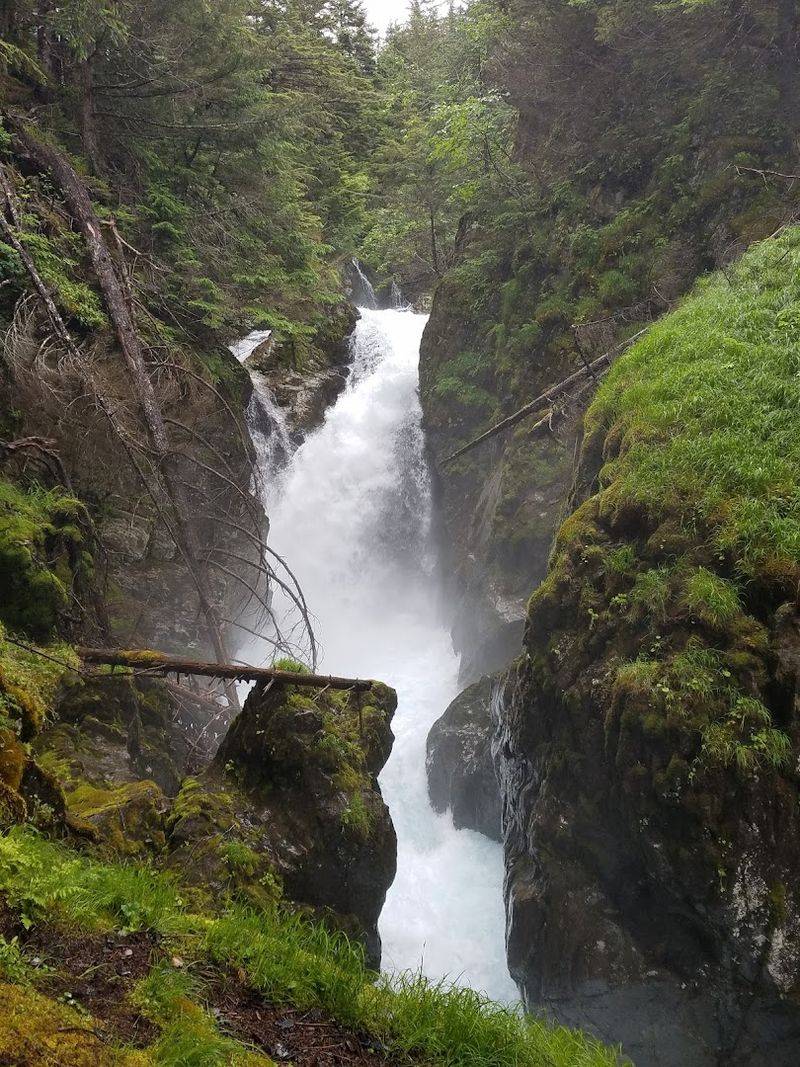
This waterfall rewards the hikers who put in a little extra effort.
Ebner Falls sits along the historic Perseverance Trail in Juneau, tucked into a steep mountain valley carved by centuries of rushing water. The falls tumble in multiple tiers through a dense, emerald-green forest that feels straight out of a fairy tale.
The Perseverance Trail itself has a rich history. Gold miners used this path in the late 1800s to access mines deeper in the mountains, so every step you take follows in some seriously adventurous footsteps.
The trail is about 3 miles one way, with Ebner Falls appearing around the 1-mile mark.
Spring brings the most dramatic flow, when snowmelt pushes the water into a thundering rush. Even in summer, the falls remain impressively active and the surrounding forest stays cool and shaded.
Bring good footwear because the trail can get muddy after rain. The sound of the water echoing through the valley is genuinely one of Alaska’s most underrated natural soundtracks.
3. Ketchikan Creek Falls, Ketchikan
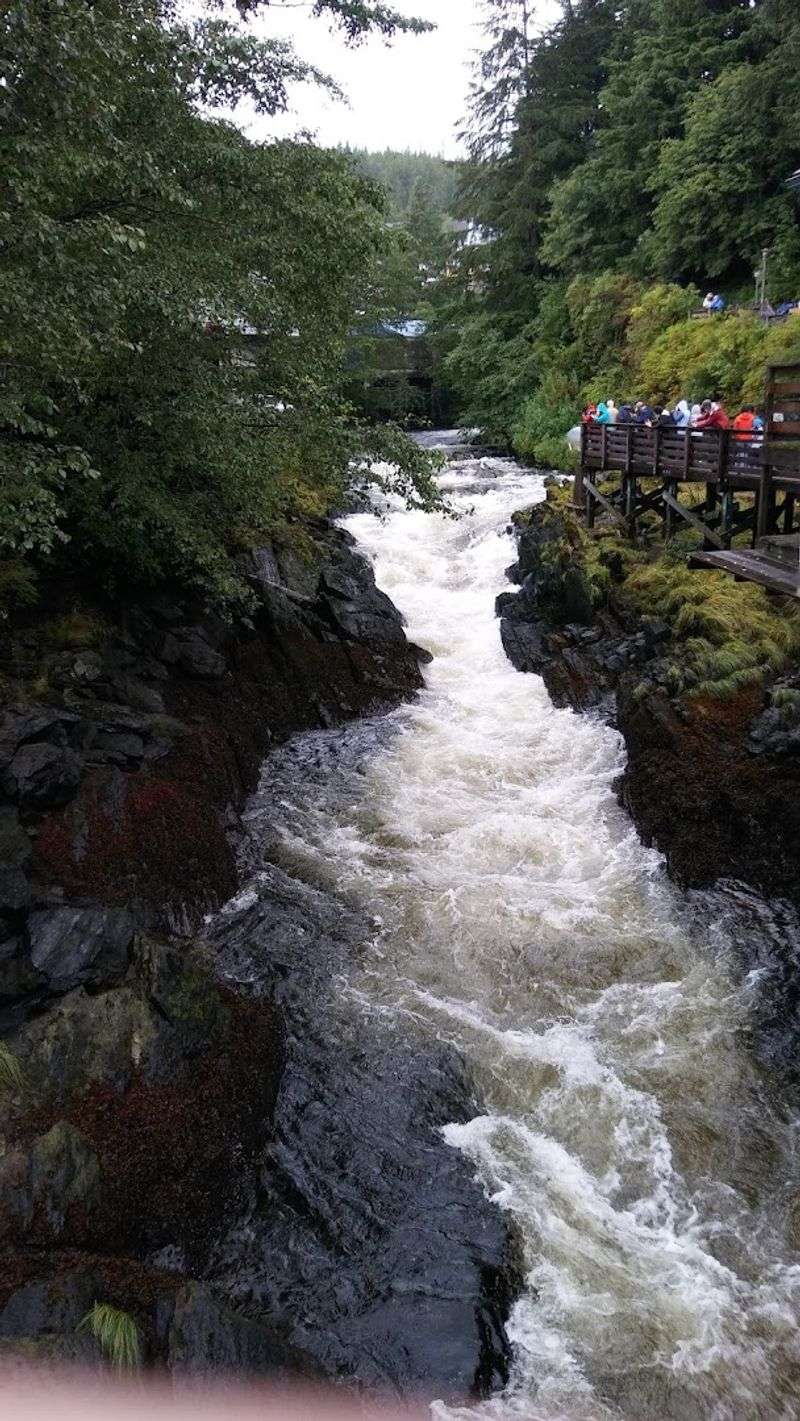
Just imagine for a second a waterfall running right through the heart of a charming coastal town.
That is exactly what you get at Ketchikan Creek Falls in Ketchikan, one of Southeast Alaska’s most accessible and underappreciated natural features. The falls cascade through the middle of the city, framed by towering Sitka spruce and red cedar trees.
Ketchikan Creek is famous for its salmon runs, and in late summer the water is absolutely packed with sockeye and pink salmon fighting their way upstream.
Watching thousands of fish surge past the falls is one of those wild Alaska moments that sticks with you for years.
Creek Street, a historic boardwalk built over the water, runs along the creek and gives great elevated views of the falls and the salmon below. The whole area is walkable from the Ketchikan cruise ship terminal, making it easy to squeeze in even on a short stop.
Pack your camera because the contrast of rushing water, forest, and colorful historic buildings creates a truly unique photo opportunity.
4. Bridal Veil And Horsetail Falls, Keystone Canyon, Valdez
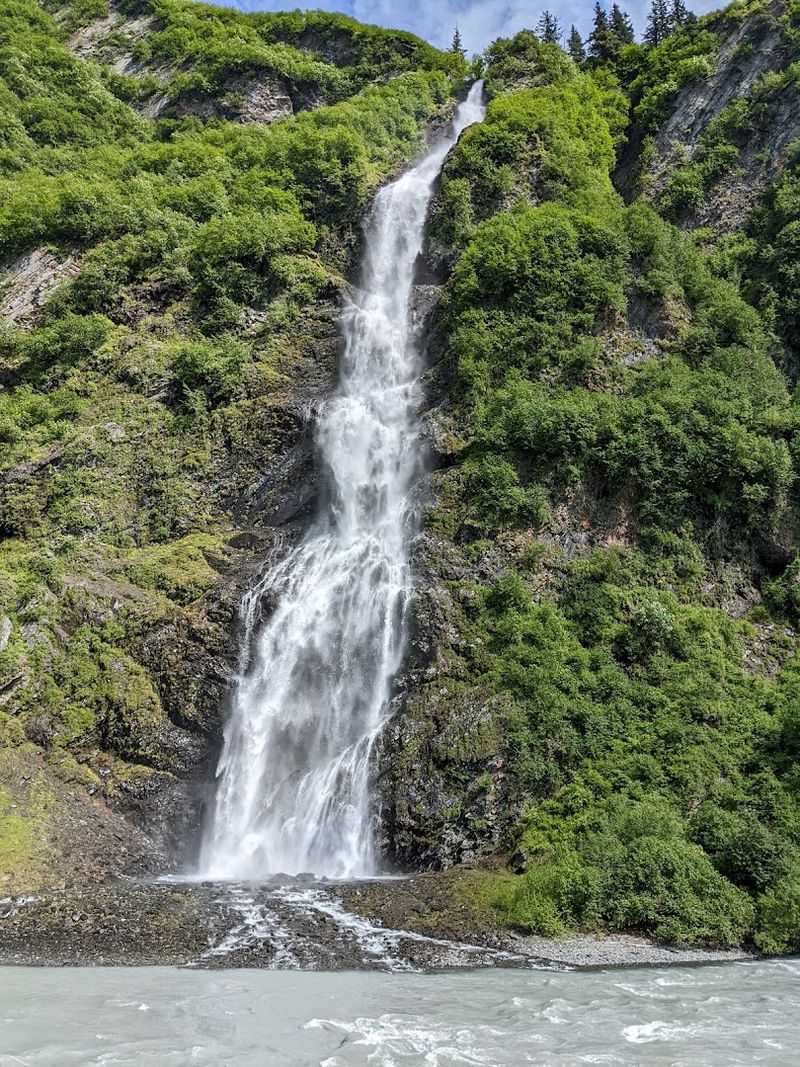
Bridal Veil Falls and Horsetail Falls in Keystone Canyon, near Valdez, are two stunning waterfalls visible right from the Richardson Highway, making them among the most dramatic roadside scenery in the entire state.
The canyon walls rise steeply on both sides, channeling the Lowe River and sending waterfalls plunging hundreds of feet down the rocky cliffs.
Bridal Veil Falls is the showstopper, dropping around 600 feet in a wispy, multi-strand cascade that earns its elegant name. Horsetail Falls runs parallel, slightly narrower but equally impressive.
Both are best seen in late spring and early summer when snowmelt is at its peak.
Valdez sits at the northern end of Prince William Sound and is already famous for its dramatic mountain scenery. Adding these waterfalls to the mix makes the drive through Keystone Canyon a genuine highlight of any Alaska road trip.
Pull off safely, take your time, and soak in the sheer scale of what you are looking at. The canyon is located along Richardson Highway, Valdez.
5. Virgin Creek Falls, Girdwood
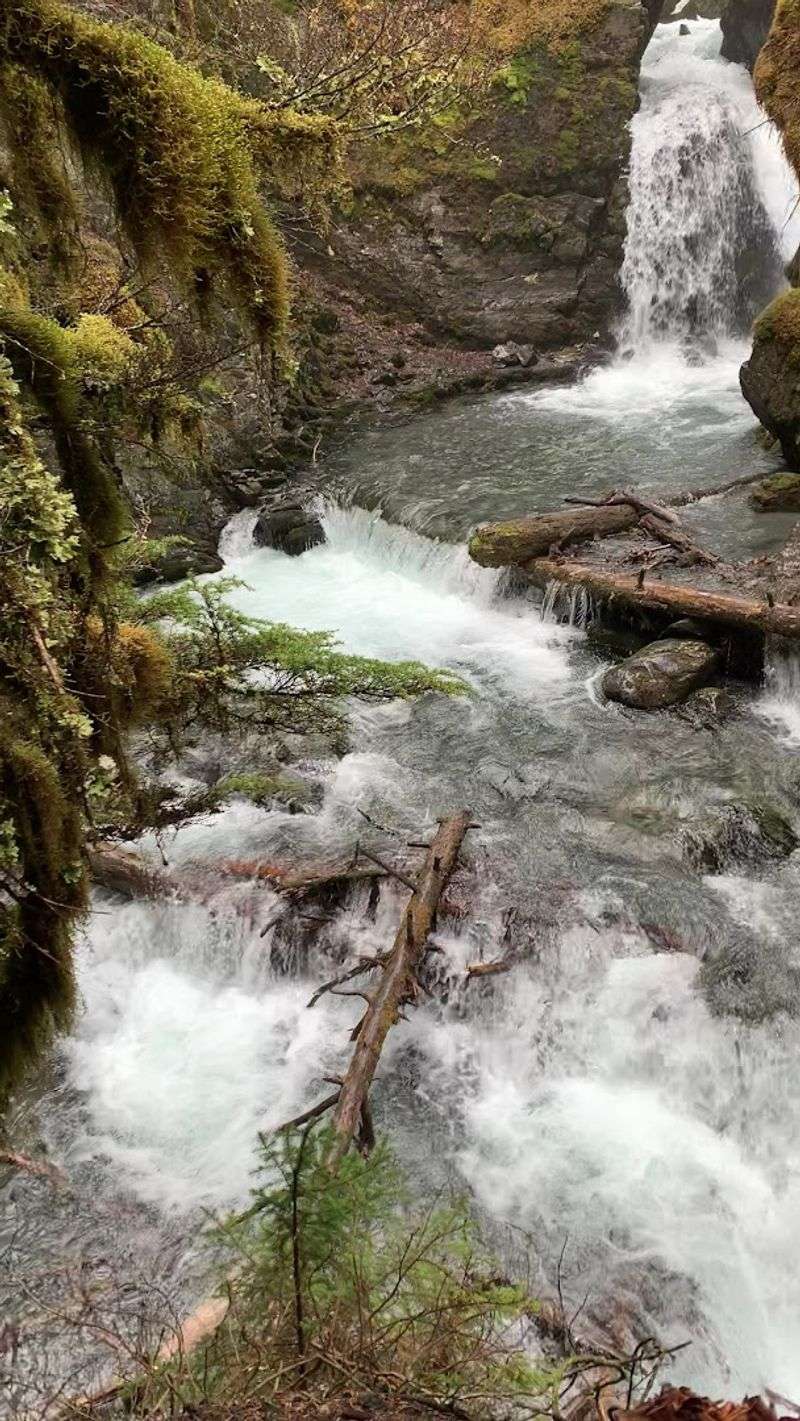
What if the best waterfall hike near a ski town was actually a summer adventure?
Virgin Creek Falls near Girdwood is exactly that kind of happy surprise. Girdwood sits about 40 miles south of Anchorage in the Chugach Mountains, and this short trail leads through a dense, rain-soaked forest before opening up to a gorgeous multi-tiered waterfall.
The hike to the falls is only about 1 mile one way, with minimal elevation gain, making it perfect for families or anyone who wants big scenery without a grueling climb.
The forest along the trail is thick with devil’s club, ferns, and old-growth Sitka spruce that create a lush, almost tropical atmosphere.
Virgin Creek Falls drops in two main tiers over mossy rock faces, surrounded by ferns and wildflowers in summer. The sound of the water fills the whole canyon, and the air near the base is noticeably cool and fresh.
After the hike, Girdwood’s small but lively town center is just minutes away, perfect for grabbing a bite and celebrating a great morning outdoors. The trailhead is located off Alyeska Highway, Girdwood.
6. Winner Creek Falls, Girdwood
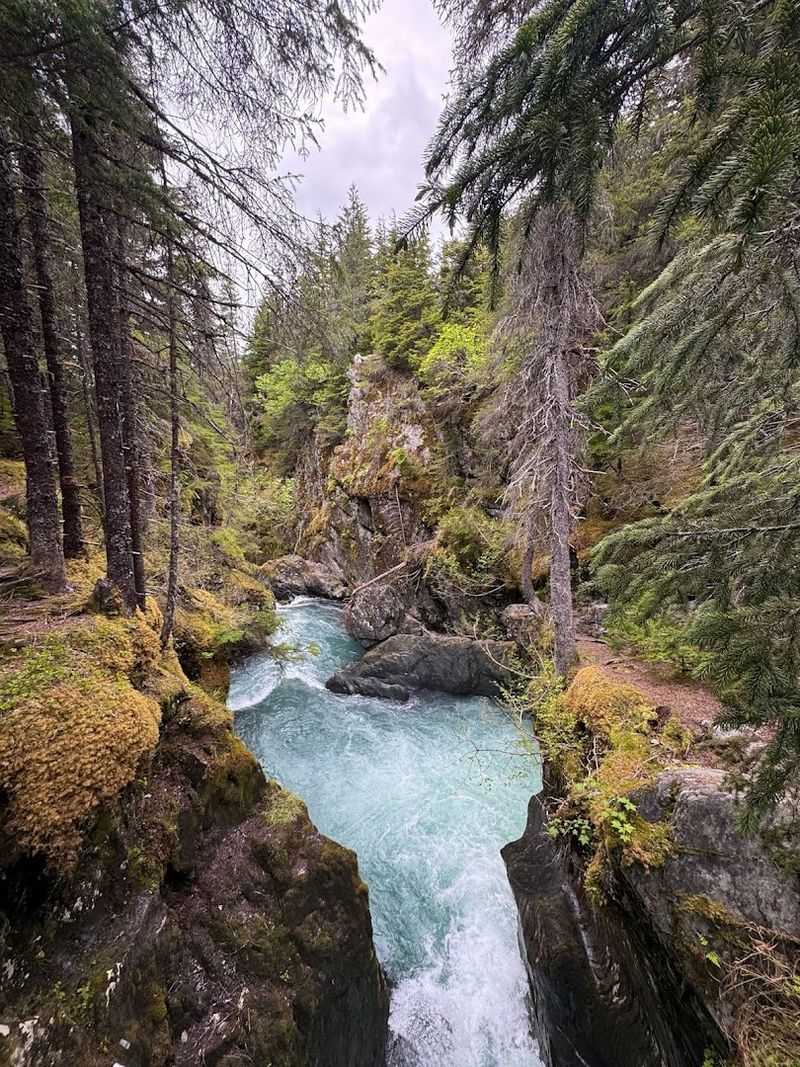
Correct me if I am wrong, but very few waterfall hikes also come with a hand-pulled tram crossing a gorge.
Winner Creek Falls near Girdwood is one of them, and that alone makes it worth the trip. The trail winds through old-growth forest in the Chugach National Forest before reaching a hand tram that visitors pull themselves across a narrow, dramatic gorge.
Beyond the tram, the trail continues to Winner Creek Falls, a powerful cascade that thunders through a rocky canyon carved deep into the Chugach Mountains.
The round trip is about 6 miles, with the terrain staying relatively gentle for most of the route before getting a bit rougher near the falls.
Summer is the ideal time to tackle this trail, when the forest is fully leafed out and the creek runs strong. Bears are active in this area, so carrying bear spray is strongly recommended.
The combination of old-growth forest, the gorge crossing, and the falls at the end makes Winner Creek one of the most complete outdoor experiences in the Girdwood area. The trailhead begins near the Alyeska Resort in Girdwood.
7. Thunderbird Falls, Eklutna
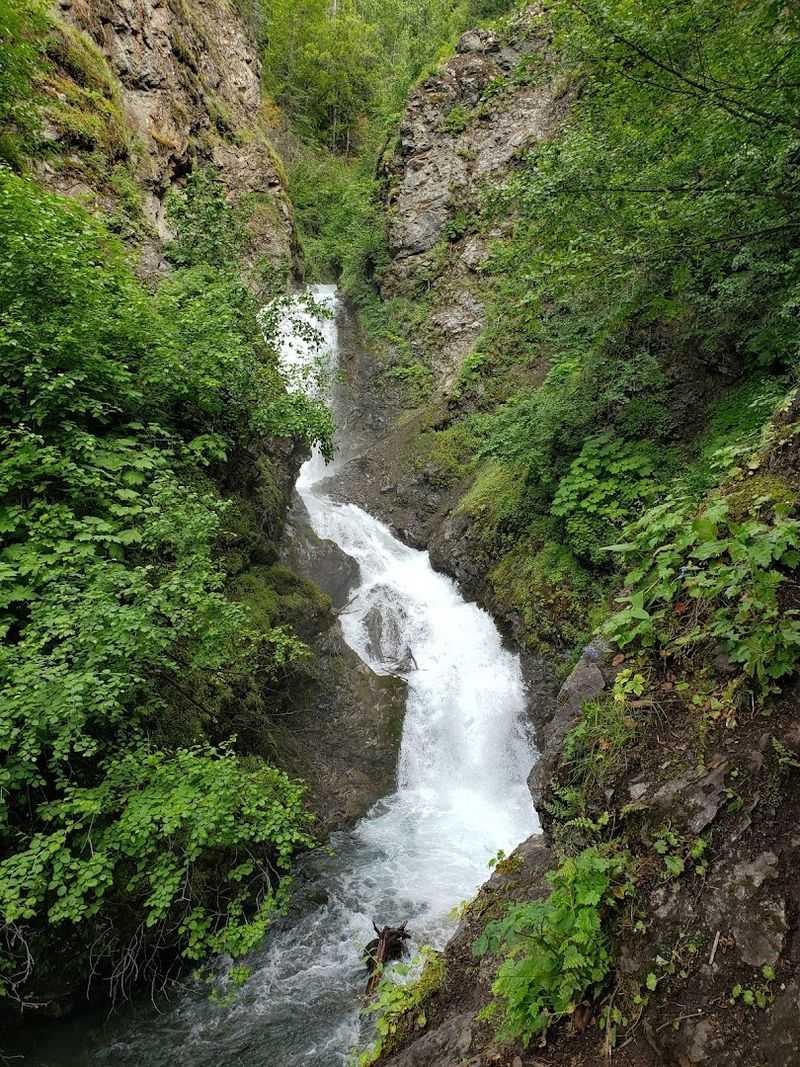
Let’s be real for a second: finding a stunning waterfall less than an hour from a major city is a rare gift.
Thunderbird Falls in Eklutna, near Anchorage, is exactly that kind of accessible gem hidden in plain sight. The waterfall drops about 200 feet through a narrow rocky canyon surrounded by birch and spruce forest that turns golden and fiery every autumn.
The trail to the falls is only about 2 miles round trip, making it one of the most popular short hikes in the Anchorage area.
The path is well-maintained and relatively easy, though the final viewpoint requires a short scramble down to the canyon floor for the best views of the falls.
Fall is arguably the most beautiful time to visit, when the surrounding birch trees explode in shades of yellow and orange against the white water of the falls. Spring and summer are also excellent, with wildflowers lining the trail and the creek running at full force.
The trailhead is located off the Old Glenn Highway in Eklutna, about 26 miles northeast of Anchorage. Parking is available at the trailhead for a small fee.
8. Russian River Falls, Cooper Landing, Kenai Peninsula
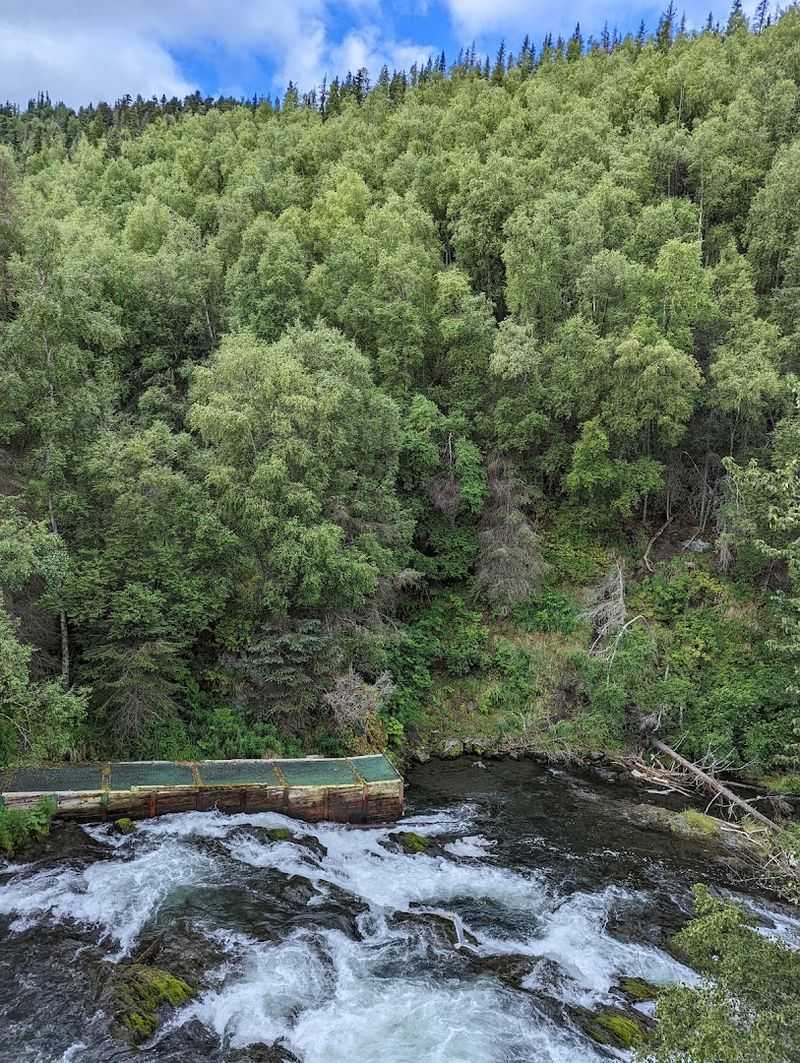
I had to do a double-take the first time I saw bears fishing salmon right below a waterfall.
Russian River Falls in Cooper Landing on the Kenai Peninsula is one of the best places in the state to witness that exact scene up close.
Every summer, thousands of sockeye salmon fight their way upstream, and brown bears show up to take full advantage of the buffet.
The falls themselves are not towering, but they are wide and powerful, creating a natural barrier that the salmon must leap to continue their journey.
Watching them hurl themselves through the churning white water is a genuinely thrilling experience. The viewing area is set back safely from the river, so you can observe without disturbing the wildlife.
The hike to the falls is about 2.5 miles one way along the Russian River Trail, passing through beautiful boreal forest and alongside the clear, cold river. Late July through August is peak salmon season and the best time for wildlife watching.
Always carry bear spray on this trail. The Russian River Falls trailhead is located near Cooper Landing on the Kenai Peninsula.
9. Lowell Creek Falls, Seward
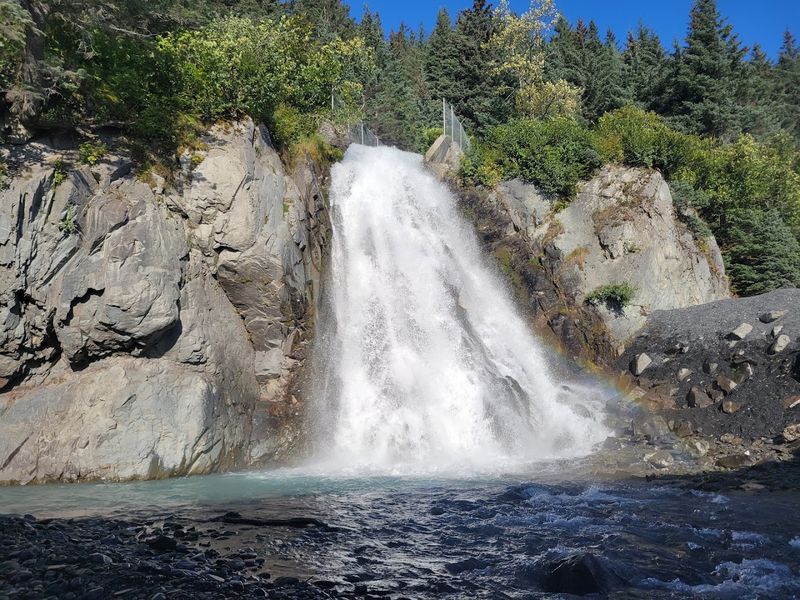
Food for thought: what if the only way to see a waterfall was to walk through a tunnel built to protect a town from flooding?
Lowell Creek Falls in Seward is that wonderfully strange situation. The creek and its falls run through an engineered diversion tunnel that channels the water under the town and out to Resurrection Bay, protecting Seward from seasonal flooding.
The falls themselves emerge from the mountainside above town in a dramatic cascade that drops steeply through a narrow rocky gorge.
The viewpoint near the tunnel entrance gives a fantastic look at the power of the water rushing through the system. It is one of those quirky pieces of Alaska infrastructure that turns into an unexpected sightseeing highlight.
Seward is already a must-visit town on the Kenai Peninsula, famous for Kenai Fjords National Park and its stunning mountain-meets-ocean scenery.
Adding Lowell Creek Falls to your Seward itinerary takes almost no extra time since the falls are located right at the edge of town.
Spring and early summer bring the highest water volume and the most dramatic flow. The falls are accessible near the end of Lowell Creek Road in Seward.
10. South Fork Eagle River Falls, Eagle River
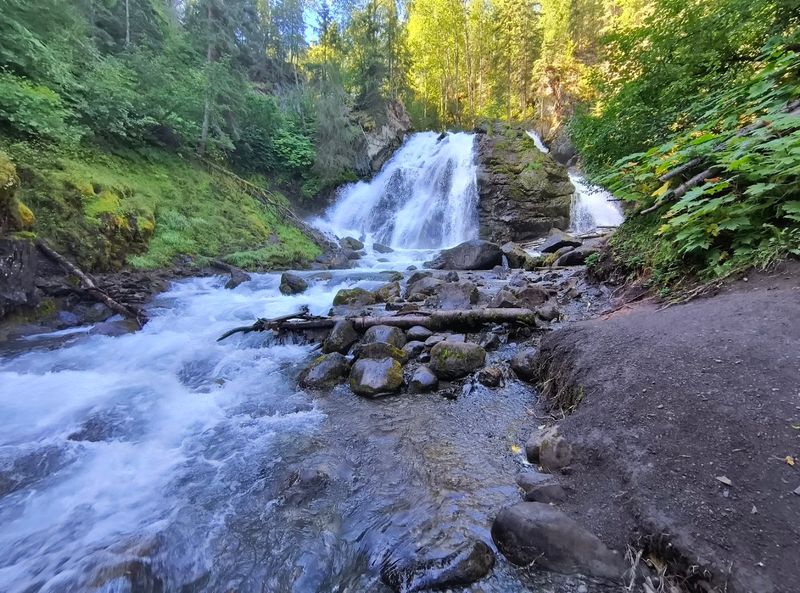
Are you seeing what I am seeing? A powerful glacial waterfall tucked inside a wild mountain valley, barely an hour from Alaska’s biggest city.
South Fork Eagle River Falls in Eagle River, near Anchorage, sits deep in the Chugach Mountains and rewards hikers with one of the most dramatic waterfall scenes accessible on foot in the region.
The hike follows the South Fork Eagle River Trail through a stunning glacial valley flanked by towering peaks.
The round trip is roughly 10 miles, so this one is best suited for experienced hikers who are comfortable on uneven terrain. The trail can be wet and rocky, and river crossings may be required depending on conditions.
The falls themselves are fed by glacial meltwater, giving the river that gorgeous milky turquoise color that is so characteristic of Alaska’s glacial streams.
The surrounding scenery, with jagged peaks, alpine meadows, and abundant wildlife, makes every step of the approach worthwhile.
Moose, Dall sheep, and even wolves have been spotted in this valley. The trailhead for South Fork Eagle River is located off South Fork Road in Eagle River, near Anchorage.
11. Brooks Falls, Katmai National Park
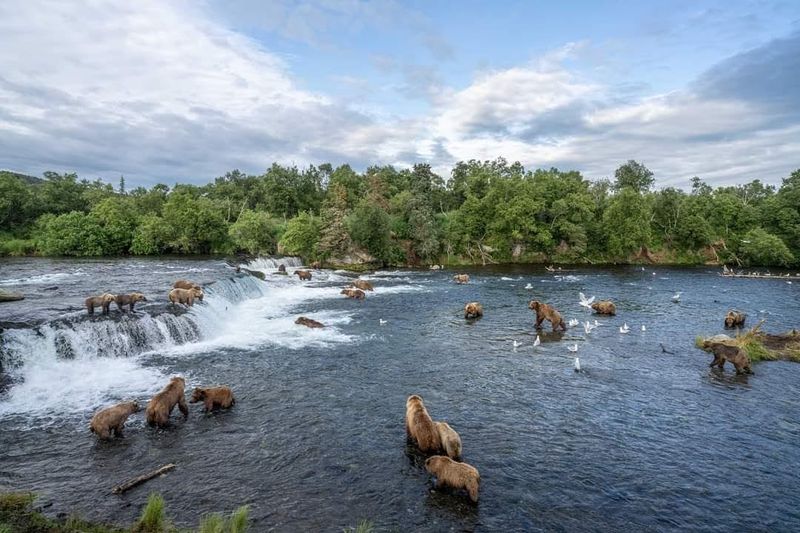
Louder for the people in the back: there is a waterfall in Alaska where you can watch brown bears catch flying salmon mid-air.
Brooks Falls in Katmai National Park is arguably the most famous wildlife viewing location in the entire country, and the waterfall is the star of the whole production. Every July, brown bears line up along the falls to intercept sockeye salmon as they leap upstream.
The National Park Service has built elevated viewing platforms right at the falls, giving visitors a front-row seat to one of nature’s most spectacular feeding events.
The bears can be enormous, some exceeding 1,000 pounds, and watching them pluck fish from the air with casual precision is absolutely unforgettable.
Getting to Katmai requires a flight from Anchorage to King Salmon and then a floatplane to Brooks Camp, which adds to the adventure. The park has no road access, keeping the experience wild and exclusive.
Permits and reservations for the viewing platform are required during peak season, so planning well in advance is essential. Brooks Camp is located within Katmai National Park and Preserve, King Salmon.