Where To Go In Georgia If You Want Fresh Air And Fewer Crowds
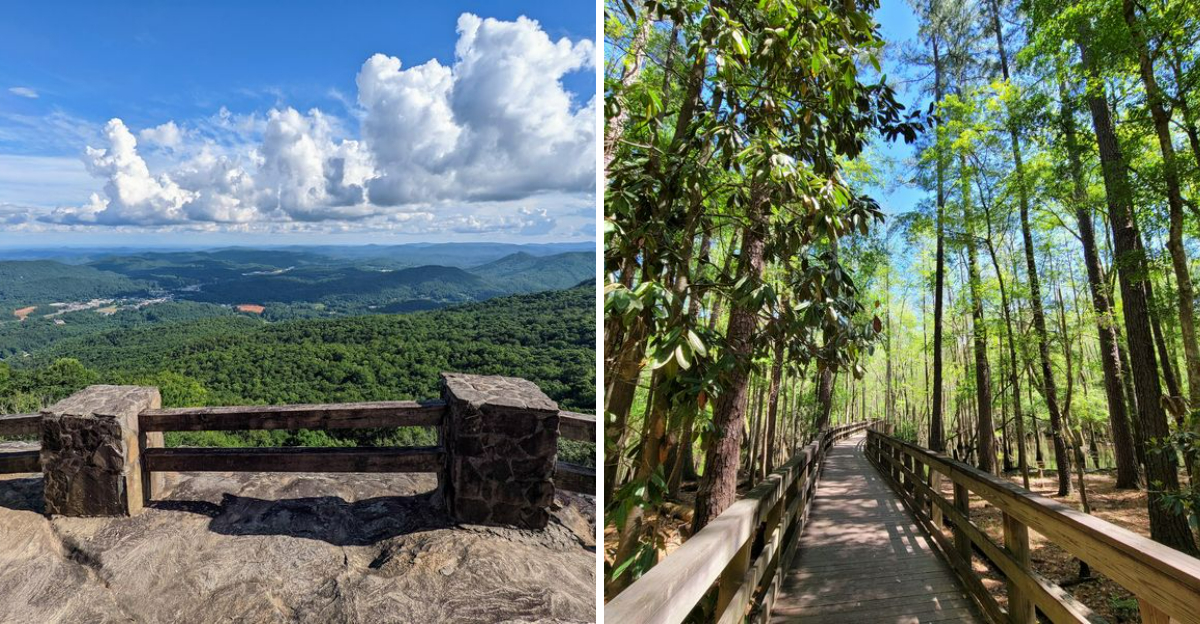
My phone lost signal somewhere past the third mile marker, and honestly, that felt like a gift. No notifications, no noise, just birdsong and the crunch of gravel under my boots.
Most people picture crowded overlooks and packed parking lots when they think about getting outside in Georgia. I used to think that too, until I started chasing dirt roads that led nowhere obvious.
What I found instead were canyons with nobody in them, creeks with no footprints on the banks, and mountaintops where the only sound was wind. These places do not announce themselves.
You find them by accident, or by someone finally sharing the secret. Georgia hides more quiet corners than most people realize, and once you find one, crowded trails start to feel like a waste of a good afternoon.
1. Cloudland Canyon State Park, Rising Fawn
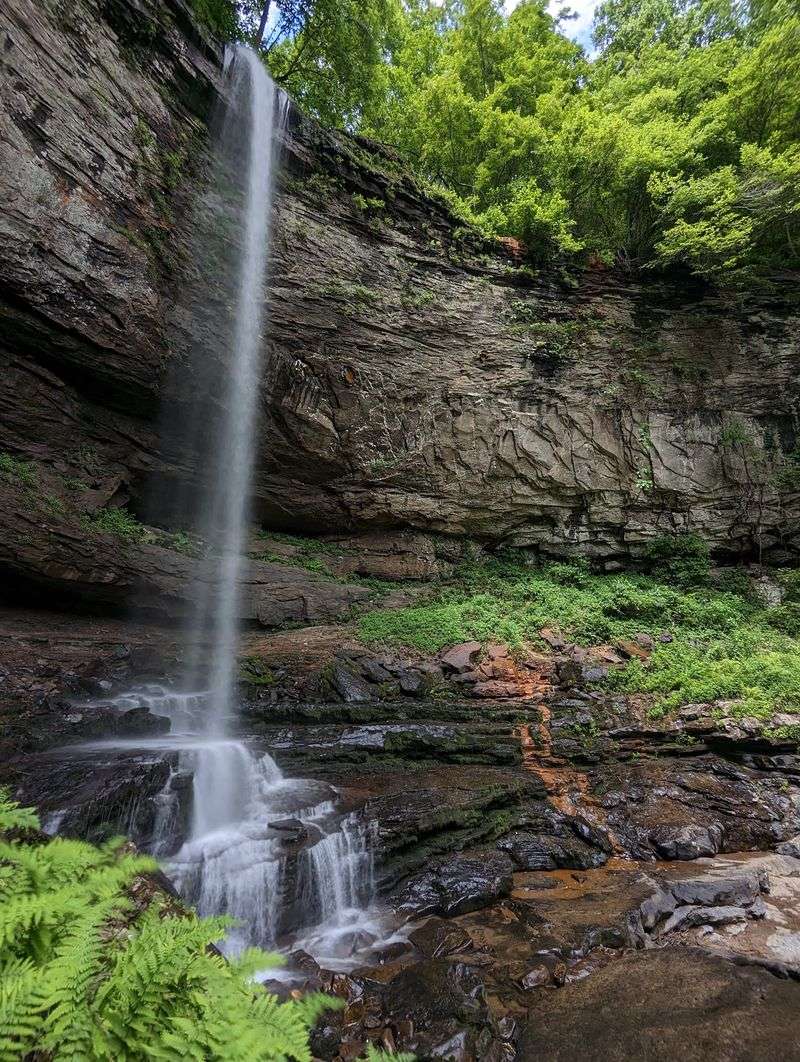
Six hundred metal stair steps stand between you and a waterfall here. Your legs will complain, and the view will make you forgive them instantly.
The park sits on the western edge of Lookout Mountain, one of the largest and most scenic in the state park system. Canyons drop roughly a thousand feet, framed by sandstone cliffs and wild caves.
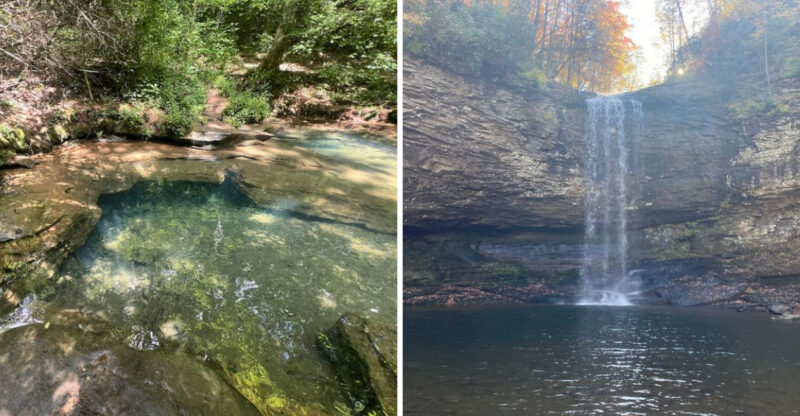
The Waterfalls Trail is the famous one, leading down to Cherokee Falls and Hemlock Falls. It is strenuous, so bring water and pace yourself on the climb back up.
For something longer but gentler on the knees, the West Rim Loop Trail runs about five miles. Backpacker Magazine once rated it among the top ten hikes in the country.
Cyclists get their own playground at the Five Points Recreation Area and along the Cloudland Connector Trail. Dirt, roots, and rock keep it interesting without turning brutal.
You will find the entrance at 122 Cloudland Canyon Park Rd, Rising Fawn, GA 30738. Weekday mornings feel almost private, especially before the mist burns off the canyon.
Cascading creeks and thick woodland make the air noticeably cooler down in the gorge. It is a real temperature drop, not your imagination.
2. Hard Labor Creek State Park, Rutledge
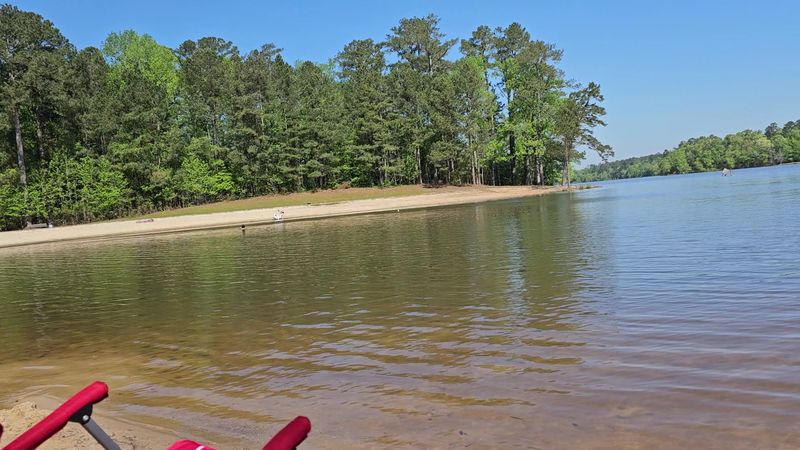
The name sounds like a warning. The golf course honors it, politely.
The Creek at Hard Labor is an 18-hole course sitting right inside the park boundaries. Narrow fairways lined with trees mean your driver is not always your friend.
Champion Bermuda greens roll cleanly, and the layout rewards players who think two shots ahead. It is often called a shotmaker’s course, which is a nice way of saying accuracy beats muscle.
Golf Digest Frugal Golfer named it the fourth sweetest deal in the country back in 2010. Affordable golf surrounded by forest is a rare combination.
Even if you never touch a club, the setting earns the trip. Woods, water, and open sky sit far enough from highway noise to feel genuinely calm.
The park address is 5 Hard Labor Creek Rd, Rutledge, GA 30663, an easy drive from the interstate. Tee times fill slower here than at resort courses, which is exactly the point.
This is one of only eight state park golf courses in this part of the state. Fresh air, birds in the trees, and no crowd pressing behind you on the tee box.
3. Watson Mill Bridge State Park, Comer
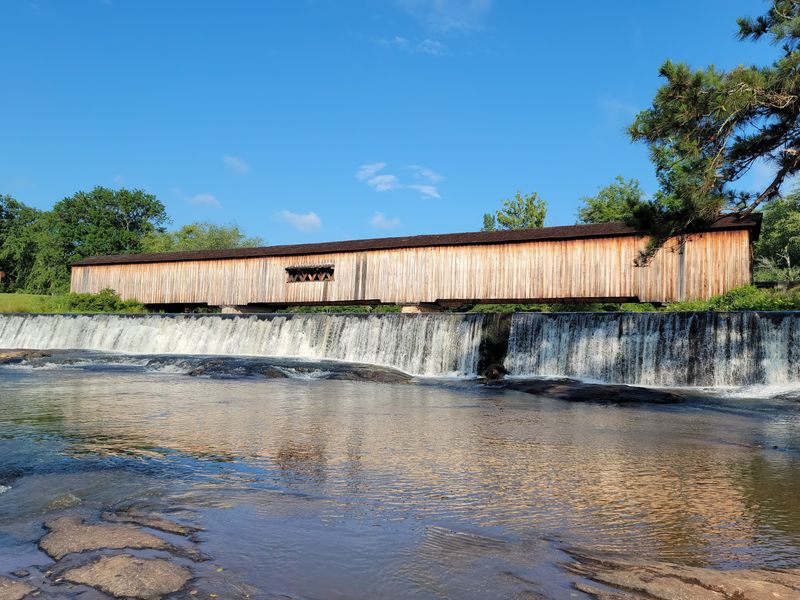
Wooden pegs hold this bridge together. Not bolts, not brackets, pegs.
Built in 1885, the covered bridge stretches 229 feet across the South Fork River. It is the longest original-site covered bridge in the state, still standing where it was raised.
The structure uses a Town lattice truss system, an old engineering trick that spreads weight across crisscrossed timbers. Standing inside, you can see the pattern clearly overhead.
Below the bridge, water spills across wide rock shoals. On warm days, that shallow rushing water is the best free splash pad you will find.
Trails cover more ground than most visitors expect across the 1,118-acre park. Hikers, cyclists, and horseback riders all get room through thick forest and along the riverbank.
Picnic tables sit near the water, and the campground makes an easy overnight stop. Mornings here come with fog on the river and very little else.
Set your directions to 650 Watson Mill, Comer, GA 30629. The drive in passes farmland that has not changed much in decades.
Photographers love late afternoon light on the weathered wood. Everyone else just loves how quiet it stays.
4. Providence Canyon State Park, Lumpkin
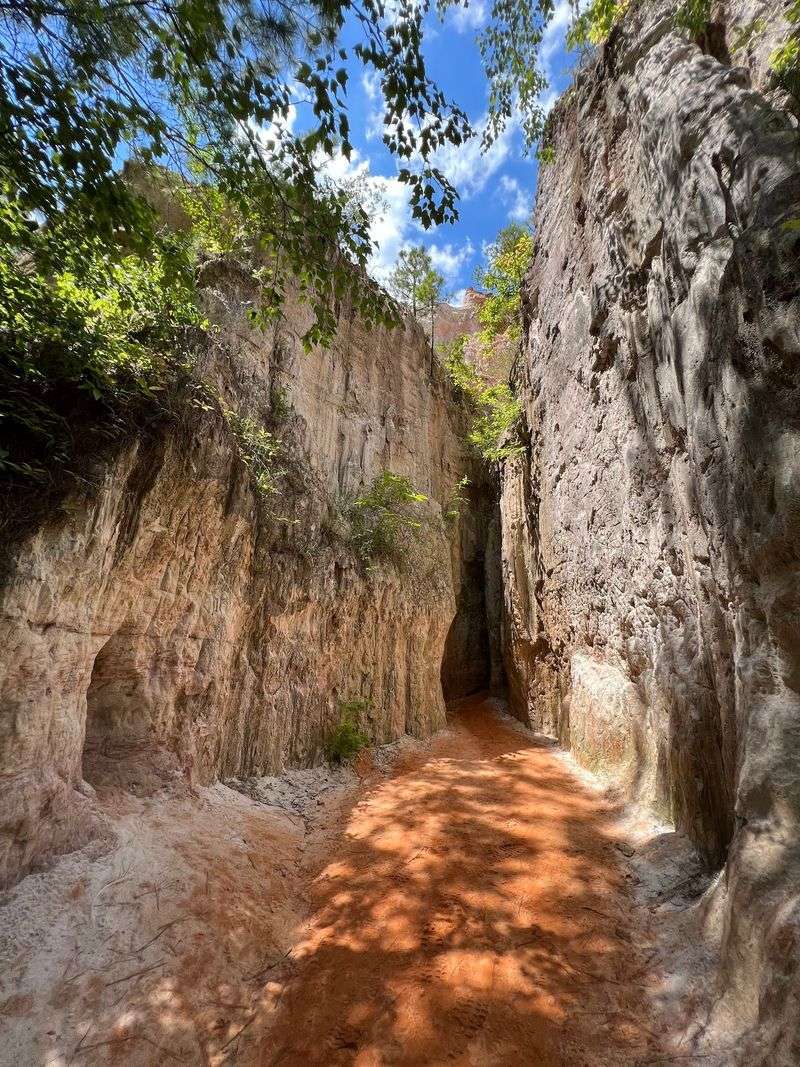
Bad farming created a wonder. That is the strange truth behind this landscape.
Poor plowing practices in the 1800s let rainwater carve the soft soil into massive gullies. Some now plunge 150 feet deep, and they are still changing.
Locals nicknamed it the Little Grand Canyon, and the color explains why. Mineral deposits paint the walls in orange, white, pink, red, and deep purple bands.
It earned a place among the Seven Wonders of the state, yet crowds stay surprisingly thin. Southwest corners of the map get less traffic than the mountains.
The 2.5-mile Canyon Loop Trail is the main event, dipping into nine numbered canyons. Wear shoes you do not mind soaking, because the floor is sandy streambed.
Backpackers can stretch out on a seven-mile route with primitive campsites. Rim trails offer the same views without any mud on your socks.
July and August bring the rare plumleaf azalea into bloom, a plant that grows only in this region. Bright red flowers against pale canyon walls make a striking pairing.
Punch in 8930 Canyon Rd, Lumpkin, GA 31815. Go early, since shade is limited on the rim.
5. Panola Mountain State Park, Stockbridge
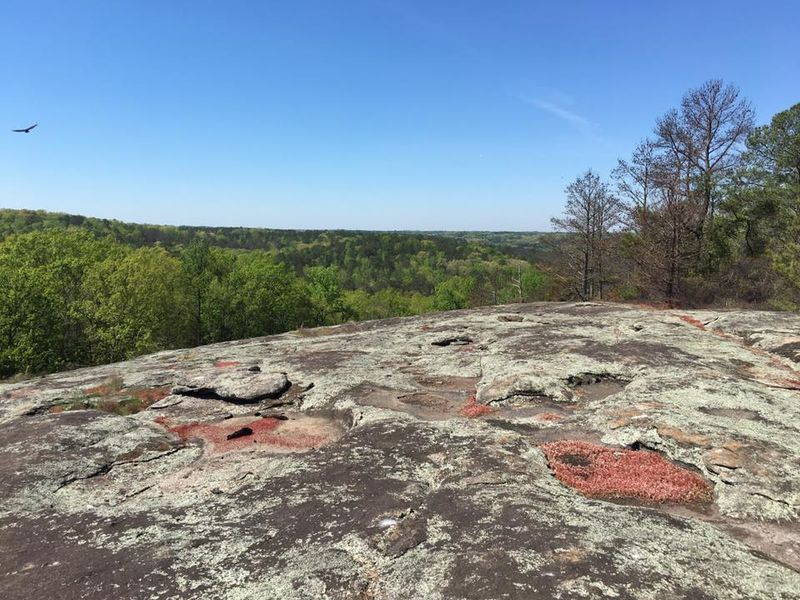
A mountain you cannot climb alone sounds odd. There is a good reason for the rule.
Panola Mountain is a 100-acre granite outcrop that was never quarried. Geologists call it a monadnock, and this one survived intact.
Because the rock surface is fragile, reaching the summit requires a ranger-led guided hike. Those guided walks include lessons about the mountain’s geology, plants, and wildlife, although reservations and fees may apply.
Rare plants cling to shallow depressions in the stone, including diamorpha and granite stonecrop. In spring, diamorpha turns tiny rock pools bright red.
The site carries National Natural Landmark status and sits inside the Arabia Mountain National Heritage Area. Much of it looks as it did centuries ago.
Not everything requires a guide, thankfully. A paved path welcomes bikes, joggers, and leashed dogs, while forested fitness trails handle regular hiking.
Programs here cover archery, geocaching, orienteering, and birding. Families with restless kids find plenty to fill an afternoon.
Find it at 2620 Georgia 155 SW, Stockbridge, GA 30281, roughly fifteen minutes from Atlanta. Being that close to a major city and still hearing birds instead of traffic feels like a small miracle.
6. Black Rock Mountain State Park, Mountain City
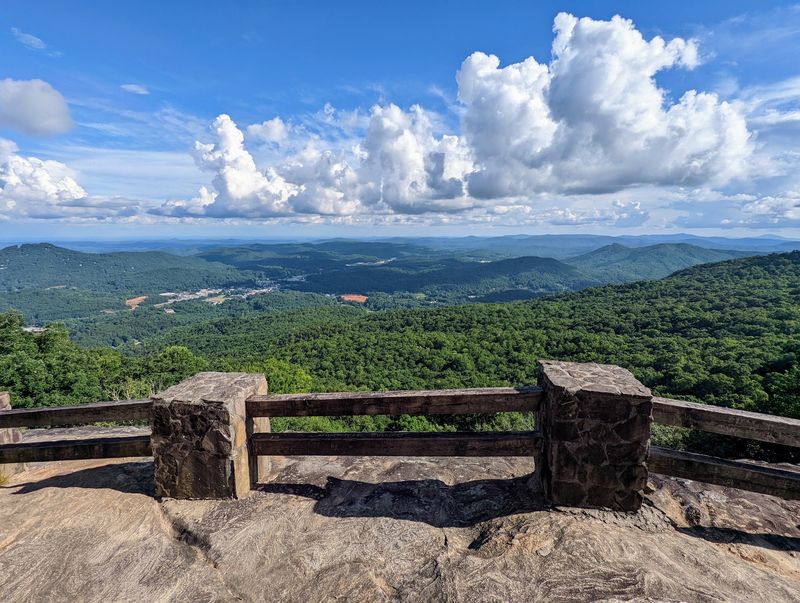
On clear days, overlooks and trails offer views stretching more than 80 miles toward three neighboring states. On clear days the view stretches more than 80 miles.
Sitting above 3,446 feet, this is the highest state park in the region. Elevation means the air stays cooler while the lowlands bake.
The approach road alone justifies the gas. Blue Ridge ridgelines stack up on both sides as you climb.
Roadside overlooks deliver serious scenery with almost no effort. Pull over, step out, and there it is.
Hikers should aim for the Tennessee Rock Trail, a moderate loop ending at a rocky outcrop. Wildflowers, streams, and small waterfalls fill in the miles.
Fall foliage draws attention, but the crowd never matches what busier mountain towns see. Weekday visits in October can feel almost selfish.
The address is 3085 Black Rock Mountain Pkwy, Mountain City, GA 30562. Bring a jacket even in warmer months, because wind at the summit has opinions.
Forests here feel lush and slightly wild, with mossy rocks and thick canopy. It is a rugged kind of quiet rather than a manicured one.
7. General Coffee State Park, Nicholls
Only one state park lets you hand food to a goat. This is that park.
The Heritage Farm gathers log cabins, a corn crib, a tobacco barn, and a cane mill in one spot. Together they show how rural families lived and worked generations ago.
Animals make the visit stick with kids. Goats, sheep, chickens, pigs, a horse, and donkeys all live on site, and visitors can feed them.
Beyond the farm, 1,511 acres open up around a four-acre lake. Fishing poles and quiet mornings pair well here.
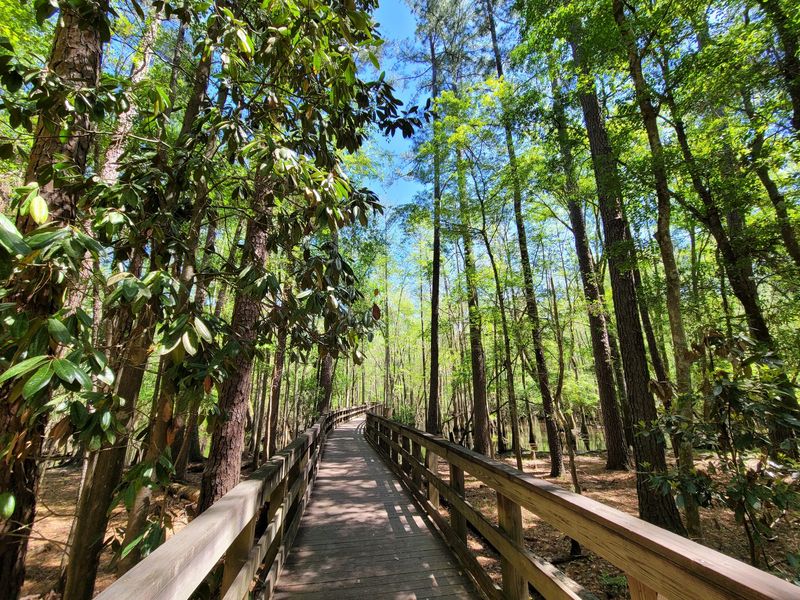
A boardwalk crosses a cypress swamp along the Seventeen-Mile River. Rare and endangered plants grow there, including pitcher plants that trap insects.
Birders do very well in this wiregrass community. Bring a long lens, because photography opportunities show up constantly.
Riders have 13.4 miles of equestrian trails to explore through pine and hardwood. Hooves on sandy soil make a satisfying sound.
Set your GPS to 46 John Coffee Rd, Nicholls, GA 31554. Folks call this corner one of the best kept secrets in the southern half of the state, and the empty picnic tables back that up.
8. Dauset Trails Nature Center, Jackson
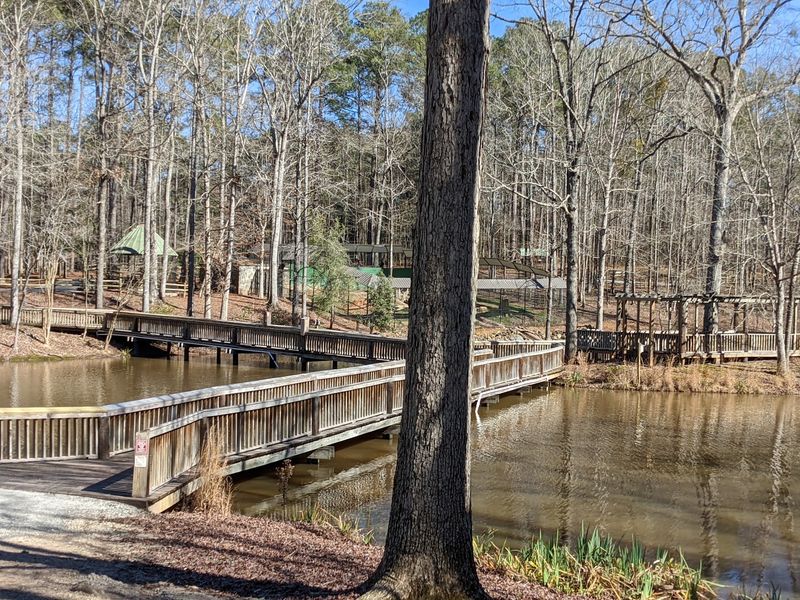
Thirty miles of trails, and admission costs nothing. Donations are welcome, but the gate is open.
Dauset Trails is a private nonprofit preserve built around environmental education and outdoor recreation. That mission shows in how well the place is cared for.
Mountain bikers get a serious network here, with routes for beginners and advanced riders alike. Flowy stretches trade off with climbs and rocky patches through thick hardwood forest.
Hikers share much of the same terrain without feeling squeezed. Thirty-plus miles spreads people out nicely.
The wildlife area houses over 70 native animals that cannot be released back into the wild. Injured or orphaned, they now serve as ambassadors for conservation.
Exhibits include native mammals, birds of prey, and reptiles such as alligators, turtles, lizards, and snakes. Seeing an owl at eye level changes how you listen in the woods.
A 19th-century-style working farm rounds out the visit with chickens, pigs, goats, cows, mules, and a donkey. Kids tend to linger at the fence longer than parents plan.
Head to 360 Mt Vernon Church Rd, Jackson, GA 30233 and give yourself half a day.
9. Sweetwater Creek State Park, Lithia Springs
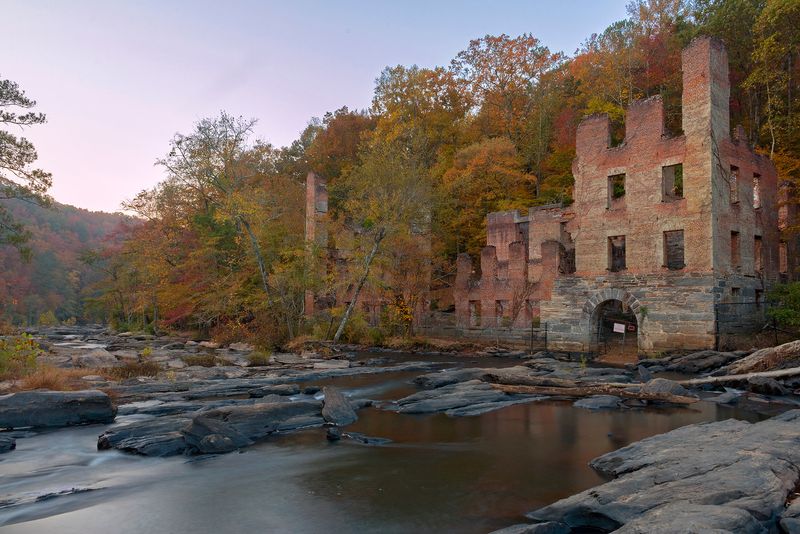
A five-story brick shell stands beside rushing water. Hollywood noticed it too.
The New Manchester Manufacturing Company mill burned during the Civil War, and its ruins still rise above the creek. Vines and moss have moved in since.
The Red Trail follows the water to reach them, tracing cascades and whitewater rapids the whole way. Past the ruins, the path climbs rocky bluffs with views straight down onto the rapids.
Filmmakers used these scenes in The Hunger Games: Mockingjay Part 1. Recognizing a spot from a movie screen is a fun bonus.
More than 15 miles of trails run through fields and forest filled with ferns, magnolias, wild azaleas, and hardwoods. Choose short or long depending on your energy.
The 215-acre George Sparks Reservoir handles the water side of things. Rentals cover fishing boats, canoes, kayaks, paddleboards, and pedal boats.
An award-winning visitor center explains the mill’s story and local wildlife before you hit the trail. Ten minutes inside makes the hike richer.
You will find it at 1750 Mt Vernon Rd, Lithia Springs, GA 30122, remarkably close to downtown Atlanta yet worlds quieter.
10. Fort Mountain State Park, Chatsworth
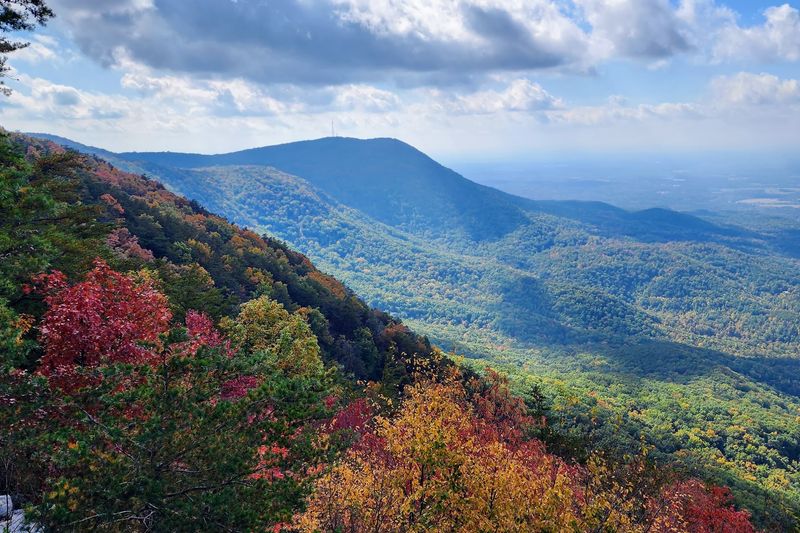
An 855-foot stone wall sits near this summit, and nobody knows exactly why. Early Native Americans likely built it for fortification or ceremonies.
Walking its length is a strange feeling. Loose stacked rock, quiet woods, and a mystery no plaque can fully solve.
Nearby stands a stone fire tower built by the Civilian Conservation Corps. Climbing it opens views across the Cohutta Wilderness.
The park spreads across 4,058 acres, so solitude is easy to find. Over 60 miles of trails serve hikers, cyclists, and horseback riders.
Paths cross streams and cut through hardwood forest and blueberry thickets. Late summer means snacking as you walk, if the bears leave any behind.
A 17-acre mountain lake anchors the recreation area, with a lakeside beach open during summer. Cold mountain water feels excellent after a long climb.
Cooler weather may be the best season here, when the forest goes gold and the air turns crisp. Campsites and cottages make weekend stays simple.
Directions point to 181 Fort Mountain State Park Rd, Chatsworth, GA 30705. Between the ancient wall and the long ridge views, this one stays in your head for weeks.