Why Locals Hesitate To Tell Tourists About This Beautifully Shaded Pennsylvania Nature Trail
Some trails don’t just offer a walk. They offer a reason to slow down completely.
I found this Pennsylvania trail by accident, chasing a recommendation someone gave me almost reluctantly, like they were breaking a personal rule. The path started ordinary enough, packed dirt and dappled light.
Then the canopy thickened and the temperature dropped ten degrees in a matter of steps. I stood there for a minute just breathing.
No crowds. No noise.
Just leaves moving overhead and a creek somewhere close by. This Pennsylvania forest keeps its best trick quiet, and I understood why the moment the shade hit my shoulders.
Some things lose their magic the second everyone knows about them. This is one of them.
A Shaded Forest That Feels Cooler Than It Should
Step under the tree canopy here and the temperature seems to drop a few degrees. Hemlock groves, mountain laurel, and native rhododendron block most of the summer sun.
The park covers 612 acres in Westmoreland County, inside the Laurel Highlands. Its varied terrain mixes hardwood forest with thick evergreen stands.
That shade is not decoration. It keeps the creek cold, which is exactly what native trout need to thrive.
Hikers who visit in July often mention how comfortable the trails stay. Along the stream, cool air seems to pool and linger.
Bring a light layer anyway, especially in spring or fall. Shade is wonderful until you stop moving and realize you are chilly.
The forest floor holds moisture, so roots and rocks can be slick. Shoes with real tread beat sneakers every time.
Photographers should plan for soft, dappled light rather than bright open scenes. Mid morning gives the best glow through the branches.
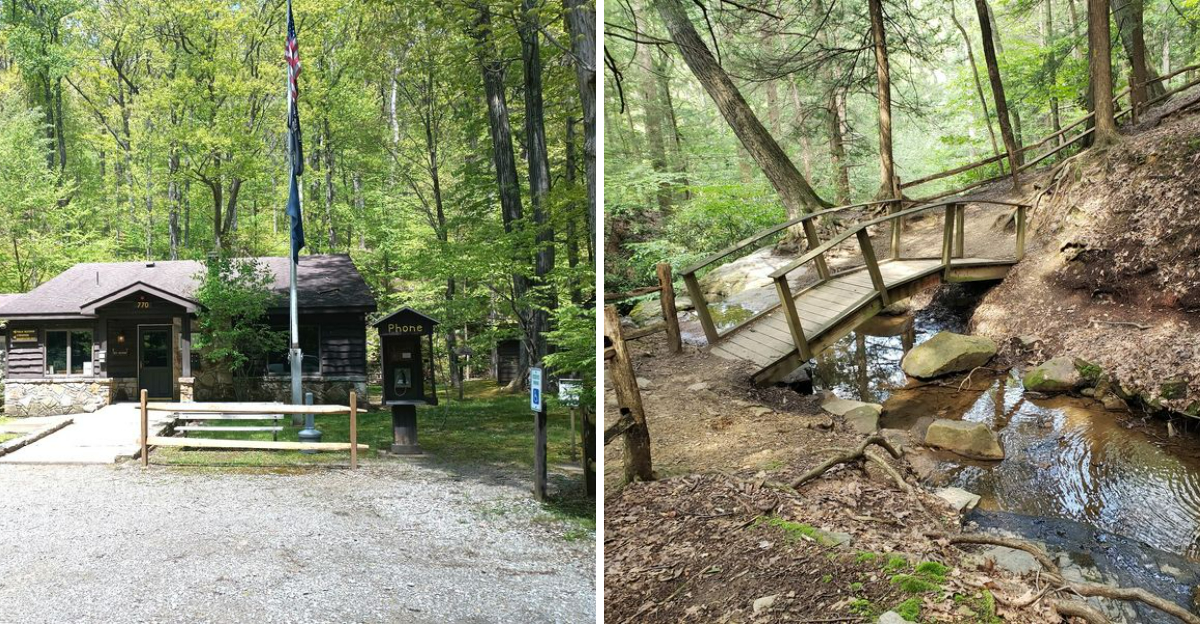
The whole place carries a hushed, closed-in feeling that bigger parks rarely offer. Find it at 770 Linn Run Rd, Stahlstown, PA 15687, and give yourself a full day.
Adam Falls Lets You Stand Behind The Water
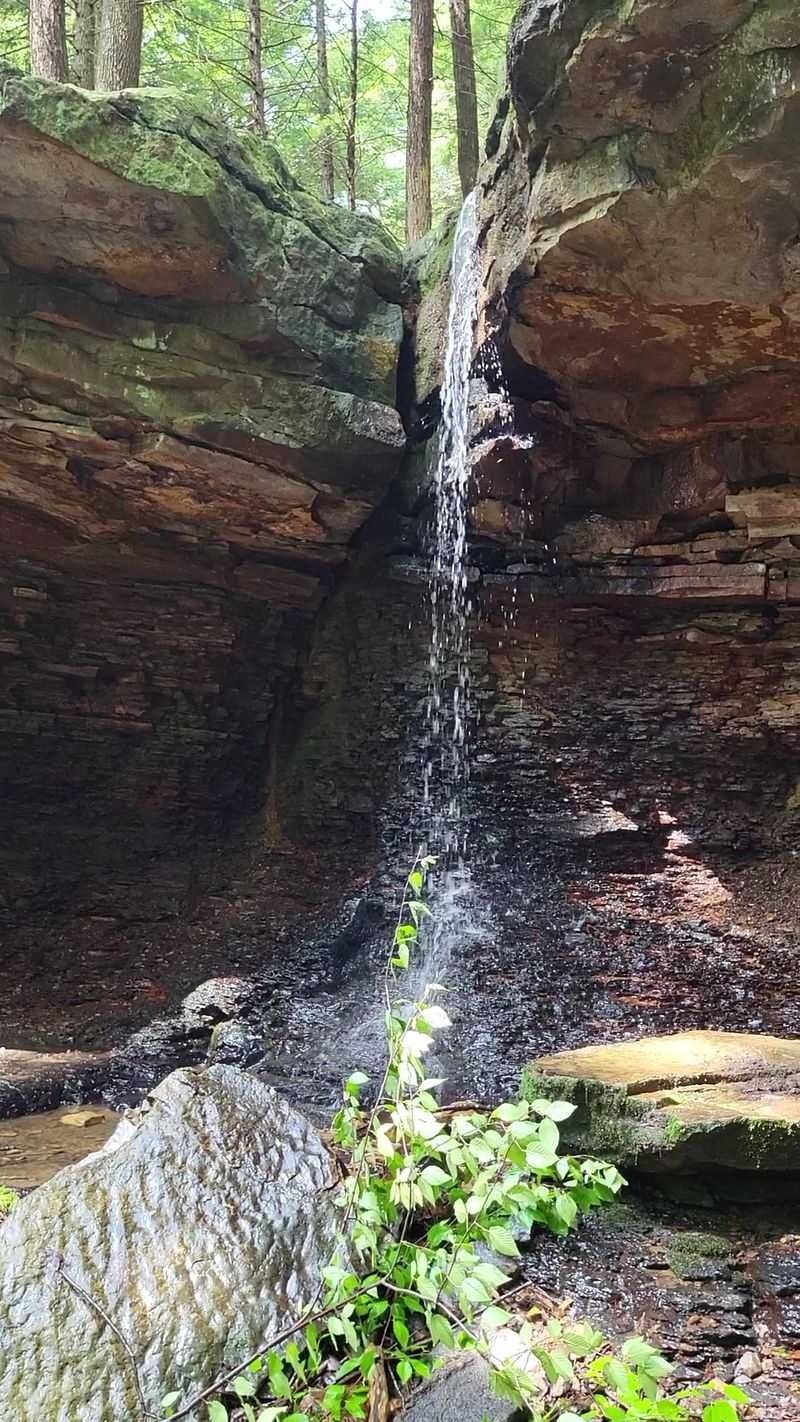
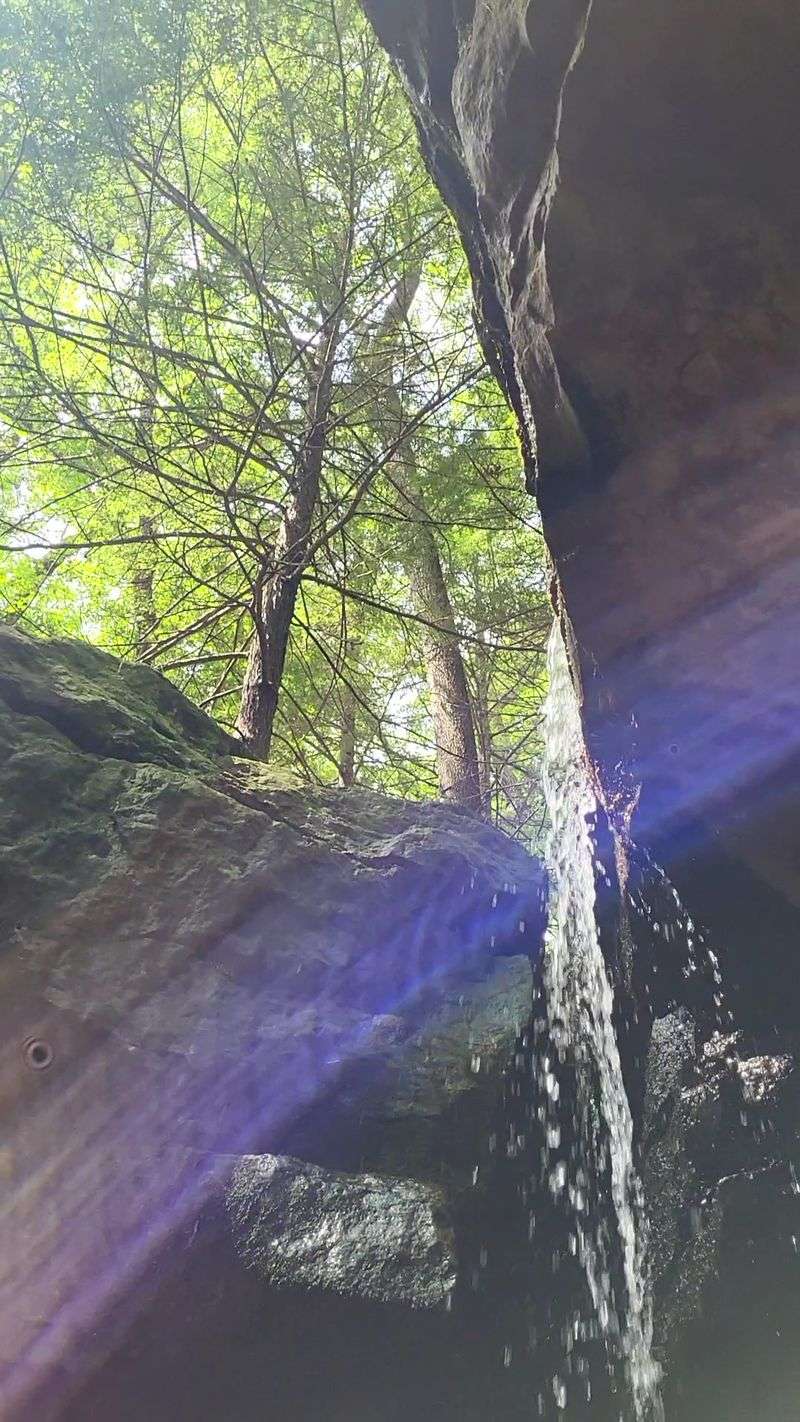
A 15-foot waterfall does not sound dramatic until you walk up to it. Adam Falls spills between hemlock and rhododendron with surprising force after rain.
The real trick is the cavern behind the curtain of water. Visitors can step into that space and look out through the falls.
Flow depends heavily on weather. Spring thaw and days after heavy rain deliver the best show.
The trail leading there is a rocky loop, roughly one to 1.3 miles. Blazes on the trees mark the route clearly.
Expect roots, loose stone, and damp footing near the base. Hiking shoes make the difference between fun and frustration.
Plan around 40 to 45 minutes for the full loop at an easy pace. Add time if you want photos from multiple angles.
Summer weekends bring more foot traffic to this section than anywhere else. Early mornings feel almost private.
Kids usually love the cave-like gap behind the water. Hold hands on the wet rock and take it slowly.
Flat Rock Trail And Its Natural Water Slide
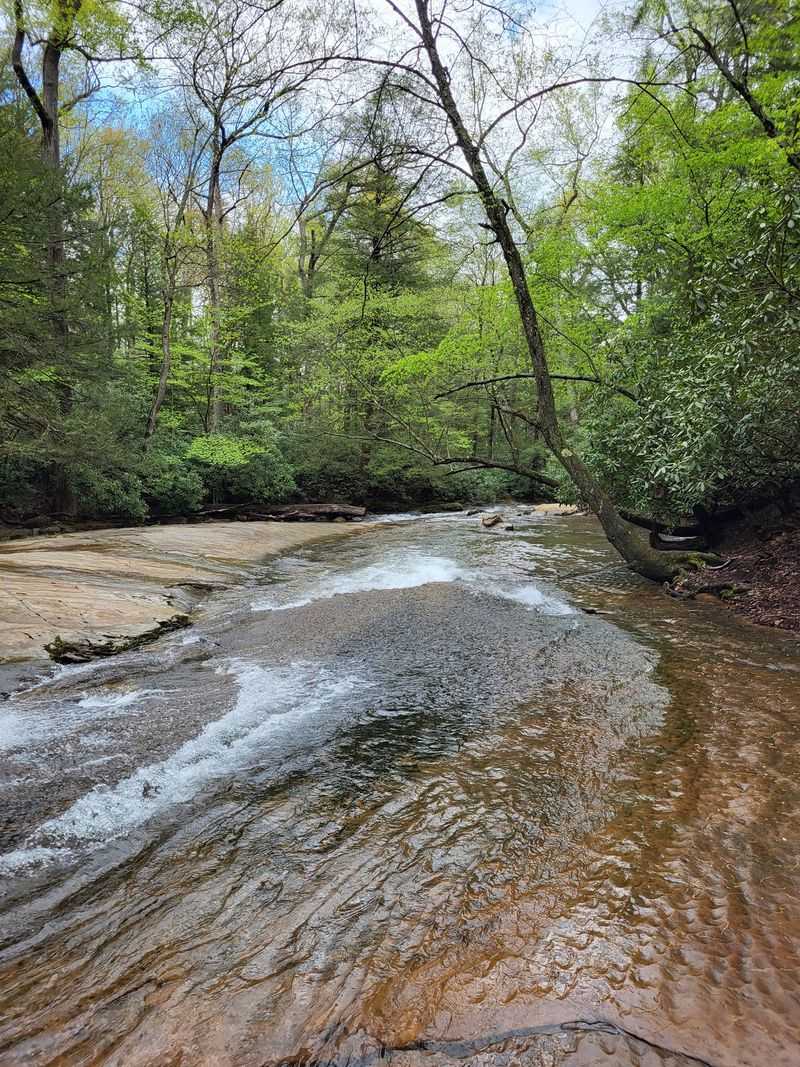
Half a mile of easy walking leads to one of the most playful spots in the park. Flat Rock Trail follows the run to a broad, smooth rock in the streambed.
Water slides across that stone in a shallow sheet. Visitors can enjoy views of the water flowing across the smooth rock, but swimming is not permitted in this area.
The path is flat and pleasant, which makes it a favorite with younger hikers. No scrambling required.
The stream adds to the scenery along the trail, while the wet rock surfaces can be slippery, so visitors should move carefully.
Changing facilities are limited near the water play area. Many visitors simply plan ahead and bring towels and dry clothes.
Sturdy footwear with good traction is helpful around damp and potentially slippery sections of the trail.
Mentions of the natural water slide come up constantly among visitors. It has quietly become the park’s signature summer attraction.
Go on a weekday if you want elbow room. Warm afternoons draw the biggest crowds by far.
Stone Ruins From A 1922 Gun Club
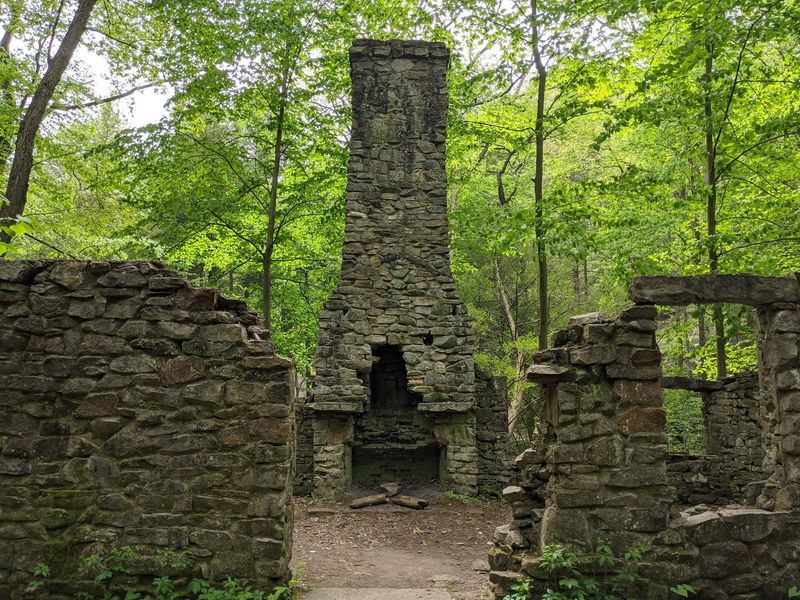
Halfway along an easy stream walk, stone walls appear where you expect only trees. The remains belong to the McGinnis Rod and Gun Club, built in 1922.
Moss covers much of the masonry now. Nature has been slowly reclaiming it for a century.
Flat Rock Trail passes the ruins, so you get history without any extra effort. The detour costs you nothing but curiosity.
Structures like this tell you the land was used long before it became a quiet retreat. People fished and gathered here generations ago.
Photographers love the contrast of squared stone against wild rhododendron. Overcast days actually flatter the scene.
Stay off the walls and let them be. Old stonework does not appreciate visitors climbing on it.
Both the ruins and the falls sit less than half a mile from parking. That makes this a rare two-for-one stop.
Kids get genuinely excited about finding a forgotten building. It turns a short walk into a small expedition.
Six Miles Of Trails That Connect To Something Bigger
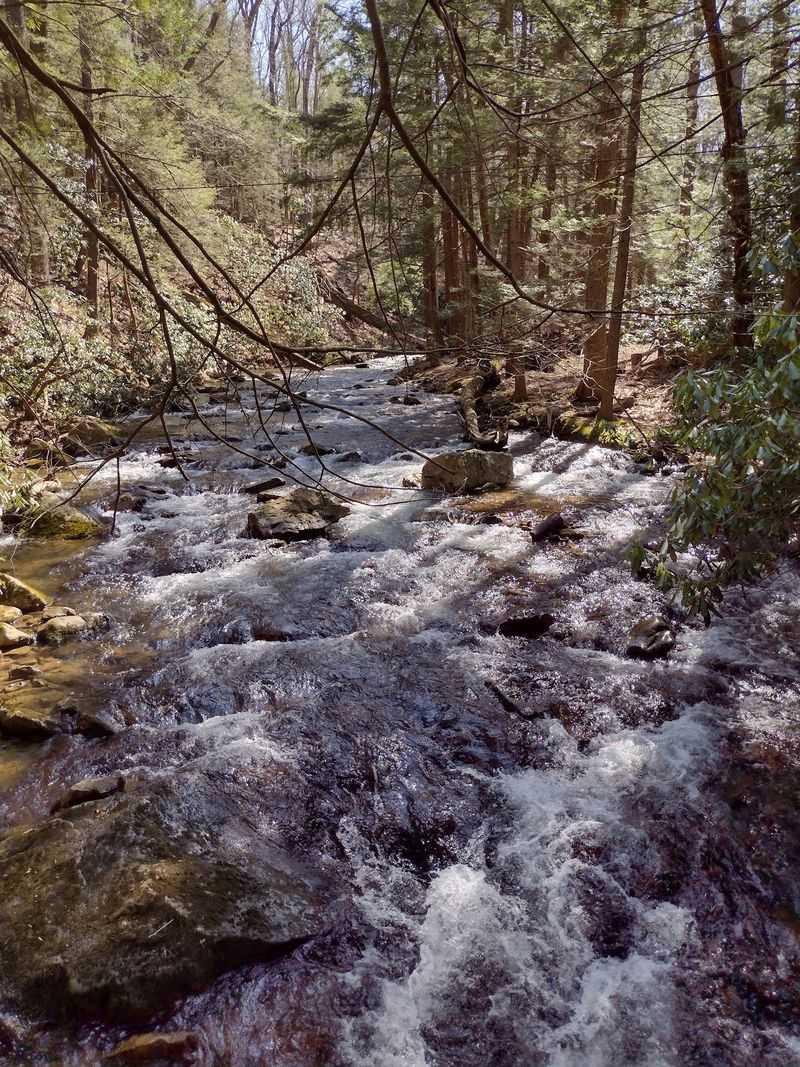
Six-plus miles of trails sounds modest for a serious hiker. The catch is that several link directly into the adjacent Forbes State Forest.
That connection turns a short outing into an all-day route. You can walk far beyond the park boundary without driving anywhere.
Grove Run Trail runs a four-mile loop along Grove Run. It climbs and dips enough to feel like real exercise.
The Iscrupe Trail measures just 0.75 miles and traces the original park road. Short, historic, and easy to fit into a visit.
Terrain ranges from gentle slopes to rocky, uneven ground. Choose your trail based on honest expectations, not ambition.
Wolf Rock Overlook sits within reach for those willing to log around five miles. The view rewards the effort.
Trails carry painted blazes on trees, which helps in thick summer growth. Snap a photo of the trailhead map anyway.
Cell service is essentially absent throughout the area. Download maps before you leave pavement.
A Forest That Came Back From Almost Nothing
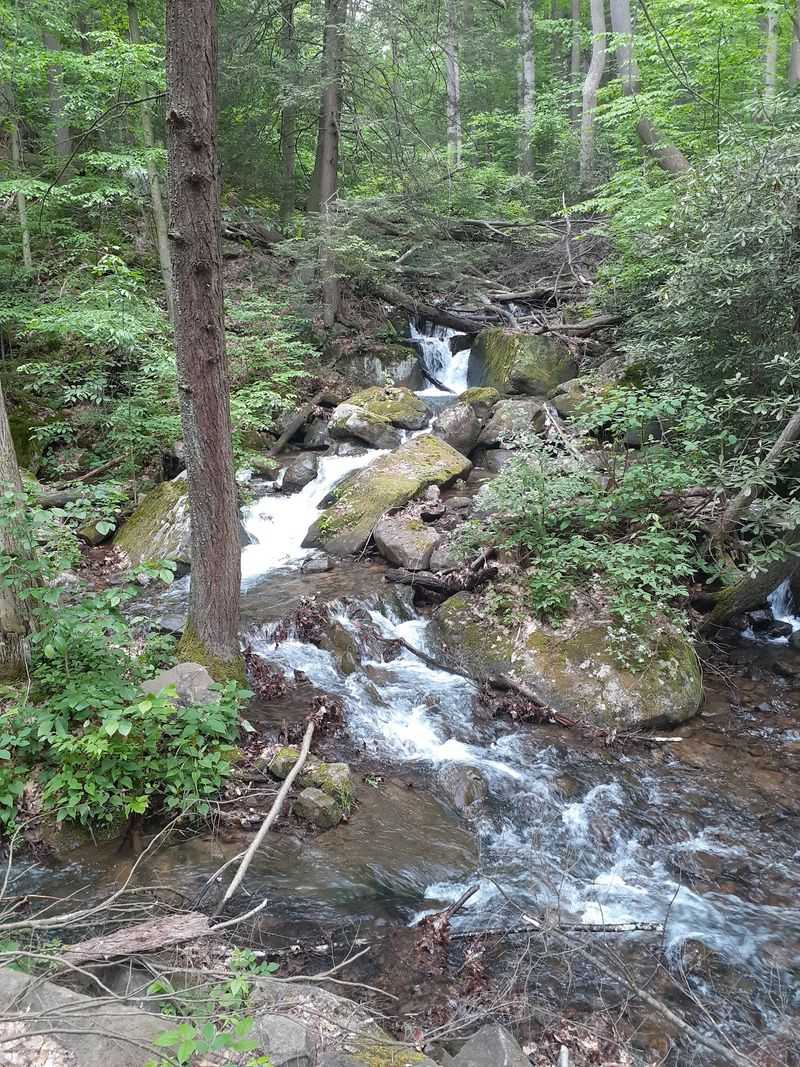
Hard to believe, but this lush woodland was once described as a wasteland. Logging in the late 1800s and early 1900s stripped the Allegheny Mountains bare.
Leftover debris and sparks from railroad locomotives fed repeated wildfires. Very little of the old-growth forest survived.
In 1909, Pennsylvania purchased the denuded land. It was the first major public forest acquisition in the Ohio River Basin.
Decades of conservation work followed. What stands today is a thriving second-growth forest with impressively large timber.
Knowing that history changes how the trees look. Every hemlock grove represents a century of patient recovery.
Visitors often comment on the size of the trunks along the creek. The forest has earned that stature.
Interpretive value like this is easy to miss if you only chase waterfalls. Slow down and read the landscape.
It also explains the protective instinct people feel here. Nobody wants to watch a comeback story get trampled.
Trout Streams You Can Actually Reach
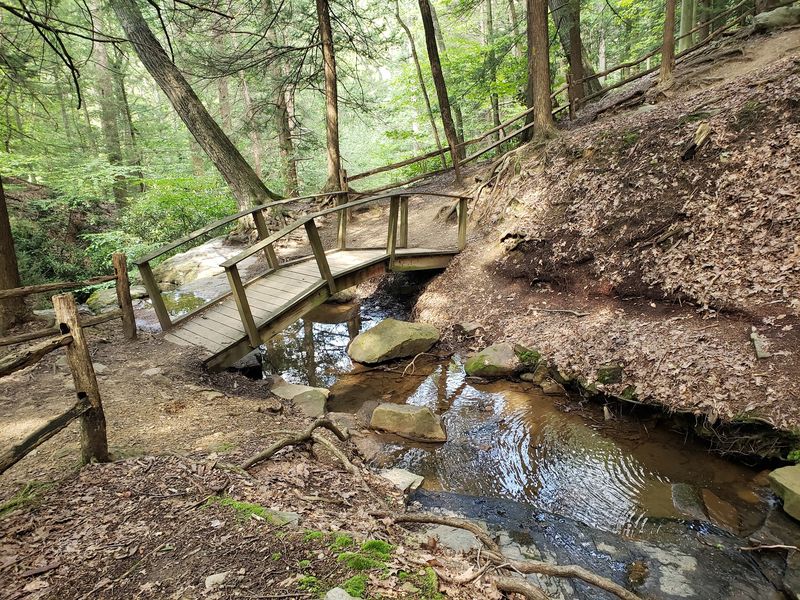
Anglers show up here for a reason. Linn Run and Grove Run both hold native trout and rank among the region’s better streams.
Cold, shaded water keeps conditions favorable through much of the year. The tree canopy does the heavy lifting.
Access is friendlier than most mountain streams. Visitors with mild to moderate mobility challenges have reported safely reaching the creek.
The streamside trail stays reasonably level in places. That opens fishing and walking to more people.
Opening weeks of trout season get crowded fast. Wait a few weeks and you will have room to cast.
Small rapids and miniature falls break up the water constantly. Even non-anglers end up standing there watching.
Check current Pennsylvania fishing regulations and licensing before you go. Rules shift by season and stream section.
Many picnic tables sit close to the water’s edge. You can fish, eat, and never leave earshot of the creek.
Rustic Cabins With Creek Sounds Out Back
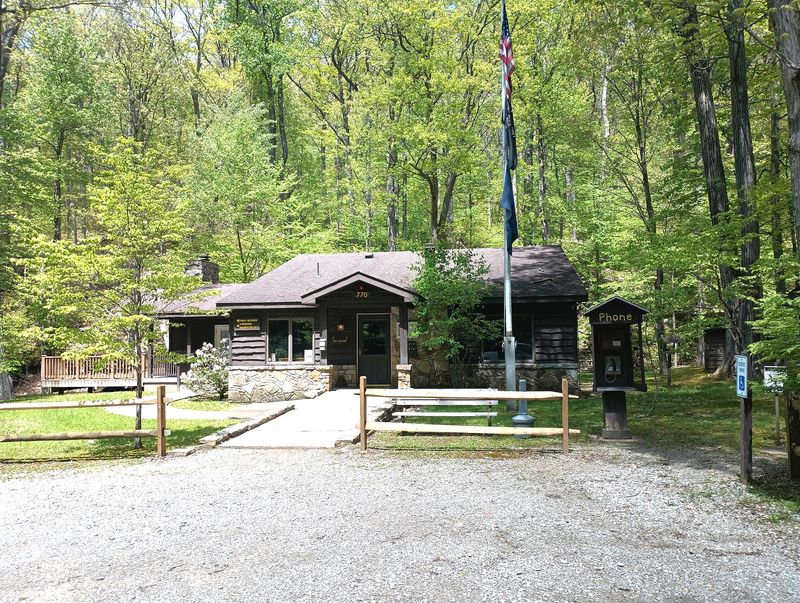
Ten rustic cabins sit spread along the road, and some were built by the Civilian Conservation Corps during the Great Depression. Their spacing means neighbors rarely feel close.
Several sit near enough to the water that the creek becomes your background noise. It beats a hotel air conditioner.
Eight primitive cabins and a modern, accessible, pet-friendly option are available year round. Sizes sleep anywhere from two to eight guests.
Each has a kitchen area with a table, refrigerator, stove, and oven. Fireplaces, heaters, fire rings, and picnic tables come standard.
Rustic units lack running water and private bathrooms. A restroom with a shower sits a short walk away.
Pack thoroughly: bedding, cookware, drinking water, and firewood. Experienced guests treat the trip like a supply run.
Autumn bookings go quickly, and holiday weekends fill even faster. Reserve well ahead through the state park system.
Cell signal is nonexistent, which most guests count as a feature. Tell someone your plans first.
Picnic Areas, Playgrounds, And A Spring Water Tap
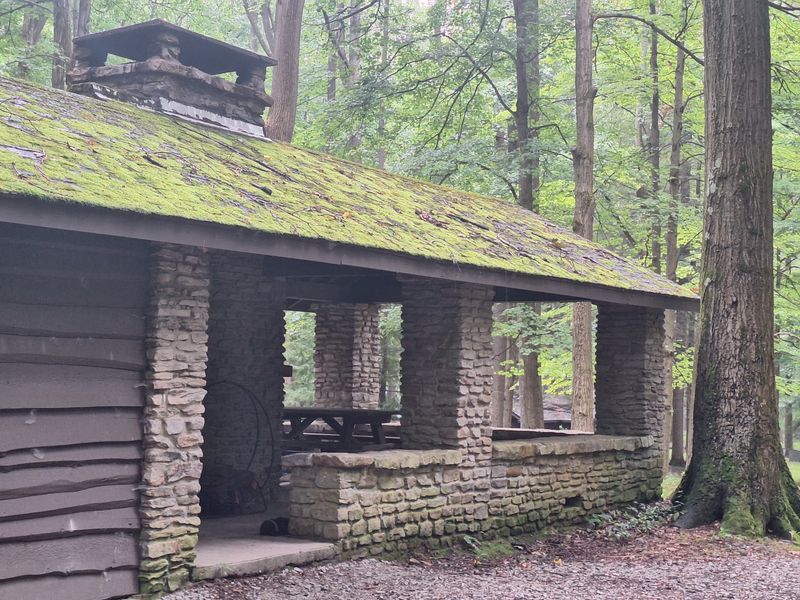
Families get more here than a parking lot and a trailhead. Picnic areas line the road and cluster around the Grove Run and Adam Falls sections.
Tables, pavilions, playgrounds, and restrooms cover the practical needs. Many tables sit within a few steps of the stream.
The Grove Run area includes a campfire circle and trail access. Its quirkiest feature is an installed tap dispensing fresh spring water.
People fill bottles and jugs there regularly. It is a small detail that visitors remember long after leaving.
Gates open at 8 AM and close at 8 PM daily. The park office sits at the south end if you need help.
Ticks are active as early as spring, so use repellent and check afterward. Signs also warn about rattlesnakes on rocky ground.
Dogs are welcome on trails and popular with regulars. Leashes keep everyone comfortable.