10 Wild Idaho Rock Climbing Spots You Have To See To Believe
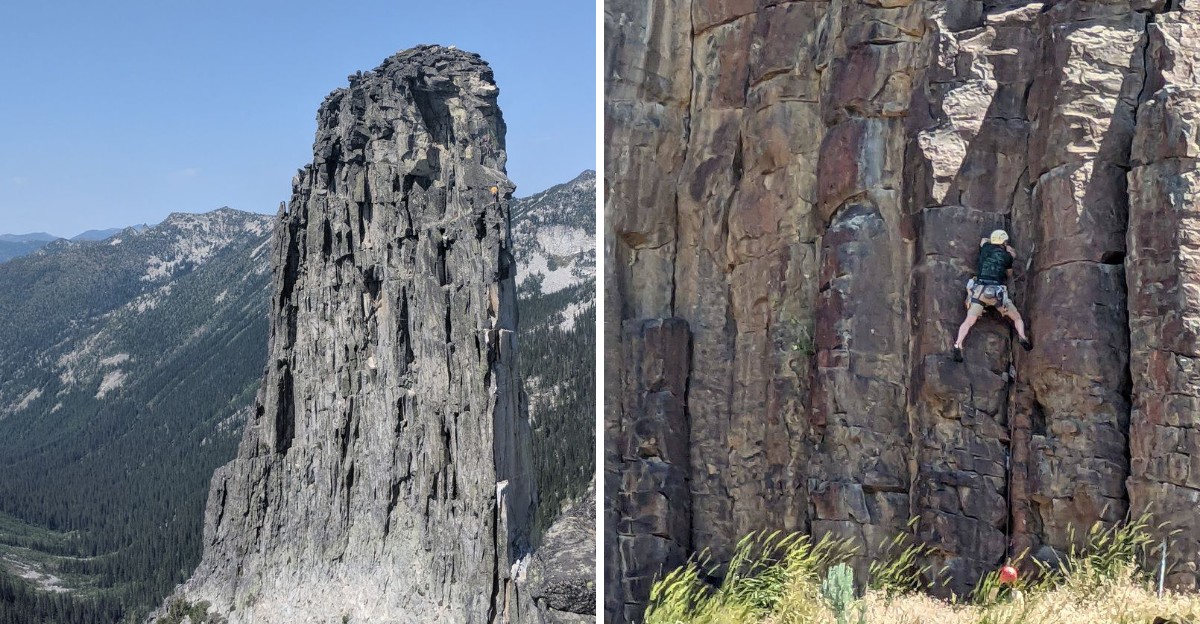
Idaho apparently let geology get a little carried away.
Across the state, cliffs rise in shapes that look sculpted rather than natural, turning ordinary pull-offs and mountain approaches into places that make you stop before anyone even clips into a rope.
That is what makes these climbing areas interesting beyond the sport itself.
You do not need to know a carabiner from a coffee mug to appreciate the scale. Some formations tower close enough to civilization for an easy detour, while others make the journey part of the spectacle before the rock even comes into view.
The climbing may be the headline, but the scenery refuses to stay in the background.
These places are dramatic enough to reward anyone who simply wants to stand below, look up, and wonder how Idaho ended up with this much stone showing off at once.
10. City Of Rocks National Reserve, Almo
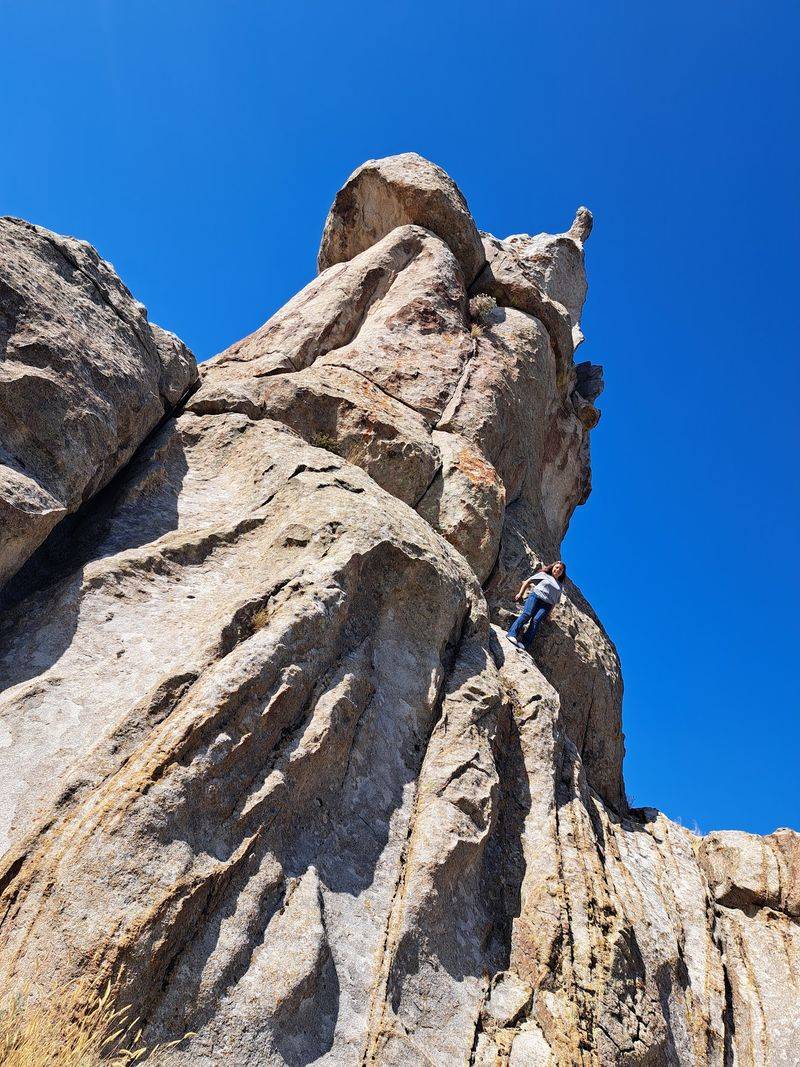
Picture a valley where enormous pale boulders and towers stand shoulder to shoulder like buildings in a quiet stone town.
That is the first impression at City of Rocks National Reserve, a globally known climbing area near the tiny farming town of Almo.
Most of the spires are made from the roughly 28-million-year-old Almo Pluton, while some formations contain far older granite from the Green Creek Complex.
More than 600 established routes range from short 30-foot warm-ups to serious multi-pitch climbs stretching several hundred feet.
Spring and fall bring the friendliest temperatures, though shaded routes make summer mornings pleasant enough. Wagon trains once rolled through this same ground on the California Trail, and you can still spot names written on the rock by pioneers.
Hiking trails wind between the formations for anyone who prefers boots to climbing shoes, and campsites sit right among the domes. Almo, just up the road, offers food, supplies, and a friendly place to rest sore hands after a long day at City of Rocks National Reserve.
9. The Fins, Near Howe
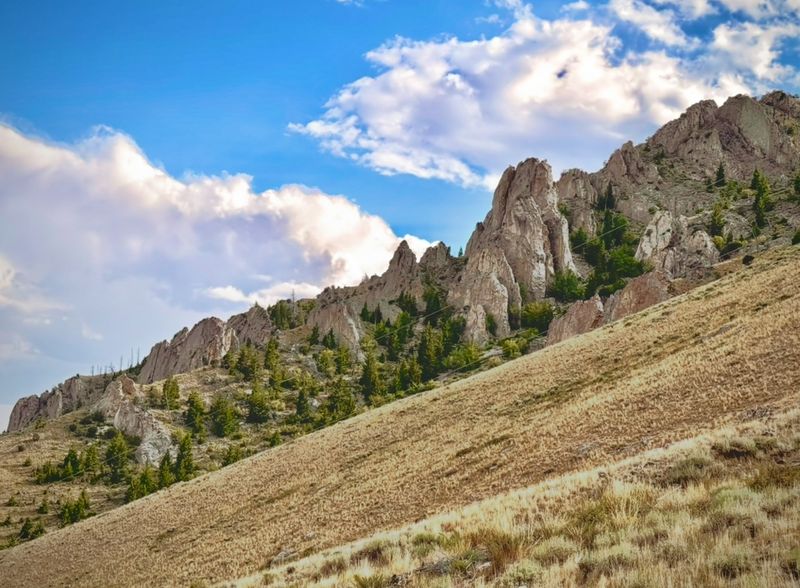
Imagine a row of giant dinner plates stood upright on a mountainside at nearly 7,700 feet. That strange skyline belongs to The Fins, a set of pale limestone walls high above the Lost River country south of Howe along Highway 33.
Climbers come for the rock texture more than anything. The dolomitic limestone is packed with secure pockets, sharp positive edges, and pinches, giving vertical and slightly overhanging faces a sustained, gymnastic feel.
Roughly 260 documented climbs fill the cliff bands, and many of the well-known lines land in the harder sport grades, so this crag rewards climbers with some mileage behind them. Afternoon shade keeps things surprisingly comfortable even in midsummer heat.
Getting there is half the adventure. The upper walls require a steep, loose dirt road where four-wheel drive is strongly recommended, and there are no shops or water taps waiting at the top.
Primitive camping means packing in everything and hauling all trash back out. Bring extra water, snacks, and patience, and The Fins will hand you views across empty valleys that feel wonderfully far from anywhere.
8. Elephant’s Perch, Sawtooth Wilderness Near Stanley
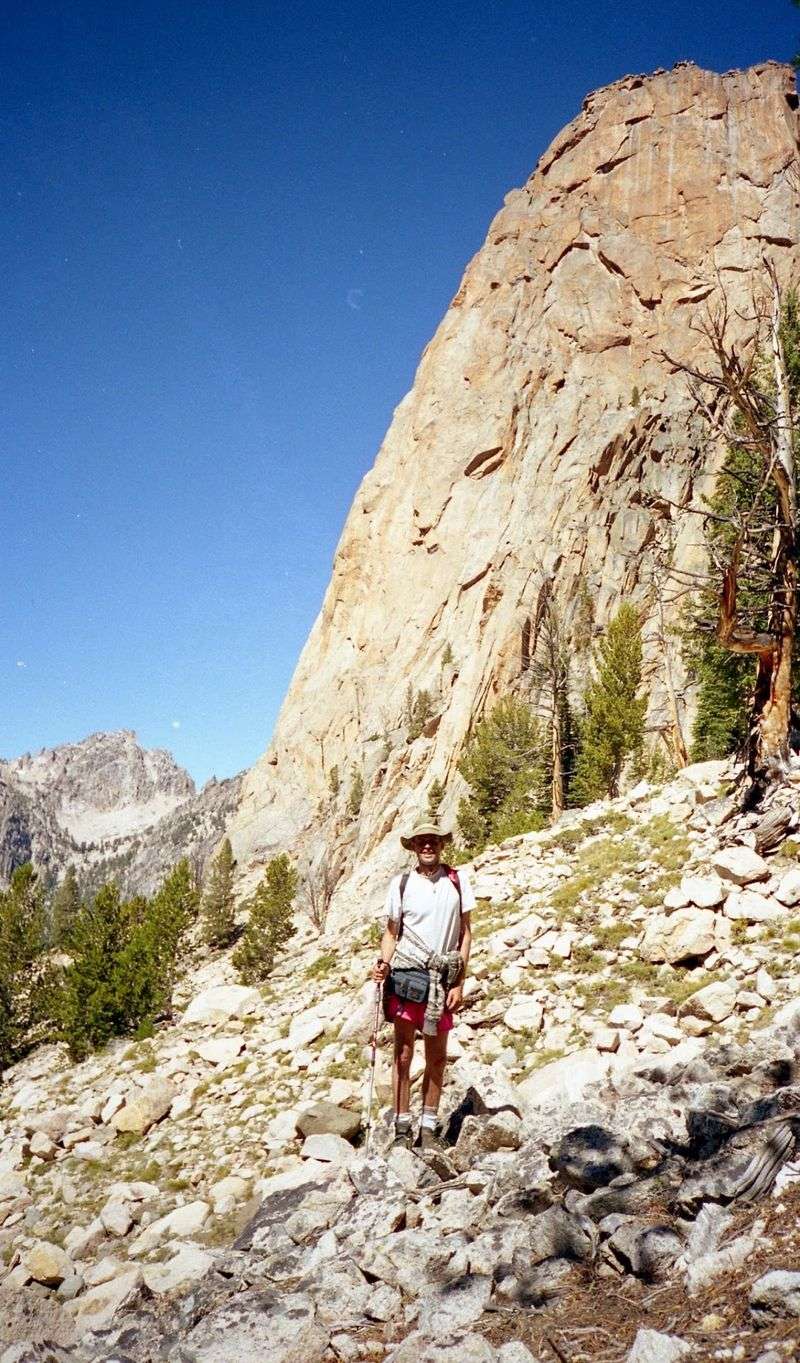
Some walls make you tip your head back and go quiet. Elephant’s Perch, rising above the forest near the Saddleback Lakes in the Sawtooth Wilderness, is one of them.
The golden granite face soars roughly 1,000 feet and has earned comparisons to El Capitan, thanks to long vertical fractures that split the wall into clean crack systems.
Established lines include the popular seven-pitch Mountaineer’s Route at 5.9- and the 12-pitch Direct Beckey at 5.11b.
July through September is the main season, when snow has cleared and afternoon storms are the biggest concern. Most parties start near Redfish Lake, often taking the scenic boat shuttle across the water, then hiking about three strenuous miles to camp beneath the wall.
Evenings up there are the reward: cold lake water, granite glowing orange, and the smell of pine and stone. Stanley sits close enough for a hearty breakfast before the hike and a big plate of comfort food afterward.
The surrounding Redfish Lake and Sawtooth trail system also gives hikers access to dramatic alpine scenery without requiring a technical climb.
7. Chimney Rock, Selkirk Mountains Near Priest Lake
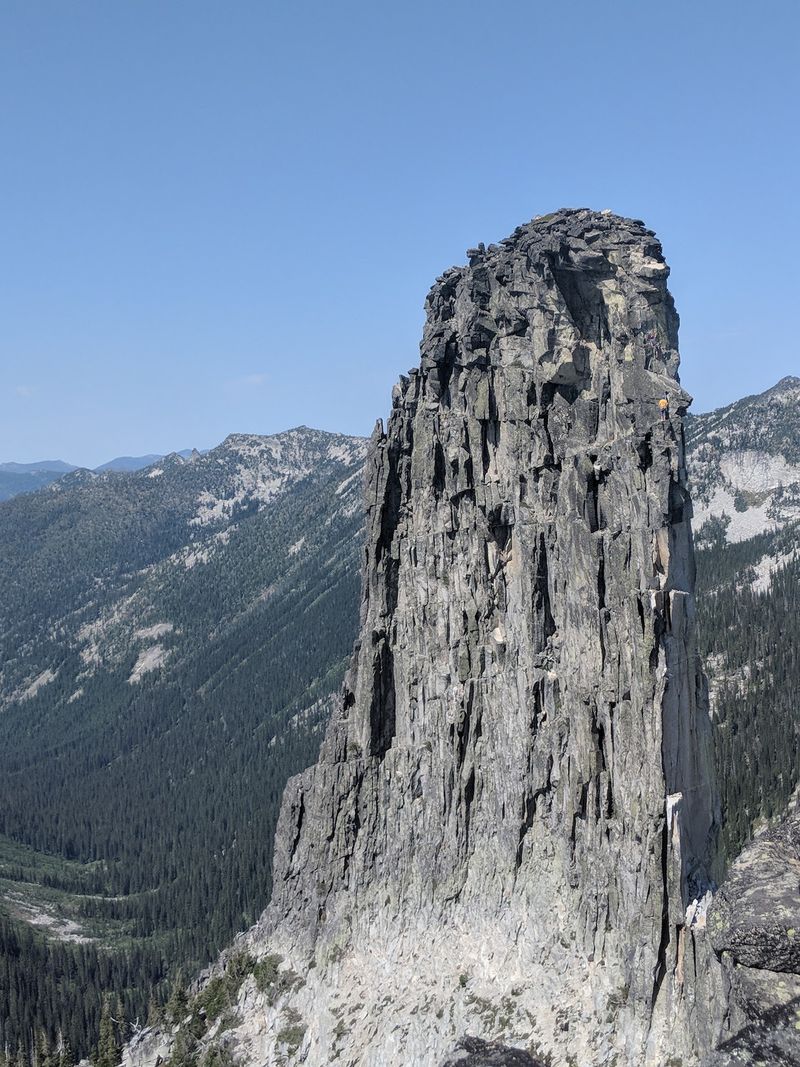
From certain angles it barely looks real, like a granite blade planted upright in the Selkirk Mountains. Chimney Rock has been drawing climbers since the 1930s, with its first recorded ascent in 1934, making it one of the oldest pieces of climbing history in the northern part of the state.
More than 20 routes work up its faces today. The classic West Face Standard Route is rated 5.3, but it is still a technical multi-pitch climb requiring appropriate climbing equipment and experience.
Plan on a full day. The Mount Roothaan approach continues through steep, rocky backcountry terrain before reaching the base of Chimney Rock, so climbers should allow substantial time for the approach.
Descents commonly involve rappelling, and the west face rappel chimney is the usual choice. Bring layers, since wind funnels hard around the spire even on warm afternoons.
Down at Priest Lake, swimming beaches, huckleberry pie, and lakeside picnic spots make the perfect finish, with the silhouette of Chimney Rock still visible on the ridgeline above.
6. Slick Rock, Near McCall
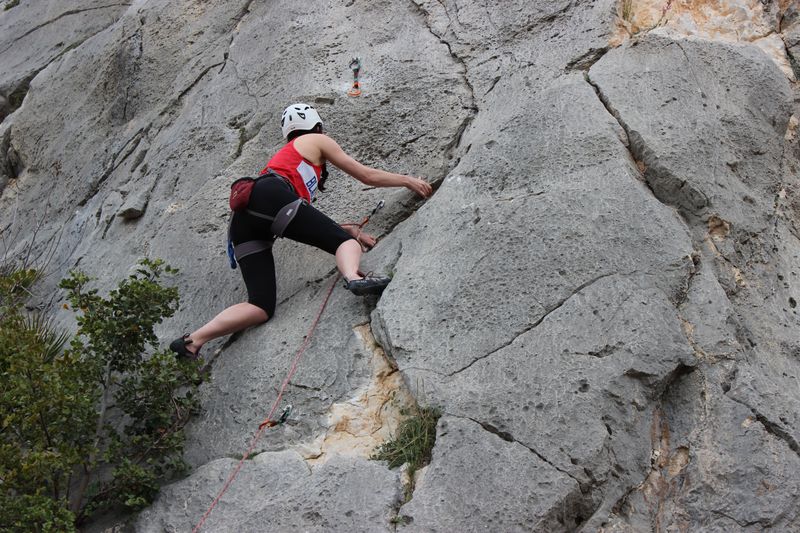
Big-wall climbing in a place most travelers drive right past: that is Slick Rock, a broad glaciated granite shield in the Lick Creek Mountains east of McCall. The face rises roughly 1,200 feet from its central base to the top, and the smooth, tilted rock looks like a frozen wave of stone.
The Regular Route, also called the Three Cracks Route, is the classic here, usually climbed in seven to ten pitches at around 5.6 to 5.7. Other favorites include the well-bolted Memorial Route at 5.8+ and the Slippery Slope at 5.10 minus.
Expect a mix of crack systems and runout slab sections where careful footwork matters more than raw arm strength. A short hike of 15 to 30 minutes from Lick Creek Road puts you at the base, which is remarkably easy for a wall this size.
Locals sometimes call the Lick Creek area the Alps of this region, and the surrounding peaks, meadows, and clear creeks back that up.
Afterward, McCall’s lakeside restaurants and ice cream shops sit a short drive from Slick Rock.
5. Black Cliffs, Near Boise
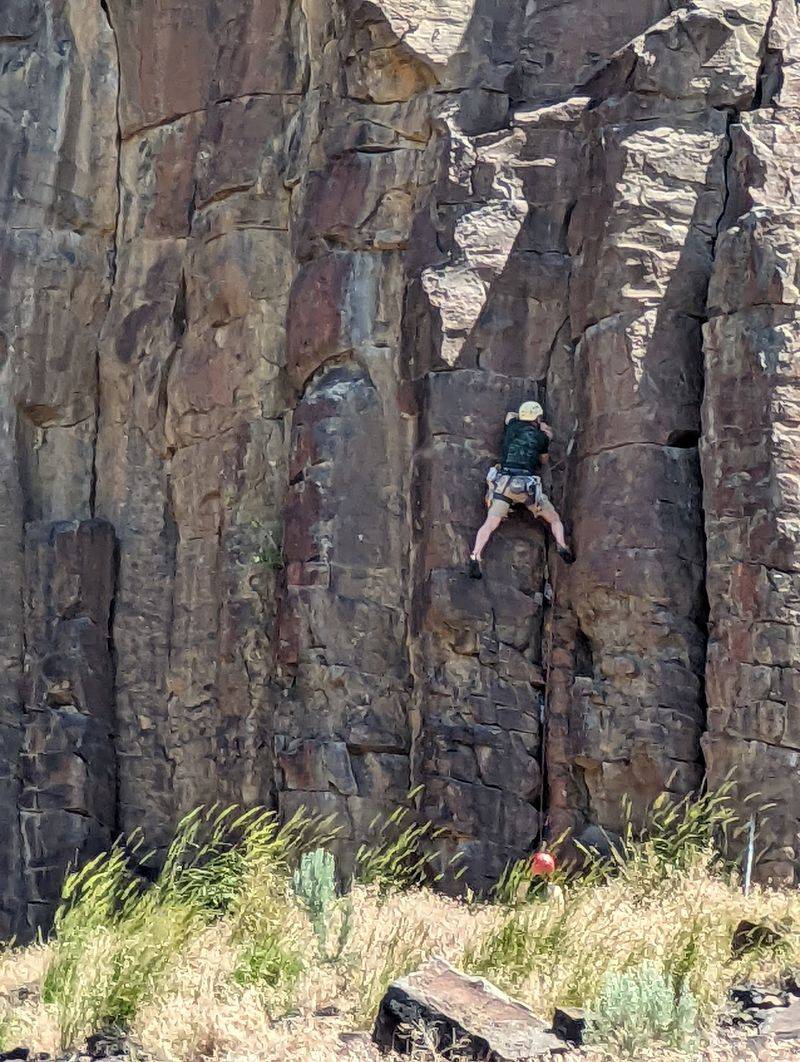
Twenty minutes from downtown coffee and you are standing beneath dark volcanic columns.
Black Cliffs stretches along Highway 21 beside the Boise River on the road toward Lucky Peak Reservoir, and the parking area sits at 43°32’14.3″N 116°05’16.4″W, Boise, ID 83716, making the approach almost comically short.
Columnar basalt creates a blocky playground of cracks, ledges, pockets, and big handholds. Hundreds of established routes cover sport, traditional, and bouldering styles, with plenty in the 5.8 and 5.9 range plus harder lines for stronger hands.
The cliffs are basalt, but climbers should still watch for loose rock and check current access and condition reports before climbing. Shade lingers on the walls until around midday, then the dark basalt soaks up heat, so spring and fall afternoons feel best.
Black Cliffs has routes suitable for a range of abilities, but beginners should use established access, current route information, and appropriate instruction rather than assuming anchors can safely be reached from above.
Sunsets over the river canyon glow pink against the cliffs, and Lucky Peak is close by for a cool dip after climbing at Black Cliffs.
4. Q’emiln Park Climbing Walls, Post Falls
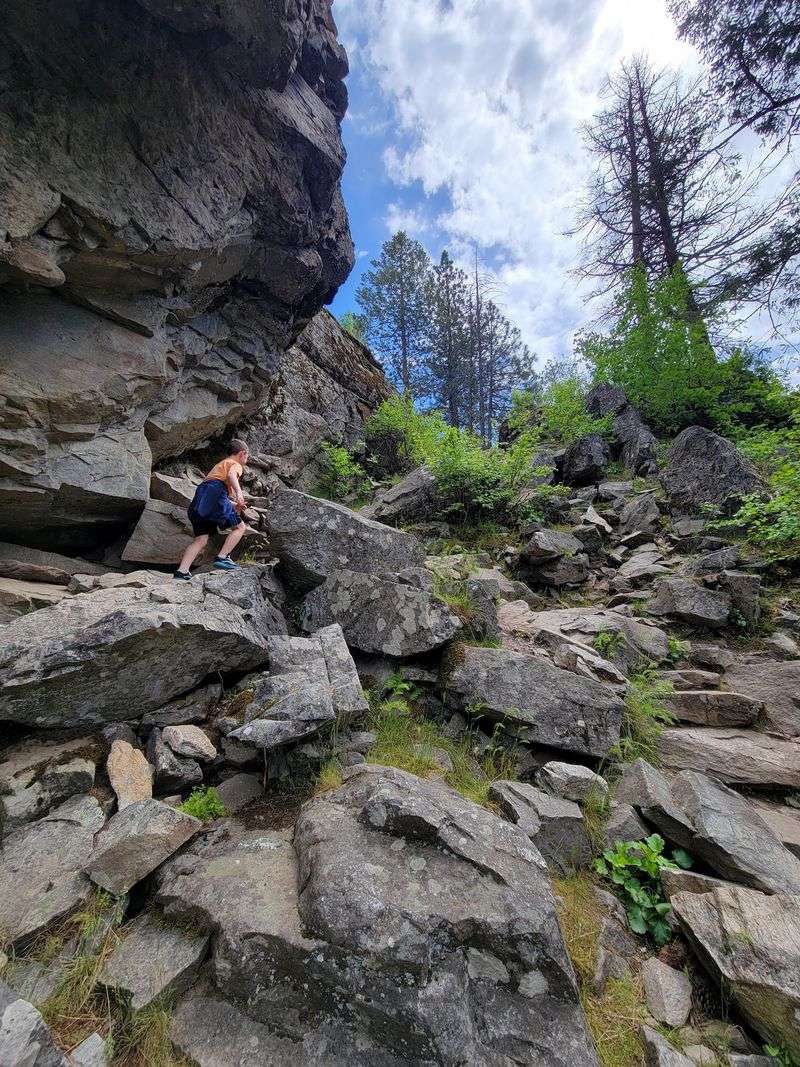
Shade, short trails, and beginner-friendly bolts make this one a favorite for families in the northern panhandle. Q’emiln Park Climbing Walls rise above forest paths in the Post Falls Community Forest, just minutes from I-90 near the Spokane River.
The stone is orthogneiss, a metamorphosed granite with grippy texture and clean features. Somewhere around 180 to 200 named routes fill the sectors, spanning sport, traditional, and bouldering options with grades from an easy 5.1 all the way to 5.12.
Route difficulty and protection vary by wall, so climbers should use current route information when choosing an appropriate objective. A thick tree canopy keeps the cliffs cool through hot summer afternoons, and the sound of the river carries up through the pines.
The park itself does double duty. A swimming beach, picnic shelters, boat launch, and miles of hiking trails give nonclimbing friends plenty to do while ropes are running.
Pack sandwiches, claim a shaded table, and spend a full lazy day rotating between water, woods, and the walls of Q’emiln Park Climbing Walls.
3. Dierkes Lake, Twin Falls
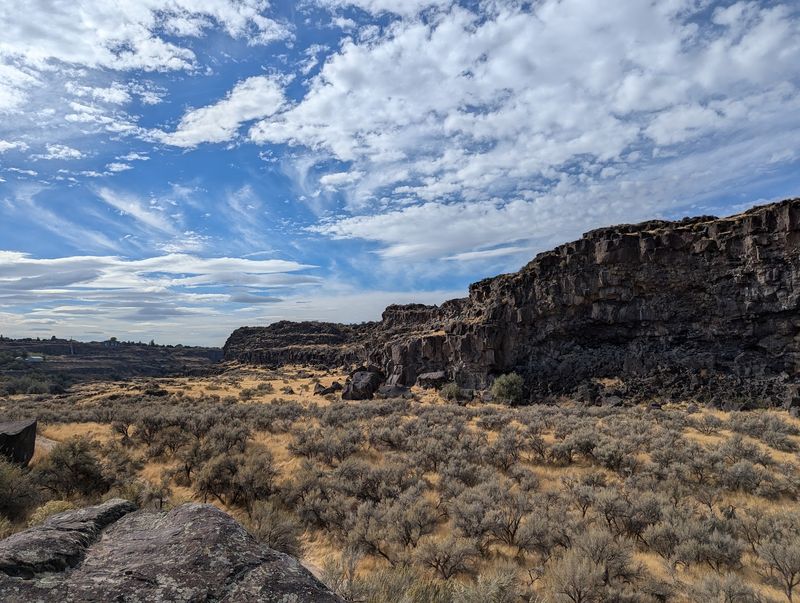
Few climbing areas let you finish a route, walk fifty steps, and jump into blue water. Dierkes Lake in Twin Falls does exactly that, with chunky basalt formations rimming a bright little lake in the Snake River Canyon country.
The rock is highly featured igneous basalt, riddled with huecos, pockets, and crimps that make movement feel puzzle-like. Mountain Project currently documents more than 100 boulder problems at Dierkes Lake, along with more than 100 roped climbs ranging from moderate routes to difficult overhanging lines.
Approaches can be as short as a five-minute stroll, a real gift compared with the remote alpine walls elsewhere in the state. Because the basalt walls trap sunshine, fall, winter, and spring often deliver the most comfortable climbing here.
Beyond the rock, the park works as a full recreation area with swimming, fishing, boating, and trails offering long views over the canyon rim. Shoshone Falls thunders nearby during high water and makes an easy add-on stop.
Bring a picnic blanket, a crash pad, and swim gear, because half the fun at Dierkes Lake happens between climbs.
2. Castle Rocks State Park, Almo
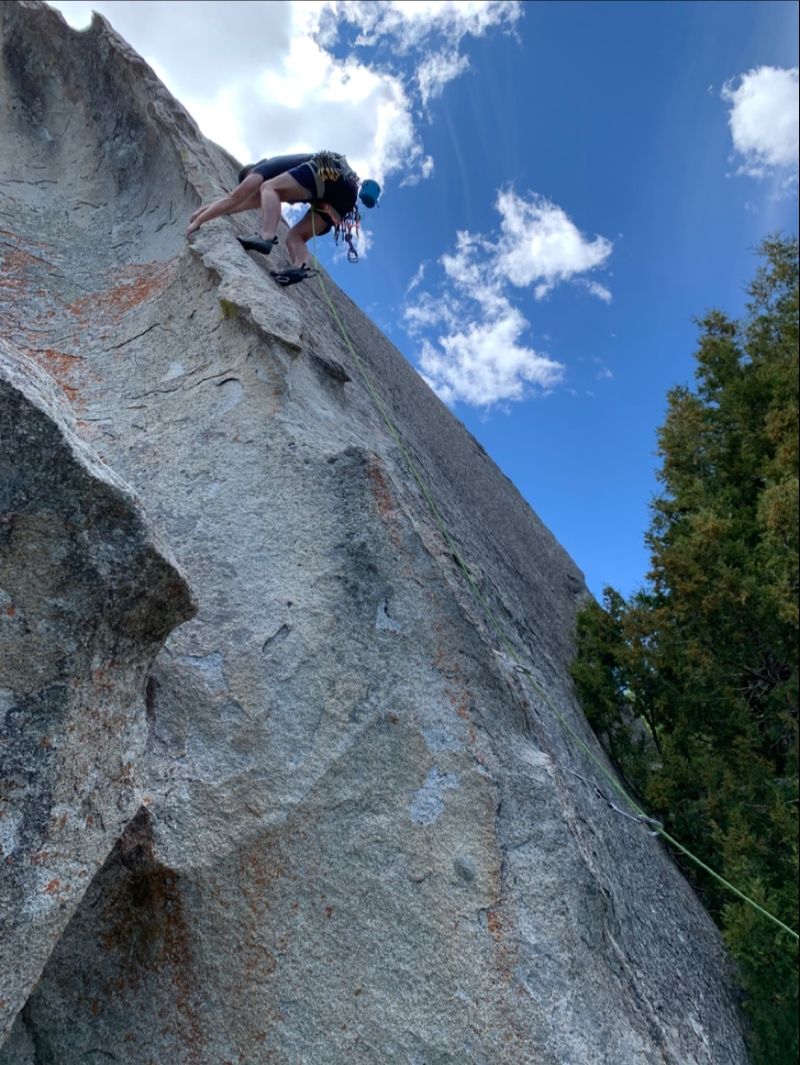
Neighbor to a famous reserve, yet very much its own destination. Castle Rocks State Park spreads granite towers, walls, and blocky formations across 1,692 acres of high desert ground near Almo, and hundreds of routes wander through the landscape.
Two rock personalities show up here. Some faces wear a warm red patina, while others show high-friction gray granite that grips climbing shoes beautifully.
Castle Rocks includes both sport and traditional routes, so climbers should choose objectives that match their experience and consult current route information. Most routes land between 5.7 and 5.10, and multi-pitch lines can reach around 300 feet.
History runs deep across the property. Native American pictographs survive on sheltered rock, and traces of the California National Historic Trail cross the surrounding country.
The state’s largest pinyon pine forest fills the valley, scenting the air with resin on warm afternoons, and trails invite hiking, mountain biking, and horseback riding between climbing sessions. Camping and a ranch-style lodging area sit inside the park boundary.
Sunrise over the towers of Castle Rocks State Park is worth setting an early alarm.
1. Rocks State Park, American Falls
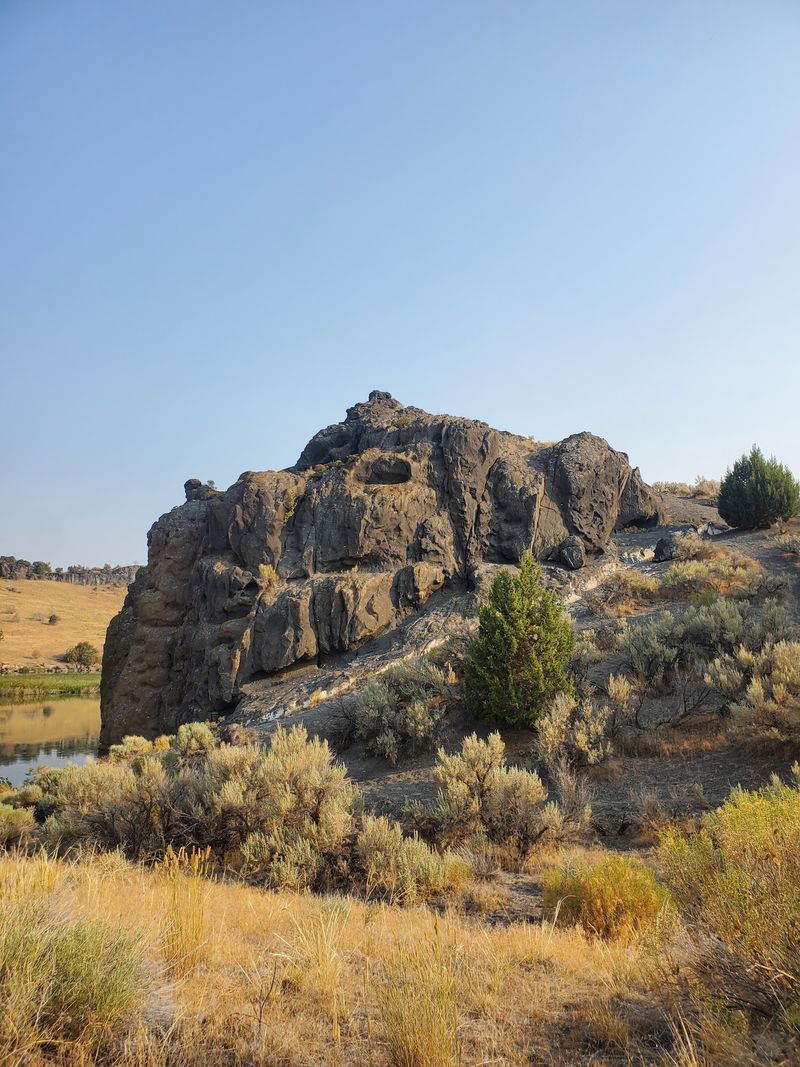
Ancient floodwaters shaped this one. MS Rocks State Park, along the Snake River near American Falls, holds huge rounded basalt boulders and steep walls carved and tumbled by the Bonneville Flood, giving the climbing a character unlike the granite areas elsewhere.
Climbing access is now divided by land ownership: roughly 250 established routes on Idaho state land remain open, while climbing on the adjacent BLM-managed portion has been closed since August 2023.
Part of the climbing on nearby BLM-managed land is currently closed, though more than 250 established routes on state land remain open and active. Late fall and early spring usually offer the kindest weather, while sheltered alcoves and heat-absorbing rock create winter microclimates that surprise visiting climbers.
The park does far more than climbing. Oregon Trail history fills the visitor center, wagon ruts and pioneer stories mark the ground, and trails lead to river overlooks where herons stalk the shallows.
There is even a disc golf course, plus campsites and picnic areas, making MS Rocks State Park an easy overnight stop with rope time built in.