Wisconsin Has 10 Hiking Trails That Make It Clear The State Was Built For People Who Love The Outdoors
The case for Wisconsin as a hiking destination has been building quietly, without much help, for a long time.
These trails are now making that case loudly enough that it can no longer be ignored.
No mountain range required, no national park designation, no plane ticket needed to reach something genuinely worth lacing up for.
The elevation changes, the forest cover, and the views that arrive without warning have all been here, largely undisturbed by the attention they deserve.
A trail system this varied does not come from nowhere.
It comes from a landscape that was simply made for this. One overdue conclusion.
1. Devil’s Lake State Park
Can you believe that one of the most dramatic landscapes in the Midwest sits quietly in south-central Wisconsin?
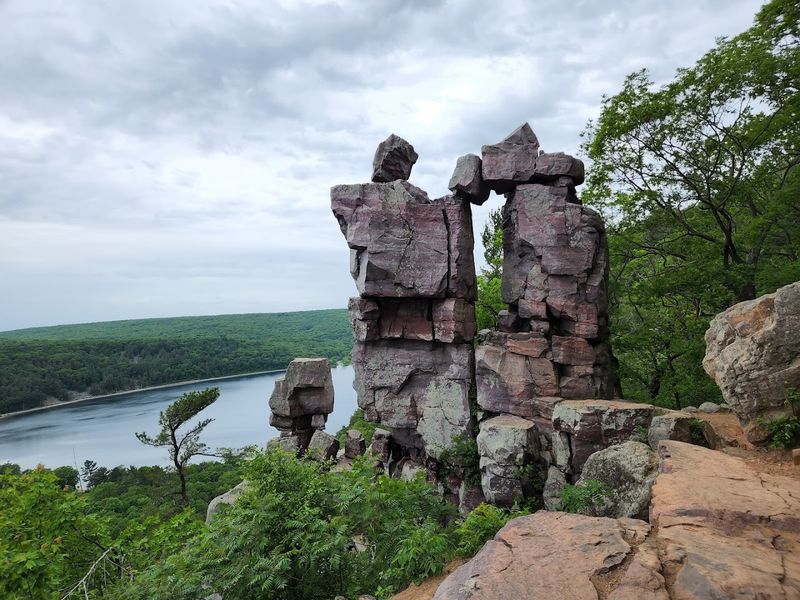
Devil’s Lake State Park near Baraboo is the kind of trail experience that rewires your expectations. Towering quartzite bluffs rise 500 feet above a glacier-carved lake.
The contrast between the rocky ridgelines and the calm water below is stunning. It feels earned once you climb to the top.
Two main trail systems run along the east and west bluffs. The east bluff trail is rockier and more challenging. The west bluff offers broader views with slightly more forgiving terrain.
I hiked the east bluff on a clear October morning. Every overlook delivered a different angle on the lake. I stopped counting the photos I took after the first dozen.
The park is Wisconsin’s most visited state park. It attracts rock climbers, swimmers, and naturalists year-round. Weekends in summer fill up fast, so plan accordingly.
Geology fans will love the exposed Precambrian quartzite. These rocks are among the oldest exposed formations in the state. They tell a story stretching back over a billion years.
Trails range from easy lakeside walks to steep bluff scrambles. There is a trail here for every ability level. Go early on weekends and let the quiet carry you through.
2. Porcupine Lake Wilderness
Who would have thought that one of Wisconsin’s most peaceful hiking experiences would be tucked away in a nearly roadless wilderness in the Northwoods?
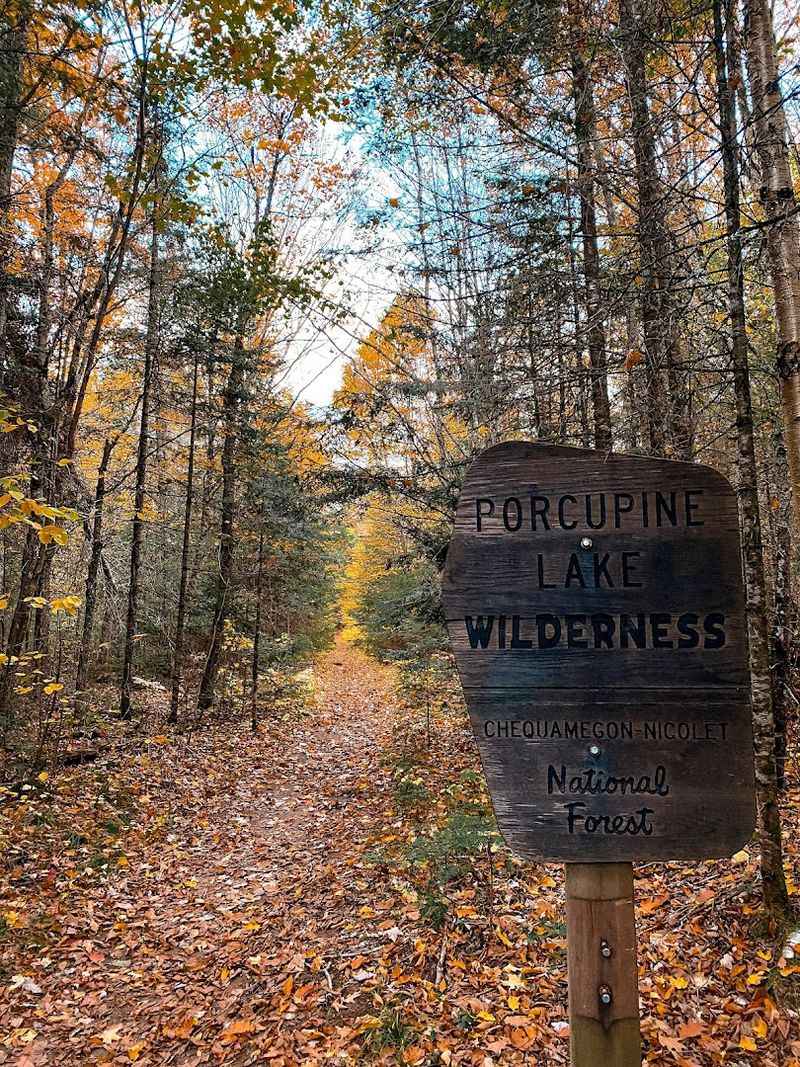
Porcupine Lake Wilderness near Drummond can be accessed via Forest Road 213. This is designated federal wilderness, meaning no motors and no development.
The silence here is almost startling at first. After ten minutes on the trail, it becomes the best part. Porcupine Lake itself is a small, pristine backcountry lake. Anglers love it for its solitude.
Hikers love it for the reflection of white birch trees on still water. The trail system is not extensive, but that is part of the appeal. You are not here to rack up miles.
You are here to slow down and notice things. Wildlife sightings are common in this corridor. I camped near the lake on a solo trip in late June. The loon calls at dusk were the only soundtrack I needed.
No campfire playlist could compete with that. This trail is best for hikers comfortable with minimal signage. Navigation skills help here.
3. Ice Age National Scenic Trail, Kettle Moraine Northern Unit, Mauthe Lake
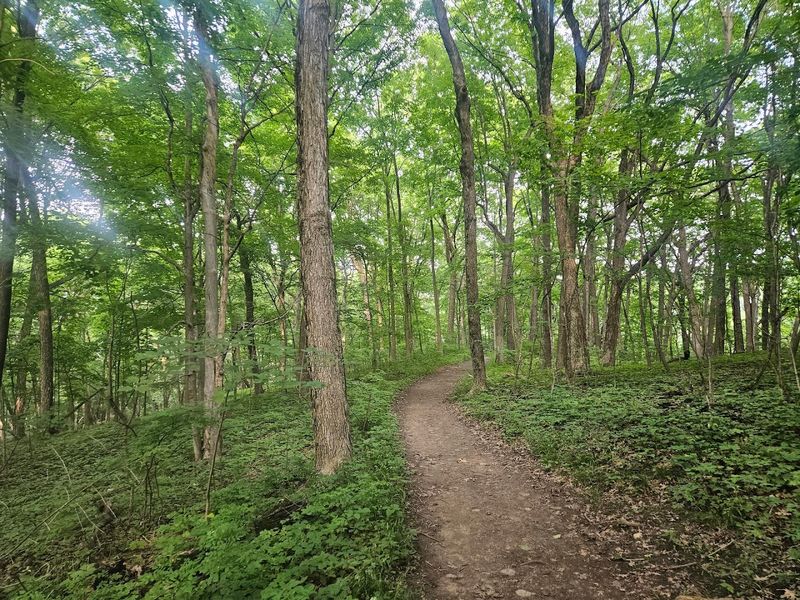
You might not believe me when I say a trail can actually teach you geology while you walk it.
The Ice Age National Scenic Trail through the Kettle Moraine Northern Unit near Campbellsport does exactly that.
Glaciers shaped every hill and hollow here. The kettles are bowl-shaped depressions left behind when ice blocks melted. They create a rolling, almost otherworldly landscape that is hard to find anywhere else.
Mauthe Lake sits right at the heart of this section. It adds a mirror-calm water feature to the already impressive scenery. Paddlers, swimmers, and hikers all share this peaceful corridor.
The trail itself is well-marked and maintained. Moderate difficulty makes it accessible for most fitness levels. Fall is my personal favorite time to hike here. The maples and oaks ignite in orange and red.
The colors reflect off the kettle ponds in a way that stops you mid-stride. Spring brings wildflowers and birdsong that fill the woods. Birdwatchers will want their binoculars ready.
Camping is available near Mauthe Lake. Waking up to fog drifting over the water is something genuinely unforgettable. This trail earns its spot on any serious Wisconsin hiking list.
4. Apostle Islands National Lakeshore
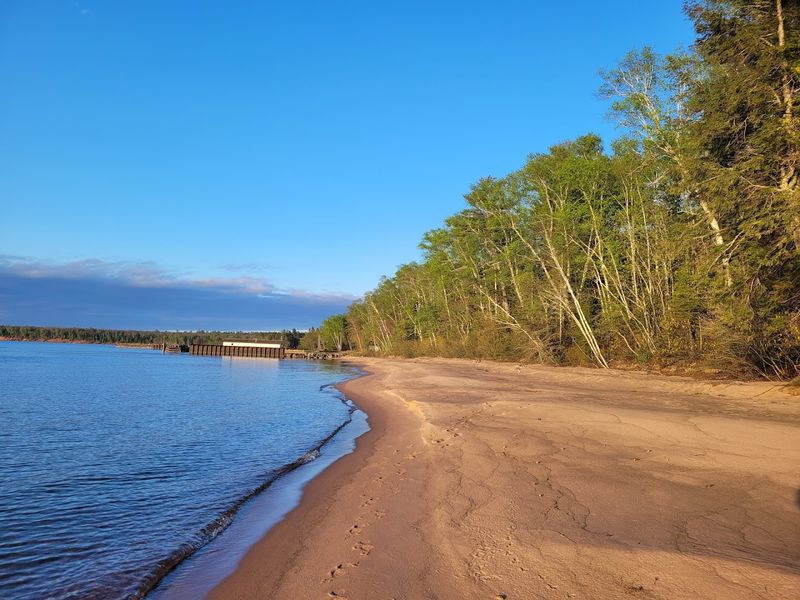
I never would have guessed that a hiking trail along Lake Superior could feel like a completely different country.
Little Sand Bay at Apostle Islands National Lakeshore near Bayfield delivers coastal drama on a scale that surprises even seasoned hikers.
Waves crash against red sandstone cliffs below. The color contrast between the rust-red rock and the deep blue water is genuinely striking.
Little Sand Bay is one of the quieter access points in the national lakeshore. Fewer crowds mean more wildlife and more stillness.
The forest behind the shore is dense northern boreal woodland. Ferns carpet the ground beneath towering white pines. Stepping from the open shoreline into that canopy is a sensory shift worth experiencing.
Sea kayaking launches from this bay for island exploration. Even non-kayakers can enjoy the beach and the near-shore views. The islands on the horizon add depth to every glance outward.
Winter brings ice formations to the sea caves nearby. Those formations draw photographers from across the country. The summer trail is beautiful, but the winter transformation is legendary.
Sunsets over Lake Superior from this stretch of trail are long and slow. The light shifts through pink, orange, and gold. Stay until the last color fades and you will not regret the walk back in the dark.
5. Rib Mountain State Park
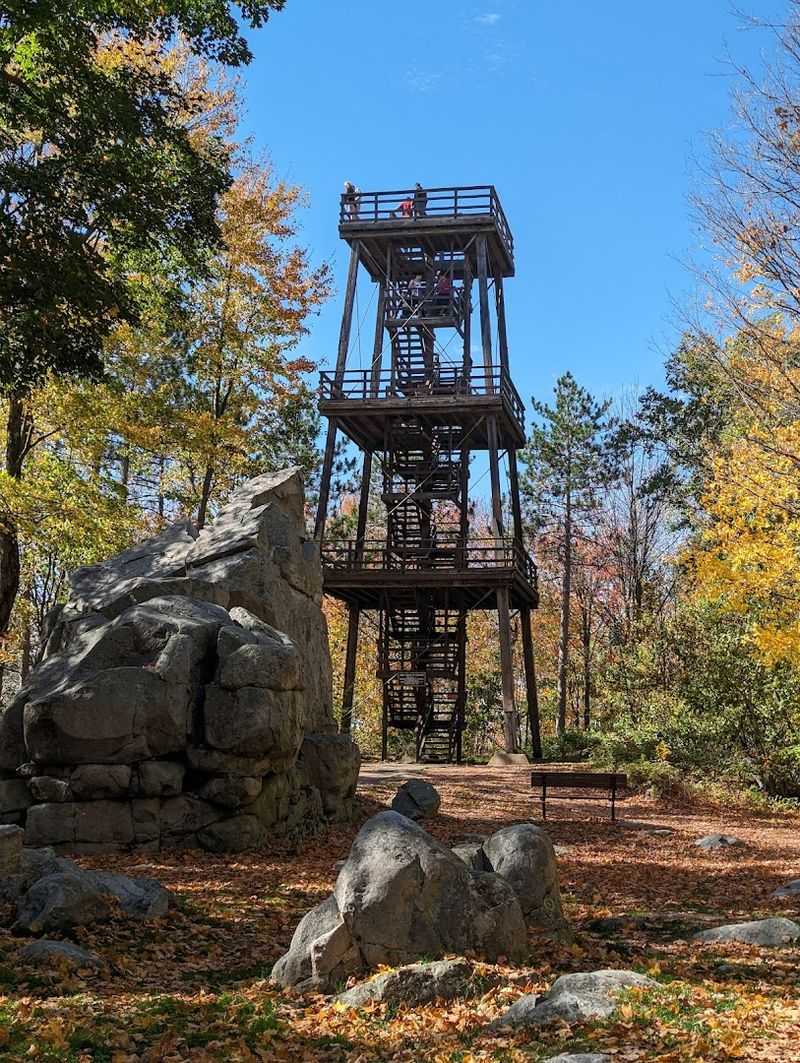
I almost missed out on this adventure. Do not be like me, and don’t delay your planned hiking trip.
Rib Mountain State Park near Wausau is one of the oldest geological formations in Wisconsin.
The quartzite here is estimated to be 1.5 billion years old. That number is hard to wrap your head around on a Tuesday morning hike. Yet standing on that exposed summit, it feels entirely believable.
Trails wind through hardwood forest and open rocky outcrops. The terrain shifts quickly between shaded canopy and breezy exposed ridges. That variety keeps every section of the hike interesting.
An observation tower sits near the summit. Climbing it adds another layer of perspective to already impressive views. On clear days, you can see well beyond Wausau and into the surrounding farmland.
The park has over 13 miles total hiking trails. Difficulty ranges from easy to moderately challenging. Trail maps are available at the park entrance and online.
Fall color here arrives in mid to late October. The ridgeline views during peak foliage are genuinely outstanding. Locals treat this annual display like a community event.
In winter, the mountain transforms into a ski area. But hiking remains possible on designated paths. Snow-dusted quartzite with bare forest views has its own stark, quiet beauty worth chasing.
6. Parfrey’s Glen State Natural Area
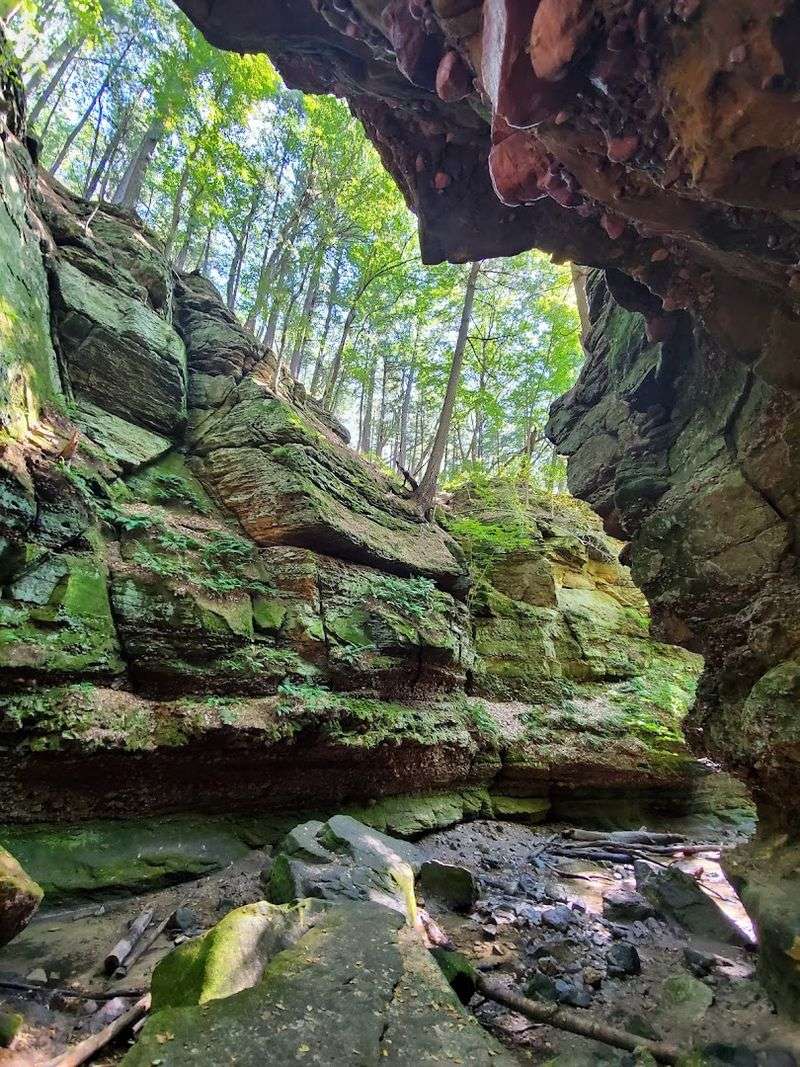
A canyon hidden inside southern Wisconsin, doesn’t that sound amazing?
Parfrey’s Glen State Natural Area near Merrimac is exactly that and it earns every ounce of its reputation. Wisconsin’s oldest state natural area sits just a short drive from Devil’s Lake.
The glen is a narrow, steep-walled canyon carved by a small creek. Walking into it feels like stepping through a geological time capsule. Sandstone walls rise sharply on both sides of the trail.
Mosses and ferns cling to every damp surface. The temperature drops noticeably as you move deeper into the canyon. The trail is only about 0.75 miles one way. Short does not mean unimpressive here.
The stream crossing adds a playful element to the hike. Stepping stones keep your boots dry if you are careful. Kids absolutely love the interactive nature of this trail.
Rare plant species grow in the cool, shaded microclimate of the glen. Botanists and naturalists have studied this area for over a century. It is protected for very good reason.
Photography here rewards patience and a wide-angle lens. The light filtering through the narrow canyon opening creates dramatic shadows.
Morning light in early summer produces especially vivid green tones that make every shot look intentional.
7. Newport State Park
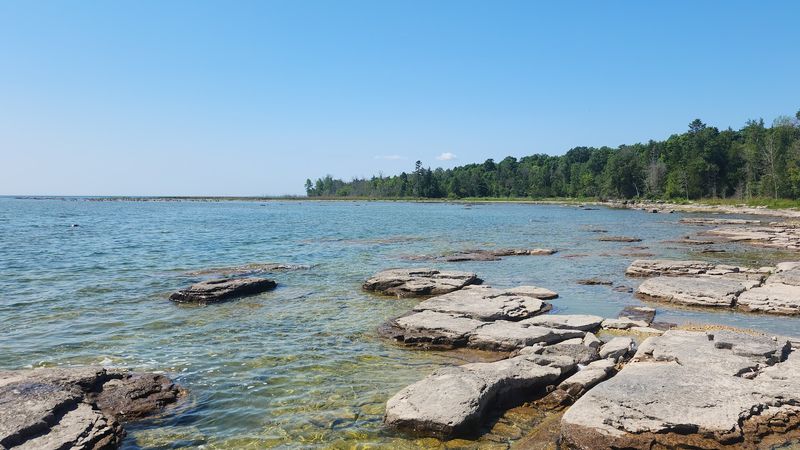
Can you believe Wisconsin has a designated dark sky park right on the Lake Michigan shoreline?
Newport State Park near Ellison Bay on the Door Peninsula is that rare combination of great hiking and incredible night skies.
The park covers over 2,300 acres of wild shoreline and forest. Trails run along rocky beaches and through mixed hardwood stands. The contrast between open lake views and deep forest shade is one of the park’s best features.
Newport is one of Wisconsin’s few true wilderness state parks. No concessions, no playgrounds, and no crowds chasing amenities. What you get instead is genuine quiet and natural rhythm.
Backcountry camping is available by permit. Waking up to Lake Michigan fog rolling through the trees is surreal. It is the kind of morning that makes you rethink your daily routine.
The 11-mile trail network loops through varied terrain. Sandy beach sections give way to rooted forest paths. Sturdy footwear is a smart call for the rockier shoreline stretches.
Wildflowers bloom in impressive variety through late spring. Trillium, wild geranium, and jack-in-the-pulpit dot the forest floor.
After dark, the Milky Way arches over Lake Michigan with almost no light interference. Stargazers make special trips here just for that view. Hiking is the reason to come, but the night sky is the reason to stay.
8. Copper Falls State Park
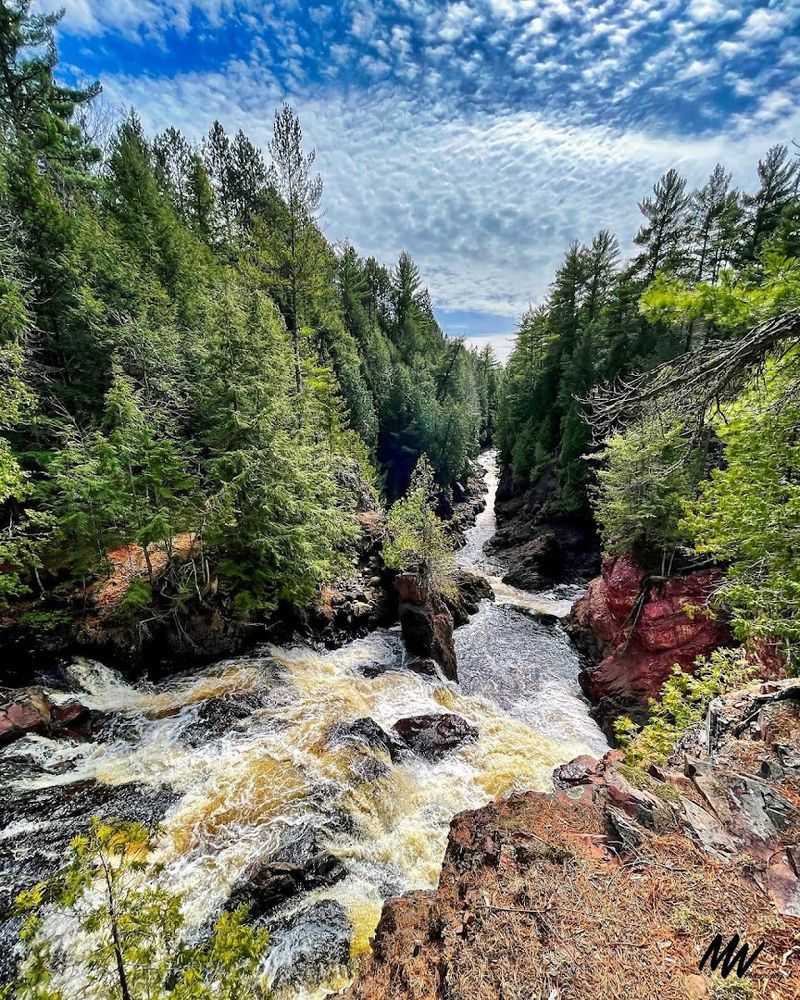
I know a waterfall park that most people outside Wisconsin have never heard of, and that is their loss.
Copper Falls State Park near Mellen packs more dramatic scenery per trail mile than almost anywhere in the state.
The Bad River carves through ancient volcanic basalt flows. Dark basalt gorges frame two major waterfalls, Copper Falls and Brownstone Falls. The geology alone makes this a destination worth a long drive.
The main loop trail is roughly two miles long. It passes multiple overlooks above the river gorge. Railings keep you safe while giving you front-row seats to the falls.
Copper Falls drops about 29 feet over red-brown rock. Brownstone Falls is shorter but equally dramatic. Together they form one of the most photogenic sequences in Wisconsin’s state park system.
The surrounding forest is northern hardwood and hemlock. In autumn, the color contrast against the dark basalt is spectacular. September and October are peak times for photographers and leaf-peepers alike.
A swimming beach on Tyler Forks Flowage is a good way to relax after hiking. The water is clear and surprisingly refreshing even in summer.
Families appreciate having that option waiting at the trailhead. Rushing through means missing the sound of the falls echoing off the gorge walls. Let that sound hold you there a little longer than planned.
9. Kettle Moraine State Forest Southern Unit
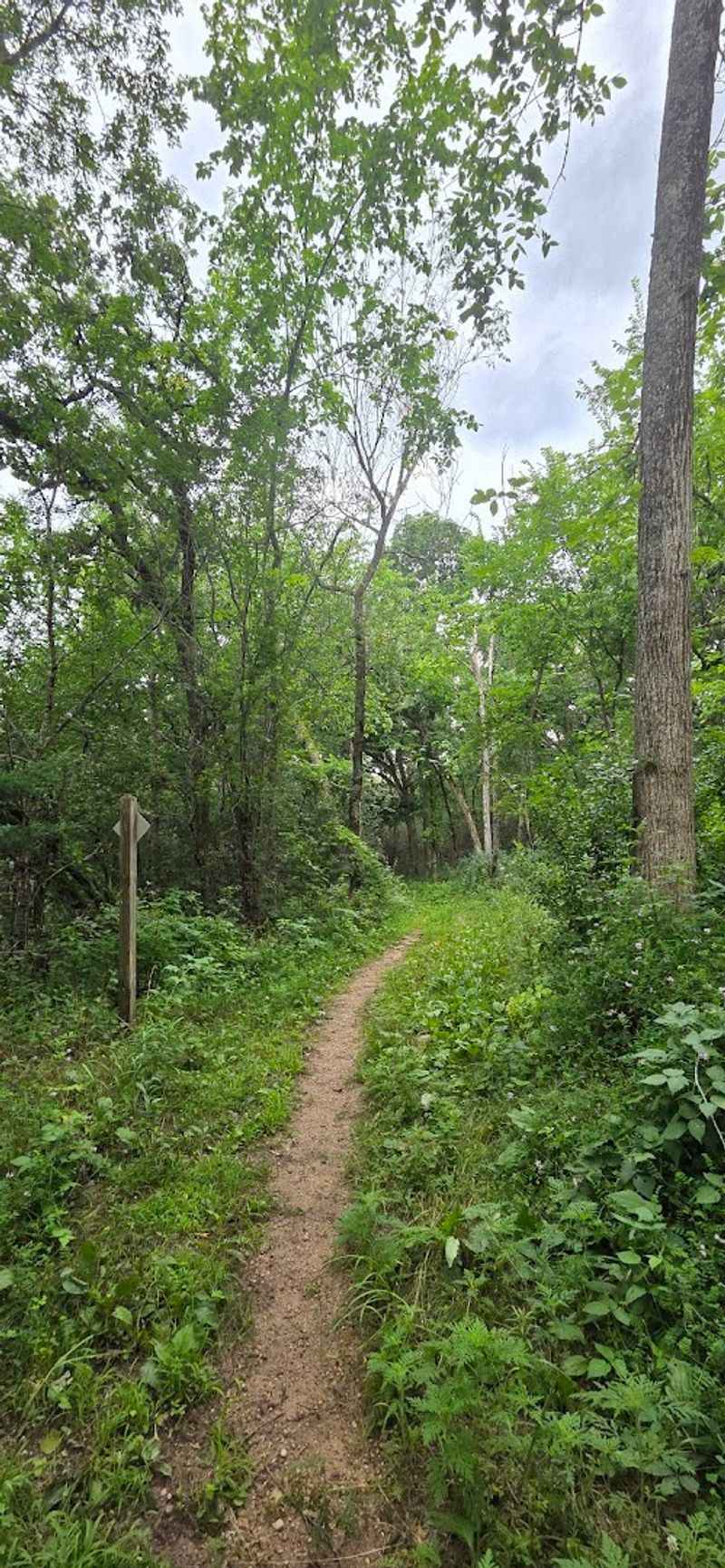
There is something quietly magnetic about a landscape that glaciers sculpted and then walked away from.
The Kettle Moraine State Forest Southern Unit near Eagle is that landscape in its most accessible and rewarding form.
The Ice Age National Scenic Trail runs through this unit as well. But the southern unit has a distinctly different character from its northern counterpart. Open prairies, oak savannas, and restored wetlands define the scenery here.
The Emma Carlin and John Muir trail systems are both excellent. Each offers loops of varying length and difficulty. Mountain bikers and hikers share some trails, so stay aware of your surroundings.
The restored prairie sections are a highlight in summer. Wildflowers bloom in dense, colorful clusters along open ridgelines. Butterflies and pollinators make these sections feel alive in a very literal way.
Kettle formations here are easier to read than in the north. The gentle bowls and ridges make the glacial history tangible. Interpretive signs along the trail explain the science without being boring.
Fall transforms the oak savannas into warm amber tones. The contrast between golden grasses and blue sky is hard to photograph badly. Even a phone camera captures something worth keeping.
The headquarters area off WI-59 is a good starting point for first-timers. Trail maps and staff assistance are available there. Start on the John Muir loop and let the landscape unfold at its own honest pace.
10. Cave Point County Park
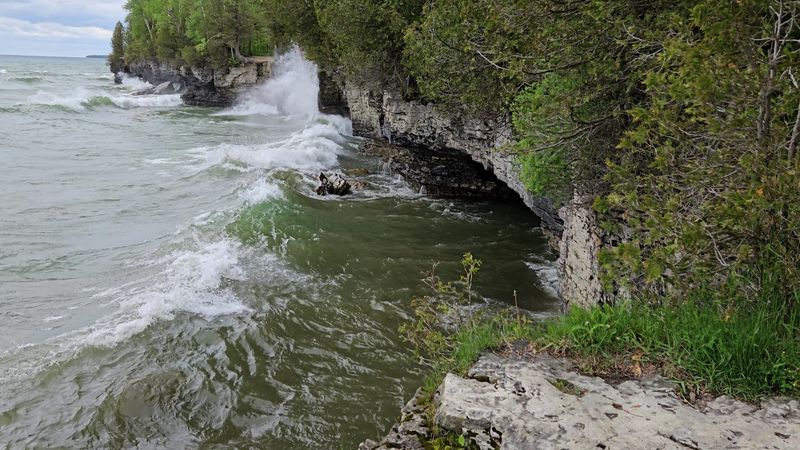
Doesn’t it seem too good to be true that a free county park could deliver sea cave drama on par with a national park?
Cave Point County Park near Sturgeon Bay, at 5360 Schauer Rd, is exactly that level of stunning. It charges nothing at the gate. Limestone cliffs drop straight into Lake Michigan here. Waves crash into undercut caves with a deep, hollow boom.
On a windy day, the sound and spray together create an experience that is hard to shake. The trail along the cliff edge is short, roughly half a mile. But every step delivers a new angle on the caves and the open lake. The payoff-to-effort ratio is absurdly high.
Kayakers paddle into the caves from the water side. Watching them from the cliff above adds a fun dimension to the hike.
The scale of the caves becomes obvious when a kayak disappears inside one. The surrounding cedar forest is fragrant and dense.
Ancient cedars cling to cliff edges with gnarled, determined roots. Their twisted shapes against the lake backdrop make for striking photographs.
Spring and fall bring the most dramatic wave action. Summer is calmer but busier with tourists. Early morning visits in any season reward those willing to set an alarm.
Cave Point sits adjacent to Whitefish Dunes State Park at 3275 Clark Lake Rd. Combining both in one day gives you caves, forest, and sand dunes. That trio makes for a Door Peninsula day that is genuinely hard to top.