You Can Bring Home Meat Raised Without Added Hormones From This Pasture-Based Virginia Farm
Dinner tastes different when you have seen where it started.
One Virginia farm lets visitors get closer to the land behind the groceries, with pasture-raised animals, rotating grazing, and a farm store that makes the whole process feel real instead of abstract.
The meat is sold without added hormones, but that is only one piece of the story.
What stands out is how much attention goes into the grass, the animals, and the movement between fields. It feels refreshingly hands-on.
This is farm-to-table without the fancy slogan, and that makes bringing something home feel a little more meaningful.
A Farm Built On Care
Open fields are central to the way this working farm raises livestock.
Polyface describes itself as beyond organic, but that phrase is the farm’s own description rather than a USDA organic certification.
Its current materials specifically state that the operation is not certified organic.
The farm says it avoids synthetic fertilizers, pesticides, and GMOs while relying heavily on grazing, composting, animal rotation, and other biological systems to manage the land.
That distinction matters because broad marketing labels do not explain how animals are actually raised. Polyface publishes detailed descriptions of its cattle, poultry, pigs, feed, and pasture practices for visitors who want more context.
Cattle graze, chickens scratch and forage, and pigs root through managed paddocks and wooded areas. Those behaviors are built into the farm’s production system rather than treated as occasional enrichment.
Polyface also states that it does not use antibiotics or vaccines. Claims involving hormones need a little context: USDA permits no-hormone claims on beef when properly documented, while hormones are not approved for raising chickens.
Polyface Farm is at 43 Pure Meadows Lane in Swoope, in Virginia’s Shenandoah Valley.
Grass-Fed Beef To Bring Home
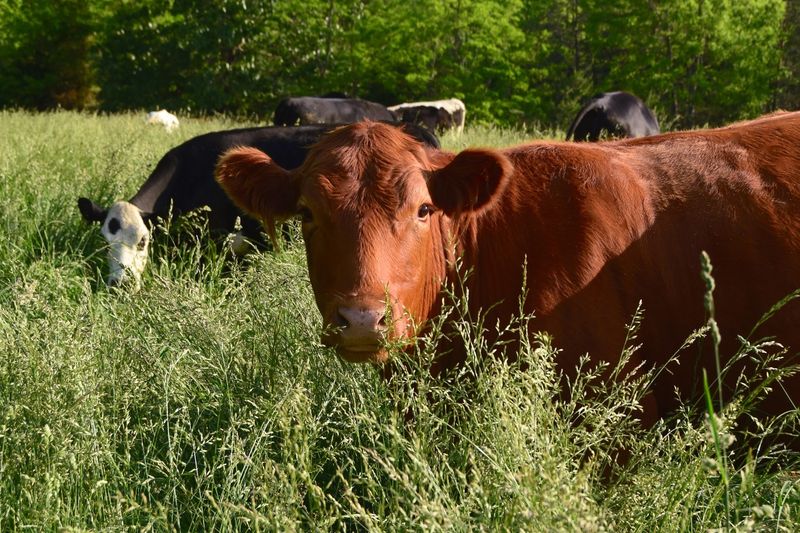
The cattle do not spend an entire season in one pasture.
Polyface markets its beef as 100% grass-fed and grass-finished, with cattle moved regularly onto fresh pasture rather than finished on grain.
That frequent rotation is one of the farm’s longest-running practices. Fresh sections are grazed while previously used ground is given time to recover.
As the cattle move, manure is distributed across the pasture rather than concentrated in one permanent feeding area. The farm treats that movement as part of its larger soil-management strategy.
Current online inventory includes ground beef, roasts, brisket, bones, organ meats, and other cuts, although the farm warns that demand can cause beef items to sell out quickly.
That makes a flexible shopping list useful. The on-farm store does not require a preorder, but Polyface recommends ordering ahead when a specific product is important.
A roast, steak, or package of ground beef can all come from the same grass-finished system, so shoppers can choose according to how they plan to cook later.
An insulated cooler is also practical for the drive home, especially when buying frozen meat during warmer weather.
Chickens With Moving Shelters
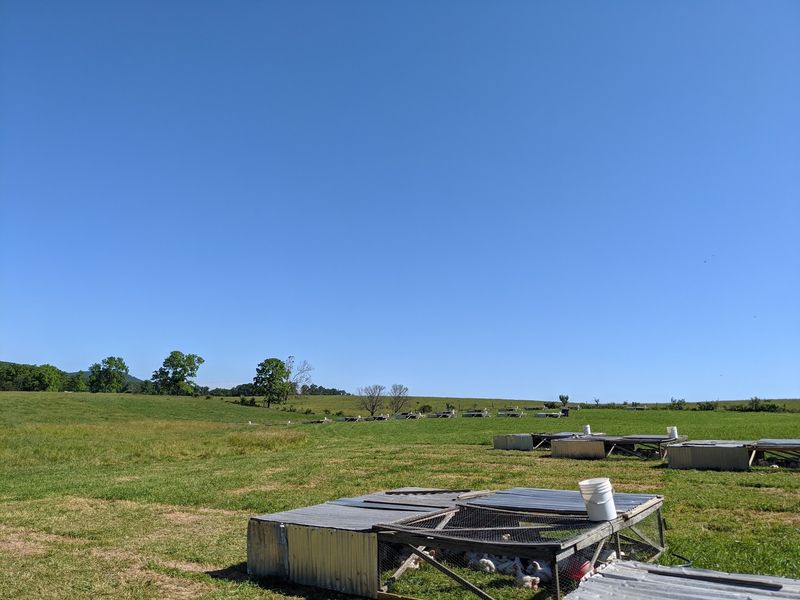
The low shelters scattered across the pasture have a very specific job.
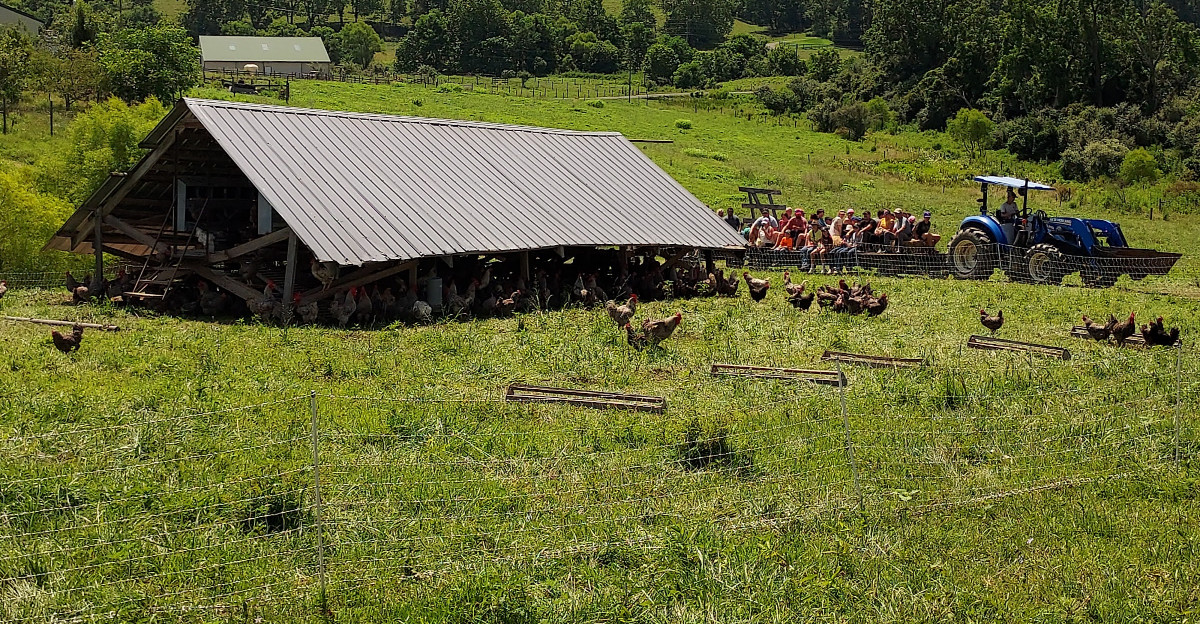
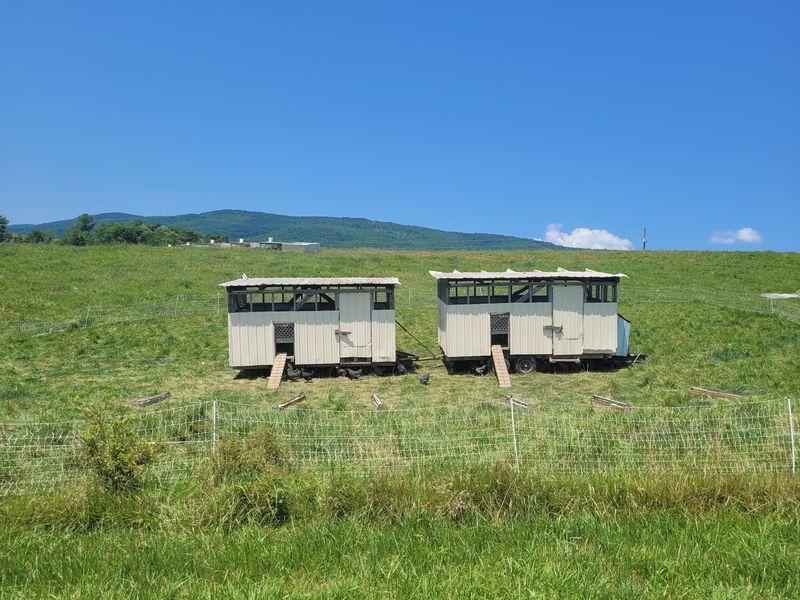
Polyface raises its broiler chickens in floorless portable shelters after the birds leave the brooder at roughly two to three weeks old. The shelters are moved to fresh grass every day.
Each move gives the birds another section of pasture for scratching and foraging while spreading manure across new ground.
The chickens also receive a locally sourced non-GMO grain ration. Polyface says that feed contains no added hormones or antibiotics.
The broiler season itself is seasonal. Birds generally move through the outdoor production system from spring into fall, while frozen inventory allows chicken to remain available beyond the growing season when supplies last.
Whole chickens are sold alongside cuts such as breasts and tenders, so shoppers do not have to commit to cooking an entire bird.
A whole chicken can stretch across several meals, while smaller packages are easier to work into a quicker dinner.
The moving shelters make the system unusually visible. Visitors can see how a simple structure allows each group of birds to reach new ground every morning.
Pigs Free To Root
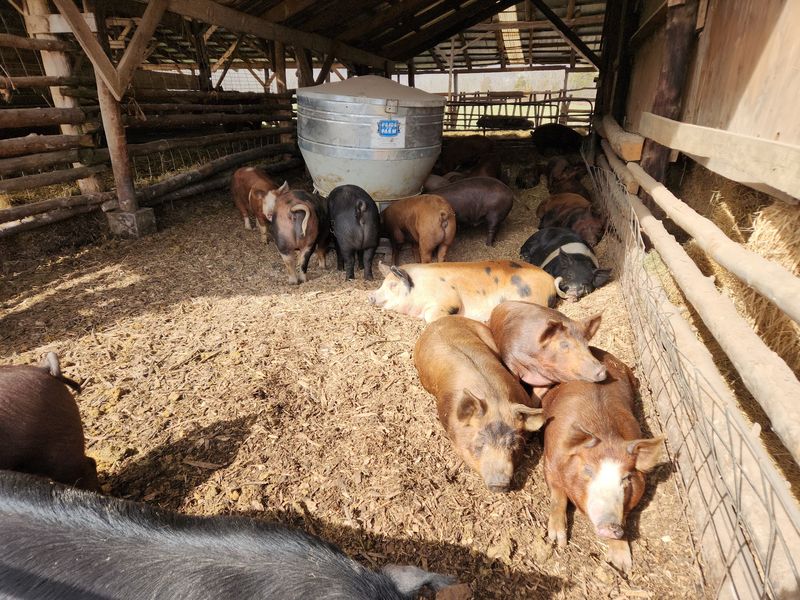
Rooting is not treated as bad behavior here.
Polyface raises pigs in managed pasture and silvopasture paddocks where they can explore, forage, and disturb the ground naturally.
Groups are moved between sections rather than staying permanently in one enclosure.
The farm calls its pork Pigaerator Pork, a name that comes from its long-running practice of using pigs to turn bedding and compost and to disturb soil in wooded systems.
The pigs receive a locally milled non-GMO grain ration along with whatever they forage. In autumn, their managed areas can include wooded sections where acorns become part of the seasonal food supply.
Pork available through the farm includes familiar cuts such as chops along with sausage, bacon, and other products. Exact inventory changes with production and demand.
A smaller cut works for a quicker meal, while a roast or larger package may suit slower cooking and larger households.
The pigs also illustrate why Polyface uses several livestock species. Cattle mainly harvest grass, while pigs disturb soil and vegetation in ways cattle do not.
Visitors should still treat every enclosure as part of an active working farm and observe animals without interfering with chores or fencing.
Eggmobiles Follow The Herd
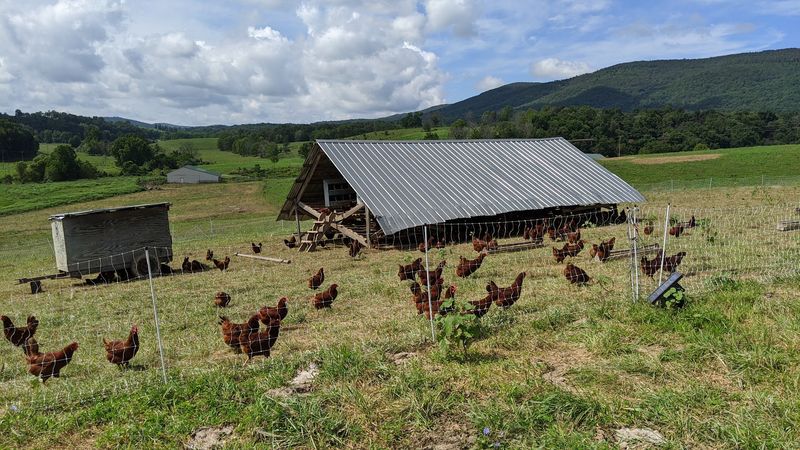
Laying hens add another layer to the pasture rotation.
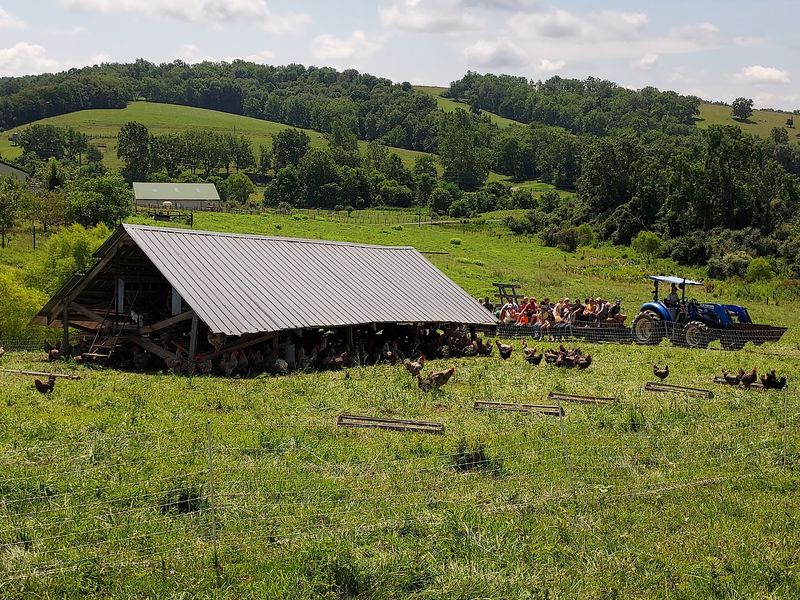
Polyface uses mobile shelters called Eggmobiles, which can be moved across the farm behind grazing cattle. Hens leave the shelter to scratch, forage, and return to nest boxes to lay.
The birds scratch through cattle manure while searching for fly larvae, grasshoppers, crickets, worms, and other food. Their movement also redistributes manure across the pasture.
Polyface moves Eggmobiles daily or every other day depending on weather and cattle movement. A second laying-hen system, the Millennium Feathernet, uses movable fencing and an A-frame shelter.
Eggs from those hens are sold through the farm store, but supply is genuinely seasonal.
Polyface does not use artificial lighting to force steady winter production, so laying drops as the days shorten. The farm regularly has fewer fresh eggs in late fall and winter.
That means a full shelf should never be assumed. Fresh eggs are currently supplemented by freeze-dried Polyface eggs made during higher-production periods.
The Eggmobile system is one of the clearest examples of how the farm links one livestock group to the work of another.
Tours That Explain The Fields
A quick glance does not explain the whole operation.
Polyface’s current farm-tour policy welcomes self-guided visitors Monday through Saturday and asks guests to respect the privacy of the homes on the property.
Self-guided visits let people move through permitted areas at their own pace while observing active farm systems rather than staged demonstrations.
For more explanation, Polyface offers private Grass Stains Tours. These are two-hour walking tours focused on the farm’s different enterprises and how they connect.
The farm also schedules Lunatic Tours on selected dates. These 2.5-hour hay-wagon tours stop at different livestock areas and are limited to 125 participants.
Because this is a working agricultural property, sturdy shoes make sense. Mud, uneven ground, livestock equipment, and changing weather can all be part of the visit.
Water and weather-appropriate clothing are useful for longer outdoor tours.
Anyone planning a special trip should check the current tour page first because guided options operate on specific schedules rather than continuously.
A Store For The Trip Home
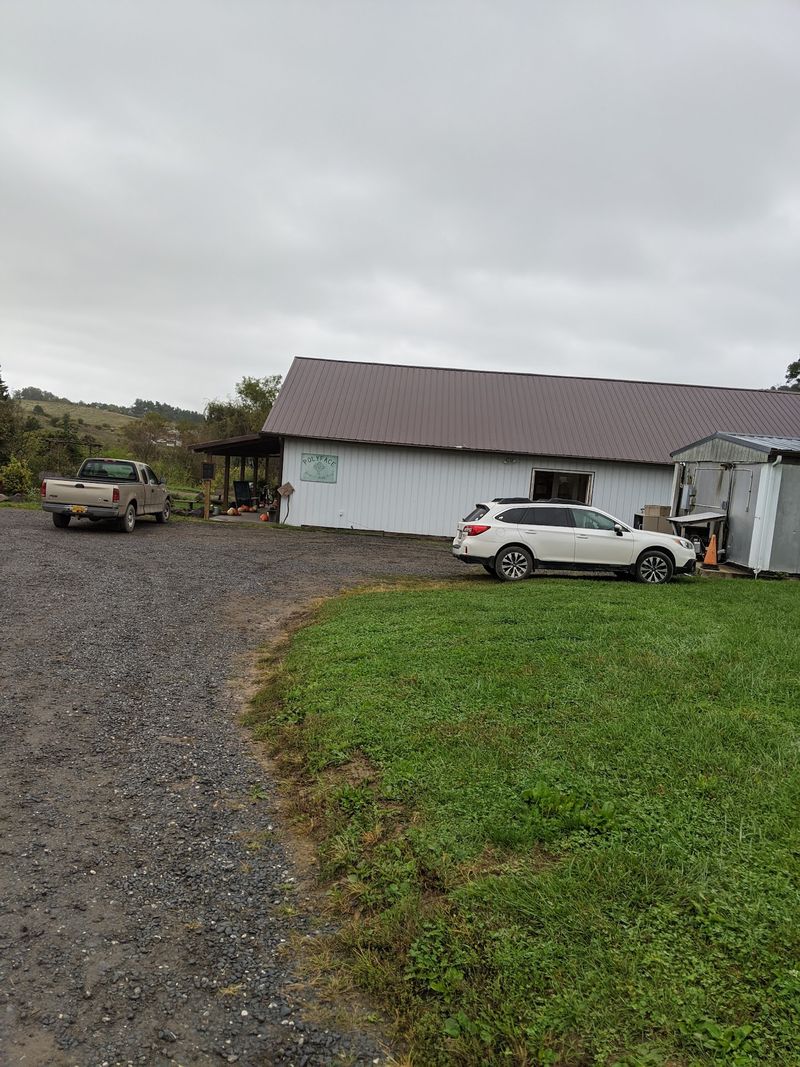
After seeing the production side, the on-farm store connects the visit to the food itself.
Polyface sells its own 100% grass-fed beef, pastured pork, chicken, turkey, and eggs, while the wider online store also carries products from other regional farms and makers.
Inventory changes with season and production. This Virginia farm specifically recommends preordering when shoppers need a particular item, although no preorder is required simply to shop on site.
Fresh pastured eggs may be available, but their supply naturally drops during shorter winter days.
Current farm-store hours are Monday through Friday from 9 a.m. to 1 p.m. and Saturday from 9 a.m. to 4 p.m. The store is closed Sunday.
Those hours are separate from the farm’s visitor-access policy, so anyone hoping to combine sightseeing with shopping should plan around the store schedule.
A cooler makes it easier to keep frozen or chilled purchases cold during the trip home.
Polyface also offers ordering, pickup locations, shipping, and regional delivery options, giving customers alternatives when an on-farm visit does not fit their schedule.
A Long View Of The Land
The pasture has a history that stretches well beyond a single shopping trip.
The Salatin family arrived in Virginia’s Shenandoah Valley in 1961 after purchasing land Polyface describes as severely worn, eroded, and abused.
Over the following decades, the family planted trees, built compost piles, dug ponds, moved cattle with portable fencing, and developed movable livestock shelters. Three generations are now connected to the operation.
That history makes the ground itself part of the story. The farm measures progress not only through livestock production but also through pasture recovery and soil management.
Rotational grazing gives previously used ground a rest period, while composting and livestock manure are incorporated into the farm’s broader fertility system.
Polyface describes its approach as regenerative agriculture, with soil health, biodiversity, animal movement, and biological cycles placed at the center of its management.
The farm remains an active commercial operation rather than a museum or demonstration property. Daily chores continue around visitors, from moving cattle and poultry shelters to checking pigs and gathering eggs.