You Can Eat Cuban Sandwiches In This Florida Building In Ybor City Since 1905
Some corners in Florida smell like coffee and toasted bread before you even reach the door. I wandered past a block of brick storefronts and hand-painted tile, expecting a quick lunch, and instead found myself inside a place that has been pressing sandwiches for cigar workers since the early 1900s.
The building keeps growing, the recipes barely change, and the same family still runs the show five generations in. What started as a 60-seat cafe now fills an entire city block, and the sandwich that made it famous is still on the menu.
A Corner Cafe That Swallowed a City Block
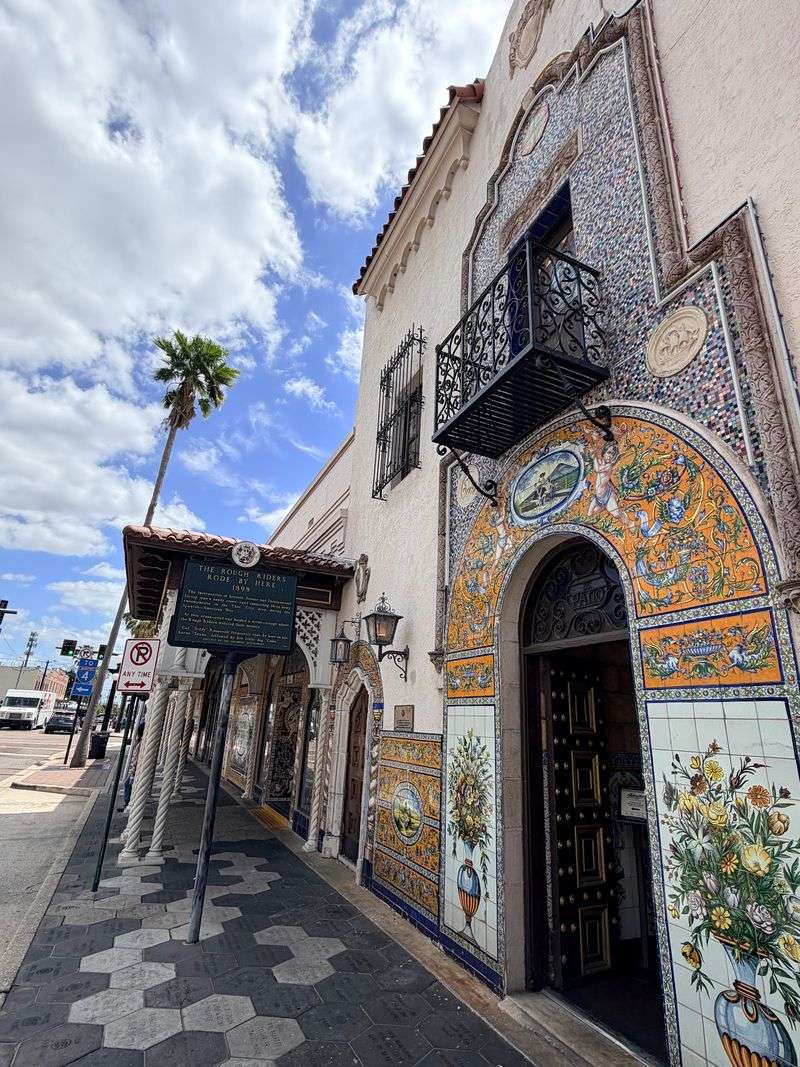
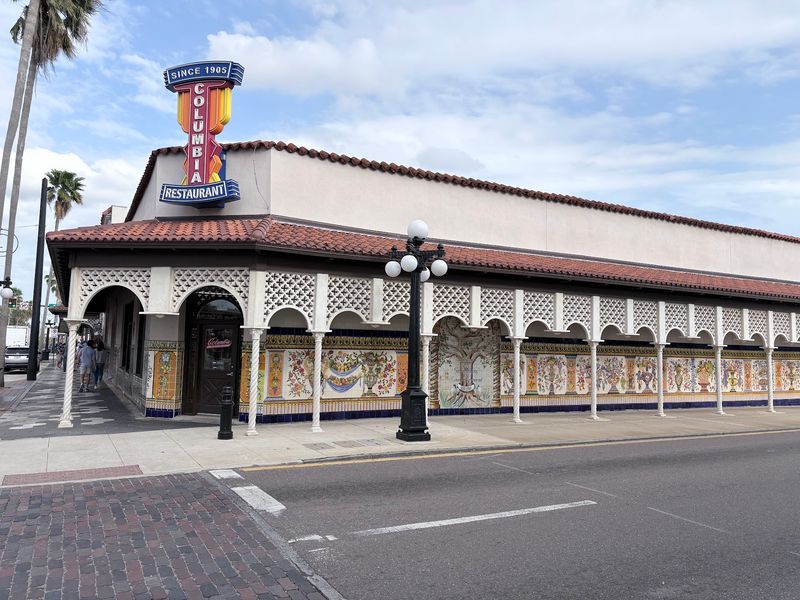
At 2117 E 7th Ave in Tampa, Florida, a long stretch of tilework and arched windows takes up more sidewalk than most restaurants take up in total. Columbia Restaurant sits right in the middle of the Ybor City Historic District, and it is not a small operation pretending to be grand.
Founded in 1905 by Cuban immigrant Casimiro Hernandez Sr., it opened as a modest 60-seat corner cafe selling Cuban coffee and Cuban sandwiches to the neighborhood. Cigar workers came in for something quick, cheap and filling before heading back to the factories.
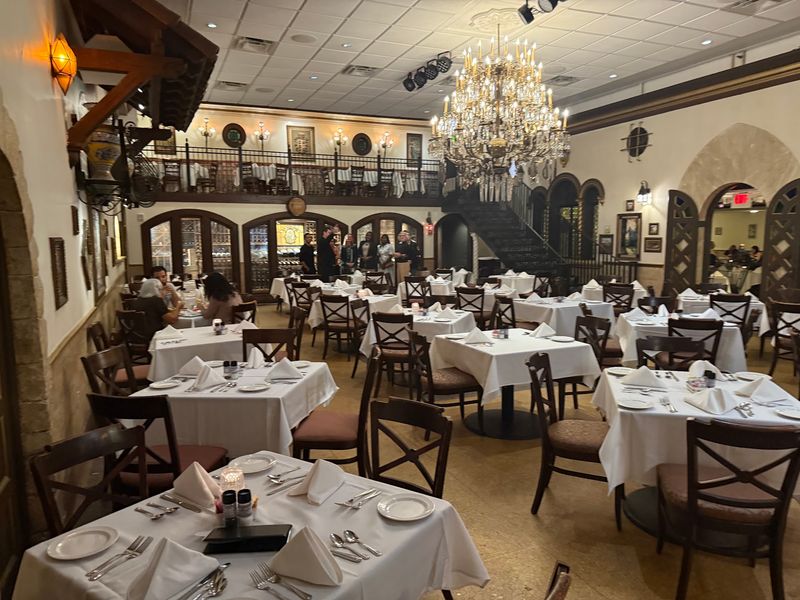
Over the following decades, the family bought the buildings next door and knocked through the walls. What exists now is a Spanish restaurant covering an entire city block, with 15 separate dining rooms and seating for roughly 1,700 guests.
Florida claims plenty of old buildings, but this one holds the title of the state’s oldest continuously operated restaurant. It is also billed as the largest Spanish restaurant in the world and the oldest Spanish restaurant in the United States.
The address has not moved once in more than 120 years.
Five Generations of the Hernandez-Gonzmart Family
Restaurants rarely stay in one family for a decade, let alone twelve. The Hernandez-Gonzmart family has owned and operated this place continuously since Casimiro Hernandez Sr. opened the doors, and the current stewards represent the fifth generation.
That continuity explains a lot about how the food tastes. Recipes were not bought from a consultant or reverse-engineered from a trend report.
They were handed down, adjusted slightly, and defended.
Guests notice it in small ways. Staff members often know the building’s history well enough to explain which room came from which decade, and some servers will happily walk a curious table through the older sections.
Visitors frequently mention being given informal tours, which is not something a chain typically encourages.
The family angle also shapes the hospitality style. Birthday celebrations get real attention, with kitchen staff and hosts occasionally joining in, and large groups are handled without visible panic.
Technically, the business began in 1903 as Saloon Columbia before being renamed Columbia Restaurant in 1905. That second date is the one stamped on the ceramics, the menus and the signage, and it has become shorthand for the whole operation.
The Original Cuban Sandwich, Built on a 1915 Recipe
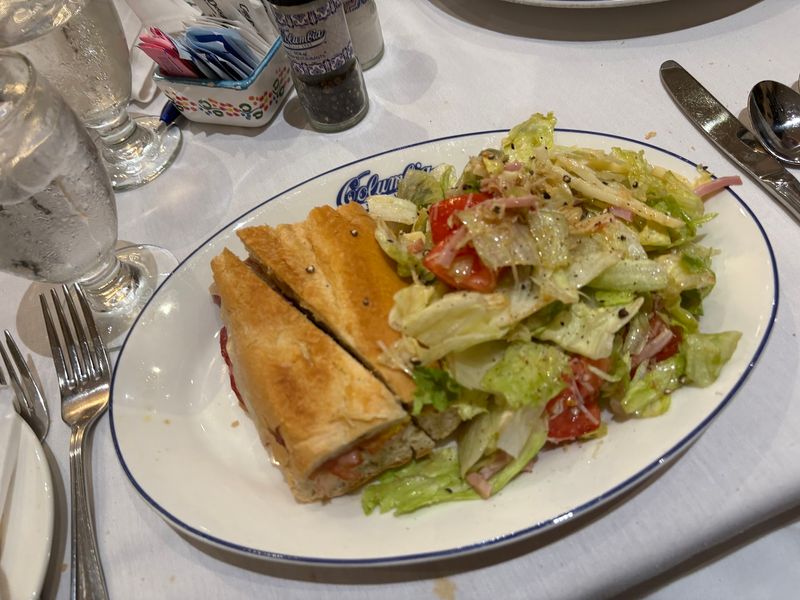
Order the Original Cuban Sandwich here and you are eating from a recipe written down by the founder in 1915. Not an interpretation of it.
The actual formula.
Layers go in a specific order: slow-roasted mojo pork, Spanish ham, Genoa salami, Swiss cheese, dill pickles and mustard, all pressed between slices of freshly baked Cuban bread until the crust crackles and the cheese gives up.
The salami is the detail that starts arguments. Tampa-style Cuban sandwiches include it, and the tradition traces directly back to Ybor City’s Sicilian immigrant community, who lived and worked alongside Cuban and Spanish neighbors.
Miami versions typically leave it out.
Each ingredient reflects a different group that settled the neighborhood. Spanish ham, Cuban roast pork and Cuban bread, Italian salami, and Swiss cheese, mustard and pickles from German and Jewish influence.
It is an immigration map you can hold in two hands.
Among the thousands of dishes ordered here, the Cuban sandwich comes up more than any other single item in guest conversation, with hundreds of specific mentions. For a menu loaded with paella and seafood, that says something about staying power.
Why Ybor City Invented This Sandwich in the First Place
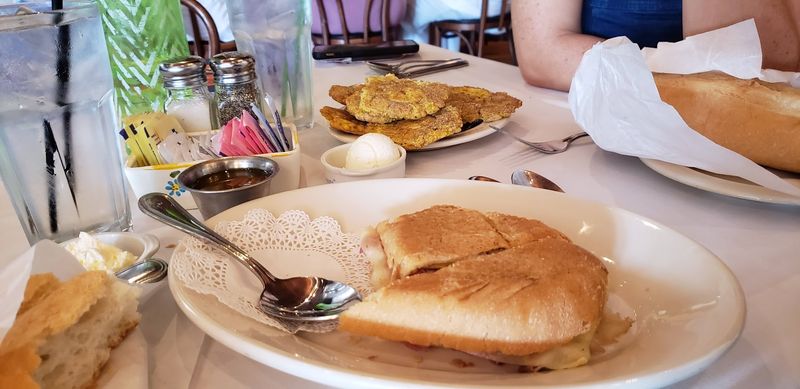
Cigar rolling was tedious, seated work, and workers needed lunch that could be eaten fast and carried easily. Out of that practical need, in the late 1800s and early 1900s, the Cuban sandwich took shape in Ybor City.
Cheap, portable, protein-heavy and pressed flat so it fit in a bag, the sandwich solved a labor problem before it became a culinary icon. Cafes near the factories competed on quality of bread and generosity of pork.
Ybor City at the time was one of the most genuinely mixed neighborhoods in the American South. Cubans, Spaniards, Sicilians, Germans and Jewish families lived within blocks of each other, and the food borrowed freely.
Tampa eventually made the sandwich official, naming it the city’s signature sandwich. That kind of civic pride is unusual for a lunch item.
Understanding the backstory changes how the sandwich tastes when it arrives at the table here. It stops being a deli order and becomes a small piece of working-class history that survived because it was genuinely good.
The restaurant that started as a workers’ cafe in 1905 is now the most visible keeper of that story.
The 1905 Salad, Tossed at Your Table
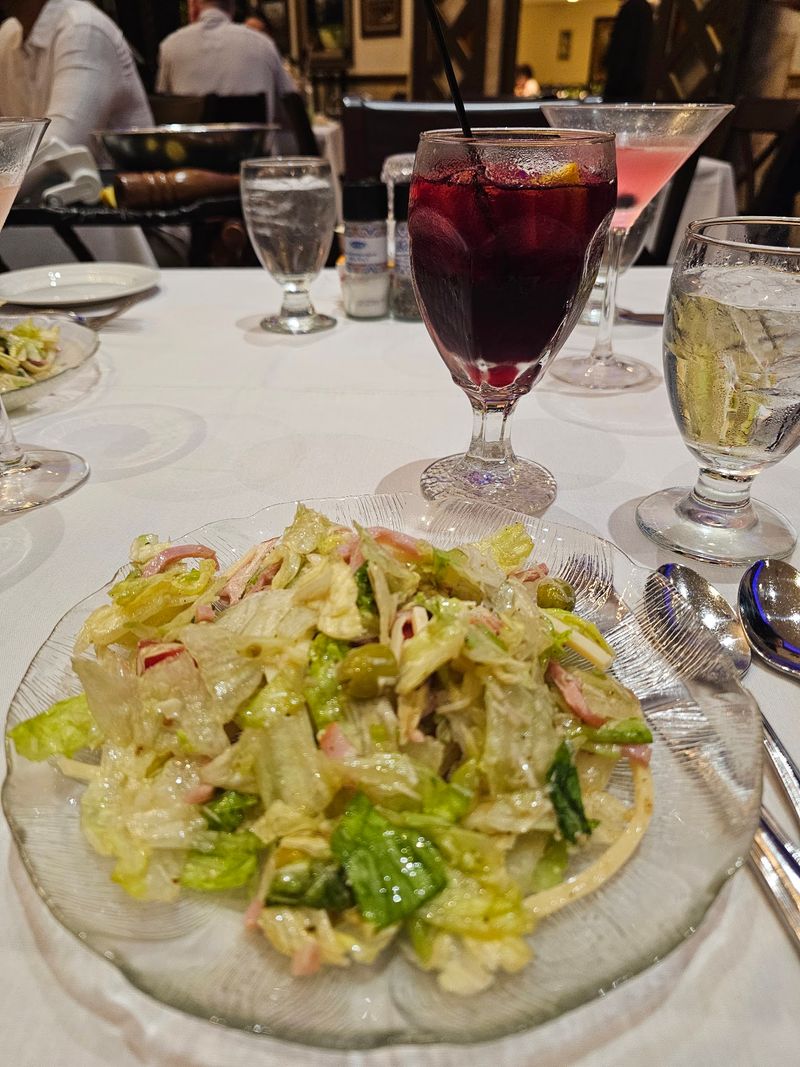
Few appetizers get their own fan club, but this one does. The 1905 Salad arrives as a performance, mixed in a large bowl right beside the table while you watch the dressing come together.
Guests bring it up constantly, with more than five hundred separate mentions, and it is frequently named the standout item of the meal even by people who felt lukewarm about their main course. Bold, garlicky and sharp, it cuts through the richness of everything that follows.
Ordering strategy matters. The large size can be split among as many as four people, and some diners add turkey to turn it into a full lunch at the bar.
There is a practical logic to starting here. The kitchen’s heavier plates, the paella, the baked seafood in clay crocks, the roasted pork, land with real weight.
A crisp, acidic opener resets the palate before all that arrives.
Regulars often treat the tableside prep as half the appeal. Watching a server work a wooden bowl with practiced speed feels like a holdover from an era when dining rooms were built for a bit of theater.
Fifteen Dining Rooms Worth Wandering
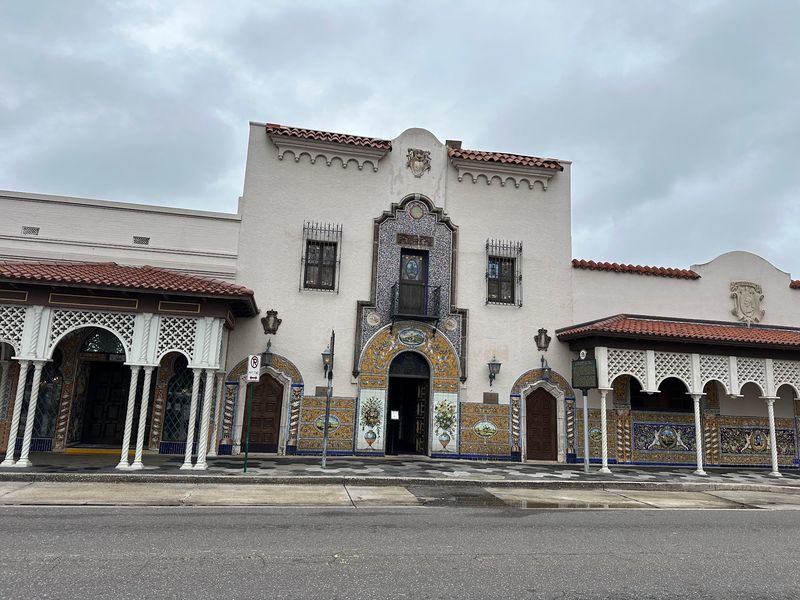
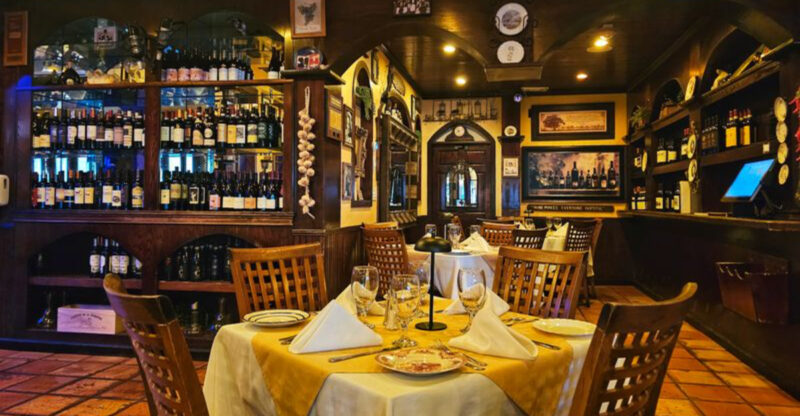
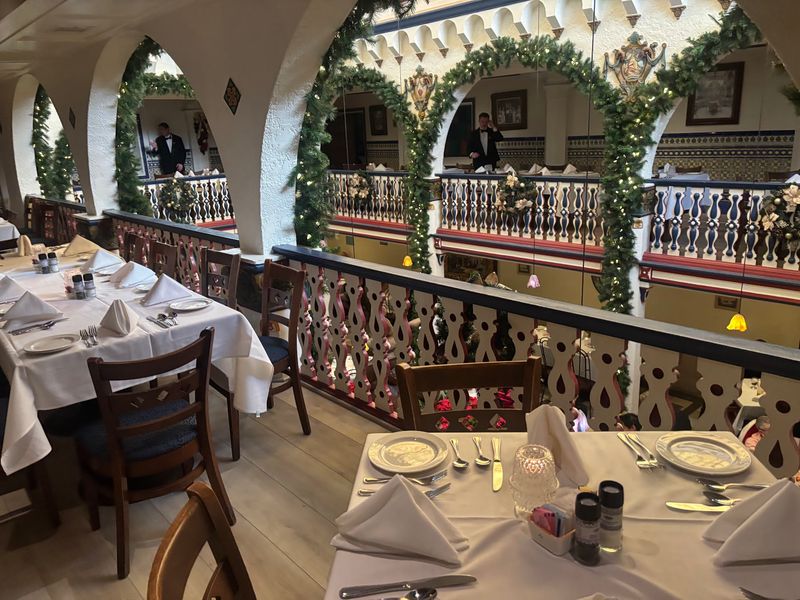
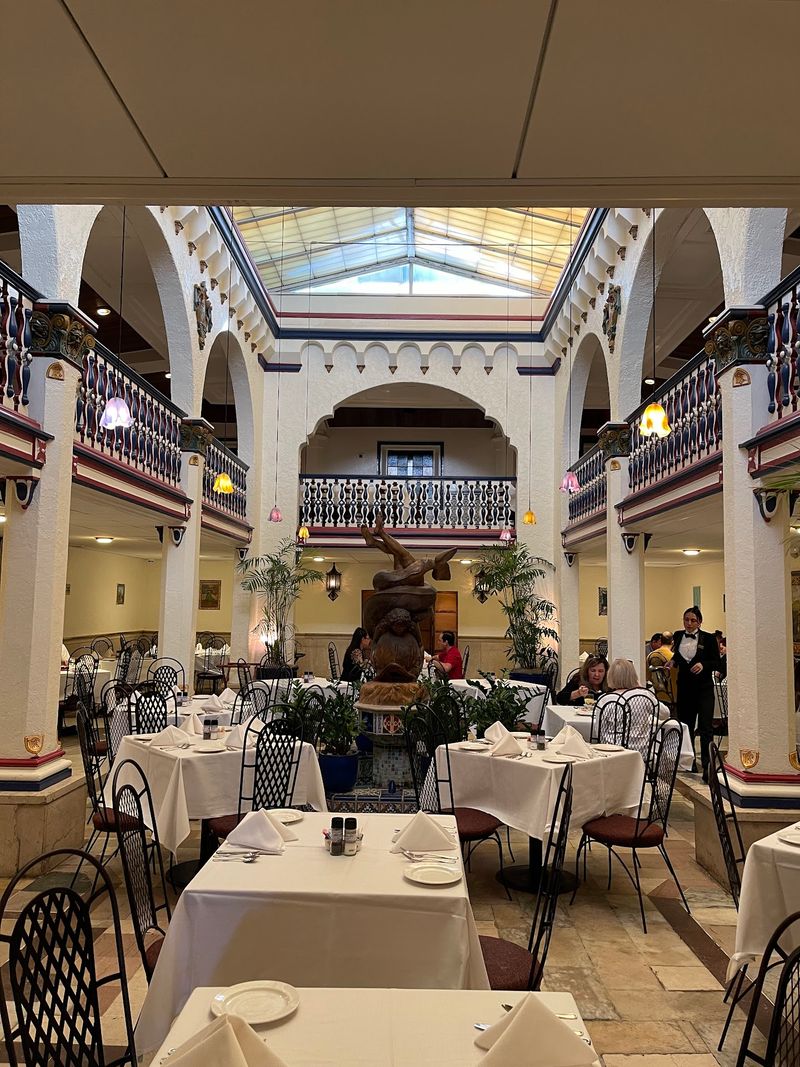
Walking in, most people stop moving for a second. Hand-painted tile climbs the walls, arches frame doorways, and each of the fifteen dining rooms carries a different mood depending on which decade of expansion produced it.
Guests routinely say they could spend an hour just circling the building before sitting down. Don Quixote appears everywhere in mosaics and small framed pictures, a nod to the Spanish side of the family heritage.
The original 1905 bar counter still stands in the Cafe Dining room, which means you can eat within arm’s reach of the fixture that served the first customers. There is also a cellar downstairs that managers sometimes show to interested guests.
Not every room feels the same, and that is the point. Some are cavernous and grand, others tucked away and quieter, and asking for a table near the historic tilework is a reasonable request.
One thing to expect: the grand rooms can echo. During peak dinner hours the sound bounces, so anyone hoping for a whispered conversation should aim for an earlier seating or a smaller side room.
Flamenco Nights in the Patio Room
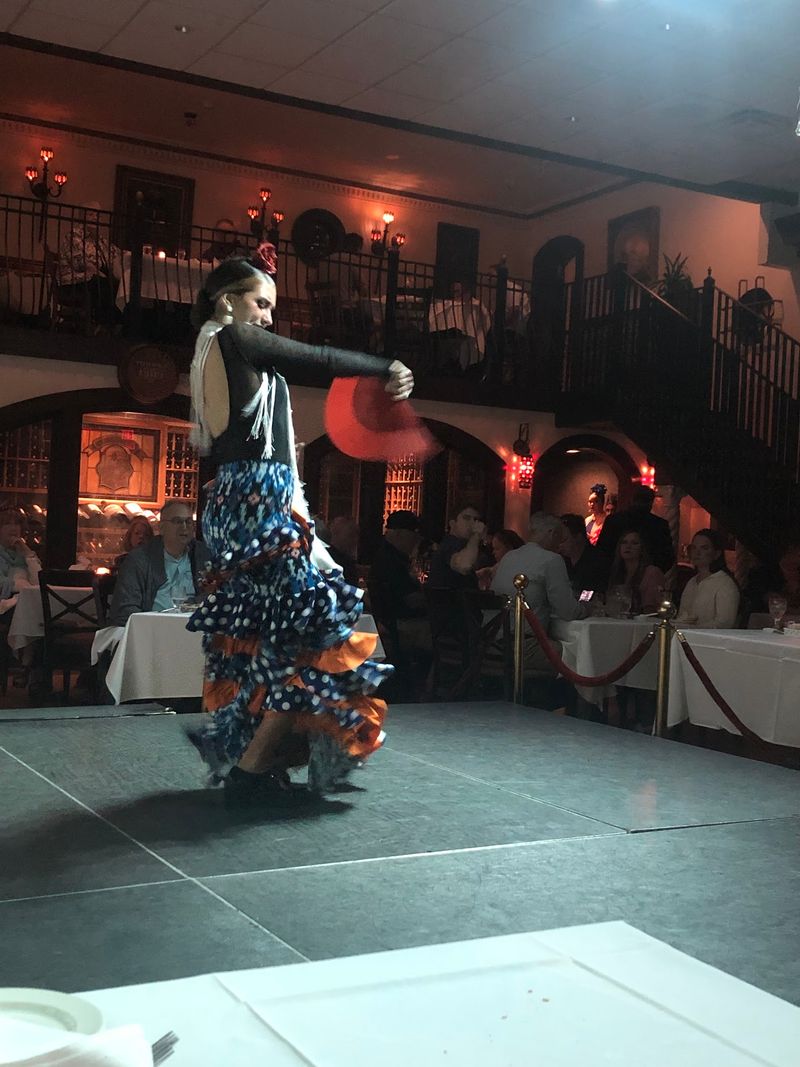
Castanets, heel work and a guitar cutting through dinner conversation. The flamenco dinner show is one of the biggest draws here, and guests describe the dancers as genuinely skilled rather than decorative.
Costumes get specific praise, and the music carries. Nearly two hundred visitors have singled the show out, which is remarkable for something happening alongside a full dinner service.
Practical details matter for this one. The performance runs as an add-on, reported by guests at around ten dollars per person, and reservations are required to get a table with a view of the stage.
Filming is not permitted during the show, so plan to actually watch it. Several guests have mentioned wishing they had known about the performance sooner, since it is not heavily advertised.
On nights without flamenco, live music often fills a corner of the restaurant instead, adding to the general hum without demanding attention. Guests who stumble into it tend to count it as a bonus.
For a restaurant selling Spanish and Cuban food inside a 120-year-old building, having dancers on the floor feels less like a gimmick and more like a continuation.
Beyond the Sandwich: Paella, Soups and Classic Plates
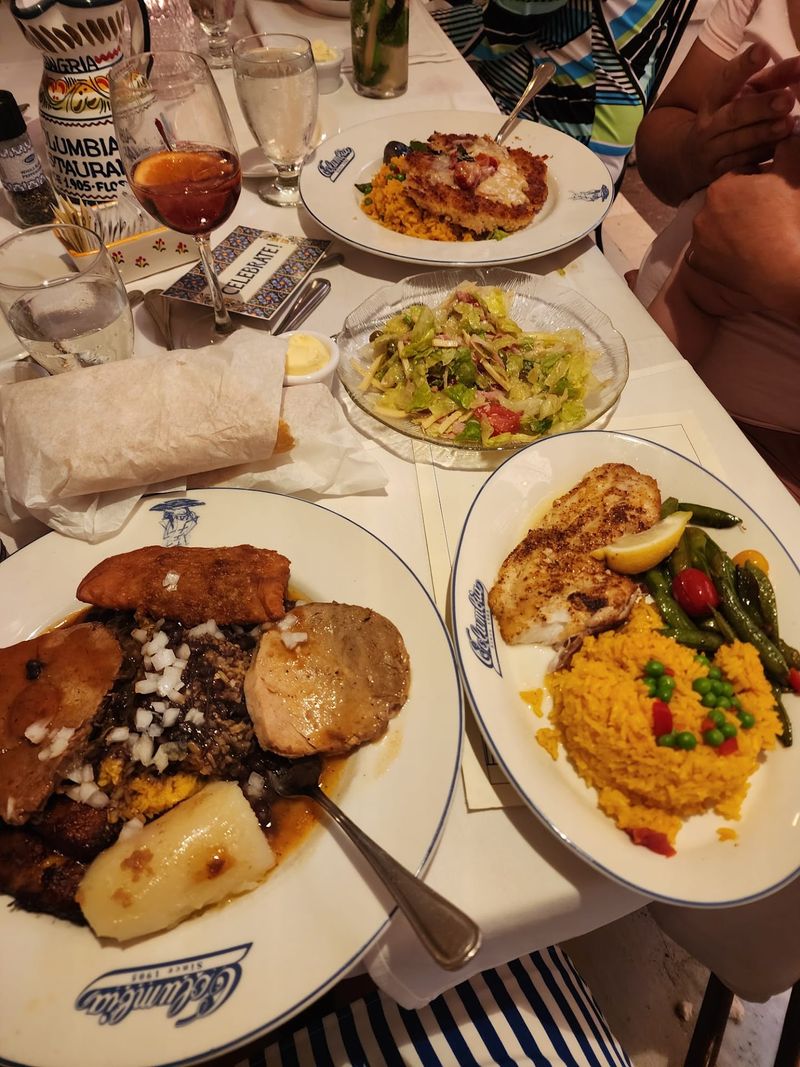
Anyone treating this as strictly a sandwich stop is leaving most of the menu untouched. Paella a la Valenciana comes loaded with lobster, mussels, clams, shrimp and chicken over seasoned rice, finished with a carved lemon, and guests consistently call it the most representative dish in the house.
Spanish bean soup and black bean soup both have devoted followings. The bean soup gets around ninety specific mentions, and several guests describe the black bean version as properly made rather than an afterthought.
Other plates that come up often include palomilla steak, picadillo with its raisins and olives, ropa vieja, stuffed shrimp, and baked seafood served bubbling in traditional clay crocks. The Cuban bread is a near-universal favorite, crackly outside and soft within.
Feedback is not unanimous. Some guests find certain dishes on the salty side or wish the flavors hit harder, and the kitchen openly invites diners to ask servers for guidance or request adjustments.
Portions run generous and rich, which makes over-ordering easy. A shared starter and one main per person is usually plenty before dessert enters the conversation.
Desserts That Steal the Evening
Bread pudding does not usually convert skeptics, yet this one has a reputation for exactly that. Guests who claim to dislike bread pudding describe finishing half a portion here, praising a soft, creamy texture rather than the soggy version they expected.
Chocolate and a rum sauce finish it off, and it draws close to three hundred mentions from diners. That puts it in the same conversation as the Cuban sandwich and the 1905 Salad.
Key lime pie is the other heavyweight, with dozens of specific shout-outs and a proper tart bite. Guava turnovers show up frequently too, which makes sense given the neighborhood’s Cuban roots.
Churros arrive with three dipping sauces: chocolate, guava and arequipe. Ordering them for the table is an easy way to end a long meal without committing to another full plate each.
There is also a custard-style dessert some guests compare to creme brulee, thicker in texture with a faint citrus note.
Given how filling the mains are, the smart move is to pace yourself early. Several visitors have admitted hitting a wall before dessert and regretting it immediately.
Service With Genuine Storytelling
The staff here treat history as part of the job. Servers routinely share the founding story, explain which dining room dates from when, and occasionally lead curious guests on short walks through the building.
Diners describe the team as warm, attentive and unusually knowledgeable, and floor managers get named almost as often as servers. Several visitors have mentioned being taken downstairs to see the cellar as part of the experience.
Celebrations get real energy. Birthday tables have received signed cards from hosts and enthusiastic greetings from the kitchen staff, which turns a dinner into something people talk about afterward.
The 4.6-star average across more than 22,000 reviews is largely built on this hospitality. Even guests who felt mixed about a specific dish tend to praise how they were looked after.
Servers are also comfortable steering orders. If something arrives too salty or not hot enough, the house line is clear: mention it and they will fix it rather than let it slide.
For a dining room seating 1,700, keeping that level of personal attention is a genuine feat of coordination.
Who Feels Most at Home Here
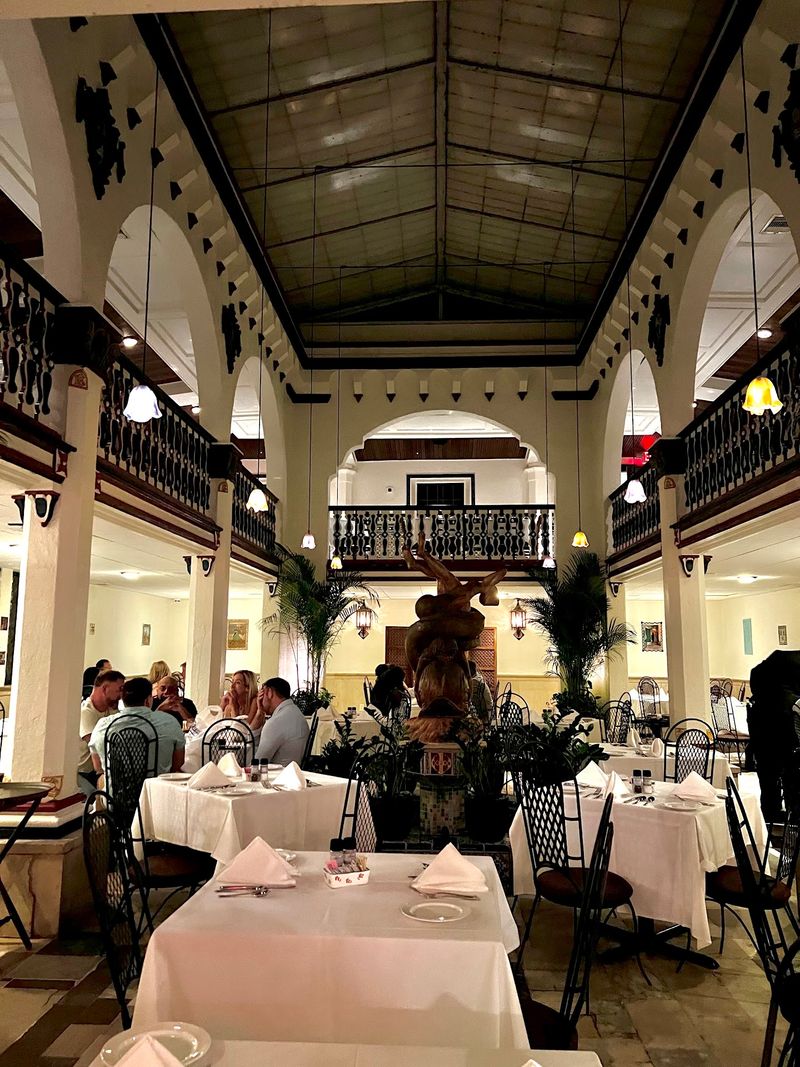
Big tables thrive in this building. Multigenerational family dinners, milestone birthdays and out-of-town visitors being shown off the city all fit the room naturally, and the staff handle large parties without friction.
History buffs get their money’s worth twice over. One guest described the combination as the best of both worlds, eating well while surrounded by 120 years of Tampa in the tilework and photographs.
Solo diners and couples on a quick stop do fine at the counter seating, which comes up often as a relaxed spot for a midday 1905 Salad and a sandwich. The energy there is livelier and the turnaround faster.
Anyone chasing a quiet, intimate meal should plan carefully. Peak service gets loud, the rooms are packed, and the general atmosphere is busy rather than hushed.
Families with kids tend to do well, partly because there is so much to look at and partly because the menu spans simple and adventurous in equal measure.
If you want a meal that doubles as a walking tour, this is the right room. If you want fast and forgettable, look elsewhere.
Hours, Prices and Getting a Table
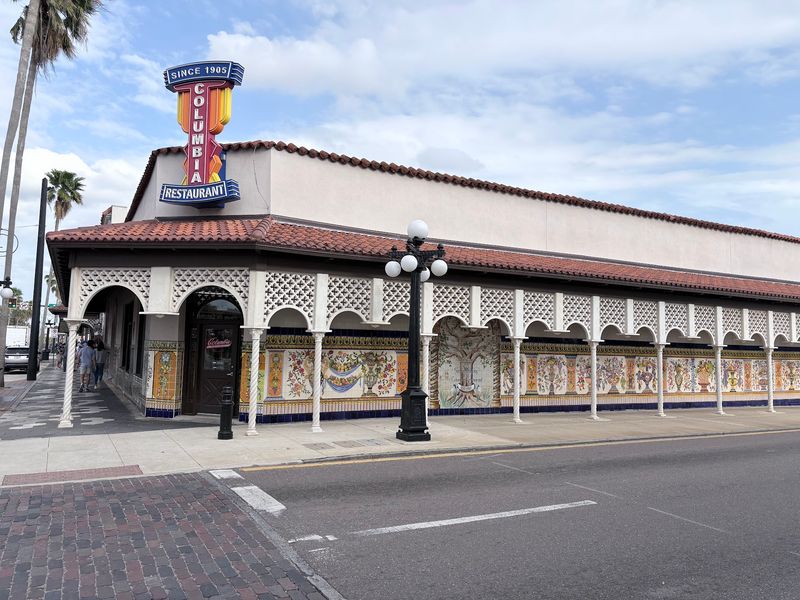
Doors open daily at 11 AM. Sunday through Thursday the kitchen runs until 9 PM, and on Friday and Saturday service stretches to 10 PM, which gives you a longer window for a weekend dinner.
Expect to spend roughly twenty to sixty dollars per person depending on whether you stick to a sandwich or go all in on paella and dessert. The flamenco show adds about ten dollars per person on top.
Reservations are strongly advised, and for show nights they are essentially mandatory. Walk-ins during peak hours risk a long wait, since the place fills up despite its enormous capacity.
You can call ahead at +1 813-248-4961 or book through columbiarestaurant.com. Show seating in particular needs a phone call.
Lunch is the quieter play. Arriving shortly after opening usually means a calmer room, easier seating and time to wander the dining rooms before the crowds land.
Larger groups should give as much notice as possible. The staff are practiced at handling them, but the popular rooms book out quickly on weekends and around holidays.
Worth the Trip Down Seventh Avenue
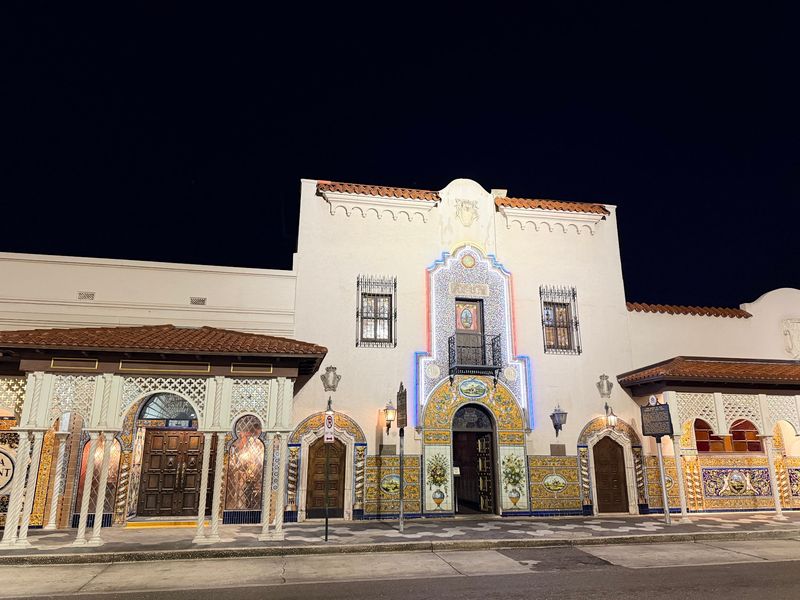
Ybor City rewards walking, and the restaurant sits right in the thick of it on brick-paved 7th Avenue. Guests staying downtown often take the streetcar and stroll the last couple of blocks, which takes minutes and doubles as sightseeing.
Parking is handled on site, with the restaurant’s own lot out front and the surrounding area well lit in the evening. That removes one of the usual headaches of a historic district.
The verdict is straightforward. Food quality draws a range of opinions, with paella, the 1905 Salad, the Cuban bread and the bread pudding earning the loudest praise while a few plates land softer than expected.
What almost nobody disputes is the setting. Eating a Cuban sandwich made from a 1915 recipe, in the same building where it was first sold to cigar workers, is not an experience you can manufacture.
Come hungry, book ahead, order the salad, and give yourself time to wander before the check arrives. The sandwich is the reason to go.
The building is the reason you will remember it.