You Can Spend A Lifetime In Connecticut And Still Overlook These 8 Charming Small Towns
Living somewhere for years can make the nearby places strangely easy to miss.
You learn the highways and the grocery runs, but little towns just beyond the usual route can stay completely off your radar. That is how these places manage to feel surprising even to longtime residents.
Quiet streets and old buildings give them plenty of character without making the visit feel staged.
Some of the most charming corners of Connecticut are the ones people pass near constantly without ever thinking to stop.
That is what makes finding them so satisfying. A familiar state can suddenly feel new again after one turn onto a road you usually ignore.
You might discover a town center that deserves more attention or a local stop that becomes the highlight of the day.
Sometimes the places closest to home are the easiest to overlook.
That only makes finally finding them feel a little more special.
1. Chester, Connecticut
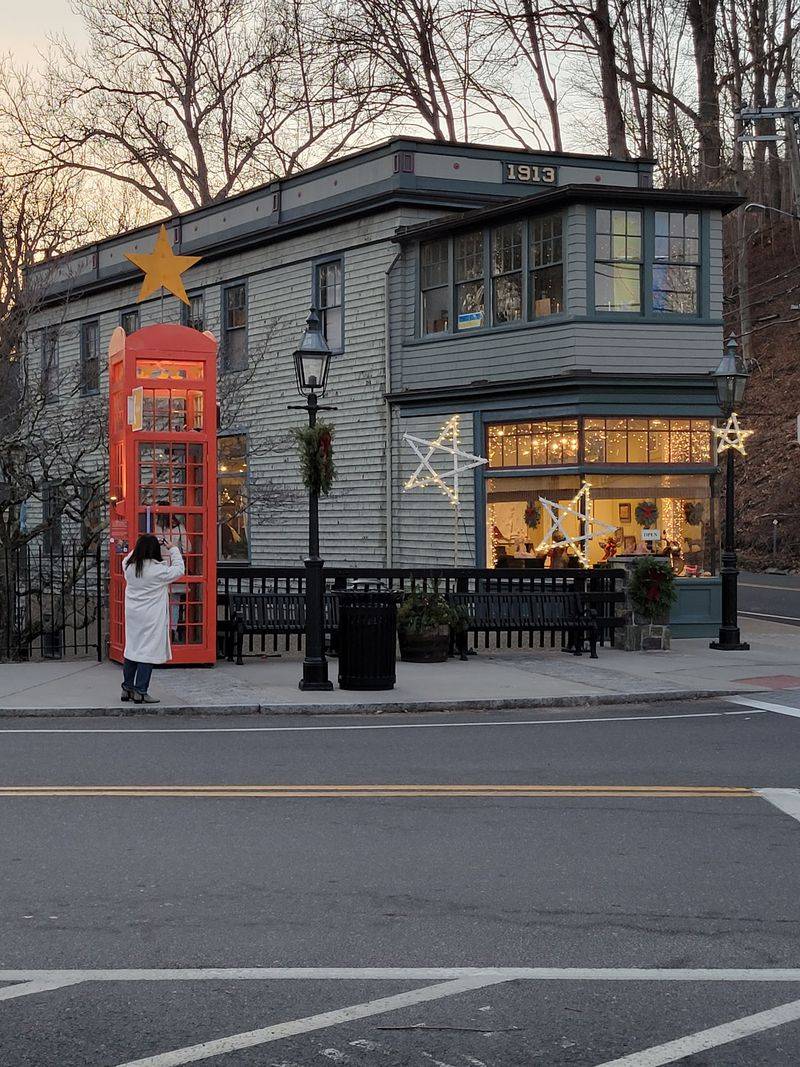
The village can be surprisingly easy to pass by, and that low-key quality is part of the charm.
Its compact center is easy to explore on foot, with independently owned shops and galleries lining Main Street. Chester was first settled in 1692 and incorporated as a town in 1836 after earlier development tied to shipbuilding, sawmills, and other small industries.
Older buildings around the center still hint at that past.
Main Street gives visitors plenty of reasons to slow down. Chester Gallery & Framing showcases paintings, sculpture, works on paper, and custom framing.
Honeycone Craft Ice Cream serves small-batch frozen desserts nearby. Grano Arso adds an Italian dinner stop, with chef Joel Gargano milling New England grains in house for pasta and bread.
The scenery changes quickly beyond downtown. Cockaponset State Forest includes the Pattaconk Recreation Area in Chester, where wooded trails and Pattaconk Lake make it easy to add outdoor time without traveling far.
Another standout is the Chester-Hadlyme Ferry. The crossing has served travelers on the Connecticut River since 1769 and currently operates seasonally between Chester and Hadlyme.
With 3,749 residents counted in the 2020 Census, Chester remains firmly small-town. Its walkable center, historic character, nearby forest, and river crossing create enough variety for an easy day trip without making the town feel crowded or overbuilt.
The town also promotes year-round events centered around its village community.
2. Cornwall, Connecticut
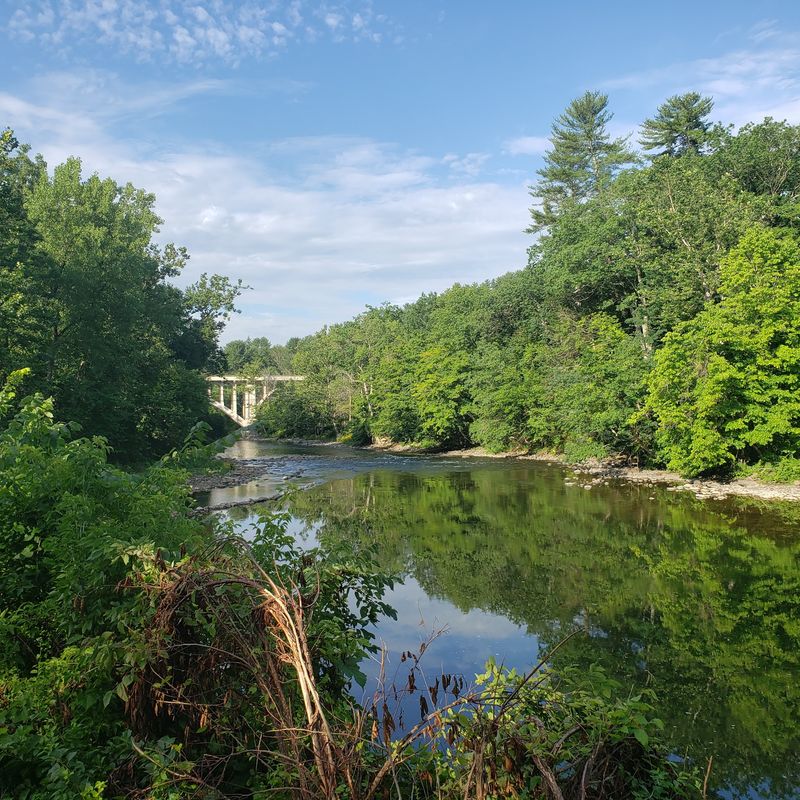
Ask around the northwest hills for a photo that captures Litchfield County. Cornwall’s covered bridge is likely to come up quickly.
The West Cornwall Covered Bridge carries Route 128 over the Housatonic River and remains one of Connecticut’s few covered bridges still open to vehicles. The present structure dates to about 1864 and measures 172 feet long.
Its narrow wooden passage gives each crossing an old-fashioned feel, while local shops and river access sit in West Cornwall.
Cornwall itself is not one village but several, including West Cornwall, Cornwall Bridge, and Cornwall Village, scattered across steep, wooded terrain.
Housatonic Meadows State Park follows the Housatonic with camping, fishing, and cartop boat access, while the Appalachian Trail passes through this corner of northwestern Connecticut.
Mohawk State Forest spreads across Cornwall and neighboring towns, with hiking trails, viewpoints, and a black spruce bog. Mohawk Mountain gives the area a skiing presence during winter, while warmer months bring hikers and paddlers to the hills and river.
A quiet piece of local pride is Cathedral Pines Preserve, a 42-acre old-growth white pine and hemlock forest. Tornadoes in July 1989 destroyed most of its largest pines, but the site was left as an ecological study area.
Designated a National Natural Landmark in 1982, it remains open for hiking, with surviving white pines reaching about 120 to 140 feet.
3. Norfolk, Connecticut
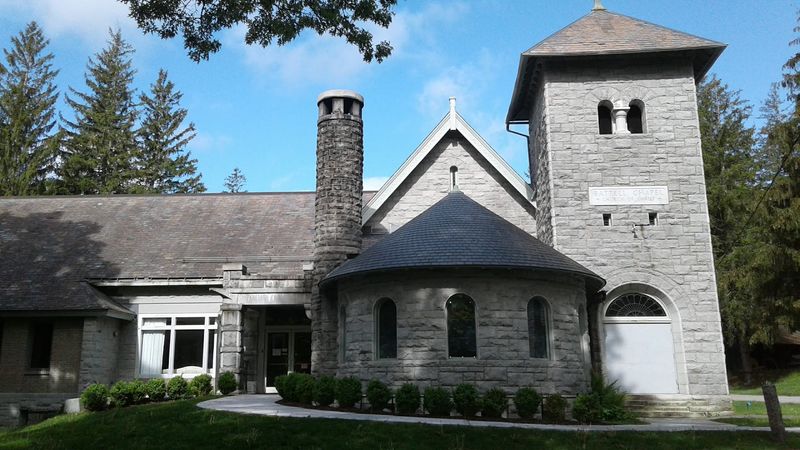
Cooler days come naturally up here. Norfolk sits high in Connecticut’s northwest hills and has long been known for cold winters and mild summers.
Its elevation helped earn it the nickname “Icebox of Connecticut.” By the late 1800s, the cool mountain air and scenery were also drawing summer visitors.
That era left behind striking architecture. Wealthy seasonal residents built country homes, and many historic buildings still surround the village green.
Music became another important part of local life. The Norfolk Chamber Music Festival carries that tradition forward on the Ellen Battell Stoeckel Estate.
Performances take place in the Music Shed, a hall known for its excellent acoustics.
Outdoor escapes begin close to the center. Haystack Mountain State Park has a short route leading to its stone observation tower.
From the summit, visitors get broad views across the surrounding hills. Dennis Hill State Park offers another scenic stop, with hiking, picnicking, and an overlook from its 1,627-foot summit.
Downtown itself is tiny. The Norfolk Library, built in 1888, stands near the green.
Historic buildings and a handful of local businesses make the center easy to explore without much planning.
Winter changes the pace completely. Norfolk is typically colder and snowier than much of Connecticut.
Cross-country skiing is one of the winter activities available at Dennis Hill. For such a small place, Norfolk manages to combine culture, historic character, and outdoor scenery without losing its wonderfully removed feeling.
4. Roxbury, Connecticut
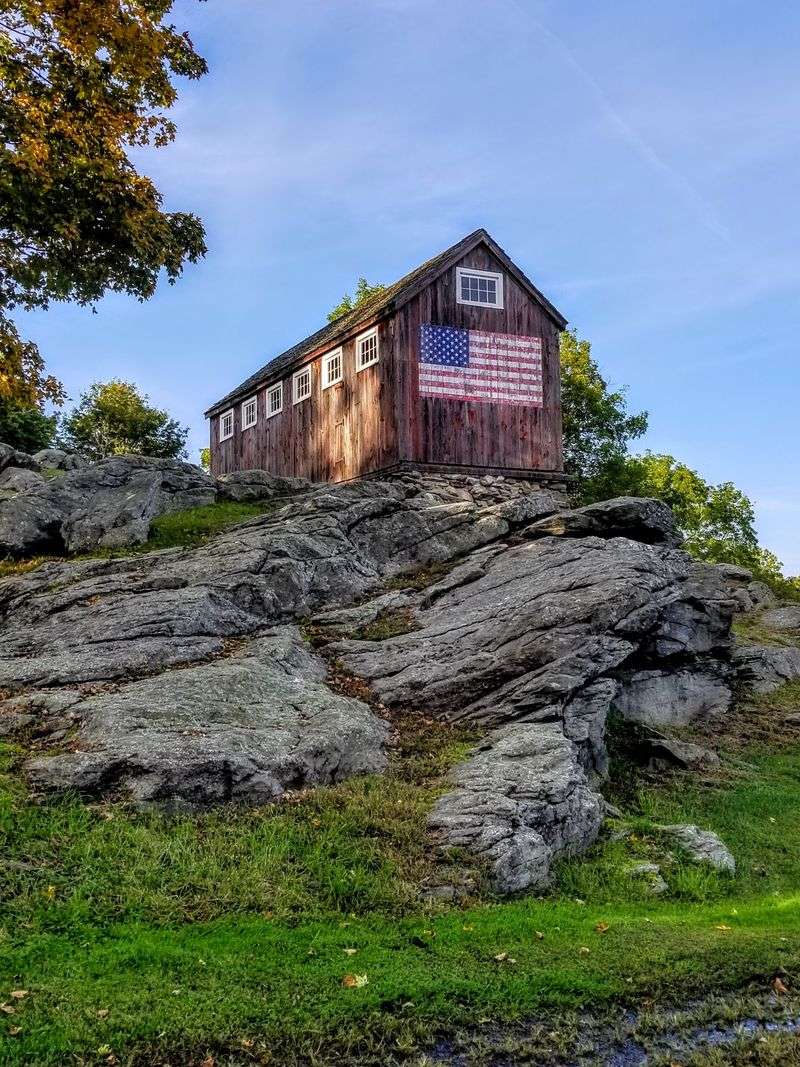
Quiet roads and preserved open land shape the character of this Litchfield County community, where large commercial development remains limited and the landscape still feels distinctly rural.
The 2020 U.S. Census counted 2,260 residents in Roxbury.
Town zoning regulations specifically identify maintaining Roxbury’s rural character as a planning goal, which helps explain the mix of wooded hills, farmland, stone walls, and widely spaced homes.
Settled in 1713 and incorporated in 1796, the town has a long history tied to agriculture, quarrying, and mining. Even today, roads quickly return to fields and forest beyond the small civic center.
For visitors, Mine Hill Preserve provides the strongest reason to stop. The 360-acre property, managed by the Roxbury Land Trust, preserves the remains of a 19th-century iron mine and furnace complex listed on the National Register of Historic Places.
Trails pass a restored blast furnace, roasting ovens, granite quarries, mine tunnels, and other surviving pieces of the former industrial site. Interpretive signs explain how iron was mined and processed here during the operation’s brief heyday.
The Roxbury Land Trust now protects more than 4,000 acres across 32 preserves and maintains about 30 miles of blazed hiking trails. Its conservation work also includes land along the Shepaug River and associated tributaries.
Come for the scenery and quiet rather than a packed sightseeing schedule. The open space itself is the attraction for visitors throughout the year.
5. Redding, Connecticut
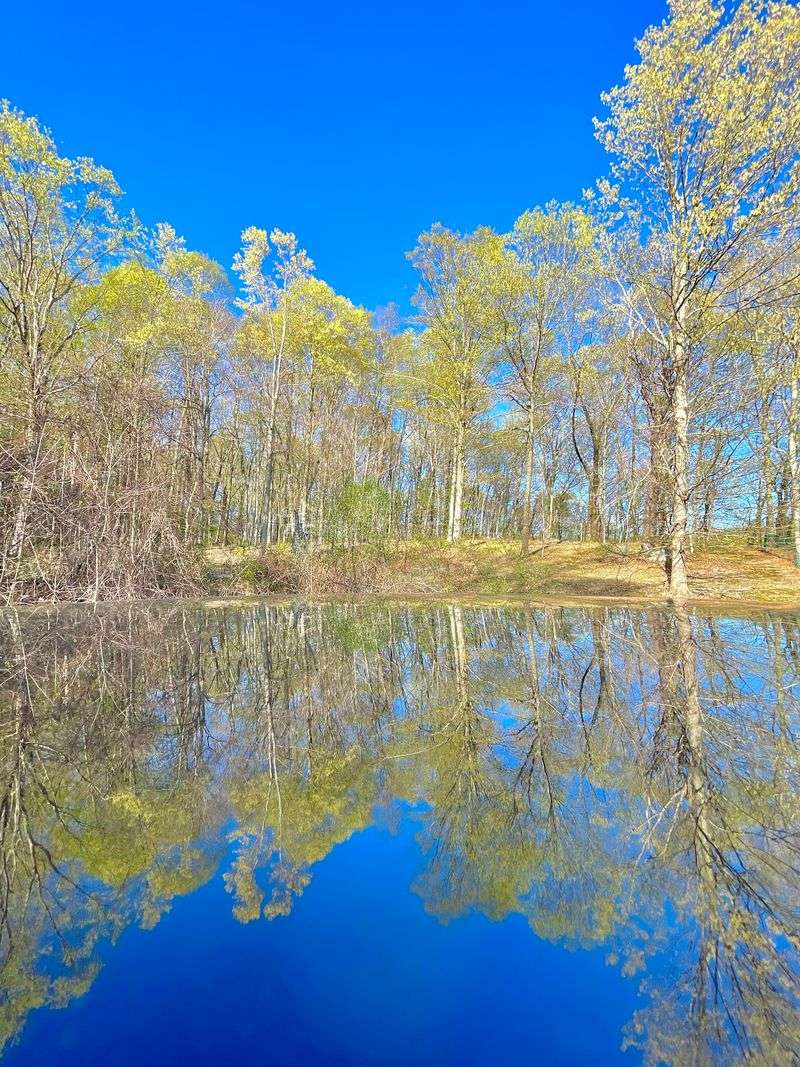
History turns up everywhere here. Redding has literary fame and Revolutionary War stories.
Even so, the town remains surprisingly quiet and easy to overlook. Mark Twain moved here in 1908 and spent his final years at Stormfield.
He also founded the Mark Twain Library that same year, leaving a connection that remains central to local identity.
Another major piece of the past waits at Putnam Memorial State Park. General Israel Putnam’s division of the Continental Army camped in Redding during the winter of 1778 and 1779.
The historic site preserves visible remnants of the encampment, including collapsed stone chimney remains, while museum exhibits display artifacts recovered there. The park entrance is at 499 Black Rock Turnpike, and a one-mile historic loop leads through the preserved camp area.
Nature takes over much of the rest of town. As of January 2026, Redding’s trail guide counted roughly 77 miles of trails on town land and other protected properties.
Saugatuck Falls Natural Area covers more than 300 acres and includes nearly six miles of trails. Devil’s Den Preserve extends across Redding and neighboring Weston, protecting about 1,800 acres.
Do not expect a traditional downtown packed with shops. The appeal is more spread out.
Scenic roads connect historic corners with protected land, and Georgetown adds older mill-era character nearby. That scattered layout may be exactly why Redding stays under the radar.
6. East Haddam, Connecticut
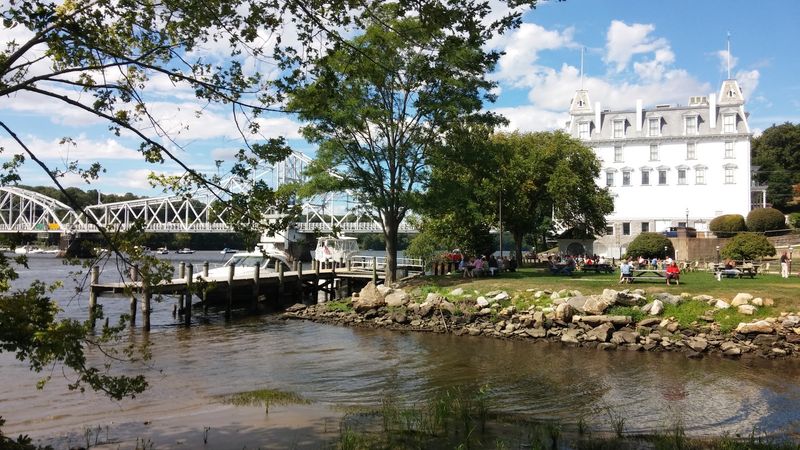
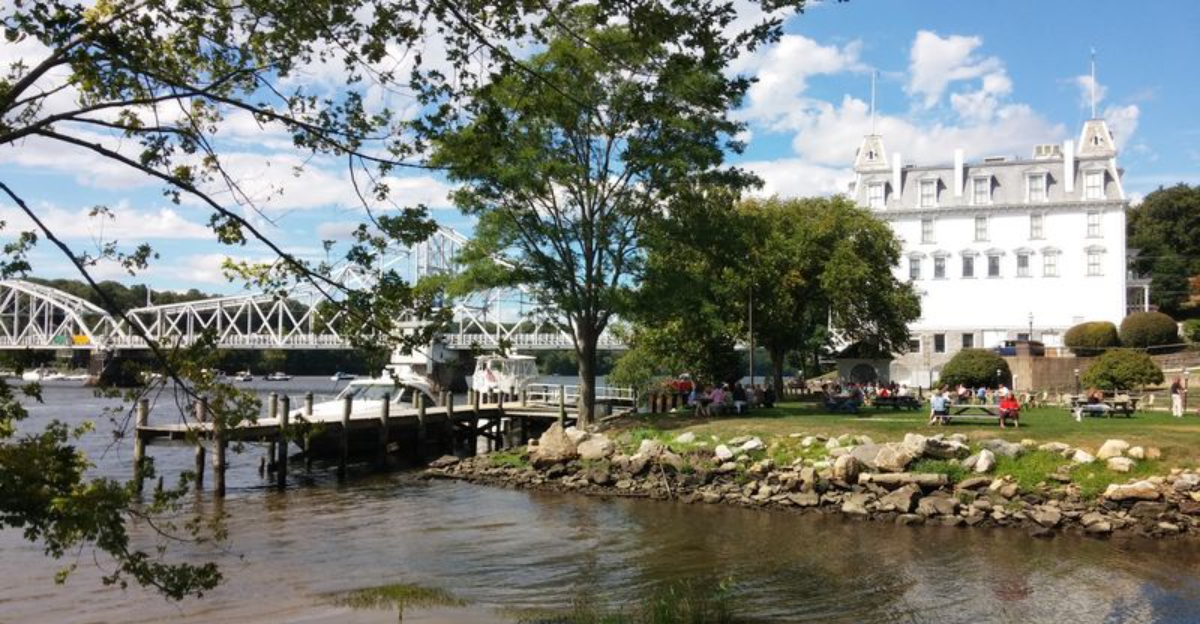
Along a scenic stretch of the Connecticut River, a Victorian opera house, an eccentric stone castle, and forested parkland give East Haddam an unusually varied collection of attractions.
The Goodspeed Opera House, at 6 Main Street, was built in 1876 and towers six stories above the Connecticut River. Restored and reopened as a professional musical theater in 1963, it is now the 398-seat home of Goodspeed Musicals.
The company says 21 of its productions have gone on to Broadway, giving this small-town stage an influence far beyond the river valley.
Across town, Gillette Castle State Park preserves the 24-room fieldstone home designed by actor William Gillette. Construction took five years, from 1914 to 1919.
The castle interior opens seasonally, while the surrounding grounds include trails that follow portions of Gillette’s former three-mile narrow-gauge railroad and scenic overlooks above the Connecticut River.
Nearby, the seasonal Chester-Hadlyme Ferry crosses the river between Hadlyme and Chester. It has carried travelers across this stretch since 1769 and welcomes vehicles, cyclists, and pedestrians.
Devil’s Hopyard State Park adds another natural highlight. There, the Eightmile River drops about 60 feet through the falls and rapids of Chapman Falls, one of the park’s best-known features.
Plan a full day here. East Haddam’s major sights are spread out, and the routes between them pass through a quiet landscape that makes driving part of the visit.
7. Putnam, Connecticut
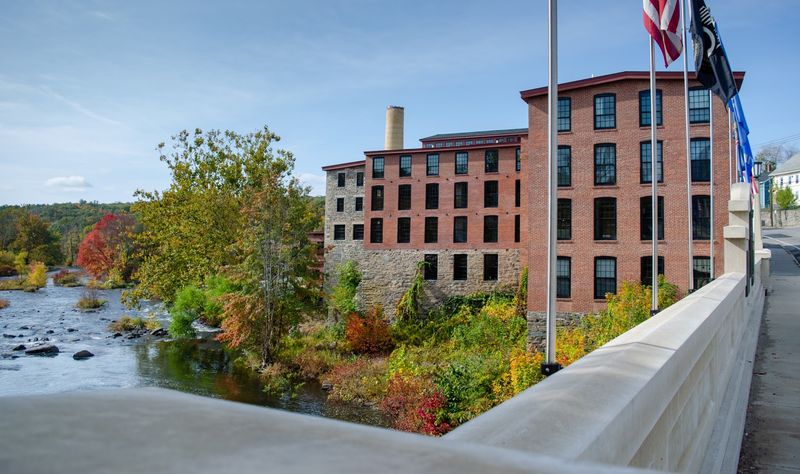
Old brick buildings do a lot of the talking here. Putnam grew beside the Quinebaug River as a busy mill town, but its next chapter turned out to be just as memorable.
When textile manufacturing declined, antique shops and independent businesses moved into many of those former commercial spaces.
That change helped build Putnam’s reputation as a destination for antique hunting. Multi-dealer shops still make it easy to spend hours browsing furniture, vintage decor, and collectibles without covering much ground.
Main Street keeps everything close together, so parking once and exploring on foot works well.
The river adds another reason to linger. The Putnam River Trail follows the Quinebaug through town on a paved route suited to walking and cycling.
Rotary Park sits nearby and hosts seasonal community events when the weather is warmer.
Food fits naturally into the old downtown setting. Cafes and restaurants occupy historic buildings, and some dining rooms still show off details such as exposed brick and original architectural touches.
The town was named for Revolutionary War general Israel Putnam, who lived in nearby Brooklyn. Fall brings especially pretty scenery, but mild days in other seasons work just as well.
Putnam feels lively enough for an afternoon out without losing the small-town character that makes it easy to overlook.
8. Union, Connecticut
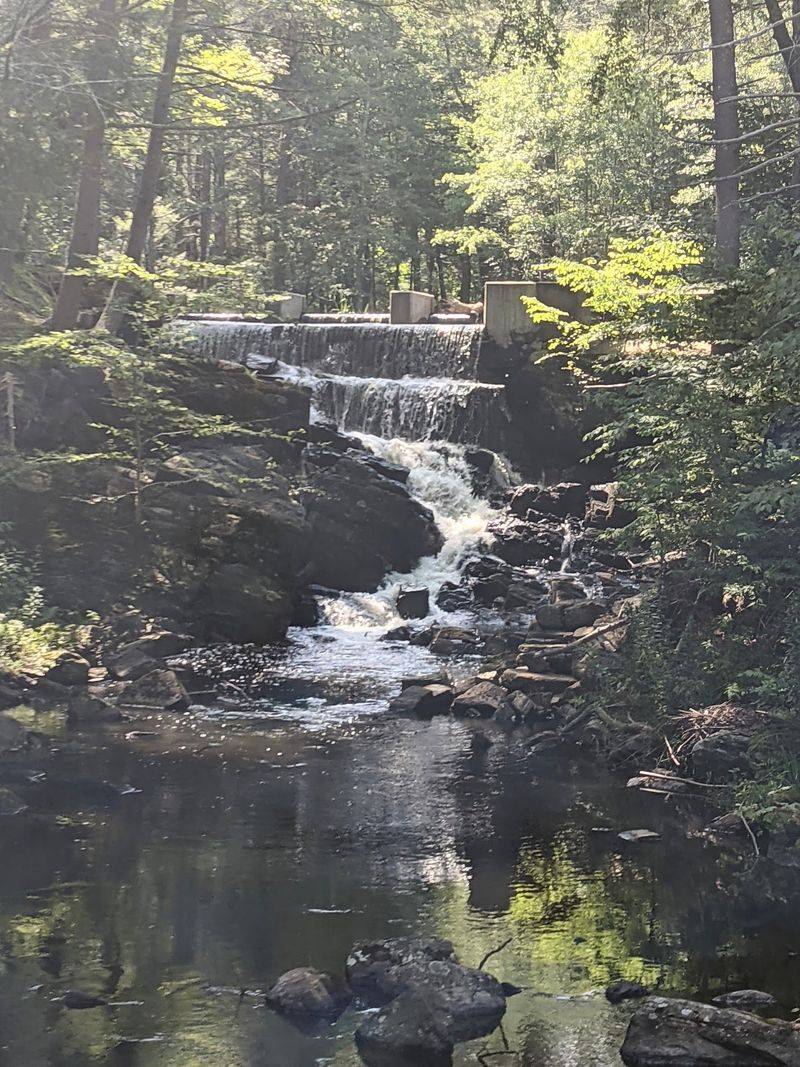
Union holds a distinction that surprises most people: it is Connecticut’s least populated town, with 785 residents counted in the 2020 U.S. Census.
Incorporated in 1734, Union sits along the Massachusetts line in northeastern Connecticut. The town’s own history notes that rough terrain and poor soil delayed settlement, making Union the last town settled east of the Connecticut River.
Lumbering later became a leading nineteenth-century industry, and by 1803 the town had seven sawmills.
Bigelow Hollow State Park and Nipmuck State Forest place Union inside one of eastern Connecticut’s largest unbroken forest areas. Together, the park and forest encompass more than 9,000 acres.
Nipmuck is Connecticut’s second-oldest state forest, with its first parcel acquired in 1905, while Bigelow Hollow’s recreation area was established in 1949.
Bigelow Pond covers about 25 acres. Nearby Mashapaug Lake is much larger, covering roughly 300 acres, and Connecticut maintains a boat launch there.
Boating regulations set a 10 mph speed limit and prohibit waterskiing.
Union remains strongly rural. Its conservation plan notes that the town has no shopping centers or large subdivisions, while the town says about one-third of its area is protected as state park or forestland.
Those protected acres include Bigelow Hollow, Nipmuck State Forest, and the Mountain Laurel Sanctuary, helping preserve the quiet, wooded character that continues to define Union. It supports hiking, boating, fishing, and outdoor recreation.