You Could Spend A Whole Day At This Nebraska Museum And Still Not See All 50,000 Items
A combine from 1890 that once needed 30 horses to pull it sits inside one long farm machinery building. That alone would make a decent day trip.
But it shares the grounds with more than 350 antique cars and 17 historic flying machines.
The collection was put together by one Nebraska man who was born in a sod house. He wanted to show how America grew, and he did not do it halfway.
I like how everything sits in chronological order, so progress unfolds right in front of you.
There are sod walls, steam locomotives, period kitchens, and a carousel with serious history behind it. I believe most people badly underestimate how long they’ll need here.
So how do you tackle 28 buildings in one visit? A little planning goes a long way, and that’s exactly what’s ahead.
A Prairie Museum That Keeps Unfolding Building After Building
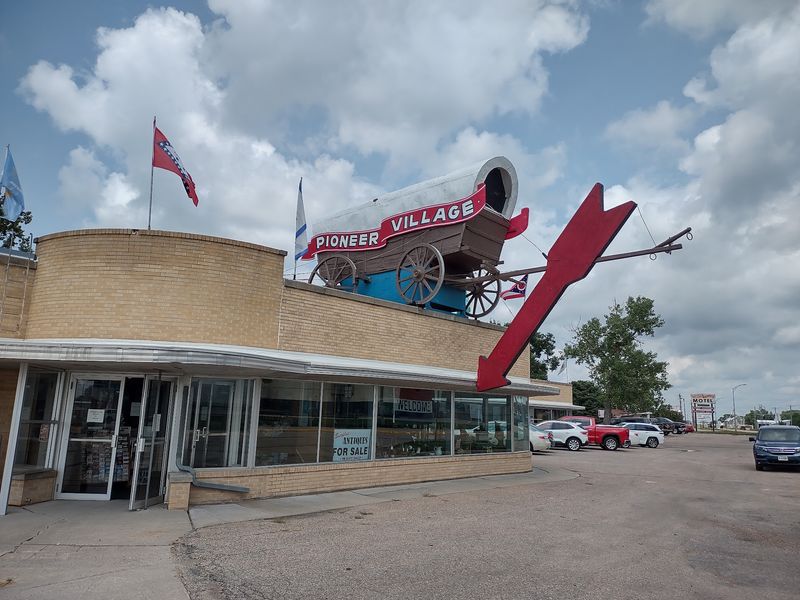
Harold Warp Pioneer Village sits along US Highway 6 in Minden, a small town in south-central Nebraska. The museum covers 20 acres and tells the story of American progress from roughly the 1830s onward.
The headline number is hard to ignore. More than 50,000 items fill 28 buildings, and nearly all of it is arranged by category and date.
That ordering matters more than it sounds. Instead of a random pile of old things, you watch an idea grow up, from a crude first version to something you’d recognize today.
Cars evolve in a line. Kitchens change decade by decade.
Farm tools get bigger, faster, and noticeably less dependent on horses.
Most museums show you highlights. Pioneer Village shows you the whole climb, step by step, and it does so with a frankly wild amount of stuff.
The Google listing simply calls it a museum with exhibits on American history. That’s accurate, though it’s a bit like calling the Sandhills some grass.
Expect antique vehicles, a blacksmith shop, historic homes, and a lot of walking. Comfortable shoes are a smart call before you even pull into the lot.
The Sod House Kid Who Built a Whole Village
Harold Warp was born in a Nebraska sod house in 1903. Few starting points sound humbler, and few lead to a 20-acre museum.
He grew up to become a successful plastics entrepreneur. That business success gave him the means to chase a much bigger hobby.
The spark came in 1948. Warp bought the country schoolhouse he had attended as a boy, and the collecting really took off from there.
By 1953, he had opened Pioneer Village to the public. His guiding theme was simple and ambitious at once: show How America Grew.
That goal explains the museum’s personality. It isn’t a curated sampler built by a committee, but one man’s sweeping private collection.
You can feel that vision in the sheer range. He gathered tractors and teacups, airplanes and art, often with an eye for the first or oldest example.
The schoolhouse that started everything still matters to the story. It turns the whole place into something personal, a Nebraska kid’s way of saying thanks to the world that raised him.
Not a bad legacy for someone whose first home had dirt walls.
More Than 350 Antique Cars Lined Up Like a History Lesson
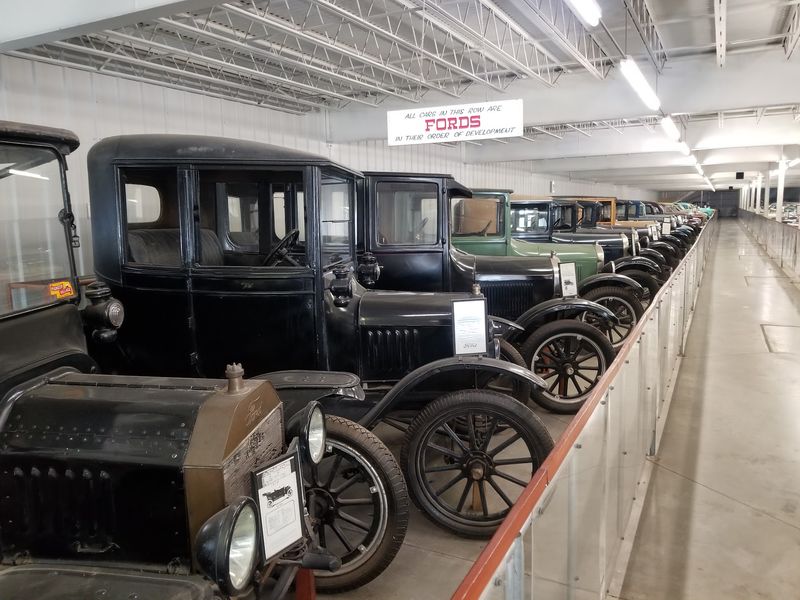
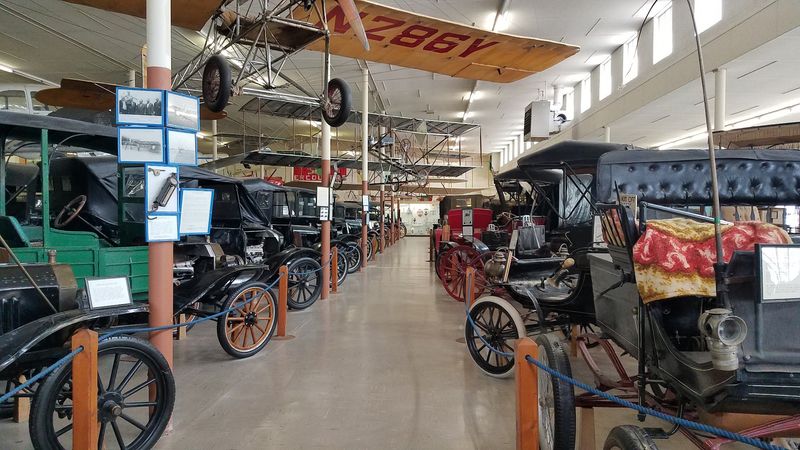
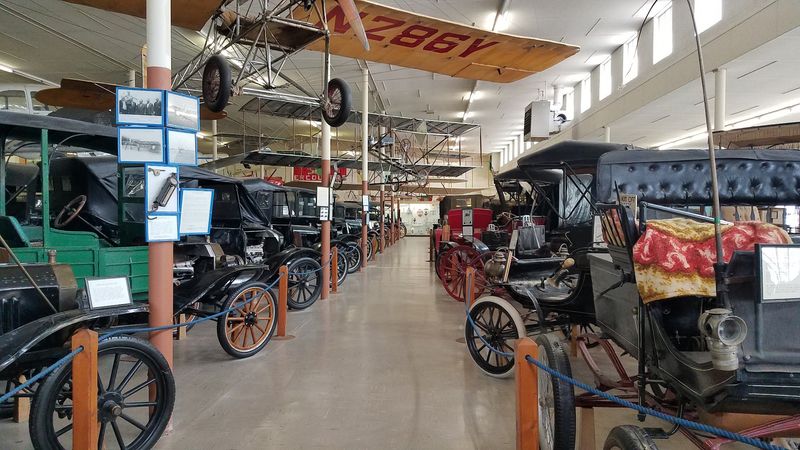
Car lovers, pace yourselves. Pioneer Village holds more than 350 antique automobiles, and they’re displayed in the order they were developed.
Some of the names are genuine showstoppers. The collection includes the world’s oldest Buick, a 1902 Cadillac, and a 1903 Ford.
Seeing them in sequence changes things. You stop looking at individual cars and start noticing how fast engineers kept rethinking wheels, seats, and steering.
Early models look like carriages that forgot their horses. A few rows later, fenders curve, headlights grow, and the cars start looking like they mean business.
Trucks share the spotlight too. There’s also a homemade motor home built about ten years before anyone manufactured one commercially, which is either visionary or extremely stubborn.
Motorcycles and snowmobiles round out the motor section. Each one adds another branch to the same story of getting from here to there.
Cars are the most talked-about part of the museum, and the reason is obvious once you see the scale. Budget real time here, because rushing through 350 vehicles is a recipe for missing that Buick.
Flying Machines and Steam Locomotives Under One Prairie Sky
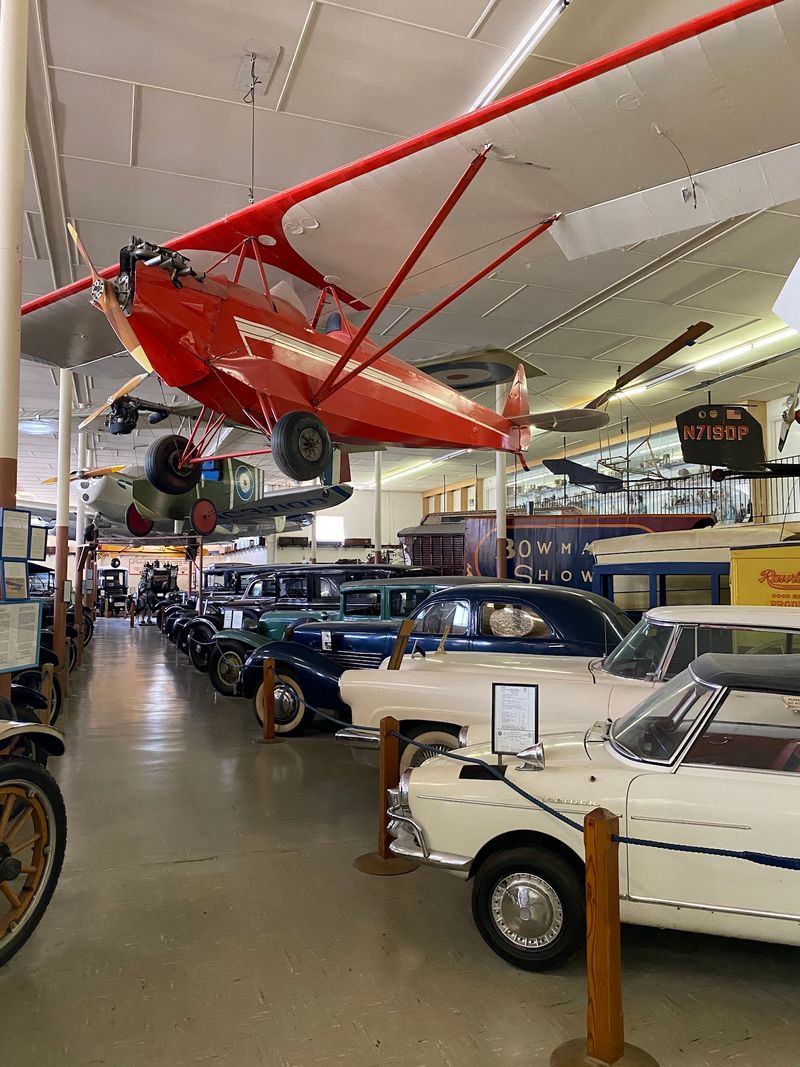
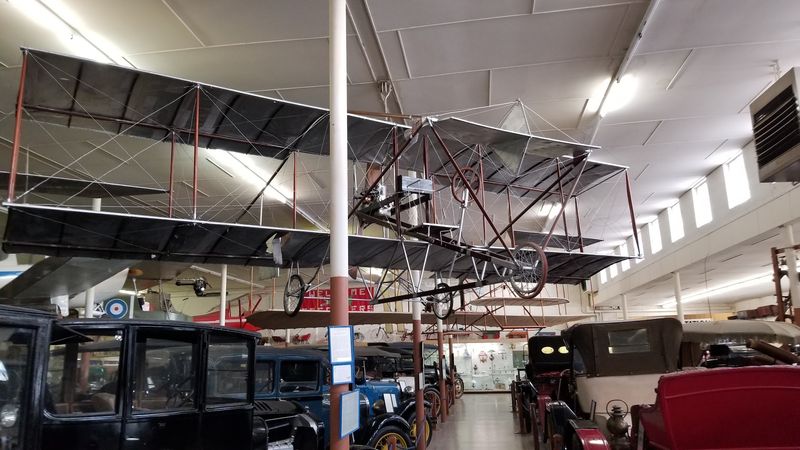
Seventeen historic flying machines live at Pioneer Village. That’s a lot of aviation for a town surrounded by cornfields.
The aircraft tell their own chronological story. You can trace flight from its fragile early days toward machines that look far more confident in the air.
Airplanes are one of the most-mentioned highlights of the whole museum. Kids tend to look up, and here that instinct pays off.
Then there are the trains. The museum displays three steam locomotives, and they bring a heavy, rolling-iron presence to the grounds.
Railroads shaped Nebraska in a big way, so the locomotives feel right at home. They connect the pioneer era to the growth of towns all along the tracks.
Pair them with the covered wagon and horse-drawn carriages elsewhere on site. Suddenly the whole travel timeline clicks, from oxen to engines to wings.
It’s a satisfying sequence for anyone who likes machines. It also works for anyone who has ever wondered how great-grandparents actually got anywhere.
Spoiler: slowly at first, then all at once.
A 265-Foot Farm Building Every Nebraskan Should See
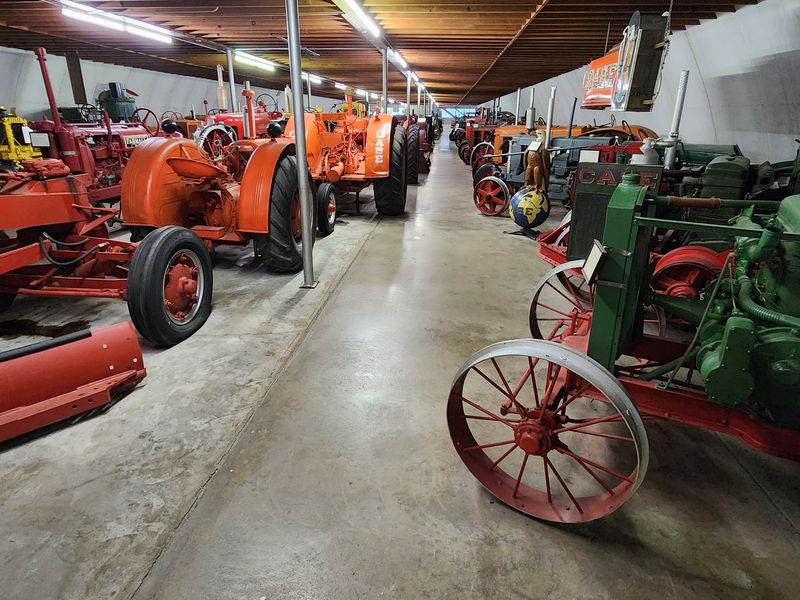
Thirty horses. That’s how many it took to pull the 1890 combine on display in the Antique Farm Machinery Building.
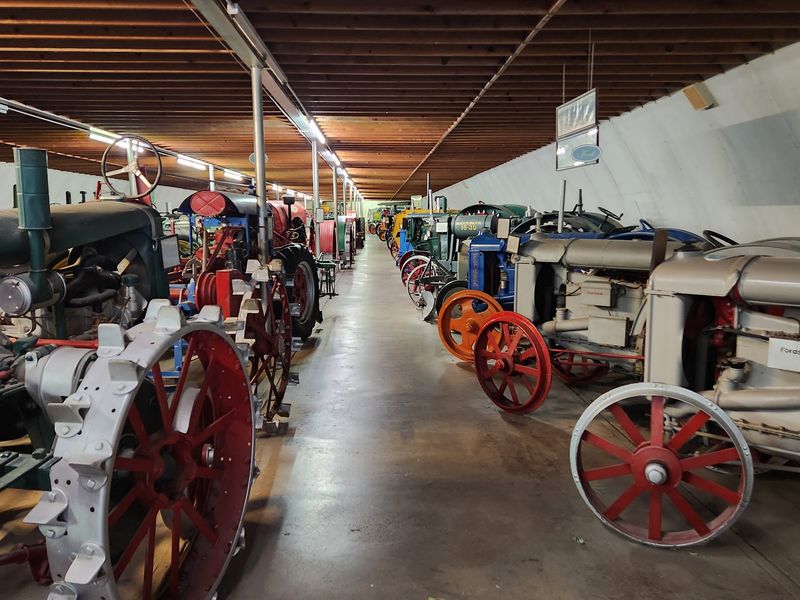
The building itself stretches 265 feet. It needs every inch to show how farming equipment evolved from muscle power to motors.
Around 100 antique tractors are part of the collection. In a state built on agriculture, that lineup feels a little like a family album.
You’ll find sod cutters, harvesting tools, and some rare corn harvesting devices. Anyone who grew up near a Nebraska farm will probably recognize a few pieces from a grandpa’s shed.
The progression is the real eye-opener. Planting and harvesting once took enormous crews and huge animal teams.
Watching the machines shrink the workload, row by row, makes modern farm life look almost suspiciously easy. It also explains why rural towns changed the way they did.
Tractors rank among the most-discussed exhibits, right behind cars and airplanes. Retired farmers and curious kids both seem to find plenty here.
Bring someone who has driven a tractor. Their commentary may be better than any sign.
Twenty Rooms of Kitchens, Parlors, and Bedrooms Through Time
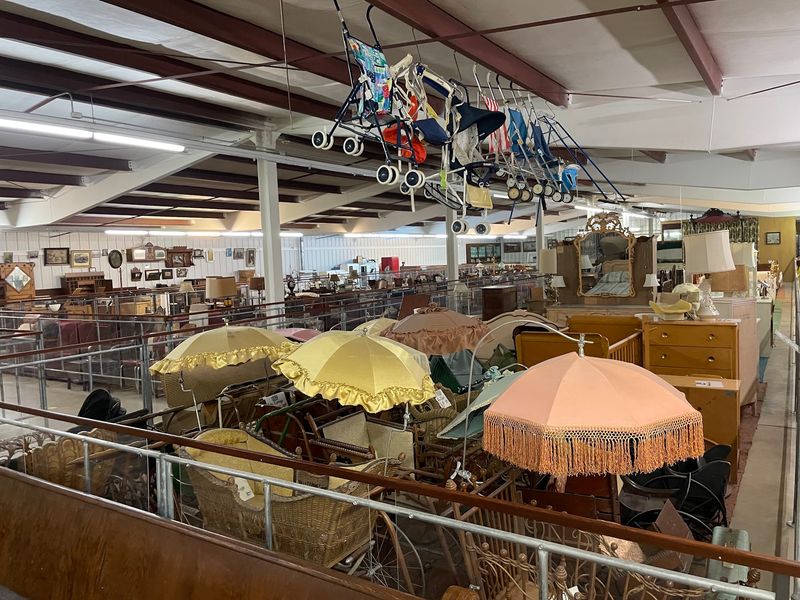
Ever wondered what a kitchen looked like in your great-great-grandmother’s day? The Homes and Shops Building answers that with twenty full rooms.
Each space shows kitchens, living rooms, and bedrooms from different generations since 1830. The rooms are full-sized, stocked with period items from their decade.
It’s the kind of exhibit that sparks conversation. Grandparents point at a radio or appliance and suddenly have a story ready.
Walking past the rooms in order shows small changes adding up. Lighting improves, gadgets appear, and chores slowly get less backbreaking.
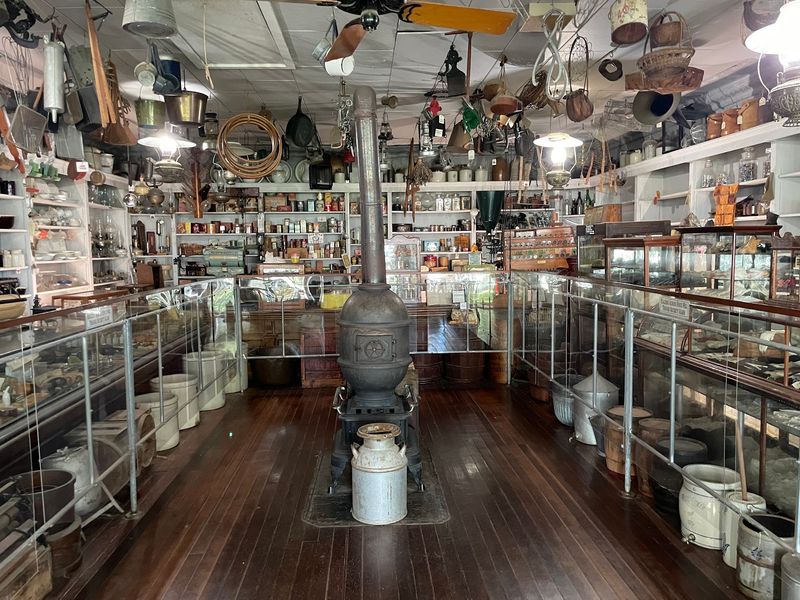
The shops are just as fun. There’s an old-time drugstore, a cobbler shop, and a fully stocked general store with examples of original sale items.
Picking out familiar brands on those shelves becomes its own little game. So does guessing what some of the stranger tools were for.
Beyond the shops, a computer exhibit stands out as a surprise for many people. It carries the same idea of everyday progress into a much more recent chapter.
Plan to linger here. Homes tend to hit closer than engines do.
Real Pioneer Buildings You Can Walk Right Up To
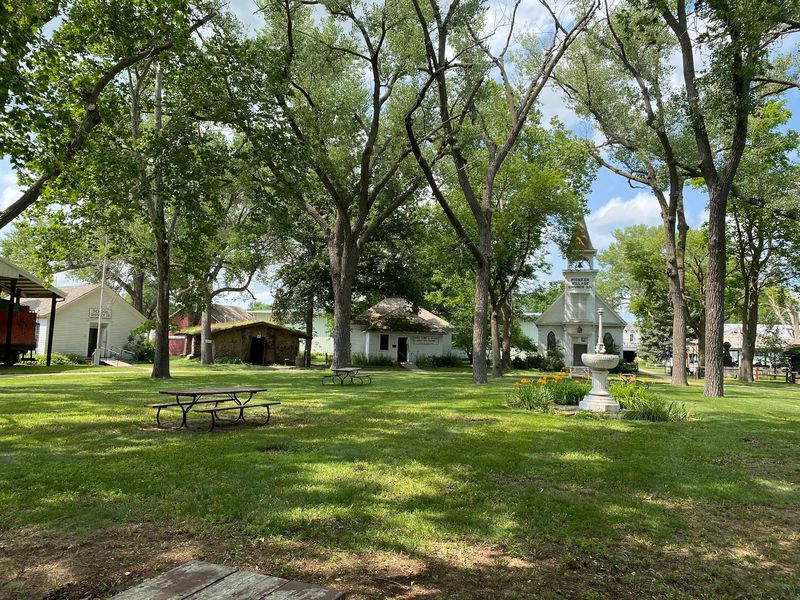
Not every exhibit sits inside a big hall. Many of the structures at Harold Warp Pioneer Village are historic buildings themselves.
A number were moved from their original spots and restored on the grounds. That gives the place the feel of an actual village rather than a single museum.
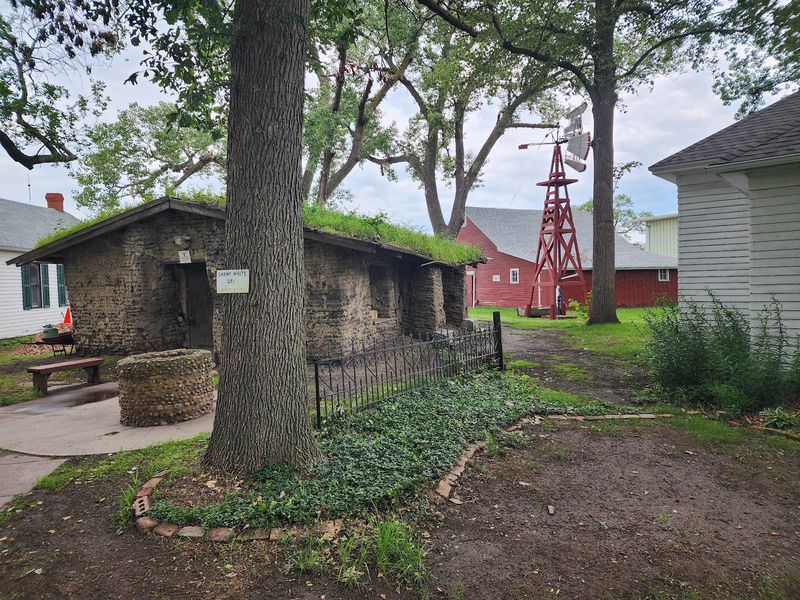
The pioneer sod house is a must. Considering the founder was born in one, it carries extra meaning here.
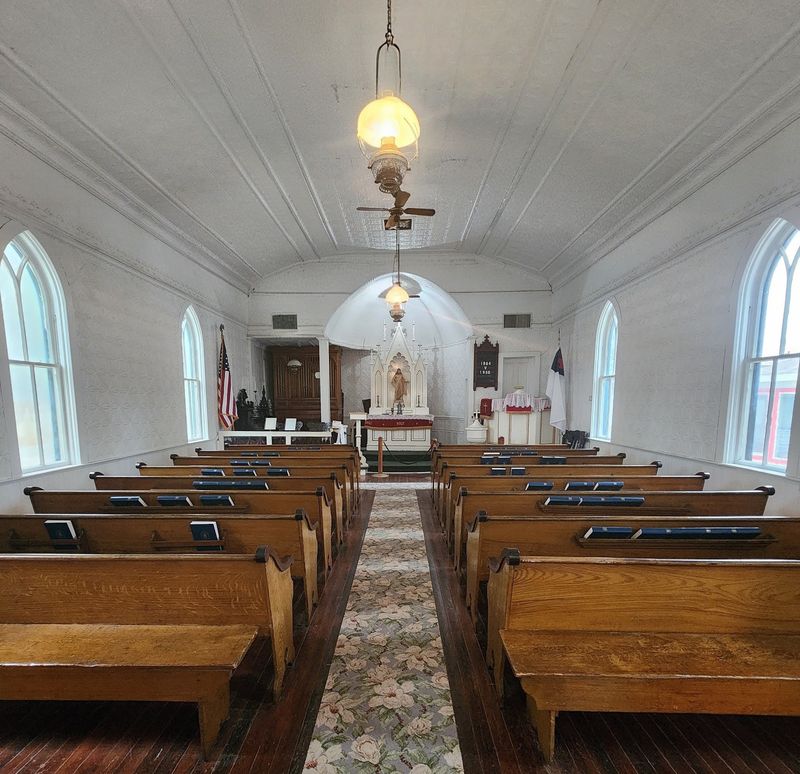
There’s also a Pony Express relay station, a frontier fort, a church, and a one-room schoolhouse. The school connects straight to Warp’s own childhood story.
A working blacksmith shop adds more frontier flavor. It’s a reminder that every town once depended on someone who could shape metal by hand.
These buildings make history feel physical. You get a sense of how small and practical early Nebraska homes and public spaces really were.
Walking between them also breaks up the indoor time. You’ll cover a fair amount of ground, so pace yourself in hot weather.
Sod walls, it turns out, are very good conversation starters.
Currier and Ives Prints and a Record-Setting Statue Collection
Art fans get a quieter treat tucked among all the machinery. Pioneer Village holds 25 Currier and Ives prints.
Those prints were once the popular pictures of American homes. They showed everyday scenes, seasons, and big moments in a style that still feels familiar.
The museum also displays 23 paintings by William Henry Jackson. His work captured the American West during the years so many of these artifacts were in use.
Then comes the collection that earns bragging rights. Pioneer Village has the largest single collection of Rogers statues.
Rogers groups were small plaster sculptures that told little stories. They were a household favorite in the 1800s, a bit like the decorative must-have of their day.
This part of the visit adds texture. It shows how people decorated, celebrated, and pictured their own lives.
Beyond fine art, the museum includes musical instruments, radio and film collections, and plenty of taxidermy. Warp clearly did not believe in narrow categories.
If cars aren’t your thing, this corner might win you over. Everyone deserves a break from carburetors.
A Historic Carousel and a Squirrel Named Moose
Here’s a fun fact for the history buffs. Pioneer Village is home to a historic steam-operated carousel noted as the oldest in the United States.
The carousel has been part of an ongoing restoration effort. These days, kids can ride it, which turns a museum visit into something a little more playful.
Families have another small mission to chase. Kids who spot the squirrel named Moose somewhere in the museum can earn a prize.
It’s a clever way to keep young eyes busy. Hunting for one squirrel among 50,000 items is a real challenge.
Kids also tend to love the vehicles, airplanes, and trains. Bright colors and big wheels hold attention well.
The museum suits a wide range of ages. Grade-schoolers, adult kids, and grandparents can each find their own favorite corner.
A nonprofit foundation now supports repairs and updates across the grounds. Fresh efforts on exhibits, the diner, and the carousel point toward a museum on the upswing.
That’s welcome news for anyone with childhood memories here. Moose, presumably, is thrilled too.
Lunch at the Historic Valentine Diner
Hunger has a way of sneaking up around building number twelve. Thankfully, the Historic Valentine Diner is open on the grounds.
Valentine diners were compact, prefabricated eateries popular in mid-century America. Having one serve classic American fare at a history museum feels fitting.
The diner was updated to serve food again after a period of sitting quiet. It’s easy to reach from inside the museum and from the parking lot.
It serves lunch, generally during a midday window on most days. Checking ahead before you go is wise, since the schedule can vary.
Another handy detail: staff can stamp your arm at admission. That lets you leave for lunch in town and come back to finish.
Minden is small, so a quick meal elsewhere won’t eat up much time. Either way, you won’t have to choose between food and the farm machinery building.
A meal break also helps you stretch the visit. Many folks end up staying far longer than planned.
Refuel, rest your feet, and then tackle those back buildings with fresh energy.
Smart Planning for Hours, Seasons, and a Campground Stay
Half a day is a good minimum. Many people suggest three to five hours, and some say two days is even better.
You’ll find Pioneer Village at 138 E US Highway 6, Minden, NE 68959. It’s a reasonable detour from Interstate 80, which makes it popular with road-trippers crossing Nebraska.
The museum is open year-round, seven days a week. Summer hours run longer between Memorial Day and Labor Day.
Weather deserves some thought. Several buildings are unheated, so cold days call for layers and hot days can feel draining.
Spring and fall tend to be more comfortable for a full day of exploring. Multi-day passes are also available if you want to take your time.
Admission is considered affordable for the size of the collection. Exact rates can change, so check before you head out.
Want to stay overnight? The Pioneer Village RV Park and Campground sits right beside the museum.
It offers primitive sites up to 30 and 50 amp service for units as long as 50 feet. Wake up, walk over, and start again.
Why This Nebraska Original Still Earns the Drive
Some museums take an hour. Harold Warp Pioneer Village politely laughs at that idea.
With more than 50,000 items across 28 buildings, it rewards curiosity in every direction. Cars, planes, tractors, homes, art, and trains all share one patch of Nebraska ground.
What makes it stick is the order. Seeing progress laid out by date turns a giant collection into a story you can actually follow.
It also carries a personal thread. A boy from a sod house built this tribute to how America grew, starting with his old schoolhouse.
Families will find a carousel, a squirrel hunt, and plenty of big machines. Retirees and history fans can spend hours reading signs and comparing decades.
Lunch at the diner and a campground next door make it easy to slow down. Nobody needs to rush through the back buildings.
For Nebraskans, it’s a point of state pride that has been welcoming visitors since 1953. For travelers, it’s a detour that tends to swallow the afternoon.
Either way, wear good shoes. And maybe keep an eye out for Moose.