You’d Never Expect The World’s Largest Hot Springs Pool To Be In Colorado
Hot springs usually sell themselves, but this one has enough scale to make the idea even more tempting.
In Colorado, the main pool stretches hundreds of feet, with warmer soaking areas and other water features adding variety around it.
What convinces me is how easy it seems to make a full day out of one stop.
You can soak, take a break, return later, and still feel like there is more to enjoy. That sounds much better than rushing through another attraction.
Sometimes the most convincing travel idea is simple: warm water, mountain air, and no real reason to hurry.
Big Medicine Before The Bathhouse
Long before ticket booths and towel rentals, the Ute people came to this steaming spot each summer. They called the spring Yampah, meaning Big Medicine, and used its heat for healing.
Captain Richard Sopris and his exploring party recorded the spring in 1860, calling the area Grand Springs.
In 1886, an engineer and his brothers purchased Yampah Spring and 10 surrounding acres and began developing the hot springs resort.
The project diverted the Colorado River around the island, and construction of the aqueduct and pool began in early 1888. The original pool measured 615 feet by 75 feet and opened on July 4, 1888.
The original pool set a world record for its size, while the present Grand Pool continues to be promoted as the world’s largest hot springs pool.
During World War II, between 1943 and 1946, the pool and the nearby Hotel Colorado served as a U.S. Naval Convalescent Hospital.
Sailors recovered in the same warm water guests enjoy today. Major renovations began after new ownership took over in the 1950s, and the Therapy Pool opened around 1960.
You can walk this layered history yourself at Glenwood Hot Springs Pool, 401 N River St where the past is still very much wet.
A Million Gallons Of Warm
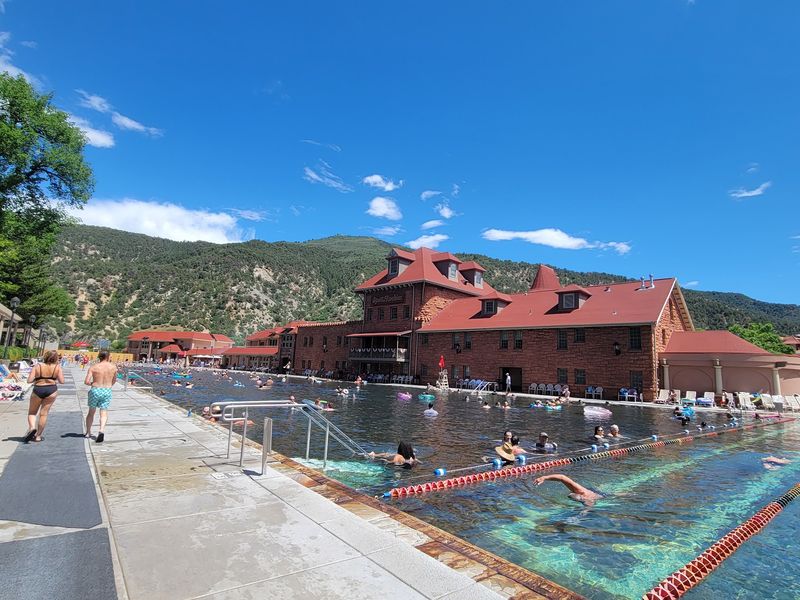
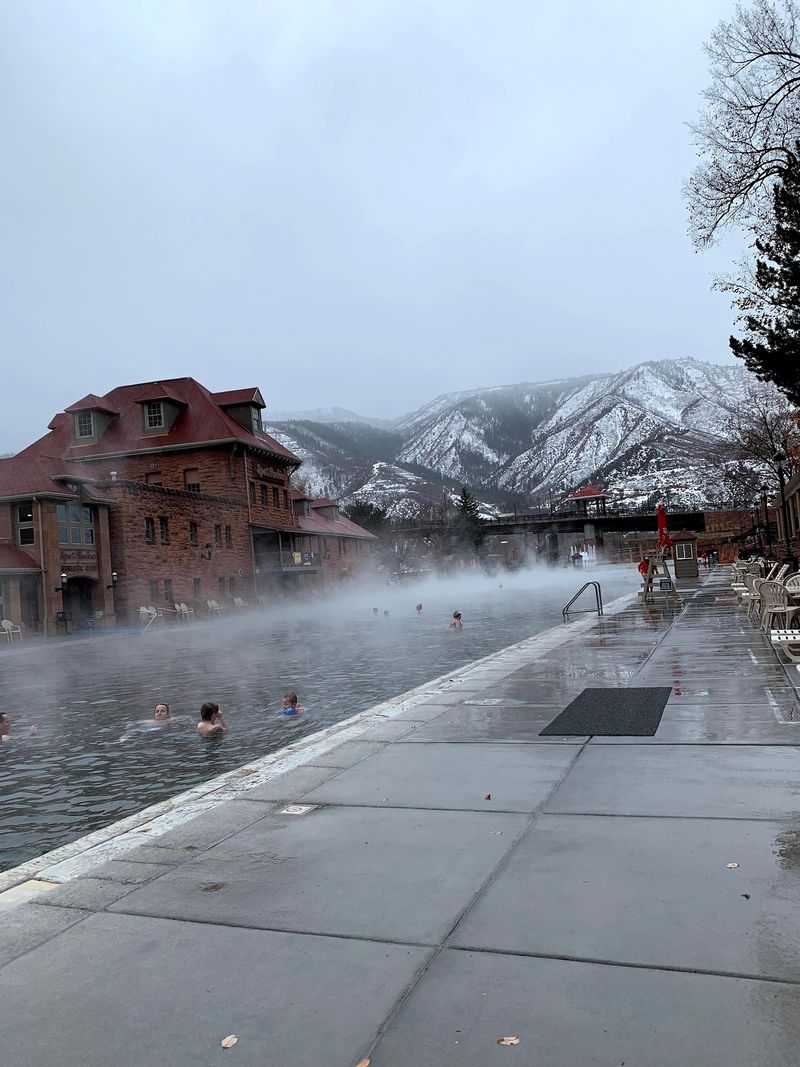
The Grand Pool measures 405 feet long and 100 feet across at its widest point and holds 1,071,000 gallons of water.
Walking its length takes real effort, and swimming it feels like a small workout. The temperature stays between roughly 90 and 93 degrees, warm enough to linger for hours without overheating.
The Grand Pool stays around 90 to 93 degrees and includes designated lap lanes as well as recreational swimming space.
Its large footprint provides extensive swimming and soaking space, even though actual crowd levels vary by day and season.
The Grand Pool has a diving area at the west end and receives mineral water from Yampah Spring, with fresh water also added for cooling.
The pools are filtered and purified continuously, with water treatment equivalent to a complete changeover every six hours.
The resort uses chlorine for disinfection along with filtration and an ozone system that reduces the amount of chlorine required.
Where Sore Muscles Surrender
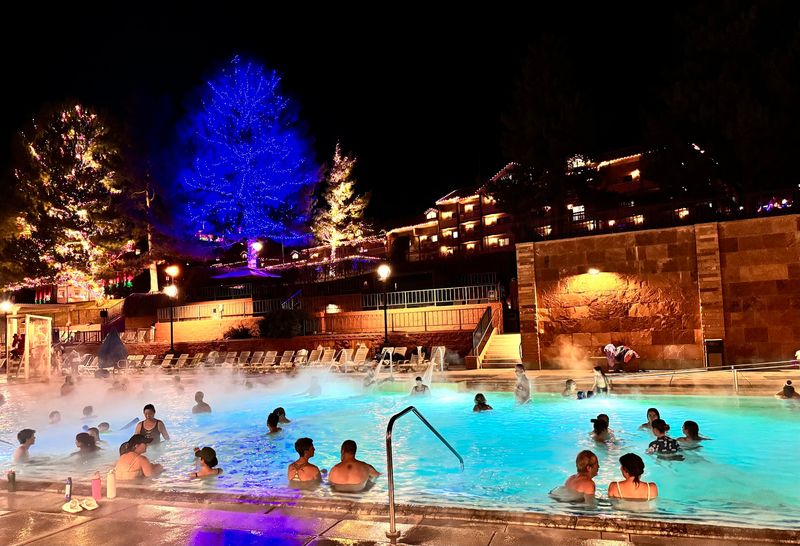
Hikers, skiers, and anyone who spent the day in a car will find their happy place in the Therapy Pool. Held at a steady 104 degrees, it sits right beside the Grand Pool and runs 100 feet by 40 feet.
At 100 feet long and 40 feet wide, the Therapy Pool is considerably smaller than the Grand Pool and stays at approximately 104 degrees. The rules here favor calm, so splashing is discouraged and the mood stays hushed.
The Therapy Pool includes submerged seating, therapy jet chairs, and power shower clusters designed to direct water toward the upper body.
Power shower clusters direct water toward the shoulders, neck, and upper back. Several guests rotate slowly between spots, chasing whichever jet feels best.
Visitors can move between the 104-degree Therapy Pool and the cooler Grand Pool, which stays around 90 to 93 degrees.
The Therapy Pool holds roughly 91,000 gallons, a fraction of the Grand Pool’s 1,071,000, which is why the smaller pool can be kept so much warmer. Evening conditions vary with weather, attendance, and season.
Five Pools, Infinity Edges Included
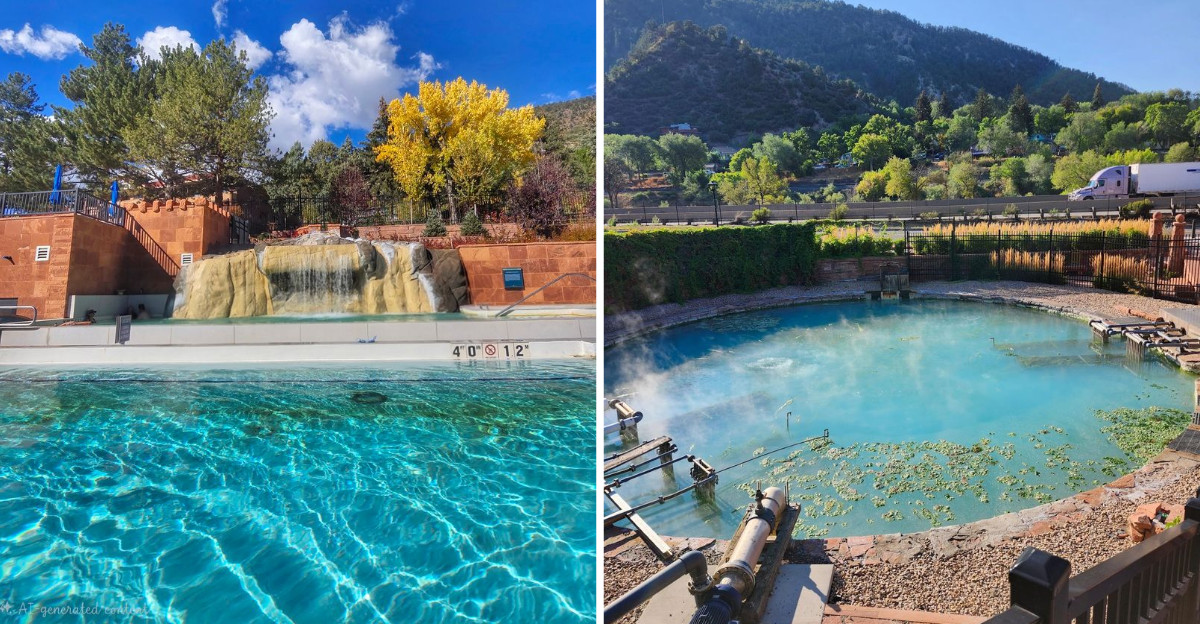
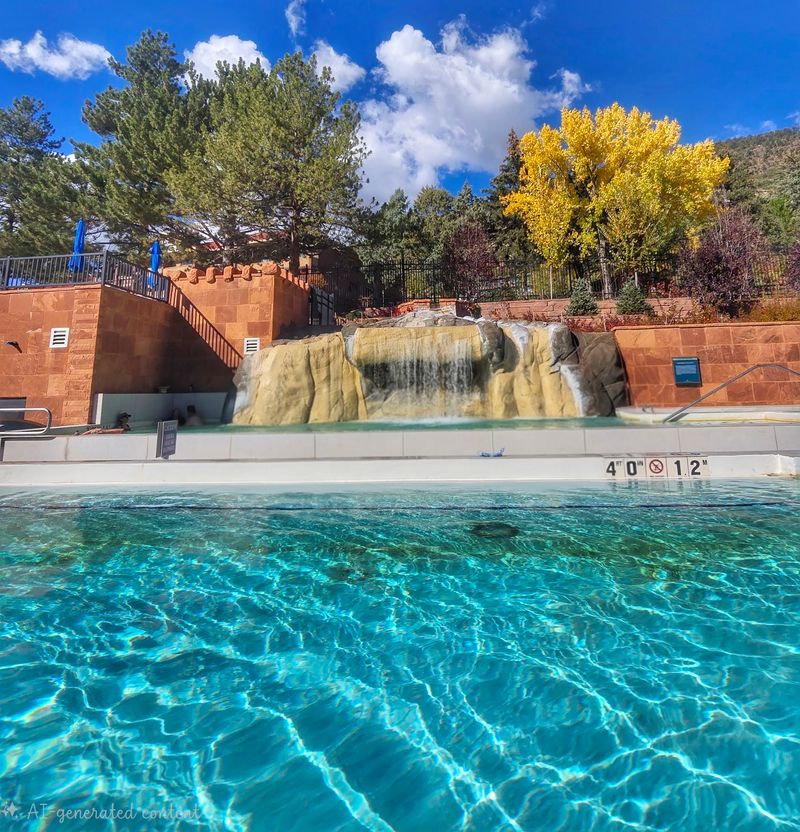
Opened in May 2024, the Yampah Mineral Baths add five pools with different temperatures, waterfalls, infinity edges, and a natural stone grotto.
Waterfalls spill over stone, infinity edges blur into the view, and a grotto tucks into the rockwork. Design details like these feel unexpected at a property with such deep roots.
Temperatures vary widely across the five pools. The Inhale cold plunge ranges from 52 to 60 degrees, while Exhale ranges from 75 to 80 degrees. The warmest pool, Cascade Waters, ranges from 100 to 104 degrees.
The five-pool layout allows visitors to move between cool and warm water at their own pace. Access to the mineral baths carries no additional fee and requires no reservation, so guests can drift between the pools whenever they like during their visit.
Yampah Mineral Baths is open to all ages until 5 p.m. and becomes an adults-only area for guests 18 and older after that time.
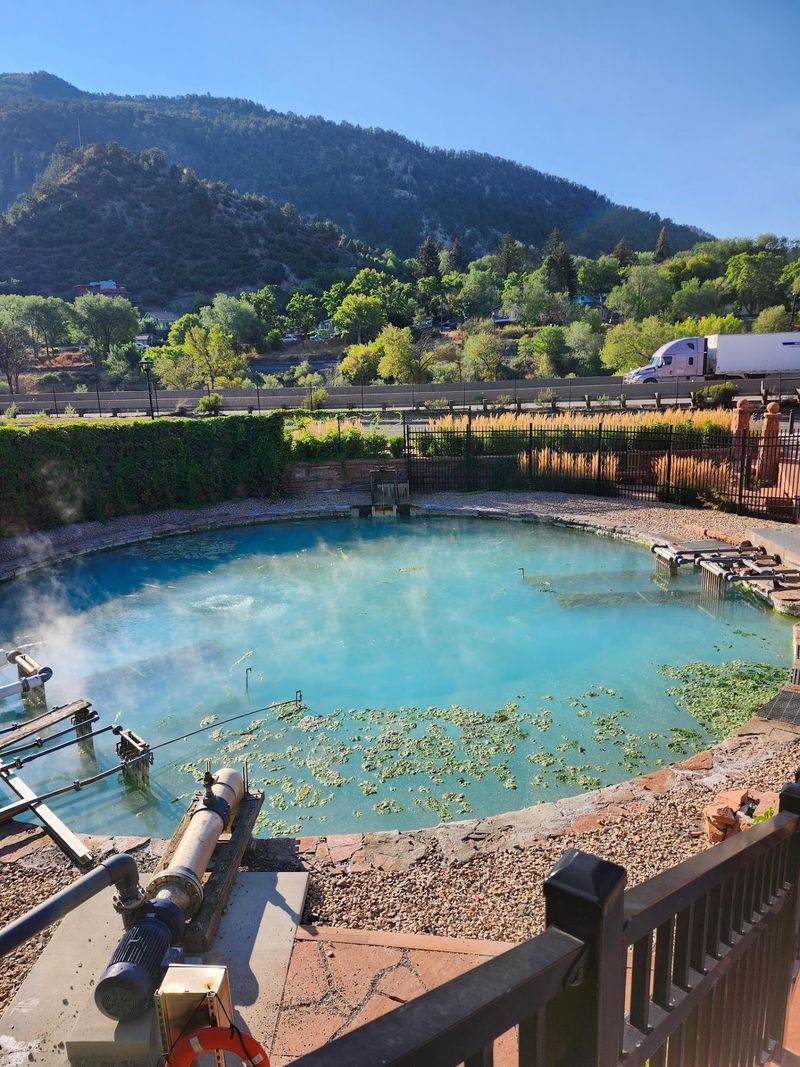
Yampah Source Spring can be viewed nearby, while the separate drinking spring allows guests to fill water bottles and sample the mineral water.
Tubes, Chutes And Kiddie Falls
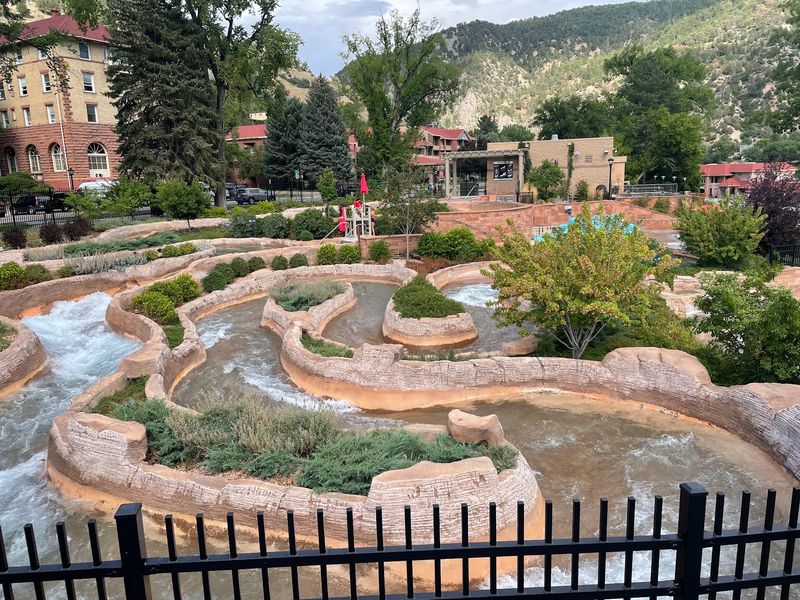
Sopris Splash Zone opened in 2019 with three family-oriented areas.
In September and October 2026, it is currently scheduled to operate on weekends from noon to 5 p.m., weather and staffing permitting.
The centerpiece is the Shoshone Chutes, a moving river ride roughly 700 feet long. Walls along the route echo the rock formations of Glenwood Canyon, which is a nice nod to the surrounding scenery.
Riders use one- or two-person tubes on the approximately 700-foot Shoshone Chutes ride, which lasts about 2.5 to 3 minutes.
Younger swimmers gravitate toward Hanging Lake Falls Pool. Its zero-depth entry lets toddlers wade in slowly, and small waterfalls invite them to duck underneath and giggle.
The younger-children area includes zero-depth entry, three small slides, waterfalls, interactive water features, and shaded play areas.
The Grand Fountain serves as a splash pad by day, sending water about seven feet high, and becomes an illuminated fountain after dark with sprays reaching up to 17 feet.
Fifteen Minerals Rising From Below
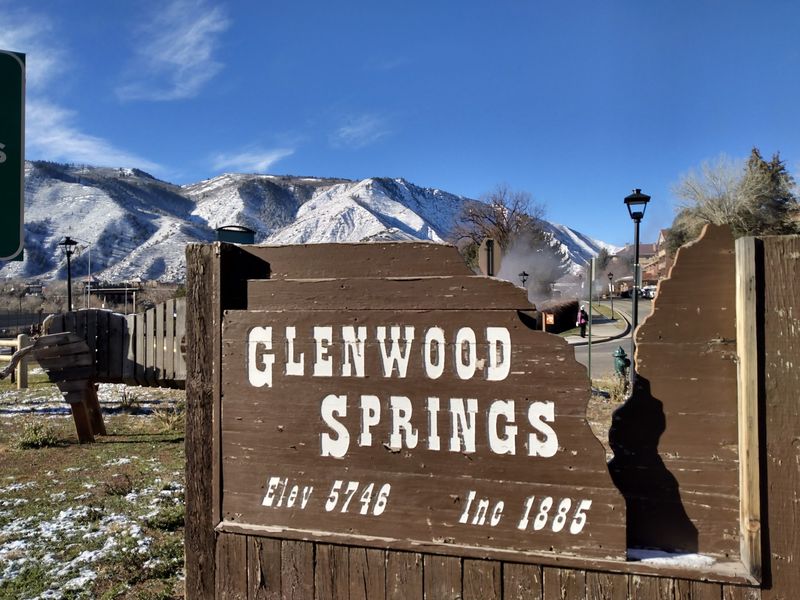
Yampah Source Spring produces about 3.5 million gallons of water each day at approximately 122 degrees.
It emerges at a blistering 122 degrees. Before reaching any pool, the water is cooled to temperatures people can actually enjoy.
Chemistry explains much of the appeal. Fifteen dissolved minerals occur naturally in the water, including calcium, magnesium, potassium, lithium, silica, zinc, iron, sodium, sulfate, boron, chloride, manganese, fluoride, phosphate, and nitrogen.
Sulfur compounds in the mineral water create its characteristic mineral odor. Balneology refers to the study and therapeutic use of mineral bathing, a tradition with roots in ancient bathing cultures.
Yampah is the Ute name for the spring and translates as “big medicine,” which the resort still uses in telling the site’s history.
The spring earned its Ute name for a reason, and generations have kept returning. The resort uses both chlorine and ozone as part of its water-treatment system, with ozone helping reduce the amount of chlorine required.
Two Rivers, One Mountain Backdrop
Geography does a lot of heavy lifting at this place.
Glenwood Springs lies at the confluence of the Colorado and Roaring Fork Rivers, while the resort sits beside the Colorado River near downtown.
The pool complex is surrounded by the mountain landscape of the Glenwood Springs valley, with distant views toward the surrounding ridges.
Water feeding Yampah Spring originates south of the Colorado River in the Lookout Mountain and Grand Hogback areas, moves through fractures into the Leadville aquifer, and is heated by the local geothermal gradient before reaching the surface.
The water travels through a deep fractured aquifer before emerging at the spring, but the article should not assign it a specific age without a supporting study.
A pedestrian bridge links the resort area with downtown Glenwood Springs and the train station across the river.
That setup makes the pool one of the few Colorado attractions you can reach on foot straight from an Amtrak platform, without a car at any point.
The pedestrian bridge also provides a convenient walking connection for travelers arriving by train.
Smart Tips Before You Soak
The pools are currently open daily from 9 a.m. to 9 p.m., and a Day Pool Pass allows guests to leave and re-enter throughout the same day.
That flexibility is worth planning around. The all-day re-entry policy makes it possible to leave the resort and return later, but crowd levels vary and should not be predicted for a specific hour.
Changing facilities and complimentary lockers are available, while towels can be rented or purchased in the pool lobby.
The Shop carries swimsuits, goggles, flip-flops, pool toys, clothing, souvenirs, and other pool accessories. Outside food is not permitted in the pool area, while meals and snacks are available from the resort’s on-site food outlets.
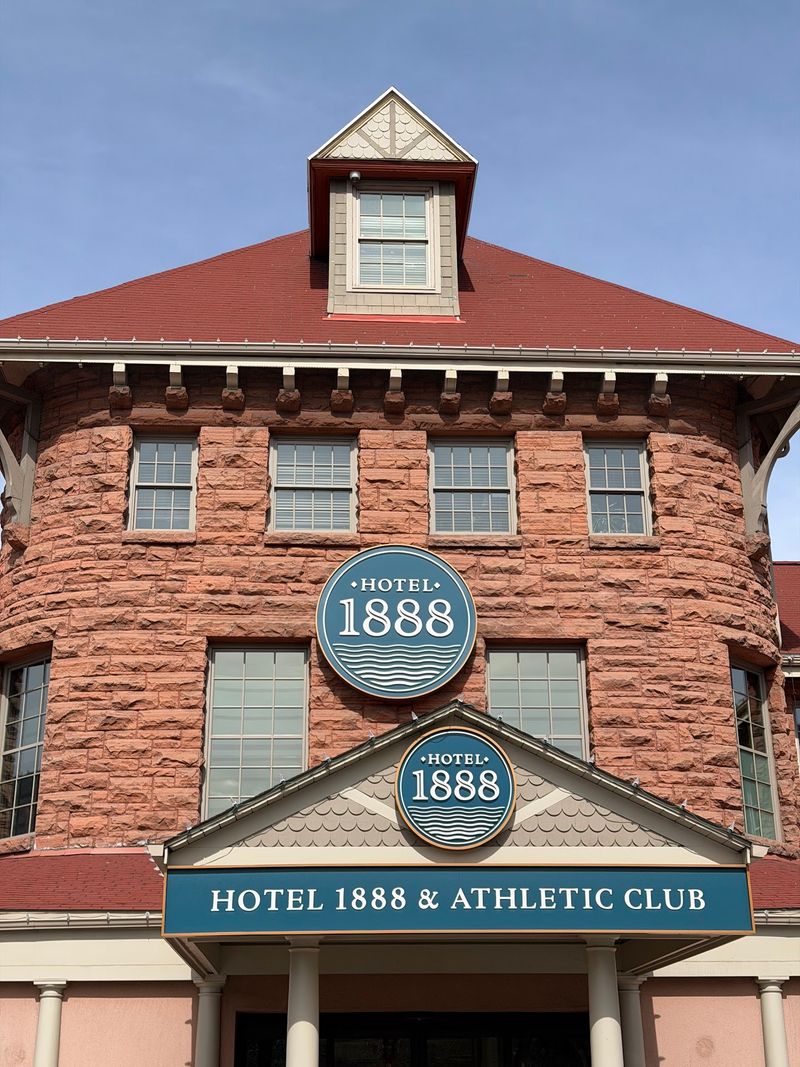
Overnight options include the renovated 107-room Lodge and the 16-room Hotel 1888 inside the historic Stone Bath House. Stays at both include unlimited pool access during operating hours.
The resort can be reached by car or by train, with the pedestrian bridge providing a walking connection from the station.