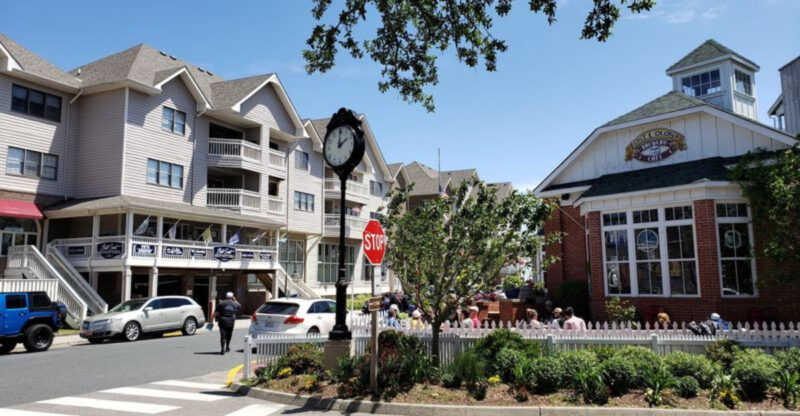
You’d Never Guess America’s 7th President Was Born In This Tiny North Carolina Town
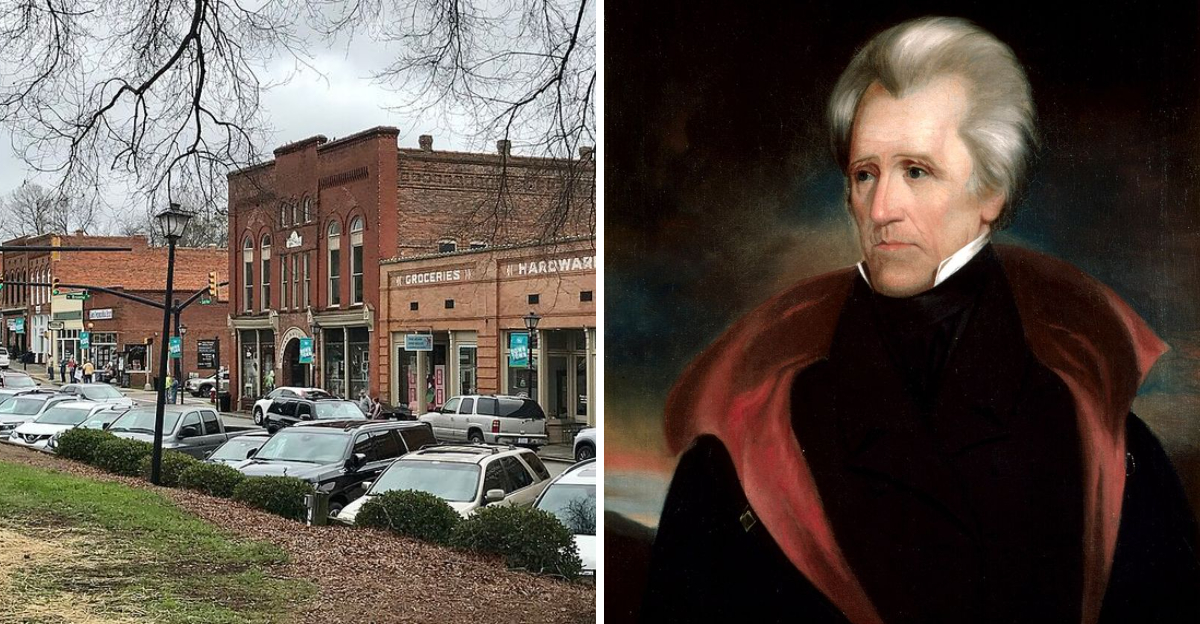
There is a presidential mystery hiding in the countryside, and the answer depends on which side of an old argument you believe.
More than two centuries ago, a boy was born somewhere around this stretch of North Carolina backcountry. He would eventually become the seventh president of the United States, but identifying the exact patch of earth where his story began has kept historians busy ever since.
That makes wandering around here unexpectedly fun.
A monument might send you down one version of the story. A few blocks later, another detail complicates it again.
Meanwhile, the town carries on with old storefronts, quiet streets, and the sort of places that tempt you to stop for something sweet before continuing your investigation.
You do not need to be a history obsessive to get pulled in. The mystery does most of the work.
Somewhere around here, one of America’s most famous political lives began.
Finding out just how uncertain that “somewhere” really is makes the story much better.
Trace The Surprising Connection To America’s Seventh President
Few frontier stories begin as dramatically as this one. Andrew Jackson Sr. and his wife Elizabeth, known as Betty, were Scots-Irish immigrants who reached the Waxhaw settlement in 1765 hoping for land and a steadier future.
Their arrival placed them among farmers carving fields out of thick woods.
Hardship came quickly. Andrew Jackson Sr. died in late February 1767, leaving Elizabeth grieving and expecting a child.
She traveled to bury him at the Old Waxhaw Presbyterian Church, and it was on the return journey that she gave birth to her son.
That baby, born March 15, 1767, grew up to become the seventh president of the United States. Old Hickory, as he was later called, entered the world in a corner of the backcountry where survival came first.
Nothing about the setting suggested a future leader: no columns, no marble, just cabins, creeks, and hard-earned harvests.
The Waxhaws region historically stretched across parts of two Carolinas, which is why the family’s story belongs to a place rather than a single address. Standing in Waxhaw today, you sense how ordinary that beginning truly was.
Follow The Story Back To The Carolina Backcountry
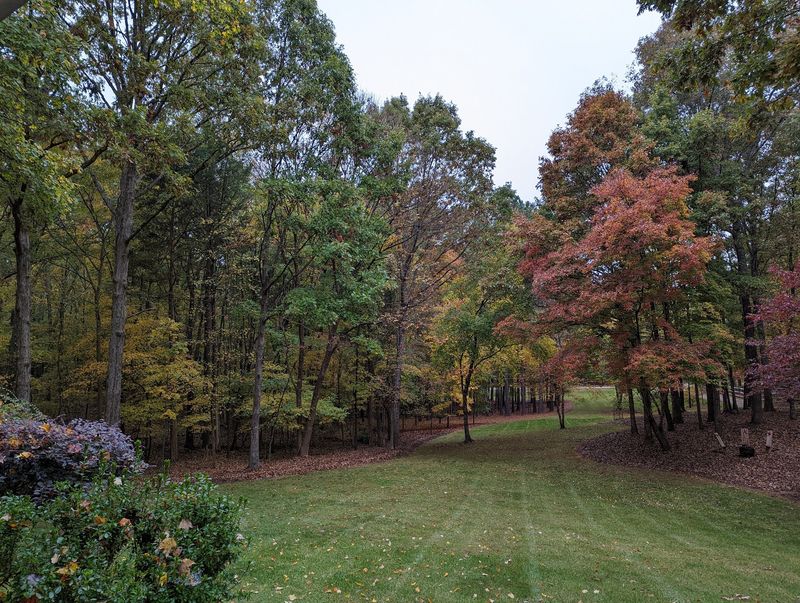
Picture dense forests, quick-running streams, open woodlands, and clearings won with an axe. That was the backcountry the first Scots-Irish families met when they arrived in the mid-1700s, many traveling south along the Great Wagon Road from Pennsylvania.
Life meant building shelter, breaking ground, and raising crops far from established towns. These were ancestral Native American lands, and settlement brought both opportunity and conflict.
Trade eventually threaded through the region as part of an early American trader’s path linking Petersburg, Virginia, with Augusta, Georgia. Wagons, livestock, and news moved along those routes, tying isolated farms to a wider world.
The interior grew fast, eventually holding about 40 percent of the colony’s population, yet representation lagged far behind. Frustration fed the Regulator movement, and after conflicts with the Cherokee in the 1760s, lawlessness pushed law-abiding settlers to organize as Regulators to restore order.
Preachers, farmers, and patriots shared the same muddy roads, and their grit shaped the character of the entire settlement. Understanding that rough, unfinished world explains why a boy born here grew up tough.
Learn Why Andrew Jackson’s Exact Birthplace Is Still Debated
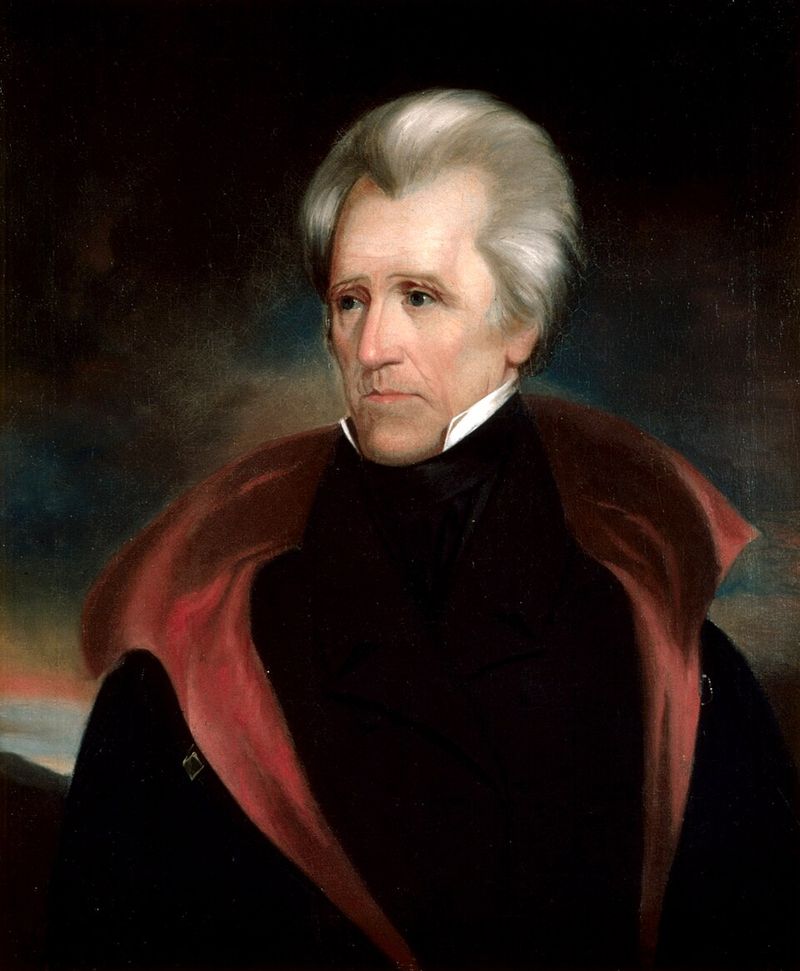
Historical mysteries rarely stay this lively after more than 250 years. Two sites anchor the disagreement: the Crawford Plantation in Lancaster County, South Carolina, and the George McCamie cabin in what is now Union County, North Carolina.
Both claims have supporters who argue with real conviction.
The core problem is simple. When Jackson was born in 1767, the official state line had not been surveyed or settled.
Families farmed the Waxhaws without knowing which colony would eventually claim their fields.
Jackson himself said he was born in South Carolina. Some historians suspect that political tensions between that state and the federal government during his presidency shaped the way he told it.
A strong oral tradition points the other direction, including testimony handed down from the mother of the midwife present at the birth, placing the event at the McCamie cabin.
The Museum of the Waxhaws takes a graceful position, recognizing that Jackson was born somewhere within the wider Waxhaws borderland shared by both states.
The unsolved puzzle becomes part of the fun once you are standing in it.
Look For Historic Markers That Keep The Presidential Connection Alive
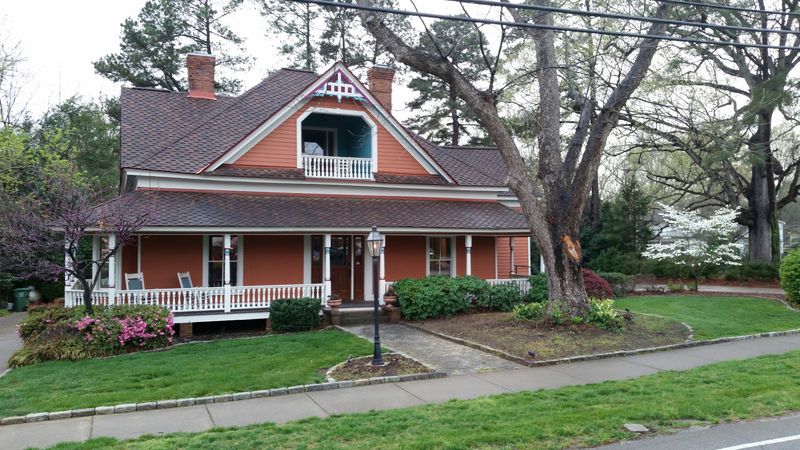
Granite and rough field boulders mark the spot local tradition honors most. A monument at the traditional site of the George McCamie cabin rests on a base of stones said to come from the cabin’s chimney foundation.
Look for it at the end of Andrew Jackson Road, a cul-de-sac about a mile down E. Rebound Road near Waxhaw.
An upright granite slab carries a carved image of the vanished cabin along with a bold inscription: HERE WAS BORN, MARCH 15, 1767, ANDREW JACKSON, SEVENTH PRESIDENT OF THE UNITED STATES.
The North Carolina Daughters of the American Revolution erected the memorial in 1910 and dedicated it on April 12, 1911.
Quiet trees surround the site, so visits feel reflective rather than crowded. Bring a camera, since the carved cabin image photographs beautifully in late afternoon light.
Exhibits at the Museum of the Waxhaws widen the picture with displays on the Waxhaw people, Scots-Irish settlers, and Jackson himself. Travelers curious about the rival claim can cross the line to Andrew Jackson State Park in South Carolina.
Explore Streets And Buildings That Still Hint At An Earlier Era
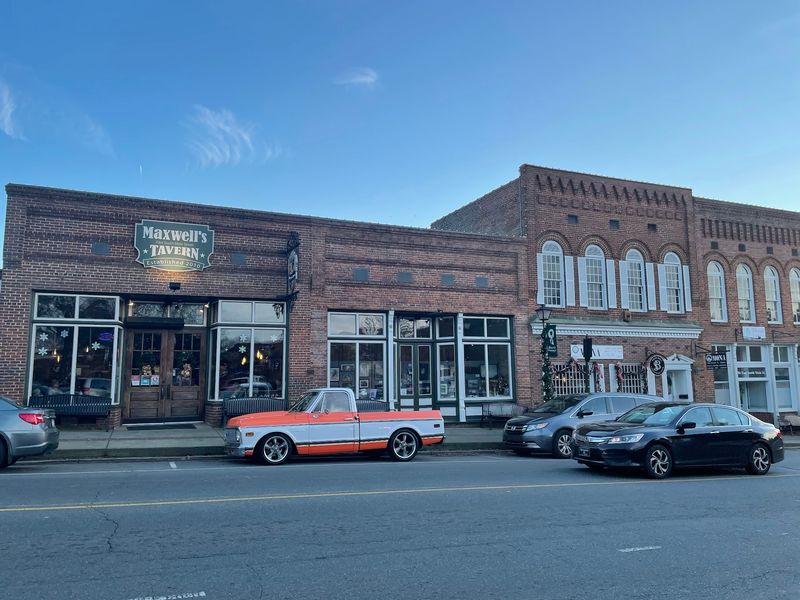
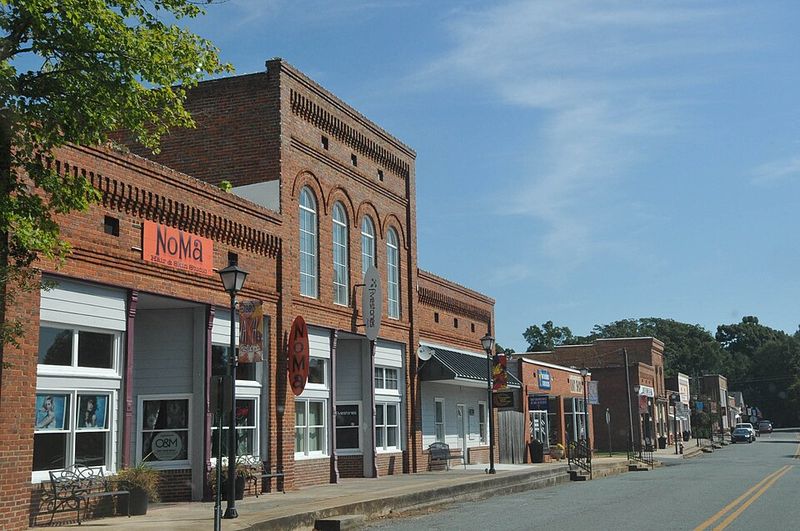
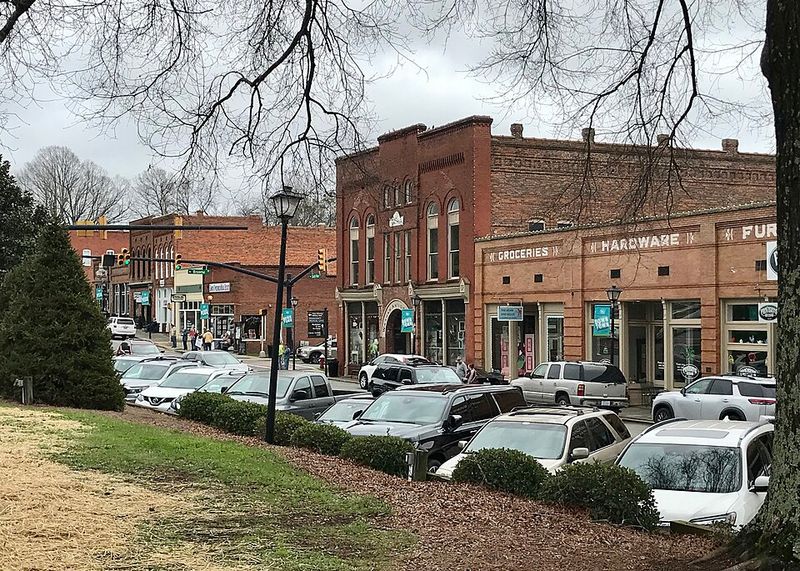
Downtown blocks here earned a spot on the National Register of Historic Places, and a self-guided walking tour makes the details easy to notice. Begin along Main Street, where storefronts more than a century old recall the railroad and textile trade that built the town.
Painted brick, tall windows, and worn thresholds tell their own stories.
Among the standouts are the Starnes-Steele House from about 1890 and the Duncan McDonald House from around 1888, often called the oldest surviving home in town. The Hugh Wilson Broome House shows off Queen Anne flourishes, while the Colonial Revival W.R.
McDonald Hotel dates to 1912. Commercial history survives too, including the R.J. Belk Store, possibly the oldest existing Belk store building, and the A.W.
Heath Commercial Complex with sections from 1898 and 1903.
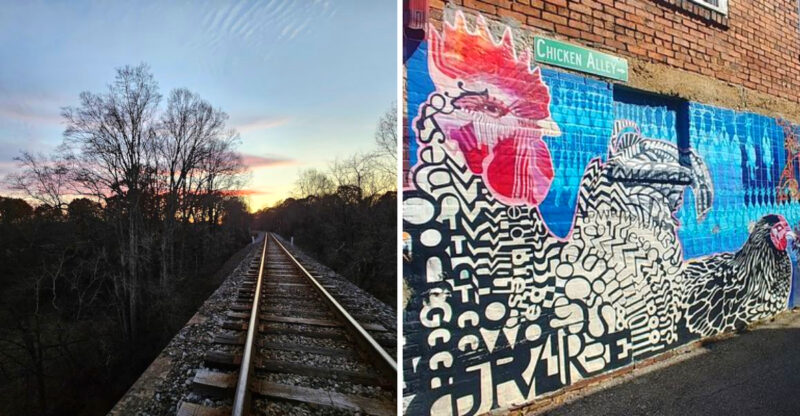
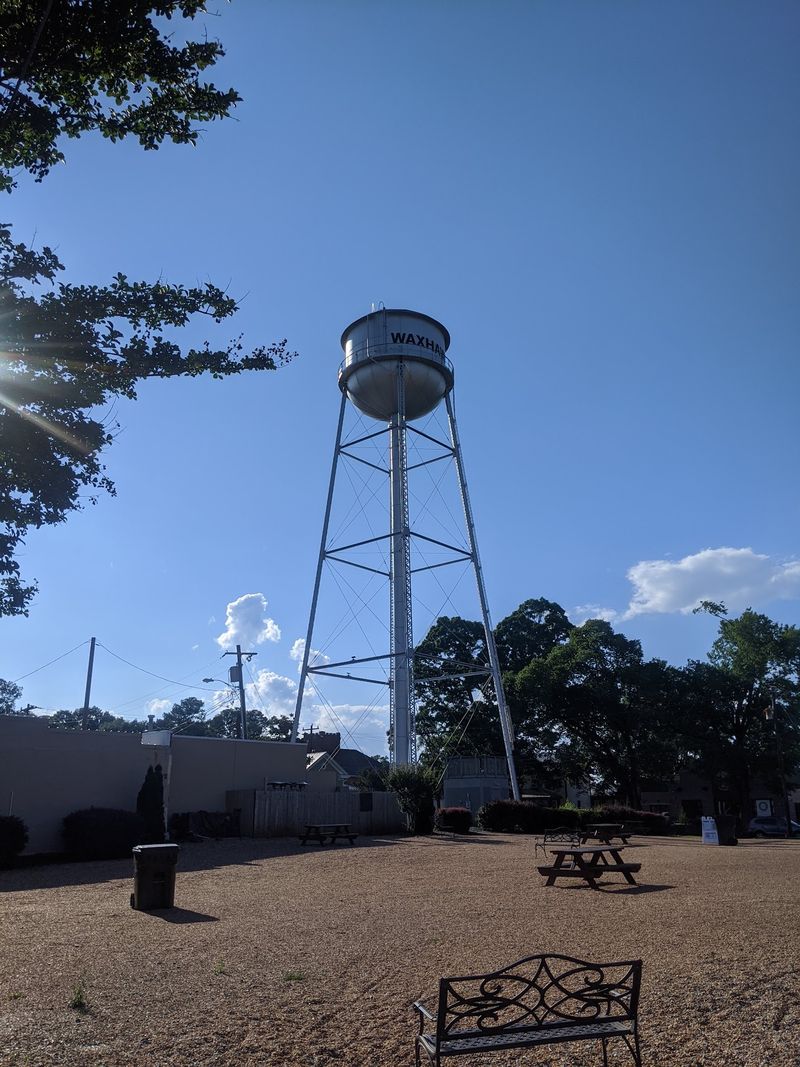
Steeples add another layer: Waxhaw Presbyterian Church from 1929 and Waxhaw United Methodist Church, dedicated in 1928. The 1940 pedestrian bridge crosses the tracks with wide views, and the 1941 water tower still catches the eye.
Time your walk for a passing train.
Dig Into The Borderland History That Shaped The Area
Only about three miles separate the town from the South Carolina state line, and that closeness has shaped nearly everything. Boundaries in this borderland stayed blurry for decades, which is exactly why Jackson’s birthplace remains unsettled.
Maps caught up long after families had already put down roots.
The Waxhaw people lived here first, and their name still carries through the region. European arrivals in the mid-1700s turned the frontier into contested ground.
Conflict marked those years, from the Yemassee War in 1715 to sharp fighting during the Revolutionary War. After the Battle of the Waxhaws, soldiers were cared for on the grounds of the Old Waxhaw Presbyterian Church, a detail that makes the churchyard feel weighty even now.
Colonial leaders had encouraged settlement of the backcountry as a buffer zone, which left early residents exposed to hardship.
Lawlessness followed, and in the late 1760s settlers formed groups called Regulators to restore order along the North Carolina and South Carolina frontier.
Knowing that backstory changes how you read the quiet farmland past the town limits.
Pair The History With A Relaxed Afternoon Of Local Exploring
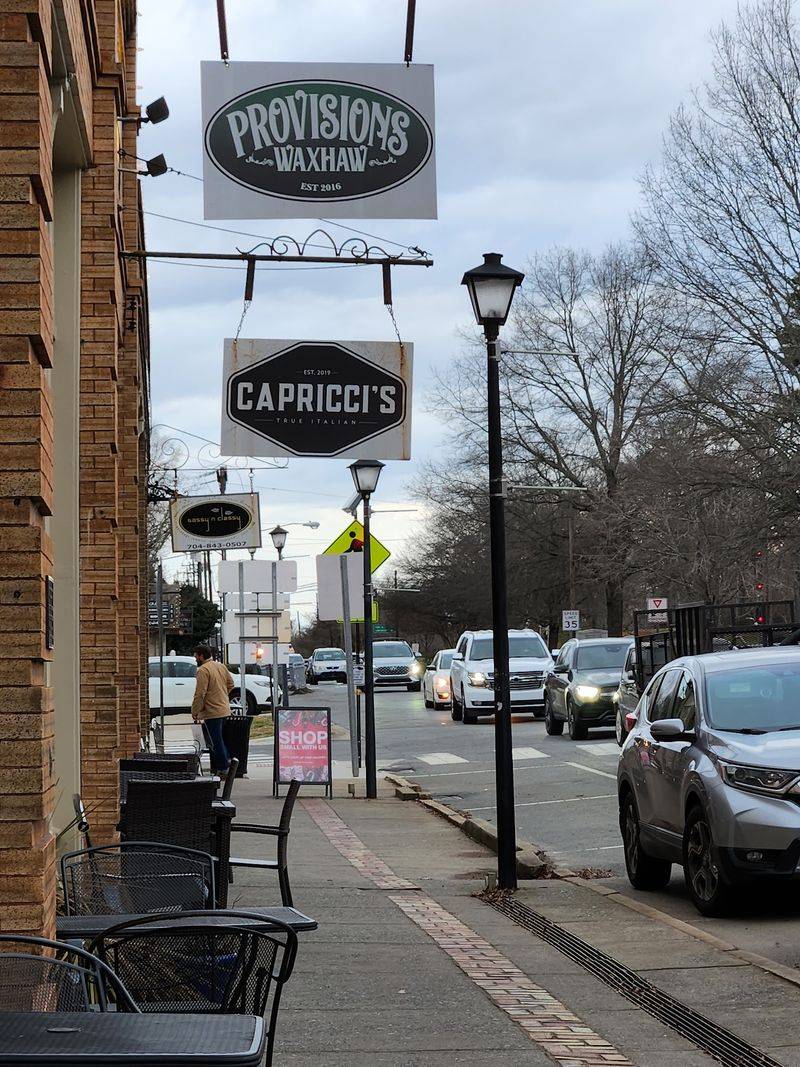
Warm cups of coffee, jars of honey, and the clink of shop doors set the afternoon mood. Provisions offers a deli lineup along with local goods and a good cup of coffee, while Greco Fresh brings Mediterranean plates, outdoor seating, and a children’s menu.
Save room for a scoop at Waxhaw Creamery, where cold, creamy bites taste best on a bench in the sun.
Shopping runs charmingly local. Mule Barn Mercantile fills its shelves with artisan crafts, antiques, honey, and old-time candy, and The Silver Spoon Children’s Boutique carries heirloom-quality clothing.
The Waxhaw Farmers’ Market gathers seasonal produce and handmade foods from nearby growers and makers. Families often head to David G.
Barnes Children’s Park for swings, climbing structures, a creek wading spot, and shaded benches, with a skate park right beside it.
For a longer outing, Cane Creek Park sits about 15 minutes from downtown with lake access, trails, picnic tables, and mini-golf. Rainy days?
Waxhaw Escape runs escape rooms and virtual reality games.
Come Away With A Presidential Origin Story Most People Never Hear
Most presidential birthplaces come with a tidy plaque and a settled address. This one hands you a question instead, and that is what makes the visit stick.
A leader who reshaped American politics began life in a frontier settlement where boundaries were still guesswork.
Elizabeth Jackson’s difficult journey, a borrowed roof, and a March morning in 1767 replaced the marble halls and family fortunes that shaped so many other early presidents.
Whether the cabin stood in North Carolina or a short distance across the line, the setting was the same: cleared fields, hard work, and neighbors who counted on each other.
Union County keeps that thread visible through its museum, its monument, and its historic streets, so you leave with a fuller sense of how humble beginnings can shape a nation’s course.
Few small towns can claim a chapter of national history this personal, and fewer still wear it so quietly.
Ask someone in town and you may hear a version you have not read anywhere. Pack the story home with a jar of local honey and you have a souvenir worth talking about.