You Won’t Soon Forget Wandering Through This Gorgeous Texas Botanical Garden
Take ten slow steps and the noise of the road starts fading. That is how quickly one Texas botanical garden changes the mood.
Water, shade, wildlife, and plant life unfold in different directions, so the grounds never feel like one long floral display.
A quiet pond may lead into wetlands. A greenhouse may pull you indoors. Then a bird call sends your attention somewhere else entirely.
There is no need to conquer every path. The visit works better when curiosity chooses the route.
Give yourself time to pause, especially near the water. Some gardens impress with color. This one also knows how to create stillness.
A Dream Born In 1937
Long before this became a public sanctuary, it was one man’s private daydream.
Texas philanthropist H.J. Lutcher Stark started shaping the land along Adams Bayou in 1937.
His inspiration came from a 1933 novel called Lost Horizon, which described a hidden mountain retreat. He borrowed the name and spent years developing gardens centered heavily on azaleas, his favorite flowering plants.
The gardens opened to visitors in 1946 and quickly earned national attention. Then a major snowstorm destroyed most of the plantings, including many of Stark’s beloved azaleas.
Stark closed the gates in 1958, and the property stayed quiet for nearly fifty years.
The Nelda C. and H.J. Lutcher Stark Foundation eventually took up the cause. After a long restoration, Shangri La Botanical Gardens and Nature Center reopened in March 2008.
Hurricane Rita heavily damaged the property in 2005, and Hurricane Ike flooded the newly reopened gardens in September 2008.
After another round of repairs, Shangri La permanently reopened in March 2009 with its original green-design strategy intact. You will find it all at 2111 W Park Ave, Orange, TX 77630.
Built Green From The Ground
Here is a fact that made me put down my map and stare.
The building complex earned LEED-NC Platinum certification, becoming the first project in Texas to reach that level.
It was also the fiftieth project worldwide to hit that mark. The architecture tucks itself into the landscape instead of shouting over it.
Details hide everywhere once you start looking. A restricted parking area uses recycled asphalt reclaimed from streets in Orange.
Metal cisterns catch rainwater, which then waters courtyards and flushes toilets. Thirty-six solar panels feed electricity into the visitor buildings.
Extra power comes from wind farms out in West Texas. A geothermal well system handles heating and cooling using steady underground temperatures.
Reflective metal roofs help cut energy use by more than 50 percent. Waterless urinals save tens of thousands of gallons every single year.
Even the flooring surprised me, since it is made from renewable corn-based material. Boardwalks and walkways use recycled plastic and wood fibers underfoot.
The building itself functions as part of the site’s environmental education message. Its visible conservation features show how water, energy, and recycled materials can be handled differently.
Three Hundred Species And Counting
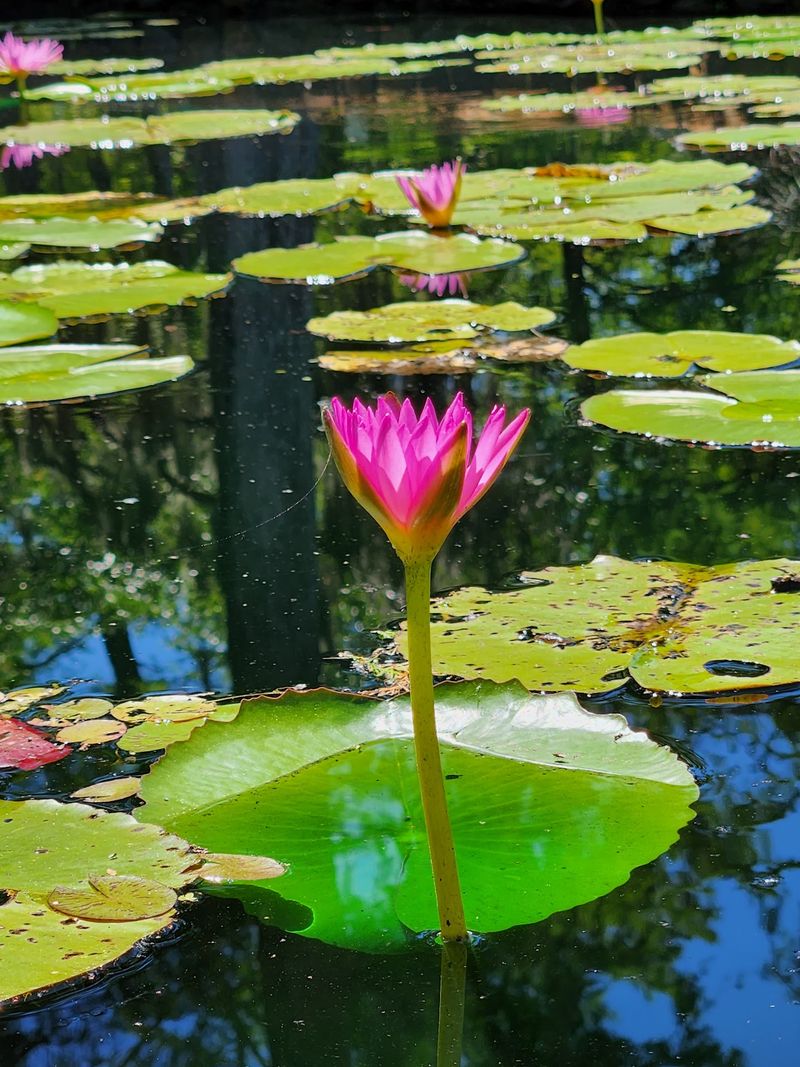
Plant lovers, clear your afternoon. The formal gardens hold more than 300 distinct plant species, arranged with real artistry.
Designers split the space into five garden rooms and four sculpture rooms. Each one carries its own mood, color scheme, and rhythm.
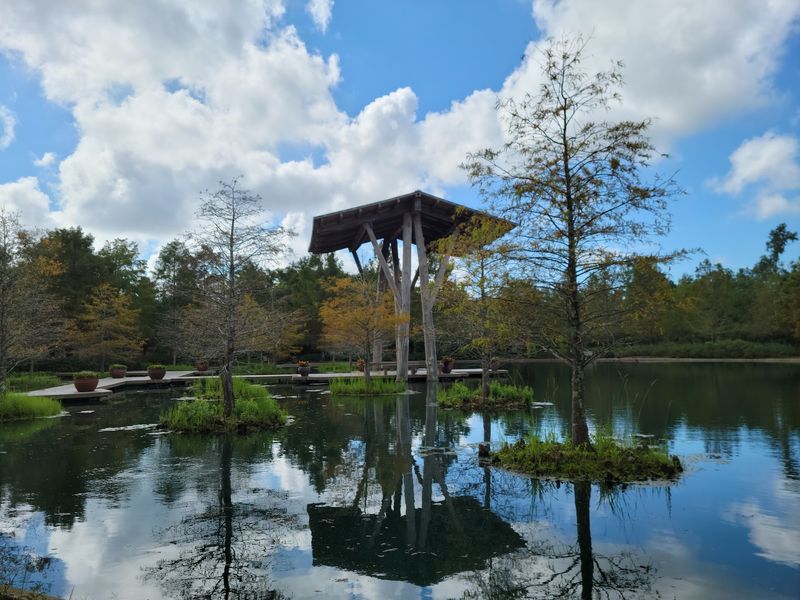
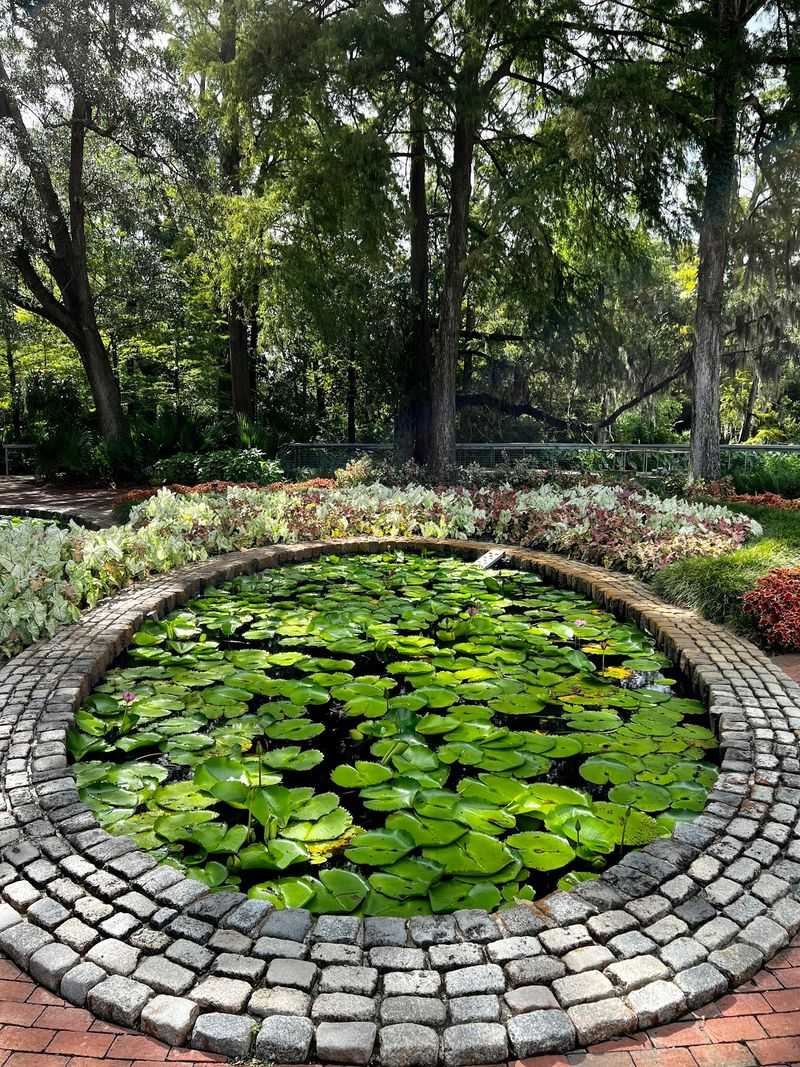
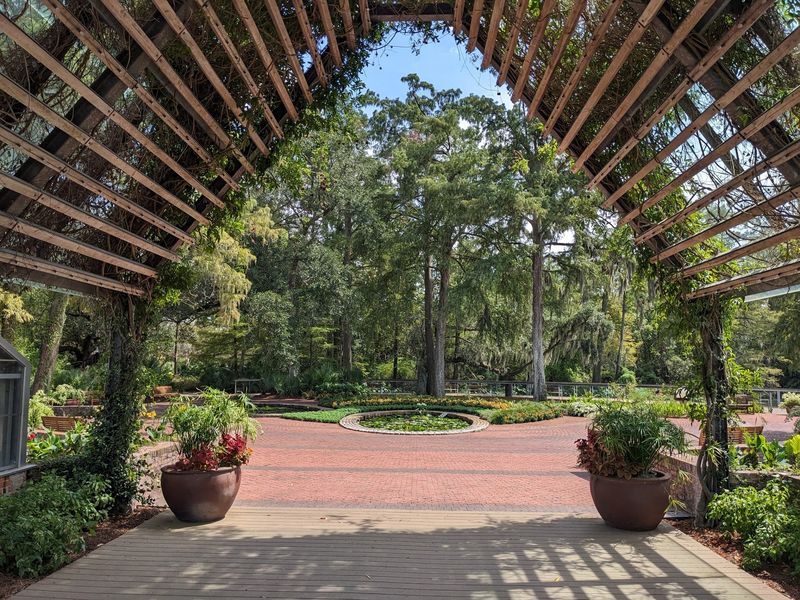
The Pond of the Blue Moon serves as a reflection pool inspired by Stark’s original garden.
Around it grow 41 azalea varieties, including some of the same varieties Stark used in his original Shangri-La.
Spring turns that corner into a riot of pink, coral, and white. The spring display becomes especially vivid when blooming azaleas reflect across the water.
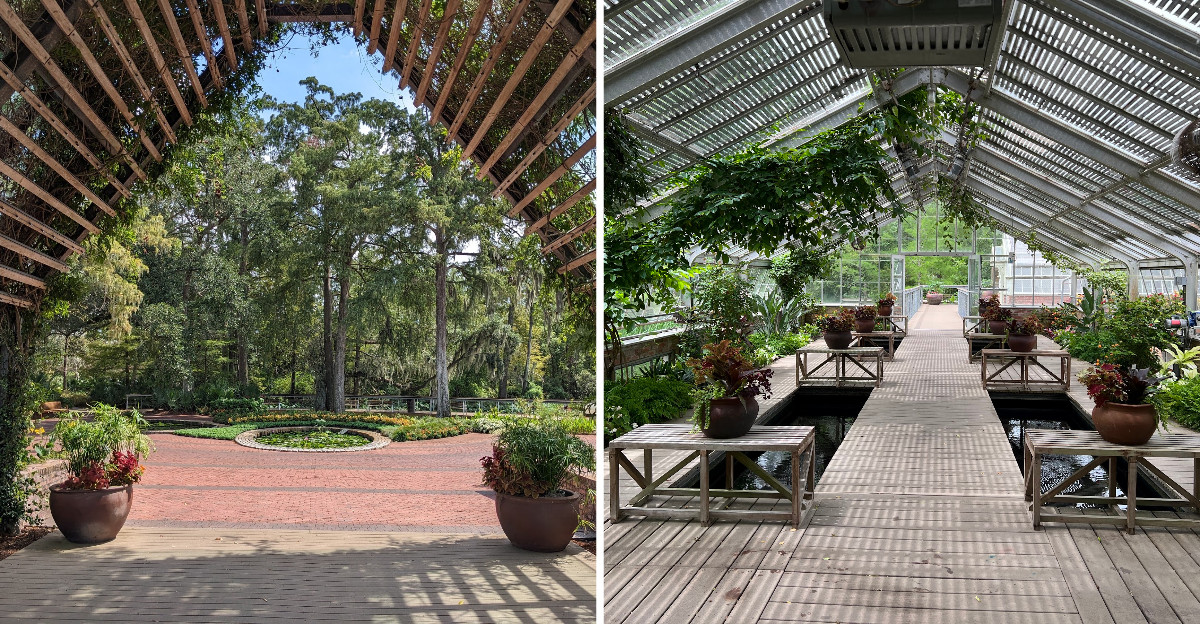
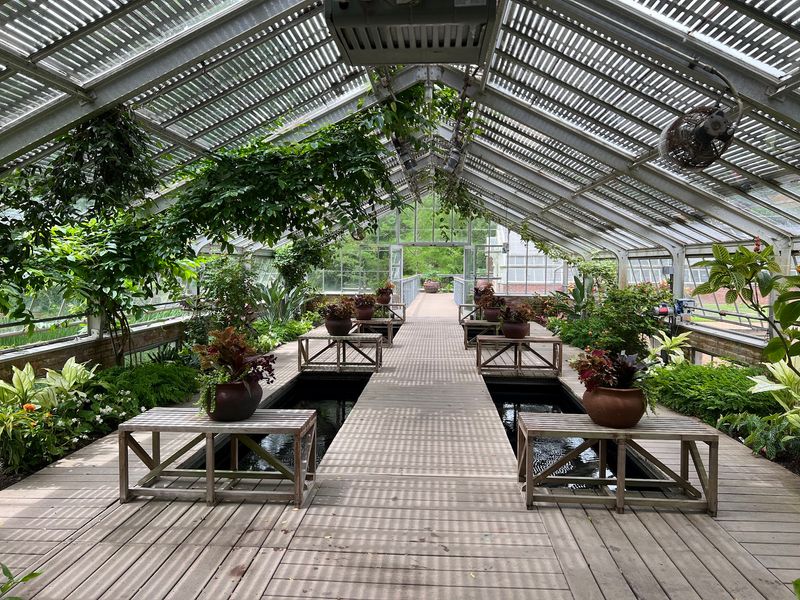
The Epiphyte House is a historic greenhouse built for Stark’s mother in the early 1900s. Inside, orchids and air plants cling to branches in midair.
Nearby sit the Exhibition Greenhouses, split into Display and Classroom spaces. Rotating exhibits mean the tropical collection never looks quite the same twice.
Fountains there use original cisterns to help regulate temperature. Clever engineering hiding behind pretty water sounds.
Hibiscus, hydrangea, and clumps of maidenhair fern grow along the walkways too. Even the parking lot edges had something worth photographing.
Into The Cypress Tupelo Swamp
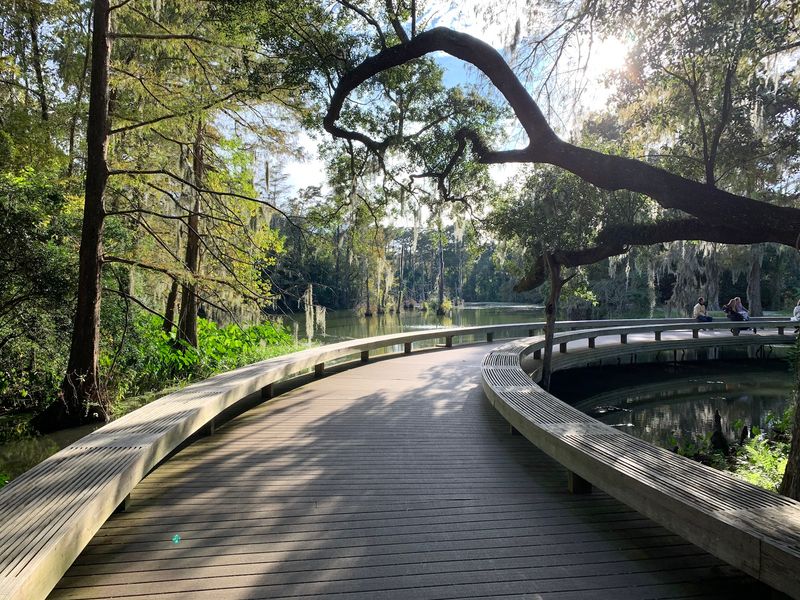
Past the manicured beds, the land turns gloriously untamed. The nature center covers a big slice of those 252 acres in Southeast Texas.
Mixed deciduous forest, wetlands, and a wide lake all share the property. The showstopper, though, is the cypress-tupelo swamp.
Bald cypress and pond cypress are deciduous conifers, meaning they drop their needles each year. Their trunks flare into wide buttressed bases that grip the soggy ground.
Woody knobs called knees poke up from the roots around them. Peeling bark gives the older trunks a weathered, striped look.
Tupelo trees join in with bell-shaped bases and bluish-black fruit. Together they form a habitat that also helps buffer the region against flooding.
One resident steals the show completely. The Survivor Tree, a pond cypress, is estimated at more than 1,200 years old. The tree has survived centuries of storms, including Hurricanes Rita and Ike.
Shangri La Botanical Gardens and Nature Center treats this swamp as a living classroom. Signs explain how each species survives the wet and dry cycles.
Pontoon Rides Along Adams Bayou
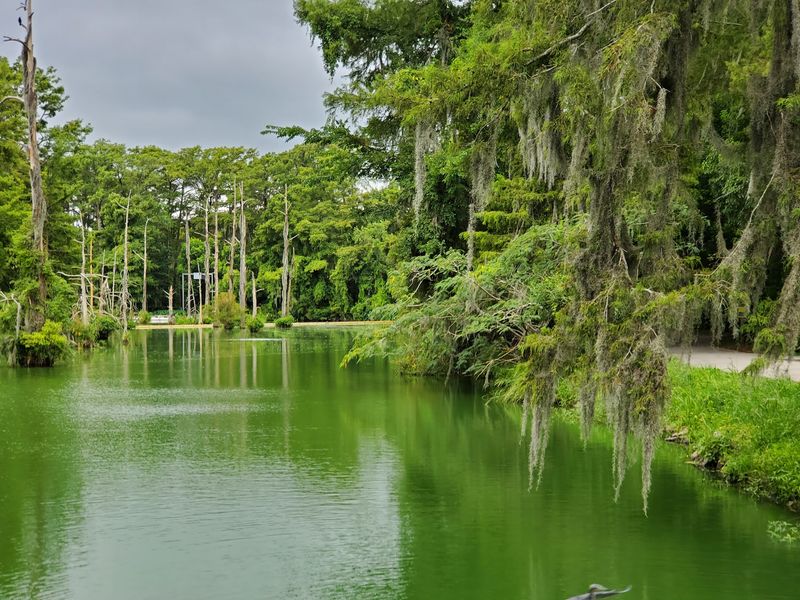
The free Outpost Tour offers one of the clearest ways to experience the natural side of the property. Guided Outpost Tours carry small groups onto Adams Bayou aboard a pontoon watercraft.
The ride lasts approximately one hour and fifteen minutes and continues into the cypress-tupelo swamp. Water reflects the canopy so cleanly that the shoreline seems doubled.
Guides explain why wetlands, upland forests, and grasslands matter to wildlife and people alike. The interpretation also connects those habitats to the broader Gulf Coast environment.
Fish and other aquatic wildlife occupy the waterways along the tour route. Birds, turtles, and other wetland wildlife may appear along the route.
Alligators are native to the property, but sightings are never guaranteed. Conservation work continues alongside the visitor experience.
Staff manage habitat and water-quality challenges across the property, including restoration efforts at Ruby Lake. Those projects support healthier conditions for aquatic wildlife and nesting birds.
Free passes are first come, first served, with 18 to 24 seats available per departure. As of September 8, 2026, tours leave Tuesday and Thursday at 11 a.m. and 1 p.m., and Saturday at noon and 2 p.m.
Hands On Fun For Families
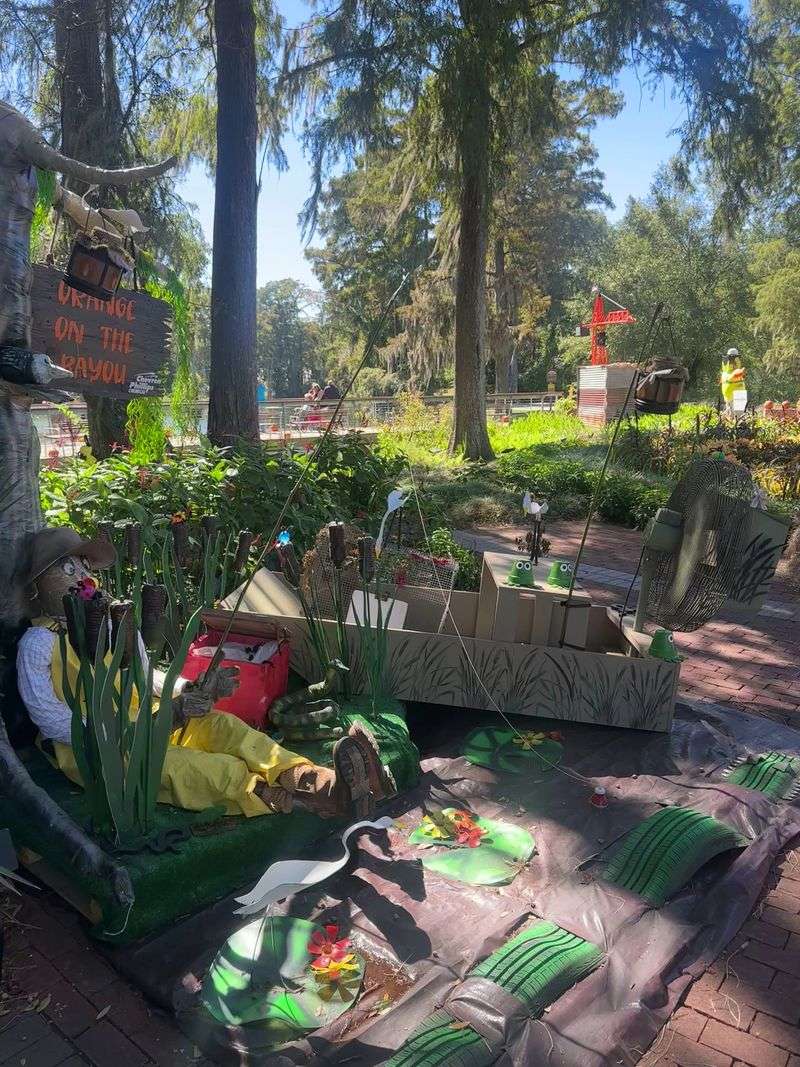
Parents, this section is for you. Indoor and outdoor exhibits here are built for curious hands and short attention spans.
Start in the Exhibit Hall, where displays introduce the history of Stark’s original garden and its modern restoration. The orientation experience gives visitors context before they head outside.
A short film plays in the 75-seat Discovery Theater. It explains Stark’s original inspiration in about the time a restless child can manage.
The Nature Discovery Center uses hands-on exhibits to introduce the site’s wetland ecosystems. Interactive displays make local ecology easier for younger visitors to explore.
Here We Grow Children’s Garden invites kids to plant, touch, and get thoroughly dirty. The Sensory Garden adds fragrance and texture to the mix.
The Nature Discovery Center also serves as the meeting point for Outpost Tour passengers before they continue to the boathouse.
The Heronry Blind lets visitors observe nesting birds on Ruby Lake without entering the colony.
Scavenger hunts appear during selected family events rather than as a guaranteed daily activity. Teachers and homeschool educators can also arrange educational visits through Shangri La’s school programs.
Learning That Sticks With You
Education is not an afterthought here, it is the entire engine.
Shangri La’s mission emphasizes environmental education, horticulture, responsible practices, conservation, and connection with the natural world.
The Stark Foundation treats the property as an outdoor classroom. Programs run for every age group, from toddlers to retirees.
Wild Wednesdays and the Saturday Adventure Series cover topics like monarch migration and aquatic creatures. Workshops and lectures round out the schedule.
Up Close with Nature sessions introduce resident animals and explain their adaptations. Meeting a creature face to face beats reading about it.
Conservation work happens quietly alongside the public programs. Conservation work includes habitat management, wetland education, and programs centered on resident and migratory wildlife.
At Ruby Lake, an aeration system helps address historically low dissolved oxygen levels. Wetland demonstration ponds also show how plants can filter nutrient-rich water before it returns to the lake.
Preserving remnant cypress populations is another priority, since those trees were heavily logged long ago. That work combines land conservation, education, and other environmentally responsible practices.
Smart Tips Before You Go
A few practical notes will make your visit smoother. Doors open at 9 am Tuesday through Saturday and close at 5 pm.
Monday and Sunday are closed days, so plan accordingly. Regular admission is free, with the annual Christmas Strolls as the notable ticketed exception.
Free visitor parking is available across West Park Avenue, with accessible spaces inside the front gate. Public restrooms are available at the front entrance and near the Pond of the Blue Moon.
Walking distance depends on the route, while guided garden tours cover more than one mile.
Benches appear regularly, which matters during humid summer afternoons. Shade covers much of the route, but bring a hat or umbrella for sunny stretches.
Bring water if you plan to stay for several hours. Picnic-style lunches are allowed only in the courtyard, where tables and chairs are available first come, first served.
Volunteers hand out maps at the entrance and answer questions happily. They spotted wildlife for me that I would have walked right past.
Give yourself at least two or three hours. Rushing through Shangri La Botanical Gardens and Nature Center defeats the whole purpose of coming.