You Won’t Believe California Is Hiding This Open-Ceiling Sea Cave
Sea caves already feel like places people should find by accident. Add an open ceiling, and the whole thing gets stranger fast.
Water moves below. Rock walls rise around you. Light drops in from above like the cave forgot to finish being a cave.
That is the kind of coastal surprise that makes a normal beach walk feel wildly underprepared.
California has plenty of pretty ocean views, but this sea cave brings a different kind of drama. It feels hidden without feeling imaginary.
The setting is rugged. The approach feels adventurous. The payoff is the moment you look up and realize the sky is part of the room.
Places like this remind people why the coast never runs out of tricks.
One turn can lead to cliffs. One careful step can reveal a pocket of ocean-carved rock.
This is not just another scenic stop.
It is the kind of place that makes people wonder how something this unusual has been sitting there all along.
The Ceiling That Looks Like Nature Got Dramatic On Purpose
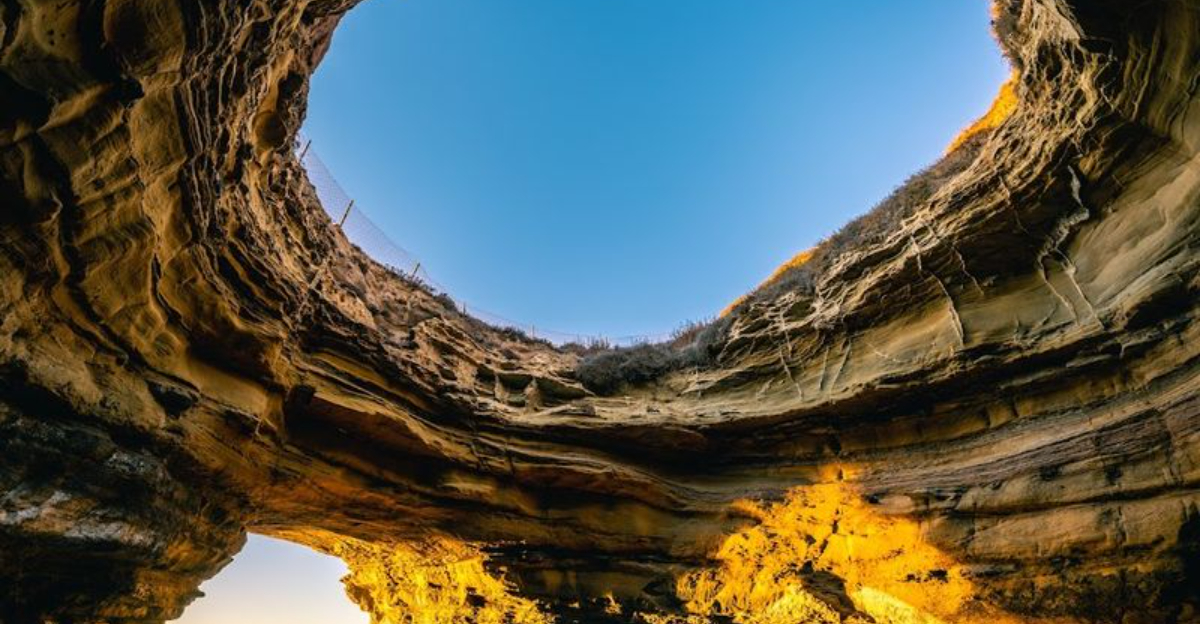
Sunlight drops straight through the cave’s open roof like a spotlight aimed at the ocean floor, and the effect is genuinely hard to process the first time.
The collapsed ceiling, measuring roughly thirty feet across, turns what would otherwise be a dark rock tunnel into a fully lit coastal chamber.
Standing inside and looking up at open sky framed by jagged sandstone edges is the kind of visual that makes people stop mid-sentence.
The cave itself runs approximately forty feet wide and forty feet high, giving it a scale that feels more like a cathedral than a crack in the cliffside.
That combination of height, width, and open roof is exactly what separates this spot from the dozens of other sea caves scattered along the Southern California coast.
Most caves pull the eyes outward toward the water, but here the ceiling becomes the entire focal point.
The light shifts throughout the day as the sun moves across the sky, and the interior walls change color from pale tan to deep amber depending on the hour.
Late afternoon tends to produce the most dramatic glow inside the chamber.
The open ceiling is not an accident of geography but rather the result of years of wave erosion slowly carving through the coastal bluffs above.
Wait For The Tide To Decide Whether You’re Even Invited
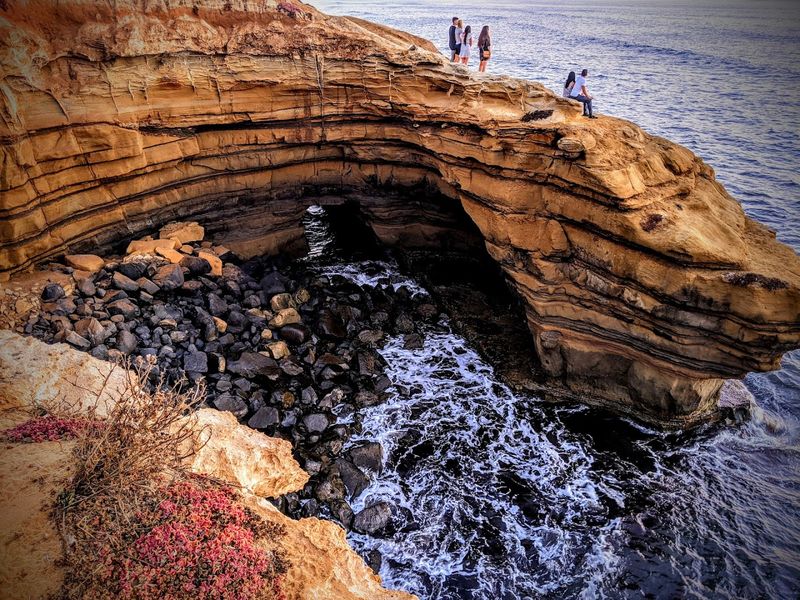
Access to the Sunset Cliffs Cave is entirely controlled by the ocean, and the ocean does not negotiate.
Guides and experienced visitors consistently note that the cave should only be attempted during a negative low tide, which means the water level drops below the standard zero baseline used on tide charts.
Arriving at any other time could mean finding the cave entrance completely submerged or dangerously wave-swept.
Even during a negative low tide, some sections of the approach may require wading through knee-deep water.
Water shoes or grippy hiking sandals are strongly recommended because the rocks are often coated with algae and can be slippery underfoot.
Checking a current tide chart before leaving is not optional here; it is the most important piece of planning the entire visit.
Rogue waves are a real concern along the Sunset Cliffs coastline, and the area has a history of visitors being caught off guard by unexpected surge.
The general advice from those familiar with the cave is to start the descent about thirty minutes before the lowest point of the negative tide and to leave the cave area before the water begins to rise again.
Surf forecasts should be reviewed alongside tide charts for the safest possible window.
Look Up Before You Look Out
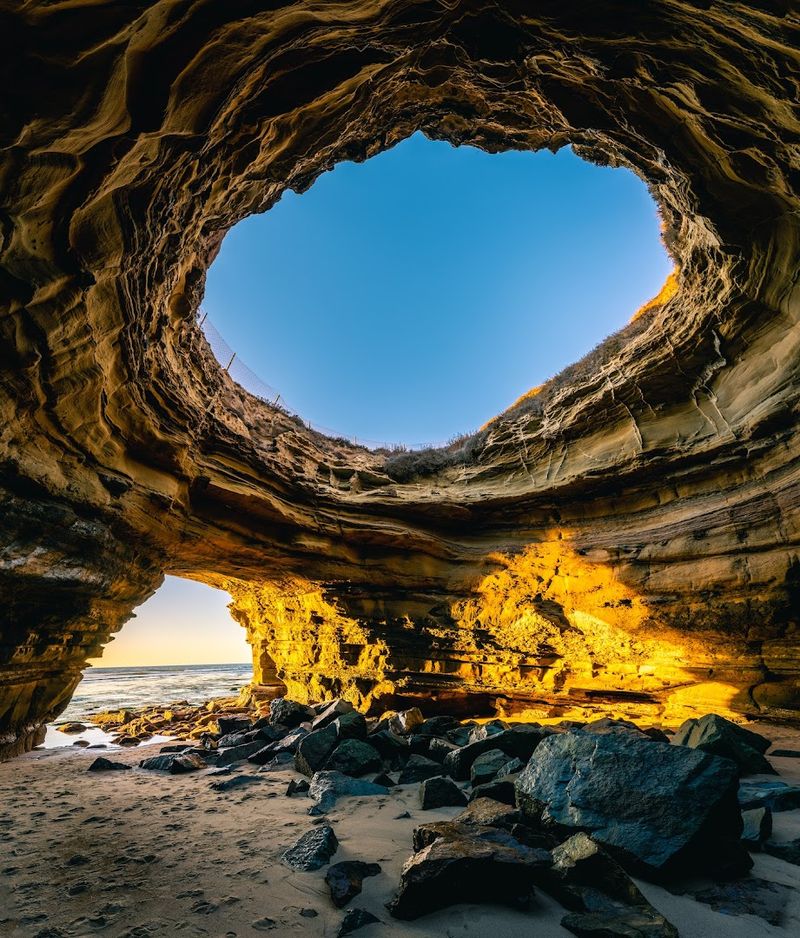
Sea caves typically frame the horizon and pull attention toward the water, but the Sunset Cliffs Cave flips that instinct completely.
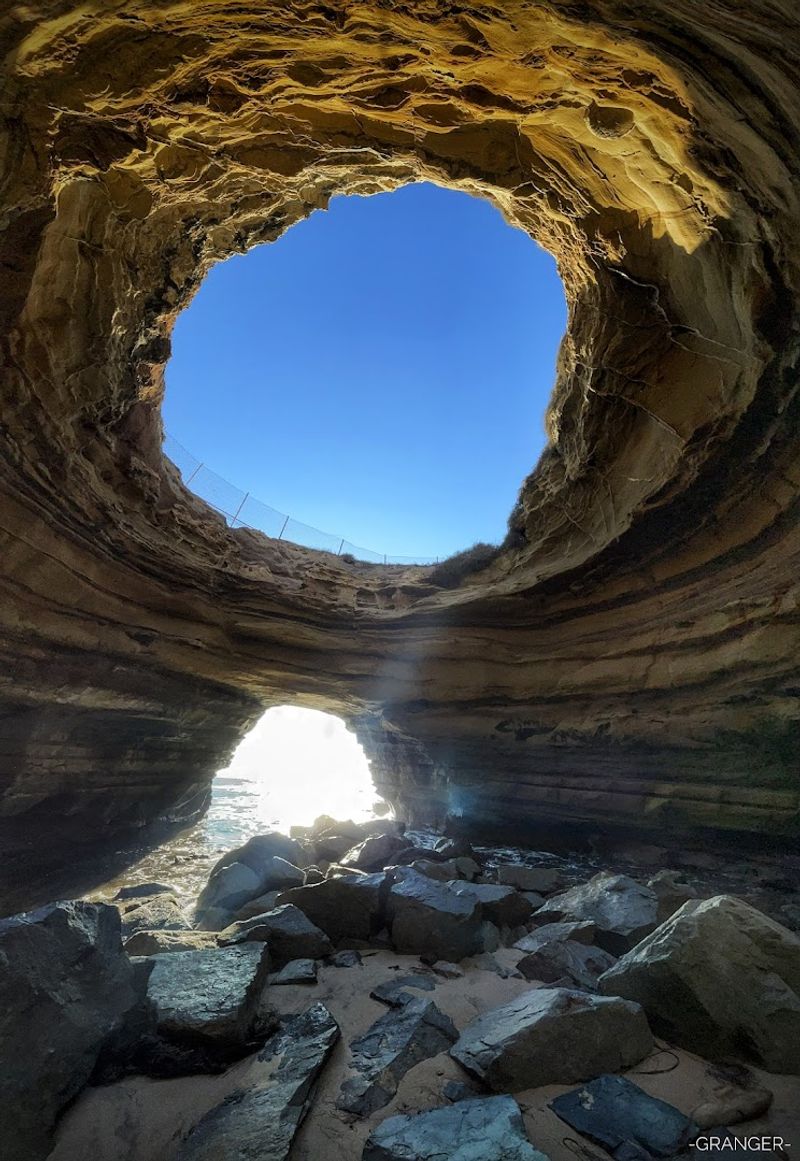
The moment a visitor steps inside, the natural reflex is to tilt back and stare straight up at the open rock ceiling above.
The skylight effect created by that collapsed roof section is the defining feature of the entire experience, and no photograph fully prepares a first-time visitor for the actual scale of it.
The surrounding cave walls are rough-textured sandstone with layers of color running horizontally through the rock, showing years of geological history compressed into visible bands of orange, tan, and grey.
Water pools on the cave floor during low tide, and the ceiling opening reflects in those shallow pools on calm days, creating a mirrored effect that doubles the visual drama.
Photographers who visit during the overlap of low tide and late afternoon light tend to capture the most striking images because the warm sunlight angles directly through the ceiling opening and illuminates the interior walls.
The cave entrance also frames the Pacific Ocean behind any subject standing inside, which gives photos a layered depth that is difficult to achieve at most coastal spots.
Both directions are worth photographing, but the upward shot consistently surprises people the most.
Treat The Walk In Like Part Of The Adventure
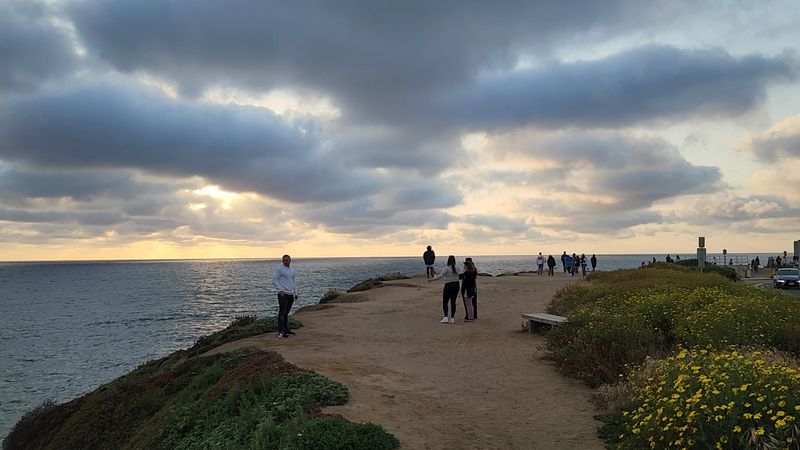
Getting to the cave is not a paved path or a short hop from the parking area.
The route requires descending to sea level near Luscomb Point along Sunset Cliffs Boulevard, which involves navigating slippery, uneven terrain that can include wet rock surfaces and occasional shallow water.
The approach is part of what makes the destination feel genuinely earned.
One commonly used route starts at the staircase located at the intersection of Sunset Cliffs Boulevard and Ladera Street, followed by a walk along the beach toward the cave.
That path tends to be more manageable than scrambling directly down the rocky bluff face, especially for those who are not experienced with coastal terrain.
Either way, the footing demands full attention throughout the approach.
Free street parking is available along Sunset Cliffs Boulevard and in the surrounding residential streets, which removes at least one logistical stressor from the trip.
The overall excursion including travel time along the shoreline and time spent at the cave tends to take around an hour from start to finish.
Bringing a dry bag for phones and cameras is a practical move since the route can involve unexpected splashes and the occasional knee-deep wade depending on tide timing and wave activity.
Watch The Cliffs Change Color As The Sun Moves
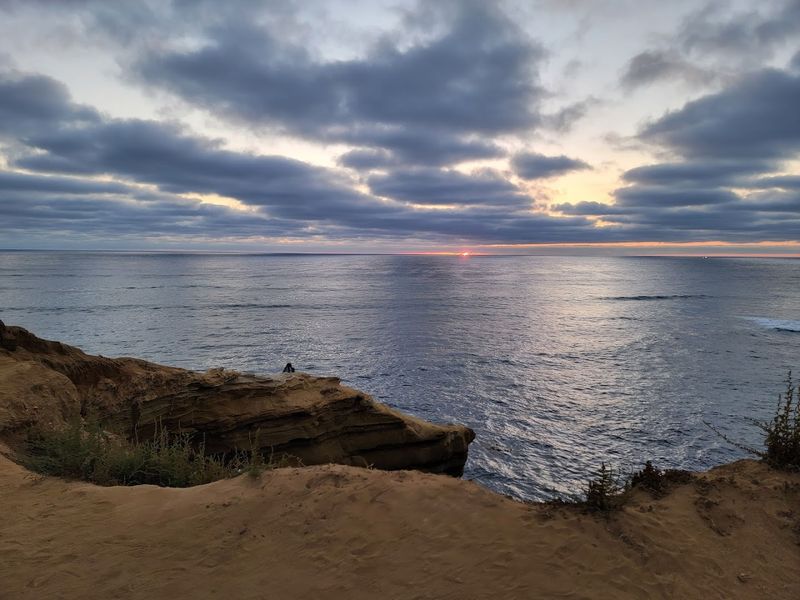
The cave sits inside a 68-acre coastal preserve that has its own visual story running parallel to the cave experience.
Sunset Cliffs Natural Park is known for its carved sandstone bluffs, natural arches, and wide Pacific views that shift dramatically depending on the time of day.
The warm tones that the park is named for tend to appear across the cliff faces in the late afternoon as the sun drops toward the horizon.
Walking along the bluff-top path before or after visiting the cave gives a completely different perspective on the same coastline.
From above, the sea caves and rock formations visible along the waterline look almost architectural, with the ocean moving through channels and openings carved by centuries of wave action.
The contrast between the orange cliff faces and the deep blue Pacific below is a consistent visual reward regardless of the season.
Even on overcast days the park holds its own because the drama of the cliffs and the sound of the surf remain constant.
Cloudy conditions can actually reduce crowds while still delivering the full sensory experience of the coastline.
The surrounding park scenery functions as a strong backup plan on days when tide conditions make the cave itself inaccessible, and it adds genuine context to the cave visit when conditions do allow entry.
Bring The Camera But Don’t Let The Photo Rush You
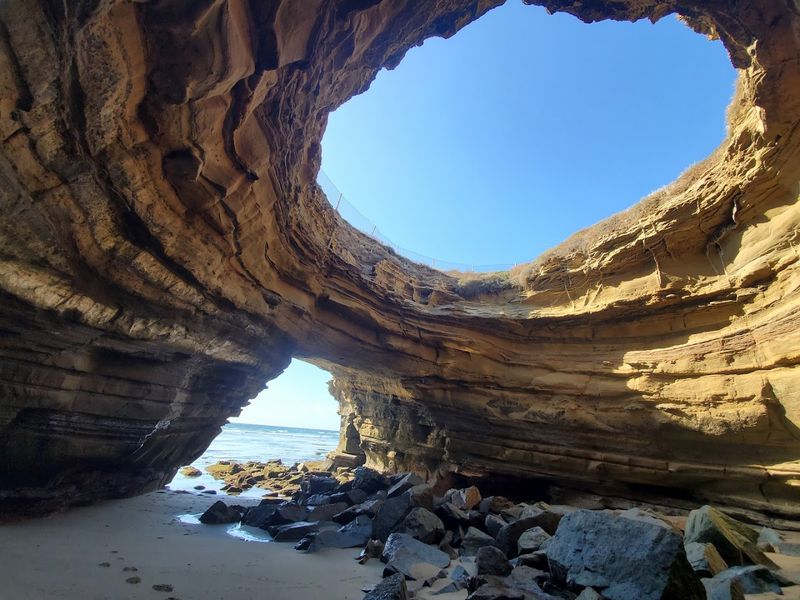
The open ceiling is genuinely one of the most photogenic natural features on the San Diego coastline, and the temptation to move quickly and grab shots from every angle is understandable.
The cave floor is rocky, uneven, and can be slippery with algae or wet from recent wave wash, which means rushing for a better angle carries real risk.
The best photo is still not worth losing footing on a wet rock with the tide beginning to shift.
Wide-angle lenses tend to work well inside the cave because the combination of the open ceiling, the cave walls, and the ocean entrance creates a layered composition that benefits from capturing as much of the space as possible in a single frame.
Shooting toward the ceiling opening with the cave walls framing the sky above produces the most striking results, especially when the sun is angled directly overhead or slightly to the west.
Late afternoon timing, when low tide coincides with the sun approaching the horizon, is considered the most rewarding window for photography at the cave.
The golden light that enters through the ceiling opening during that period illuminates the interior walls in a way that changes the entire character of the space.
Patience and tide awareness together produce far better results than speed alone ever could at this location.
Use Luscomb Point As Your General Clue
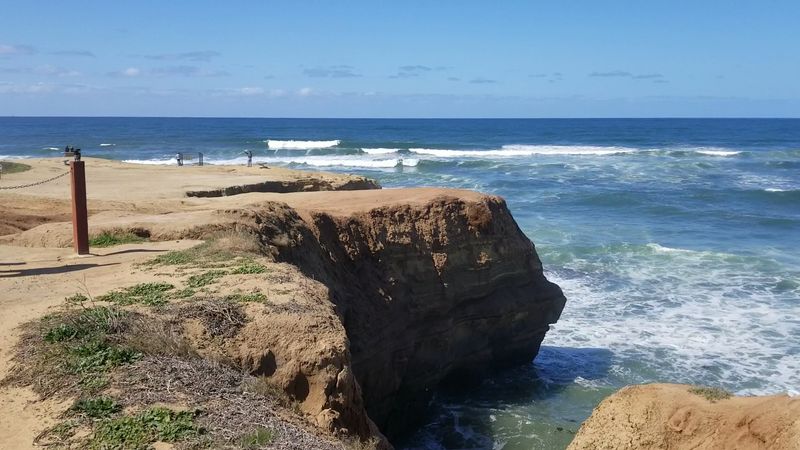
Finding the cave requires a more specific reference point than a general search for Sunset Cliffs, because the park covers a long stretch of coastline and the cave sits in a particular section of it.
Luscomb Point along Sunset Cliffs Boulevard is the geographic reference that most guides use to orient visitors toward the correct descent point.
Searching for the cave using only the park name can lead to starting points that are too far north or south of the actual location.
The address range along Sunset Cliffs Boulevard near the cave is commonly listed around the 800 block in the Point Loma neighborhood of San Diego.
Street parking along Sunset Cliffs Boulevard is free and available in stretches, though it can fill up during peak sunset hours.
Arriving earlier in the day before the afternoon crowd builds gives more flexibility for both parking and for timing the tide window correctly.
Cell reception can be limited near the cliff edge and along the shoreline, so downloading a tide chart and a map of the area before leaving is a practical step.
Having the Luscomb Point reference saved offline makes the descent point much easier to locate once signal drops.
Relying on live navigation at the shoreline level is not always reliable, and a little preparation before the drive saves significant confusion on arrival.
Notice The Ocean Window At The Cave Entrance
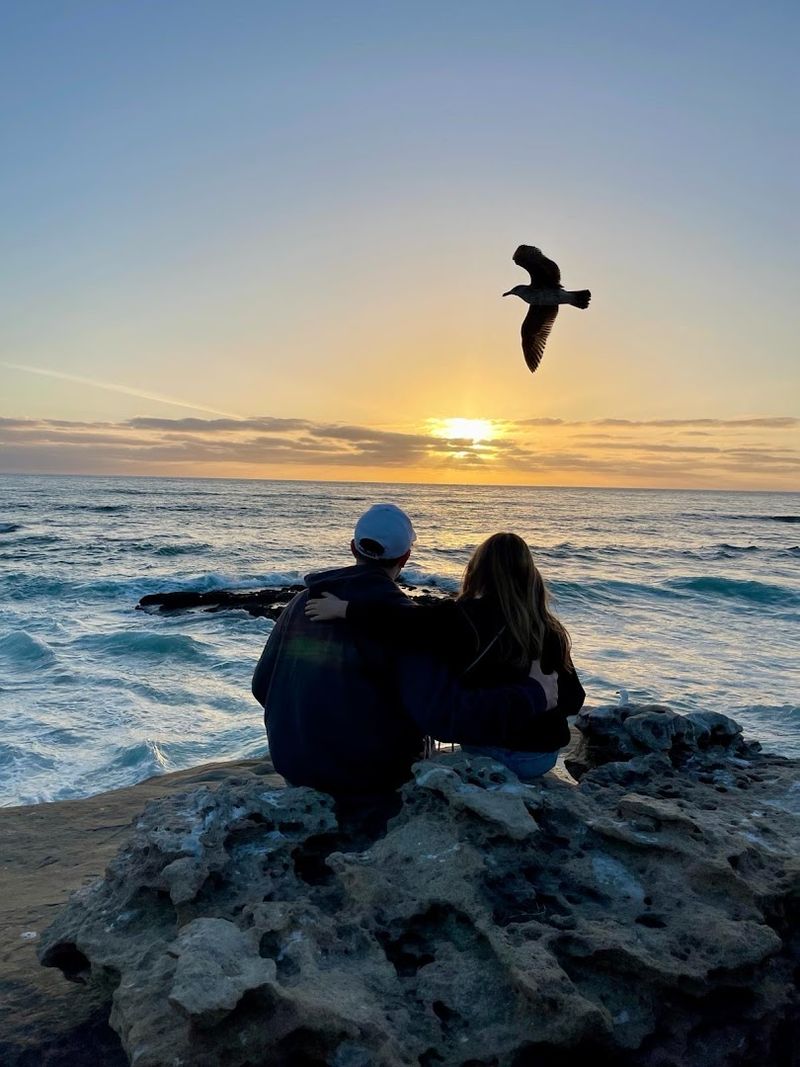
Standing inside the cave and looking toward the entrance reveals a second stunning visual that rivals the ceiling opening.
The cave mouth frames the Pacific Ocean like a living painting, with the rough sandstone walls on either side acting as a natural border around the open water beyond.
The combination of ocean view through the entrance and open sky above through the ceiling gives the interior of the cave a quality that genuinely feels unreal.
That framed ocean view is part of what makes the cave so visually distinctive compared to other sea caves along the California coastline.
Most caves offer either an ocean view from the entrance or an interesting ceiling, but rarely both in the same space.
The layered effect of looking through the cave toward the water while light pours in from above creates a depth of field that photographers and casual visitors both tend to notice immediately.
The sound inside the cave adds another dimension to the experience.
Wave energy moves through the cave entrance and echoes off the rock walls, creating a low resonant sound that changes with the size and frequency of incoming swells.
On calmer days the effect is a steady rhythmic wash, while on more active swell days the sound fills the entire chamber. Both versions of the cave have their own character worth paying attention to during a visit.