You’d Think This Kentucky Town Was Lifted Right Out Of Europe
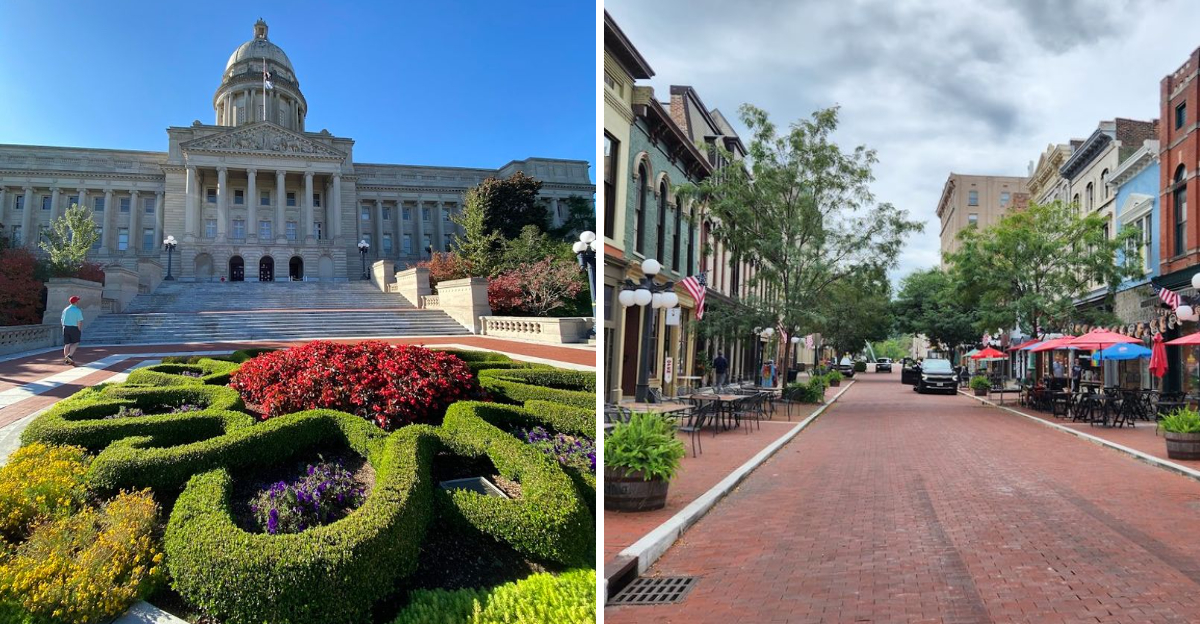
There is a town in Kentucky that looks like it studied abroad and never got over it. A lazy river curves right through its center, the way rivers do in old European cities.
Church steeples and rooftops rise against green hills on every side. The historic downtown could pass for an old world postcard with almost no editing.
You can wander past grand columns, brick storefronts, and streets that predate the automobile. Climb to the overlook above town and the view will stop you mid sentence.
It feels like the Rhine Valley decided to vacation in bourbon country. Yet everything here stays warmly, stubbornly Kentucky.
The accents are southern, the sweet tea flows, and strangers still wave hello.
Even its name sounds borrowed from Europe, though the real story behind it is pure American frontier. You get all that charm without the airfare or the jet lag.
Your passport stays home.
The Capitol Building And Its Beaux-Arts Grandeur
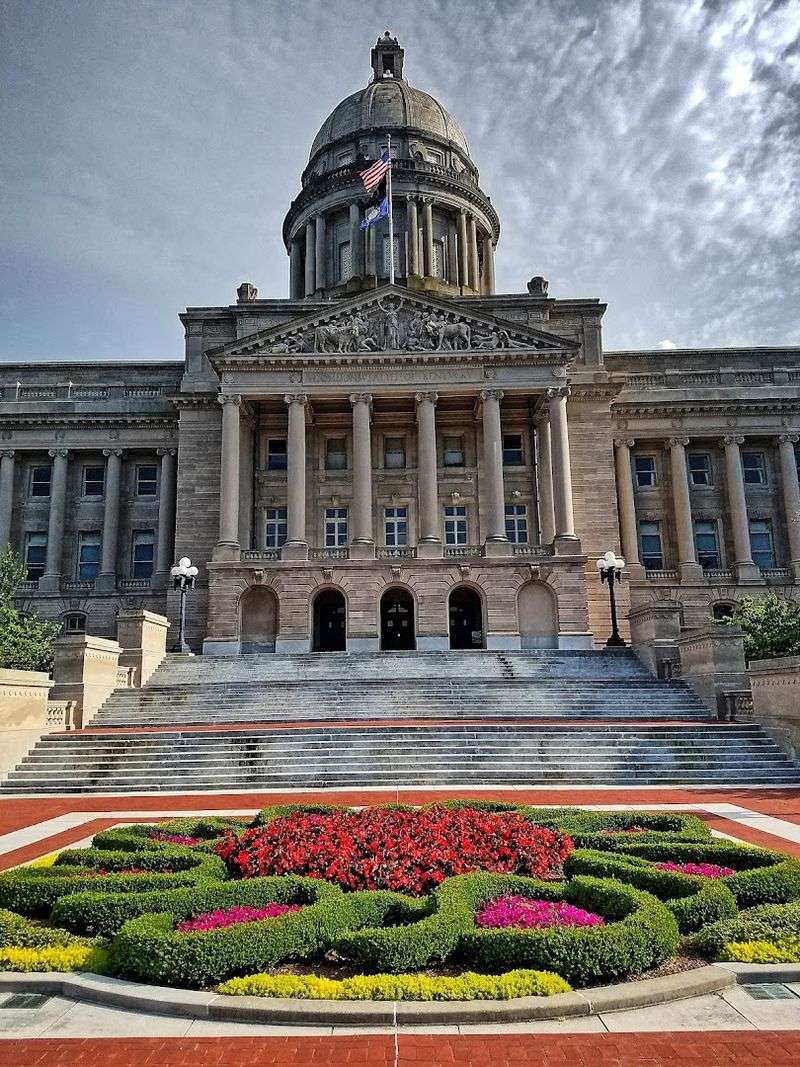
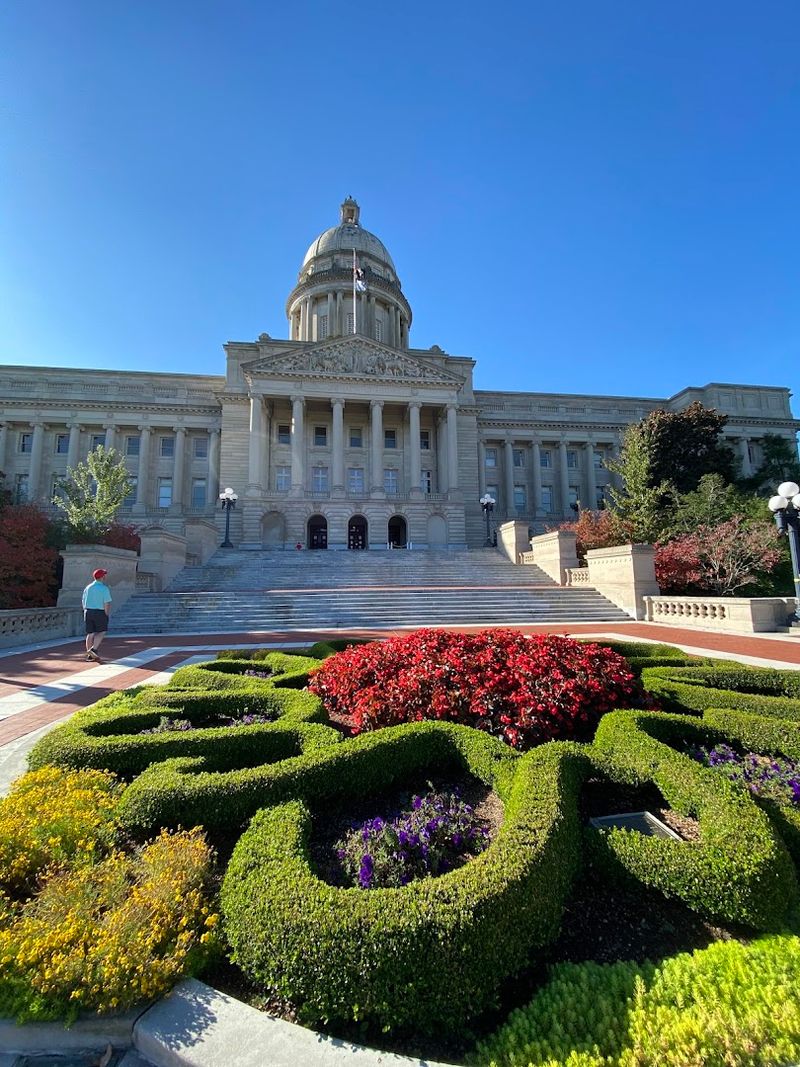
Frankfort’s Kentucky State Capitol looks like it was airlifted from Paris and gently set down on a hill above the Kentucky River.
Completed in 1910, it was designed in the Beaux-Arts style, the same architectural language used for grand European government buildings. The dome alone rises 212 feet into the air.
Standing in front of it, you almost expect to hear French being spoken nearby. The building is covered in Indiana limestone and features intricate sculptural details that most state capitols simply do not bother with.
It is genuinely impressive without trying too hard.
Inside, the rotunda is lined with portraits of Kentucky governors and decorated with marble floors that echo with every footstep.
The floral clock outside, planted with thousands of blooming plants, adds a formal garden touch that feels straight out of a European palace ground.
The Capitol building is currently closed for a multiyear renovation, but visitors can still explore parts of the grounds and see the Floral Clock.
Old Frankfort Pike And Its Rolling Green Countryside
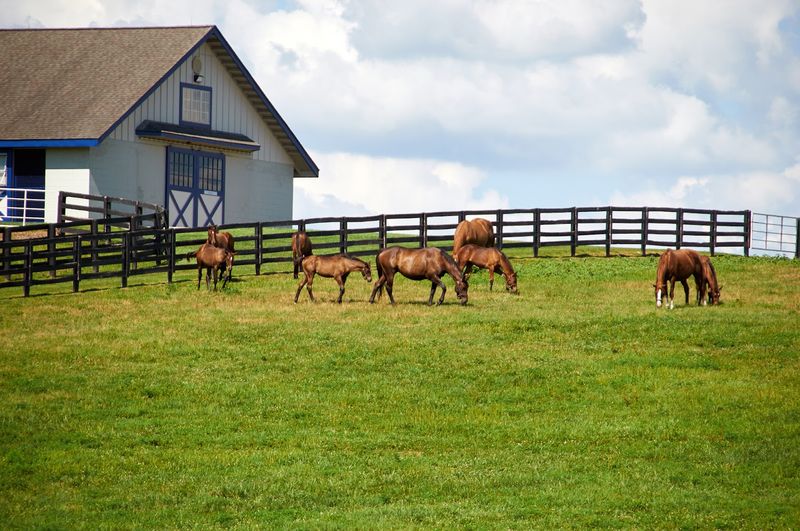
Old Frankfort Pike is the kind of road that makes you pull over just to stare.
Running between Frankfort and Lexington, this stretch of two-lane highway passes through horse country so picture-perfect it genuinely looks like the English countryside on a clear morning.
White plank fences line both sides for miles.
Stone farmhouses sit behind iron gates. Massive oak trees arch over the road and create a canopy that filters the sunlight into something almost cinematic.
I drove this route on a foggy October morning and felt completely transported.
This National Scenic Byway passes through six National Register historic districts and links numerous historic properties. Cyclists love it.
Photographers love it.
Honestly, anyone with eyes loves it. There are no traffic lights, no fast food signs, and no strip malls in sight.
Just rolling farmland and the occasional horse glancing up from the grass.
If you are visiting Frankfort, this drive absolutely needs to be on your list. It costs nothing and delivers everything.
The Historic Downtown District Along St. Clair Street
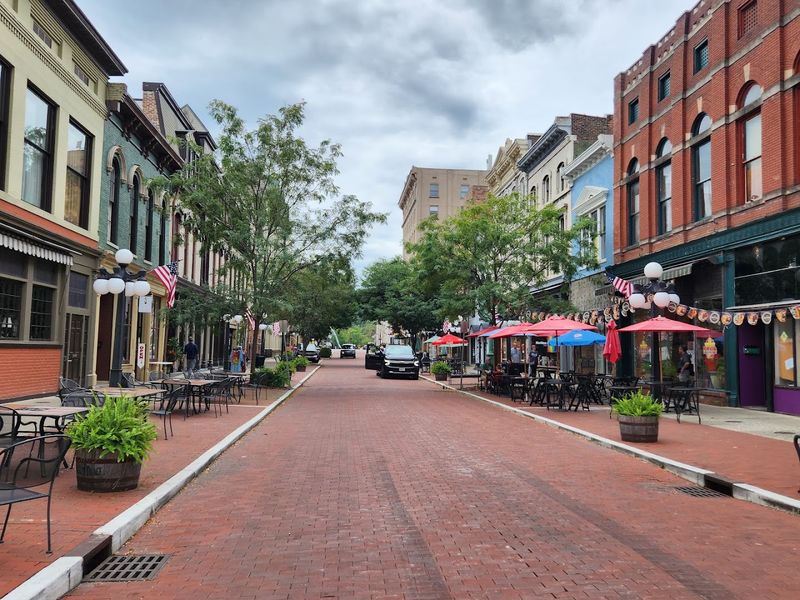
St. Clair Street in downtown Frankfort moves at a pace that most American cities have completely forgotten.
The buildings are old, the sidewalks are wide, and the whole strip has this unhurried, European town square energy that is surprisingly easy to settle into. You will not feel rushed here.
Independent shops, local restaurants, and small galleries line the blocks in buildings that date back to the 1800s.
The brick facades, arched windows, and decorative cornices give the street a visual character that chain-store commercial strips simply cannot replicate. It feels lived-in and genuine.
On weekend mornings, locals actually walk here. They carry coffee, stop to chat, and browse shop windows without any particular urgency.
That alone sets it apart from most American downtowns.
A few of the storefronts have flower boxes and painted wooden signs that would look completely at home in a small German or Belgian town.
Spend an afternoon here and you will leave wondering why more American cities do not look like this. The scale is human, the details are beautiful, and the atmosphere is completely its own.
The Kentucky Vietnam Veterans Memorial And Its Ingenious Design
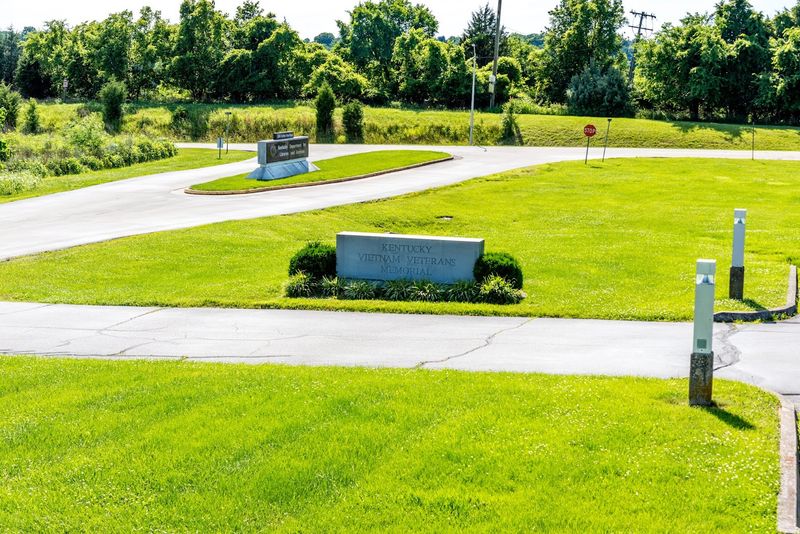
Most memorials ask you to stand and look. This one asks you to think.
The Kentucky Vietnam Veterans Memorial in Frankfort uses a giant sundial so that the shadow of the gnomon falls on each veteran’s name on the exact anniversary of their death.
It is one of the most thoughtful and quietly emotional memorial designs in the country.
The concept came from a local architect, and the execution is flawless.
The memorial sits on a gentle hillside with views of the surrounding city, and the overall setting has a calm, contemplative quality that invites you to slow down.
You do not need to know anyone listed there to feel something standing in front of it.
The design has won multiple national awards and is frequently cited as one of the most creative public memorials in America. It is the kind of place that surprises you with how much it affects you.
Visiting takes maybe twenty minutes, but you will think about it for much longer. The combination of clever engineering and deep human meaning makes this one of Frankfort’s most genuinely moving landmarks.
Do not skip it.
Corner Of Wapping Street And Its Riverside Charm
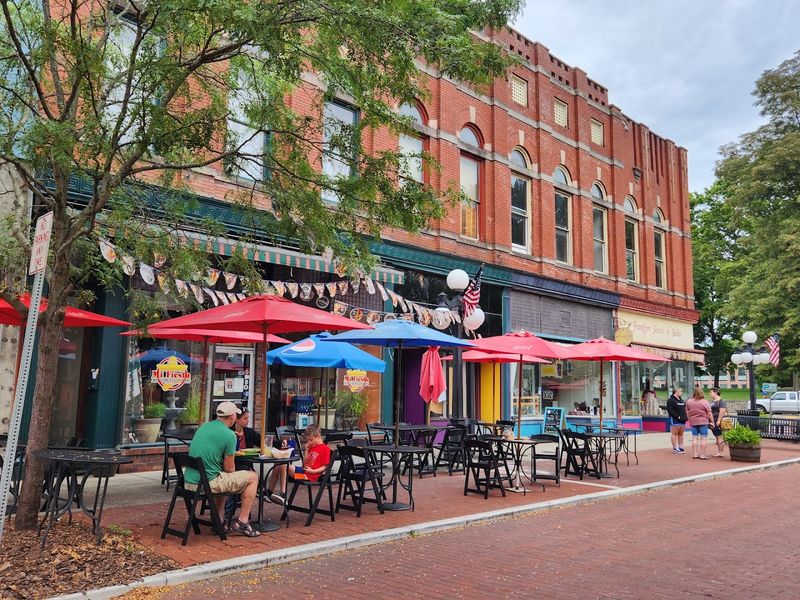
Wapping Street runs right along the Kentucky River and has the kind of charm that makes you want to move there immediately.
The name alone sounds like it belongs in a Charles Dickens novel, and the street more than lives up to the title. Old homes lean toward the water with porches and gardens that have clearly been loved for generations.
The neighborhood dates back to Frankfort’s earliest days as a river trading town.
Some of the structures along this corridor are among the oldest in the city, and walking the street feels like stepping through a very well-preserved timeline of American domestic architecture. It is quiet, residential, and genuinely beautiful.
The river moves slowly past the back gardens, and on still mornings the reflections in the water are almost perfectly clear.
This is not a tourist attraction with a gift shop. It is just a real neighborhood that happens to look like something out of a European riverside town.
Bring a camera, wear comfortable shoes, and plan to walk slowly. The details reward attention.
Few visitors to Frankfort even know this street exists, which somehow makes it even better.
The Liberty Hall Historic Site And Its Georgian Architecture
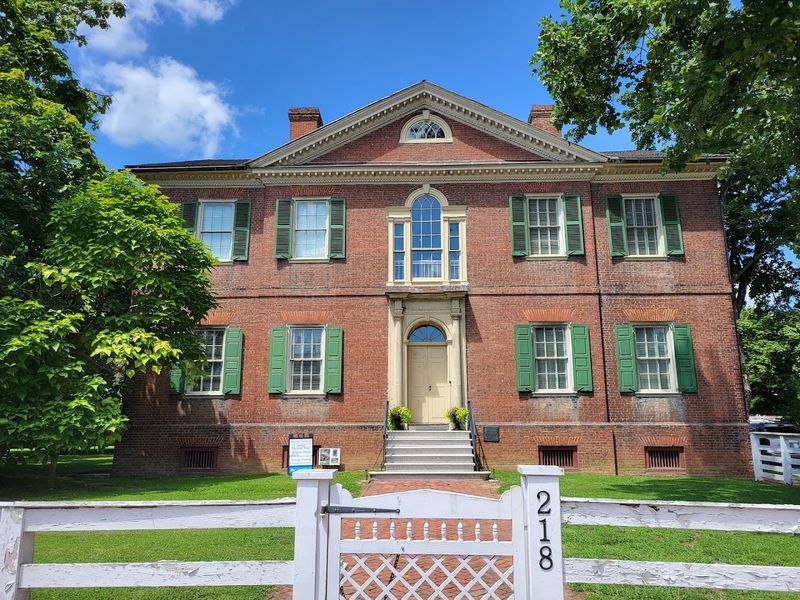
Liberty Hall looks like it belongs on the grounds of a British estate, not a block from downtown Frankfort.
Built in 1796 by Kentucky’s first U.S. Senator, John Brown, the Georgian brick mansion is one of the best-preserved examples of Federal-period architecture in the entire state.
It is elegant without being showy.
The formal garden behind the house is the real surprise.
Laid out in the style of 18th-century European gardens, with symmetrical beds, boxwood hedges, and carefully placed pathways, it creates a sense of order and beauty that feels genuinely old-world.
Standing in that garden, you could easily forget what decade you are in.
Tours of the interior reveal period furniture, original family artifacts, and rooms that have barely changed since the early 1800s.
The neighboring Orlando Brown House, built in 1835 for John Brown’s son Orlando, is an important early example of Greek Revival architecture.
Together, the two buildings form a small historic campus that tells the story of early Kentucky politics and culture in vivid detail.
Admission is affordable, the guides are knowledgeable, and the whole experience is far more engaging than it sounds on paper.
The Capital City Museum And Frankfort’s Layered History
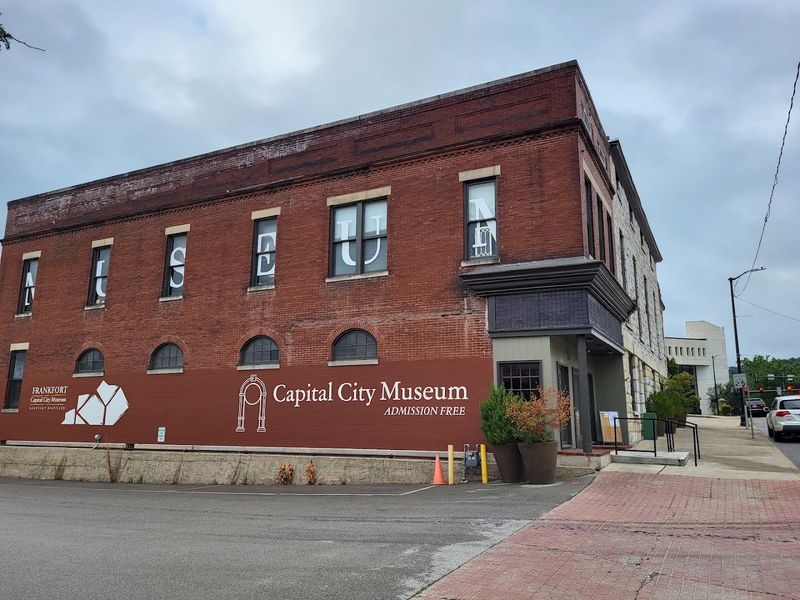
Frankfort became Kentucky’s capital in 1792, and the Capital City Museum does a genuinely good job of explaining why that matters.
Located at 325 Ann Street in downtown Frankfort, the museum covers the town’s founding, its role in Kentucky politics, and the everyday lives of its earliest residents. It is the kind of local history museum that actually holds your attention.
The exhibits include original documents, maps, photographs, and artifacts that give real texture to what life looked like here two centuries ago.
There is something almost European about how seriously Frankfort takes its own civic history. The town knows where it came from and is not shy about it.
One of the more interesting exhibits traces the city’s layout, which was designed to feel formal and intentional from the very beginning.
Wide streets, public squares, and civic buildings were planned with a sense of permanence that most frontier towns completely ignored.
That planning is part of why Frankfort still looks so coherent and well-proportioned today. The museum is free to enter, small enough to tour in under an hour, and genuinely worth the stop.
It reframes everything else you see in the city once you know the backstory.
The Kentucky River And Its Dramatic Palisades Views
The Kentucky River does not just pass through Frankfort. It defines it.
The stretch of river near the city cuts through dramatic limestone palisades that rise sharply on both sides, creating a landscape that looks more like central France than central Kentucky.
The cliffs are stunning and completely unexpected if you have never seen them before.
Several overlooks near the city give you a full view of the river and the bluffs, and on clear days the scene is genuinely breathtaking.
The combination of the slow green water, the pale limestone walls, and the dense forest above creates a layered visual effect that photographers absolutely love. It is one of those places that looks better in person than in any photo.
Canoeing and kayaking on the river are popular options for getting closer to the palisades, and several outfitters in the area offer rentals and guided trips.
Even if you stay on land, the views from the walking paths near the city are more than worth the effort. The river has shaped Frankfort’s geography, economy, and identity for over two centuries.
Seeing it up close makes the whole city make more sense, and it is completely free to enjoy.