You’ll Never Want To Explore These 7 Creepy Places In Connecticut After Dark
Some places just have an energy that is hard to explain in the daylight and nearly impossible to shake after dark.
Connecticut has a surprisingly long list of spots that come with stories attached – the kind that locals pass around and visitors stumble onto completely unprepared.
History runs deep here and not all of it is the kind that sits quietly. Abandoned buildings that have seen things, roads that locals avoid after a certain hour, and locations so steeped in local legend that even the most skeptical person starts feeling something they cannot quite name.
These creepy places are the kind of spots that dare you to show up after dark and make absolutely no promises about what happens if you do. Consider yourself warned and maybe keep the group chat open just in case.
1. Union Cemetery, Easton
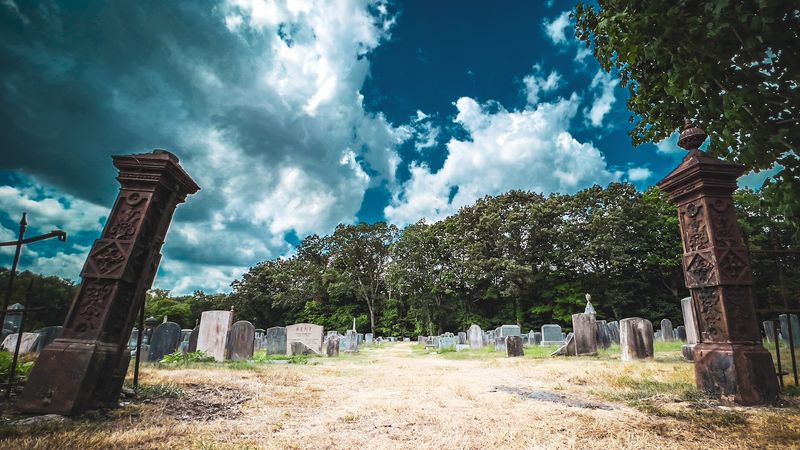
Considered by many paranormal researchers to be one of the most haunted cemeteries in the entire United States, this small burial ground in Easton has built a reputation that stretches far beyond Connecticut’s borders. Located at the intersection of Routes 59 and CT-136, the cemetery sits quietly beside a white church, looking almost ordinary during daylight hours.
The contrast between its peaceful daytime appearance and its nighttime reputation is part of what makes it so unsettling.
The most frequently reported apparition here is known as the White Lady, described as a glowing female figure who appears among the headstones after dark. Accounts of this figure have circulated for decades, drawing ghost hunters, documentary crews, and curious visitors from across the country.
The stories are consistent enough that even local residents tend to avoid the area once the sun goes down.
Beyond the White Lady, a separate figure known as Red Eyes has reportedly been spotted near the adjacent Stepney Cemetery, adding another layer of unease to the already tense atmosphere. The gravestones themselves date back several centuries, with some markers so weathered that the names carved into them are nearly impossible to read.
That kind of age carries its own quiet weight.
Visiting during daylight hours is a far more manageable experience, and the historical value of the cemetery is genuinely worth the trip. Many of the graves belong to early Easton settlers, and the churchyard setting gives the location a solemn, respectful character.
After dark, however, the mood shifts entirely, and the surrounding woods seem to press in closer than they did just hours before. For anyone curious about Connecticut’s paranormal history, this is the place most researchers point to first.
2. Gunntown Cemetery, Naugatuck
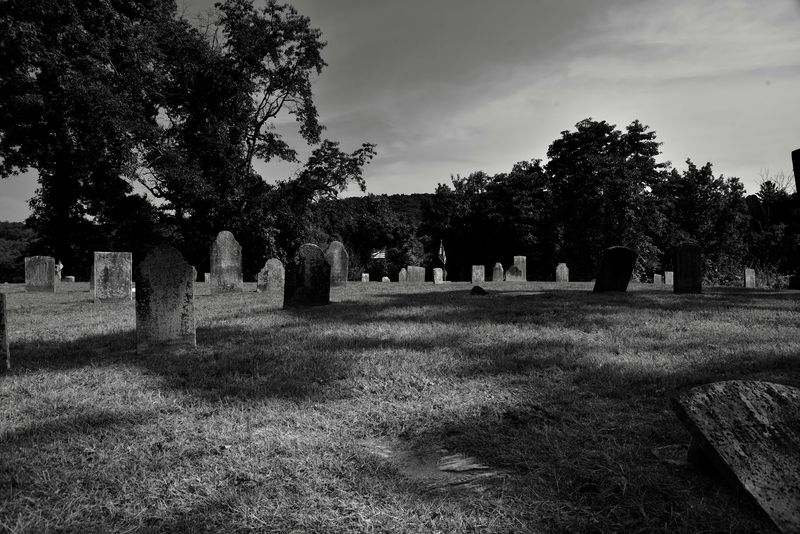
This historic burial ground in Naugatuck has earned a reputation as one of the creepiest spots in the valley. Dating back to the late 1700s, some of the oldest markers lean at unsettling angles after centuries of settling ground, giving the cemetery a haunting presence even on bright afternoons.
The layout is uneven, with clusters of graves from the same families placed closely together, reflecting the hardships of colonial-era life. Local legend claims the cemetery was cursed long ago, warning that anyone who disrespects the graves may find themselves followed home by something inexplicable.
Whether or not the stories hold any truth, the physical environment does little to discourage imagination. Overgrown paths, cracked stones, and the general isolation of the location combine to create a setting that feels genuinely removed from the ordinary world.
Paranormal investigators have documented unusual activity here over the years, including strange sounds, sudden temperature drops, and photographic anomalies that remain difficult to explain. The cemetery is not heavily trafficked, which means most visits are solitary, offering very little ambient noise and an almost tangible sense of presence in the stillness.
Families and history enthusiasts will find the inscriptions revealing, providing a glimpse into the lives of some of Naugatuck’s earliest settlers and the challenges they faced. Observing these markers during daylight offers context and appreciation for the cemetery’s history, but the atmosphere changes dramatically after dark, producing a sense of eeriness that few visitors choose to experience twice.
For anyone intrigued by history, folklore, or the unexplained, Gunntown Cemetery provides a striking mix of all three. You can find the cemetery at 243 Gunntown Rd, Naugatuck, CT 06770.
3. Lamson Corner Cemetery, Burlington
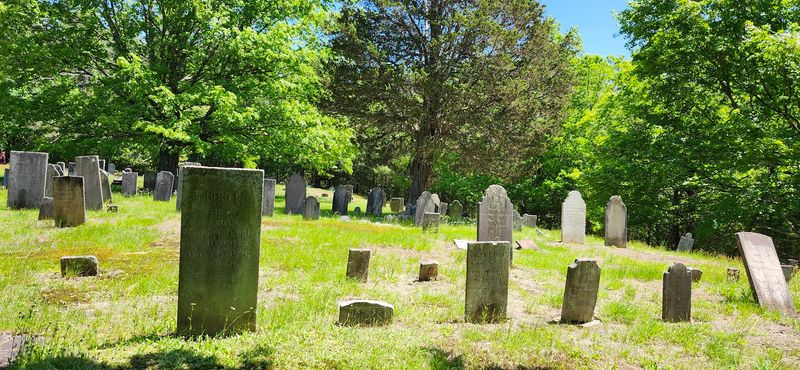
Burlington is a small, quiet town in Hartford County that most people drive through without a second thought, but the Lamson Corner Cemetery has given it a place on Connecticut’s list of genuinely unsettling locations. Situated near the Upton and Jerome Avenue area, this modest burial ground is easy to miss until the moment it comes into view, at which point the atmosphere shifts in a way that is hard to put into words.
The trees surrounding the site grow dense and close, blocking out light even on clear days.
The cemetery is one of several in Burlington that has attracted paranormal attention over the years, partly because of its remote setting and partly because of the age and condition of its markers. Some of the headstones are so old that they have sunk partially into the earth, giving the ground an uneven, almost unsettled quality underfoot.
Visitors have described a persistent feeling of being watched while walking through the rows, even when no one else is visibly present.
Unusual cold spots have been reported here even during warmer months, and some visitors have noted that their phones and cameras behave oddly near certain sections of the cemetery. These kinds of reports are consistent enough to have made Lamson Corner a regular stop for paranormal enthusiasts exploring Connecticut’s rural back roads.
The combination of history, isolation, and accumulated local lore creates an environment that feels genuinely weighted.
During daylight hours the cemetery is peaceful and historically interesting, with markers that reflect Burlington’s early settlement history. The names carved into the stones are familiar to longtime residents, and the site is maintained well enough to suggest that the community still values its connection to the past.
After dark, though, the combination of dense woods and deep quiet makes the place feel like it belongs to another time entirely.
4. Evergreen Cemetery, New Haven
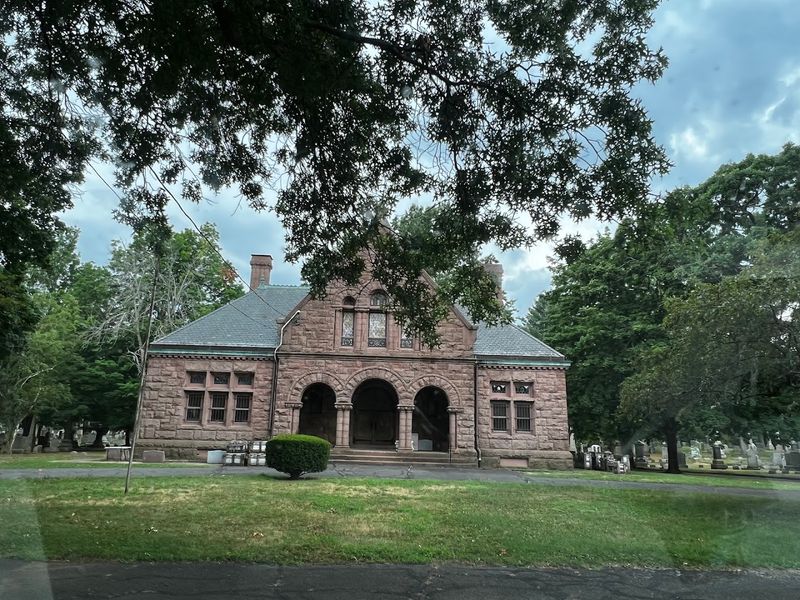
Large historic cemeteries carry a particular kind of atmosphere that smaller rural burial grounds simply cannot replicate, and the scale of this New Haven site makes it one of the most striking in all of Connecticut. Located at 769 Ella T Grasso Blvd, Evergreen Cemetery spans a considerable area and contains graves dating back to the early nineteenth century, with monuments ranging from modest flat stones to elaborate Victorian-era sculptures.
The variety of markers tells the story of New Haven’s evolving history in a way that few other places can.
After dark, the cemetery transforms in a way that even regular visitors find difficult to describe calmly. The tall trees that line the interior paths block out ambient city light more effectively than expected, creating pockets of genuine darkness within an otherwise urban environment.
That contrast between the surrounding city noise and the sudden quiet inside the cemetery gates is one of the first things people notice when they visit after hours.
Reports of paranormal activity at Evergreen have circulated for years, with unexplained lights, shadowy figures near older sections of the grounds, and unusual sounds being among the most commonly described experiences. The cemetery is large enough that certain areas feel genuinely remote even though the city surrounds it on all sides.
That sense of isolation within an urban space adds a layer of unease that purely rural cemeteries do not always produce.
The historical significance of Evergreen is substantial, and many notable figures connected to New Haven’s past are buried here. Exploring the grounds during daylight hours offers a genuine education in local history, with inscriptions and monument styles reflecting different eras of the city’s development.
The combination of historical depth and persistent paranormal reputation makes this one of the more layered and complex stops on any tour of Connecticut’s creepiest places.
5. Old New-Gate Prison & Copper Mine, East Granby
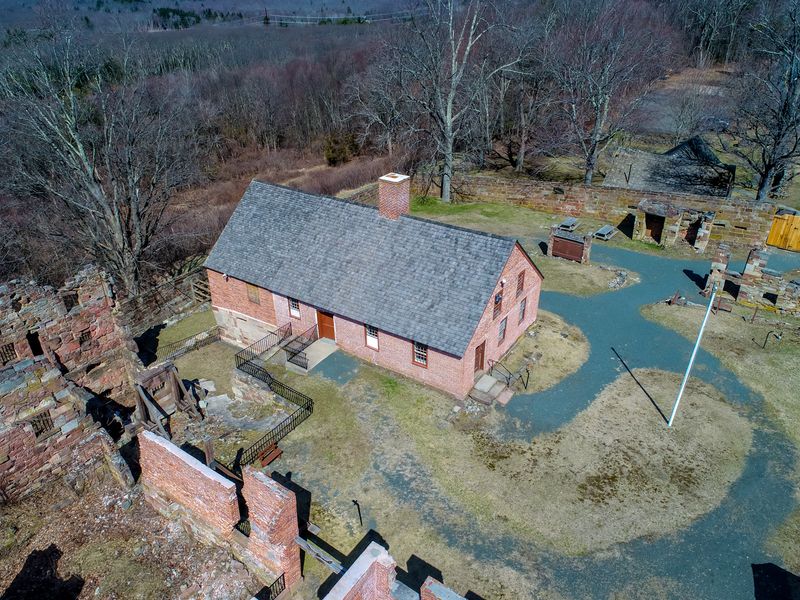
This site stands out in Connecticut’s history as something darker than most people expect from a museum. Long before it became a preserved landmark, the area began as one of the first chartered copper mines in North America in the early 1700s and later became the state’s first official prison.
When mining operations wound down in the mid‑18th century, deep shafts and cavernous tunnels already carved into the earth became the setting for confinement rather than extraction. Beginning in the 1770s, the colony of Connecticut converted the abandoned mine into a prison, sending convicts deep underground into narrow, damp passages with almost no natural light or ventilation.
Conditions were notoriously harsh, with prisoners living and working in darkness that stretched into every corner of their daily existence. Overcrowding, makeshift cells, and forced labor turned what might have been a bleak punishment into something close to a nightmarish experience for those held there.
Today the prison and mine are treated as an archaeological preserve and history museum that sparks curiosity about early American industry, justice, and punishment, rather than merely entertaining sensational ideas. Visitors can explore the ruins, examine exhibits on site, and take guided tours of the old mine passages to get a sense of how dramatically this place differed from more humane penal facilities.
You’ll find the site at 115 Newgate Rd, East Granby, CT 06026, where the physical remnants of centuries‑old stone walls, tunnels, and guardhouses offer a palpable reminder of the grim realities faced here long ago.
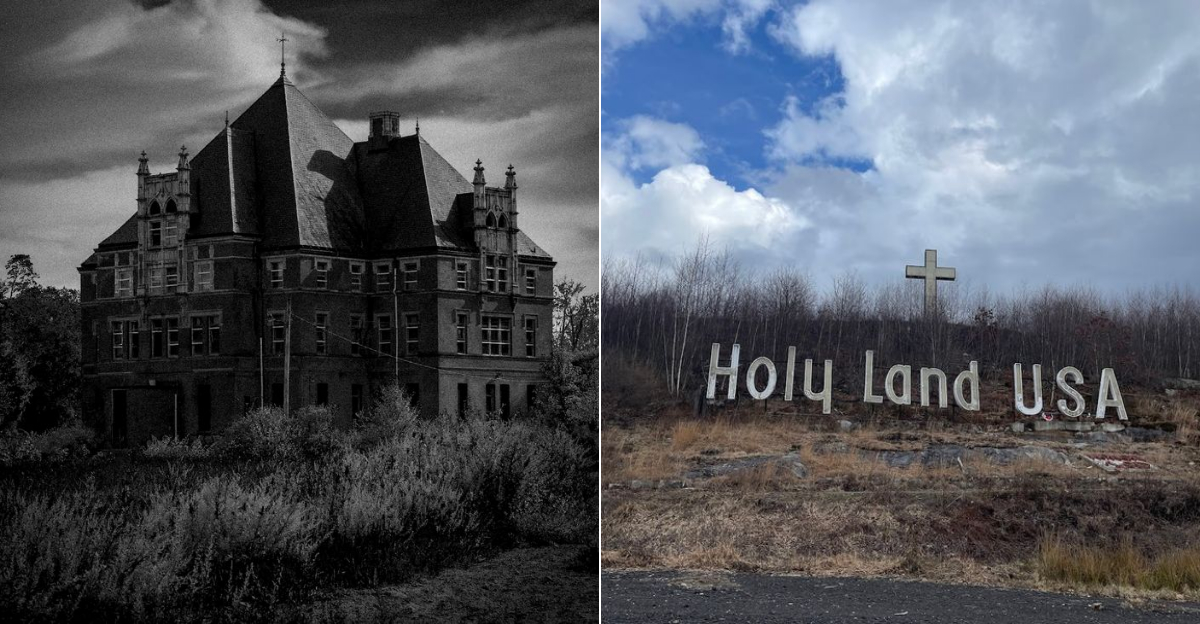
6. Holy Land USA, Waterbury, CT
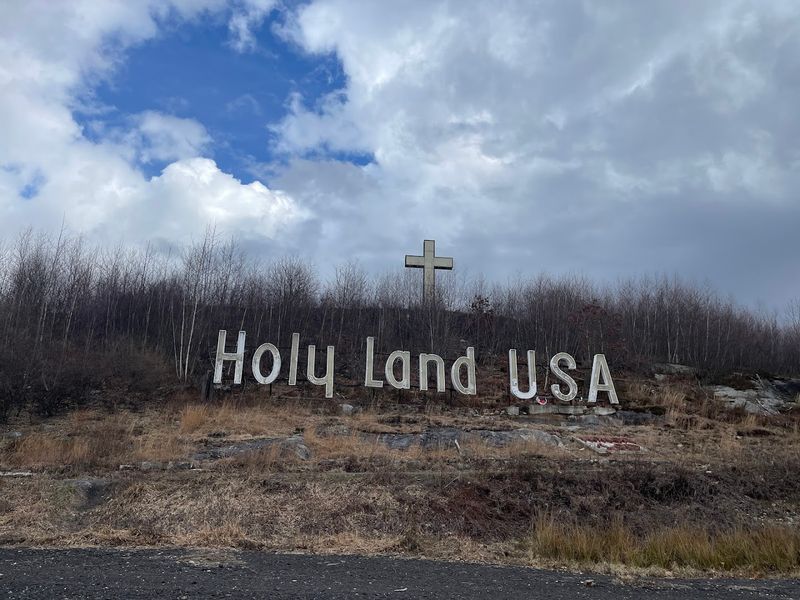
This decaying religious theme park has been drawing curious and unnerved visitors for decades, and its crumbling state gives it an atmosphere unlike almost anything else in New England. Holy Land USA was originally built starting in the 1950s as a sprawling outdoor recreation of biblical scenes, complete with miniature structures, painted signs, and religious statues spread across several acres.
At its peak it attracted hundreds of thousands of visitors, but after closing in 1984 it was left largely untended and slowly consumed by weather and vegetation. The site sits on Pine Hill and can be seen from parts of Waterbury below, with a large illuminated cross that has become something of a landmark for the city.
Portions of the property have undergone restoration efforts in recent years, and some areas are accessible to the public through organized visits, though conditions and access details may vary and should be confirmed before planning a trip. Holy Land USA can be found at 60 Slocum St, Waterbury, CT 06706.
The combination of religious iconography and decades of neglect creates a visual environment that many visitors find deeply unsettling.
Cracked statues, faded murals, and rusted metal structures scattered across the hillside give the impression of a world that was frozen mid-sentence and never allowed to finish. The overgrown paths between exhibits feel narrow and close, and the hilltop location means that wind moves through constantly, producing sounds that carry easily through the deteriorating structures.
After dark, the illuminated cross visible from the city below takes on a very different character than it holds during daylight hours. The history of the site is genuinely fascinating from a cultural and architectural standpoint, reflecting a particular era of American religious expression that has largely faded.
Visiting with awareness of the ongoing restoration work adds context to what can otherwise feel like a purely eerie experience, grounding the strangeness of the place in something human and historically specific.
7. Norwich State Hospital, Preston, CT
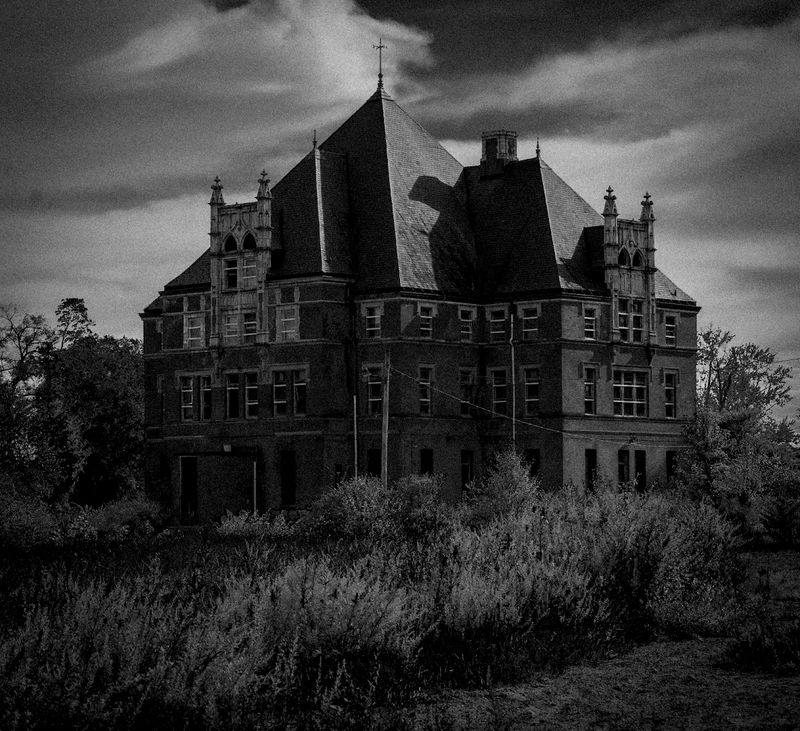
Abandoned psychiatric institutions carry a particular kind of dread that is difficult to replicate, and the former Norwich State Hospital in Preston is one of the most visually striking examples of that category in all of Connecticut. The complex was established in 1904 and operated for nearly a century before closing in 1996, leaving behind a collection of massive brick buildings that have been deteriorating ever since.
The scale of the site is genuinely surprising the first time it comes into view, with multiple large structures spread across a substantial piece of land along the Thames River.
The property has been the subject of redevelopment discussions for years, and access to the buildings is not permitted due to safety hazards and ongoing legal and planning processes. The exterior of the complex is visible from public roads, and the sight of those large decaying structures is enough to understand why the location has accumulated such a powerful reputation.
Broken windows, collapsed sections of roof, and heavily overgrown grounds combine to create an image that feels more like a film set than a real place.
Paranormal interest in the site has been substantial, driven largely by the building’s history as a mental health facility and the stories of patients who lived there throughout nearly a century of operation. Unexplained lights visible from outside the perimeter, unusual sounds carrying across the grounds after dark, and the general atmosphere of institutional abandonment have made it a frequent subject of ghost hunting content and local legend alike.
The history of Norwich State Hospital is also a serious and sobering chapter in Connecticut’s mental health care past, touching on issues of institutional treatment that deserve thoughtful engagement rather than simple sensationalism. The buildings themselves represent a kind of architectural record of that history, and even viewed from a distance they communicate something about the weight of what happened inside them over nearly a hundred years of operation.