You’re Not Prepared For These 8 Wonderfully Weird Museums In New York
Famous landmarks are only half the story. The stranger half hides in plain sight. You find it down alleys and back roads.
These museums ignore every usual rule. So each visit catches you off guard. New York saves its weird side for the curious.
I love a place that makes no sense. These broke my expectations. One tells a story you never knew. Wonder pulls you from room to room. The surprises never really stop.
Some fit in one room. Others sprawl through houses. So no two visits feel alike. You leave with questions and a grin.
Bring an open mind and go.
1. Mmuseumm
Slow down for a second and ask yourself: when did you last look at a plastic bag and feel something?
That question is exactly what this tiny freight elevator museum invites you to sit with. Mmuseumm is not your typical exhibition space, and that is precisely the point.
The collection here focuses on overlooked objects from modern life. A single shoe, a failed product, a piece of debris from a news event.
Each item is curated with a short explanation that transforms it into something worth studying.
The curators behind Mmuseumm believe that ordinary things carry extraordinary weight. Their rotating exhibitions have featured everything from a rejected cereal box to objects collected from international conflicts.
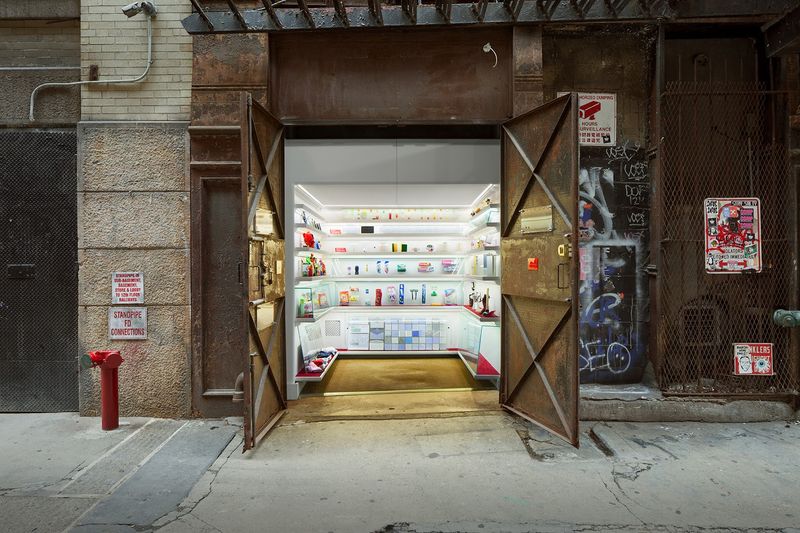
Nothing here is random. The museum occupies a repurposed freight elevator shaft in Cortlandt Alley. You can find it at 4 Cortlandt Alley in New York, tucked between SoHo and Tribeca.
The alley itself adds a layer of discovery to the whole experience.
The heavy, industrial doors open directly onto the sidewalk, allowing passersby to peer into the glowing, subterranean cabinet of curiosities at any hour of the day. It turns a gritty, forgotten Manhattan passage into an unexpected gallery for the curious.
Groups tend to linger longer than expected. One small object often sparks a ten-minute conversation between strangers.
That kind of slow, deliberate attention is rare and refreshing. Mmuseumm proves that curation is not about size. It is about intention.
A single hallway of carefully chosen objects can shift your perspective more than an entire floor of traditional exhibits ever could.
2. The City Reliquary Museum
There is a specific kind of nostalgia that hits when you see a subway token behind glass.
It is small, brass, and somehow holds an entire era of the city inside it. The City Reliquary Museum in Brooklyn runs entirely on that feeling.
This community-focused institution collects and preserves artifacts tied to New York City’s everyday past. Old storefronts, neighborhood relics, donated objects from longtime residents.
The result is a deeply personal portrait of a city in constant change.
What sets this museum apart is its grassroots character. It was founded by neighborhood volunteers and still runs with strong community involvement.
The collections grow because people bring things in, not because a board approves acquisitions.
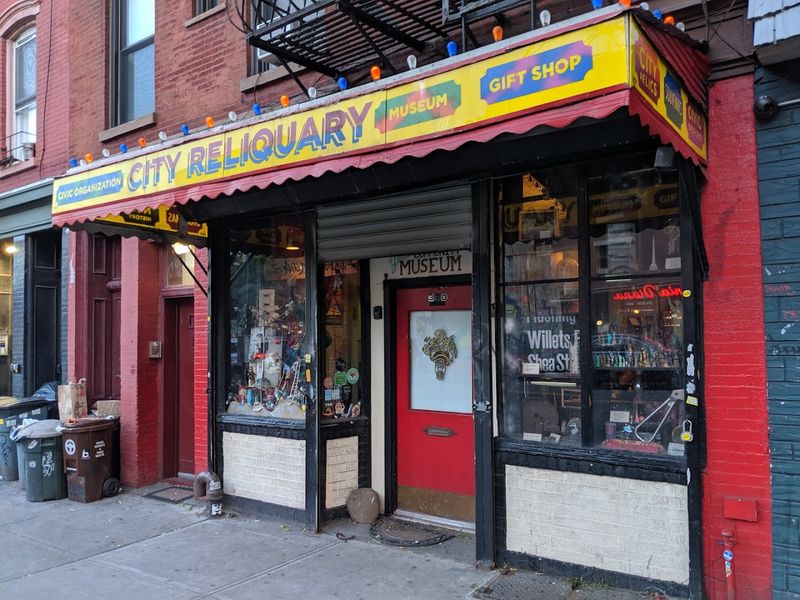
The building itself is modest and welcoming. You will find the museum at 370 Metropolitan Ave in Brooklyn, sitting comfortably within the Williamsburg neighborhood.
It fits right into the block without trying to stand out.
Rotating exhibitions often highlight specific immigrant communities or forgotten industries. One recent display focused entirely on the history of Brooklyn seltzer delivery.
That level of specificity is what makes the Reliquary so compelling.
Even the backyard garden serves as a living gallery, cluttered with salvaged architectural ornaments, old lampposts, and fragments of demolished landmarks that refuse to be forgotten.
Spending time here teaches you that history is not always grand. Sometimes it is a chipped dish, a handwritten receipt, or a faded photograph from a block party.
Those small pieces, together, build something that feels surprisingly complete.
3. Sing Sing Prison Museum

Few collections carry the weight of this one. Walking through exhibits about incarceration, reform, and justice is not light entertainment.
The Sing Sing Prison Museum in Ossining takes on that responsibility with care and seriousness.
The museum documents the history of one of America’s most recognized correctional facilities. Artifacts, photographs, and personal accounts trace the evolution of the prison system from the 1820s to the present.
The scope is both historical and deeply human.
Exhibits cover not just the institution but the lives of those who passed through it. Guards, administrators, incarcerated individuals, and reformers all have a presence here.
That balance of perspectives is what makes the storytelling so layered.
The museum is located at 30 State St in Ossining, on the banks of the Hudson River. The setting adds a certain gravity to the experience. You are standing close to where so much American legal history unfolded.
Educational programming here is strong and thoughtful. Schools and community groups regularly engage with the museum’s material through guided discussions. The goal is reflection, not spectacle.
Visiting the Sing Sing Prison Museum challenges you to think critically about justice and reform. It does not offer easy answers, and it is not supposed to.
What it does offer is an honest, unflinching look at a system that shaped, and continues to shape, American society in profound ways.
4. Museum Of Illusions New York
Have you ever circled back to one room you simply could not shake?
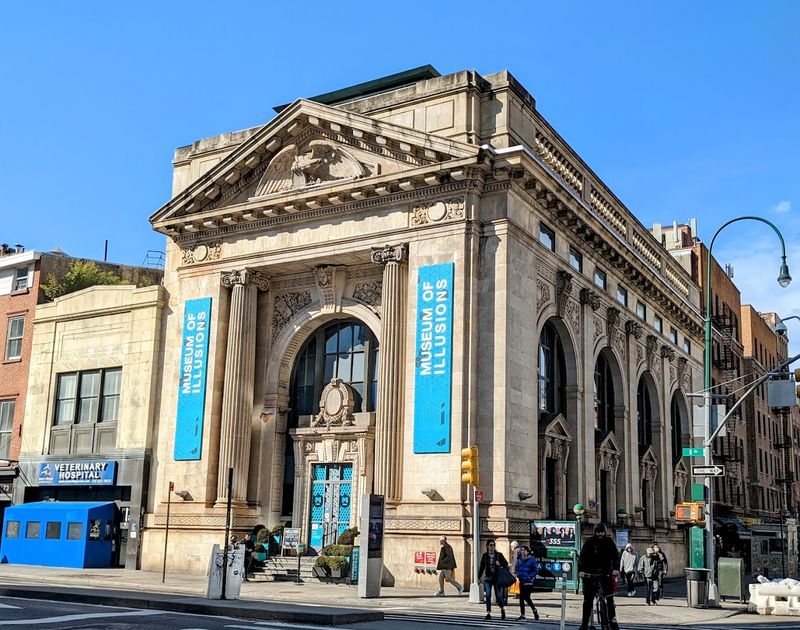
That is the exact loop most people find themselves in at this interactive Manhattan attraction. The Museum of Illusions in New York is built to confuse your brain in the best way possible.
The exhibits here use science and art together to create experiences that trick your perception. Rooms appear to tilt, objects seem to float, and your reflection does things it really should not.
Each installation is grounded in the psychology of visual perception. What makes it work for all ages is its accessibility. There are no long explanations required.
You walk in, engage, and your brain does the rest. The learning happens through the confusion itself.
The museum sits at 77 8th Ave in New York, right in the Chelsea neighborhood. It is easy to reach from most parts of Manhattan. The central location makes it a natural stop on any city day.
Groups tend to move through at their own pace, doubling back to recreate certain effects. The vortex tunnel and the infinity room consistently draw the longest lines. Both are worth every second of waiting.
Photography is not just allowed here, it is encouraged. Most people leave with dozens of photos that make no visual sense to anyone who was not there.
That shared confusion becomes its own kind of souvenir from a genuinely disorienting afternoon.
5. Opus 40
Some things take your breath away before you even understand what you are looking at.
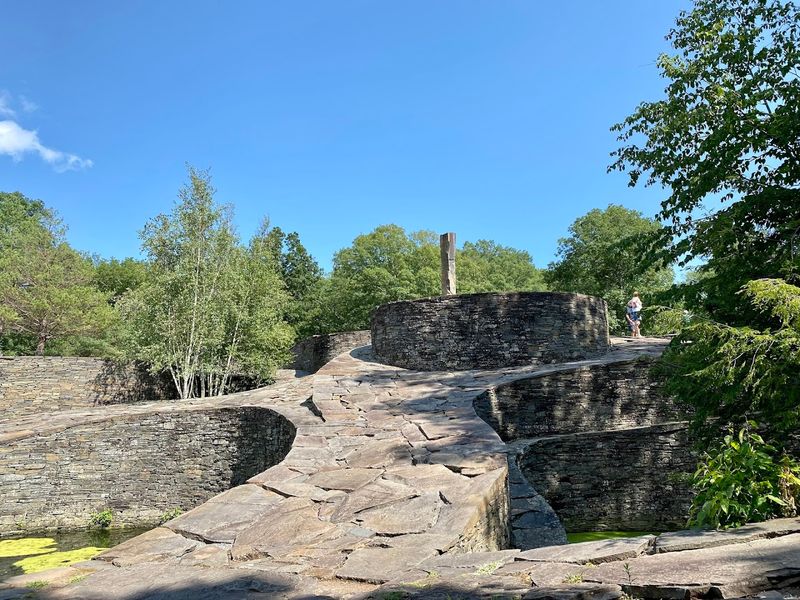
That is the effect of stepping onto the grounds of this extraordinary sculptural landscape for the first time. Opus 40 in Saugerties is a work of art on a scale that feels almost impossible.
Harvey Fite spent 37 years hand-carving six and a half acres of bluestone into terraces, ramps, pools, and pathways. He worked largely alone, using traditional stone-cutting tools.
The result is a single unified sculpture that doubles as a functioning landscape.
At the center of the site stands a nine-ton bluestone monolith. It anchors the entire composition without explanation or signage. You simply stand near it and feel the weight of everything around it.
The property also houses a museum dedicated to Fite’s tools, process, and personal history. You can find the full site at 356 George Sickle Rd in Saugerties, nestled in the Hudson Valley.
The surrounding Catskill landscape deepens the atmosphere considerably.
Seasonal events, concerts, and outdoor performances bring the site to life throughout warmer months. The acoustics of the stone terraces make live music feel unexpectedly intimate.
Even a quiet weekday walk here rewards attention. Opus 40 is not a museum in the traditional sense. It is closer to a lifetime made tangible.
Walking its pathways leaves most people unusually quiet, turning the experience over in their minds long after they have left.
6. National Museum Of Mathematics
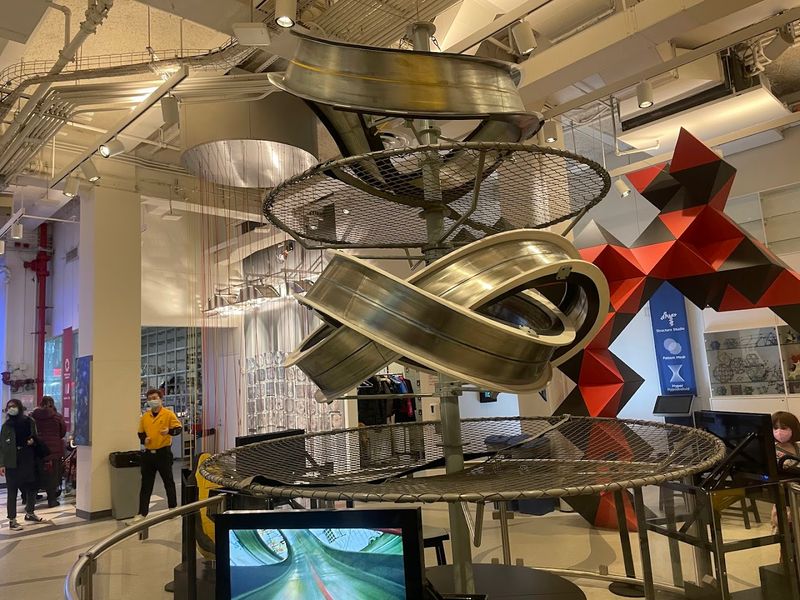
Most people carry a complicated history with math. It is either a subject they loved or one that made them feel lost.
MoMath, the National Museum of Mathematics in New York, was built specifically to change that relationship.
The exhibits here are entirely hands-on and designed to make abstract concepts feel physical and fun. Visitors can ride a tricycle with square wheels on a curved track that somehow produces a smooth ride.
That single experience rewires how you think about geometry.
The museum spans two floors of interactive installations. Each one is tied to a real mathematical principle, but the explanations never feel like a lecture. Discovery is built into the design of every exhibit.
MoMath is located at 635 6th Ave in New York, directly across from Madison Square Park. The central Manhattan address makes it an easy addition to any city itinerary.
The building is compact but efficiently packed with content.
Programs for school groups run year-round, and weekend events often draw adults without children in tow. Math puzzle nights and special lectures attract a crowd that genuinely loves numbers.
The community around the museum is part of its appeal.
Leaving MoMath, you tend to notice patterns and shapes you previously ignored. A staircase, a tiled floor, a shadow on a wall. The museum does not just teach math. It quietly trains you to see it everywhere around you.
7. ARTECHOUSE NYC
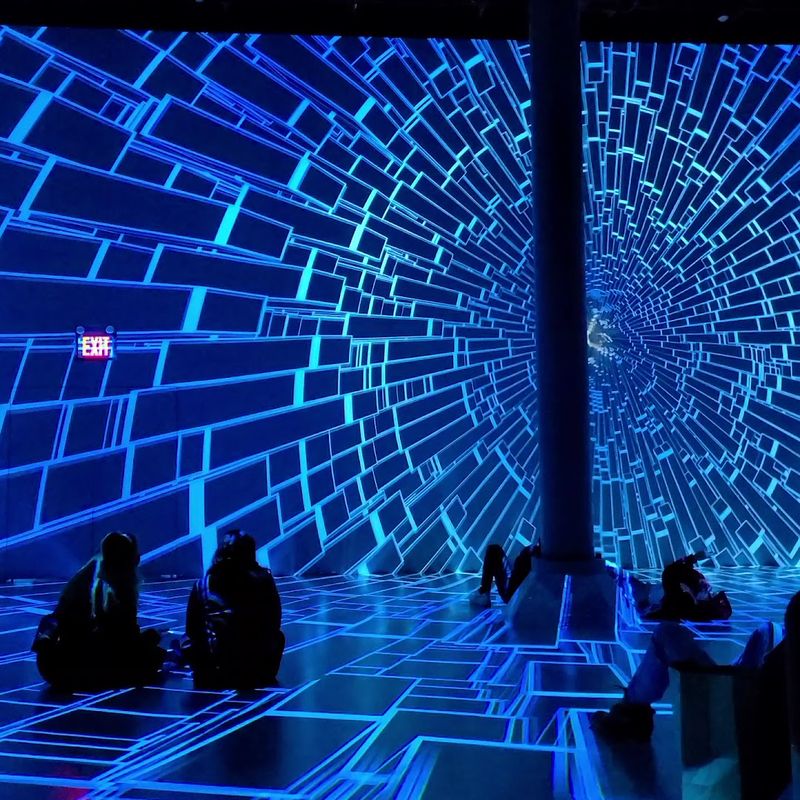
Forget standing still in front of a framed canvas. At ARTECHOUSE NYC, the art surrounds you completely, moves with you, and responds to the space you occupy.
It is a fundamentally different kind of encounter with creative work.
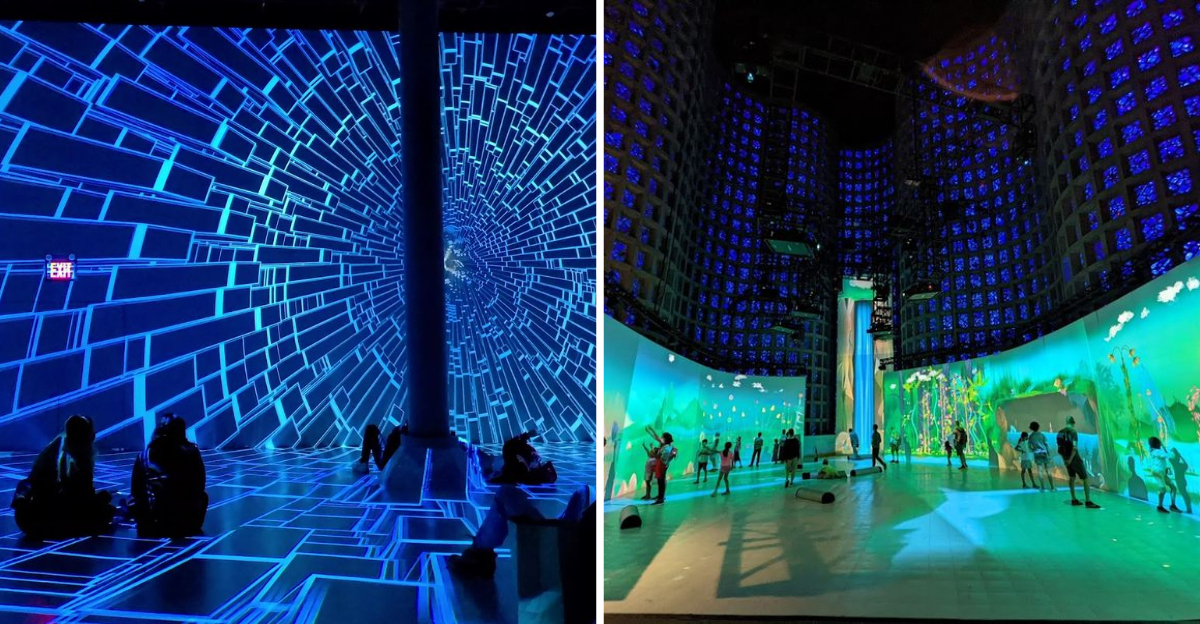
This technology-driven art space presents large-scale immersive exhibitions that blend projection mapping, sound design, and interactive elements. Each installation is created specifically for the venue. No two exhibitions feel remotely alike.
The space itself is a former underground space beneath Chelsea Market. High ceilings and dark walls make the projections hit with full intensity. The environment removes distractions and pulls you entirely into the work.
You will find ARTECHOUSE at 439 W 15th St in New York, steps from the High Line and Chelsea Market. The neighborhood is dense with creative energy, and ARTECHOUSE fits naturally within it.
The surrounding area makes for a full afternoon of exploration.
Past exhibitions have drawn on themes from nature, data visualization, and global mythology. The artists behind each show work across disciplines, combining code, music, and visual art.
That cross-disciplinary approach keeps the programming consistently surprising.
ARTECHOUSE appeals to people who have never set foot in a traditional museum and to longtime art enthusiasts equally. It meets you where you are and asks nothing except your attention.
Bringing that attention fully into the room is the whole experience, and it rarely disappoints.
8. New York Hall Of Science
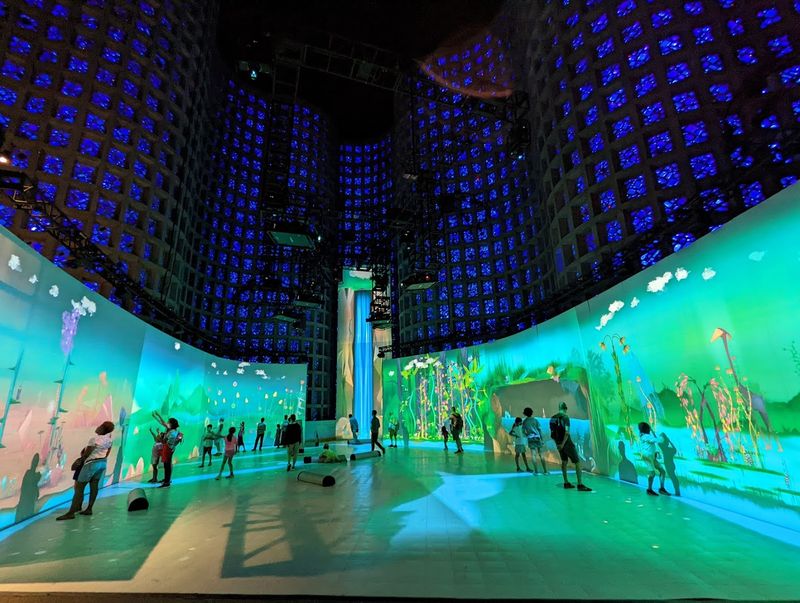
Not every science museum earns its reputation. This one has been building its credibility since the 1964 World’s Fair.
The New York Hall of Science in Corona, Queens, carries that legacy forward with serious energy.
The building itself is worth noting before you step inside. Its curved, textured concrete exterior is a piece of mid-century architecture that still looks striking today.
The rocket park outside holds actual spacecraft from the space race era.
Inside, the exhibits cover biology, physics, chemistry, and technology across multiple floors. The design encourages active participation at every turn.
You are expected to touch, build, test, and ask questions throughout your time here.
The Connected Worlds installation is a standout feature. It is a fully immersive digital ecosystem that responds to the movements of everyone in the room.
Children and adults engage with it differently, which makes it endlessly watchable.
The museum is located at 47-01 111th St in Corona, within Flushing Meadows-Corona Park. The surrounding park offers additional space to decompress after a full day of exhibits.
The combination makes for a well-rounded outing.
What makes the Hall of Science distinct is its commitment to serving its local community. Programming is multilingual and designed with accessibility in mind.
That grounded, neighborhood-first approach gives the whole institution a warmth that larger science museums sometimes lack, and it shows in every corner of the building.