7 Idaho Railroad Tunnels And Trestles You Walk Or Bike Through On Old Rail Lines
Old train tracks in Idaho did not just fade away when the last freight cars rolled through. Many of those rail beds became trails, and the tunnels and trestles came along for the ride.
Today you can pedal through a mountain in the dark or stroll across a wooden span high above a creek. These seven spots, from the Panhandle to the farm country near the Tetons, let you feel that railroad history under your own wheels and boots.
1. Taft Tunnel, Saltese, ID
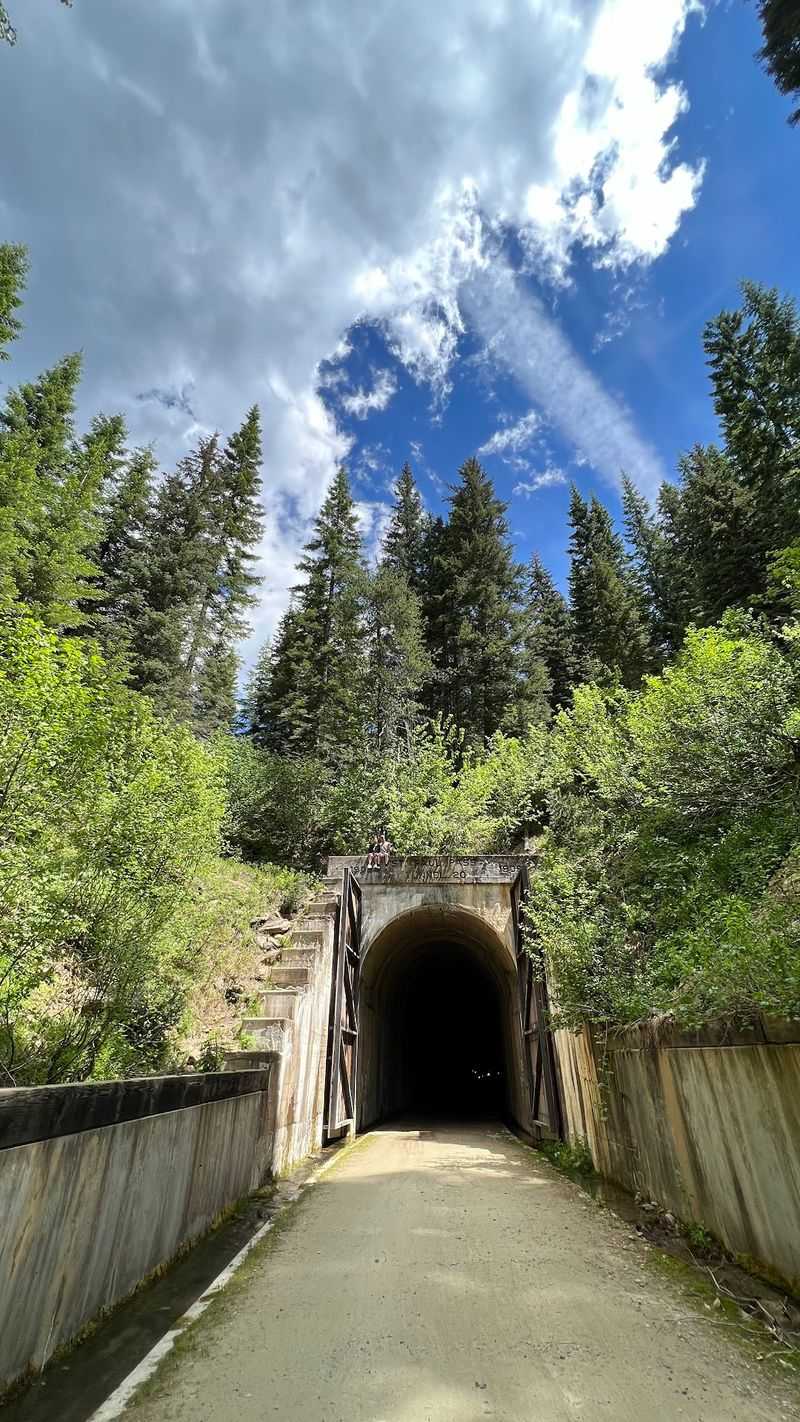
Cold air hits first. Roll up to the East Portal of the Taft Tunnel and you can feel the temperature drop a good 20 degrees before your front tire even crosses into the dark.
Also called the St. Paul Pass Tunnel, this passage runs 1.66 miles through the Bitterroot Mountains on the old Milwaukee Road line. It was dug in the early 1900s, and walking or biking it today feels like stepping inside a giant stone straw.
A strong bike light is not optional here, because the darkness swallows everything beyond your beam.
Keep your eyes peeled partway through for the marker showing the border between Idaho and Montana. Few trails let you cross a state line underground, and kids love calling out which state they are in as they pass it.
The tunnel is the classic opening act for riders starting the Route of the Hiawatha from the east end. Bring a jacket even on a hot August afternoon, since the chill lingers the whole way and dripping water can make the floor damp.
Trail passes sell out on busy summer weekends, so grabbing tickets ahead of time saves a long drive ending in disappointment. The address is NF-300 in Saltese, right along the Idaho state boundary.
2. Kelly Creek Trestle (Milwaukee Road)
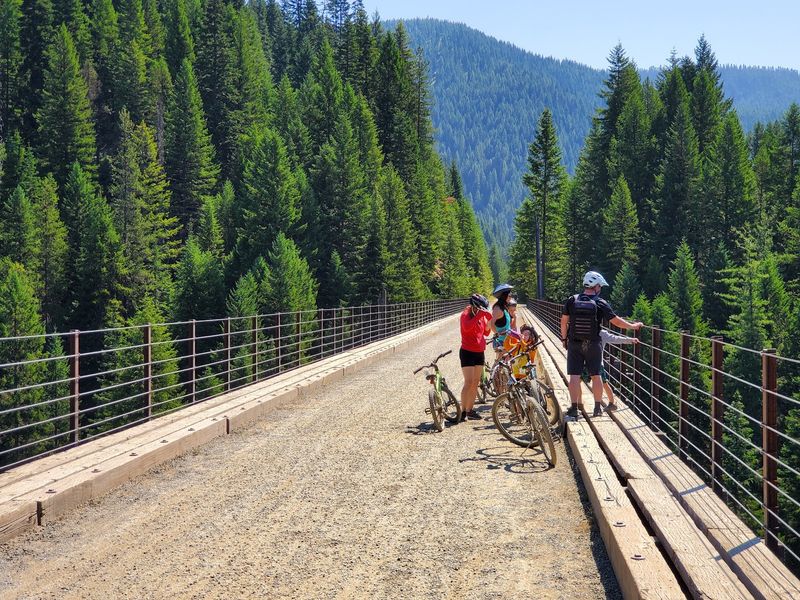
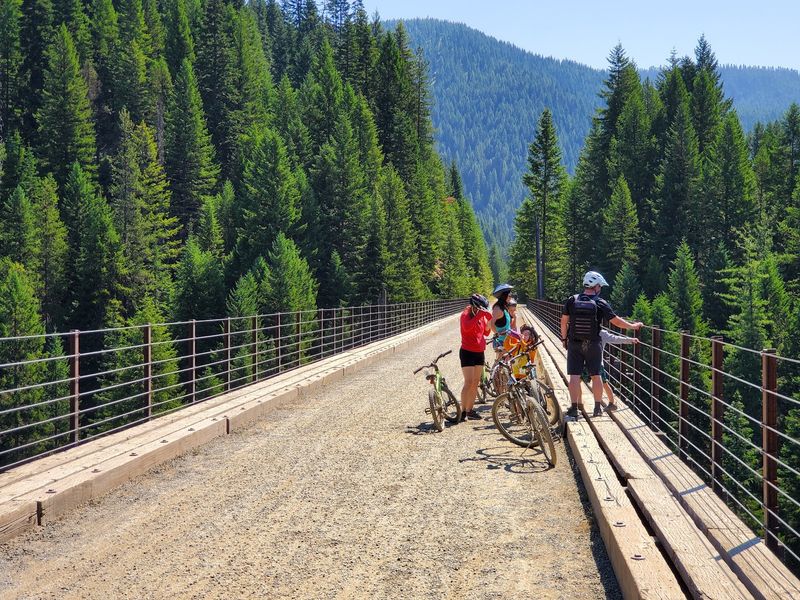
After the long dark of the tunnels, Kelly Creek feels like someone flipped the lights back on. The trees fall away, the ground drops off, and suddenly you are riding through open sky on a towering steel trestle.
Built for the Milwaukee Road, this span once carried heavy trains across a deep Bitterroot Mountain ravine. Now it serves as one of the key crossings on the Route of the Hiawatha, and the railings make it comfortable even for nervous riders.
Most people slow down here on purpose.
Why stop? The views are the reward.
Look down and you see a carpet of evergreens far below, and look out and ridgelines roll away in every direction across the Idaho Panhandle.
Photographers tend to set up near the ends of the trestle to catch riders stretched across the full length. Early in the day, mist sometimes hangs in the drainage, giving the scene a soft, layered look.
A quick history bit for curious kids: railroad crews built these high bridges so trains could keep a steady, gentle grade through rough country. That same gentle grade is exactly why the trail feels so easy on the legs today.
3. Turkey Creek Trestle (Milwaukee Road), Avery, ID
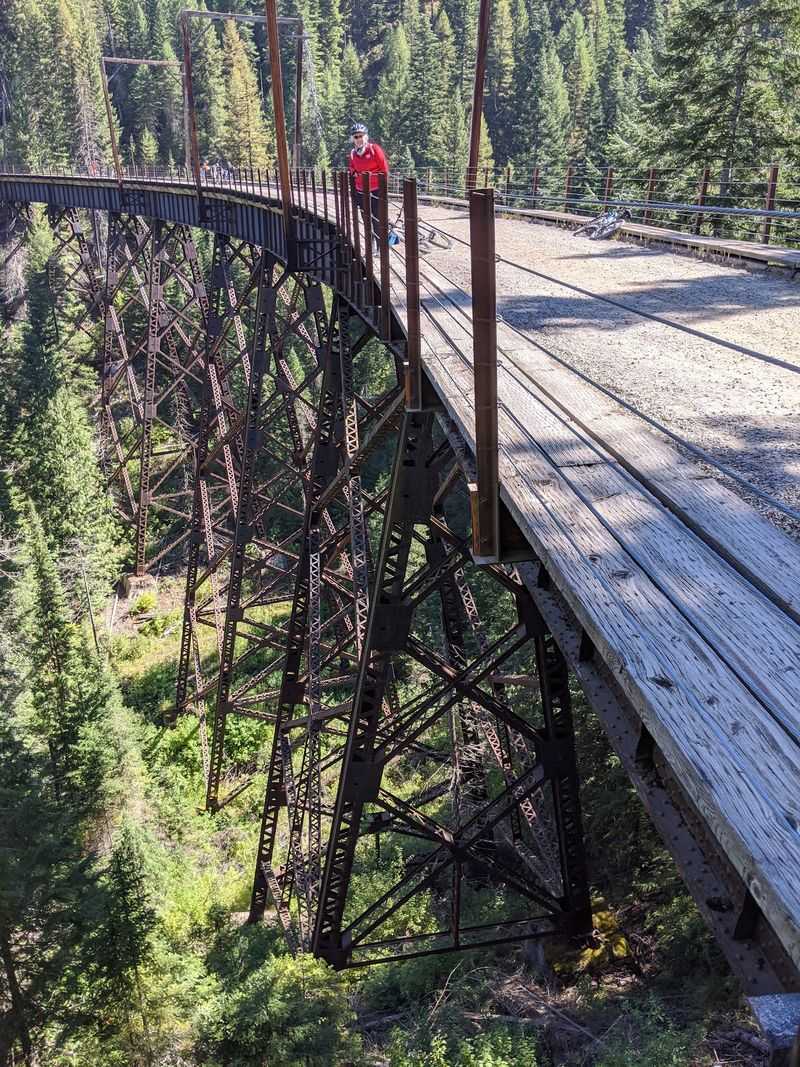
Avery is a tiny St. Joe River community, and the old Milwaukee Road grade above it still holds some impressive pieces of railroad muscle. Turkey Creek Trestle is one of them.
Hikers and cyclists cross this high bridge on the Milwaukee Road Rail-Trail, and it is open only to non-motorized users. That means no engine noise, just the crunch of gravel, the hum of tires, and maybe a creek murmuring somewhere far below.
Quiet like that is getting harder to find.
Standing in the middle, you get a real sense of the engineering it took to push a railroad through this steep Shoshone County terrain. Crews had to bridge gulch after gulch to keep the line moving toward the coast.
Each crossing was a small victory over the mountains.
Pace yourself and take a break here. A trestle makes a natural spot to sip water, snap a family photo, and point out how the rail bed curves along the hillside ahead.
Bring layers, snacks, and a sturdy bike or good shoes, since services are limited out in this backcountry. Find it along the Milwaukee Rd Rail-Trail near Avery.
4. Conant Creek Trestle, Ashton, ID
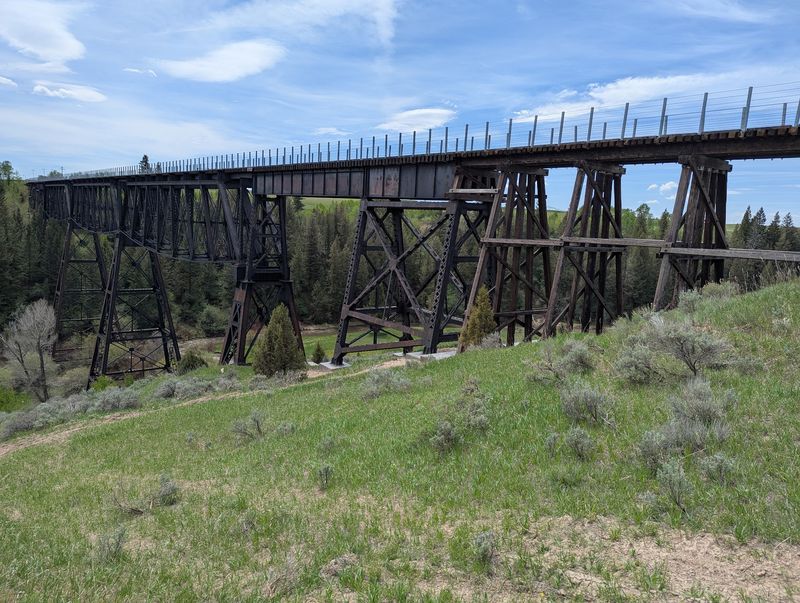
Wheat fields, potato country, and then a sudden gap where Conant Creek has carved its way through the land. Bridging that gap is a restored trestle first put up in 1911.
The Conant Creek Trestle sits on the Ashton-Tetonia Trail, which follows the old Teton Valley Branch of the Union Pacific through eastern Idaho. You cannot simply drive up and walk onto it.
You need to hop on the trail itself and travel a stretch to reach the bridge, which makes arriving feel earned.
Down below, the creek winds through willows and stands of aspen. In fall those aspens turn gold, and the contrast with the weathered bridge timbers is the kind of scene worth pulling over for.
Out east, the Teton Mountains keep you company the entire way. On a clear day their jagged tops seem close enough to touch, even though they sit across the state line in Wyoming.
Gravel and dirt make up much of this trail surface, so wider tires help. Pack sunscreen too, since shade is scarce on the open farmland approach near Ashton.
5. Ashton Tetonia Trail Bridge, Ashton, ID
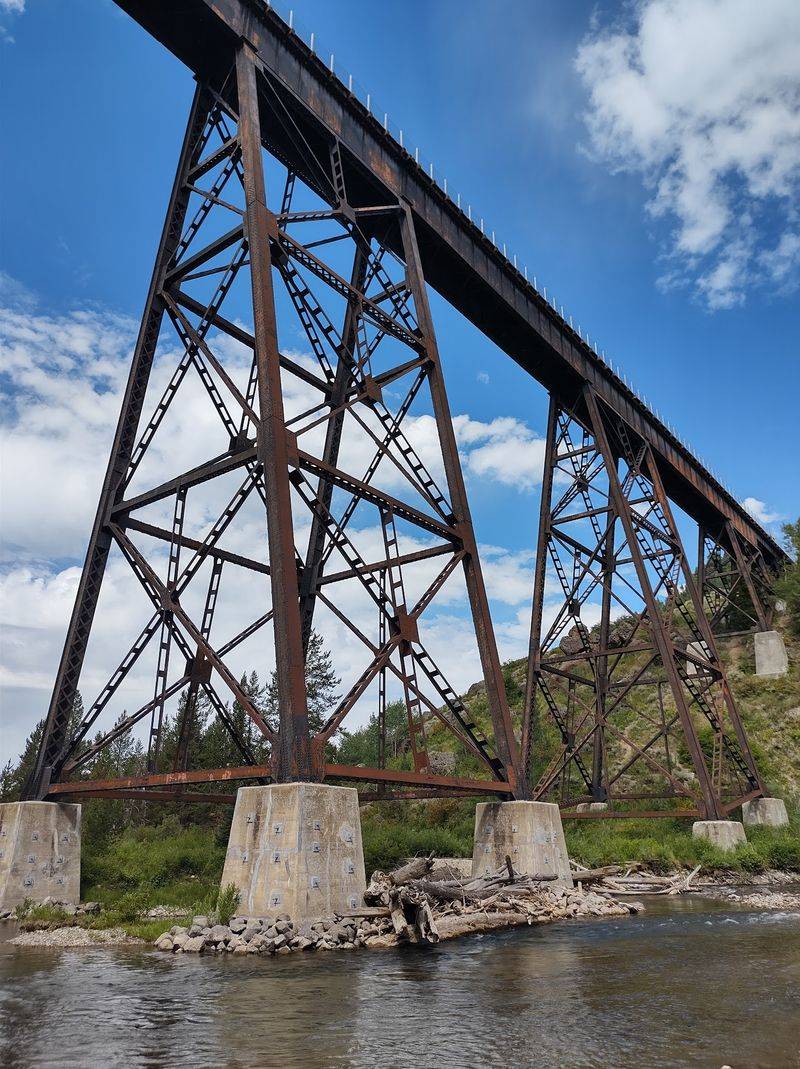
Sunshine is practically guaranteed on this side of the state. The Ashton-Tetonia Trail rolls across open farm country, and one of its showpieces is an old railroad bridge perched high above a creek.
Look over the railing and the drop is real. Railroad builders needed to cross the deep coulees cut into this part of Fremont and Teton counties, so they went big.
The result is a span that makes walkers stop mid-step and cyclists coast to a standstill.
Around you, the scenery shifts between golden fields, rolling hills, and the Teton peaks lifting up in the distance. It feels very much like eastern Idaho, a place where farm life and mountain views share the same horizon.
Families like this trail because the old rail grade stays fairly level. Little legs can handle a few miles out to the bridge and back without too much grumbling.
Pick a calm morning if you can, since afternoon wind often sweeps across these wide open fields. A thermos of hot cocoa and a picnic blanket turn the trip into a full outing.
Look for the bridge along the Ashton – Tetonia Trail near Ashton.
6. Coeur d’ Alene River Bridge, Harrison, ID
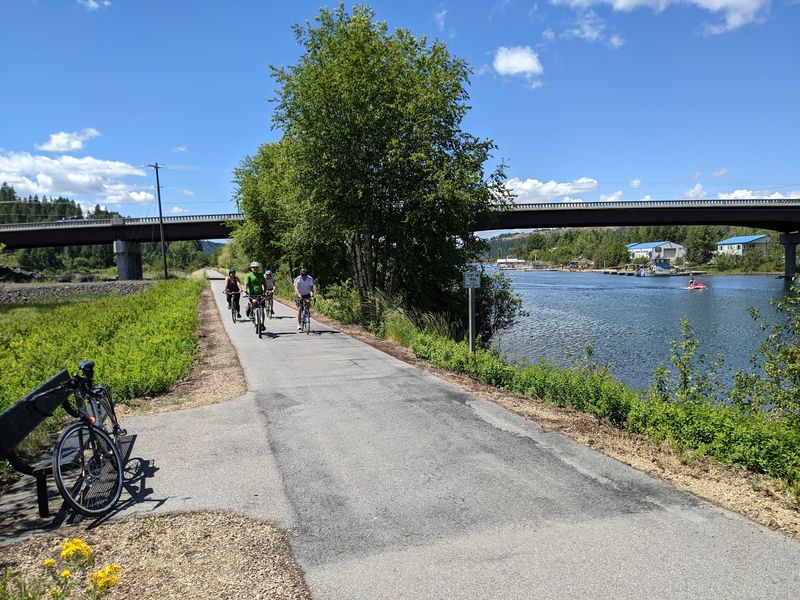
Harrison is a small lakeside town that wakes up every summer when cyclists roll in. Just beyond it, the Trail of the Coeur d’Alenes crosses the Coeur d’Alene River on an old rail bridge.
This route once carried Union Pacific trains hauling loads out of the Silver Valley. Today the corridor is smooth pavement, and the river bridge is one of those spots where nearly everyone pauses.
Water stretches out on both sides, and the breeze off the river feels great on a warm day.
Keep watch for wildlife. The wetlands and lakes along this part of the Panhandle draw ducks, geese, herons, and sometimes a moose wading in the shallows.
Paved trail means strollers, road bikes, and even inline skates work well here. That makes the bridge an easy win for grandparents, toddlers, and anyone who prefers a gentle ride over a rugged one.
Many people start in Harrison, ride out across the river, and return for an ice cream cone in town. It is a simple loop with plenty of payoff.
The bridge sits near ID-97 outside Harrison.
7. Weiser River Trail
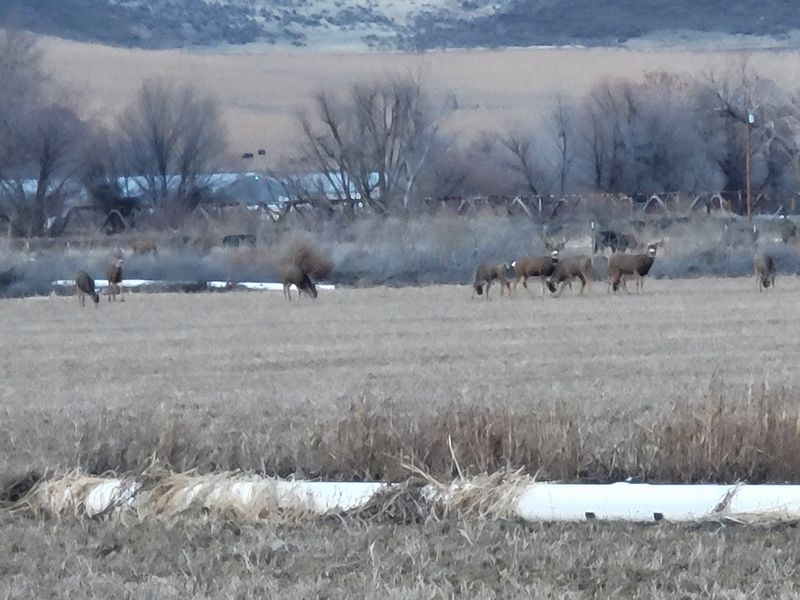
Eighty-some miles of old railroad grade, and dozens of trestles along the way. The Weiser River Trail is the longest rail-trail in Idaho, and it rewards anyone willing to explore more than one stretch.
Trains on the Pacific and Idaho Northern line once chugged through here. Now the whole length is open for hiking, gravel biking, and long-distance cycling across rural Washington and Adams counties.
Many open-deck timber and steel trestles have been kept in place, so you cross the river and its side creeks again and again.
What sets this trail apart is variety. The southern end runs through dry canyon country with sagebrush hills, while the northern miles climb into meadows and pine forest.
Pick a section instead of trying to tackle it all at once. Short out-and-back rides from small trailheads give you a handful of trestles without needing a whole weekend.
The surface is mostly gravel, so a mountain or gravel bike handles it best. Bring plenty of water, because towns are spread out and summer heat in the lower canyons builds fast.
Spring and fall bring the most comfortable riding weather.