7 Idaho Sand Dunes, Lava Fields And Craters That Look Nothing Like The Rest Of The State
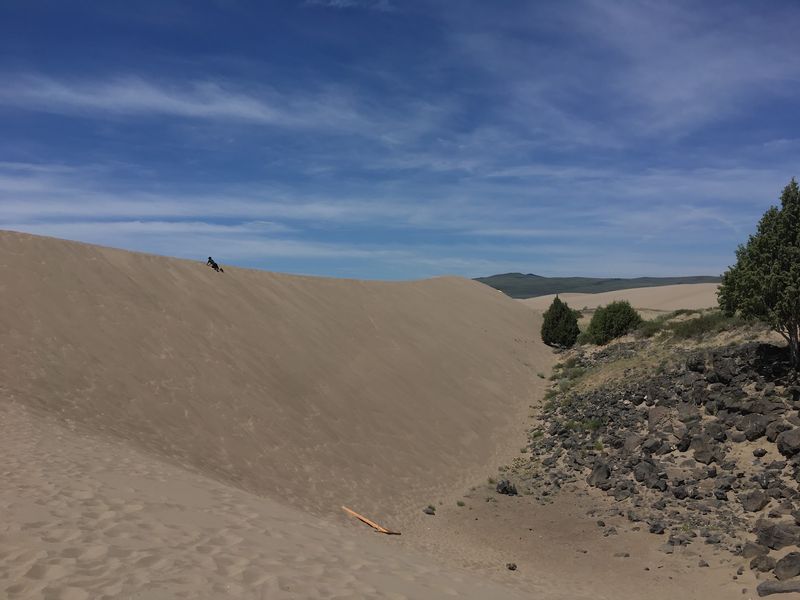
In 1969, NASA astronauts came to Idaho to practice for the moon. Not a lab.
Not a movie set. A real stretch of black lava in the desert.
That fact alone made me want to rethink the whole map. Most folks picture pine forests, trout rivers, and potato fields when they hear the state’s name.
Yet out on the Snake River Plain, the ground turns into ropy rock, glittering sand, and volcanic rims you can walk around.
I love that one of these spots has a sand dune taller than any building in Boise. Another hides ice inside a lava tube, even when summer heat bakes the road outside.
A few sit so close to the interstate that drivers zip right past without a glance.
So how many of these strange places have you already passed on the way to somewhere else?
1. Craters of the Moon National Monument & Preserve
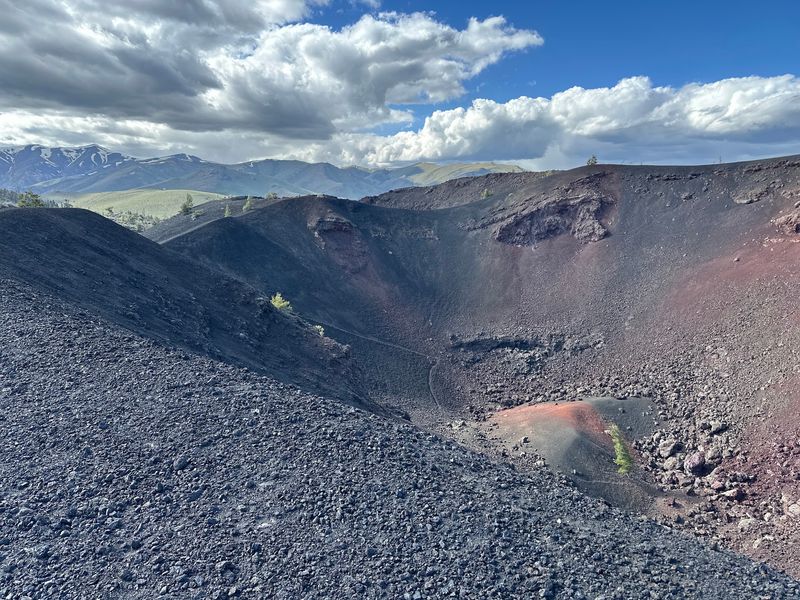
Astronauts trained for the moon here in 1969, so your bar for weird scenery just got raised. President Calvin Coolidge made it a national monument in 1924 and called it a weird and scenic landscape.
He wasn’t wrong. You’ll find miles of black lava flows dotted with cinder cones, spatter cones, and little islands of sagebrush.
The whole thing sits on the Great Rift, the largest young lava field in the lower 48 states. Eruptions shaped it over the past 15,000 years, and the most recent one happened only about 2,000 years ago.
Want to go underground? Lava tubes like Indian Tunnel, Dew Drop Cave, Beauty Cave, and Boy Scout Cave let you crawl, duck, and wander beneath the crust.
Inferno Cone is the classic climb for a sweeping look across the field. Paved paths and cinder trails with interpretive signs keep things easy for kids and grandparents alike.
After dark, the show keeps going, since the monument became an International Dark Sky Park in 2017. Lava Flow Campground puts you right in the middle of it.
The monument stays open year-round, though snow affects the Loop Road and visitor center hours. Check conditions before driving out from Arco.
Address: 1266 Craters Loop Road, Arco, ID 83213
2. Bruneau Dunes State Park, Bruneau, ID
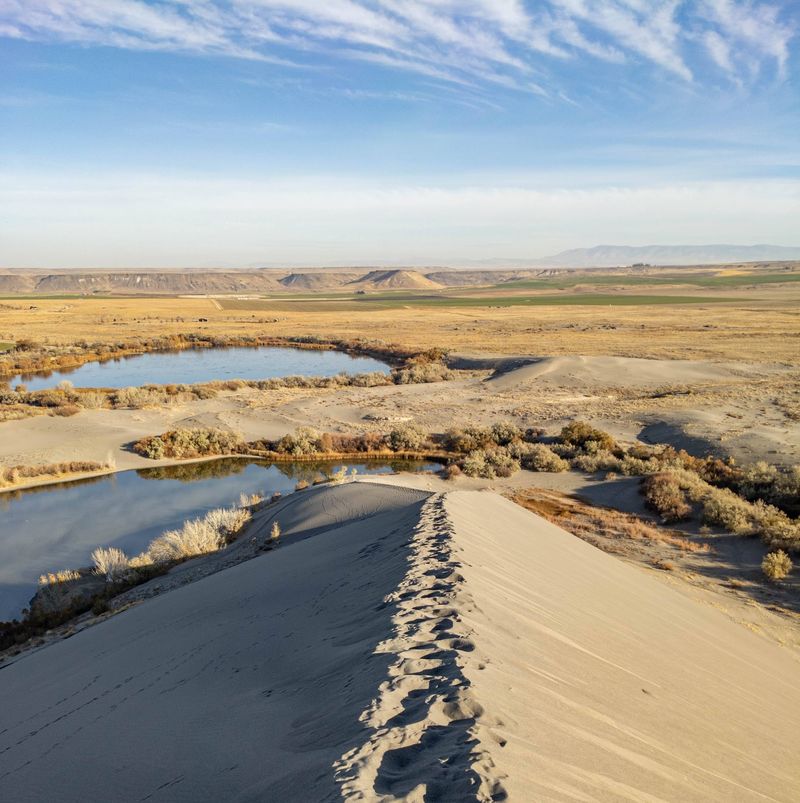
Roughly 470 feet of sand rises off the desert floor here, making it North America’s tallest single-structured dune. That’s taller than any building in Boise, and you can climb it for free sweat equity.
Geologists think the sand may have started piling up after the Bonneville Flood about 15,000 years ago. Even stranger, these dunes formed near the center of a natural basin instead of at its edge.
That setup is unique in the Western Hemisphere. Idaho really likes to show off in quiet ways.
Climbing is only half the fun. You can rent sandboards and sleds at the visitor center and ride your way back down.
Small lakes sit at the base of the dunes, with bluegill and bass for anyone who brought a pole. Picnic tables, grills, a playground, and campsites round things out for a full family day.
Then comes nightfall. The park became an International Dark Sky Park in 2024, and its observatory holds the largest public-access telescope in Idaho.
Observatory programs usually run spring through fall. Plan a sunset climb, then trade sand for stars.
Address: 27608 Bruneau Sand Dunes Rd, Bruneau, ID 83604
3. St. Anthony Sand Dunes
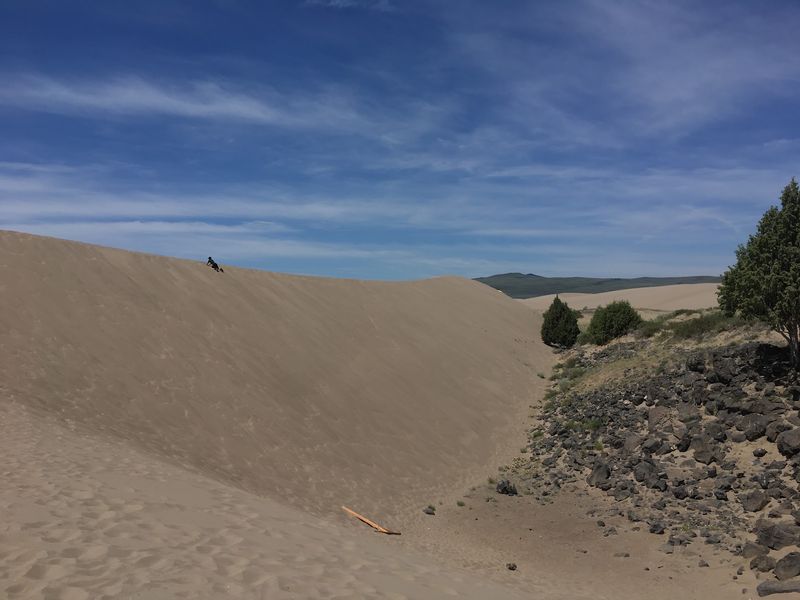
Eastern Idaho hides a beach with no ocean, and it covers more than 10,000 acres of white quartz sand. Some dunes stay small at around 10 feet, while others climb close to 400.
Off-road riders treat this place like a playground in the warmer months. ATVs, side-by-sides, and dirt bikes carve tracks across ridges with names like Choke Cherry Hill and Thunder Mountain.
Not a motor person? Sledding and sandboarding work just as well, and the sand doesn’t care how you get down.
Egin Lake sits right inside the dunes, which feels like a mirage you can actually touch. The Egin Lakes Campground gives you the closest access to the bigger dunes, while the Red Road access suits the smaller ones.
The area also matters a lot to wildlife. Elk, deer, and grouse spend their winters here, so the larger west-side dunes close seasonally to give them room.
That makes summer and fall the sweet spot for a visit. You’ll find it about 10 miles northeast of Rexburg off US Route 20.
Bring sunglasses, because that quartz sand bounces light like nobody’s business.
Address: Egin Lakes Access, St. Anthony, ID 83445
4. North Menan Butte Trail
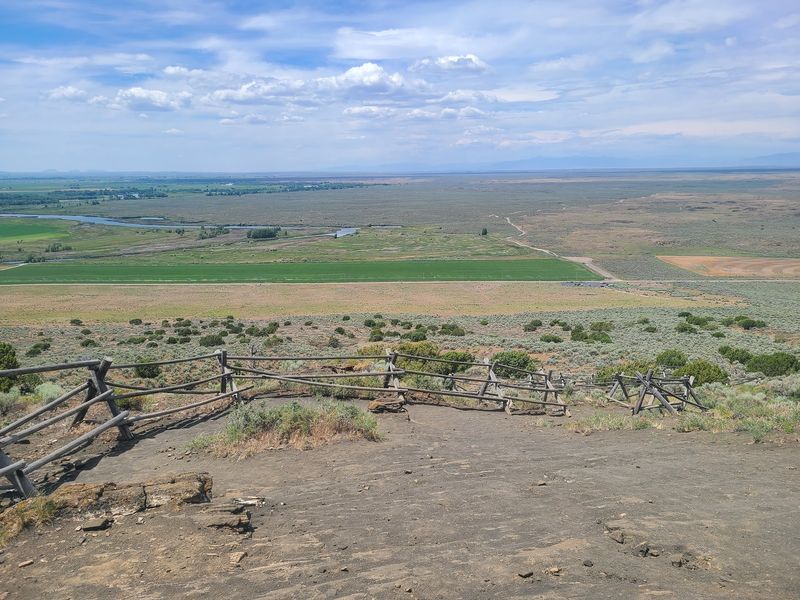
About 10,000 years ago, hot magma hit the cold water of the Snake River and the result went boom. What’s left is North Menan Butte, one of the largest tuff cones on Earth.
It’s also one of the only volcanic eruptions in the United States known to have happened in freshwater. That’s a fun fact to drop while you catch your breath on the climb.
And yes, you’ll be catching your breath. The trail starts steep before leveling out into a lollipop loop around the crater rim.
The full route runs about 3.1 miles. Once you’re up top, you can peer into a massive volcanic bowl and look out across farmland in Jefferson County.
Interpretive signs explain the geology as you go. There’s a vault toilet at the trailhead, and leashed dogs are welcome on the trail.
Keep it simple out here, since the area is for non-motorized use only. Campfires aren’t allowed, and there are no day-use fees.
It’s an easy add-on to a Rexburg or Idaho Falls afternoon. Your legs will remember it longer than your camera roll.
Address: North Menan Butte Trail, Menan, ID 83434
5. Hell’s Half Acre (south trails)
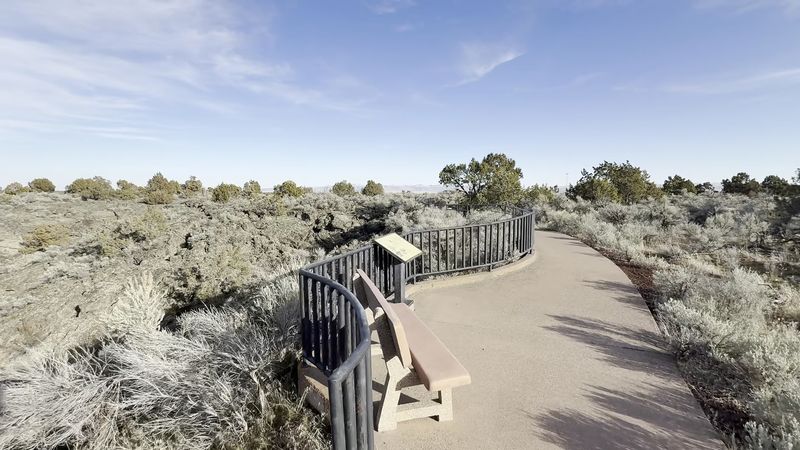
Most rest stops offer a vending machine and a patch of grass. Along I-15 near Blackfoot, you get a lava field the size of a small county.
Hell’s Half Acre covers roughly 150 square miles, which makes the name a hilarious understatement. It formed about 5,200 years ago in a short eruptive burst.
Geologists consider it the youngest and easternmost large lava field tied to the Snake River Plain basalts. Part of it earned National Natural Landmark status in 1976.
From the Blackfoot rest areas at Exit 95, a paved path leads you right through the rock. Short side trails branch out toward pressure ridges, collapse features, and views of distant buttes.
Look closely and you’ll spot two lava styles side by side. Smooth, ropy pahoehoe curls next to blocky, jagged a’a.
Interpretive signs break down the volcanic backstory along the way. Spring and early summer bring evening primrose, Indian paintbrush, and prickly pear cactus blooming between the cracks.
Access is free, and picnic tables make it a solid leg-stretch for road trippers. Twenty minutes here beats another lap around a gas station.
Address: I-15 Blackfoot Rest Area, Exit 95, Blackfoot, ID 83221
6. The Civil Defense Caves
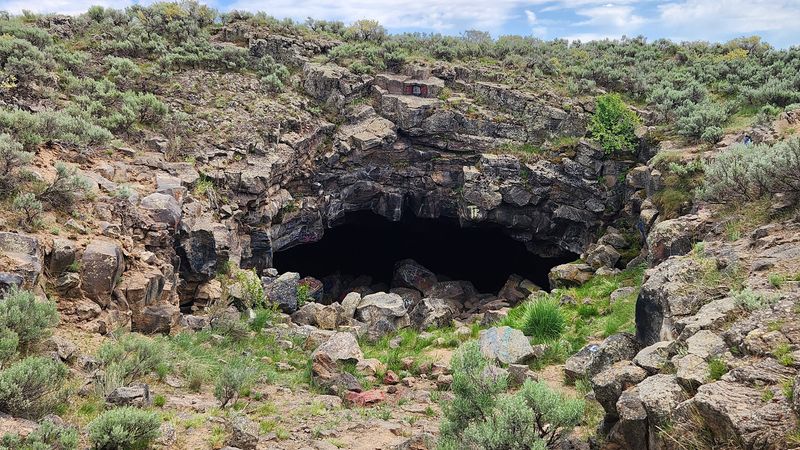
Ice in a lava tube sounds like a riddle, but the answer sits in the desert near St. Anthony. The Civil Defense Caves hold icy formations even though they were born from molten rock.
The name points to their past as a Cold War fallout shelter site. Historical information near the caves fills in that chapter, so take a minute before heading in.
Underground, the lava tube runs a long way. You can explore without technical gear or rappelling skills, which makes it a fun pick for curious kids.
That said, prepare like a grown-up. Sturdy boots matter on the rough, slick floor, and good lights are a must since the sun quits early in there.
Getting there takes some patience. The drive out is long and bumpy, so a vehicle with decent clearance helps.
You’ll also notice graffiti on some walls, which is a shame. Pack out your trash and leave the rock as you found it, so the next family gets a better view.
Pair it with the St. Anthony Sand Dunes for a full day of eastern Idaho oddities.
Address: The Civil Defense Caves, St Anthony, ID 83445
7. Black Magic Canyon of Big Wood River, Shoshone, ID
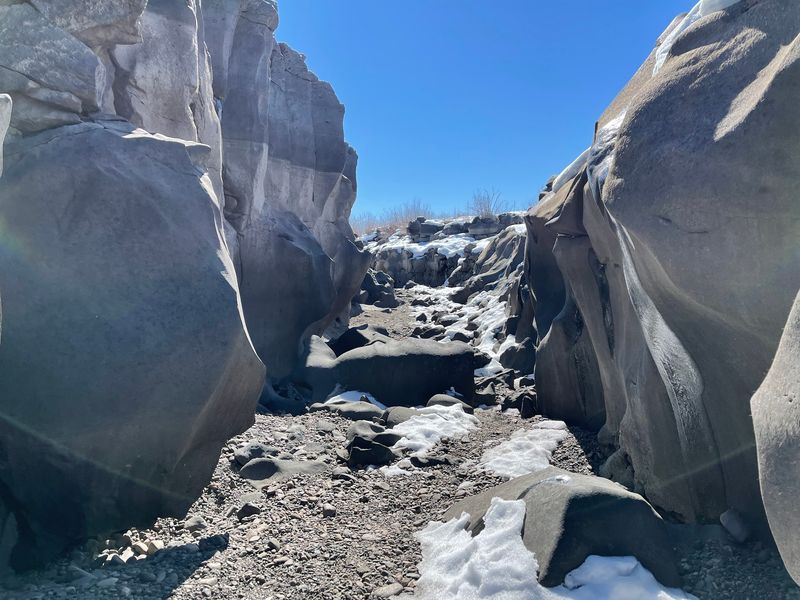
Water and lava teamed up on an art project near Shoshone, and the gallery is free to wander. Black Magic Canyon cuts through dark basalt along the Big Wood River.
Over time, rushing water polished the stone into smooth curves, swirls, and holes. Some pieces look carved by hand, though nature did the work.
Hiking down between those black walls feels like stepping into a sculpture garden. Little ones love scrambling through the narrow ravine and poking their heads into hollows.
Timing is the big rule here. The canyon only works as a hike when it’s dry, since the river channel can carry fast-moving water.
Check water conditions before you climb down, and skip it if the river is running. A quick look from the rim first is a smart habit.
Plenty of Magic Valley folks have never heard of it, which is part of the fun. It sits off Highway 75, so it pairs nicely with a drive toward the Wood River Valley.
Bring shoes with good grip, because polished rock is slippery. Then let the shapes do the talking.
Address: ID-75, Shoshone, ID 83352