10 Indiana Furniture Trends Making A Stylish Comeback

Indiana design is having a moment, and it is not by accident.
From Indianapolis to Shipshewana, makers have been blending century-old techniques with crisp contemporary silhouettes, proving heritage can feel fresh and forward.
The result is a blend of comfort and character paired with cleaner lines, updated materials, and a lighter touch.
Many of these returning trends once defined living rooms, dining spaces, and bedrooms decades ago.
What’s changed is how they’re being used. Bulky shapes are softened, finishes feel warmer, and pieces are chosen for both function and personality.
Instead of copying the past, these designs borrow from it thoughtfully.
Pieces feel lived-in but not dated, stylish without being precious.
The focus is on longevity, versatility, and making spaces feel inviting rather than overly designed.
If you love furniture that tells a story while still fitting your modern life, check out these Indiana-rooted trends that are ready to move in and make themselves at home!
1. Hickory Rocking Chairs
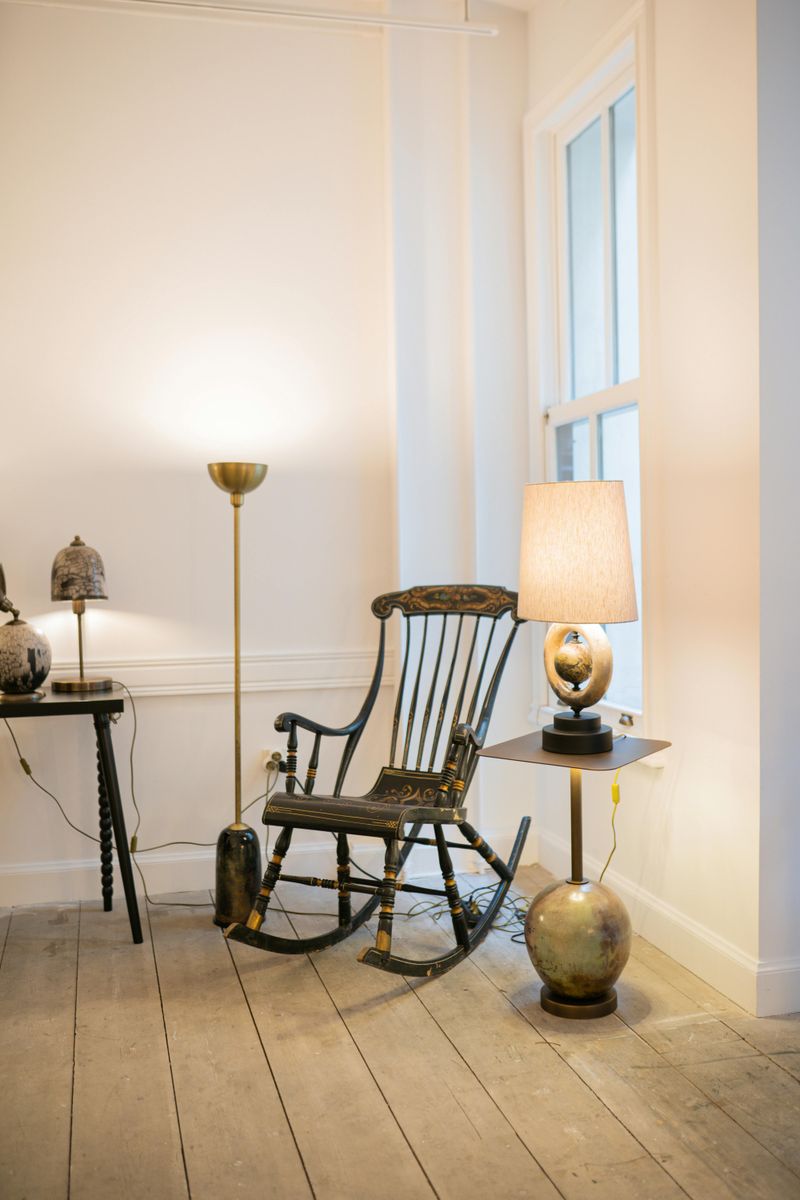
Hickory rocking chairs are back, but they are trading bulky silhouettes for slimmed-down profiles and refined joinery.
Indiana makers use kiln-dried hickory for strength, then taper spindles and arms so the chair looks airy without losing durability.
The result is a rocker that glides silently and feels at ease in Scandinavian-leaning rooms or warm farmhouse spaces.
Today’s versions often feature low-sheen oil finishes that highlight bark-on accents or subtle sapwood color shifts.
Seat geometry is calibrated with slightly deeper saddles and gentler pitch, so you can read, nurse, or simply watch a sunset without pressure points.
Because hickory is native to Indiana, sourcing can be local, lowering transport impact and supporting regional mills.
You will also see smart add-ons like felt runner pads to protect modern floors and replaceable nylon glides.
If porch space is limited, indoor-scale rockers offer shorter runners for tighter footprints while maintaining that soothing cadence.
Designers are mixing hickory with blackened steel brackets or leather slings for a balanced, modern-rustic feel.
Whether styled solo in a reading nook or flanking a hearth, these rockers deliver timeless motion with contemporary clarity.
Your back will thank you, and so will your living room.
2. Quartersawn Oak With Contemporary Lines
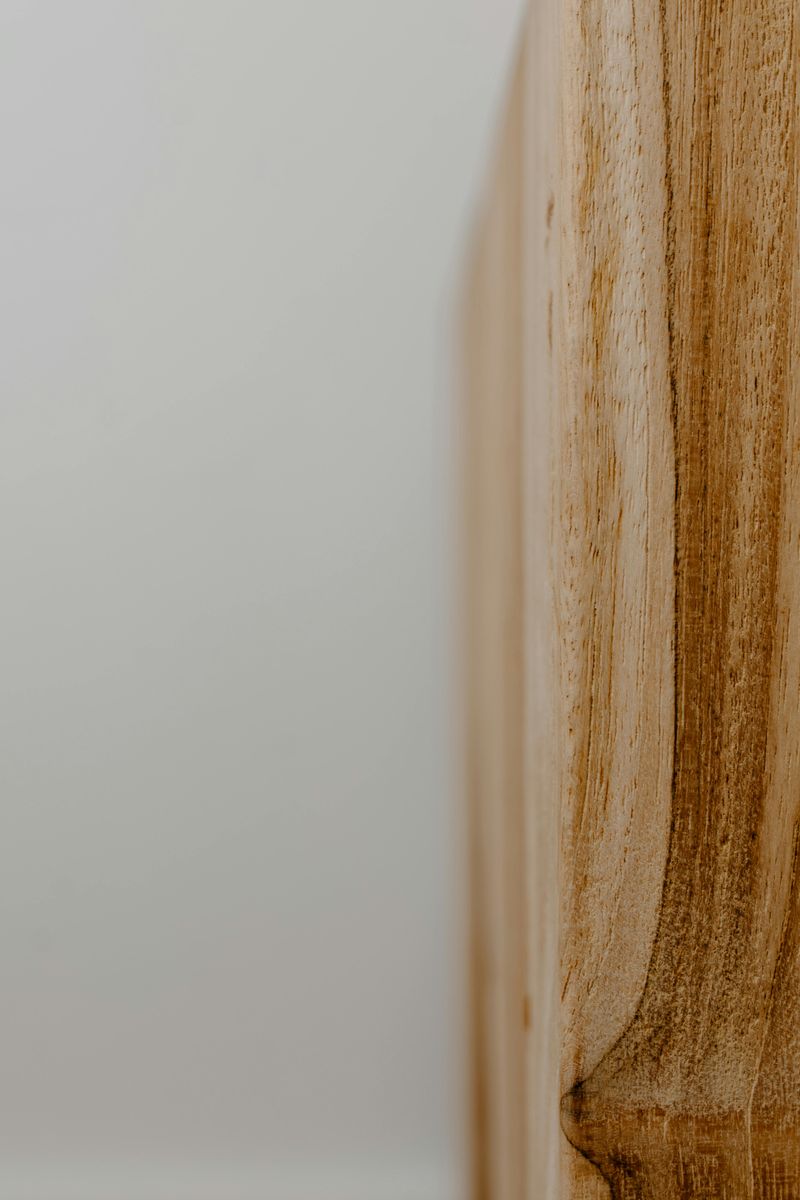
Quartersawn oak is experiencing a renaissance, and Indiana workshops are leading with cleaner profiles that let the ray fleck do the talking.
Instead of heavy moldings, you get slab doors, shadow reveals, and knife-edge tops that spotlight the grain’s medullary flames.
The look suits minimalist interiors yet keeps that Midwestern warmth.
Craftspeople are using rift edges on legs for straight grain, then reserving dramatic fleck for drawer fronts and case panels.
Hardwax oils maintain touchable texture while resisting spills, and push-to-open hardware keeps faces visually quiet.
In dining rooms, a quartersawn trestle table resists warping, meaning your surface stays level season to season.
The technique is historically rooted in American Arts and Crafts furniture, and Indiana’s supply chain still supports consistent cuts.
Contemporary builds add removable panels for cable routing, making sideboards viable media consoles.
You will also see chamfered handholds replace pulls, preventing visual clutter and finger smudges.
For color, natural white oak remains king, but fumed tones and light ceruse finishes are trending for subtle contrast.
Pair with linen upholstery or stoneware to emphasize texture without stealing the show.
If you want enduring stability and visual drama in one package, modern quartersawn oak delivers day-to-day practicality and artful grain theater.
3. Pie Safes With Punched Tin Art
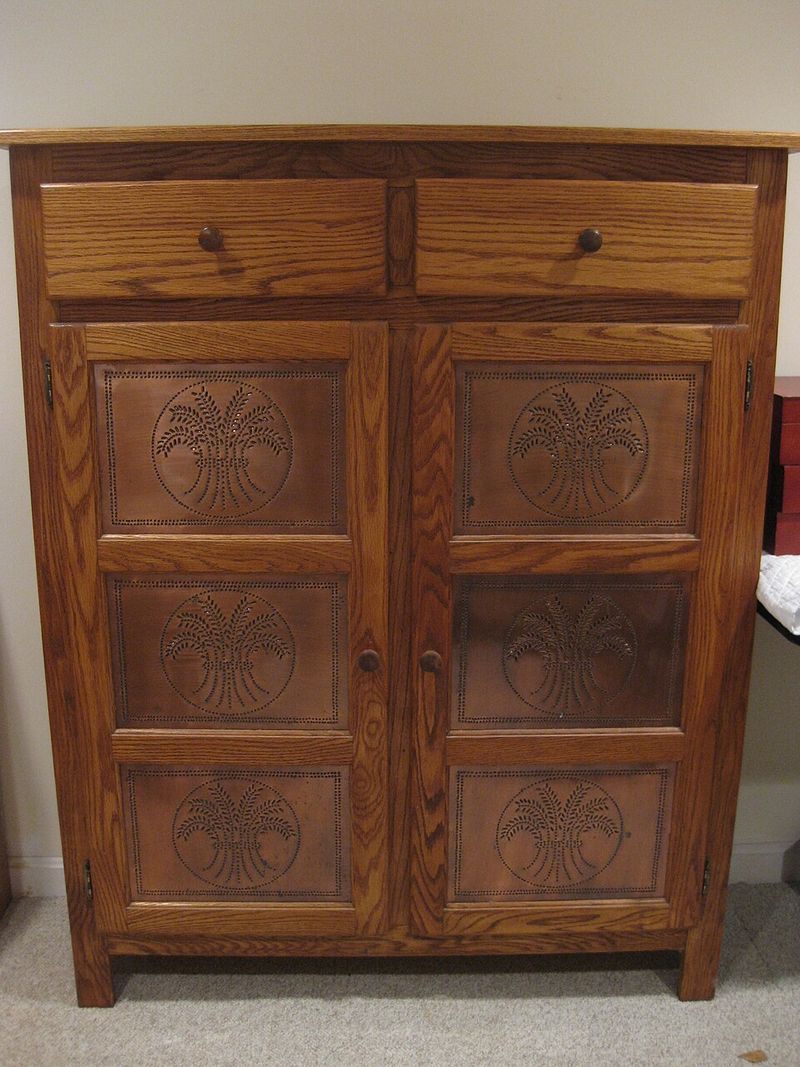
Pie safes began as practical guardians for baked goods, and now they are statement pieces reimagined for modern living.
Indiana artisans are laser-cutting or hand-punching tin panels into botanical and geometric motifs, turning ventilation into art.
The cabinets gain taller legs, slimmer rails, and concealed soft-close hinges, so they breathe but feel fresh.
Inside, adjustable shelves accommodate cookware, linens, or cocktail napkins, while wire grommets let the safe moonlight as a router or speaker cabinet.
The metal panels subtly diffuse sound and signal, making tech storage prettier and less obvious.
Choose a whisper-matte finish and the safe sits comfortably beside quartz and stainless appliances.
Historically, pie safes lived in farm kitchens across the Midwest.
Today, you will see them in entryways as landing zones or in dining rooms as textural credenzas.
The charm is the dance of light through the piercings, creating patterns on nearby walls at sunset.
Designers experiment with mixed metals like antiqued brass or blackened tin to coordinate fixtures.
If you love tactile details and concealed functionality, a modern pie safe delivers character without clutter.
It is nostalgic, yes, but also surprisingly adaptable for small-space living with airy proportions and multi-role storage.
4. Shaker-Inspired Simplicity
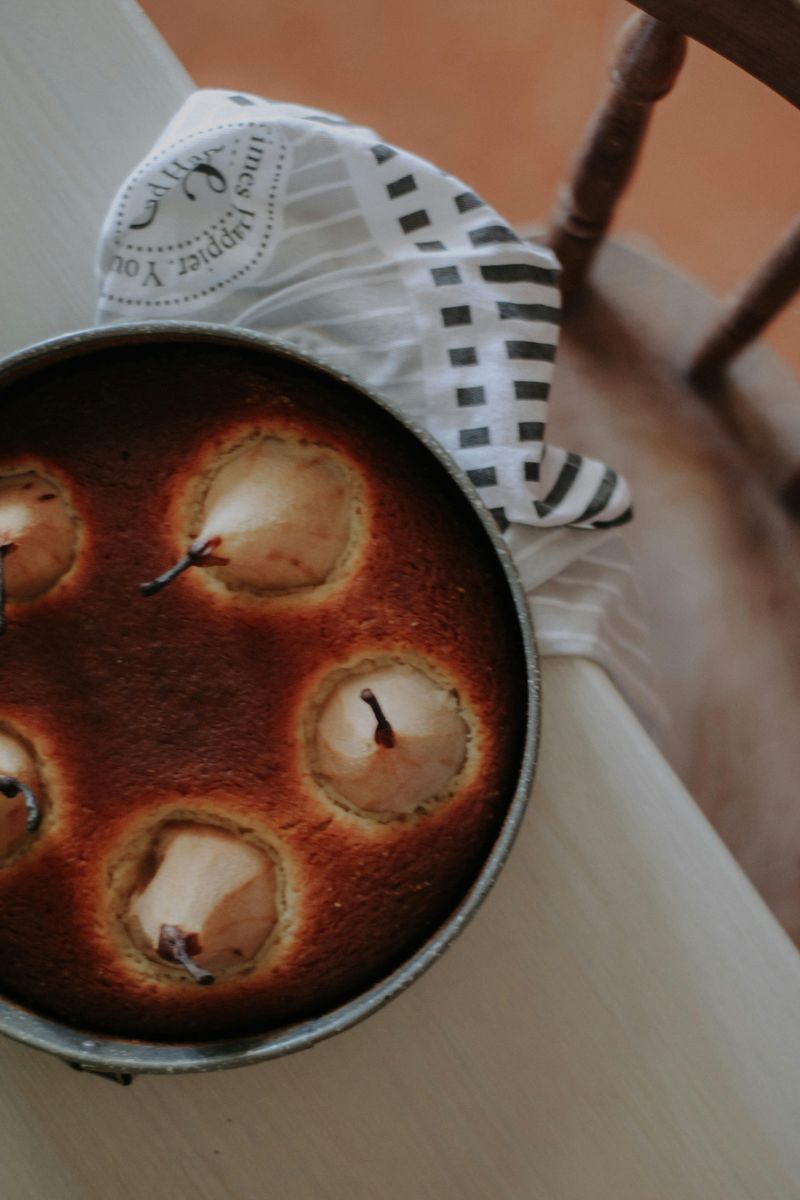
Shaker influence has never left Indiana entirely, but it is trending anew with ultra-clean lines and quietly perfect joinery.
Think ladder-back chairs with eased edges, pegs instead of showy hardware, and aprons that disappear into shadow.
The restraint feels modern while honoring the ethic of utility and honesty.
Local hardwoods like cherry, maple, and walnut shine with hand-rubbed oil that warms over time.
Dining tables feature floating tops on Z-clips to accommodate seasonal movement, preventing splits and preserving crisp geometry.
Designers keep proportions human-scaled, so nothing dominates smaller open-plan spaces.
You will notice subtle updates: slightly wider slats for lumbar support, silicone foot pads to quiet movement, and durable waterborne topcoats that hold up to daily life.
Storage pieces use inset doors with precise gaps, letting craftsmanship be the decoration.
It is the kind of furniture that disappears until you need it, then quietly delights.
Styling is easy!
Pair with linen runners, stoneware, and a single branch in a vase to echo the purity of the build.
When you crave calm rooms and long-lasting value, Indiana-made Shaker-inspired pieces deliver a balanced mix of clarity, comfort, and craft.
5. Bentwood Curves From Historic Techniques
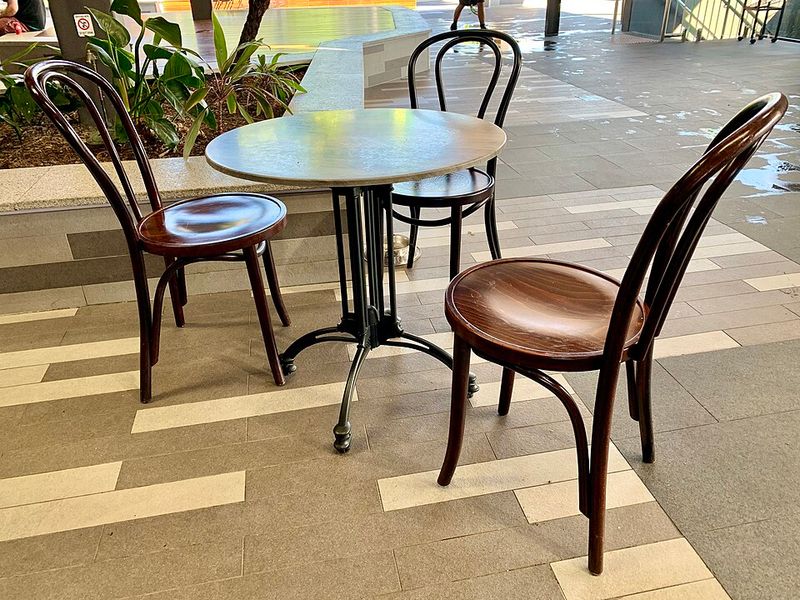
Bentwood is back, drawing on 19th-century techniques used in Indiana factories that once cranked out curved-back chairs.
Today’s makers steam-bend oak, ash, or hickory into fluid frames that favor continuous lines and minimal fasteners.
The curves feel sculptural, but the engineering hides inside the radius and lamination.
Modern pieces include lounge chairs with ribbon-like arms, pendant cradles, and even bentwood coffee tables with integrated magazine slings.
Jigs are CNC-cut for consistency, while the wood is air-dried to avoid spring-back.
You get organic motion without chunky joinery, perfect for airy lofts and light-filled dens.
Finishes skew toward low-gloss oils and plant-based varnishes that preserve grain clarity.
Seat decks swap in breathable webbing or leather panels, keeping silhouettes thin and comfortable.
The effect is graceful, resilient, and surprisingly compact for small apartments.
Indiana shops collaborate with local metalworkers for discreet brackets where loads demand it.
That hybrid construction brings durability without visual noise.
6. Rustic Barnwood

Indiana barnwood furniture has matured from chunky salvage into refined heirlooms with clean geometry.
Makers source beams and siding from decommissioned barns, stabilize wormholes, and book-match boards for continuity.
The patina stays, but edges are jointed true, and modern steel bases lighten the visual weight.
Tabletops get waterborne conversion varnish for wipe-clean durability without plastic glare. The result is heritage you can actually use every day.
Credenzas and beds benefit from the narrative of nail scars and saw kerfs, yet drawers run on whisper-quiet undermount slides.
Designers often incorporate shadow gaps to visually separate panels, preventing the look from reading too rustic.
You can balance textures with linen or glazed ceramics to keep rooms calm.
Because supply is finite, provenance matters. Indiana shops document barn origins when possible, adding a story card for your piece.
If you want sustainable character with modern livability, elevated barnwood hits the sweet spot: warm, storied, and engineered for contemporary homes.
7. Hoosier Cabinets Reimagined
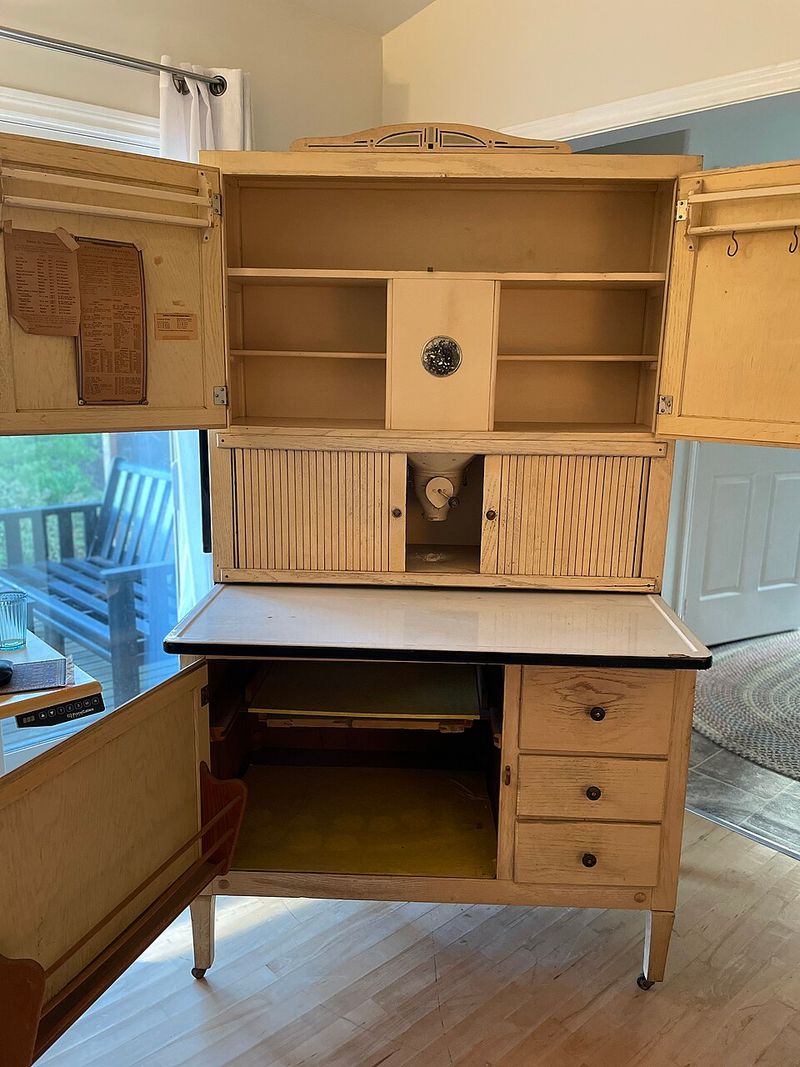
The early 1900s Hoosier cabinet was Indiana’s gift to kitchen efficiency, and the concept is trending again with smart upgrades.
You still get a flour-bin vibe and a tambour door, but today’s versions hide induction-safe pull-out shelves and integrated outlets.
The work surface might be quartz or maple end-grain for durability.
Upper cubbies organize spices, baking tools, and small appliances, while motion-activated lighting limits fumbling.
Soft-close slides and adjustable dividers turn a narrow footprint into a powerhouse station.
In condos, a Hoosier can function as a full mini-kitchen for coffee, prep, or lunch.
Designers borrow original stenciling cues as subtle inlays, keeping the nostalgia light.
Doors may be inset with reed glass to obscure clutter yet glow softly at night.
Colorways trend toward creamy whites, pale sage, and natural wood that plays nicely with stainless and stone.
For tech readiness, grommets shuttle cables discreetly to a surge-protected strip. Ventilated back panels prevent heat buildup around devices.
8. Milk Paint Finishes, Matte and Durable
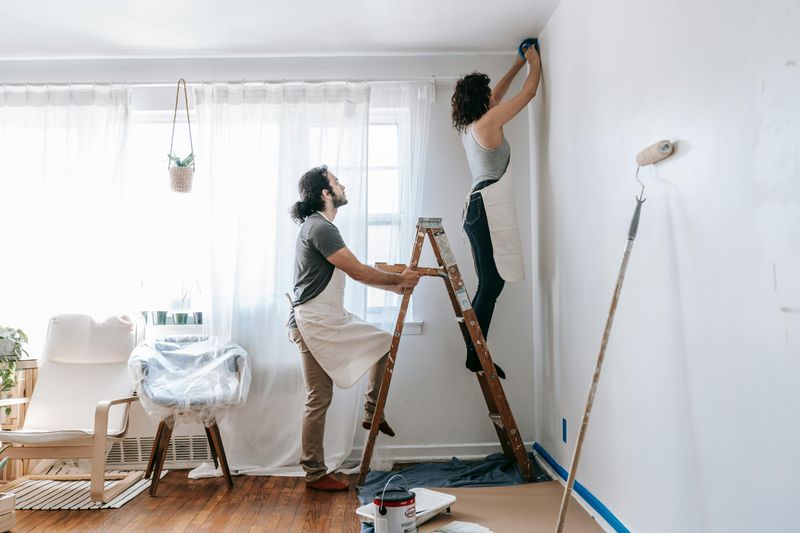
Milk paint is having a comeback across Indiana studios because it is tactile, eco-minded, and beautifully matte.
Traditional formulas use casein, lime, and pigments, creating velvety depth you cannot fake with synthetics.
The look lands between chalky and mineral, perfect for quiet bedrooms and entry pieces.
Contemporary makers topcoat with waterborne polyurethane or hardwax oil to handle everyday wear.
Layering two tones and strategic burnishing reveal edges and planes without heavy distressing.
Colors lean earthy: indigo, clay, lichen, and buttermilk white that flatters oak and maple.
Because milk paint bonds into the wood, it will not peel like film finishes.
Over time it develops a softly lived-in patina, especially on high-touch points like drawer lips.
It is also low odor, friendly for quick turnarounds and small apartments.
Mix with modern forms for contrast: a flat-front dresser, a parsons console, or a ladder-back chair set.
Hardware choices like linen-wrapped pulls or simple brass mushrooms keep the vibe restrained.
9. Hickory Splint Basketry As Functional Decor
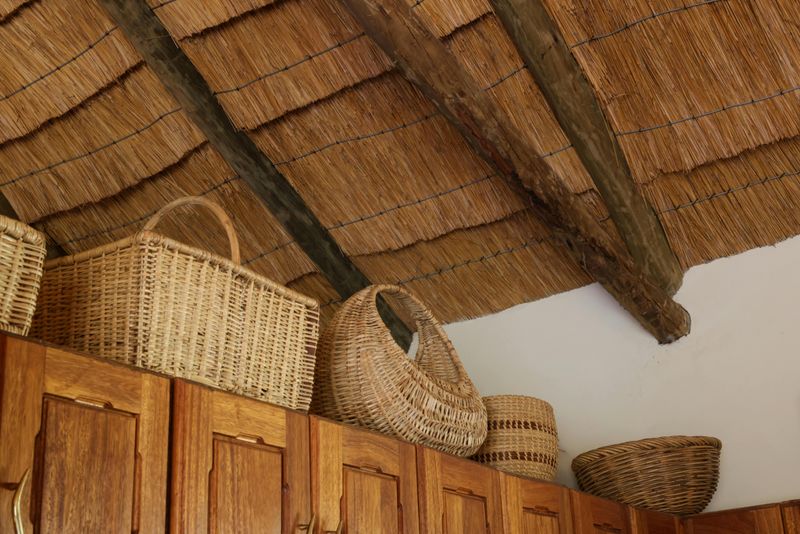
Hickory splint basketry, long practiced in Indiana, is reappearing as both storage and sculpture.
Craftspeople harvest bark, rive it into thin strips, and weave patterns that balance strength and airiness.
In modern homes, baskets land on walls as textural art or serve as trays on coffee tables.
Look for tight corners, true rims, and subtle color shifts between heartwood and sapwood.
Some makers dye splints with plant pigments to create quiet stripes that play nicely with neutral palettes.
Handles are often steam-bent for comfort and longevity, making them practical for everyday use.
Functionally, these baskets corral remotes, mittens, and pantry goods without visual noise.
On shelves, they add warmth to metal and glass, rounding out a room’s material mix.
You can group multiples at varying sizes to build rhythm on a wall.
Because hickory is durable, the weave ages gracefully rather than sagging.
Small repairs are simple, extending lifespan and reducing waste.
When you want texture with heritage and real utility, hickory splint basketry delivers handmade charm that fits neatly into contemporary routines.
10. Amish-Crafted Tech-Ready Workstations
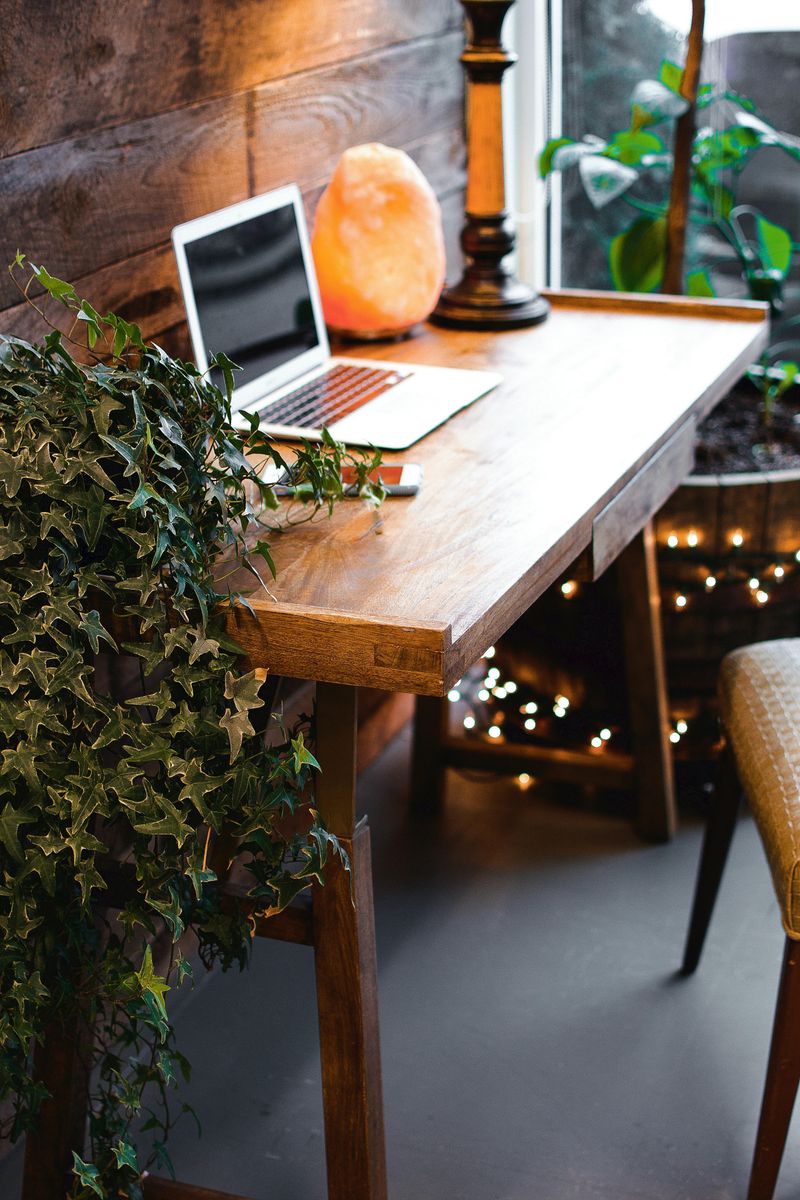
Across northern Indiana, Amish shops are building solid-wood desks and media cabinets that quietly integrate technology.
Think lift-top or sit-stand bases with concealed gears, routed channels for cables, and pop-up power with USB-C.
The forms stay calm and rectilinear so the room feels orderly even when devices proliferate.
Drawers ride on soft-close undermount slides, and grommets exit neatly at the back edge.
Magnetic panels hide routers and hubs while allowing airflow so equipment stays cool.
Wireless charging pads nest under thin wood veneers, keeping surfaces clean and uncluttered.
Because these pieces are custom-friendly, you can specify width, wood species, and ergonomic height.
Walnut and rift white oak dominate, finished in durable, low-sheen coats that resist fingerprints.
Pulls are optional, with touch-latch fronts creating an appliance-like stillness.
The appeal is longevity. Instead of disposable particleboard, you get hardwood joinery designed for decades, with components that can be serviced.
If your workspace needs calm beauty and seamless function, Indiana’s tech-ready Amish furniture bridges tradition and modern life without visual fuss.