12 Best Cycling Trails In California Every Local Should Pedal At Least Once
California isn’t just a place you visit – it’s a place you ride through, one breathtaking mile at a time.
From sun-soaked coastal highways to quiet vineyard roads and shaded river paths, cycling in California offers a front-row seat to some of the most diverse scenery in the country.
One moment you’re gliding past crashing waves and dramatic cliffs, the next you’re pedaling through rolling valleys where the air smells of eucalyptus and wine grapes.
Each route feels like its own adventure, blending natural beauty with a sense of freedom only a bike can deliver. What makes California truly special for cyclists is the variety.
Whether you crave challenging climbs, peaceful nature rides, or scenic urban trails, there’s a path perfectly suited to your pace and passion.
Wildlife sightings, hidden beaches, historic towns, and sweeping mountain views turn every ride into a story worth telling.
It’s not just about the destination – it’s about the moments in between, where the rhythm of the road and the landscape create an unforgettable experience. Once you start exploring California by bike, it’s hard to imagine seeing it any other way.
1. Pacific Coast Highway (Monterey To Big Sur)
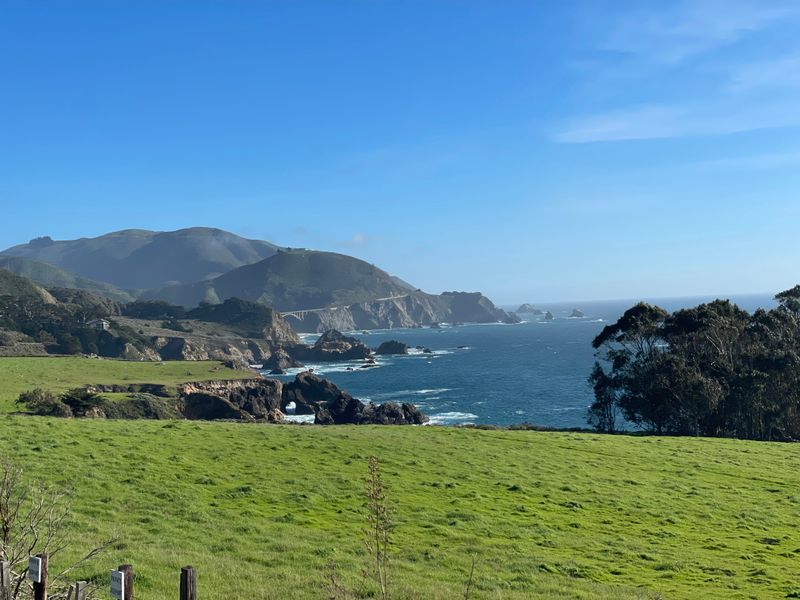
Riding along the Pacific Coast Highway between Monterey and Big Sur feels like cycling through a postcard.
The road hugs towering cliffs that drop sharply into the Pacific Ocean, with waves crashing far below and seabirds gliding overhead.
Fog often rolls in during morning hours, creating a mystical atmosphere that clears by midday to reveal brilliant blue water stretching toward the horizon.
This stretch covers roughly 30 miles and includes challenging climbs with rewarding descents. Cyclists should prepare for narrow shoulders in some sections and heavy tourist traffic during summer weekends.
Spring and fall offer quieter conditions with comfortable temperatures and wildflowers dotting the hillsides.
Several state parks along the route provide rest stops and scenic overlooks perfect for catching breath and snapping photos.
The Bixby Creek Bridge stands out as an iconic landmark worth pausing to admire. Riders need to carry plenty of water and snacks since services are limited between towns.
2. Marvin Braude Bike Trail (Los Angeles)
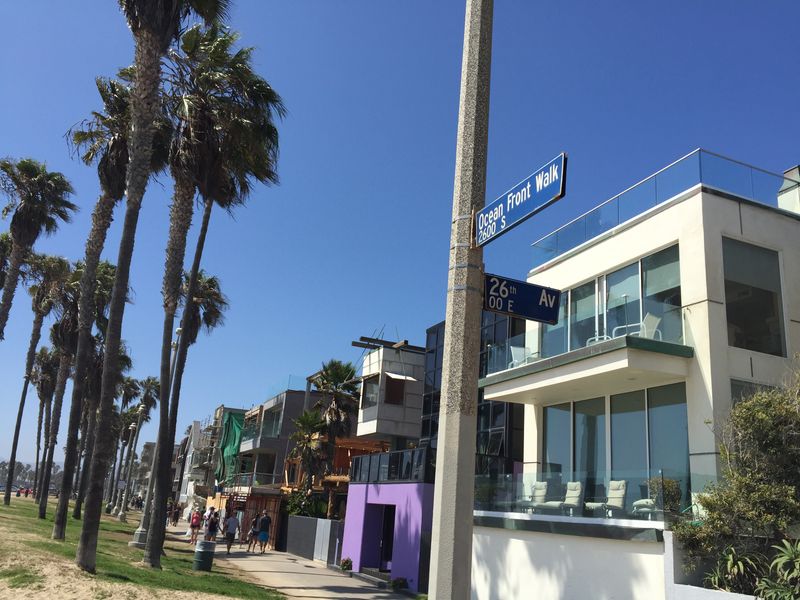
Known locally as The Strand, this 22-mile paved path runs right along the sand from Will Rogers State Beach down to Torrance County Beach.
Beachgoers, joggers, and skaters share the space, creating a lively coastal vibe that captures the essence of Southern California beach culture.
Palm trees sway alongside the path while the smell of salt air mixes with sunscreen and food from nearby vendors.
The trail passes through some of Los Angeles County’s most famous beach communities, including Santa Monica, Venice, Manhattan Beach, and Hermosa Beach.
Each neighborhood has its own personality, from Venice’s eclectic boardwalk scene to Manhattan Beach’s more polished atmosphere. The route stays mostly flat, making it accessible for riders of all skill levels.
Early morning rides offer cooler temperatures and fewer crowds, while afternoons bring peak beach activity and people-watching opportunities.
Parking can be challenging near popular piers on weekends, so arriving early or using public transit makes sense.
3. Bayshore Bikeway (San Diego)
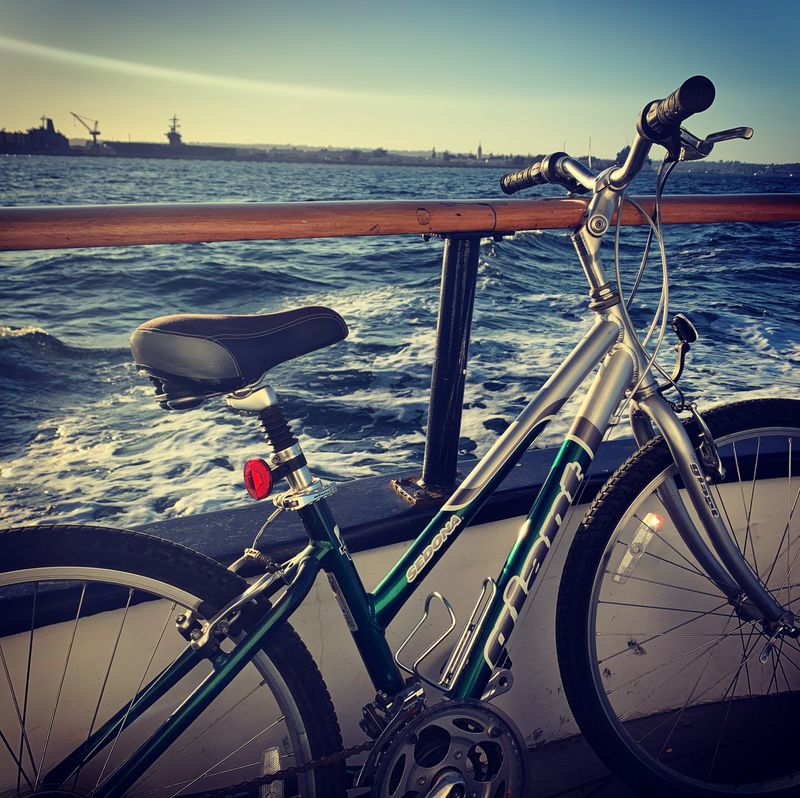
Circling San Diego Bay for 24 miles, this mostly flat loop connects downtown San Diego with Coronado, Imperial Beach, and Chula Vista.
Riders cross the iconic Coronado Bridge or take the ferry, then follow the water’s edge past marinas filled with sailboats and naval vessels.
The skyline views change constantly as the route curves around the bay.
Wildlife sightings are common along the southern stretches, where the path passes through the Sweetwater Marsh National Wildlife Refuge.
Herons, egrets, and other shorebirds wade through shallow waters while cyclists roll past on smooth pavement. The area feels surprisingly peaceful despite being surrounded by urban development.
Some sections run along city streets with bike lanes rather than separated paths, so riders need to stay alert for traffic.
The Coronado portion offers charming beach town atmosphere with cafes and shops for refreshment stops. Winds can pick up in the afternoon, especially near the bay’s open waters.
4. Monterey Bay Coastal Recreation Trail
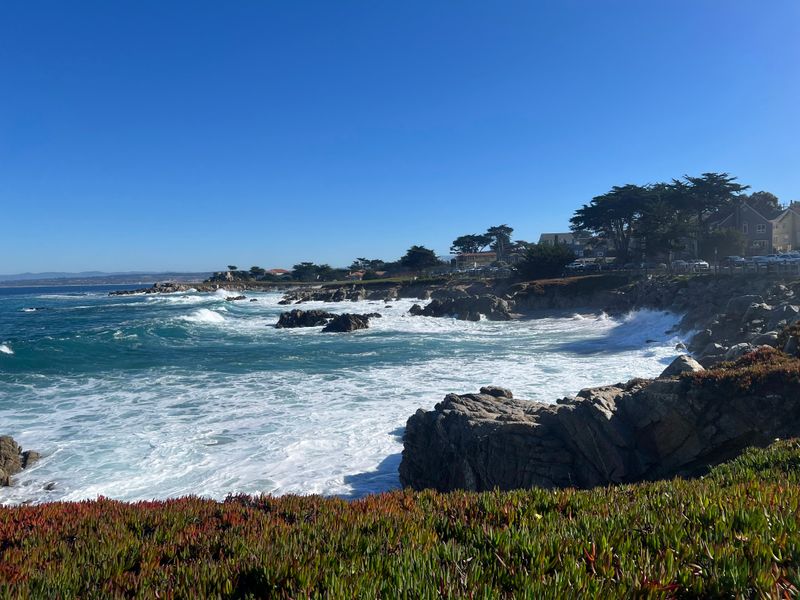
Stretching 18 miles along Monterey Bay, this paved trail connects Castroville through Monterey and Pacific Grove to Lovers Point.
The route follows an old railway line, hugging the shoreline so closely that spray from crashing waves sometimes reaches the path during high tide.
Sea otters float on their backs in kelp beds just offshore, cracking open shellfish on their bellies.
Cannery Row’s historic buildings line one section, where tourists browse shops and restaurants while cyclists weave through at a relaxed pace.
The path widens in some areas and narrows in others, requiring courtesy when passing pedestrians. Benches placed at scenic viewpoints invite riders to stop and watch for whales during migration seasons.
Morning fog is typical but usually burns off by late morning, revealing stunning coastal views. The trail surface stays in good condition with minimal cracks or bumps.
Parking is available at multiple access points, though spaces fill quickly on sunny weekend mornings.
5. American River Bike Trail (Sacramento)
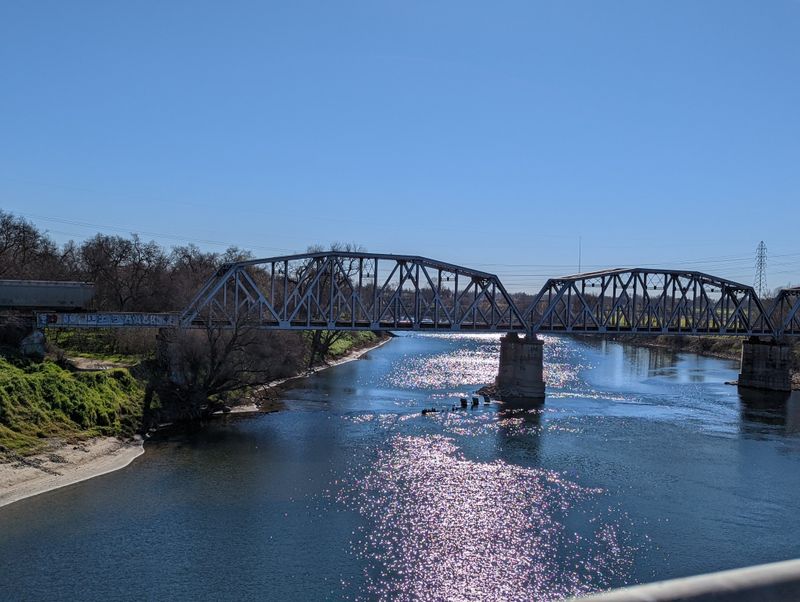
Also called the Jedediah Smith Memorial Trail, this 32-mile paved path follows the American River from downtown Sacramento all the way to Folsom Lake.
Cottonwood and oak trees provide shade along much of the route, creating a green tunnel effect that keeps temperatures comfortable even during hot summer days.
The river flows steadily beside the trail, with occasional rapids and calm pools where people fish or wade.
The trail passes through several parks offering restrooms, water fountains, and picnic areas spaced conveniently for longer rides.
Weekday mornings tend to be quieter, while weekends bring families, runners, and fellow cyclists sharing the wide path.
The surface quality remains consistently smooth with clear mile markers helping riders track their progress. Wildlife includes deer, turkeys, and various waterfowl that barely seem bothered by passing cyclists.
The slight uphill grade heading toward Folsom becomes more noticeable in the final miles but never turns steep. This trail works well for both training rides and leisurely afternoon outings.
6. LA River Path
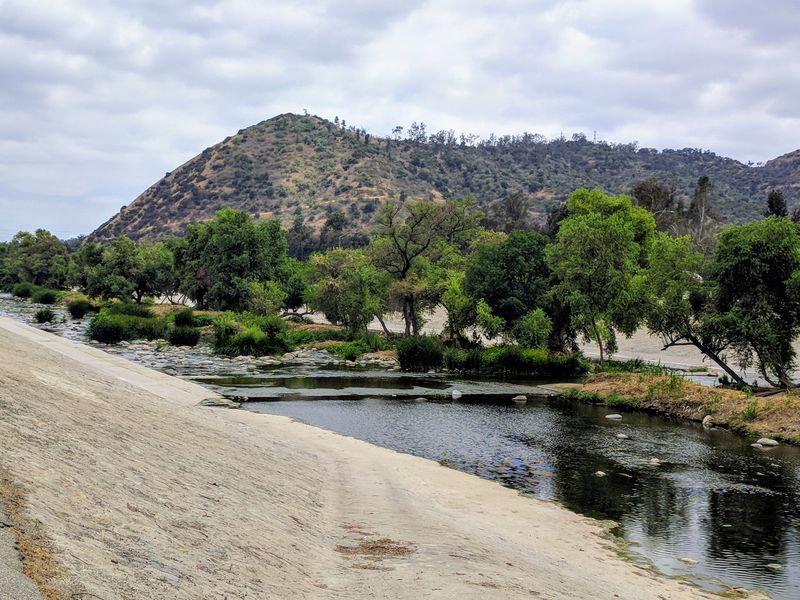
Running through the heart of Los Angeles, the LA River Path transforms what was once a concrete flood channel into an unexpected urban cycling corridor.
The path extends roughly 50 miles from Canoga Park through Studio City, Glendale, and down to Long Beach, though not all sections connect seamlessly yet.
Graffiti murals decorate the concrete walls in many areas, creating an outdoor art gallery that changes regularly.
The completely flat route makes for easy pedaling, though the concrete surroundings can feel hot and exposed during summer afternoons.
Recent restoration efforts have added vegetation and wildlife habitat to certain stretches, bringing surprising pockets of green to the urban landscape.
Birds now nest in these restored areas, and fish have returned to sections with flowing water. Access points are scattered throughout the route, with some neighborhoods offering better amenities than others.
The path sees steady use from commuters and recreational riders alike. Weekday mornings provide the most peaceful riding conditions before afternoon heat builds up.
7. Presidio Park Trail (San Francisco)
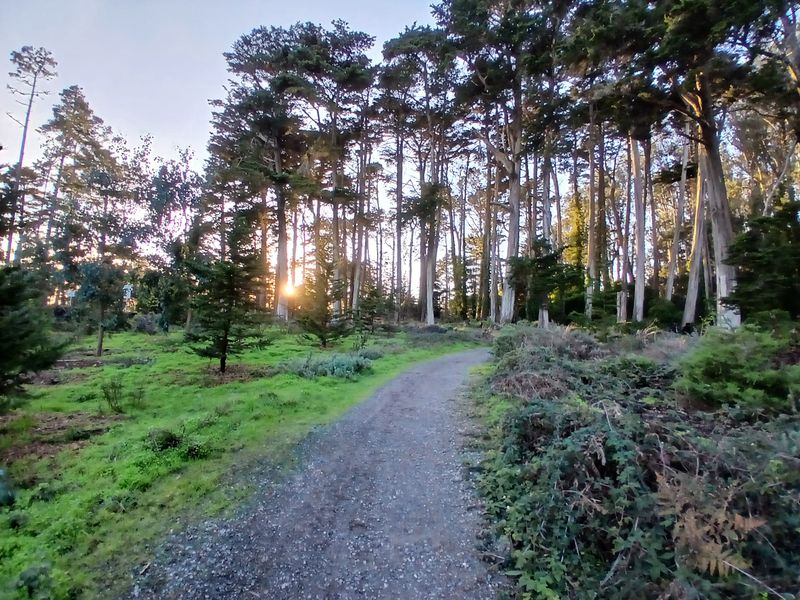
Winding through the historic Presidio in San Francisco, this network of trails offers about 24 miles of cycling paths through forested parkland with glimpses of the Golden Gate Bridge.
Eucalyptus and cypress trees tower overhead, their branches creating dappled shade patterns on the pavement below.
The trails range from easy flat sections to challenging climbs that reward effort with panoramic views of the bay and Pacific Ocean.
Former military buildings now house museums, cafes, and visitor centers where riders can stop to explore history or grab refreshments.
The Main Post area serves as a central hub with clear signage directing cyclists toward different trail options. Some paths are paved while others use compacted gravel suitable for hybrid or mountain bikes.
Fog frequently blankets the area during summer mornings, creating a cool, misty atmosphere that feels worlds away from the city despite being within San Francisco’s boundaries.
The trails connect to other city bike routes, making the Presidio part of longer urban cycling adventures.
8. Mission Trail (San Diego)
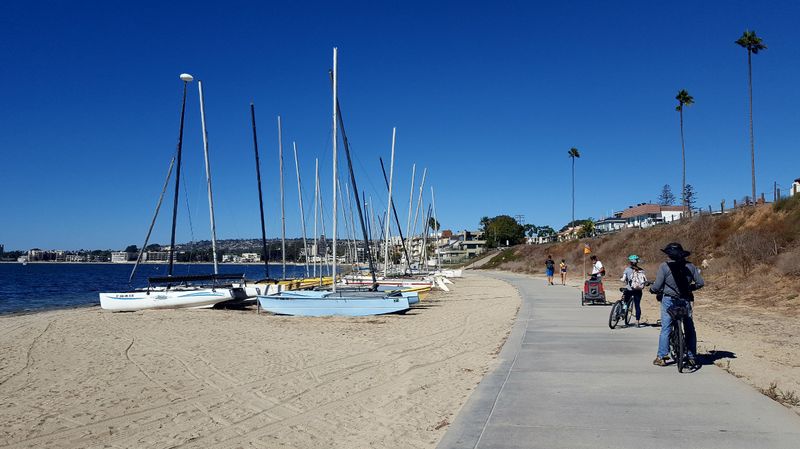
Connecting Mission Bay to the San Diego River, this scenic route covers roughly 12 miles through diverse landscapes.
The trail starts near the beach with ocean breezes and transitions inland through parks, residential neighborhoods, and natural riparian habitat.
Mission Bay’s calm waters attract kayakers and paddleboarders while cyclists roll along the shoreline path. The route includes both paved sections and some unpaved stretches that work better with wider tires.
Families often use this trail for casual rides since the terrain stays relatively flat and traffic crossings are well-marked. Playgrounds and grassy areas along the way provide spots for breaks or picnics.
Bird-watching opportunities increase along the river sections, where native plants have been restored to support local wildlife.
The trail can get busy on warm weekend afternoons when San Diego residents flock outdoors. Morning rides offer cooler temperatures and better chances of spotting herons and other wading birds in the shallows.
9. Truckee River Legacy Trail (Truckee/South Lake Tahoe)
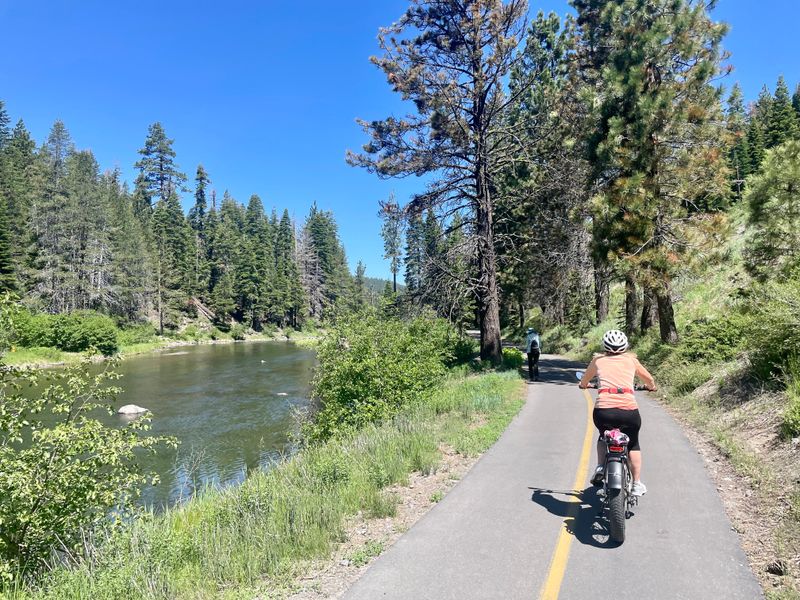
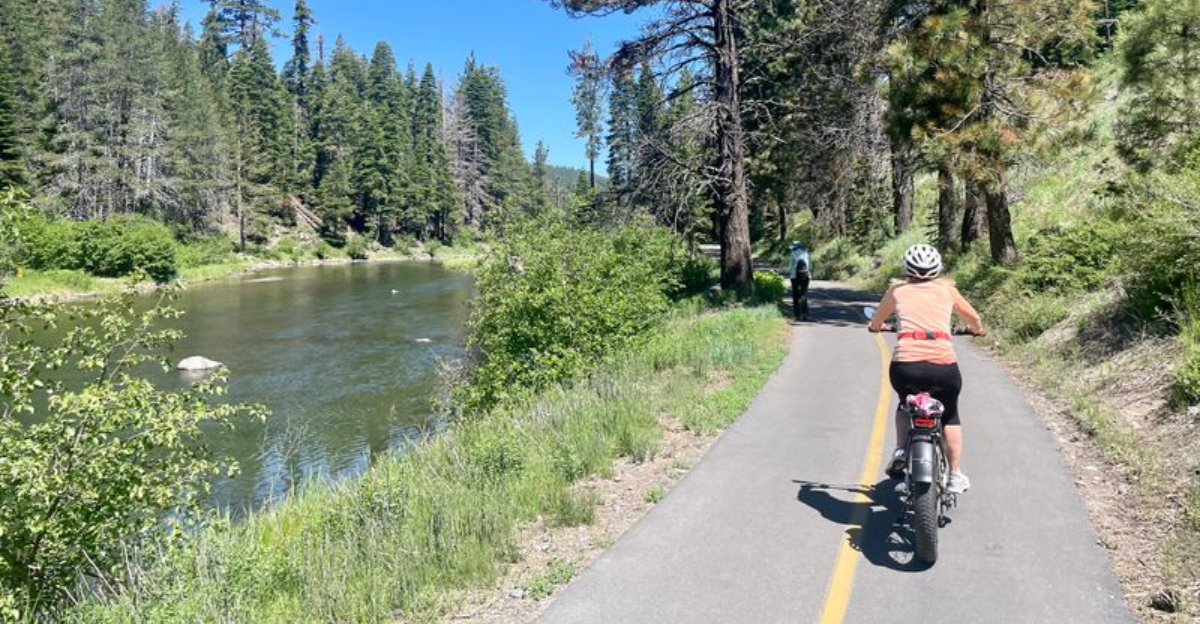
Following the Truckee River for about 10 miles between Tahoe City and Truckee, this paved trail showcases Sierra Nevada mountain beauty at its finest.
Clear alpine water rushes over granite boulders while pine trees frame views of distant peaks. The elevation hovers around 6,000 feet, so the air feels crisp and thin compared to sea-level riding.
The trail stays mostly flat despite the mountainous surroundings, making it accessible for families and casual riders who want to enjoy the scenery without intense climbing.
Several bridges cross the river, offering different perspectives of the rushing water below. Wildflowers bloom along the banks during summer months, adding splashes of color to the green forest.
The trail sees heaviest use during summer vacation season when visitors fill the Lake Tahoe area.
Fall brings fewer crowds and spectacular golden aspen trees, while winter snow closes the trail until spring thaw. Trailheads at both ends provide parking, though spaces can be limited on busy weekends.
10. Park To Playa Trail (Los Angeles County)
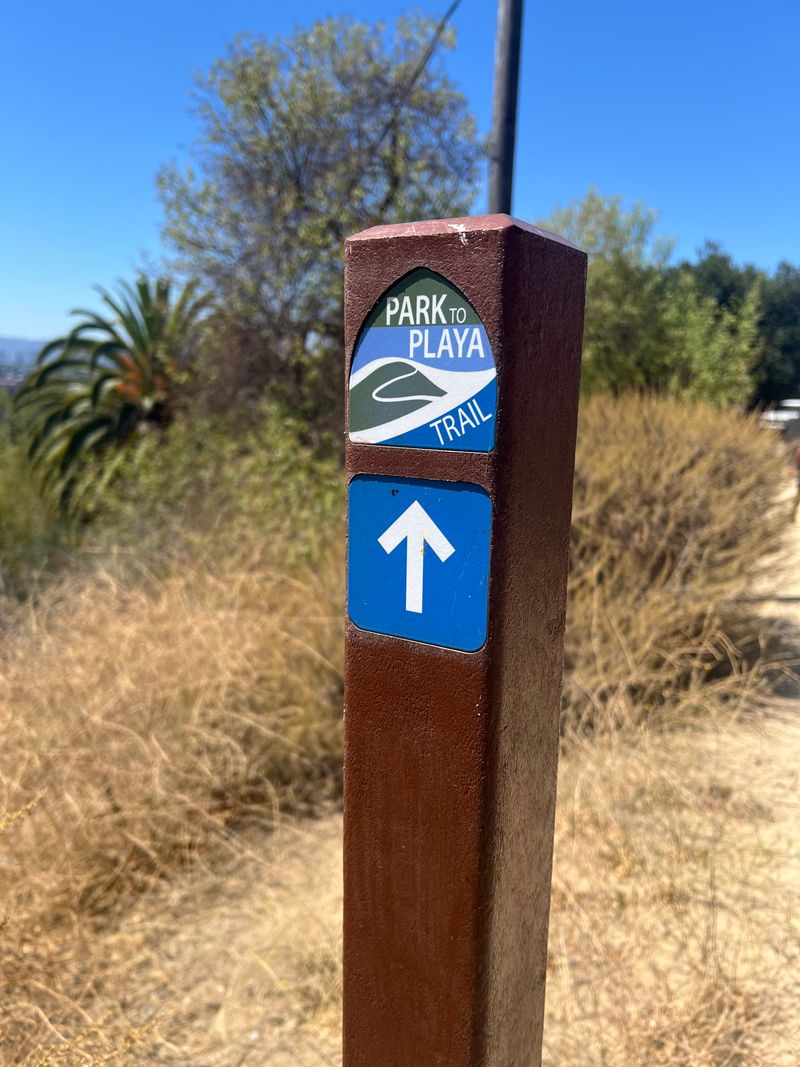
Connecting the mountains to the ocean, this ambitious trail network links the San Gabriel Mountains with the beaches of Santa Monica Bay.
Currently about 20 miles are completed, with more sections under development to eventually create a continuous 51-mile route.
The trail passes through diverse neighborhoods, parks, and natural areas, reflecting the varied character of Los Angeles County.
Riders experience dramatic elevation changes, from mountain foothills down to sea level, making this more challenging than flat coastal paths.
The upper sections wind through chaparral-covered hillsides with views across the Los Angeles basin, while lower portions travel through urban areas using bike lanes and separated paths.
Not all segments connect seamlessly yet, requiring some street riding between trail sections. The completed portions offer a unique way to experience Los Angeles beyond highways and traffic.
Community gardens, neighborhood parks, and local businesses line various segments. This trail continues to evolve as new sections open, gradually fulfilling the vision of mountains-to-sea connectivity.
11. Ventura River Parkway Trail (Ventura County)
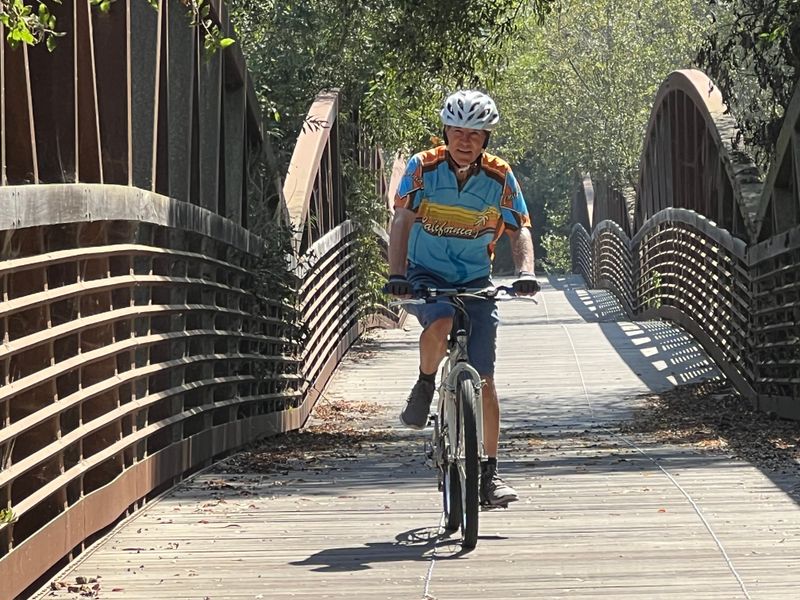
Running alongside the Ventura River for about 6 miles, this trail provides a peaceful escape through riparian habitat between Ojai and Ventura.
Sycamore and oak trees arch over the path in places, creating cool tunnels of green even during warm afternoons.
The river flows year-round in most sections, supporting willows, cattails, and other water-loving plants along its banks.
The trail surface alternates between paved and hard-packed dirt, with the northern sections near Ojai featuring more natural surfaces.
Cyclists comfortable on hybrid or mountain bikes can ride the entire length, while road bikes work better on the southern paved portions.
The route stays relatively flat with only gentle grades. Local residents use this trail regularly for exercise and dog-walking, creating a friendly neighborhood atmosphere.
Bridges cross the river at several points, and benches placed at scenic spots invite riders to pause and listen to the water flowing past. The trail remains accessible year-round, though winter rains can temporarily close unpaved sections.
12. Coyote Creek Trail (Santa Clara County)
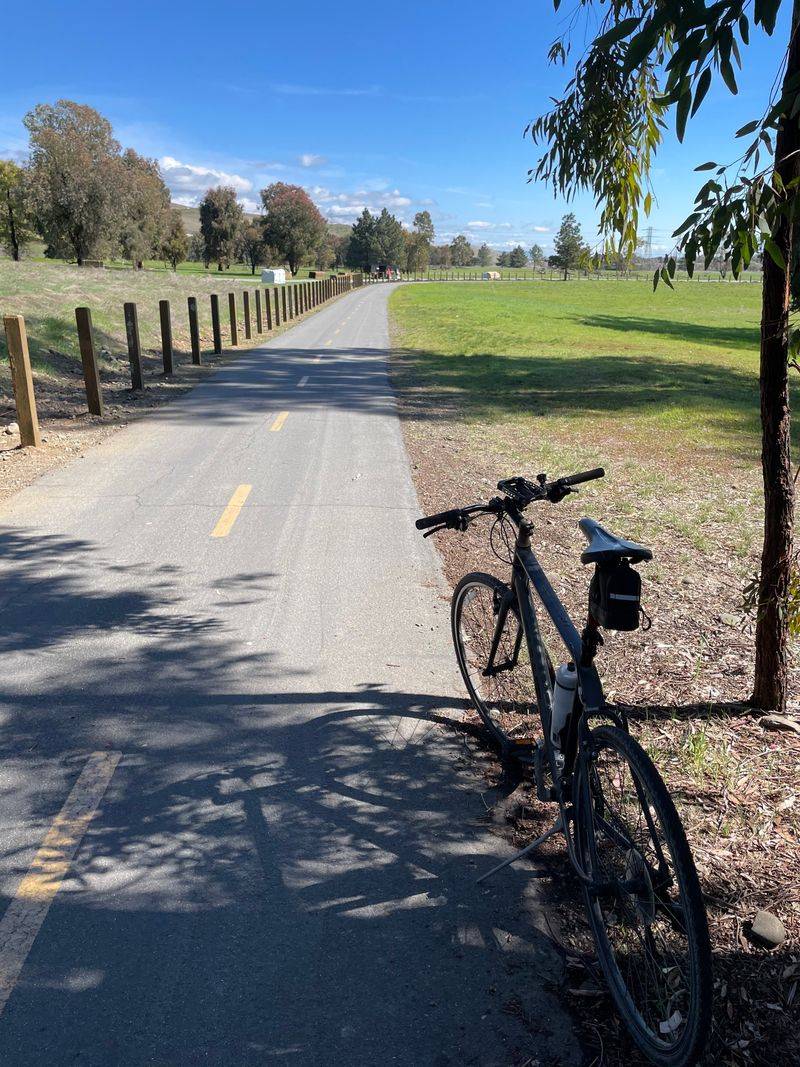
Stretching over 15 miles through the heart of Silicon Valley, this trail follows Coyote Creek from San Jose to Morgan Hill.
The paved path winds through urban parks, past office buildings, and alongside restored wetlands where tech workers and families alike escape for lunch breaks or evening rides.
Cottonwood and willow trees line the creek, providing habitat for birds and shade for cyclists. The southern portions feel more rural, passing through open spaces and agricultural areas that remind riders of the valley’s farming heritage.
The northern sections near downtown San Jose show more urban development but still maintain green corridors along the water.
The trail stays flat throughout, making it popular for commuters and recreational riders of all abilities.
Multiple access points with parking lots make it easy to ride shorter segments or tackle the full distance. Restrooms and water fountains appear at regular intervals in the parks along the route.
Weekday mornings bring commuter traffic, while weekends see more families and leisurely-paced groups enjoying the scenery.