These Are 10 Must-Do Day Hikes In Yosemite National Park, California
Yosemite National Park has a way of capturing attention the moment visitors arrive.
Towering granite cliffs rise overhead, waterfalls thunder through narrow valleys, and quiet alpine lakes reflect some of the most dramatic landscapes found anywhere in the American West.
In California, few places offer such a powerful combination of natural beauty and accessible adventure, making Yosemite a dream destination for hikers of every experience level.
For those planning a day hike, the park delivers far more than scenic walks.
Well-maintained trails lead to panoramic viewpoints, mist-filled canyons, and high-country terrain that feels worlds away from everyday life.
Some routes offer gentle paths perfect for a relaxed outing, while others challenge hikers with steep climbs that reward every step with unforgettable views.
Choosing the right trail can shape the entire experience. That is why insight from park rangers and trail experts matters.
Their recommendations highlight the hikes that best showcase Yosemite’s scenery while remaining achievable within a single day.
These carefully chosen routes reveal the heart of Yosemite and explain why California’s most iconic national park continues to inspire awe in everyone who explores its trails.
1. Half Dome Trail

Few hiking experiences compare to standing atop Half Dome’s 8,842-foot summit, where the entire Yosemite Valley spreads out below like a living map.
This iconic granite dome has become a bucket-list destination for adventurous hikers willing to tackle its demanding 14 to 16-mile round-trip journey.
The trail climbs roughly 4,800 feet through diverse terrain, starting in shaded forest before emerging onto exposed granite slopes.
Hikers should plan for a 10 to 12-hour day and start before dawn to avoid afternoon thunderstorms that can develop suddenly in the high country.
The final 400 feet requires ascending the famous cable route, where steel cables bolted into the rock provide handholds for the steep climb.
This section tests both physical strength and mental resolve, as the smooth granite slopes away at dramatic angles.
A permit system limits daily hikers to protect both the trail and the experience, so advance planning through the recreation.gov lottery becomes essential.
The cables typically operate from late May through early October, depending on snow conditions. Gloves help protect hands on the metal cables, and sturdy hiking boots with excellent traction make the approach safer and more comfortable.
2. Mist Trail And John Muir Trail Loop
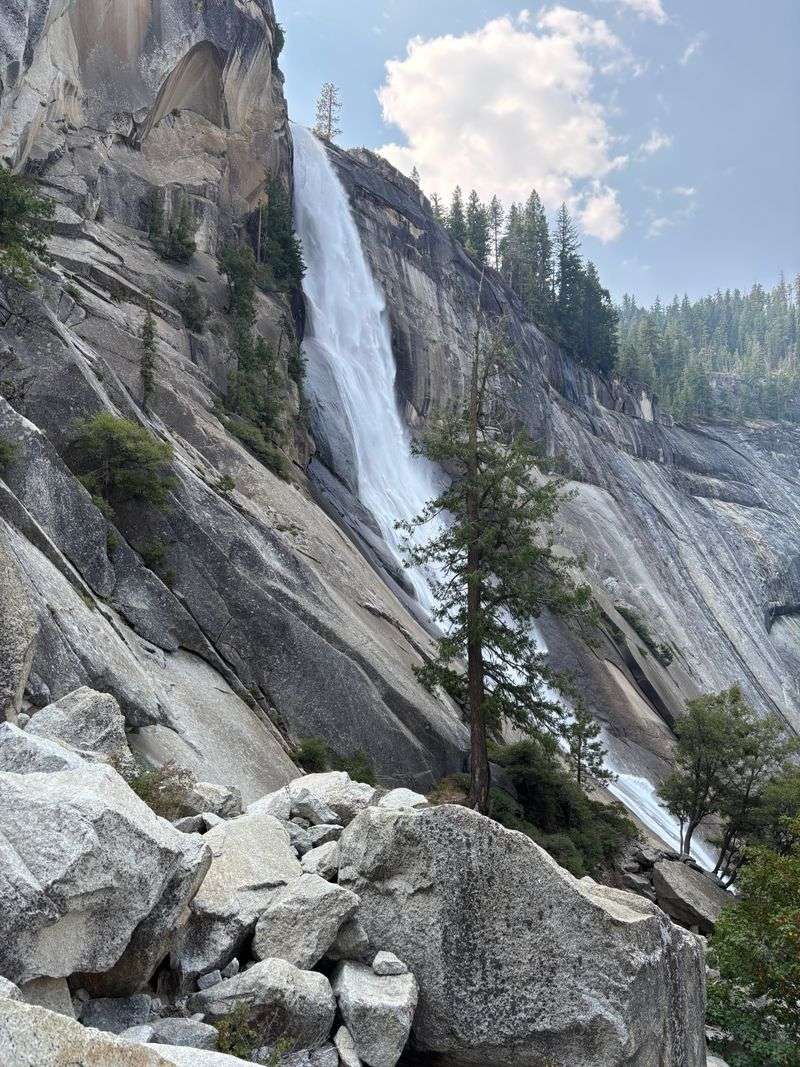
Water thunders down 594 feet at Vernal Fall, creating a constant spray that drenches hikers and gives this route its memorable name.
The Mist Trail climbs alongside the fall on steep granite stairs carved directly into the cliff face, offering front-row views of the cascading water.
Rainbows often dance in the mist on sunny mornings, creating magical moments that make the challenging ascent worthwhile.
The loop continues past Vernal Fall to Nevada Fall, another spectacular 594-foot drop that rewards hikers with different perspectives of Yosemite’s waterpower.
The John Muir Trail provides the return route, offering a gentler descent with sweeping valley views and welcome shade through pine and fir forest.
The complete loop covers about 6 to 7 miles with roughly 2,000 feet of elevation gain.
Spring and early summer bring peak water flow, making the falls most impressive but also making the granite steps extremely slippery and potentially hazardous.
Waterproof jackets help keep hikers comfortable through the heaviest spray sections near Vernal Fall.
The trail can become crowded on weekends and holidays, so weekday visits or very early starts provide more peaceful experiences on this deservedly popular route.
3. Upper Yosemite Falls Trail
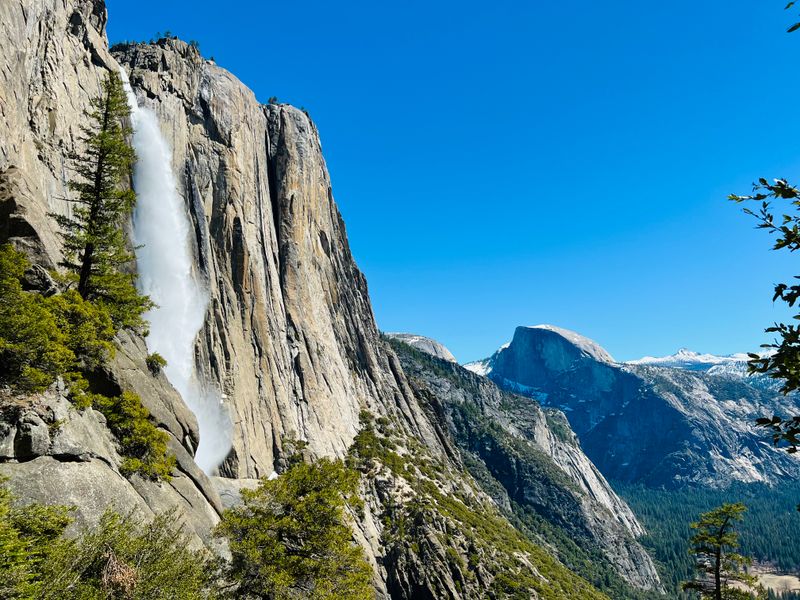
Earning the view from the top of North America’s tallest waterfall requires commitment, as this trail climbs 2,700 feet over 3.6 miles of relentless switchbacks.
The effort pays off with perspectives that few visitors experience, looking down on Yosemite Valley from the same height as the water before it plunges 2,425 feet to the rocks below.
The round-trip journey covers 7.6 miles and typically takes 6 to 8 hours. The trail wastes no time with gentle warm-up sections, immediately beginning steep climbing through oak and pine forest.
About halfway up, Columbia Rock provides a natural rest stop with impressive valley views, though the falls themselves remain hidden.
The final approach traverses exposed granite slopes where the sound of rushing water grows louder with each step.
At the top, hikers can carefully approach the brink where Yosemite Creek accelerates before its dramatic drop, though extreme caution becomes necessary near the slippery rocks.
Spring months showcase the falls at peak flow, though the trail can remain snow-covered into May. Summer brings more manageable conditions but also reduces water flow, sometimes to a trickle by late August or September in dry years.
4. Mirror Lake Loop
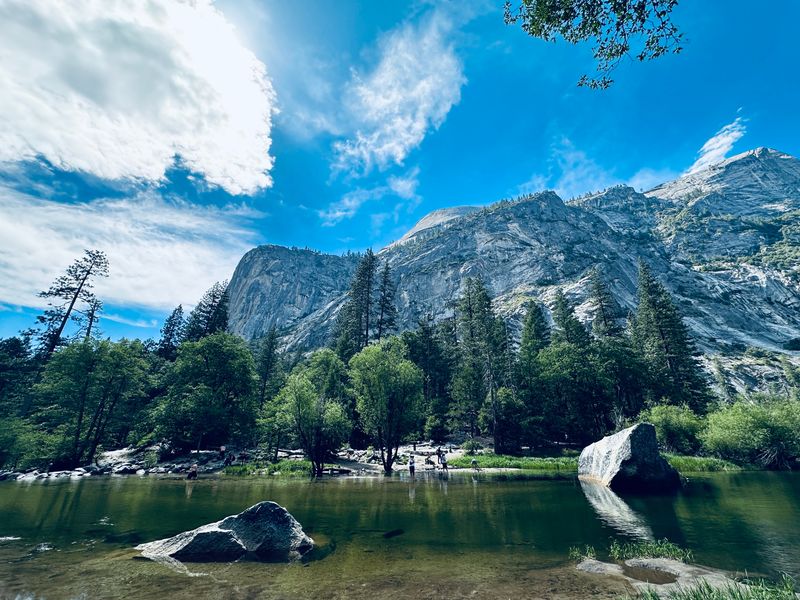
Tranquility defines the Mirror Lake experience, where calm water creates perfect reflections of Half Dome and the surrounding cliffs during spring and early summer.
This easy 5-mile loop follows a paved path initially, then transitions to a natural trail that circles the lake through pleasant forest and meadow settings.
The relatively flat terrain makes it accessible for families and hikers seeking a gentler Yosemite experience.
The lake itself represents a natural process of transformation, as Tenaya Creek gradually fills the basin with sediment.
During spring runoff, water fills the lake basin and creates the famous mirror reflections. By late summer and fall, the water often recedes to a small creek, revealing sandy flats and meadow vegetation.
Early morning visits often provide the calmest water and best reflection conditions before afternoon breezes ripple the surface.
The loop can be walked in either direction, though counterclockwise allows hikers to approach the main reflection viewpoint from the optimal angle.
Winter months may bring ice and snow, transforming the scene into a different kind of quiet beauty that attracts fewer visitors but offers its own rewards.
5. Taft Point And Sentinel Dome Loop

Dramatic fissures split the granite cliff edge at Taft Point, creating narrow cracks that drop thousands of feet straight down to the valley floor below.
This 5.5-mile loop combines two spectacular viewpoints accessed from the same trailhead along Glacier Point Road, offering remarkable scenery for relatively modest effort.
The trail gains only about 500 feet total, making it one of Yosemite’s most rewarding hikes in terms of views per vertical foot climbed.
Taft Point extends out over the valley on a rocky promontory protected by simple railings, though the fissures themselves remain open and require careful attention.
Looking down through these cracks provides a thrilling perspective that some find exhilarating while others prefer to admire from a safe distance.
El Capitan rises across the valley, appearing almost close enough to touch despite the actual distance.
Sentinel Dome offers 360-degree panoramic views from its 8,122-foot summit, reached by a short climb up smooth granite slopes.
The famous Jeffrey pine that once crowned the dome died in the 1970s but remained standing until it finally toppled in 2003.
Glacier Point Road typically opens in May or June and closes with snow in November, limiting this hike to the warmer months.
6. Four Mile Trail To Glacier Point
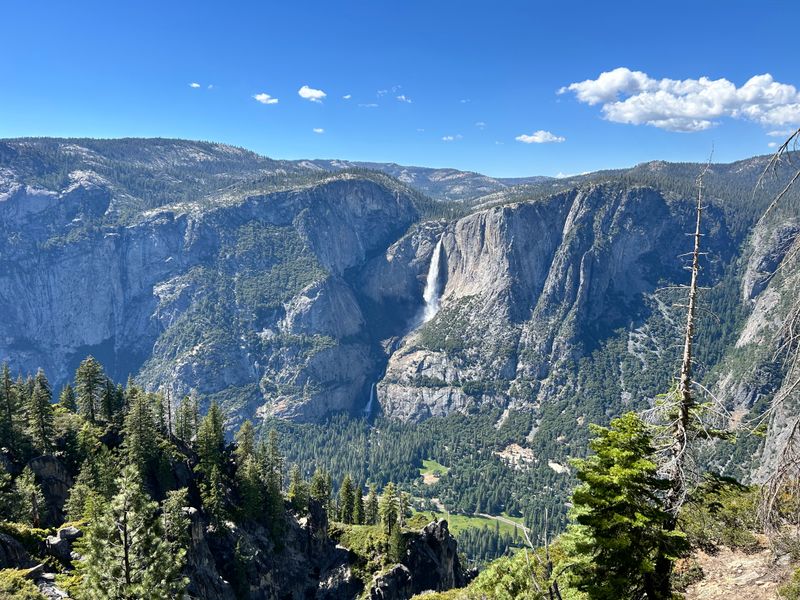
Switchbacks climb relentlessly from the valley floor to Glacier Point’s 7,214-foot overlook, gaining 3,200 feet of elevation over 4.8 miles of well-maintained trail.
The name proves misleading, as the distance actually exceeds four miles, though historical measurements may have used different methods.
Views improve with every hundred feet gained, providing constantly changing perspectives of Yosemite Valley’s iconic landmarks.
The trail begins near the Swinging Bridge parking area and immediately starts climbing through oak and pine forest.
Exposed sections offer increasingly impressive views of Yosemite Falls across the valley, while Half Dome gradually reveals itself as elevation increases.
The final approach traverses beneath Sentinel Rock before emerging at Glacier Point’s developed overlook area.
Many hikers arrange shuttle transportation to hike one-way downhill from Glacier Point, avoiding the strenuous uphill climb.
The trail typically opens in late May or early June after winter snow melts and closes again with the first significant snowfall.
Summer heat can make the exposed sections uncomfortable during midday, so early morning starts become especially important on this challenging but rewarding route to one of Yosemite’s most famous viewpoints.
7. Mist Trail To Nevada Falls
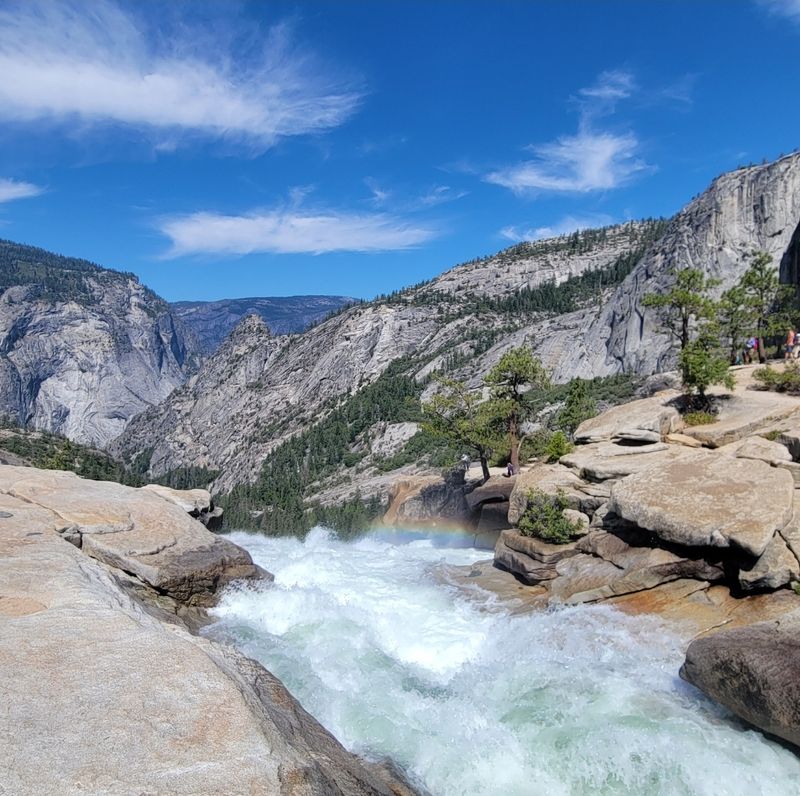
Nevada Fall drops 594 feet in a powerful cascade that can be heard long before it comes into view, creating a constant roar that echoes through the granite canyon.
This 5.4-mile round-trip hike follows the Mist Trail past Vernal Fall before continuing upstream along the Merced River to Nevada Fall’s impressive drop.
The trail climbs about 2,000 feet total, with the steepest sections concentrated on the approach to Vernal Fall.
After passing Vernal Fall, the trail moderates somewhat as it winds through forest and alongside the river.
The final approach to Nevada Fall’s overlook provides dramatic views looking down the cascade’s length and out across the valley.
The perspective differs significantly from the view of Vernal Fall, as hikers look at Nevada Fall from the side rather than climbing directly beside it.
Return options include retracing the Mist Trail or descending via the John Muir Trail, which offers a gentler gradient and different scenery.
Spring runoff creates the most spectacular water displays, though the trail becomes more hazardous when wet.
The granite steps on the Mist Trail require careful foot placement, and the constant spray can make surfaces extremely slippery throughout the climbing sections near Vernal Fall.
8. Lower Yosemite Falls Trail
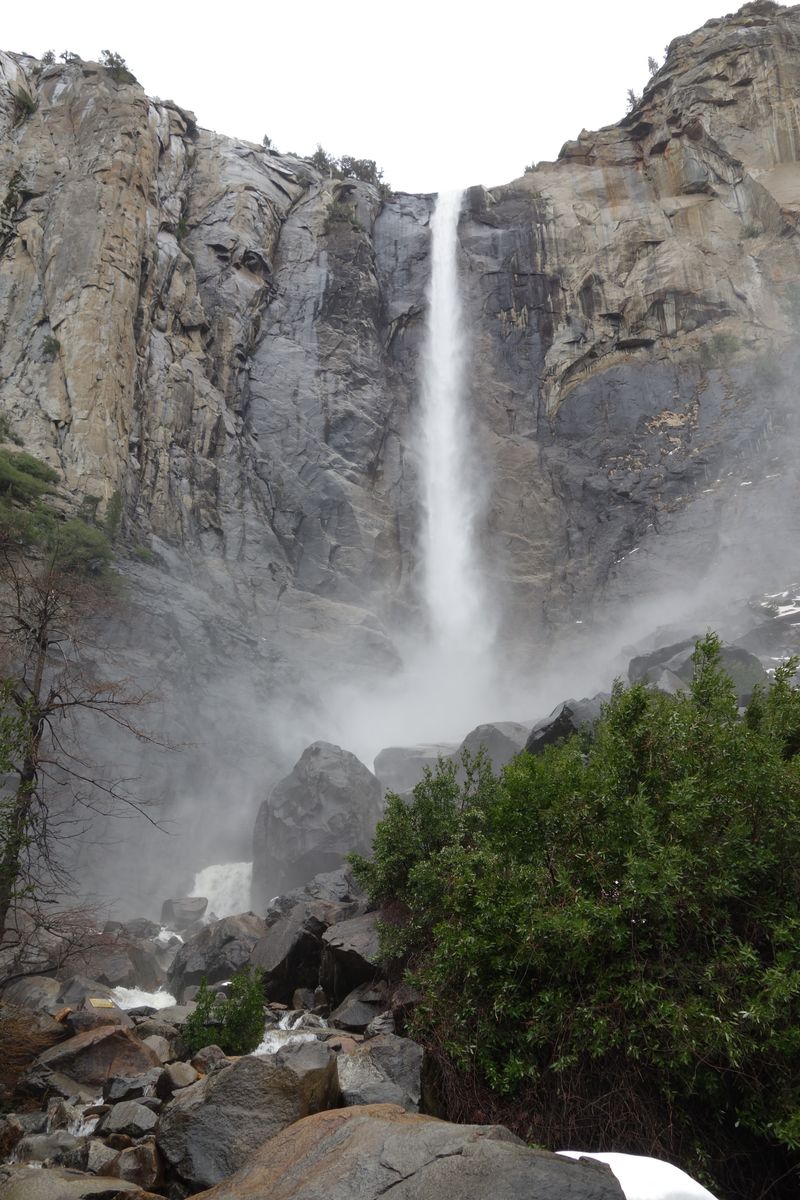
Accessibility meets grandeur on this paved 1-mile loop that brings visitors to the base of North America’s tallest waterfall without requiring significant climbing or hiking experience.
The trail begins near Yosemite Village and follows a gentle path through oak woodland before emerging at the fall’s base.
Wheelchairs and strollers can navigate the paved sections, making this spectacular view available to nearly everyone.
Spring months transform this easy walk into an unforgettable sensory experience, as peak runoff sends 2,425 feet of falling water crashing onto the rocks with tremendous force.
The spray can drench visitors standing at the viewing areas, creating refreshing cooling and often producing brilliant rainbows in the mist.
The sound becomes almost overwhelming, a physical presence that drowns out conversation.
By late summer in dry years, the falls may reduce to a trickle or stop flowing entirely, completely changing the experience.
The trail remains pleasant year-round though, offering valley views and easy walking regardless of water flow.
The proximity to Yosemite Village makes this trail extremely popular, so expect crowds during peak visitor seasons and consider early morning or evening visits for more peaceful experiences at this iconic and easily accessible Yosemite landmark.
9. Cathedral Lakes Trail
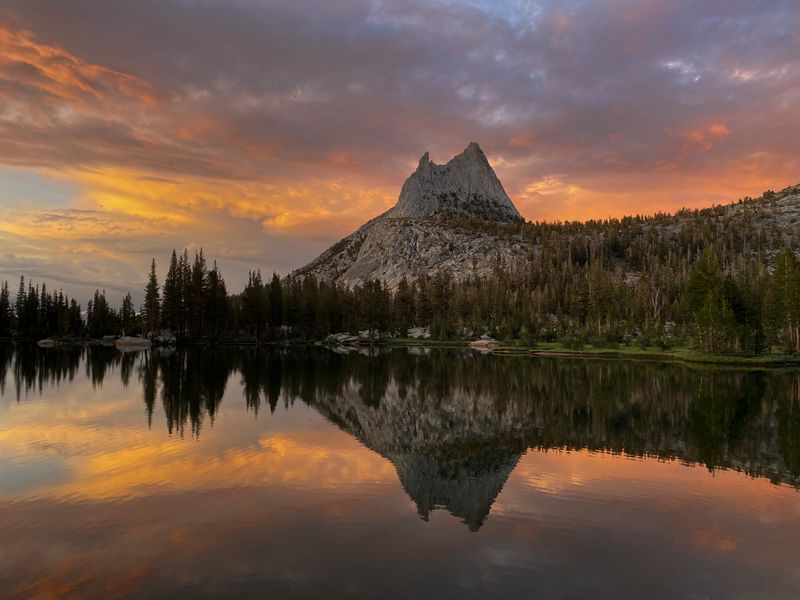
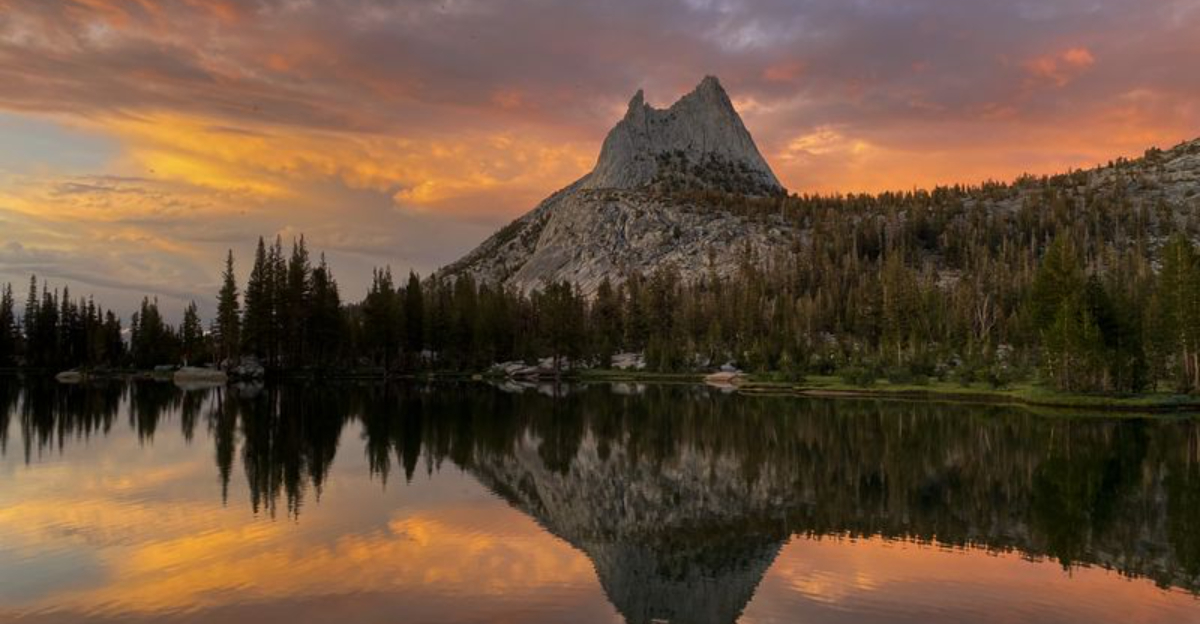
Alpine perfection reveals itself at Cathedral Lakes, where crystal-clear water reflects the jagged spires of Cathedral Peak in mirror-like stillness.
This 8-mile round-trip hike begins at Tuolumne Meadows, climbing gradually through lodgepole pine forest before opening into high-elevation meadows painted with wildflowers during July and August.
The trail gains about 1,000 feet, making it more accessible than many other Yosemite high-country routes.
Lower Cathedral Lake appears first, offering sandy shores perfect for rest stops and quiet contemplation of the surrounding granite landscape.
Many hikers choose to stop here, but continuing another half mile to Upper Cathedral Lake reveals an even more dramatic setting.
The upper lake sits in a rocky basin with Cathedral Peak rising directly overhead, creating postcard-perfect scenery.
The trailhead sits along Tioga Road, which typically opens in late May or June and closes with the first significant snowfall in October or November.
Mosquitoes can be intense in early summer when snowmelt creates abundant breeding pools, so insect repellent becomes essential gear.
Afternoon thunderstorms develop frequently in the high country during summer months, making morning starts safer and more comfortable for this deservedly beloved trail.
10. Clouds Rest Trail
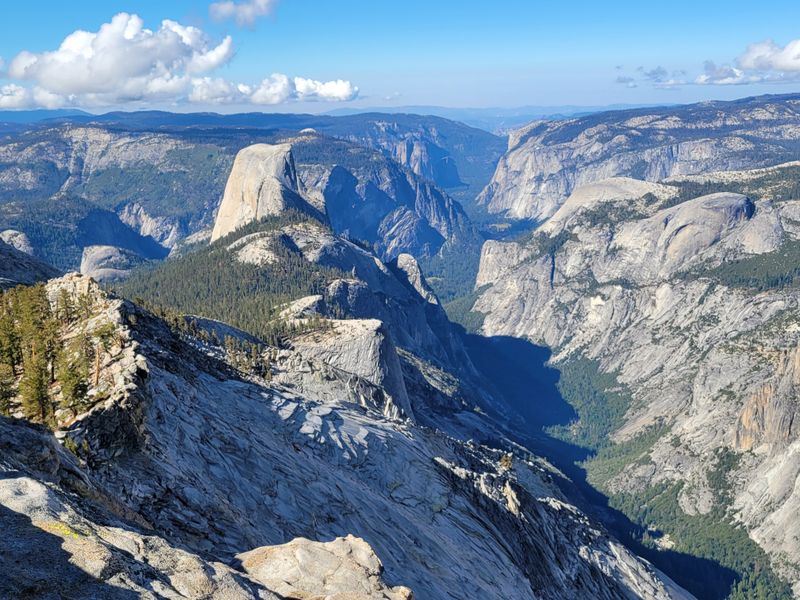
Standing atop Clouds Rest at 9,926 feet provides what many consider the finest panoramic view in all of Yosemite, with Half Dome appearing almost close enough to touch from across Tenaya Canyon.
This challenging 14.5-mile round-trip hike gains about 2,300 feet from the Sunrise Lakes trailhead, though the distance proves more demanding than the elevation gain might suggest.
The final approach follows a narrow granite ridge that requires sure footing and comfort with exposure.
The trail begins in forest near Tenaya Lake and climbs gradually through alternating woodland and granite slabs. Views expand steadily as elevation increases, with glimpses of distant peaks appearing through the trees.
The final mile traverses increasingly open terrain before reaching the summit ridge, where the full 360-degree panorama suddenly reveals itself.
Half Dome rises to the south, appearing broader and more massive from this angle than from valley viewpoints.
Tenaya Canyon drops away steeply to the west, while the high peaks of the Cathedral Range march across the eastern horizon.
The summit offers plenty of room for rest and contemplation, though afternoon thunderstorms can develop quickly during summer months, making early starts essential for safety on this exposed high-country route.