This Overlooked City In California Charms Visitors With Elegant Victorian Architecture
Time slows the moment you arrive. Streets feel calm and deliberate. Buildings stand with quiet confidence. Every corner invites a closer look.
Ferndale rests along the coast of California and feels wonderfully untouched by modern rush. The town is known for its remarkable Victorian architecture and the care taken to protect it.
It did not stumble into its charm by accident. Pride and preservation shaped every block over generations. Tall facades line Main Street with decorative trim and bold colors that reflect a prosperous past.
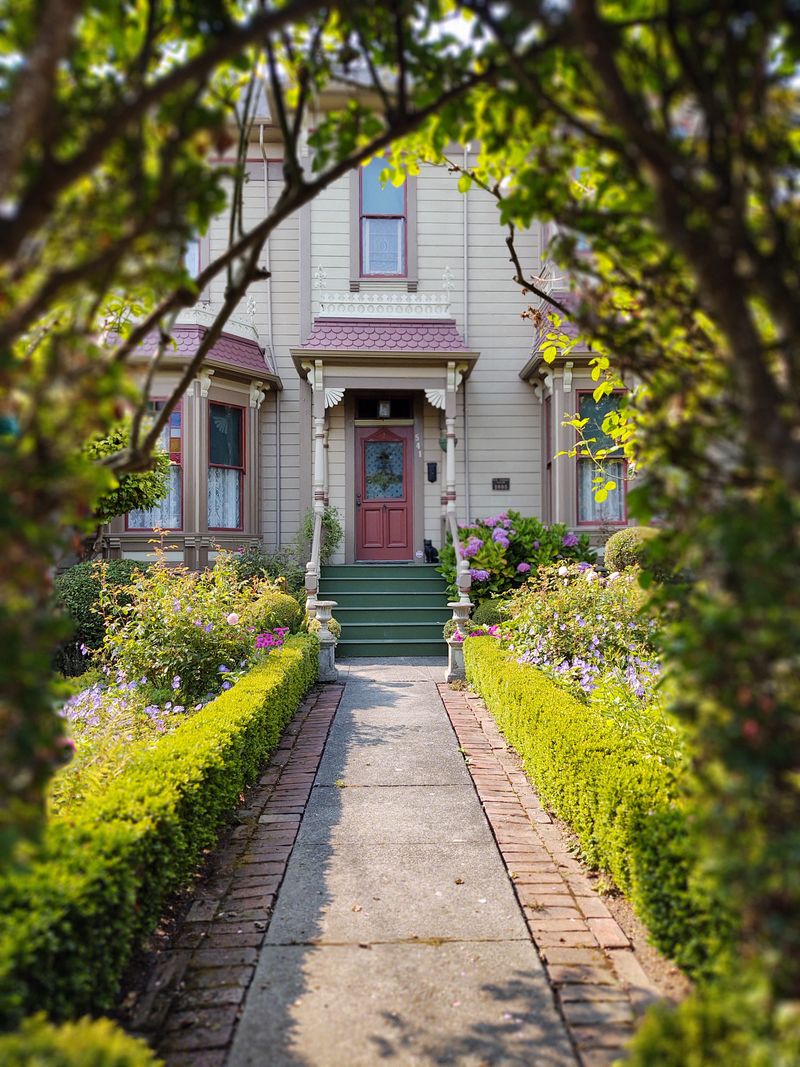
Homes rise nearby with ornate details that speak to craftsmanship rarely seen today. Walking here feels immersive rather than nostalgic.
Ferndale remains lived in and loved rather than staged. The legacy of dairy farming wealth still shows in the scale and elegance of the buildings. Shops cafes and galleries now fill spaces once tied to daily trade and community life.
Architecture tells the story here. History feels close and personal. Every building has a voice. Quiet places can leave the strongest impression. Visitors often arrive curious and leave impressed.
Ferndale offers more than beauty. It offers continuity.
The town stands as proof that progress does not require erasing the past. In California places like this are rare. Ferndale chooses to remember and that choice makes it unforgettable.
Ferndale Earned The Title Victorian Village
Ferndale holds its Victorian Village nickname with genuine pride, not as a marketing gimmick but as a reflection of decades of community commitment to architectural preservation.
The city contains one of the best-preserved collections of Victorian-era commercial buildings in California, with dozens of storefronts and residences dating back to the 1880s and 1890s.
Unlike many towns that have modernized their downtown areas, Ferndale residents chose to maintain the original character of their buildings, creating a streetscape that genuinely reflects late 19th-century design.
The entire Main Street Historic District earned placement on the National Register of Historic Places in 1994, recognizing its significance as an intact example of a Victorian-era commercial district.
This designation reflects not just the age of the buildings but their remarkable state of preservation and the continuity of the streetscape.
Walking through downtown feels authentic because the buildings were never torn down or significantly altered, allowing visitors to experience the architectural details exactly as they appeared over a century ago.
The ornate cornices, decorative trim, and original building facades remain visible and well-maintained.
Local preservation efforts continue today, with property owners following strict guidelines to maintain historical accuracy during any restoration or repair work.
This commitment to authenticity distinguishes Ferndale from other historic towns that may have recreated or heavily modified their Victorian structures.
Gingerbread Mansion
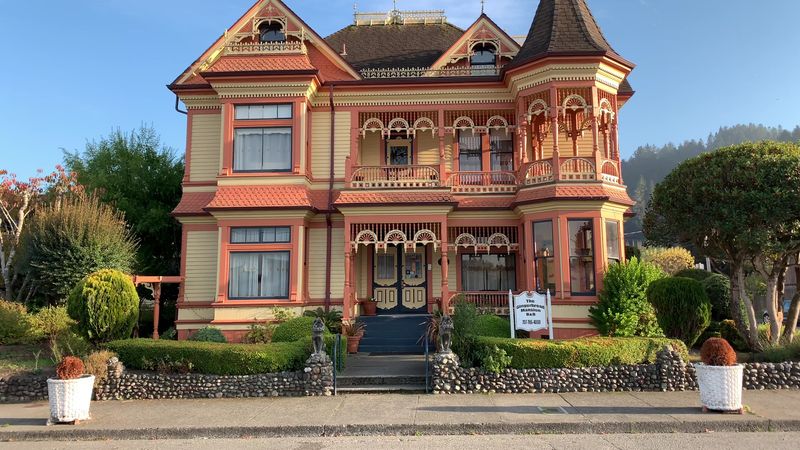
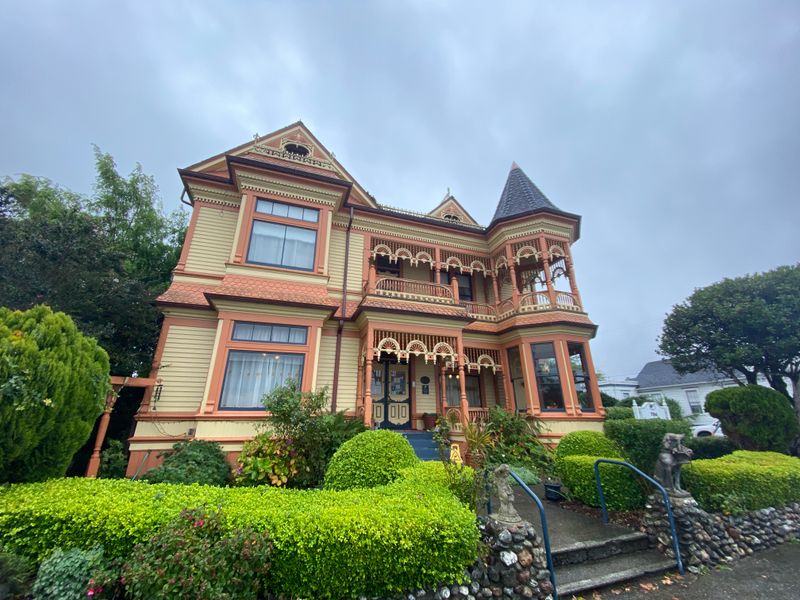
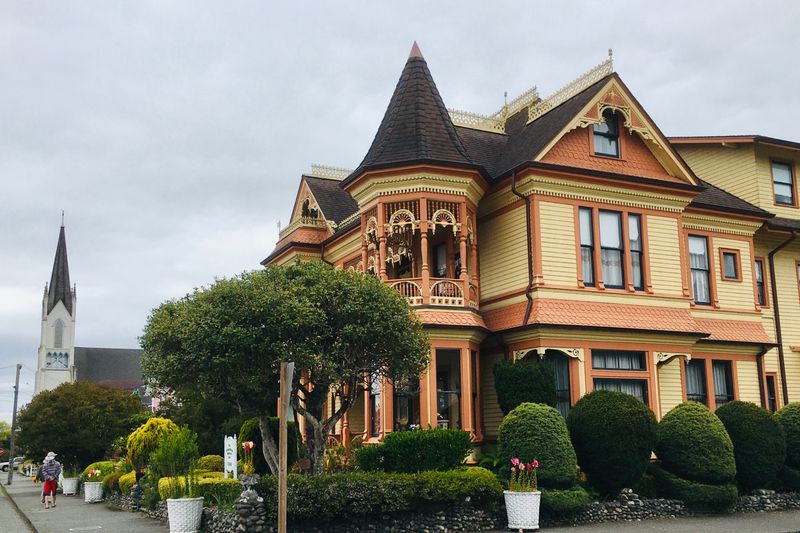
Built in 1899, the Gingerbread Mansion represents Queen Anne Victorian architecture at its most elaborate and photogenic.
The house stands at 400 Berding Street, featuring three floors, 32 rooms, and extensive gardens that surround the property with seasonal color and carefully maintained landscaping.
The mansion earned its whimsical name from the intricate decorative trim work that adorns the exterior, resembling the delicate icing details on a gingerbread house.
Throughout its history, the building served multiple purposes beyond its original function as a family residence, including time as a hospital and an American Legion hall.
Today it operates as a bed-and-breakfast inn, allowing guests to experience the interior spaces and architectural details firsthand.
The exterior features multiple gables, turrets, and bay windows characteristic of Queen Anne style, all painted in complementary colors that highlight the architectural details.
The level of decorative trim work exceeds what appears on most Victorian homes, creating visual interest from every angle.
Photographers appreciate how the mansion presents differently throughout the day as sunlight shifts across the facade, illuminating different architectural elements.
The gardens provide additional visual appeal, with flowering plants and mature trees framing views of the house.
The combination of architectural complexity and photogenic setting explains why this particular Victorian home appears in countless photographs, postcards, and travel features about Ferndale.
Shaw House
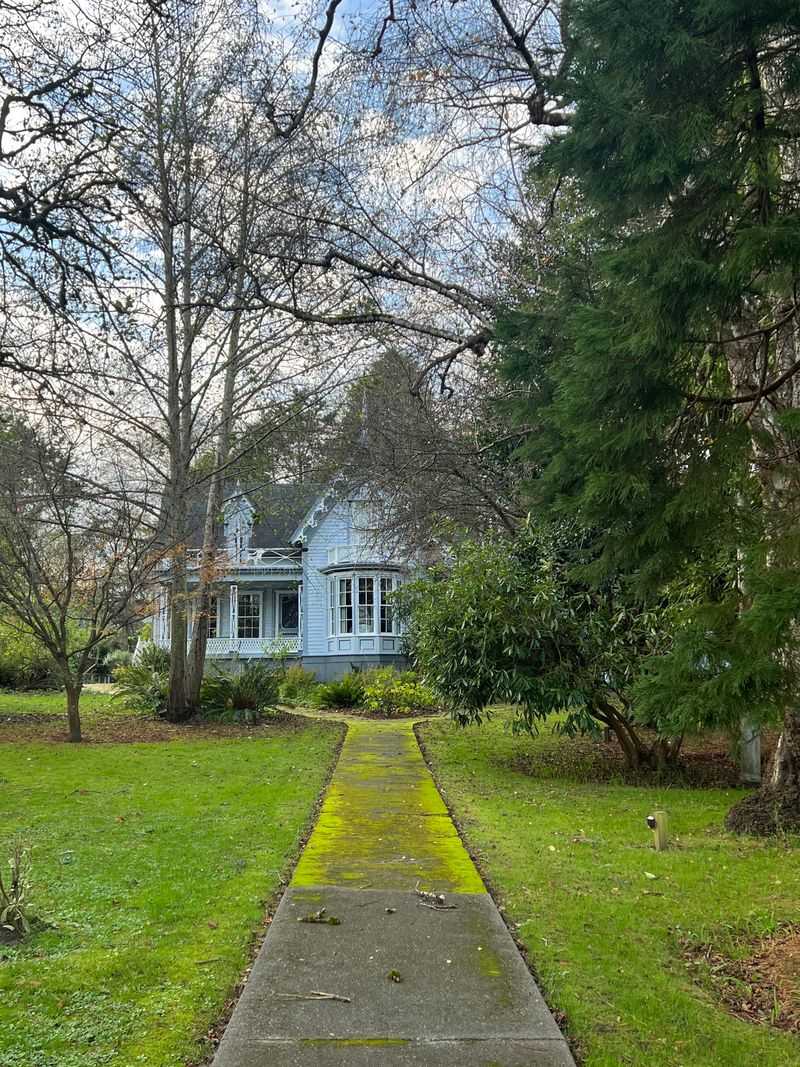
Constructed in 1854 by Seth Shaw, the Shaw House predates most of Ferndale’s Victorian-era buildings, representing the earliest period of settlement in the area.
The house exhibits Carpenter Gothic style, a simpler and earlier architectural approach than the elaborate Victorian designs that would follow decades later.
Carpenter Gothic features pointed arch windows, steep roof lines, and decorative trim work created by skilled carpenters using wood rather than stone.
Throughout its long history, the building served various community functions beyond residential use, including time as a courthouse and post office when Ferndale was still developing its civic infrastructure.
These multiple uses reflect how important buildings in small frontier communities often served whatever purpose the town needed most.
Today the Shaw House at 703 Main St, Ferndale, CA 95536 operates as a bed-and-breakfast, offering visitors the opportunity to stay in Ferndale’s oldest surviving residence.
The building’s age and architectural style provide a contrast to the later Victorian homes, showing how building design evolved over the decades as the community prospered.
The simpler lines and more restrained decoration of Carpenter Gothic style create a different aesthetic than the ornate Queen Anne Victorians that followed.
Guests staying here experience a different chapter of Ferndale’s architectural history, one that predates the dairy farming wealth that funded the more elaborate later buildings.
The house stands as tangible evidence of Ferndale’s earliest days, when the community was just beginning to establish itself.
Berding House
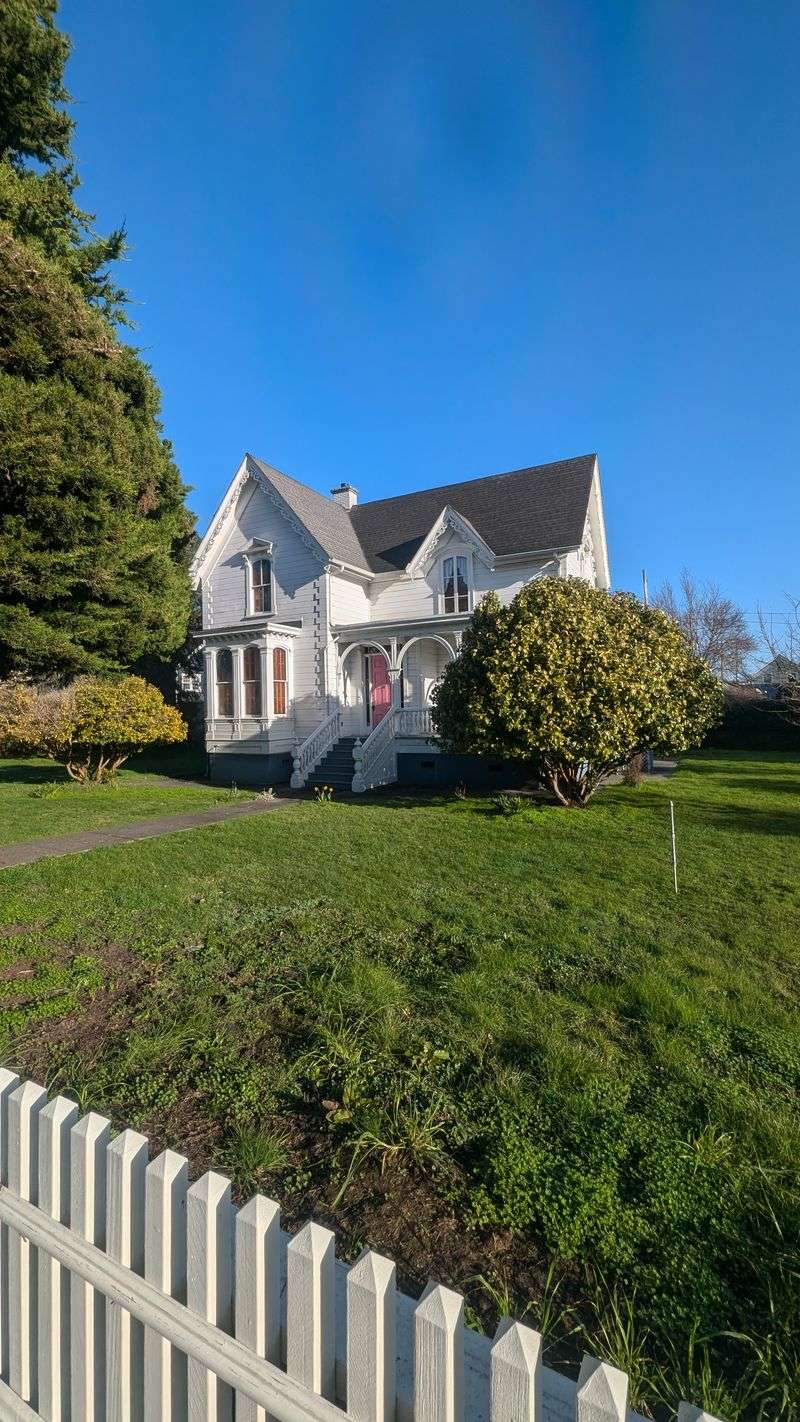
Located at 455 Ocean Avenue, the A. Berding House carries the charming nickname Gum Drop Tree House, earned from the row of cypress trees planted along the front of the property.
Built in 1875 in Carpenter Gothic Victorian style, the house was constructed by Arnold Berding, a pioneer merchant who established himself in Ferndale during its early growth period.
The building earned placement on the National Register of Historic Places, recognizing its architectural significance and historical value to the community.
The cypress trees that gave the house its nickname have grown for nearly 150 years, their distinctive rounded shapes resembling gum drops when viewed from the street.
These mature trees have become as much a part of the property’s identity as the house itself, creating a recognizable silhouette that distinguishes this residence from others in town.
Carpenter Gothic Victorian represents a transitional architectural style, combining the earlier Carpenter Gothic elements with Victorian-era decorative details.
The house features the pointed arch windows and vertical emphasis of Gothic style alongside the more ornate trim work that became popular during the Victorian period.
The combination creates visual interest while maintaining a somewhat more restrained appearance than the later Queen Anne Victorians.
The property demonstrates how Ferndale’s architectural character developed over time, with each decade bringing new design influences.
The trees and house together create a landmark that residents and visitors recognize, contributing to the overall historic character of the neighborhood.
Victorian Inn
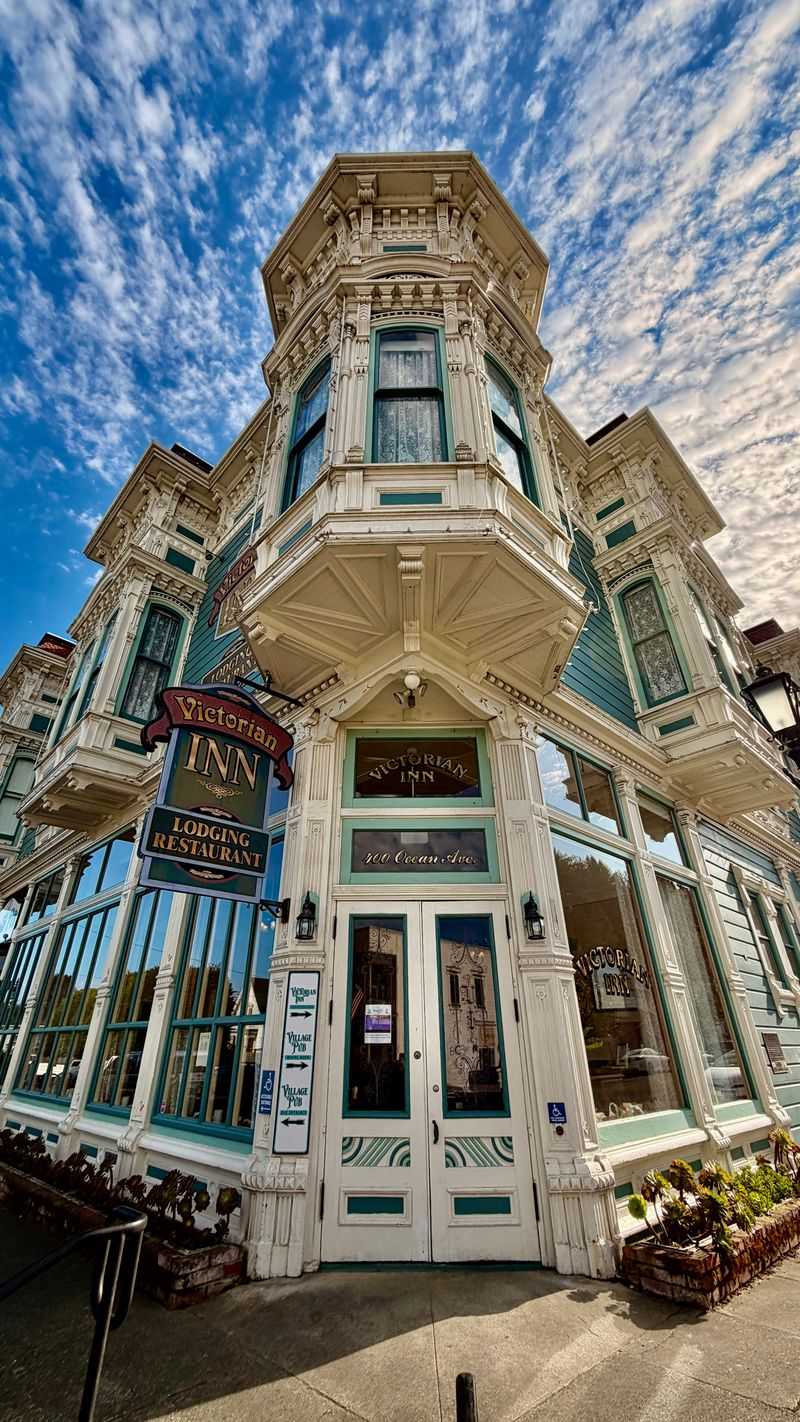
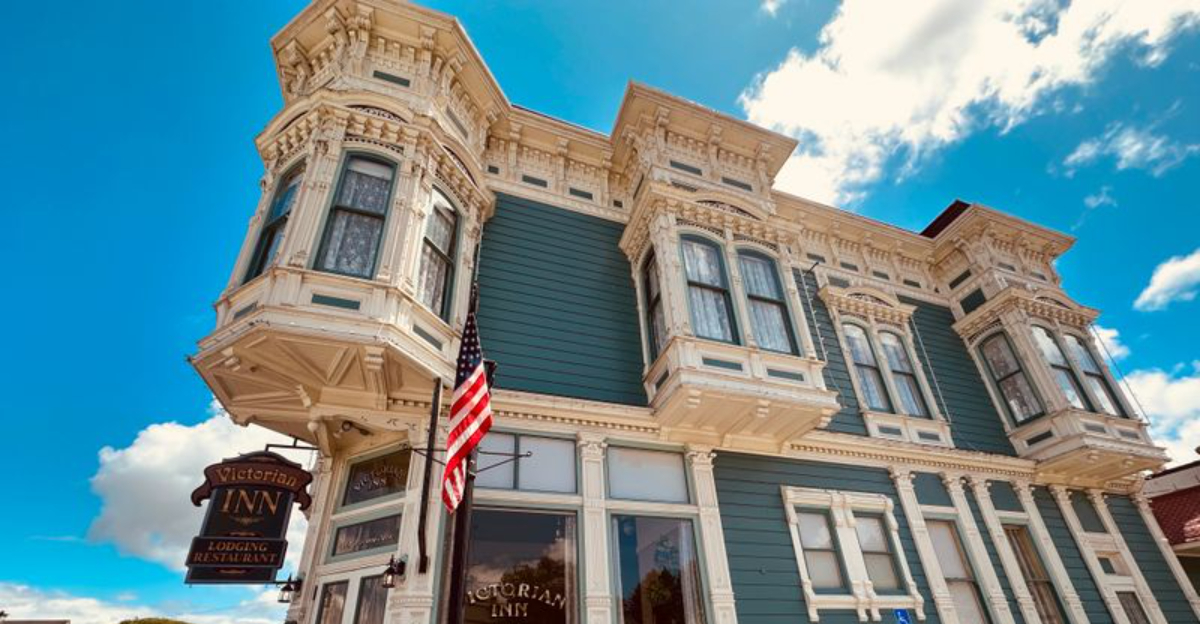
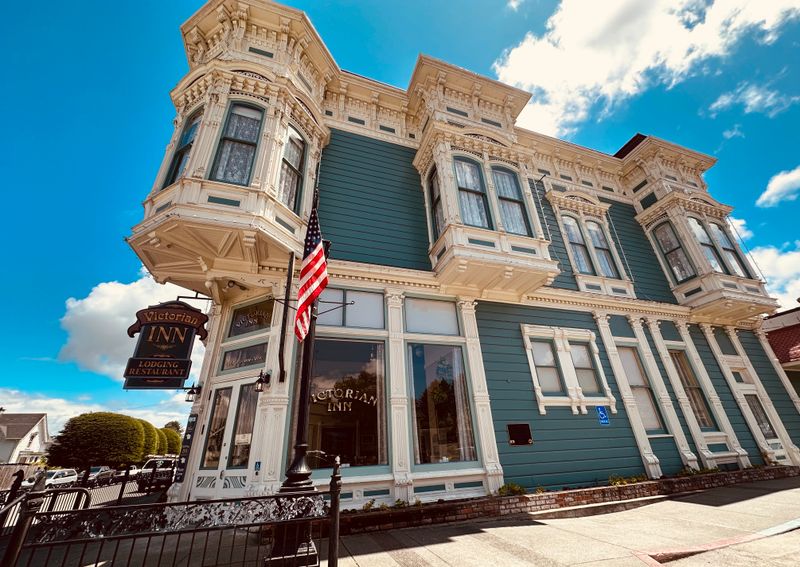
Situated at 400 Ocean Avenue, the Victorian Inn displays Stick Style-Eastlake Victorian architecture, a specific design approach characterized by highly decorated surfaces and complex geometric patterns.
Constructed between 1890 and 1891, the building was designed by architect Thomas J. Frost, who created a structure that combined commercial and hospitality functions.
The ground floor originally housed a bank and retail stores, while the upper floor operated as a hotel, a common arrangement in Victorian-era commercial buildings.
The facade features highly decorated bay windows that project from the building face, creating visual depth and allowing natural light to enter from multiple angles.
The shingled mansard parapet roof adds architectural interest along the roofline, a decorative element that serves no functional purpose beyond enhancing the building’s appearance.
Stick Style architecture emphasizes the structural frame of the building, with decorative elements that highlight vertical, horizontal, and diagonal lines.
Eastlake detailing adds another layer of ornamentation, with turned spindles, carved brackets, and intricate patterns that create visual complexity.
The combination of these design approaches results in a building facade that rewards close examination, with decorative details appearing at every level.
The building continues to serve commercial and hospitality functions, maintaining its original mixed-use character.
The level of decorative detail reflects the prosperity Ferndale experienced during the dairy farming boom, when building owners could afford to hire skilled architects and craftsmen to create elaborate structures.
Palace Saloon
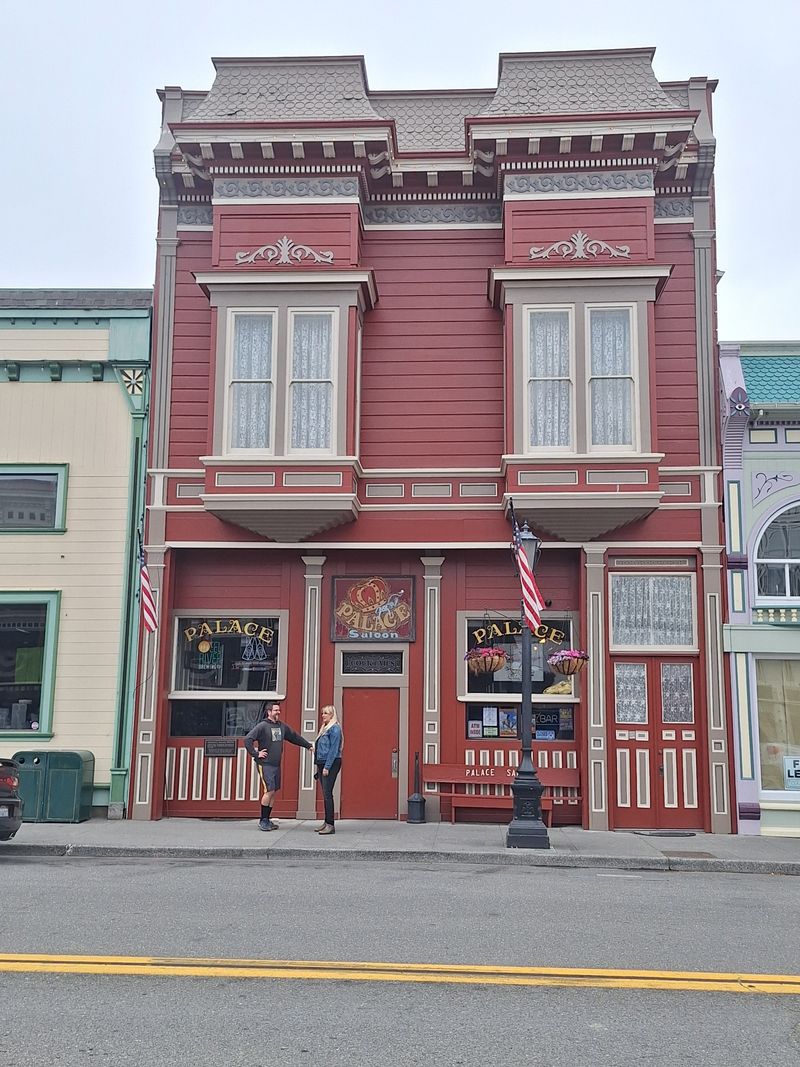
Built in 1902, the Palace Saloon stands at 353 Main Street, occupying a prominent position in the downtown commercial district.
Also known as the M. H. Donnelly Building after its original owner, this two-story structure displays architectural elements associated with French Second Empire style, particularly visible in the twin mansard roofs that cap the two projecting bays on the facade.
The decorated false-front creates additional height and visual drama, a common feature in Western commercial architecture that made buildings appear larger and more impressive than their actual size.
The building serves as a contributing property within the Ferndale Main Street Historic District, which earned National Register of Historic Places designation in 1994.
This recognition acknowledges how individual buildings like the Palace Saloon work together to create a cohesive historic streetscape.
French Second Empire architectural elements were popular in American commercial buildings during the late 19th and early 20th centuries, bringing European sophistication to frontier towns.
The mansard roofs, named after French architect François Mansart, create additional usable space in the upper story while providing a distinctive profile that distinguishes the building from its neighbors.
The two projecting bays break up the flat facade, adding dimensional interest and creating window displays that could attract attention from multiple angles.
The Palace Saloon represents how Ferndale merchants invested in impressive buildings that reflected their business success and civic pride.
The architectural details communicate permanence and prosperity, important messages in a competitive commercial environment.
Dairy Farming Wealth Funded The Victorian Building Boom
Ferndale’s remarkable collection of Victorian architecture exists because of the prosperity dairy farming brought to the Eel River Valley during the late 1800s.
The rich bottomland surrounding Ferndale proved ideal for raising dairy cattle, and local farmers developed successful operations that produced butter and cheese for markets throughout California and beyond.
This agricultural wealth created a class of prosperous farmers and merchants who had the financial resources to construct elaborate homes and commercial buildings.
The timing of Ferndale’s prosperity coincided with the Victorian era, when architectural styles emphasized ornamentation, complex rooflines, and decorative details.
Successful farmers and business owners wanted buildings that reflected their economic achievement, leading them to hire architects and skilled craftsmen to create impressive structures.
The concentration of ornate Victorian buildings in such a small town directly correlates to the dairy industry’s profitability during this period.
Unlike mining towns that experienced boom and bust cycles, dairy farming provided steady, sustained income that supported ongoing investment in buildings and infrastructure.
This economic stability allowed Ferndale to develop a cohesive architectural character, with most major buildings constructed within a relatively short time period using similar design approaches.
The dairy barns and creameries that supported this wealth have largely disappeared, but the Victorian homes and storefronts remain as evidence of the prosperity agriculture brought to the community.
Understanding this economic foundation helps explain why such elaborate architecture appears in what might otherwise seem an unlikely location.
Main Street Historic District Contains Dozens Of Contributing Buildings
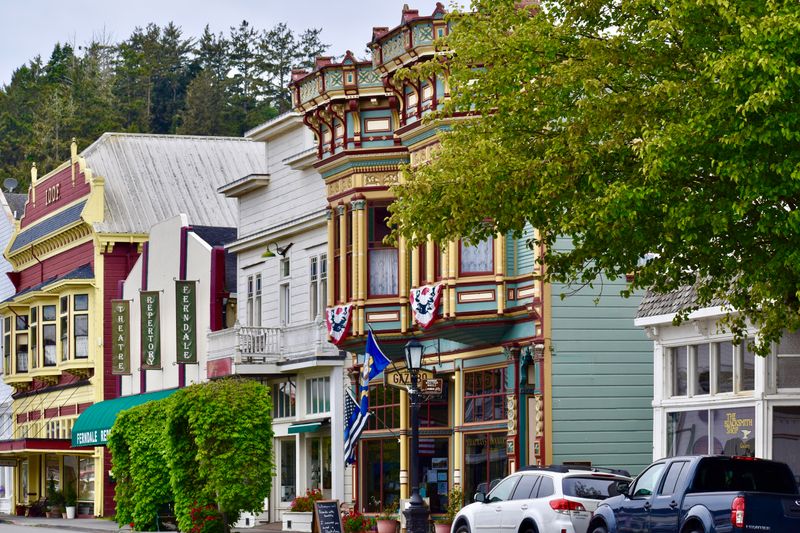
The Ferndale Main Street Historic District encompasses the commercial core of the city, containing dozens of Victorian-era buildings that together create one of California’s best-preserved 19th-century streetscapes.
The district earned National Register of Historic Places designation in 1994, recognizing the collective significance of these structures as an intact example of a Victorian commercial district.
Contributing buildings within the district include storefronts, hotels, saloons, banks, and other commercial structures, most constructed between 1880 and 1910.
What makes this district particularly significant is not just the age of individual buildings but their continuity and cohesiveness as a group.
The streetscape presents a unified architectural character because most buildings were constructed within a relatively short time period using similar design vocabularies.
Walking down Main Street provides a visual experience that closely resembles what residents and visitors would have encountered over a century ago.
The buildings maintain their original scale, with most structures standing two stories tall and built directly against the sidewalk in the traditional commercial pattern.
Original storefronts remain largely intact, with large display windows flanking recessed entrances, a design that maximized visibility for merchandise while providing weather protection.
Upper story windows retain their original proportions and decorative surrounds, contributing to the overall architectural character.
The district demonstrates how preservation efforts focused on an entire streetscape rather than individual landmark buildings can maintain historical character more effectively.
The concentration of well-preserved buildings within a compact area makes Ferndale’s historic district particularly accessible and visually impressive to visitors.
Carpenter Gothic Style Appears In The Earliest Ferndale Structures
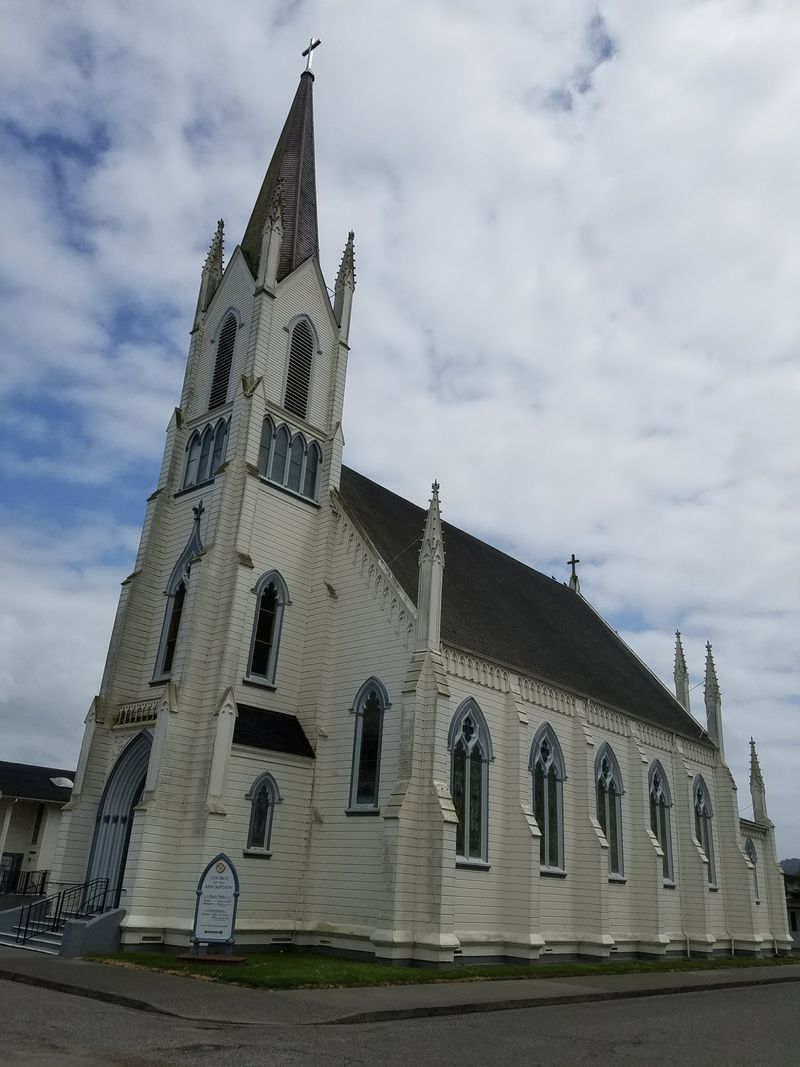
Before the elaborate Queen Anne and Stick Style Victorians appeared, Ferndale’s earliest builders favored Carpenter Gothic style, a distinctly American architectural approach that adapted Gothic Revival elements to wood construction.
This style emerged in the mid-1800s when pattern books provided builders with designs they could execute using readily available lumber and basic carpentry tools.
Carpenter Gothic buildings feature steeply pitched roofs, pointed arch windows, decorative bargeboards along the gable ends, and vertical board-and-batten siding that emphasizes height.
The style proved particularly popular in frontier communities where skilled stonemasons were scarce but competent carpenters were available.
Gothic Revival architecture originally relied on stone construction, but Carpenter Gothic translated these design elements into wood, making the style accessible and affordable.
Ferndale’s Carpenter Gothic buildings tend to be simpler and more restrained than the later Victorian structures, reflecting both the earlier time period and the less elaborate aesthetic preferences of the 1850s and 1860s.
The vertical emphasis and pointed arches create a different visual character than the horizontal emphasis and rounded or squared openings typical of later Victorian styles.
These earlier buildings provide architectural context, showing how Ferndale’s built environment evolved as the community grew and prospered.
The survival of Carpenter Gothic structures alongside later Victorian buildings creates architectural diversity, allowing visitors to trace stylistic changes over several decades.
Several of these early buildings have been carefully maintained, preserving examples of this important transitional style in American architecture.
Queen Anne Victorian Style Dominates Later Residential Architecture
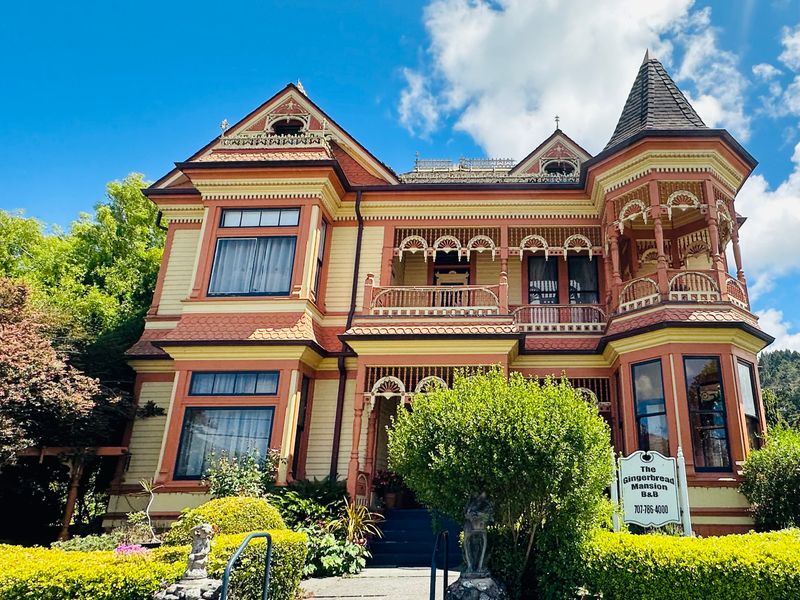
As Ferndale prospered during the 1880s and 1890s, successful residents built homes in Queen Anne Victorian style, the most elaborate and visually complex residential architecture of the Victorian era.
Queen Anne houses feature irregular floor plans, multiple gables and rooflines, turrets and towers, wraparound porches, bay windows, and extensive decorative trim work.
The style emphasizes variety and visual interest, with different surface treatments including patterned shingles, horizontal siding, and decorative panels appearing on different sections of the same house.
Color schemes typically involve three or more complementary colors that highlight architectural details, a practice that became known as painted lady treatment.
The complexity of Queen Anne design required skilled architects and craftsmen, making these houses expensive to build and thus symbols of economic success.
Ferndale contains numerous examples of Queen Anne residential architecture, ranging from modest cottages with some Queen Anne elements to elaborate mansions that display the full vocabulary of the style.
The Gingerbread Mansion represents Queen Anne architecture at its most ornate, but many other homes throughout the residential neighborhoods exhibit characteristic features.
These houses transformed Ferndale’s residential streets into showcases of Victorian-era design, creating neighborhoods that remain visually striking today.
The survival of so many Queen Anne houses in good condition reflects both the quality of original construction and ongoing preservation efforts.
Walking through residential areas provides opportunities to observe variations within the Queen Anne style, from restrained examples to exuberant displays of decorative excess.
Ferndale Survived Economic Decline That Destroyed Other Victorian Towns
Many California towns built impressive Victorian architecture during 19th-century boom periods, but most demolished or significantly altered these buildings during later decades when maintenance became expensive and modern styles seemed more appealing.
Ferndale avoided this fate partly through economic circumstance that proved fortunate for preservation.
When dairy farming declined as the region’s economic engine, Ferndale experienced stagnation rather than growth, meaning property owners lacked both the motivation and financial resources to demolish old buildings and construct new ones.
This economic slowdown, which might have seemed negative at the time, preserved the Victorian streetscape by default.
Buildings remained standing because replacing them was not economically viable, not necessarily because of any conscious preservation philosophy.
By the time preservation awareness emerged in the 1960s and 1970s, Ferndale still possessed an intact collection of Victorian buildings that had escaped the modernization other towns experienced.
Community members recognized the value of what they had retained and began actively working to preserve and maintain the historic character.
The town’s relative isolation also contributed to preservation, as Ferndale remained off major transportation routes and never experienced the development pressure that transformed other Northern California communities.
What began as economic necessity evolved into deliberate preservation strategy, with residents understanding that their Victorian architecture represented both historical significance and potential economic value through heritage tourism.
This combination of circumstances and conscious choice explains how Ferndale retained its Victorian character when many comparable towns did not.
Architectural Details Reveal Victorian-Era Craftsmanship And Design Philosophy
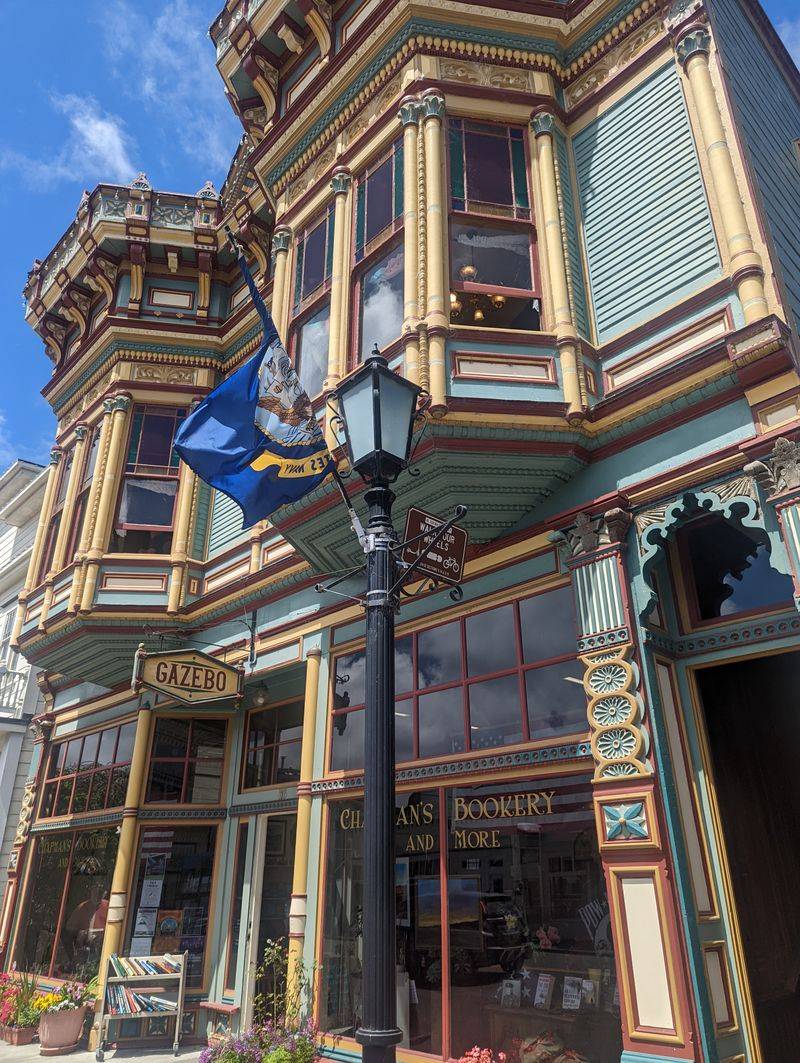
Close examination of Ferndale’s Victorian buildings reveals the level of craftsmanship and attention to detail that characterized late 19th-century construction.
Decorative elements that appear on these structures were not mass-produced but created by skilled carpenters, woodworkers, and craftsmen who understood both structural requirements and aesthetic principles.
Brackets supporting roof overhangs feature intricate scroll work and geometric patterns.
Window surrounds include decorative headers, carved corner blocks, and molded trim that frame openings with architectural emphasis.
Cornices along rooflines incorporate multiple layers of molding, creating shadow lines and visual interest.
Bay windows project from building faces at precise angles, requiring careful carpentry to maintain structural integrity while creating the desired aesthetic effect.
Victorian design philosophy valued ornamentation as both decorative and symbolic, with elaborate details communicating prosperity, sophistication, and cultural refinement.
The variety of decorative elements appearing on Ferndale buildings reflects pattern book designs that craftsmen adapted and personalized for individual projects.
No two buildings display identical decorative schemes, even when following similar overall design approaches.
The quality of this craftsmanship explains why these buildings have survived over a century of use, as the construction quality exceeded minimum standards.
Decorative elements were integrated into the structure rather than applied as superficial additions, ensuring their durability.
Modern restoration work requires craftsmen who can match original techniques and materials, maintaining authenticity while addressing deterioration.
The architectural details visible throughout Ferndale provide tangible evidence of the skill and care invested in Victorian-era construction.
Preservation Efforts Continue
Maintaining Ferndale’s Victorian character requires ongoing effort, as historic buildings need regular maintenance and occasional restoration to remain structurally sound and visually appealing.
Property owners follow preservation guidelines that ensure any work respects the historical character of buildings, using appropriate materials and techniques that match original construction methods.
These guidelines address paint colors, window replacement, roof materials, and exterior modifications, helping maintain the cohesive appearance of the historic districts.
Local preservation organizations provide resources and expertise to property owners, offering guidance on appropriate restoration approaches and connecting owners with craftsmen experienced in historic building work.
The community understands that preservation benefits everyone by maintaining the unique character that distinguishes Ferndale from other towns.
Heritage tourism provides economic benefit, with visitors drawn to the authentic Victorian architecture supporting local businesses and justifying the investment in preservation.
This creates a positive cycle where preservation efforts generate economic returns that fund further preservation work.
Building codes and zoning regulations include provisions that protect historic structures while allowing necessary updates for safety and functionality.
Finding balance between preservation and practical use requires flexibility and problem-solving, as historic buildings must meet modern safety standards while retaining their character.
The success of Ferndale’s preservation efforts demonstrates how community commitment combined with practical guidelines can maintain historical character over decades.
New generations of residents have embraced preservation values, ensuring that the Victorian architecture will continue to define Ferndale’s identity for years to come.