This Historic California Ghost Town Feels Like Stepping Into the Old West
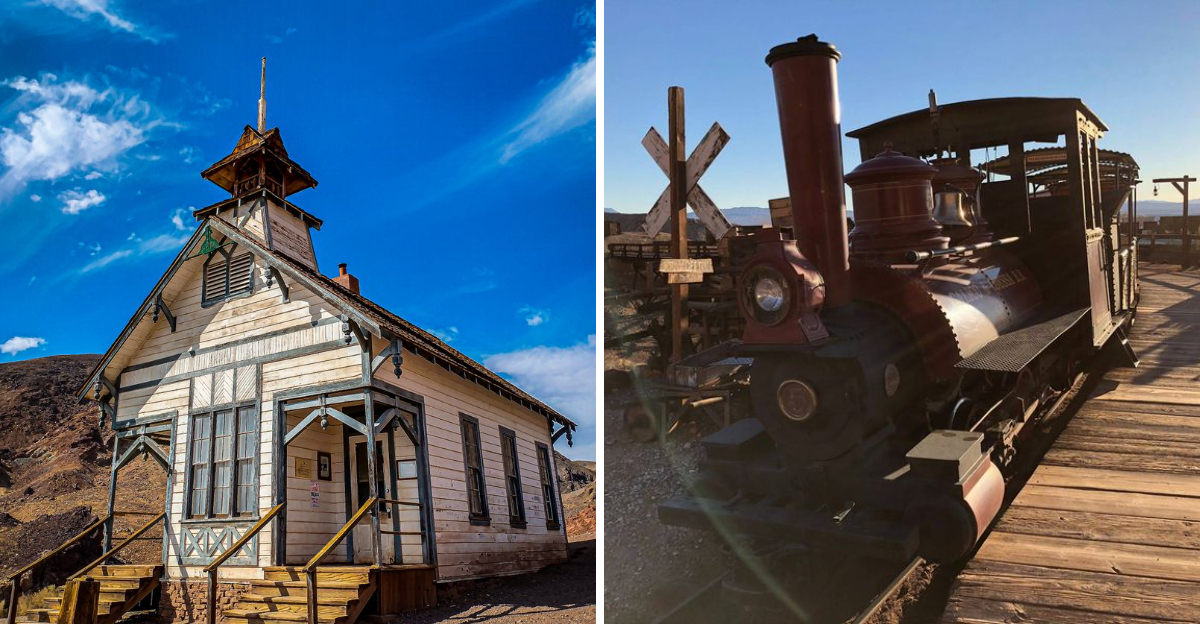
The dusty roads crunch underfoot, and the air hums with stories of the past. Imagine stepping into a place where time stands still, transporting you back to the days of gold rush excitement and Western grit.
The old buildings, weathered by sun and wind, carry a rich history that calls you to explore. Every corner holds a piece of the past, from the historic mine shafts to the homes that once housed the dreams of those chasing fortune.
The energy here is palpable, a testament to the once-thriving silver mining community that lived and worked in this desert town.
Today, the experience is as much about the journey as it is about the destination. Visitors wander through the remnants of this bygone era, capturing glimpses of life in the 1880s.
Calico Ghost Town, nestled in the rugged Calico Mountains of San Bernardino County, offers an adventure back in time.
It’s a chance to walk the same trails as miners did and to feel the pulse of history echoing through every step.
Ready to relive California’s Wild West days?
1. Discovery And Foundation In 1881
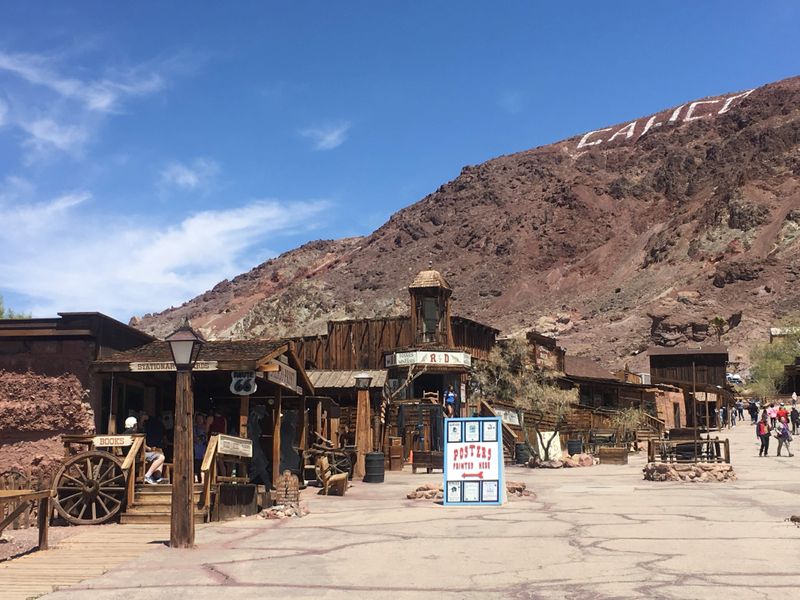
Four prospectors made a discovery that changed the landscape of the Calico Mountains forever when they struck silver in 1881.
Their find sparked immediate excitement throughout California and beyond, drawing fortune seekers from every direction.
The silvery mineral deposits gleamed in the mountain rock, giving the area its distinctive appearance and eventual name.
Within months of the initial discovery, tents and rough shelters dotted the mountainside as miners arrived to claim their piece of the boom.
The settlement grew from a handful of prospectors to a bustling camp almost overnight. News traveled fast in those days, carried by telegraph and word of mouth across the western territories.
Calico transformed from empty desert to thriving town in less than a year, showing just how quickly communities could spring up during mining rushes.
The original four prospectors became local legends, their names passed down through the generations of stories told about the town’s founding.
Silver ore poured from the mountains, and the town’s future looked brighter than the precious metal itself.
2. Rapid Growth To Over 500 Mines
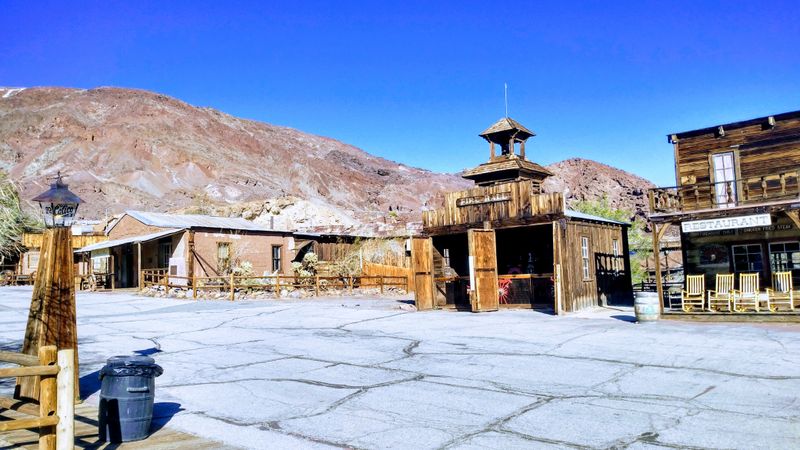
By 1883, Calico had exploded into one of the most productive mining centers in California, boasting over 500 active mines scattered throughout the surrounding mountains.
The population swelled to approximately 1,200 residents, all hoping to strike it rich in the silver-laden hills.
Mining claims covered nearly every available patch of ground, creating a patchwork of operations ranging from small one-man digs to larger commercial ventures.
The town’s main street buzzed with activity from dawn until well past dark, as miners, merchants, and families went about their daily business.
Saloons, general stores, boarding houses, and assay offices lined the dusty thoroughfare, each playing a vital role in the mining economy.
The sound of pickaxes striking rock echoed constantly from the surrounding hills, creating a rhythmic backdrop to daily life.
This rapid expansion created both opportunities and challenges for the growing community. Infrastructure struggled to keep pace with the influx of residents, and services remained basic despite the town’s wealth.
Yet the promise of silver kept people coming, and Calico’s population continued to climb through the mid-1880s.
3. Economic Boom Worth Millions
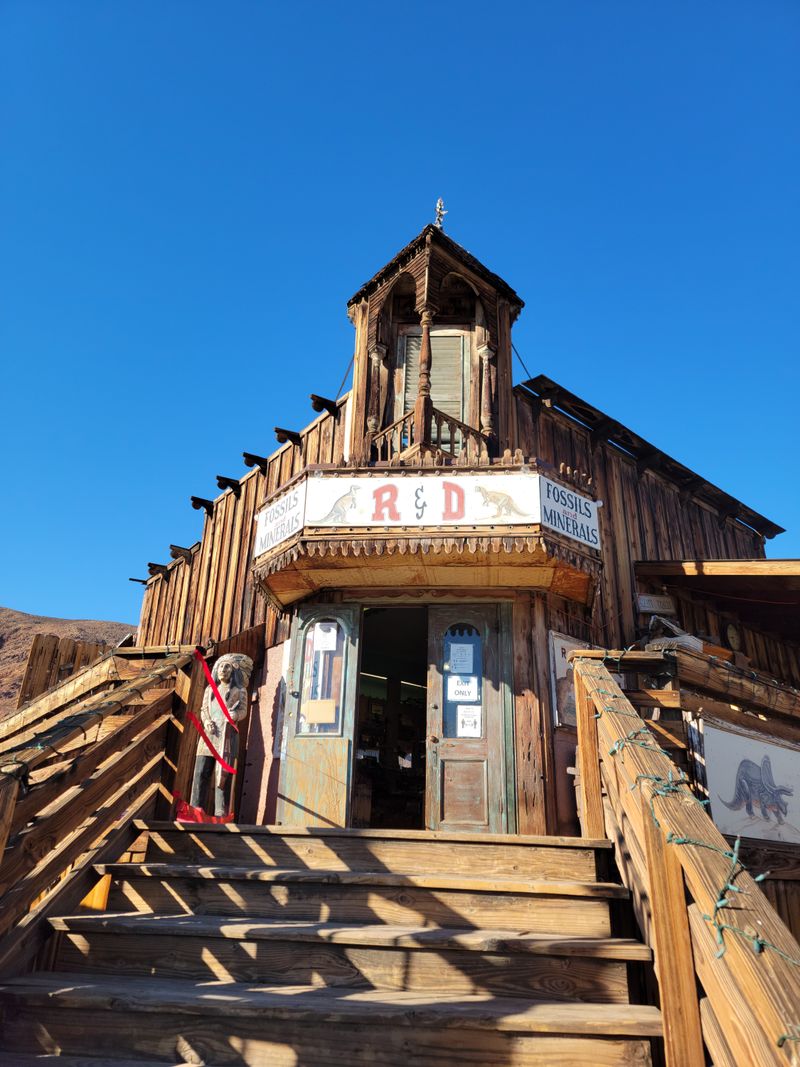
Over three decades, Calico’s mines produced an astonishing $86 million worth of silver, making it one of California’s most valuable mining districts.
The wealth flowing from these mountains attracted investors from San Francisco and beyond, who poured money into expanding operations.
Silver wasn’t the only treasure hidden in these hills, however, as miners also extracted approximately $45 million in borax during the same period.
Borax became increasingly important to Calico’s economy as silver prices fluctuated throughout the 1880s and early 1890s.
This white mineral found uses in cleaning products, ceramics, and various industrial applications, providing a steady income stream when silver markets dipped.
The dual production of both minerals made Calico somewhat more stable than purely silver-dependent towns.
The combined value of these minerals would equal billions in today’s currency, representing extraordinary wealth extracted from a relatively small geographic area.
Mine owners reinvested profits into better equipment and deeper shafts, constantly seeking new veins of ore.
Workers earned decent wages by frontier standards, though the work remained dangerous and physically demanding regardless of the pay.
4. Decline And Abandonment By 1907
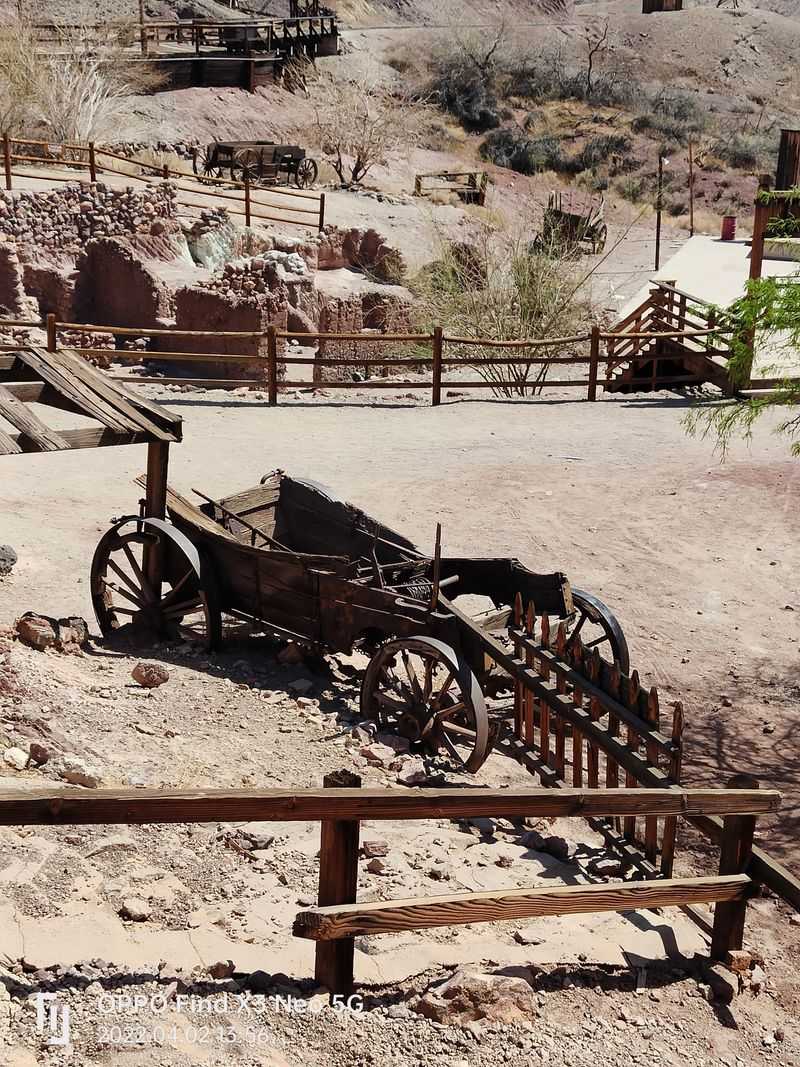
Silver prices crashed dramatically in the mid-1890s, dealing a devastating blow to Calico’s mining-dependent economy.
The federal government’s decision to stop purchasing silver at fixed rates sent shockwaves through mining communities across the West.
Mines that had been profitable suddenly couldn’t cover their operating costs, forcing many to close permanently.
Families began leaving Calico as employment opportunities dried up and businesses shuttered their doors one by one.
The once-bustling main street grew quieter each month, with fewer residents and abandoned buildings becoming increasingly common.
By the turn of the century, only the most stubborn residents remained, hoping for a silver price recovery that never came.
The last residents departed around 1907, leaving behind a complete ghost town of empty structures and silent mine shafts.
Desert winds blew through abandoned homes, scattering papers and memories across the dusty streets.
Calico joined the ranks of countless other Western boomtowns that rose spectacularly and fell just as fast, victims of economic forces beyond their control.
5. Walter Knott’s Restoration In The 1950s
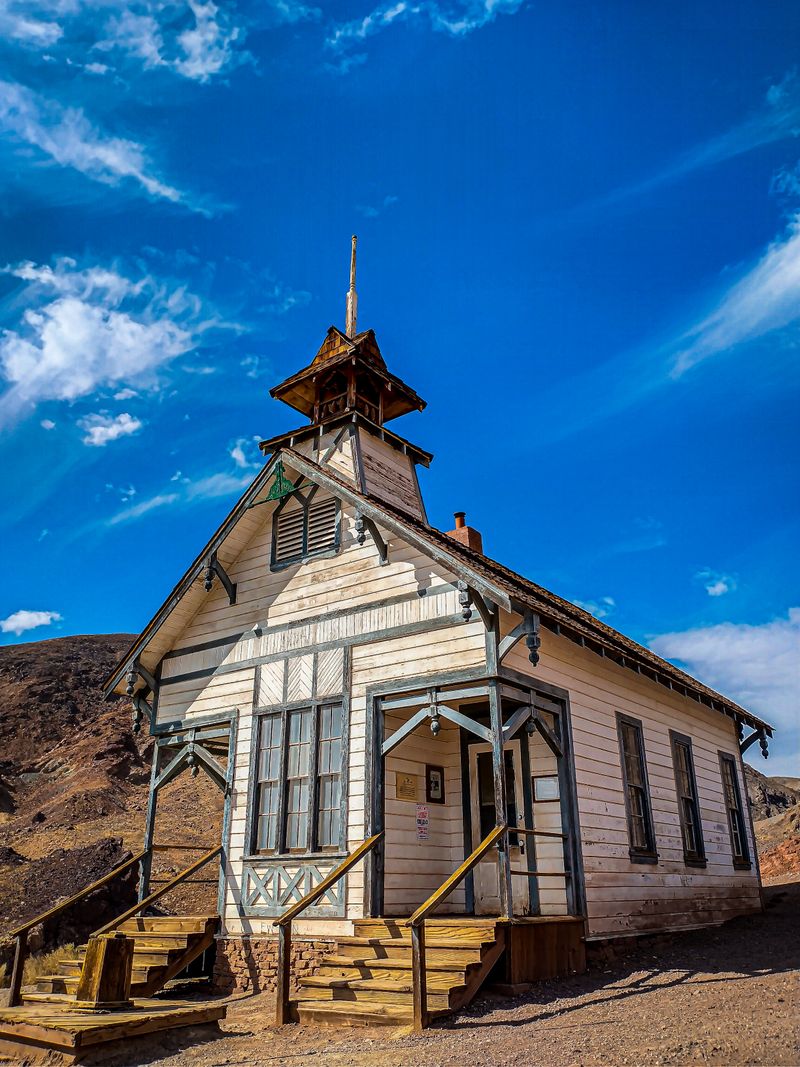
Walter Knott, the entrepreneur behind Knott’s Berry Farm, purchased the abandoned town of Calico in the 1950s with a vision of preserving California’s mining heritage.
He had grown up hearing stories about the Old West and felt passionate about saving these crumbling remnants of frontier life.
Knott invested considerable personal funds into stabilizing buildings and reconstructing structures that had collapsed during decades of neglect.
The restoration aimed to recreate Calico as it appeared during its 1880s heyday, using historical photographs and survivor accounts as guides.
Knott’s team carefully researched building materials, construction techniques, and architectural details to ensure authenticity.
They rebuilt storefronts, homes, and community buildings, bringing the ghost town back to life while respecting its historical character.
Knott eventually donated the restored town to San Bernardino County, ensuring its preservation for future generations.
His restoration work transformed Calico from a crumbling ruin into an accessible historical site where visitors could experience authentic Old West atmosphere.
The project demonstrated how private initiative could save important historical sites from disappearing entirely.
6. California Historical Landmark Status
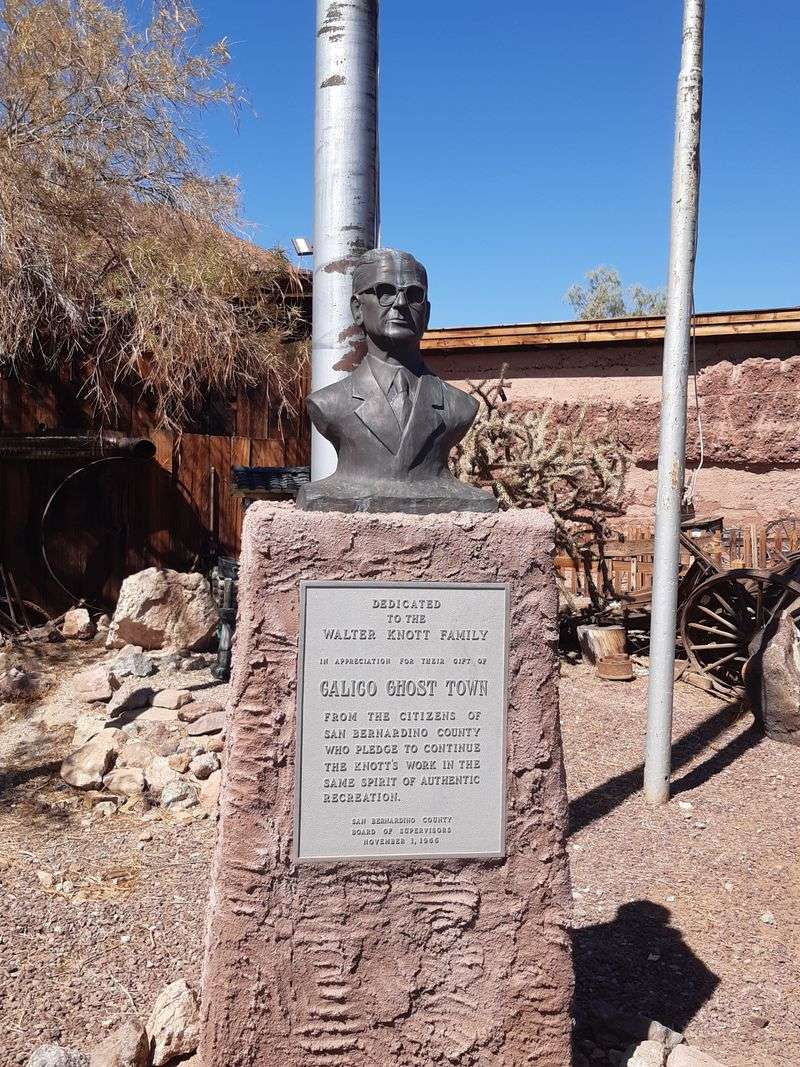
California officially recognized Calico’s historical significance in 1962 by designating it as California Historical Landmark number 782.
This recognition placed Calico among the state’s most important historical sites, acknowledging its role in California’s mining era.
The landmark designation came with official markers and documentation that helped educate visitors about the town’s authentic history.
Historical landmark status provided additional protection for the site and attracted increased attention from history enthusiasts and tourists.
The designation validated Walter Knott’s restoration efforts and confirmed Calico’s value as an educational resource.
State recognition also opened doors for potential funding and support for ongoing preservation work.
The landmark plaque stands near the entrance to the town, providing visitors with context about Calico’s historical importance before they explore the site.
This official recognition distinguishes Calico from purely commercial Old West attractions that lack authentic historical foundations.
The designation ensures that future generations will continue to learn about California’s mining heritage through this preserved example of frontier life.
7. Official Silver Rush Ghost Town Proclamation
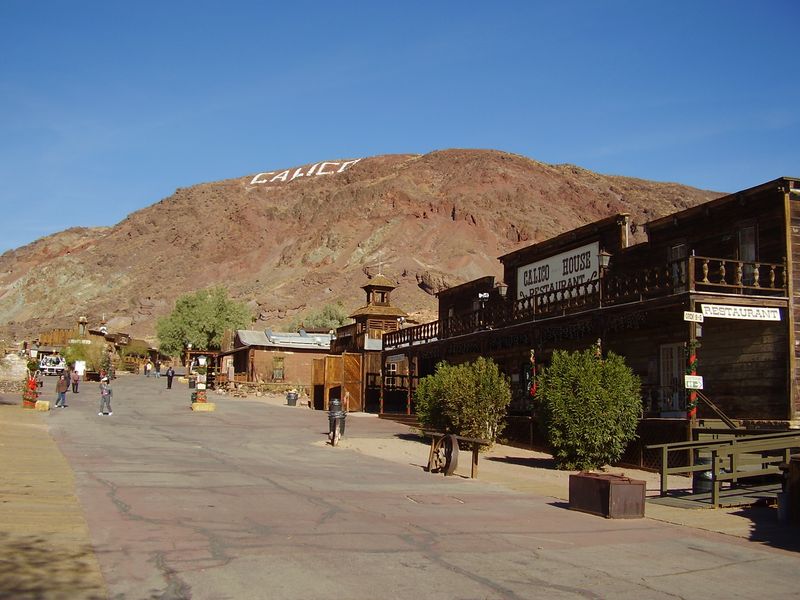
Governor Arnold Schwarzenegger issued a special proclamation in 2005, officially naming Calico as California’s Silver Rush Ghost Town.
This unique designation set Calico apart from other mining towns and ghost town attractions throughout the state.
The proclamation recognized both the town’s authentic history and its importance in telling the story of California’s silver mining era.
The governor’s proclamation brought renewed attention to Calico and reinforced its status as a premier destination for understanding California’s mining heritage.
This official recognition came nearly fifty years after Walter Knott’s restoration work began, validating the decades of preservation efforts.
The designation also helped position Calico as an educational resource for schools and history programs throughout California.
Unlike gold rush towns that dominated California’s earlier mining history, Calico represented the later silver boom that swept through the western states.
The proclamation highlighted this distinction and ensured that the silver rush story would be preserved alongside the more famous gold rush narratives.
Visitors today can experience this officially recognized piece of California history in its authentic desert mountain setting.
8. Diverse Cultural Population
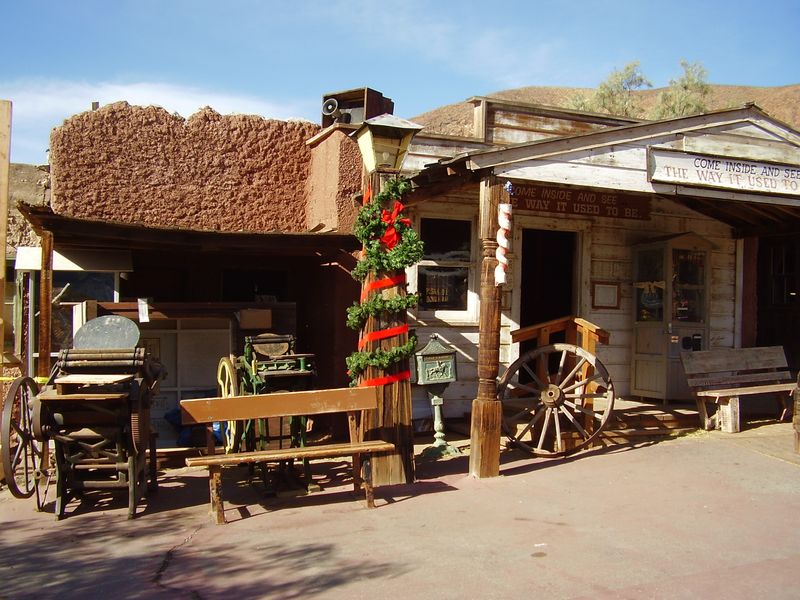
Calico’s population at its peak reflected the remarkable diversity of frontier mining communities, with residents arriving from China, Ireland, England, Greece, and the Netherlands.
Chinese immigrants formed a significant portion of the workforce, bringing expertise in mining techniques and establishing their own community within the larger town.
Irish miners arrived with experience from coal mines back home, adapting their skills to silver extraction in the California desert.
English prospectors brought capital and business experience, often becoming mine owners or investors in larger operations.
Greek immigrants established small businesses, including restaurants and boarding houses that served the diverse population.
Dutch settlers contributed to the town’s commercial sector, creating a truly international community in the middle of the Mojave Desert.
This cultural mixing created a unique social fabric where different languages, foods, and traditions blended in daily life.
Despite occasional tensions common in frontier towns, residents generally cooperated out of practical necessity and shared economic interests.
The diversity enriched Calico’s character and demonstrated how mining booms attracted people from around the world, all seeking opportunity in the American West.
9. Haunted Reputation And Paranormal Activity
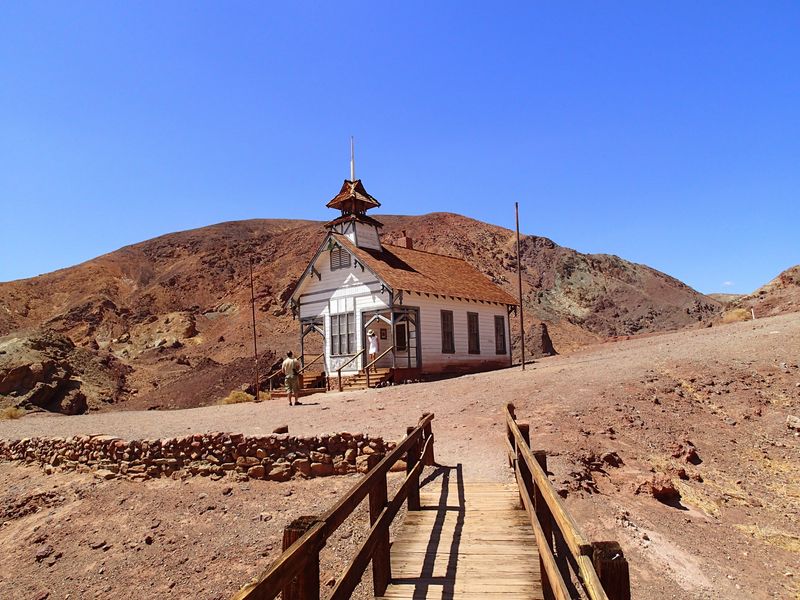
Visitors and staff at Calico have reported unexplained phenomena for decades, giving the ghost town a reputation that extends beyond its historical significance.
Shadowy figures have been spotted moving between buildings after dark, particularly near the old schoolhouse where children once learned their lessons.
The Maggie Mine attracts particular attention from paranormal enthusiasts, with reports of strange noises echoing from deep within the tunnels.
Some visitors describe hearing footsteps on wooden boardwalks when no one else is around, or catching glimpses of period-dressed figures who vanish when approached.
The schoolhouse generates numerous reports, with people hearing children’s voices or seeing movement through the windows.
Whether these experiences stem from genuine paranormal activity or the power of suggestion in an atmospheric historical setting remains debated.
The combination of authentic history and reported hauntings adds an extra dimension to the Calico experience for many visitors.
Ghost tours and paranormal investigations have become popular activities, though skeptics attribute most experiences to natural causes and active imaginations.
Regardless of personal beliefs about the supernatural, Calico’s abandoned-then-restored status creates an undeniably eerie atmosphere, especially during evening hours.
10. Calico And Odessa Railroad Experience
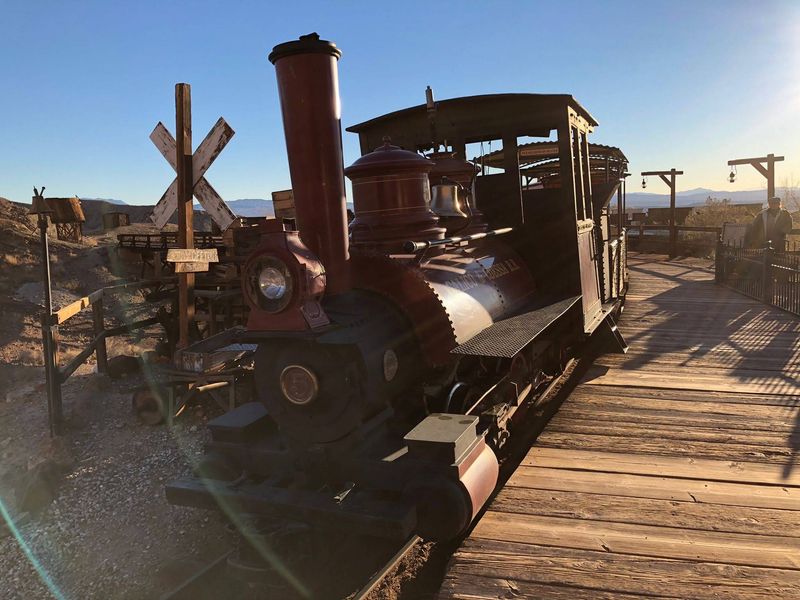
The narrow-gauge Calico and Odessa Railroad offers visitors a scenic journey through the desert landscape surrounding the ghost town, providing perspectives on the terrain that miners navigated daily.
This heritage railroad operates along tracks that wind through canyons and hills, offering views of the mining district from a unique vantage point.
The train ride lasts about fifteen minutes and includes narration about the area’s mining history and geological features.
Riding the railroad helps visitors understand the challenges of transporting ore and supplies in this rugged desert environment.
The narrow-gauge design reflects the type of mining railroads common during Calico’s active years, when trains hauled silver ore to processing facilities.
Passengers can see remnants of old mining operations scattered throughout the hills, visible from the train but difficult to reach on foot.
The railroad experience particularly appeals to families with younger children, offering a break from walking while still providing educational content.
The gentle rocking of the train and the desert scenery create a relaxing interlude during a visit to the more active parts of the ghost town.
This attraction combines authentic historical transportation methods with comfortable modern safety standards.
11. Maggie Mine Tours Underground
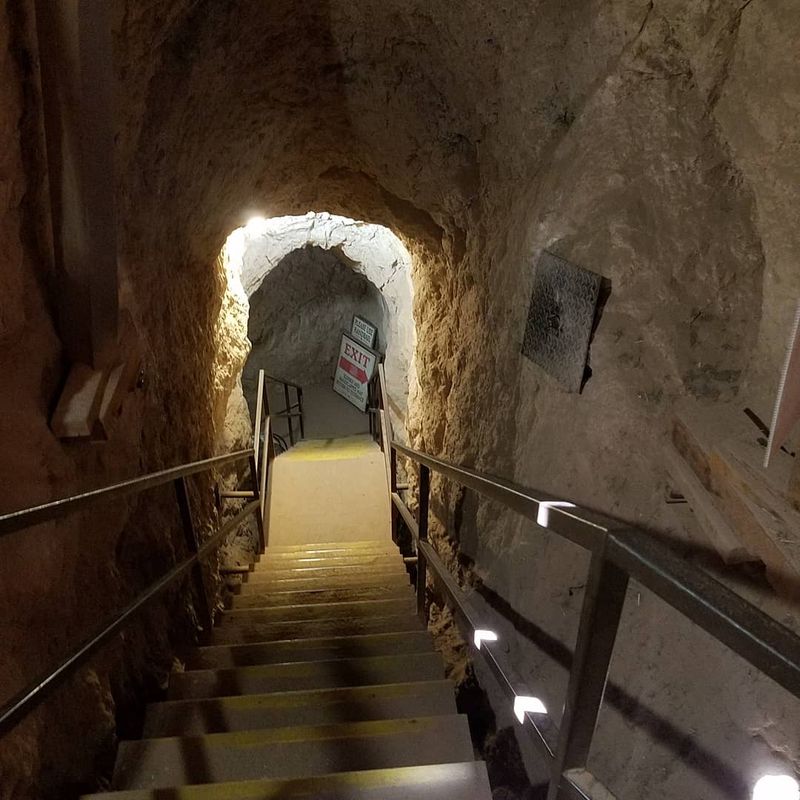
The Maggie Mine stands as one of Calico’s most productive silver mines, and today visitors can walk through sections of the actual tunnels where miners once worked.
Tours lead groups into the cool darkness of the mine shaft, where the temperature drops noticeably compared to the desert heat outside.
The experience provides genuine insight into the dangerous and claustrophobic conditions miners endured daily in pursuit of silver.
Inside the mine, guides point out tool marks on the rock walls, showing where miners chipped away at the mountain by hand and with primitive equipment.
The narrow passages and low ceilings make clear how physically demanding and uncomfortable mining work was in the 1880s.
Some sections display period mining equipment, helping visitors understand the techniques used to extract ore from solid rock.
The tour typically lasts about thirty minutes and requires basic mobility, as the mine floor is uneven and the passages tight in places.
Many visitors find the mine tour to be the most memorable part of their Calico visit, offering an authentic experience that can’t be replicated above ground.
The cool darkness provides welcome relief from desert heat while delivering a powerful historical lesson.
12. Cultural Events And Historical Reenactments
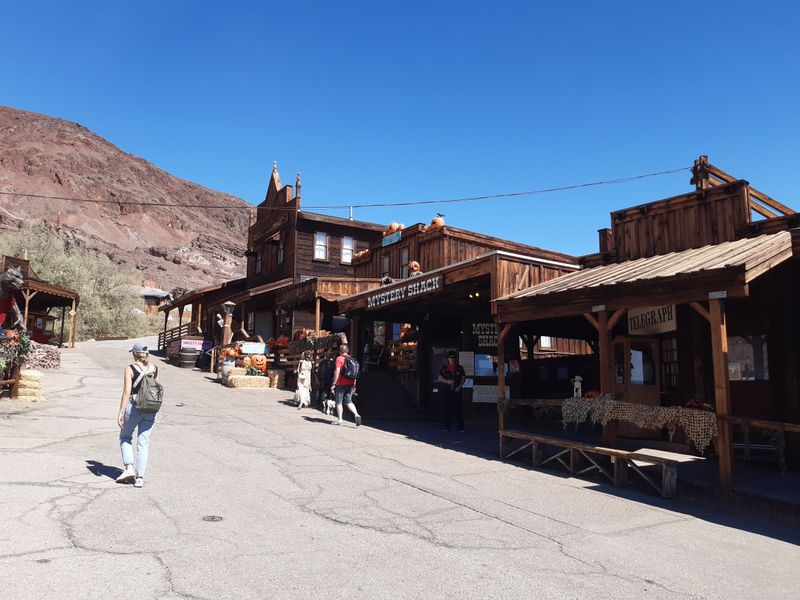
Throughout the year, Calico hosts special events that bring the Old West to life through historical reenactments, festivals, and themed celebrations.
Actors in period costume portray townspeople from Calico’s heyday, demonstrating frontier skills like blacksmithing, gold panning, and rope making.
These events transform the ghost town from a static historical site into a living history experience where visitors can interact with the past.
Seasonal celebrations include Wild West Days, featuring staged gunfights, can-can dancers, and demonstrations of frontier justice.
Spring and fall typically offer the most comfortable weather for outdoor events, drawing larger crowds than the extreme summer heat allows.
Holiday events bring special decorations and activities that blend Old West themes with traditional celebrations.
These events provide entertainment while maintaining educational value, teaching visitors about daily life, work, and recreation in a frontier mining town.
Families particularly enjoy the interactive nature of festival days, when children can participate in activities and meet costumed characters.
The events calendar varies from year to year, so checking ahead helps visitors plan trips around specific interests or themes.
13. Visitor Amenities And Facilities
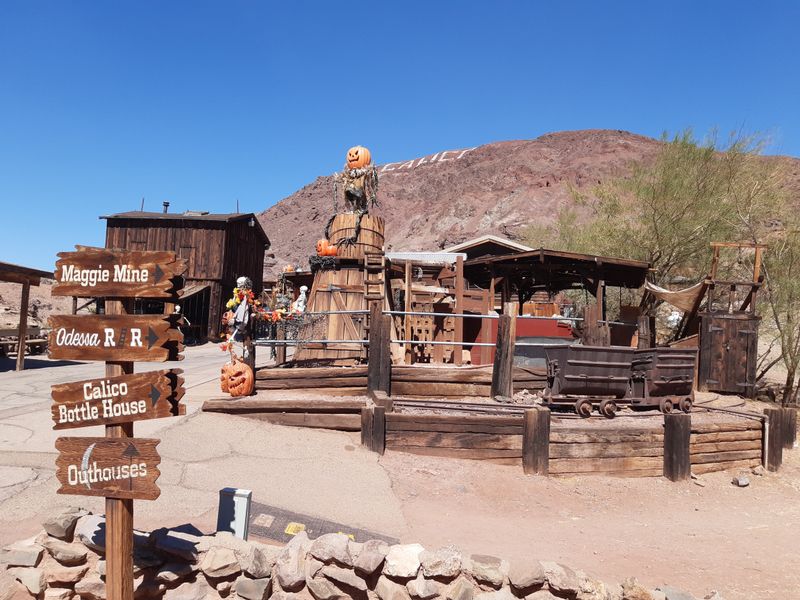
Calico Ghost Town is located at 36600 Ghost Town Road, Yermo, California, making it accessible for day trips from Los Angeles, Las Vegas, and other regional cities.
The site offers comprehensive facilities including gift shops selling Old West themed items, restaurants serving basic American fare, and picnic areas for families who prefer bringing their own food.
Camping facilities accommodate visitors who want to extend their stay and experience the desert environment overnight.
The shops along main street sell everything from rock candy and sarsaparilla to replica mining equipment and period clothing.
Restaurant options remain casual and family-friendly, with menus featuring burgers, sandwiches, and simple meals suitable for refueling between activities.
Restroom facilities are distributed throughout the site, and most areas remain accessible for visitors with basic mobility.
Outdoor recreation opportunities include hiking trails that lead into the surrounding hills, offering views of the ghost town and desert landscape.
The combination of historical attractions and modern amenities makes Calico suitable for visitors ranging from serious history enthusiasts to families seeking an educational day trip.
Parking is available near the entrance, and admission fees help support ongoing preservation and maintenance of this unique historical site.