These North Carolina Places Are Local Treasures You Might Miss
North Carolina holds secrets in every corner, from forgotten gold mines to hidden waterfalls that reward the curious traveler. While crowds flock to the usual hotspots, these lesser-known jewels offer something rarer: authentic experiences without the tourist shuffle.
Coastal villages whisper tales of maritime history, while mountain hollows cradle surprises that most maps never mention. Historic mill towns and cave systems wait patiently for visitors who dare to wander off the beaten path.
Pack your curiosity and prepare to discover places where locals have been keeping the best stories to themselves. These treasures prove that sometimes the most memorable adventures happen when you veer away from the guidebook.
North Carolina rewards explorers who take the scenic route, and these destinations will make you feel like an insider discovering something truly special.
1. Edenton
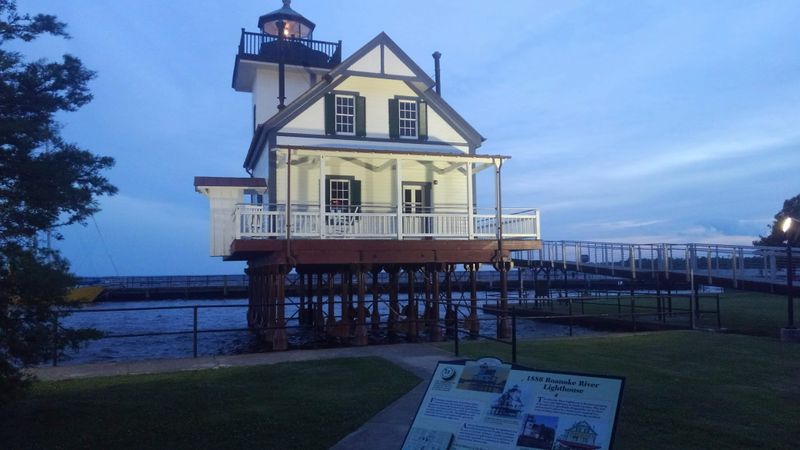
Picture a waterfront town where colonial architecture stands proudly along tree-lined streets, and history feels alive in every brick. Edenton claims the title of one of North Carolina’s oldest communities, sitting pretty on the Albemarle Sound in Edenton.
Georgian and Victorian homes create a stunning backdrop for wandering, with each corner revealing another postcard moment.
The 1767 Chowan County Courthouse, at 127 W. Water St., Edenton, remains the oldest active courthouse in the state, still dispensing justice centuries later.
Cannons from the Revolutionary War guard the waterfront, reminding visitors that this wasn’t always a peaceful place. The Edenton Tea Party, led by bold women in 1774, marked one of the first organized political protests by American women.
Walking tours reveal layers of stories, from colonial governors to Civil War skirmishes, all compressed into walkable blocks. Antique shops and local cafes occupy historic buildings, offering modern comforts wrapped in eighteenth-century charm.
The harbor beckons sailors and photographers alike, especially during golden hour when light dances across the water. Small-town hospitality meets genuine historical significance here, creating an atmosphere that larger destinations struggle to replicate.
Edenton doesn’t shout for attention; it simply exists beautifully, waiting for those who appreciate substance over spectacle.
2. Fearrington Village
Charm radiates from every cobblestone and garden gate in this planned community that transformed a 1920s dairy farm into something magical. Fearrington Village sits at 2000 Fearrington Village Center, Pittsboro, where black-and-white Belted Galloway cows still graze the pastures, their distinctive markings earning them celebrity status.
These Scottish cattle have become unofficial mascots, appearing on everything from postcards to restaurant menus throughout the village.
The Fearrington House Inn, at 240 Market St, Pittsboro, offers luxury accommodations with gardens that belong in magazines, featuring blooms carefully selected for year-round color. Restaurant menus highlight farm-to-table cuisine before that phrase became trendy, sourcing ingredients from surrounding farms and artisan producers.
Boutique shops line walkways, selling handcrafted goods, specialty foods, and home décor that reflects refined country living.
Book lovers find sanctuary in McIntyre’s Books, located at 220 Market Street, an independent bookstore hosting author events and readings that draw literary fans statewide. Gardens designed by prominent landscape architects create outdoor rooms filled with roses, herbs, and flowering trees that change with the seasons.
The village balances upscale amenities with genuine warmth, avoiding pretension while maintaining exceptional standards. Walking these grounds feels like stepping into a storybook where attention to detail elevates everyday moments into something memorable and worthwhile.
3. Oakwood Cemetery
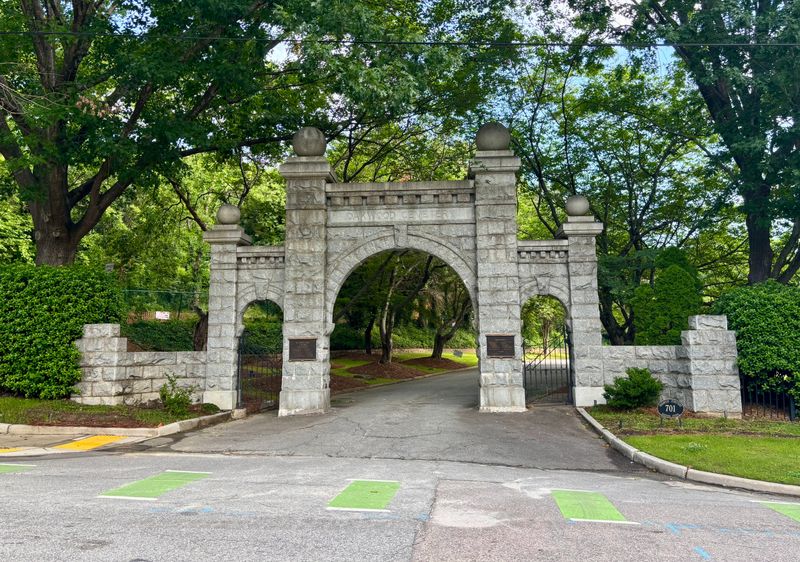
Beauty and history intertwine beneath towering oaks and magnolias in this Victorian garden cemetery that doubles as outdoor museum and peaceful sanctuary. Oakwood Cemetery spreads across 102 acres at 701 Oakwood Avenue, Raleigh, where elaborate monuments tell stories of governors, Confederate generals, and everyday citizens who shaped North Carolina.
Founded in 1869, the cemetery follows the rural cemetery movement popular in that era, emphasizing natural landscapes over stark graveyards.
Walking paths wind past Gothic Revival mausoleums, marble angels, and iron fences that showcase nineteenth-century craftsmanship at its finest. Spring brings explosions of azaleas and dogwoods, transforming the grounds into a floral wonderland that attracts photographers and nature lovers.
Notable residents include eleven North Carolina governors, numerous Civil War officers, and writers whose words helped define Southern literature.
The Confederate Cemetery section contains rows of simple stones marking soldiers who died far from home, a sobering reminder of war’s cost. Victorian symbolism appears throughout, with carved lambs representing children, broken columns signifying lives cut short, and ivy representing eternal memory.
Guided tours reveal fascinating details about burial customs, monument meanings, and the prominent families who built Raleigh into a capital city. Oakwood proves cemeteries can serve as living history lessons wrapped in natural beauty and contemplative quiet.
4. Reed Gold Mine
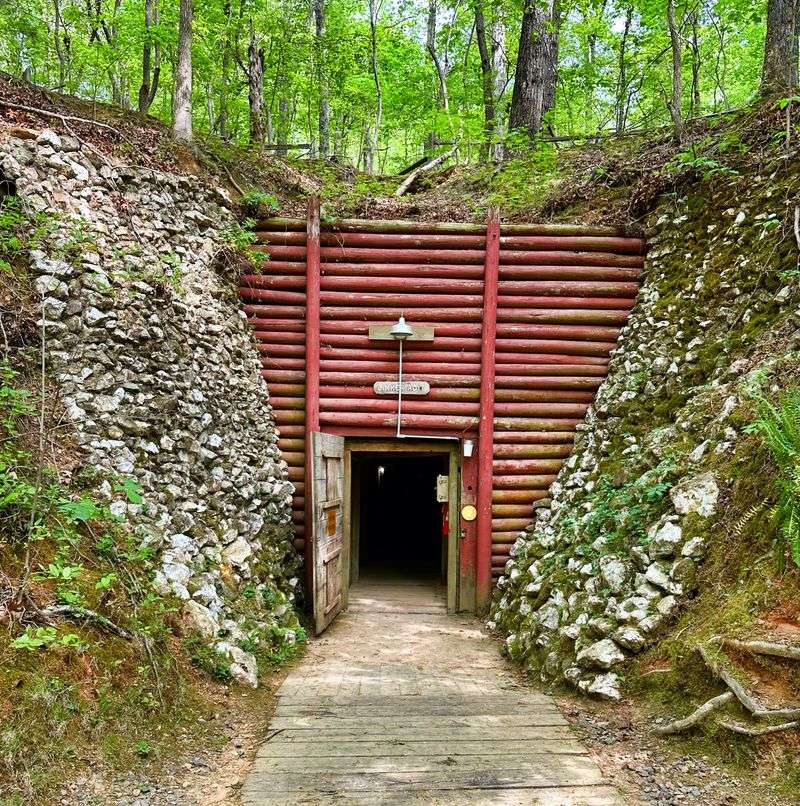
Gold fever struck North Carolina decades before California’s famous rush, and this unassuming farm started it all with a single sparkling discovery. Reed Gold Mine sits at 9621 Reed Mine Road, Midland, where twelve-year-old Conrad Reed found a seventeen-pound gold nugget in 1799 while fishing.
His family used the shiny rock as a doorstop for three years before discovering its true value, launching America’s first documented gold rush.
Underground tours take visitors through restored mining tunnels where candlelight flickers against rock walls, recreating the claustrophobic conditions miners endured daily. Above ground, the visitor center displays authentic mining equipment, gold specimens, and exhibits explaining extraction techniques that evolved from simple panning to industrial operations.
Panning demonstrations let visitors try their luck in sluices filled with ore, and finding even tiny flakes creates genuine excitement.
The Reed family farm buildings stand preserved, showing how sudden wealth transformed simple farmers into wealthy landowners almost overnight. Trails wind through the property, passing mining pits and stamp mills that crushed tons of quartz searching for precious metal.
Spring and fall bring school groups eager to learn geology and history simultaneously, their enthusiasm infectious as they discover real gold. Reed Gold Mine proves that sometimes the biggest treasures hide in the most unexpected places, waiting for observant eyes.
5. Hillsborough
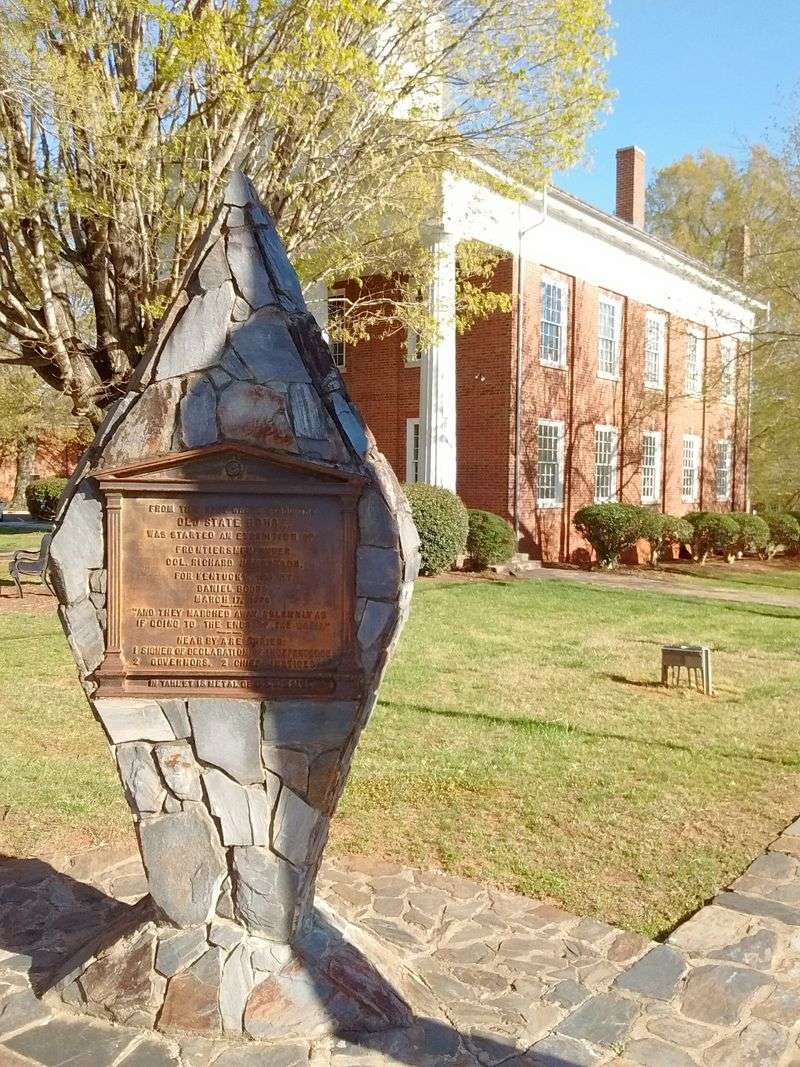
Revolutionary War intrigue and colonial elegance define this town where history literally lines every street, preserved in brick and stories. Hillsborough centers around 101 East King Street, Hillsborough, where the Colonial Inn has welcomed travelers since 1759, making it one of North Carolina’s oldest continuously operating inns.
British General Cornwallis once occupied this very building, planning strategies that ultimately failed at Yorktown.
The Riverwalk follows the Eno River through town, offering peaceful trails where locals walk dogs and visitors decompress from modern life. Historic homes showcase architectural styles spanning three centuries, from simple colonial structures to elaborate Victorian mansions with gingerbread trim.
The Burwell School, North Carolina’s first school for women, operated from 1837 to 1857, educating young ladies in subjects typically reserved for men.
Downtown galleries and studios attract artists drawn to affordable spaces and supportive creative communities that nurture rather than compete. Farm-to-table restaurants serve innovative cuisine using ingredients from surrounding Orange County farms, proving small towns can deliver big flavors.
Annual events like Hog Day and the Handmade Parade celebrate local culture with quirky humor and genuine community spirit. Hillsborough balances preservation with progress, maintaining historical integrity while embracing contemporary arts and sustainable living that attracts young families and retirees seeking authenticity.
6. Saxapahaw
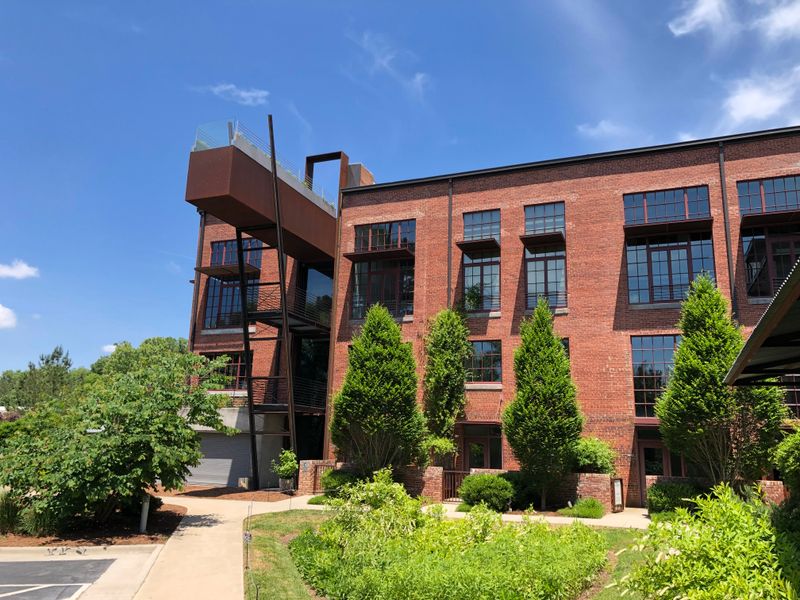
Mill village revival stories don’t get much better than this textile town reborn as an artisan community along the Haw River. Saxapahaw clusters around 1628 Saxapahaw-Bethlehem Church Road, Saxapahaw, where a restored cotton mill now houses restaurants, breweries, and creative businesses instead of looms.
The transformation happened organically as artists and entrepreneurs recognized potential in abandoned industrial spaces with river views and affordable rent.
The Eddy Pub, at 1715 Saxapahaw-Bethlehem Church Rd, Saxapahaw, serves craft beers and wood-fired pizzas in a renovated mill building where exposed beams and brick walls create industrial-chic atmosphere. Live music fills the space on weekends, featuring regional bands that draw crowds from Chapel Hill and beyond.
The Haw River Trail offers paddling and hiking opportunities, with access points perfect for launching kayaks or simply watching water flow over rocky shoals.
The general store maintains old-fashioned charm while stocking organic produce, local meats, and artisan goods that support regional farmers and makers. Community events like outdoor movie nights and farmers markets foster neighborly connections rarely found in larger towns.
The mill village aesthetic remains intact, with worker cottages now renovated into charming homes for new residents committed to sustainable living. Saxapahaw proves that reinvention doesn’t require erasing history; sometimes the best future honors the past while creating something entirely fresh and exciting.
7. Valle Crucis
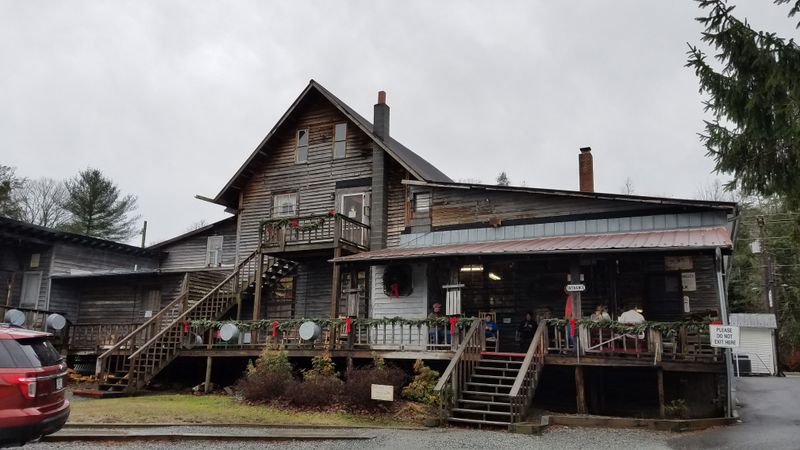
Mountain magic concentrates in this valley where a legendary general store has anchored community life since Reconstruction-era North Carolina. Valle Crucis centers on 3866 Highway 194 South, Valle Crucis, where the Mast General Store occupies a rambling wooden building listed on the National Register of Historic Places.
Creaky floors and potbelly stoves transport visitors backward while merchandise ranges from practical work boots to whimsical toys and local honey.
The name Valle Crucis means Valley of the Cross, referring to three streams converging to form a cross-shaped intersection visible from surrounding mountains. An Episcopal mission school operated here from 1842 to 1908, educating mountain children and leaving behind beautiful stone buildings now privately owned.
The Watauga River flows through the valley, offering fly fishing opportunities that attract anglers seeking native trout in pristine mountain streams.
Nearby hiking trails lead to waterfalls and scenic overlooks where autumn transforms forests into blazing tapestries of red and gold. Small farms dot the landscape, some operating for generations, others recently established by back-to-the-land enthusiasts seeking simpler lives.
The valley retains agricultural character despite tourism pressures, with cattle grazing in pastures framed by Blue Ridge peaks. Valle Crucis feels like stepping into an earlier era where community mattered more than commerce and natural beauty provided daily entertainment.
8. Southport
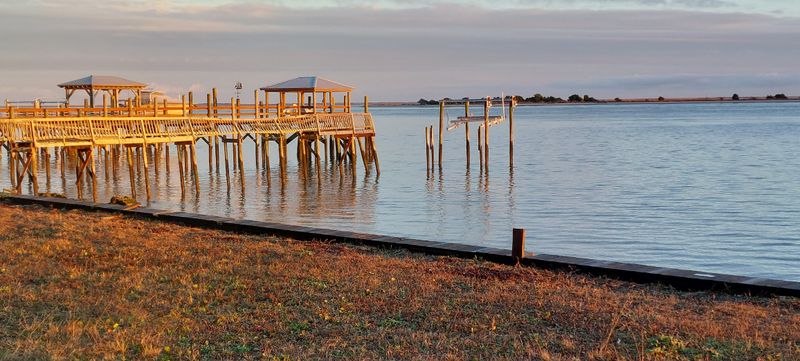
Coastal charm reaches perfection in this riverside town where lighthouse views and maritime heritage create a setting straight from coastal fantasies. Southport sits at the mouth of the Cape Fear River at 113 West Moore Street, Southport, where sailboats glide past, and pelicans dive for fish against backdrops of historic homes.
Live oaks draped with Spanish moss shade streets lined with nineteenth-century cottages painted in cheerful coastal colors.
The North Carolina Maritime Museum at 204 E Moore St, Southport, explores the region’s seafaring past, from piracy to piloting, with artifacts recovered from shipwrecks littering the Graveyard of the Atlantic. Fort Johnston, built in 1745, protected the river entrance for centuries and now houses the Southport Historical Society with exhibits about military and civilian life.
The Old Smithville Burying Ground contains graves dating to the 1790s, with epitaphs telling stories of yellow fever epidemics and sea captains lost at sea.
The Southport Pier extends into the river, offering prime spots for fishing, sunset watching, and counting cargo ships heading to Wilmington’s busy port. Fourth of July celebrations draw thousands for fireworks over the water, while the North Carolina Fourth of July Festival ranks among the state’s oldest Independence Day traditions.
Film crews frequently choose Southport as a backdrop for movies and television shows, recognizing photogenic qualities that cameras love. Southport delivers authentic coastal living without resort crowds or commercial development spoiling small-town atmosphere.
9. Linville Caverns
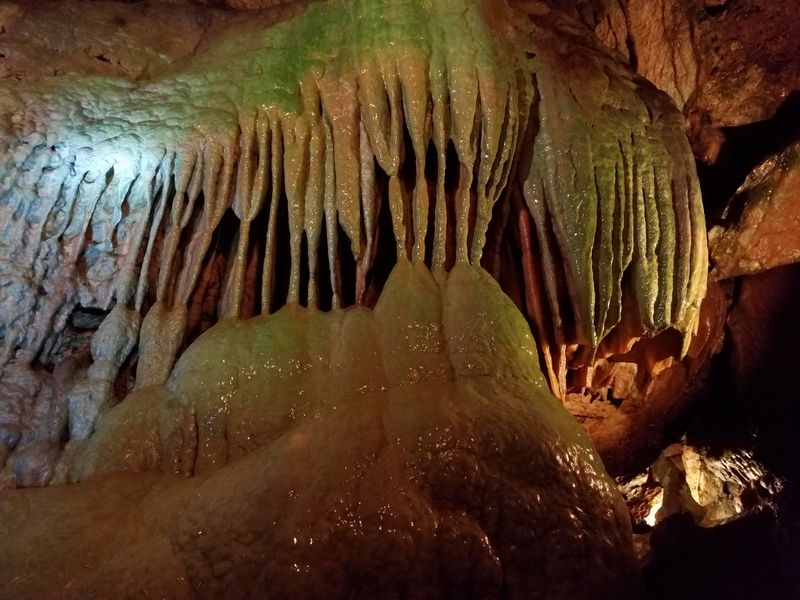
Underground wonders await beneath the Blue Ridge Mountains where flowing streams carved limestone into chambers filled with formations millions of years in the making. Linville Caverns burrows into Humpback Mountain at 19929 US Highway 221 North, Marion, in McDowell County, where guided tours reveal a hidden world most people drive past unknowingly.
Discovery came in the 1800s when fish swimming from the mountain caught local attention, leading to exploration of passages extending deep into solid rock.
Tours descend into constant fifty-two-degree temperatures where darkness feels absolute until lights illuminate stalactites, stalagmites, and flowstone curtains in shades of cream and rust. Underground streams still flow through the caverns, their waters home to blind trout evolved to survive in perpetual darkness without eyesight.
The formations grow incredibly slowly, adding layers over centuries, making even small stalactites thousands of years old.
Guides share geological explanations alongside folklore about moonshiners hiding stills in these chambers during Prohibition, though evidence remains purely anecdotal. The caverns remain active, meaning water continues sculpting new features while slowly expanding existing passages through chemical processes.
Comfortable walkways and handrails make the tour accessible for most ages and fitness levels, though the underground environment stays cool year-round. Linville Caverns proves that North Carolina’s treasures exist above and below ground, rewarding curiosity with experiences found nowhere else in the region.
10. McGalliard Falls
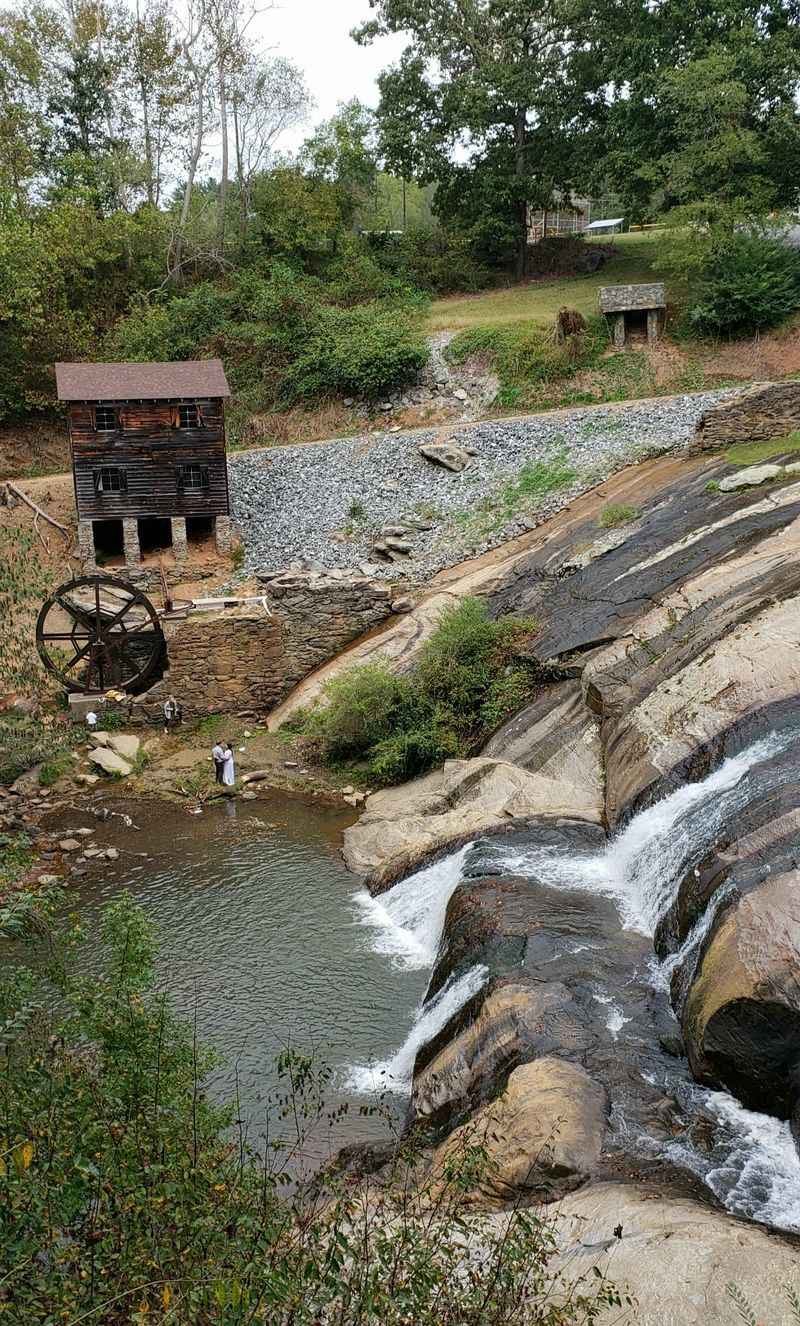
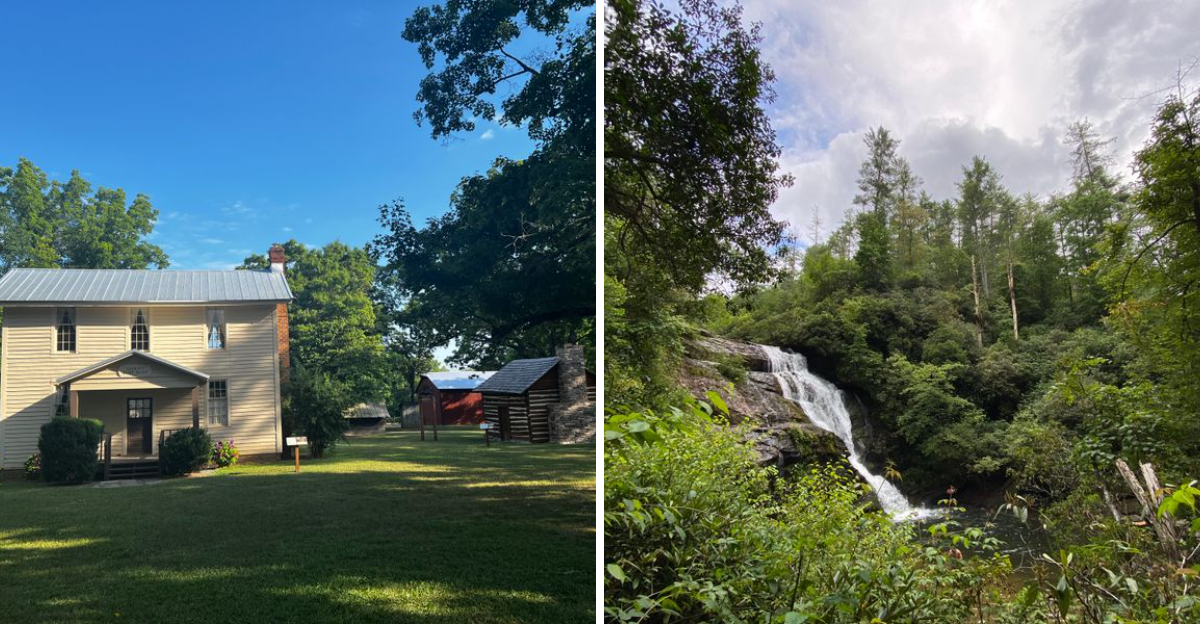
Waterfall hunters often overlook this cascading gem tucked into a wooded gorge where accessibility meets natural beauty without the crowds. McGalliard Falls drops thirty feet over rocky ledges at 2900 McGalliard Falls Road, Valdese, where a short trail leads from parking area to viewing platform.
The falls split into multiple channels during high water, creating a wide curtain of whitewater crashing into a pool below.
Rock formations surrounding the falls show layers of geological history, with different strata visible in cliff faces flanking the cascade. During summer, the pool at the base invites wading and splashing, though swimming isn’t officially permitted in this Burke County park.
Autumn transforms the setting when hardwoods blaze with color, framing the falls in reds and golds that photographers dream about.
The trail measures less than half a mile, making this waterfall accessible for families with young children and visitors with limited mobility. Picnic tables near the parking area provide spots for lunch with forest views, and the park rarely feels crowded even on pleasant weekends.
Local residents treat McGalliard Falls as their backyard retreat, visiting regularly to decompress from work stress or exercise dogs on wooded paths. The falls flow year-round, though spring runoff creates the most dramatic displays when snowmelt and rain swell the creek.
McGalliard Falls delivers waterfall experiences without requiring the strenuous hikes that guard North Carolina’s more famous cascades.
11. Coquina Beach
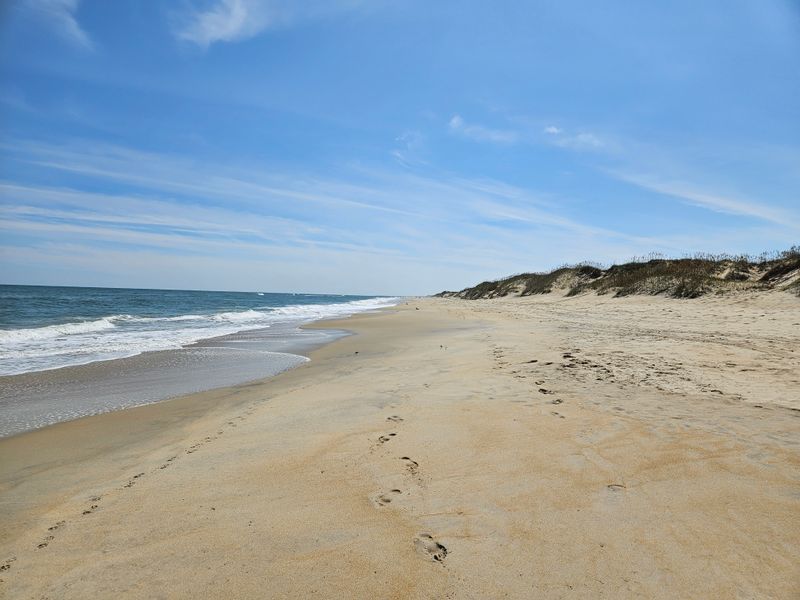
Outer Banks beaches each claim unique personalities, but Coquina Beach offers something special where shipwreck remains emerge from sand like maritime ghosts. Located along Highway 12 near Buxton in Cape Hatteras National Seashore, this stretch of coastline takes its name from tiny coquina clams that burrow into wet sand as waves recede.
Golden sands extend for miles, backed by towering dunes that shift with storms and seasons.
The Laura Barnes shipwreck sits partially exposed on the beach, a 1921 schooner driven ashore during a hurricane that now serves as playground and photo opportunity. Wooden ribs curve from sand, weathered by decades of salt and sun into sculptural forms that remind visitors of the ocean’s power.
Swimming conditions vary with weather, but lifeguards patrol during the summer months when families flock to these protected shores.
Shelling proves excellent here, with diverse specimens washing up after storms and during changing tides that rearrange the bottom constantly. Hang gliders occasionally soar overhead, launching from nearby Jockey’s Ridge and riding coastal winds above the surf.
The beach maintains a wild, undeveloped character despite its accessibility, with no commercial development cluttering views or interrupting natural rhythms. Sunrises paint the sky in spectacular colors, rewarding early risers with displays that justify setting alarms.
Coquina Beach captures the essence of Outer Banks beauty without the crowds that pack more famous stretches of sand.
12. Yates Mill
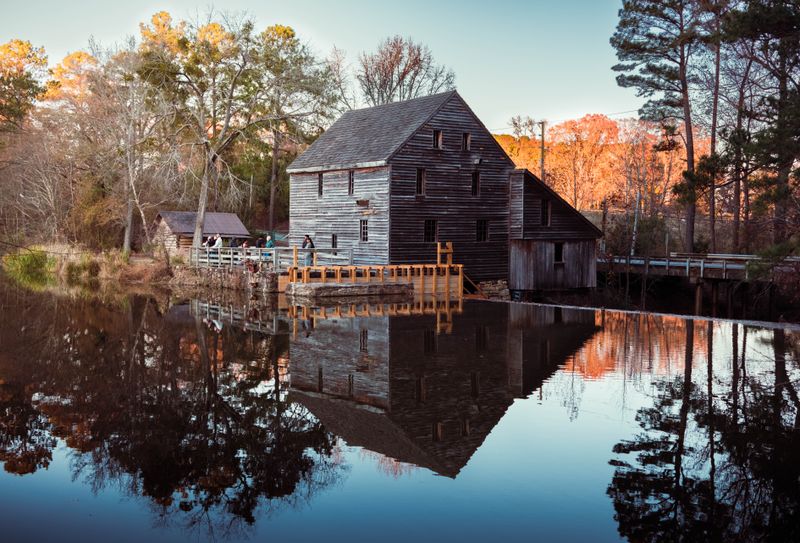
Working gristmills have nearly vanished from the American landscape, making this restored gem a functioning time capsule of agricultural heritage. Yates Mill stands at 4620 Lake Wheeler Road, Raleigh, where a wooden waterwheel still turns when millers demonstrate eighteenth-century grain grinding techniques.
Built around 1756, the mill operated commercially until 1953, serving generations of farmers who brought corn and wheat for processing into meal and flour.
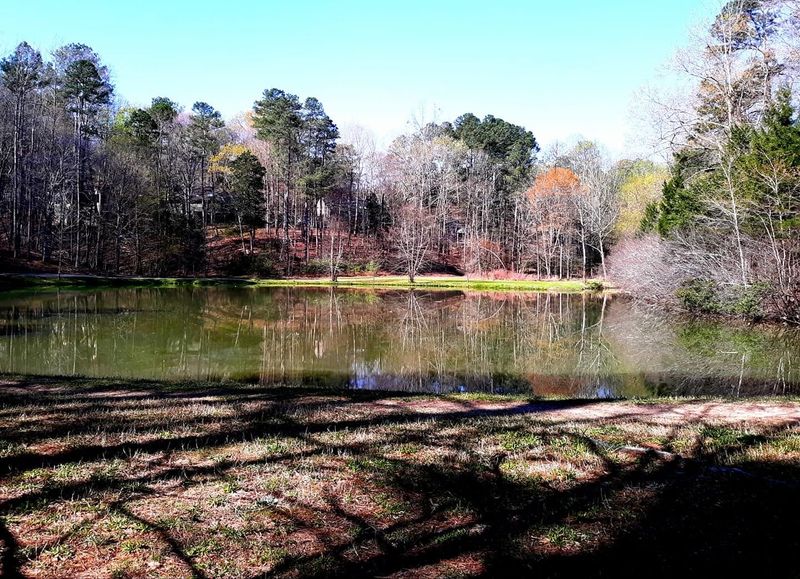
The mill pond creates a scenic centerpiece for Yates Mill County Park, its calm waters reflecting sky and surrounding forests in mirror-perfect stillness. Trails circle the pond and explore adjacent woodlands, offering easy walks through habitats supporting deer, herons, and turtles visible from boardwalks.
The mill building itself showcases post-and-beam construction methods and wooden gears that transferred waterpower to grinding stones weighing hundreds of pounds.
Restoration efforts beginning in the 1960s saved the structure from collapse, with volunteers and preservationists dedicating years to returning the mill to working condition. Educational programs teach visitors about milling processes, local history, and the importance of water-powered industry in rural economies.
The surrounding park protects 174 acres of green space within rapidly developing Raleigh suburbs, providing nature access for neighborhoods without requiring long drives. Yates Mill connects past and present, demonstrating that historical preservation serves practical purposes while honoring the ingenuity of earlier generations who built structures meant to last centuries.
13. Cedarock Park
Hiking trails, historic buildings, and working farms combine in this multi-faceted park that offers something for everyone seeking outdoor recreation or agricultural education. Cedarock Park spreads across 414 acres at 4242 R Dean Coleman Rd, Burlington, where the Garrett family donated their ancestral land for public enjoyment.
Six miles of trails wind through forests and fields, passing streams and rock outcroppings that provide natural obstacles for trail runners and mountain bikers.
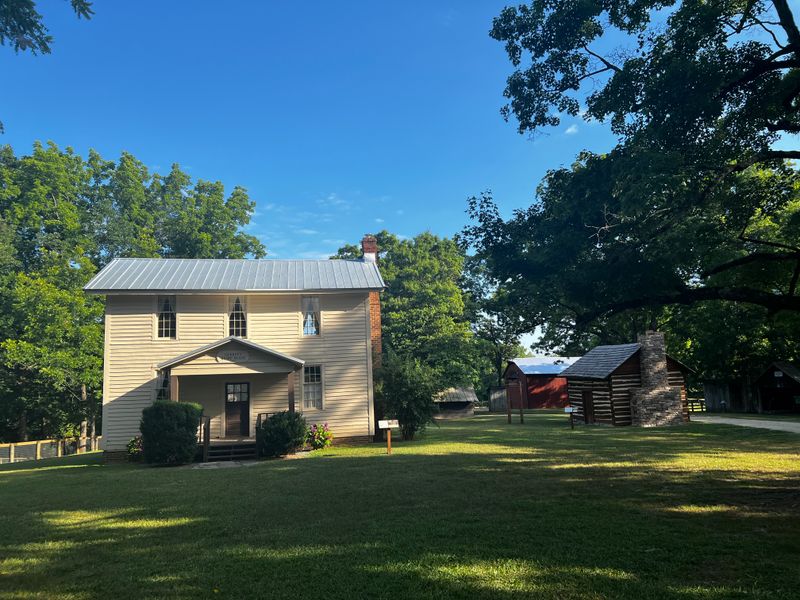
The Cedarock Historical Farm preserves nineteenth-century agricultural practices with heritage breed animals, heirloom gardens, and period buildings, including a log cabin and barn. Volunteers in period dress demonstrate crafts like blacksmithing, weaving, and candle making during special events that transport visitors backward in time.
Children especially enjoy meeting chickens, goats, and horses living on the farm, many experiencing barnyard animals up close for the first time.
Disc golf enthusiasts flock to the eighteen-hole course winding through wooded terrain that challenges players with elevation changes and technical shots. Picnic shelters accommodate family gatherings and company outings, with grills and tables available by reservation or on a first-come basis.
The park maintains a low-key atmosphere despite extensive amenities, feeling more like a large private estate than a public facility. Cedarock Park demonstrates that conservation and recreation coexist beautifully when thoughtful planning preserves natural and cultural resources while welcoming visitors to explore and learn.
14. Marshall High Studios
Artistic renaissance blooms in this mountain town where a former high school transformed into creative hub hosting galleries, studios, and performance spaces. Marshall High Studios occupies 115 Blannahassett Island Rd, Marshall, in a three-story brick building that educated Madison County students from 1929 to 1982.
Classrooms now house working artists creating pottery, paintings, jewelry, and sculptures that reflect mountain culture and contemporary visions.
Open studio events invite visitors to watch artists at work, asking questions about techniques and inspiration while witnessing creativity in action. The building retains educational character with original woodwork, tall windows, and wide hallways that once echoed with student voices.
Multiple galleries display rotating exhibitions featuring regional and national artists, with receptions drawing crowds from Asheville and beyond.
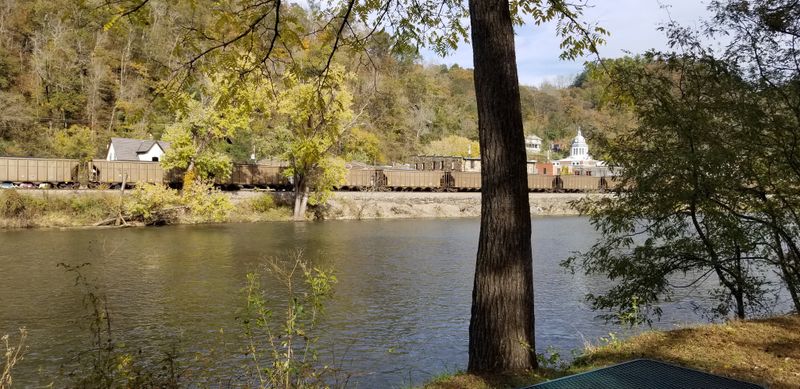
The performance hall hosts concerts, theater productions, and film screenings, maintaining the auditorium’s original purpose of gathering the community for shared cultural experiences. Downtown Marshall surrounds the studios with antique shops, cafes, and the French Broad River flowing past historic buildings clinging to steep hillsides.
The town embraces its artistic identity without losing mountain authenticity, balancing tourism with the needs of working-class residents who’ve called Madison County home for generations. Marshall High Studios proves that adaptive reuse breathes new life into historic structures while honoring their original purpose of education and community enrichment.
Visiting feels like discovering a secret that locals have been quietly enjoying while the rest of the state looks elsewhere.
15. Secret Falls
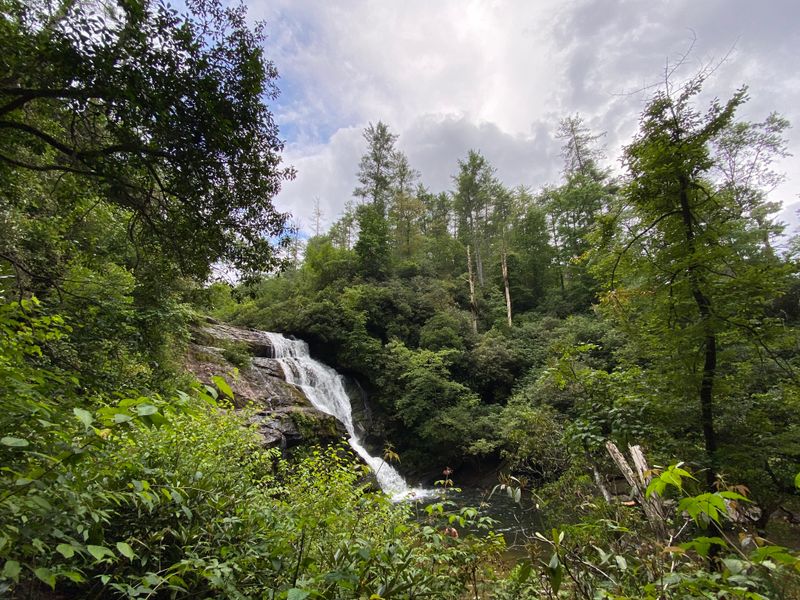
Adventure seekers willing to work for their rewards find paradise at this hidden cascade deep in Nantahala National Forest wilderness. Secret Falls lives up to its name, requiring a challenging hike through rugged terrain without official trails or clear directions.
Located at Big Creek Rd, Highlands, the falls drop approximately thirty-five feet over a rocky cliff into a crystal-clear pool perfect for swimming.
The approach involves creek crossings, boulder scrambling, and bushwhacking through rhododendron thickets that test determination and navigation skills. GPS coordinates help, but even with technology, finding the falls demands attention to terrain features and willingness to backtrack when paths disappear.
The payoff justifies the effort: a pristine waterfall in a natural amphitheater where few footprints mark the surrounding rocks.
Swimming in the pool offers refreshing rewards after the sweaty hike, with water so clear that every pebble on the bottom remains visible. Moss-covered rocks frame the falls, creating a grotto-like atmosphere that feels primordial and untouched by modern intrusions.
Visiting requires respecting Leave No Trace principles since no facilities or maintenance exist in this remote location. The falls flow strongest in spring and after heavy rains, though even during drier periods, the cascade maintains enough volume to impress.
Secret Falls reminds adventurers that North Carolina still harbors wild places where solitude and natural beauty reward those who venture beyond the easy destinations.