This Enchanting California Village Looks Like It Was Pulled Straight From A Fairy Tale
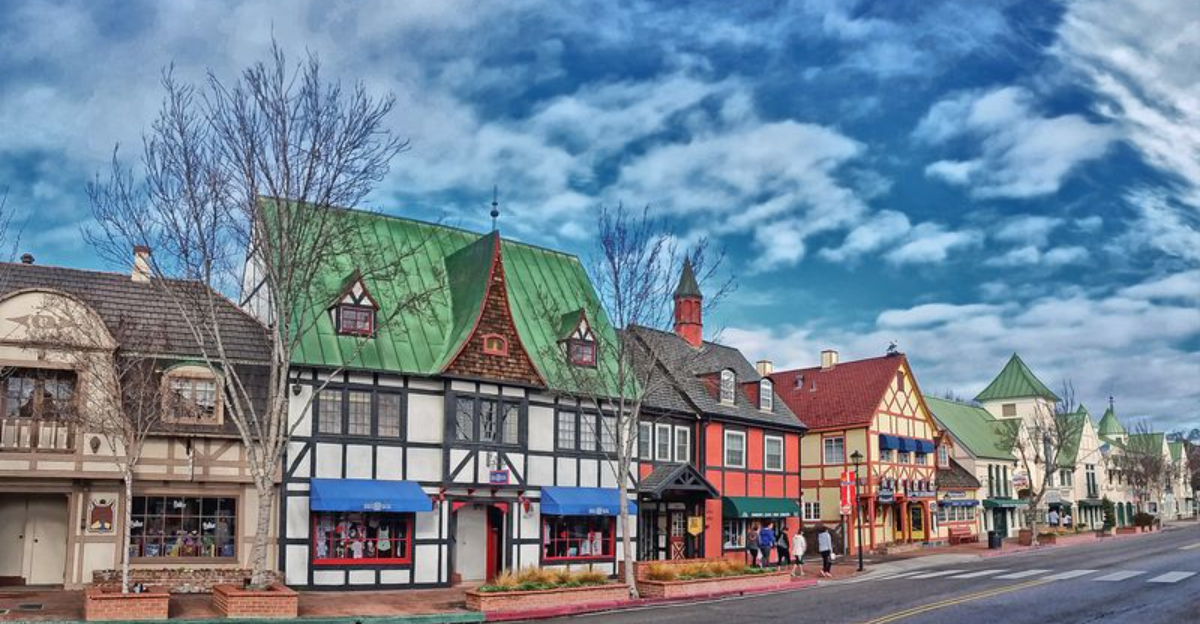
Once upon a time, there was a village called Solvang, where windmills turned gently above storybook streets and the scent of warm pastries drifted through the air.
Timbered buildings stood close together as if sharing secrets, their balconies dressed in flowers and their windows glowing with quiet invitation.
The village felt carefully placed, shaped by tradition and imagination rather than urgency or modern rush.
Set within California, Solvang unfolds like a living fairytale. Cobblestone paths encourage wandering without purpose, while bakeries and small shops reward curiosity at every turn.
The rhythm of daily life moves slower here, allowing moments to stretch and details to shine. Laughter carries easily, and even a simple walk feels like part of a larger tale.
Nothing in Solvang asks visitors to hurry. Time softens, conversations linger, and the outside world seems to fade just beyond the rooftops.
The village offers an escape rooted in charm and wonder, a place where childhood stories feel suddenly close again and where the magic of a fairytale quietly continues, one step at a time.
1. Danish Heritage And Architecture
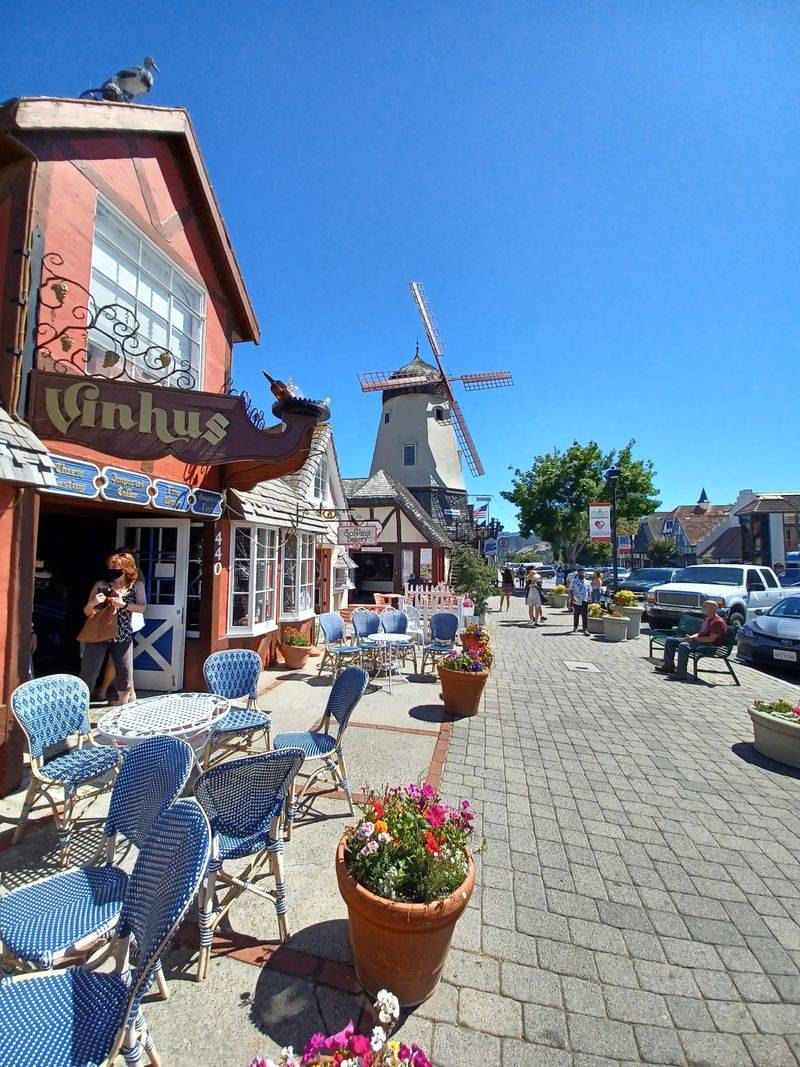
Walking through Solvang feels like stepping onto a film set designed to capture old-world Denmark.
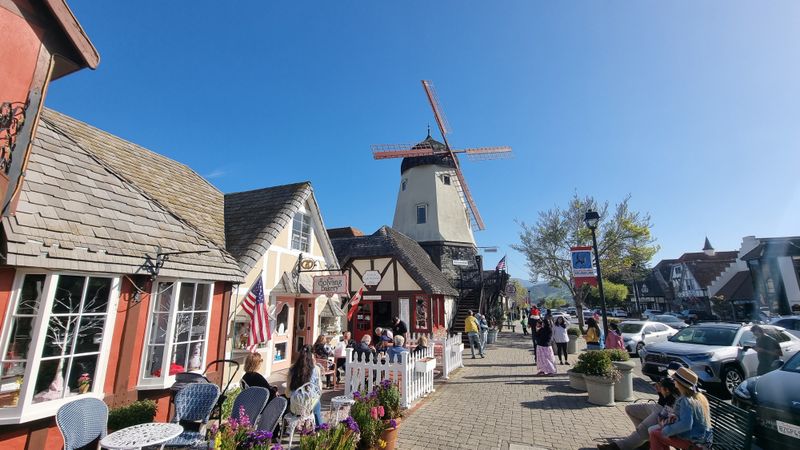
The buildings showcase half-timbered construction with exposed wooden beams creating geometric patterns against white stucco walls.
Thatched roofs top some structures, adding rustic charm that contrasts beautifully with the California sunshine.
Street signs bear Danish names like Copenhagen Drive and Alisal Road, reinforcing the cultural identity at every turn.
A replica of Copenhagen’s famous Rundetårn stands as a focal point, inviting visitors to climb its spiral walkway.
Hans Christian Andersen’s statue watches over the village, honoring the beloved storyteller whose fairy tales shaped childhoods worldwide.
Architectural details include painted wooden shutters, flower boxes overflowing with blooms, and decorative stork sculptures perched on rooftops.
The design choices weren’t random – founders deliberately created this aesthetic to preserve their heritage and create a living tribute to their homeland.
Every corner presents photo opportunities that capture the village’s commitment to maintaining its distinctive character.
The architecture serves both aesthetic and practical purposes, with covered walkways providing shade during warm valley days.
Buildings house shops, galleries, and restaurants that continue the Danish theme inside with imported goods and traditional décor.
2. Authentic Danish Bakeries And Pastries
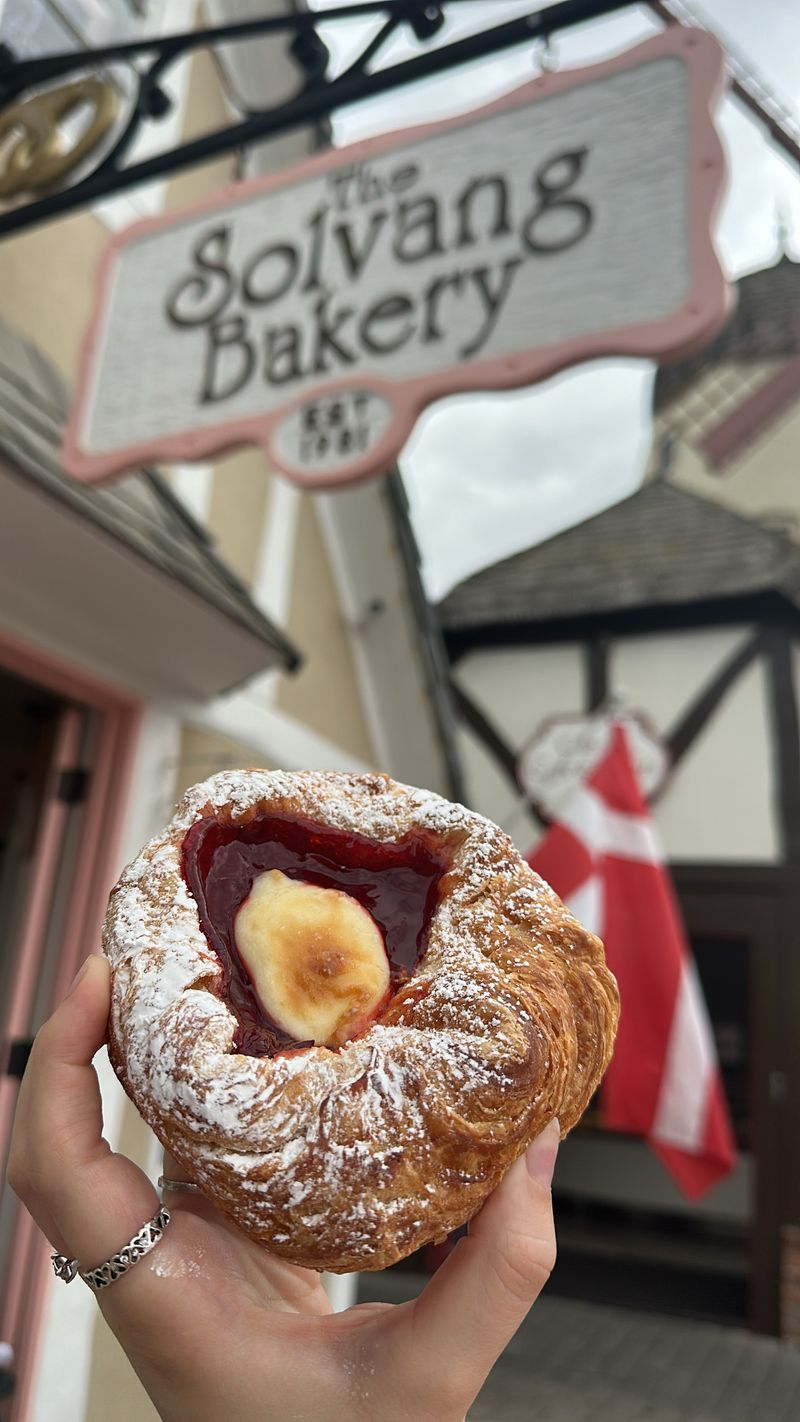
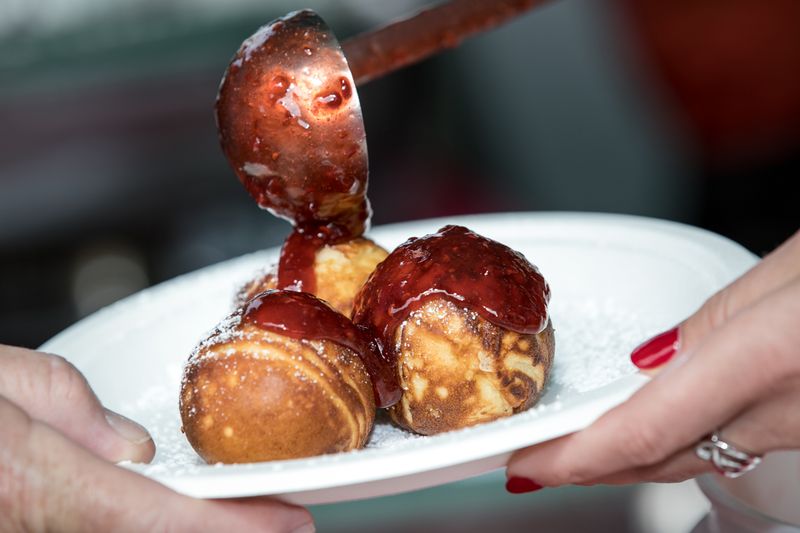
The scent of butter and sugar drifts through Solvang’s streets, leading visitors to bakeries that have perfected recipes passed down through generations. Æbleskiver, those pillowy spherical pancakes dusted with powdered sugar, arrive at tables still warm from cast-iron pans.
Kringles – flaky oval pastries layered with almond paste or fruit fillings – showcase the precision Danish baking demands.
Several bakeries operate daily, with morning hours bringing the freshest selections as bakers pull golden loaves and pastries from ovens.
Display cases reveal an array of treats including Danish butter cookies, marzipan confections, and layered cakes decorated with meticulous detail.
The pastries aren’t overly sweet, allowing the quality of butter and craftsmanship to shine through each bite.
Seating areas in these bakeries range from cozy indoor tables to outdoor patios where guests can enjoy their treats while watching village activity.
Some establishments have served the community for decades, maintaining consistency that locals rely on and visitors discover with delight.
Purchasing a box of assorted pastries makes a practical souvenir, though keeping them uneaten until reaching home requires willpower.
The bakeries also offer savory options like Danish open-faced sandwiches for those seeking lunch rather than dessert.
3. Danish Days Festival Celebration
Since 1936, Solvang has transformed each September into a celebration of Danish folk traditions that draws thousands of visitors.
Danish Days brings parades featuring participants in traditional costumes, with women wearing embroidered aprons and men in knickers and vests.
Folk dancing demonstrations showcase choreography preserved from centuries-old village celebrations in Denmark.
The festival schedule typically spans a weekend, with activities beginning mid-morning and continuing into evening hours.
Food vendors line the streets offering specialties beyond what’s available year-round, including traditional Danish meatballs and red cabbage dishes.
Live music fills the air, with accordion players and Danish bands providing soundtrack to the festivities.
Craft booths display handmade goods reflecting Scandinavian artistry, from hand-painted wooden items to knitted woolens.
The atmosphere feels genuinely celebratory rather than commercialized, with community members actively participating rather than simply performing for tourists.
Children’s activities include traditional games and storytelling sessions that introduce younger generations to cultural heritage.
Parking becomes challenging during festival days, with visitors advised to arrive early or use shuttle services.
The event remains free to attend, though individual food and craft purchases require payment. Weather in September typically offers pleasant temperatures ideal for outdoor celebration.
4. Santa Ynez Valley Wine Country Location
Solvang’s position in the heart of Santa Ynez Valley places it among dozens of acclaimed wineries producing varieties that thrive in the region’s microclimate.
The valley’s geography creates ideal growing conditions, with warm days and cool nights allowing grapes to develop complex flavors.
Tasting rooms dot the landscape within minutes of the village center, offering opportunities to sample locally produced wines.
Many visitors combine cultural exploration of Solvang with wine tasting excursions, creating a full day of diverse experiences.
The contrast between Danish village charm and California wine culture creates an unexpected pairing that defines the area’s appeal.
Some tasting rooms occupy historic buildings while others feature modern architecture with valley views.
The wine industry supports much of the local economy, with harvest season bringing increased activity and employment opportunities.
Visitors find various price points and wine styles, from casual tasting experiences to more formal tours with food pairings.
The surrounding countryside offers scenic drives past vineyards that change appearance with seasons – green shoots in spring, heavy clusters in summer, golden leaves in autumn.
Designated driver arrangements or tour services become necessary considerations when planning wine tasting itineraries.
The concentration of wineries within a small geographic area makes visiting multiple locations feasible within a single afternoon.
5. Visits From Danish Royalty
Crown Prince Frederik’s 1939 visit marked the first time Danish royalty set foot in Solvang, validating the village’s efforts to maintain cultural connections across the Atlantic.
Princess Margrethe visited twice, in 1960 and again in 1976, with the community organizing elaborate welcomes featuring flag-lined streets and traditional ceremonies.
Prince Henrik’s 2011 visit celebrated the village’s centennial, creating a full-circle moment that honored the founders’ vision.
These royal visits weren’t mere photo opportunities but represented genuine recognition of Solvang’s role in preserving Danish heritage abroad.
Community members prepared for months before each visit, ensuring every detail reflected pride in their cultural identity.
The royals toured local landmarks, sampled traditional foods, and met with residents who maintained ties to Denmark through family connections.
Photographs and memorabilia from these visits appear in local museums and businesses, serving as tangible links to Denmark’s monarchy.
The visits generated international media attention, raising Solvang’s profile beyond regional tourism circles.
For Danish-Americans throughout California and beyond, these occasions affirmed the importance of cultural preservation efforts.
The warmth with which royalty received Solvang’s hospitality strengthened bonds between the village and Denmark.
Future visits remain possible as new generations of Danish royalty continue traditions of connecting with diaspora communities worldwide.
6. Sideways Film Location Fame
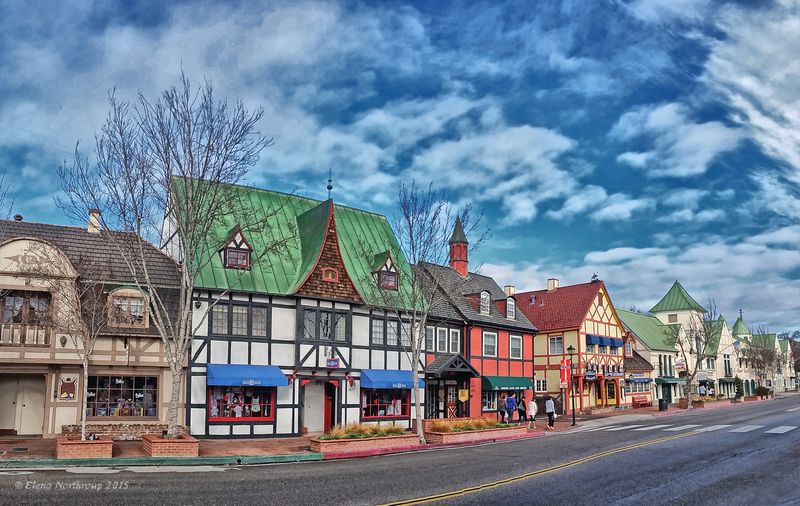
The 2004 film “Sideways” showcased Santa Ynez Valley’s wine country with Solvang serving as a backdrop for this critically acclaimed comedy-drama.
Director Alexander Payne chose the region for its authentic wine culture and unpretentious atmosphere that contrasted with Napa Valley’s polish.
The film’s success brought international attention to the area, with wine enthusiasts and movie fans making pilgrimages to locations featured on screen.
Several Solvang establishments appeared in the film, experiencing increased visitor traffic following its release.
The movie’s impact on local wine tourism proved substantial, with some wineries reporting significant increases in visitors citing the film as inspiration. “Sideways” captured the valley’s character honestly, showing both its charm and its ordinary moments without excessive romanticizing.
Film tourism continues years after release, with visitors seeking out specific restaurants and tasting rooms featured in memorable scenes.
The movie’s dialogue about wine appreciation influenced how people approach tasting experiences, sometimes for better and occasionally creating unrealistic expectations.
Local businesses balanced embracing the attention while maintaining authenticity that attracted filmmakers initially.
The production brought temporary employment and economic activity during filming, with locals serving as extras and supporting crew needs. “Sideways” remains a cultural touchstone that introduced countless people to a region they might never have discovered otherwise.
7. Elverhøj Museum Of History And Art
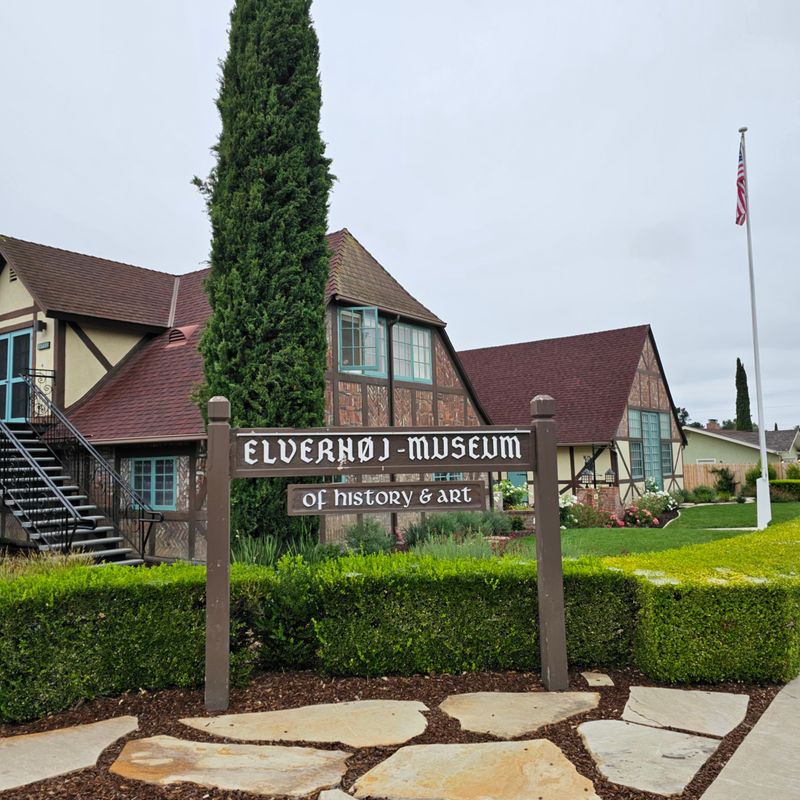
Housed in a building designed to evoke 18th-century Danish farmhouse architecture, the Elverhøj Museum preserves Solvang’s founding story and ongoing cultural traditions.
The museum’s name translates to “elves’ hill,” referencing Danish folklore that adds whimsy to this educational institution.
Exhibits include photographs documenting the village’s transformation from farmland to tourist destination, alongside artifacts brought from Denmark by early settlers.
The museum is located at 1624 Elverhoy Way, Solvang, CA 93463, positioned within walking distance of the village’s commercial center.
Gallery spaces rotate art exhibitions featuring both Danish and local California artists, creating dialogue between old-world traditions and contemporary creativity.
Personal stories of immigrant families provide context for understanding why preserving Danish culture mattered so deeply to Solvang’s founders.
Admission policies and hours vary seasonally, with the museum typically welcoming visitors Thursday–Monday, 11am–5pm.
The building itself serves as an exhibit, with architectural details demonstrating traditional Danish construction methods adapted to California’s climate.
Educational programs include lectures, workshops, and cultural demonstrations that engage both residents and tourists.
The museum operates as a nonprofit organization, relying on admissions, donations, and volunteer support.
Collections include traditional costumes, household items, and documentation of how Danish-Americans maintained cultural identity while integrating into American society.
8. Traditional Danish Windmills
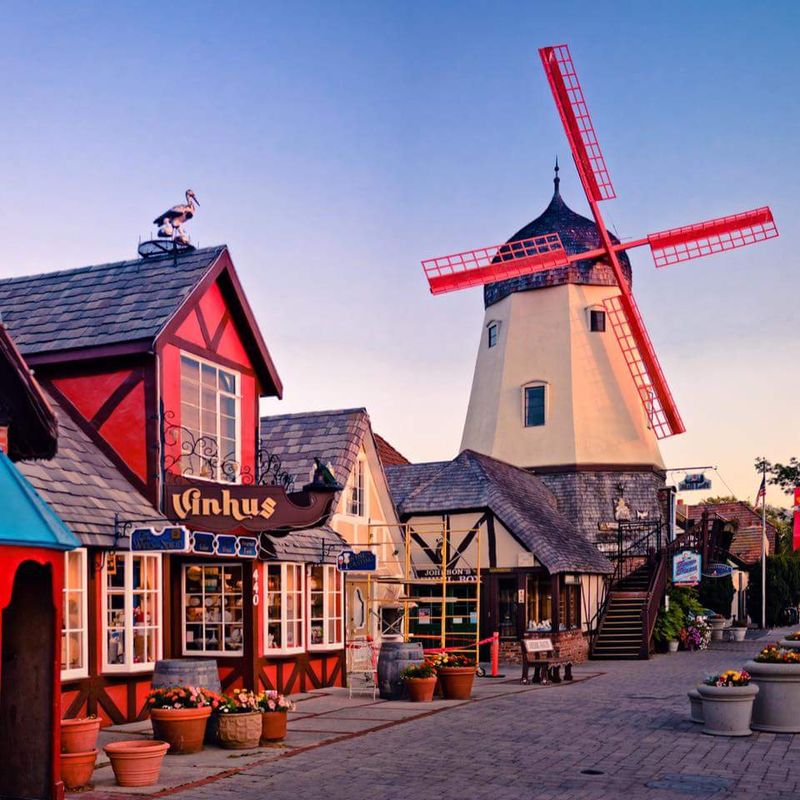
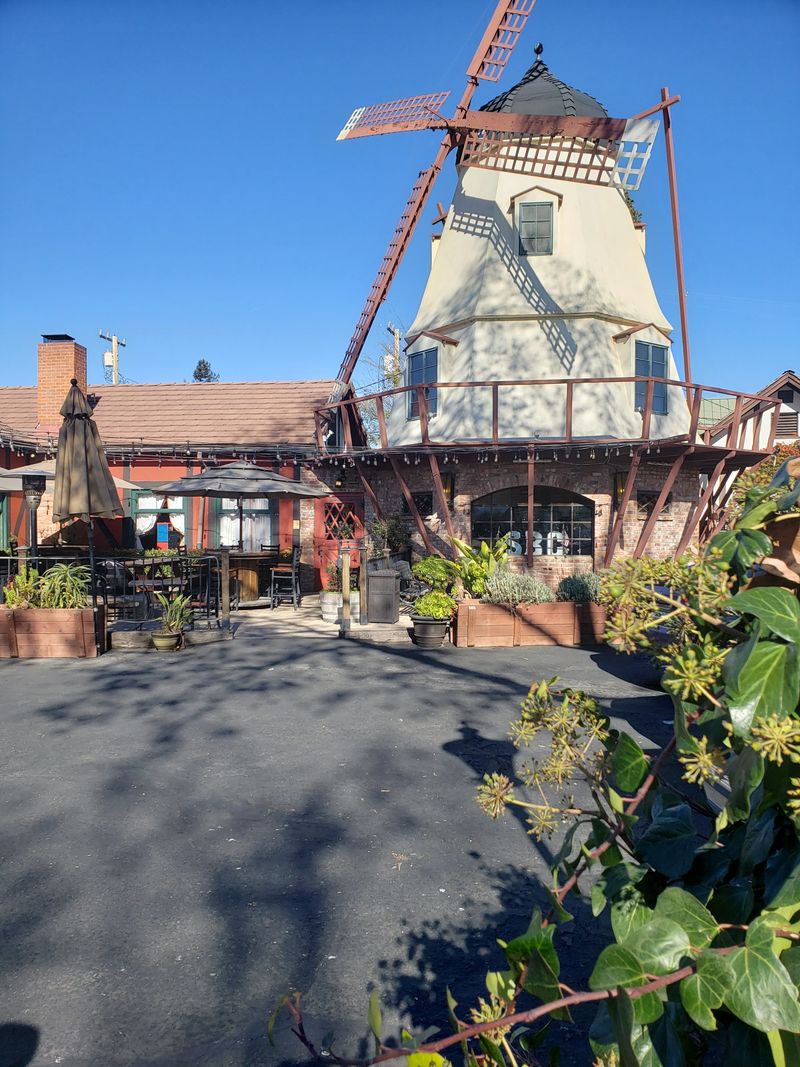
Windmills punctuate Solvang’s skyline, serving as both functional tributes to Danish engineering and beloved landmarks that orient visitors navigating the village.
The most prominent windmill stands along Alisal Road, its blades rotating when wind conditions allow, creating movement that catches the eye from blocks away.
These structures weren’t built for grinding grain but rather as architectural statements affirming cultural identity.
Danish windmill design differs from Dutch versions, with specific proportions and construction details that experts recognize immediately.
Solvang’s windmills vary in size and style, with some attached to businesses while others stand independently in parks or gardens.
The largest windmill offers photo opportunities from multiple angles, with surrounding landscaping providing colorful foregrounds during blooming seasons.
Maintaining wooden windmills in California’s climate requires ongoing attention, with periodic restoration projects ensuring structural integrity.
The windmills have become so associated with Solvang that they appear on virtually all promotional materials and souvenirs.
Children particularly enjoy these structures, often asking questions about how windmills work and why they’re important to Danish culture.
Some windmills include small museums or gift shops at their bases, creating additional reasons to approach these landmarks closely.
The contrast between traditional European windmill design and California’s landscape creates the visual incongruity that makes Solvang memorable.
9. Julefest Christmas Celebration
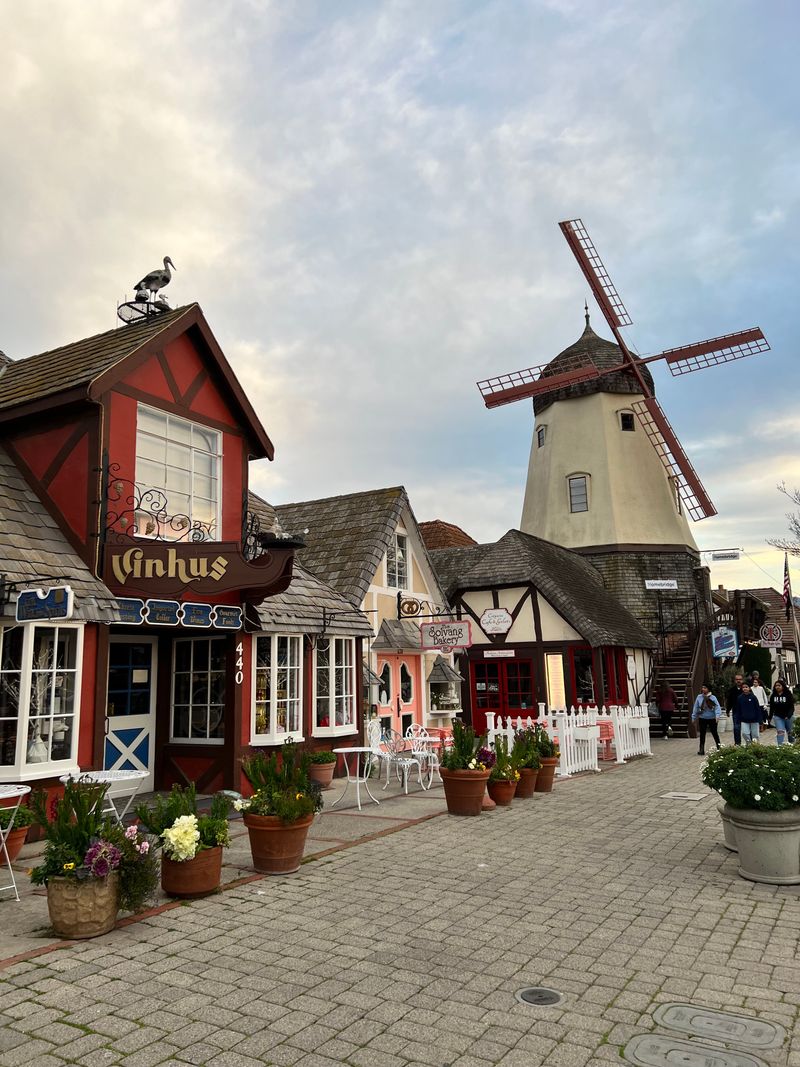
December transforms Solvang into a Danish Christmas village, with Julefest celebrations extending throughout the month rather than concentrating on a single weekend.
Thousands of lights outline buildings, creating a glow that makes evening strolls particularly magical.
A tree lighting ceremony traditionally kicks off the season, with community caroling and appearances by costumed characters from Danish holiday traditions.
Danish Christmas customs differ somewhat from American traditions, with Julefest offering glimpses into how Scandinavians celebrate the season.
Shops stock imported decorations including wooden ornaments, paper hearts, and traditional candle holders that reflect authentic Danish holiday aesthetics.
Bakeries expand their offerings to include seasonal specialties like pebernødder (spiced cookies) and rice pudding with hidden almond prizes.
The celebration maintains a family-friendly atmosphere, with activities designed to engage children while adults appreciate the cultural authenticity.
Weather during December can be cool, making warm layers advisable for outdoor activities. The village’s compact size allows visitors to experience multiple events during a single visit without excessive walking.
Lodging books quickly for December weekends, with visitors advised to make reservations well in advance.
Julefest avoids the commercial frenzy that sometimes overwhelms larger holiday celebrations, instead offering a more intimate experience focused on tradition and community.
The combination of Danish customs and California setting creates a unique holiday experience unavailable elsewhere in the United States.
10. Old Mission Santa Inés
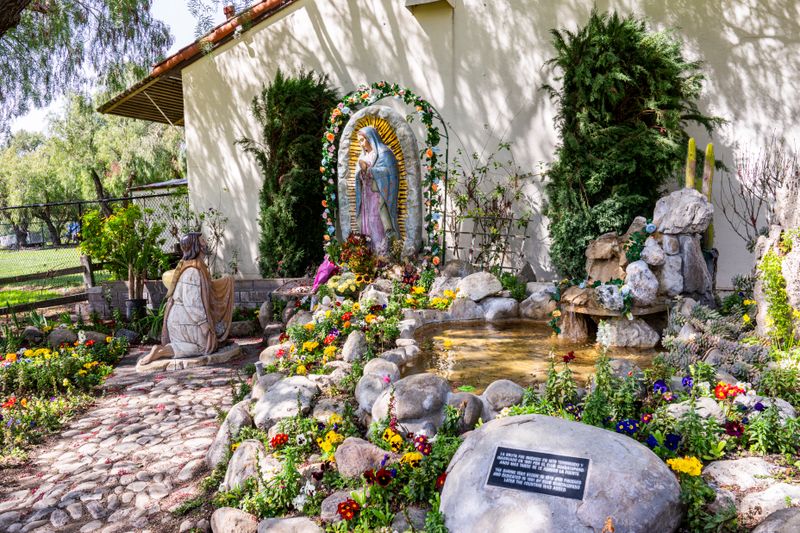
Predating Solvang by over a century, Mission Santa Inés was founded in 1804 as part of California’s chain of Franciscan missions.
The mission sits at 1760 Mission Drive, Solvang, CA 93463, occupying a prominent position that reminds visitors of the region’s layered history.
Adobe walls and tile roofs represent Spanish colonial architecture that contrasts dramatically with the Danish buildings surrounding it.
The mission continues functioning as an active parish while also operating as a museum open to respectful visitors.
Interior spaces include a chapel with original religious artwork, a small museum displaying artifacts from the mission era, and gardens planted with species that sustained the mission community.
The peaceful grounds offer contemplative spaces away from the village’s commercial activity.
Guided tours provide context about mission life, the Chumash people who lived in the region before European arrival, and the complex legacy of California’s mission system.
The building has survived earthquakes and required multiple restoration efforts over two centuries. Original frescoes and hand-carved wooden details demonstrate the craftsmanship of mission-era artisans.
Visiting hours typically accommodate tourists during morning and afternoon periods, with mass schedules posted for those wishing to attend services.
The mission’s presence adds historical depth to Solvang, creating an unexpected juxtaposition between Danish and Spanish colonial cultures within a single small community.
11. Solvang Vintage Motorcycle Museum
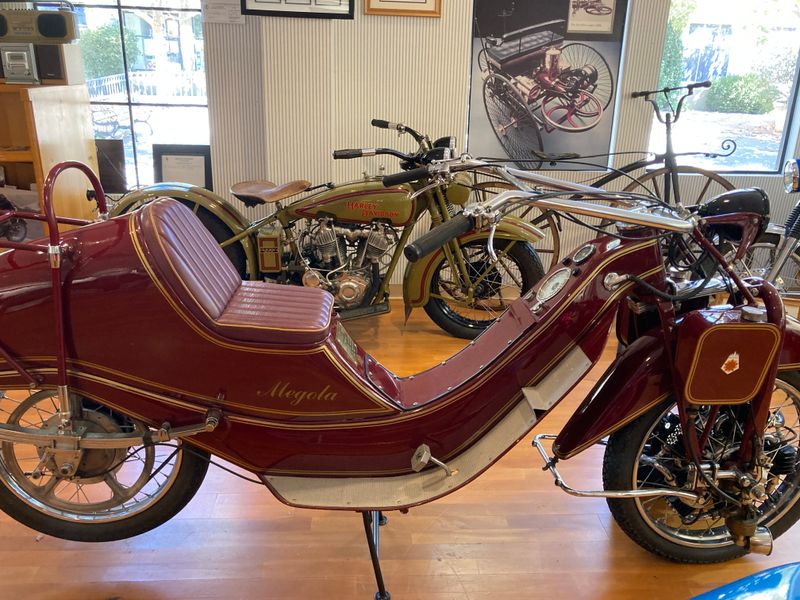
Motorcycle enthusiasts discover an unexpected treasure at this museum showcasing dozens of classic bikes spanning decades of design evolution.
The collection includes American brands like Harley-Davidson and Indian, Japanese manufacturers such as Honda and Yamaha, and European makers including Triumph and BMW.
Each motorcycle represents a specific era’s engineering philosophy and aesthetic preferences.
The museum is located at 320 Alisal Road, Solvang, CA 93463, occupying a space that allows proper display of these mechanical works of art.
Bikes range from early 20th-century models with minimalist designs to mid-century machines featuring chrome details and powerful engines.
Informational placards provide context about each motorcycle’s significance, manufacturing details, and restoration stories.
The museum typically opens Thursday through Monday during afternoon hours, with admission fees supporting ongoing preservation efforts.
Lighting emphasizes each bike’s lines and details, creating an almost gallery-like atmosphere that elevates motorcycles beyond mere transportation.
Some visitors spend hours examining mechanical details while others appreciate the artistic elements of vintage motorcycle design.
The collection changes periodically as bikes rotate in and out for maintenance or loan to other exhibitions.
Photography is generally permitted, allowing enthusiasts to document rare models they might never encounter elsewhere.
The museum adds unexpected diversity to Solvang’s attractions, appealing to visitors who might not otherwise consider stopping in a Danish-themed village.