This California Trail Feels Like Walking Through A Forest Of Ancient Giants
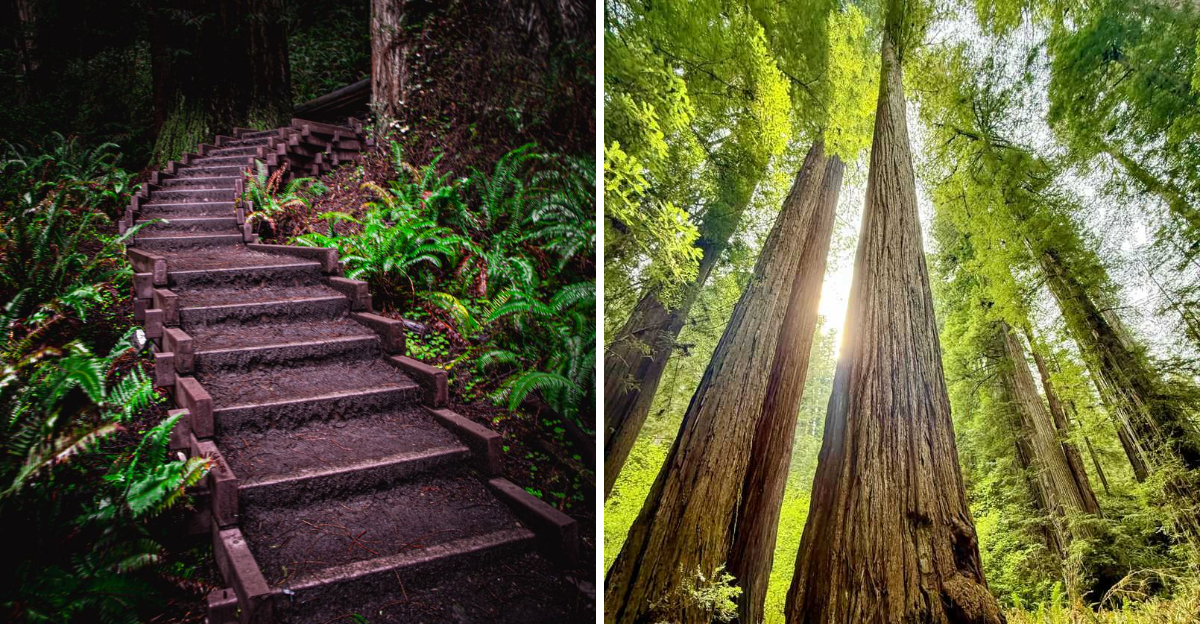
Walking among coast redwoods that have stood for over a thousand years creates a feeling unlike any other outdoor experience.
The Grove of Titans Trailhead in Jedediah Smith Redwoods State Park offers exactly that kind of journey through one of the most awe-inspiring landscapes found anywhere on the planet.
These massive trees tower overhead with bark thick enough to withstand centuries of storms and branches that disappear into the canopy high above.
The trail itself winds through a forest where silence feels heavier and sunlight filters down in golden shafts that illuminate the forest floor.
Northern California protects some of the last remaining old-growth redwood groves, and this particular location stands out for the sheer size of its trees.
Visitors who make the trip often describe the experience as humbling, with the scale of these living giants putting human existence into perspective.
The boardwalk system now in place allows people to witness this natural wonder while protecting the delicate root systems that keep these ancient trees alive and thriving for future generations to appreciate.
1. Location And Access
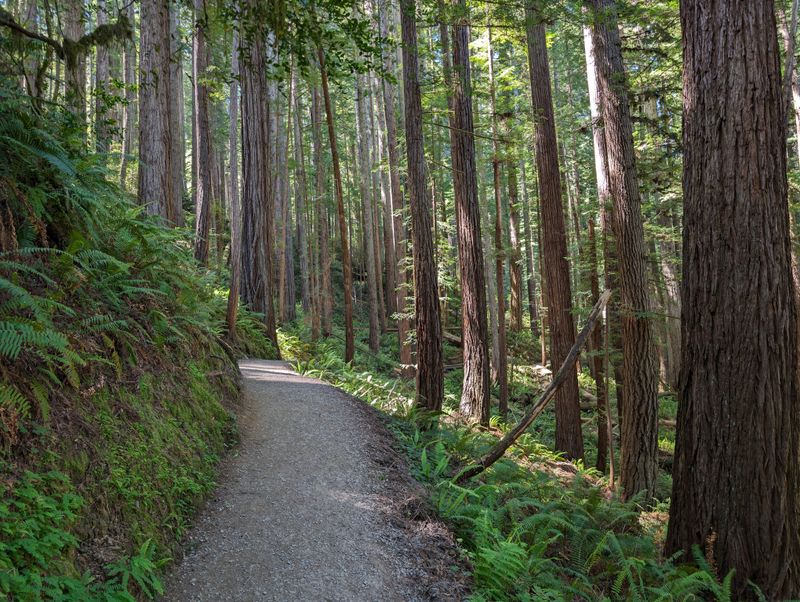
Getting to the Grove of Titans requires a bit of planning since the trailhead sits along Howland Hill Road rather than directly off a major highway.
Travelers coming from Crescent City or other coastal areas should head inland toward Highway 199, then follow signs directing them to this unpaved scenic route.
The road itself passes through dense redwood forest, offering previews of the massive trees waiting at the trail.
Howland Hill Road remains unpaved and narrow, making it unsuitable for large recreational vehicles or any vehicle towing a trailer.
The surface can become rutted during wet weather, though most standard cars handle the conditions without difficulty during dry months.
Drivers should proceed slowly and watch for oncoming traffic since passing spots appear infrequently along the route.
Parking at the trailhead fills quickly during summer weekends, with spaces becoming scarce by mid-morning on popular days. Arriving before 9 AM increases the chances of finding a spot without circling or waiting.
The eastern side of Howland Hill Road hosts the main parking area, with additional overflow parking located a short walk away when the primary lot reaches capacity.
2. Trail Length And Features
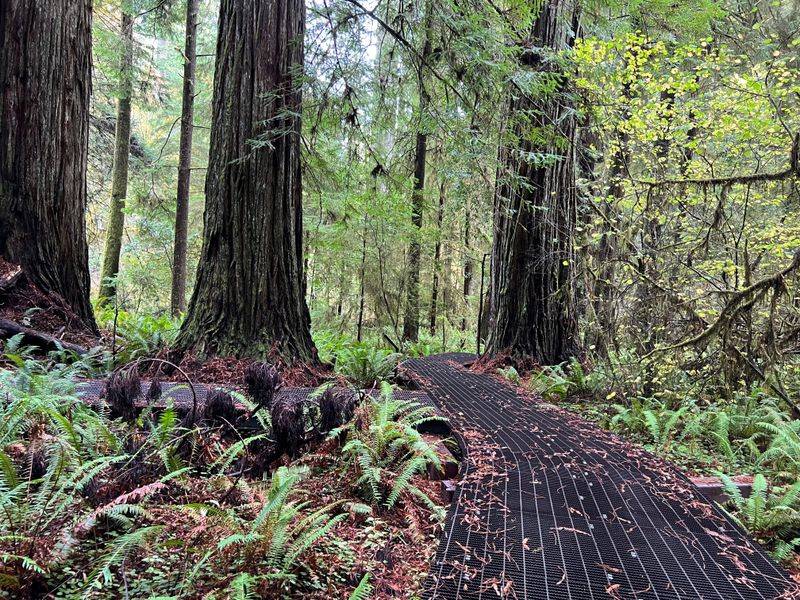
The entire loop measures approximately 1.5 miles from start to finish, making it manageable for most visitors who can walk at a moderate pace.
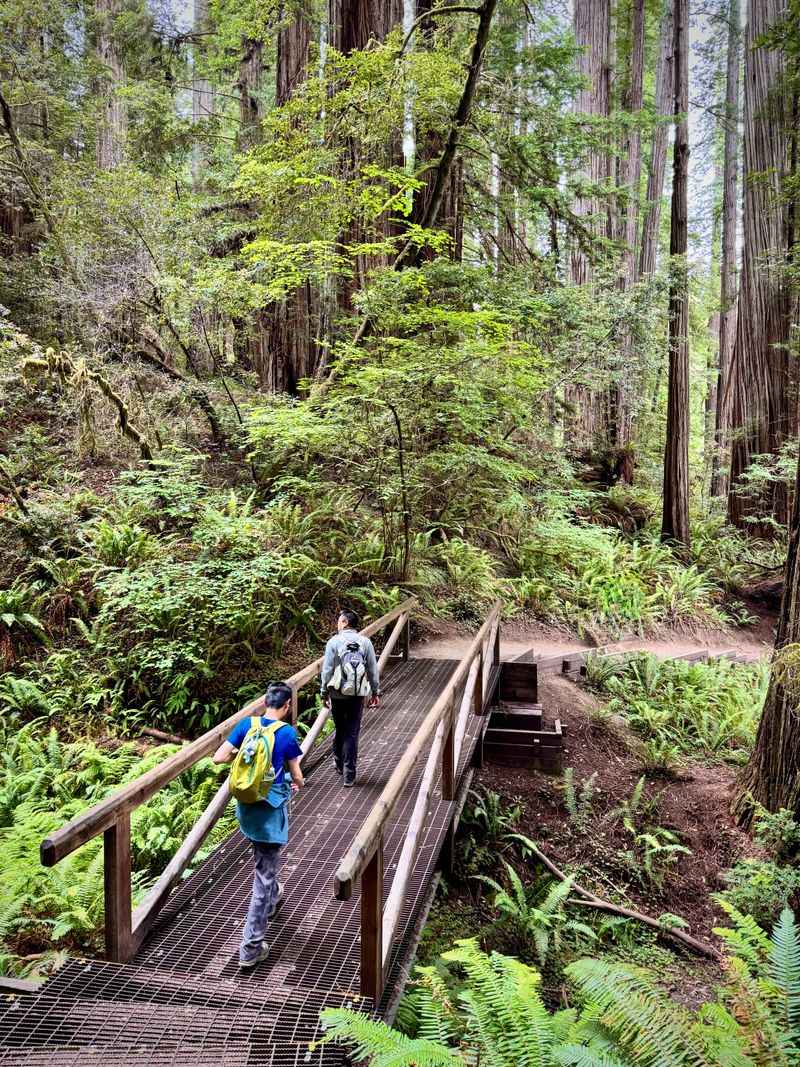
About 1,300 feet of that distance consists of elevated boardwalk constructed specifically to protect the sensitive forest floor beneath.
The wooden pathway rises several inches above ground level, keeping foot traffic away from the shallow root systems that spread out from each redwood trunk.
Walking on the boardwalk feels stable underfoot, with railings installed along sections where the elevation increases or the path curves around particularly large trees.
Metal stairs appear at several points where the terrain changes elevation, requiring visitors to step up or down rather than walking on a continuous flat surface.
These stairs lack ramps, which affects accessibility for some people. Beyond the boardwalk sections, the trail continues on natural dirt paths that wind between trees and over small rises in the landscape.
The non-boardwalk portions can become muddy after rain, so wearing appropriate footwear makes the walk more comfortable.
The entire route circles back to the starting point, eliminating the need to retrace steps and allowing hikers to see different perspectives of the grove throughout their visit.
3. Historical Significance
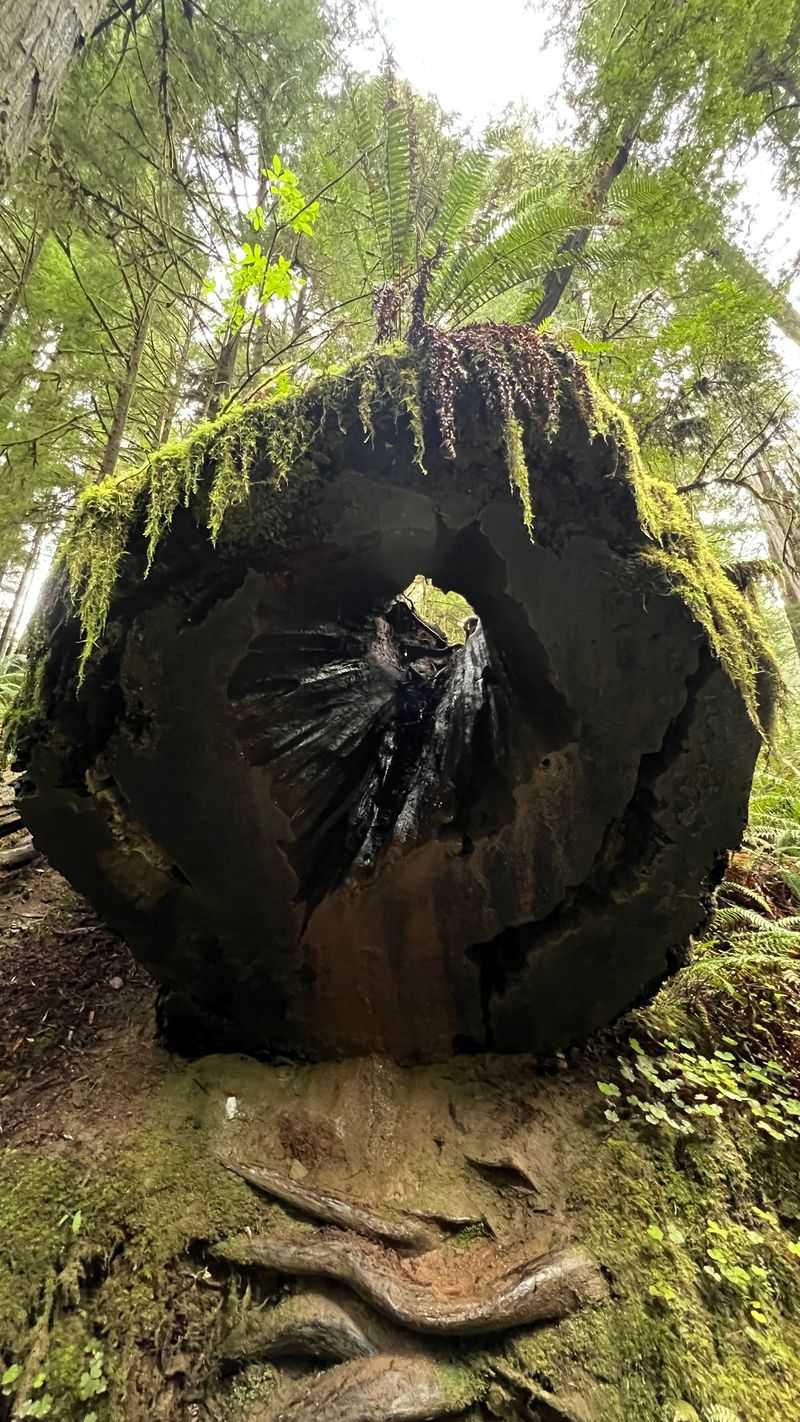
Indigenous peoples knew about these massive trees for thousands of years before European settlers arrived in the region.
The forest served as part of their traditional lands, providing resources and holding cultural significance long before anyone thought to measure the trees or give them scientific names.
That connection to the past adds layers of meaning to the landscape beyond just the biological facts.
Modern researchers stumbled upon the grove in the late 1990s while conducting surveys of old-growth redwood forests.
They quickly realized the exceptional size of several trees growing in this particular area, which had somehow escaped the logging that claimed so many other redwood groves.
The “re-discovery” sparked interest in protecting the site and studying the trees more carefully.
The name Grove of Titans came from the extraordinary dimensions of the trees found here, with several specimens ranking among the largest coast redwoods measured anywhere.
Scientists continue studying how these trees grew to such remarkable sizes and what conditions allowed them to survive when surrounding forests fell to saws.
The historical timeline of the grove extends far beyond human memory, with the oldest trees predating many civilizations.
4. Environmental Impact
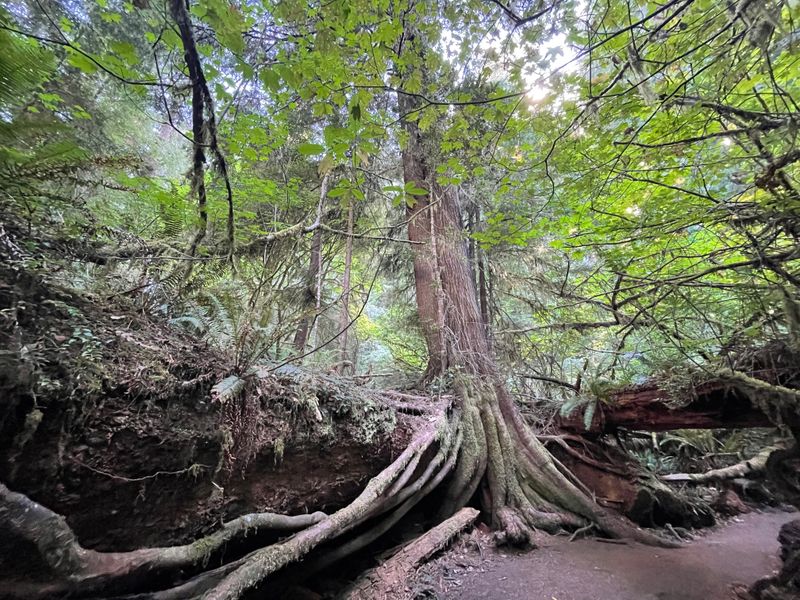
Before the boardwalk existed, visitors who wanted to see the massive trees walked directly on the forest floor, creating unofficial trails that crisscrossed the area.
Each footstep compressed soil and damaged the delicate plants growing beneath the canopy. Ferns, sorrel, and other understory vegetation disappeared from the most heavily trafficked areas, leaving bare dirt paths that expanded wider each season.
The shallow root systems of coast redwoods spread outward from the trunk rather than growing deep into the ground.
When people walked over these roots repeatedly, the compaction prevented water and nutrients from reaching the tree properly.
Some roots became completely exposed as soil eroded away, leaving them vulnerable to damage and disease.
Increased visitation created a cycle where more people meant more damage, which then threatened the very trees everyone came to see.
Researchers documented significant degradation in the grove, with some areas showing severe soil compaction and loss of native plant species.
The environmental impact assessment revealed that without intervention, continued foot traffic would eventually harm even the largest trees, potentially shortening their lifespan or making them susceptible to falling during storms when their root systems weakened from constant disturbance.
5. Conservation Efforts
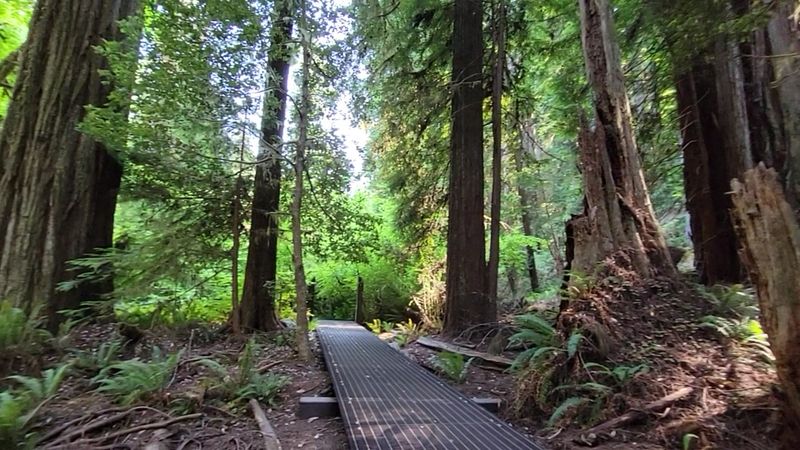
Recognizing the damage occurring at the Grove of Titans, multiple organizations came together to fund a comprehensive restoration and protection project.
Save the Redwoods League, California State Parks, the National Park Service, and Redwood Parks Conservancy pooled resources to create a solution.
The combined funding reached $3.5 million, allowing for extensive work beyond just building a simple trail.
The project included designing and constructing the elevated boardwalk system that now protects the forest floor.
Engineers had to figure out how to install support posts without damaging tree roots, requiring careful planning and specialized equipment.
Workers brought materials to the site in ways that minimized additional impact to the surrounding forest.
Beyond the boardwalk, conservation efforts included restoring areas where vegetation had been trampled away.
Native plants were reintroduced in damaged zones, and barriers were installed to prevent people from wandering off the designated path.
Ongoing monitoring tracks how well the forest recovers now that foot traffic stays on the elevated walkway.
The partnership approach demonstrated how different agencies can work together when protecting natural resources becomes a shared priority, setting an example for other sensitive locations facing similar visitor pressure.
6. Trail Accessibility
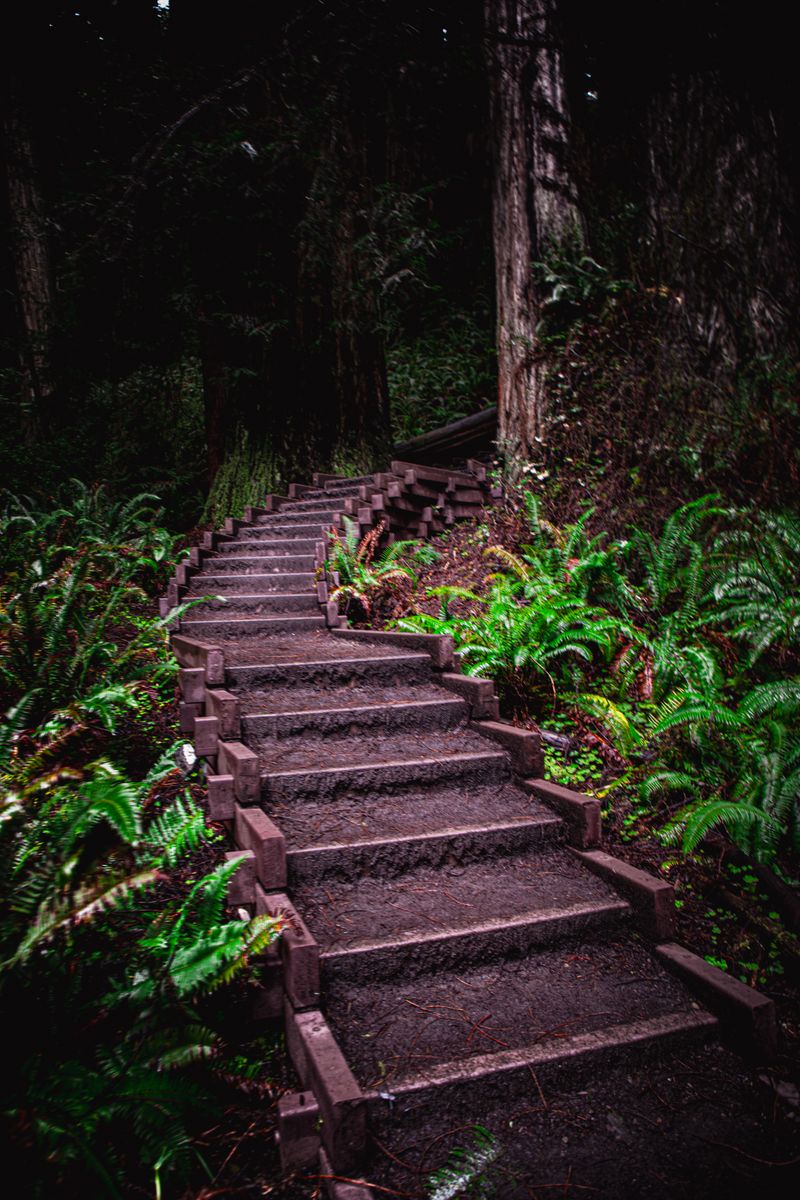
The Grove of Titans Trail does not meet ADA accessibility standards, which means people using wheelchairs or mobility devices will find the path challenging or impossible to navigate.
Metal stairs appear at multiple points along the route where elevation changes occur. These steps lack ramps or alternative routes, creating barriers for anyone who cannot climb stairs.
Beyond the stairs, the trail surface varies between the smooth boardwalk sections and natural dirt paths with roots, rocks, and uneven terrain.
Even the boardwalk portions include some narrow sections and areas where the surface tilts slightly due to the natural landscape beneath.
People with limited mobility should carefully consider whether they can manage these conditions before starting the walk.
The distance of 1.5 miles might seem short, but the combination of stairs, uneven surfaces, and lack of rest areas with seating makes the trail more demanding than the mileage suggests.
Visitors who need frequent breaks may find limited spots to step aside and rest without blocking the path for others.
Families with strollers face similar challenges, as the stairs and narrow sections make wheeling a stroller through the entire loop impractical or impossible in several places.
7. Visitor Amenities
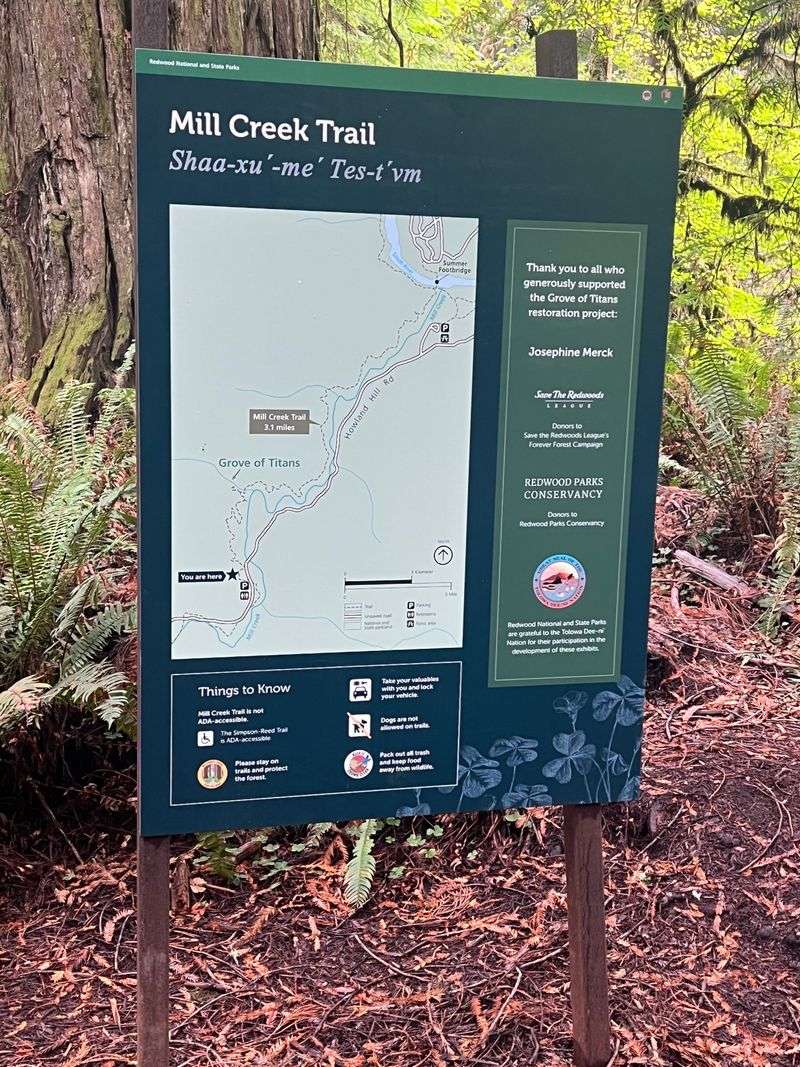
Recent improvements along Howland Hill Road added facilities that make visiting the area more comfortable for everyone.
ADA-accessible parking spaces now exist near the trailhead, providing designated spots for visitors who need closer access.
These spaces feature proper dimensions and surface materials that meet accessibility standards, even though the trail itself remains challenging. Restroom facilities also received upgrades to include ADA-accessible options.
The new restrooms offer clean facilities with running water and meet modern standards for accessibility, addressing a significant need since the remote location previously lacked adequate facilities.
Having these amenities available means visitors can spend more time exploring without worrying about basic necessities.
The parking area improvements included better signage directing people to the trailhead and explaining trail conditions before they start walking.
Information boards display maps, safety guidelines, and details about the redwood ecosystem. These additions help visitors prepare appropriately and understand what to expect.
The amenities represent a significant upgrade from previous conditions when the area offered minimal services, though visitors should still bring their own water and snacks since no food or drink vendors operate at the trailhead.
8. Notable Trees
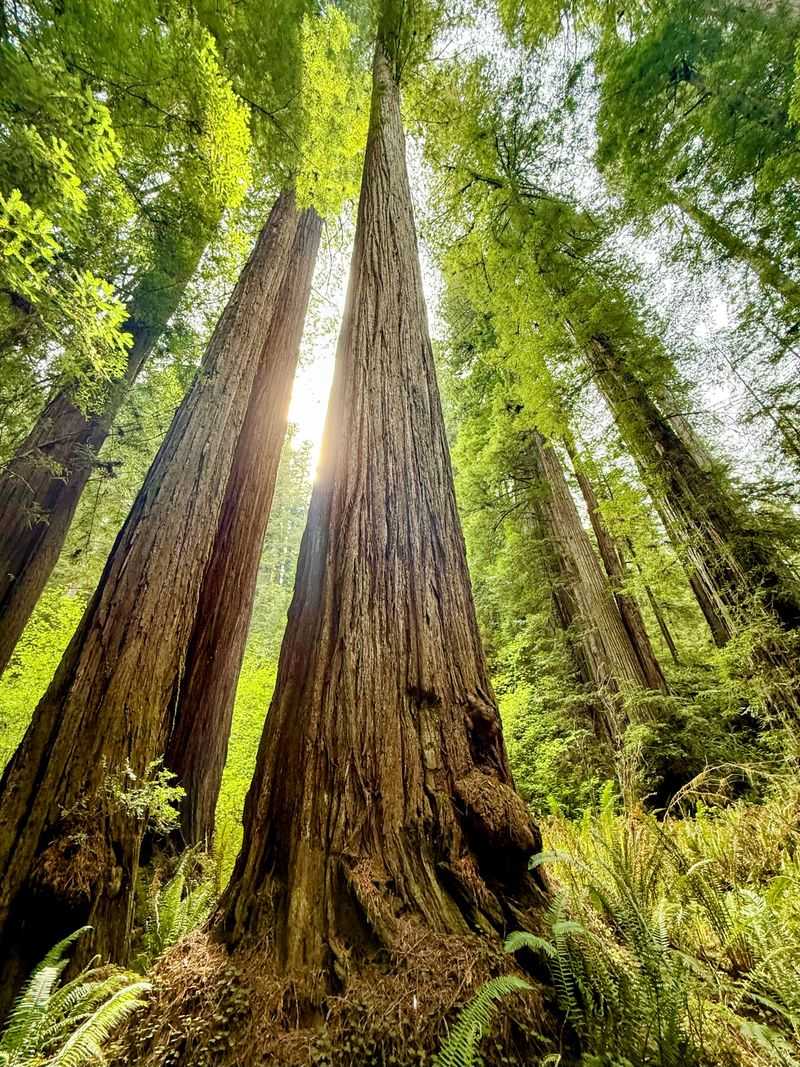
The Del Norte Titan stands as one of the largest coast redwoods measured anywhere, containing an estimated 37,200 cubic feet of wood in its massive trunk and branches.
Trying to comprehend that volume challenges the imagination until standing next to the tree reveals its true scale. The trunk diameter alone measures wide enough that several people holding hands could barely encircle it.
Several other giant redwoods grow near the Del Norte Titan, creating a grove where nearly every tree reaches exceptional dimensions.
Scientists have measured and documented these trees, giving some of them names while others remain identified primarily by their location within the grove.
Each massive specimen represents centuries of growth under ideal conditions. The size of these trees results from a combination of factors including age, genetics, soil conditions, and climate.
Coast redwoods grow taller than any other tree species, but the Grove of Titans specimens also developed unusually thick trunks, creating their extraordinary volume.
Bark thickness on the largest trees can exceed twelve inches, providing protection from fire and insect damage.
Standing among these giants creates perspective on the passage of time and the resilience of living things that can survive and thrive for over a millennium.
9. Ecological Importance
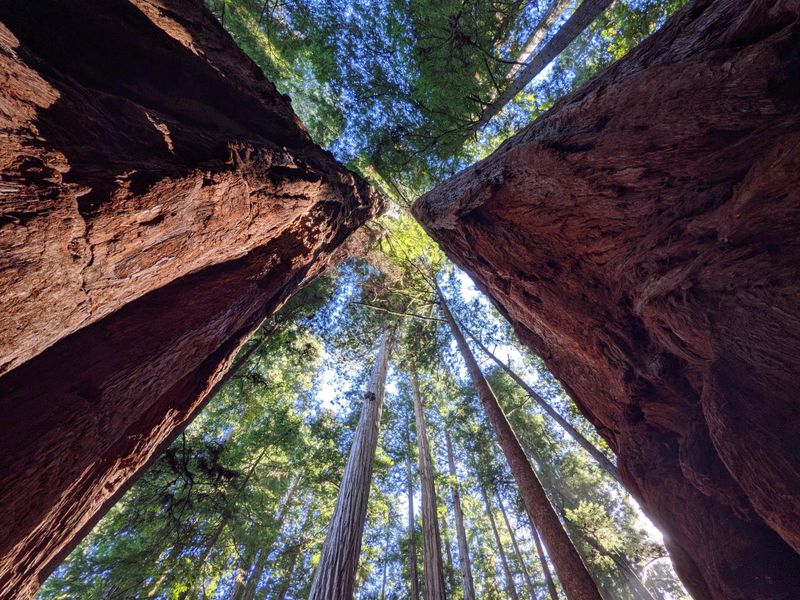
The entire region containing the Grove of Titans received designation as a UNESCO World Heritage Site, recognizing its global significance for biodiversity and conservation.
This status places the redwood forests in the same category as other irreplaceable natural wonders around the world.
The designation brings international attention and can help secure funding for ongoing protection efforts.
Coast redwoods grow naturally only in a narrow coastal strip of California and southern Oregon, making every remaining old-growth grove ecologically precious.
These forests support complex ecosystems with species found nowhere else, from the canopy hundreds of feet above ground down to the forest floor.
The trees themselves modify the local climate, capturing fog moisture and creating humid conditions that allow ferns and other moisture-loving plants to thrive.
Old-growth redwood forests like the Grove of Titans also store massive amounts of carbon in their wood, making them important for climate regulation.
A single large redwood contains more carbon than many entire acres of younger forest.
The ecological value extends beyond just the trees themselves to include all the interconnected species that depend on old-growth forest conditions, from insects to birds to mammals that make their homes in this unique environment.
10. Visitation Tips
Timing a visit to avoid crowds requires planning around peak seasons and days of the week. Summer weekends bring the most visitors, with parking lots filling completely by late morning.
Weekdays during summer offer slightly better conditions, though popular times still see significant traffic. Spring and fall provide excellent alternatives with fewer people and often pleasant weather for hiking.
The parking situation presents the biggest challenge for visitors, with limited spaces and no overflow lots nearby.
Recreational vehicles, trailers, and large trucks cannot navigate Howland Hill Road safely, which restricts the types of vehicles that can reach the trailhead.
Anyone driving a standard car or SUV should manage the road conditions fine, but should drive slowly and watch for oncoming traffic.
Bringing appropriate supplies makes the visit more enjoyable since no services exist at the trailhead. Water, snacks, and weather-appropriate clothing belong on every packing list.
The forest canopy creates cool, shaded conditions even on warm days, and coastal fog can roll in quickly, dropping temperatures and creating damp conditions.
Sturdy shoes with good traction help on the stairs and uneven trail sections.
Cell phone service may be unreliable in the area, so downloading maps or directions beforehand prevents navigation issues.