14 Magical Castles In California You Never Realized Existed
Stone towers rise from vineyards, medieval fortresses hide in mountain valleys, and fairy-tale estates overlook sparkling lakes throughout the Golden State.
Most people think of beaches and redwoods when they picture this western landscape, but scattered across California are authentic castles that rival anything found in Europe.
Some were built by eccentric millionaires who wanted their own piece of history, while others emerged from the hands of artists who spent decades crafting their visions from recycled materials and sheer determination.
These structures range from grand hilltop mansions with over a hundred rooms to intimate stone retreats tucked into desert landscapes.
Many feature drawbridges, turrets, moats, and even torture chambers that transport visitors back centuries.
The best part is that most of these castles welcome guests year-round, offering tours, tastings, and unforgettable experiences.
Whether perched above the Pacific Ocean or nestled in wine country, each castle tells a unique story of ambition, creativity, and architectural wonder that continues to surprise anyone who discovers them.
1. Hearst Castle, San Simeon
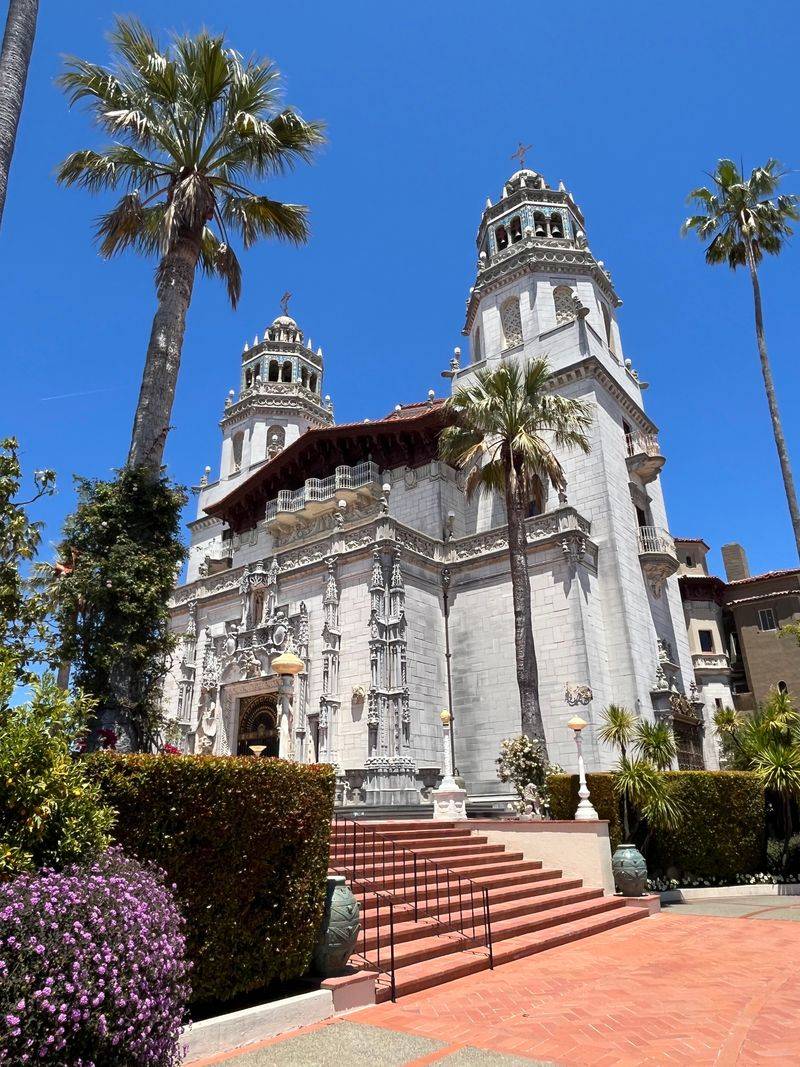
Publisher William Randolph Hearst created one of the most extravagant estates ever built in America when he constructed this hilltop marvel between 1919 and 1947.
The location at 750 Hearst Castle Road in San Simeon sits 1,600 feet above sea level with sweeping views of the Pacific coastline.
Architect Julia Morgan worked alongside Hearst for nearly three decades to bring his vision to life, blending Spanish Colonial Revival and Mediterranean styles across 165 rooms.
The Neptune Pool alone required years to complete and holds 345,000 gallons of water surrounded by marble colonnades and ancient Roman temple facades.
Indoor spaces showcase European antiques, Renaissance paintings, and tapestries collected during Hearst’s extensive travels.
The estate sprawls across 127 acres of gardens, terraces, and walkways that connect the main house to three guesthouses.
Tours run throughout the year and require reservations due to high visitor demand. The Grand Rooms Tour covers the main living areas and takes about an hour to complete.
Comfortable shoes matter since the tour involves climbing stairs and walking across uneven outdoor surfaces. Morning visits tend to be less crowded than afternoon slots, especially during summer months.
2. Scotty’s Castle, Death Valley
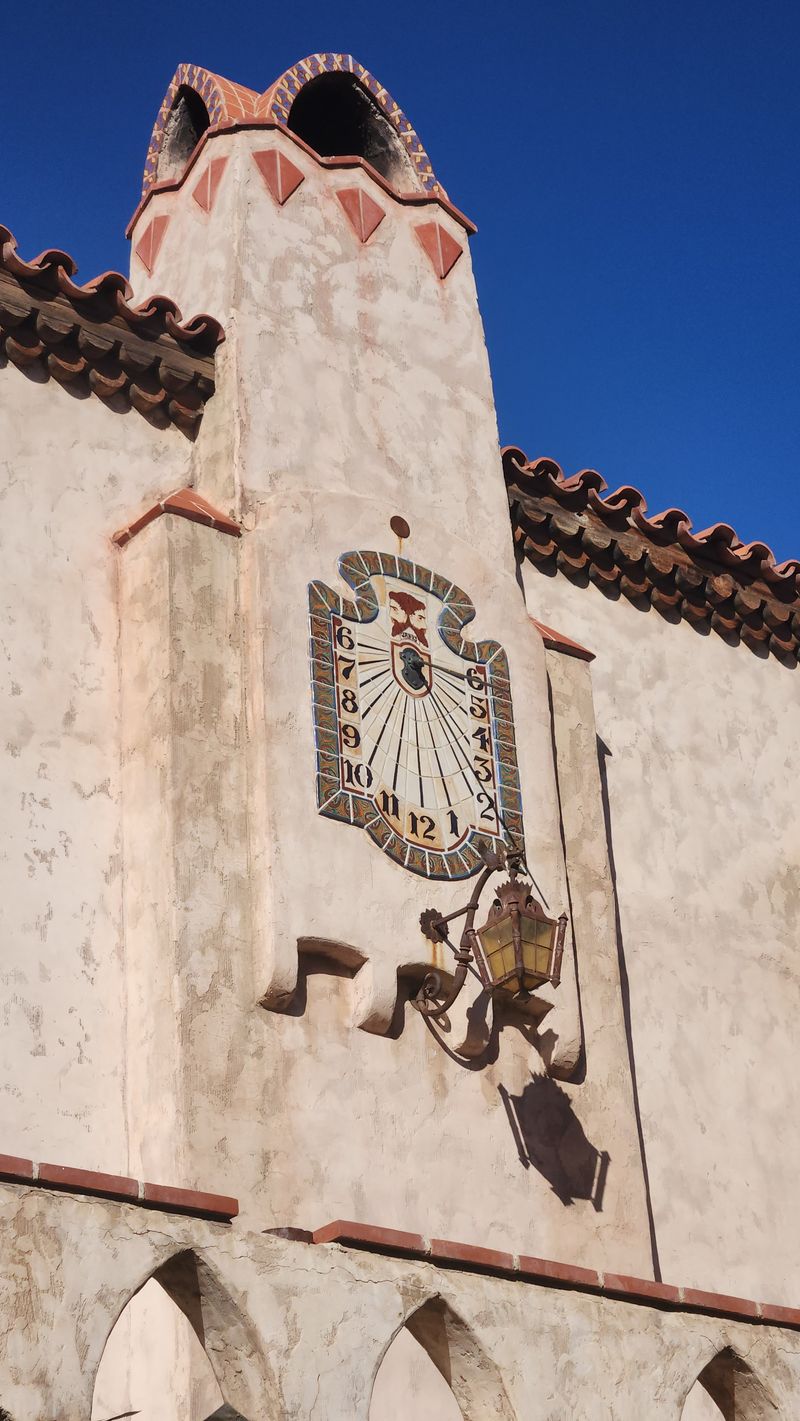
Construction began in 1922 on this desert oasis when Chicago millionaire Albert Johnson decided to build a vacation retreat in Grapevine Canyon.
The castle sits at 123 Scotty’s Castle Road in Death Valley, featuring Spanish Colonial Revival architecture that seems impossibly out of place among the barren landscape.
Johnson’s friendship with prospector Walter Scott, known as Death Valley Scotty, gave the property its enduring nickname despite Scott never actually owning it.
The main house includes hand-painted tiles, carved wooden beams, and a music room with a massive pipe organ that still plays during special demonstrations.
Underground tunnels connect various buildings and provided natural cooling in the scorching desert heat.
Water from nearby springs allowed gardens and fountains to flourish in an environment where rainfall averages less than two inches annually.
Flash flooding severely damaged the castle in 2015, and restoration work continues as of this writing. The National Park Service has not announced a firm reopening date for interior tours.
Visitors can still view the exterior from designated areas and explore the surrounding Death Valley landscape. Check the official park website before planning a visit to confirm current access status.
3. Castello Di Amorosa, Calistoga
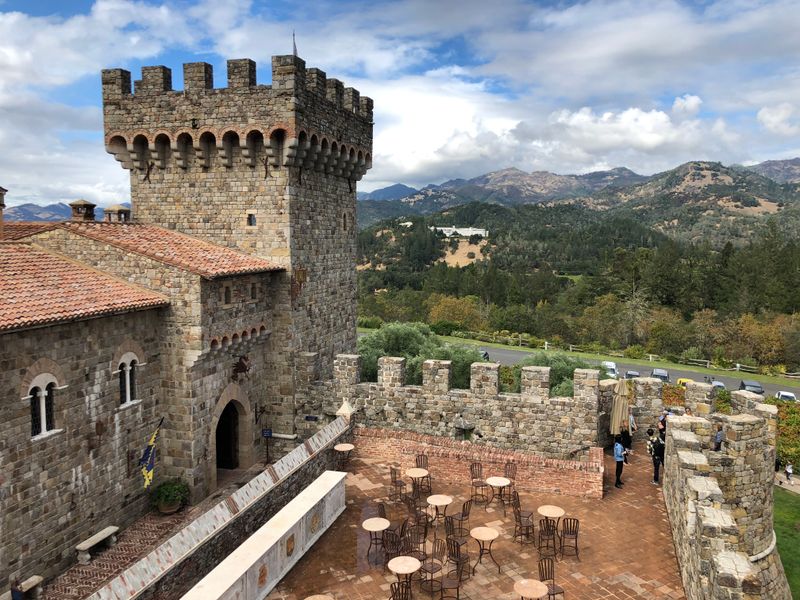
Fourth-generation winemaker Dario Sattui spent 14 years and $40 million building an authentic 13th-century Tuscan castle in the heart of Napa Valley.
The structure at 4045 St. Helena Highway in Calistoga opened in 2007 with 107 rooms spread across eight levels of hand-laid stone and brick.
Craftsmen imported materials from Europe and used traditional medieval construction techniques to achieve historical accuracy down to the iron hinges and wooden beams.
A functioning drawbridge spans a dry moat at the entrance, leading visitors into a courtyard surrounded by defensive walls and towers.
The Great Hall features frescoed ceilings, while the dungeon level includes a torture chamber with period equipment that adds an eerie authenticity.
Wine production happens in temperature-controlled cellars beneath the castle, where Italian and Napa Valley varietals age in oak barrels.
Guided tours include wine tastings and take visitors through multiple levels of the castle. Reservations are required and should be made several weeks in advance during peak season.
The property prohibits children under five from touring due to steep stairs and delicate displays.
Weekend afternoons fill up quickly, so weekday mornings offer a quieter experience with more personalized attention from guides.
4. Chateau Montelena, Calistoga
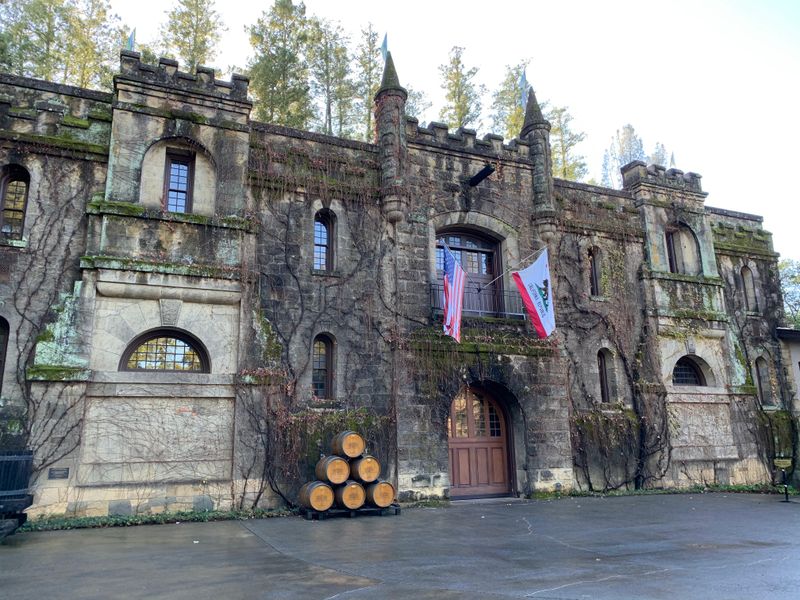
Alfred Tubbs founded this winery in 1882 and built the castle structure that still serves as the production facility and tasting room.
The location at 1429 Tubbs Lane in Calistoga combines French-inspired architecture with Chinese-style gardens that surround Jade Lake.
Stone walls rise three stories with turrets at each corner, creating a silhouette that would fit comfortably in the Loire Valley.
The winery gained international fame in 1976 when its Chardonnay won the Judgment of Paris blind tasting, defeating top French white Burgundies and shocking the wine world.
That historic moment helped establish Napa Valley as a serious competitor to European wine regions. The castle’s thick stone walls maintain consistent temperatures ideal for aging wine in the cellar below.
Tasting experiences require advance reservations and include seated sessions in various locations around the property. The Estate Tasting takes place in the castle’s original wine library and lasts about an hour.
Gardens surrounding Jade Lake feature walking paths, bridges, and pavilions that guests can explore before or after tastings.
Spring brings blooming flowers and mild temperatures, while fall offers harvest activity and changing vineyard colors. Comfortable walking shoes help navigate the property’s gravel paths and uneven terrain.
5. Ledson Castle, Kenwood (Sonoma Valley)
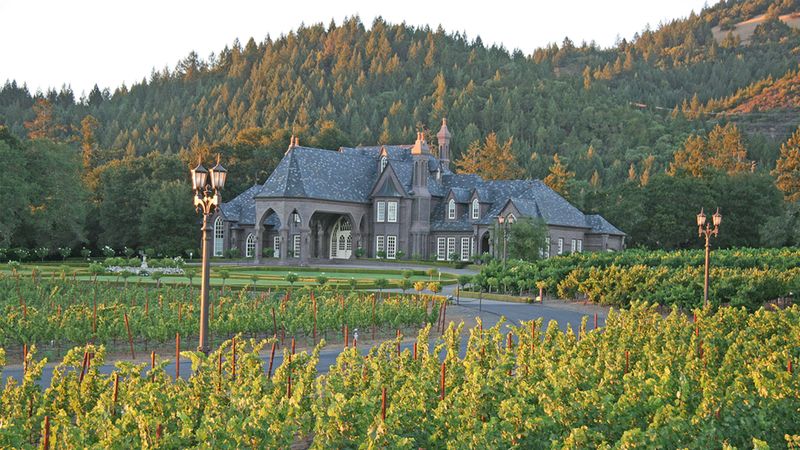
Steve Ledson originally planned to build a family home in 1989 but ended up creating a 16,000-square-foot castle that now houses a winery and marketplace.
The address is 7335 CA-12 in Kenwood, positioned prominently along the main road through Sonoma Valley.
Gothic and Romanesque elements blend with French Normandy influences across the stone and brick facade, complete with turrets, arched windows, and decorative ironwork.
Construction took five years and utilized materials from around the world, including hand-carved doors from South America and stained glass from Europe.
The castle opened as a winery in 1999 after passing motorists kept stopping to ask about tours. Multiple tasting rooms inside offer different experiences, from casual walk-in samples to seated reserve flights.
The marketplace on the ground level sells wine, gourmet foods, and gifts without requiring a tasting reservation.
Upstairs tasting rooms feature fireplaces, leather furniture, and vineyard views through tall windows. Walk-in tastings are available most days, though reserved experiences guarantee seating during busy periods.
The property includes a deli that serves sandwiches and cheese plates perfect for enjoying on the outdoor terrace. Weekday visits typically mean shorter waits and more relaxed conversations with staff.
6. Preston Castle, Ione
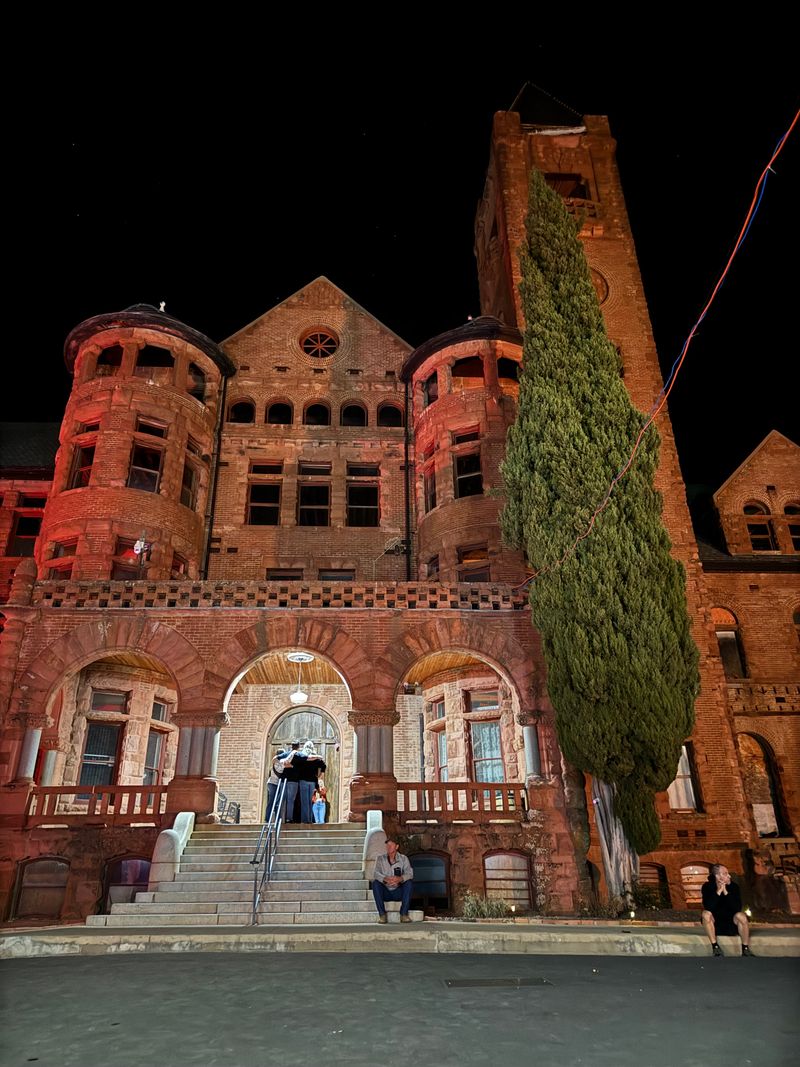
The State of California opened the Preston School of Industry in 1894 as a reform school for juvenile offenders, and the imposing Romanesque Revival building served that purpose until 1960.
Located at 900 Palm Drive in Ione, the red brick structure rises four stories with towers, arched windows, and ornate stonework that was meant to inspire rather than intimidate young residents.
Architect Clinton Day designed the building to resemble an educational institution more than a prison.
Over 13,000 boys passed through Preston during its 66 years of operation, learning trades and receiving education in a setting that reflected Progressive Era reform ideals.
The castle closed after newer facilities were built, and the building sat largely abandoned for decades.
Deterioration, vandalism, and reported paranormal activity gave Preston a reputation that attracted urban explorers and ghost hunters.
The Preston Castle Foundation now manages the property and offers public tours on weekends from March through November.
Tours last about 90 minutes and cover the main building’s history, architecture, and restoration efforts. The structure remains in partial disrepair, so visitors must sign waivers and wear closed-toe shoes.
Photography is encouraged, and many visitors come specifically to capture the atmospheric decay and historical details. Advance tickets are recommended since tour group sizes stay small.
7. Rubel Castle, Glendora
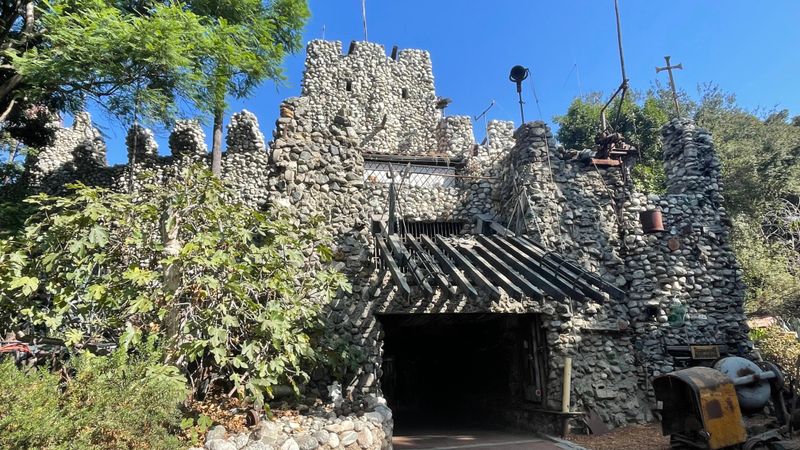
Michael Rubel spent over 50 years building this remarkable castle from recycled materials, broken concrete, river rock, and salvaged objects he collected throughout Southern California.
The property sits at 844 N. Live Oak Avenue in Glendora at the base of the San Gabriel Mountains.
What began as a small structure in the 1950s grew into a sprawling complex with towers, bridges, and hidden rooms that reflect Rubel’s artistic vision and engineering skill.
Working primarily alone, Rubel incorporated everything from beer bottles to telephone poles into the castle’s construction. A functioning drawbridge guards the entrance, while a clock tower rises above the main structure.
Interior spaces include a bottle room where walls consist entirely of glass bottles set in concrete, creating colorful patterns when light filters through.
The castle operates as a museum run by volunteers who knew Rubel before his death in 2007. Tours happen on select Saturdays and require advance booking through their website.
Guides share stories about Rubel’s life, construction techniques, and the meaning behind various design elements.
The property remains a work in progress as volunteers continue restoration and preservation efforts. Donations support ongoing maintenance and help keep this unique folk art environment accessible.
Wear sturdy shoes since the grounds include uneven surfaces and narrow passages between structures.
8. Castle Green, Pasadena
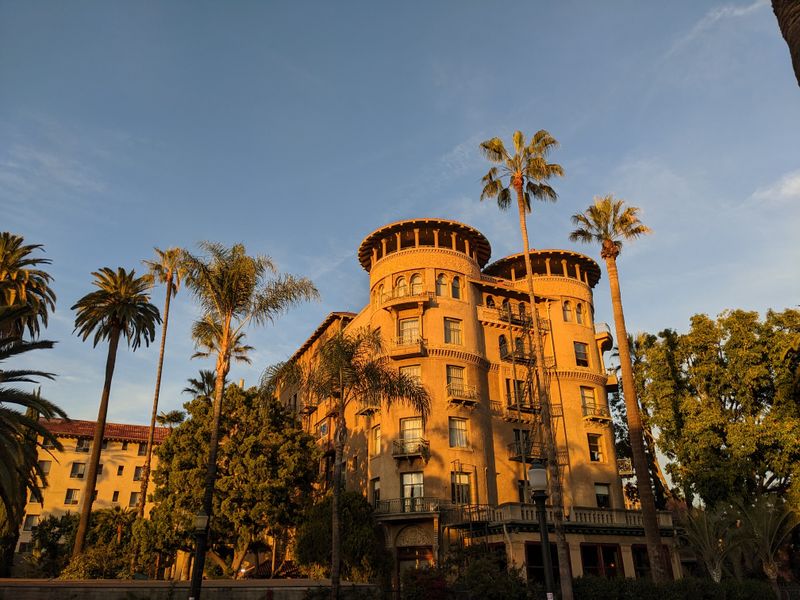
Frederick Roehrig designed this luxury apartment building in 1898 as part of a larger resort complex called the Green Hotel.
The building stands at 99 S. Raymond Avenue in Pasadena, featuring Moorish Revival architecture with intricate terra cotta ornamentation and a distinctive green tile roof.
Twin minarets originally flanked a central tower that was removed after the 1906 San Francisco earthquake raised concerns about structural safety.
The hotel catered to wealthy East Coast visitors who spent winters in California’s mild climate. Lavish interiors included ballrooms, dining rooms, and elegant guest suites that hosted presidents, industrialists, and celebrities.
The complex fell into decline during the Great Depression, and the main hotel building was eventually demolished, leaving only the Castle Green standing.
The structure now contains private condominiums and is not open for regular public tours. The Pasadena Museum History occasionally organizes special access events where visitors can see the restored ballroom and other historic spaces.
The exterior remains visible from the street, and the building’s placement near Old Pasadena makes it easy to admire while exploring the downtown area.
The best views come from the southwest corner where the full facade and remaining tower are visible. Check with the Pasadena Museum History for upcoming tour dates if interior access is desired.
9. Kimberly Crest House & Gardens, Redlands
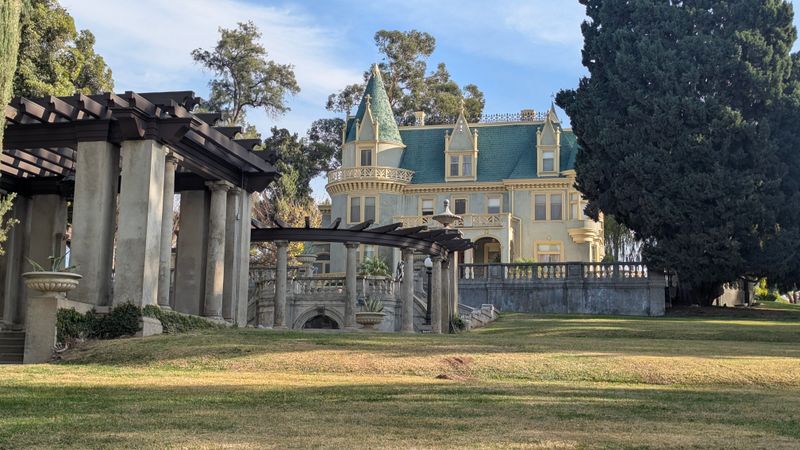
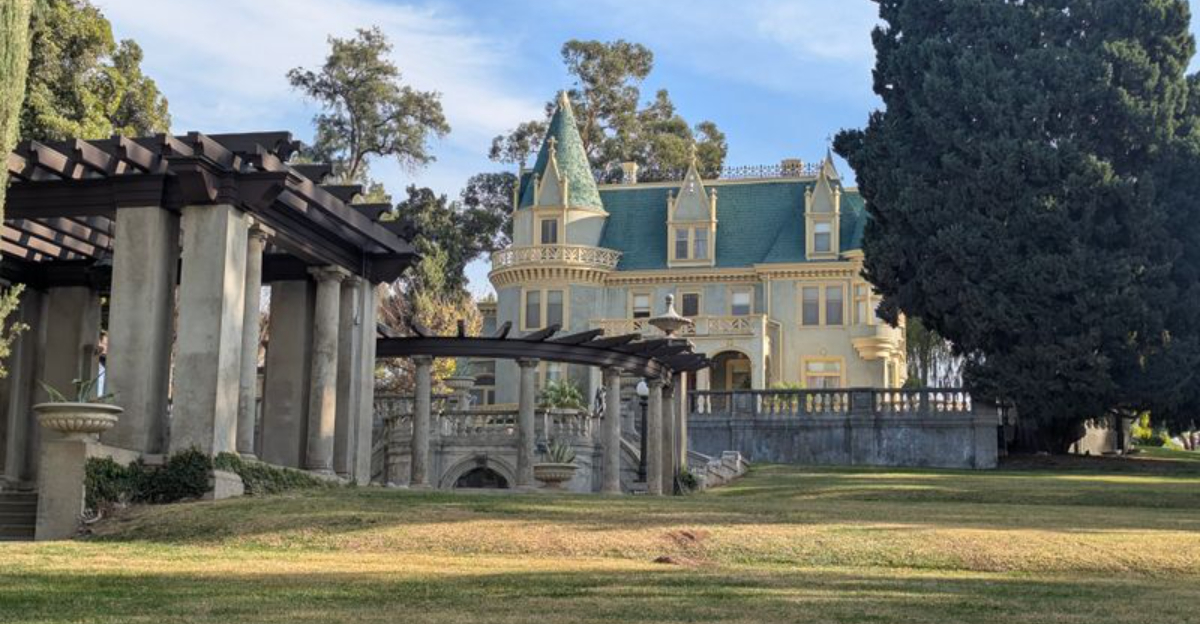
Cornelia Hill built this French chateau-style mansion in 1897 as a winter residence, and the Kimberly family later purchased it in 1905.
The estate sits at 1325 Prospect Drive in Redlands with commanding views of the San Bernardino Valley and surrounding mountains.
Victorian architecture combines with French chateau elements across three stories that include turrets, steep gabled roofs, and elaborate woodwork both inside and out.
J. Alfred Kimberly made his fortune as a co-founder of Kimberly-Clark Corporation, and his family maintained the home until 1979 when it became a house museum.
Original furnishings, family photographs, and personal belongings remain in place throughout the rooms.
The property includes seven acres of Italian gardens with fountains, lily ponds, and mature trees that provide shade along walking paths.
Guided tours run Thursday through Sunday and last about an hour covering the home’s three floors and history. The tour includes the parlor, dining room, library, and several bedrooms decorated in period style.
Gardens are accessible during tour hours and offer peaceful spots to rest on benches surrounded by seasonal plantings.
Spring brings peak blooming in the gardens, while cooler months make the indoor tour more comfortable.
The museum hosts special events including afternoon teas and holiday celebrations that require separate tickets and advance registration.
10. The Castle House Estate, Joshua Tree
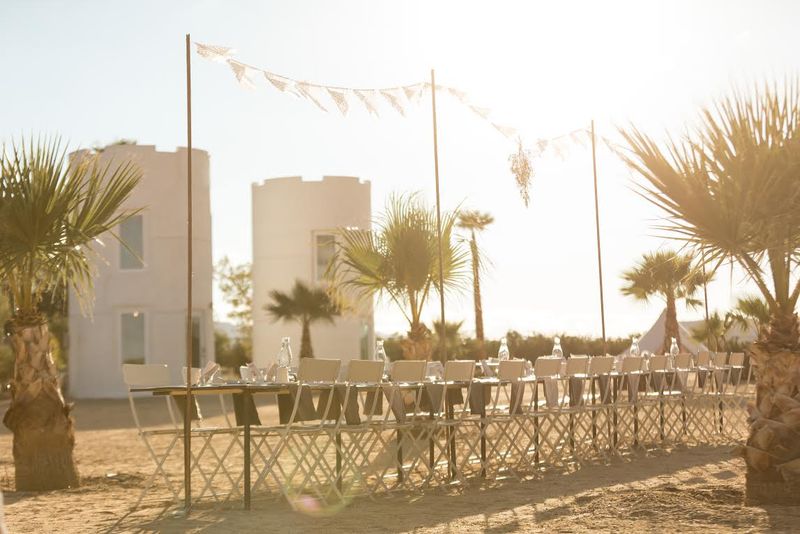
Artist and sculptor Nance Breitenbach spent years building this stone castle retreat in the high desert near Joshua Tree National Park at 64278 E Broadway in Joshua Tree..
The property combines castle aesthetics with desert modernism, using local stone and boulders as integral parts of the design.
Towers rise from the rocky landscape while large windows frame views of the surrounding desert and distant mountains.
The castle operates as a vacation rental rather than a museum or tour destination. Guests can book the entire property for overnight stays, experiencing the unique architecture and desert setting firsthand.
Interior spaces blend medieval elements like arched doorways and stone walls with contemporary amenities including modern kitchens and bathrooms.
Multiple outdoor areas take advantage of the desert climate, including patios, fire pits, and secluded spots among the boulders.
The location provides easy access to Joshua Tree National Park while offering complete privacy away from town. Night skies in this area reveal thousands of stars due to minimal light pollution.
The castle accommodates groups looking for an unusual desert retreat with character far beyond typical vacation rentals.
Booking happens through vacation rental platforms, and rates vary by season with winter and spring being most popular due to comfortable temperatures. Summer heat can be intense, though the stone construction helps moderate indoor temperatures.
11. Vikingsholm, Lake Tahoe (Emerald Bay)
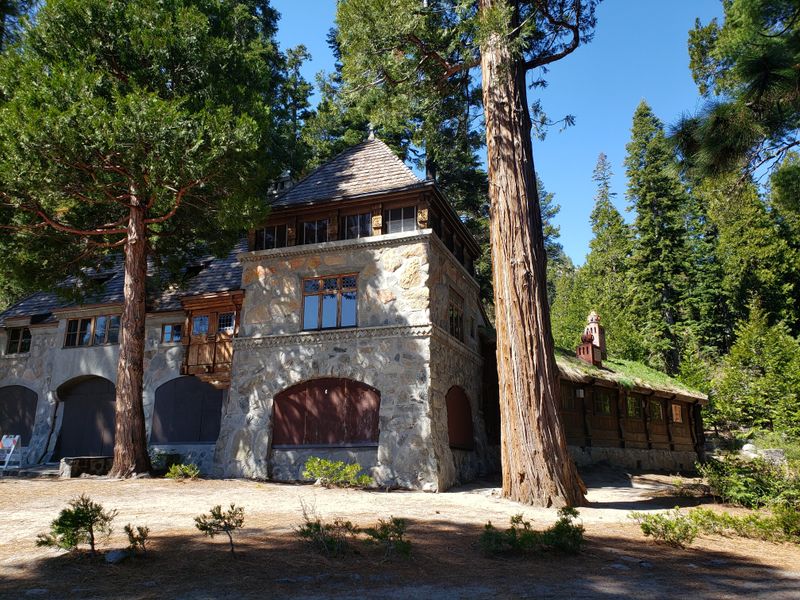
Lora Josephine Knight commissioned architect Lennart Palme to design this 38-room Scandinavian castle in 1928 after falling in love with Emerald Bay’s beauty.
The structure sits at CA-89 in Tahoma, on Lake Tahoe’s western shore, accessible only by a steep one-mile trail from the parking area above.
Palme studied medieval Nordic architecture extensively and incorporated authentic details including hand-hewn timbers, carved dragon heads, and a sod roof planted with wildflowers.
The castle served as Knight’s summer home until 1945 and showcases Scandinavian craftsmanship throughout its interior.
Carved wooden details, traditional Nordic furniture, and hand-forged hardware create an atmosphere that transports visitors to medieval Norway.
The location offers stunning views across Emerald Bay’s impossibly blue water toward Fannette Island with its stone teahouse ruins.
California State Parks manages Vikingsholm and offers guided tours from late May through September.
The trail down to the castle descends 500 feet and takes about 30 minutes at a moderate pace. The return climb requires more time and effort, so visitors should plan accordingly and bring water.
Tours last about 30 minutes and cover the main floor rooms and exterior grounds. The beach in front of the castle provides a perfect spot to rest before the uphill return. Early morning visits beat both the heat and the crowds that arrive by midday.
12. Pirate’s Tower, Laguna Beach
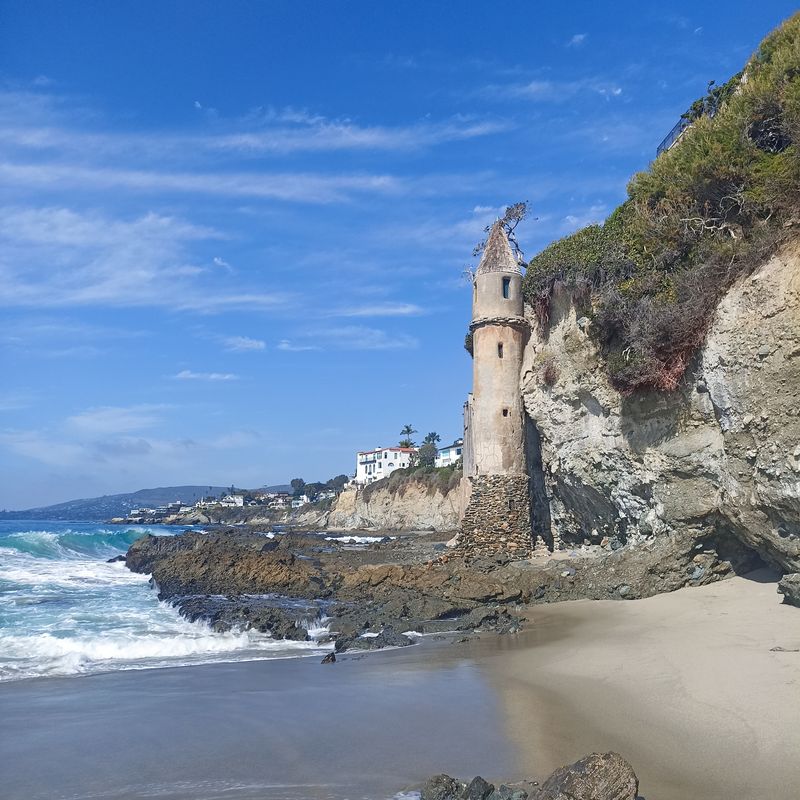
Perched along a secluded stretch of Laguna Beach, this storybook tower feels like something lifted from a fantasy coastline rather than Southern California.
Built in 1926 by Senator William E. Brown, the 60-foot structure served as a private passageway connecting his clifftop estate to the sand below.
Pirate’s Tower rises from Victoria Beach with weathered stone walls, arched openings, and a turreted crown that gives it a distinctly medieval silhouette against the coastal cliffs.
Inside, a narrow spiral staircase once allowed discreet access between the mansion and shoreline without using public paths.
Over time, local legends helped fuel the tower’s mysterious nickname, with tales suggesting pirates used similar lookout structures along the coast. Whether true or not, the folklore adds to the site’s cinematic pull.
Today, visitors can walk up to the base during low tide, peer through the archway entrance, and take in sweeping Pacific views from the surrounding sand.
Framed by rocky coves and tucked beneath steep bluffs, the tower feels hidden in plain sight – a surreal coastal relic that turns an ordinary beach walk into something far more memorable.
13. Albion Castle, San Francisco
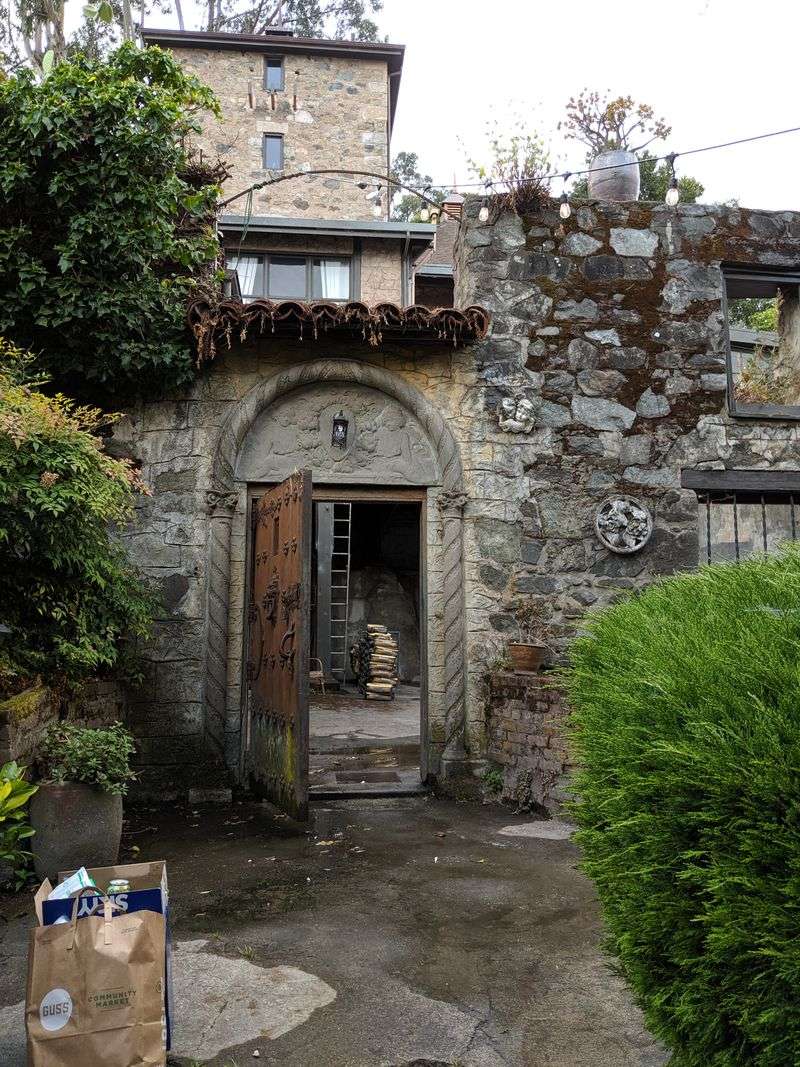
Rising above the surrounding homes in San Francisco’s Bayview–Hunters Point, this hilltop mansion looks more like a fortified stronghold than a private residence.
Built in 1870 by John Molloy, the three-story structure was designed in the Gothic Revival style, giving it an unmistakably castle-like presence that still turns heads more than a century later.
Albion Castle stands at 881 Innes Avenue, defined by corner turrets, crenelated parapets, and tall arched windows that echo medieval fortress design.
A central tower lifts above the roofline, while decorative cornices and detailed stonework add layers of Victorian craftsmanship that separate it from the neighborhood’s more modest homes.
Originally built as a family residence, the mansion has quietly witnessed San Francisco’s evolution for over 150 years, its dramatic silhouette remaining largely unchanged as the city expanded around it.
Though privately owned and closed to the public, the exterior alone draws architecture lovers and photographers hoping to capture one of the city’s most unexpected castle façades tucked into an everyday residential street.
14. Sam’s Castle, Pacifica
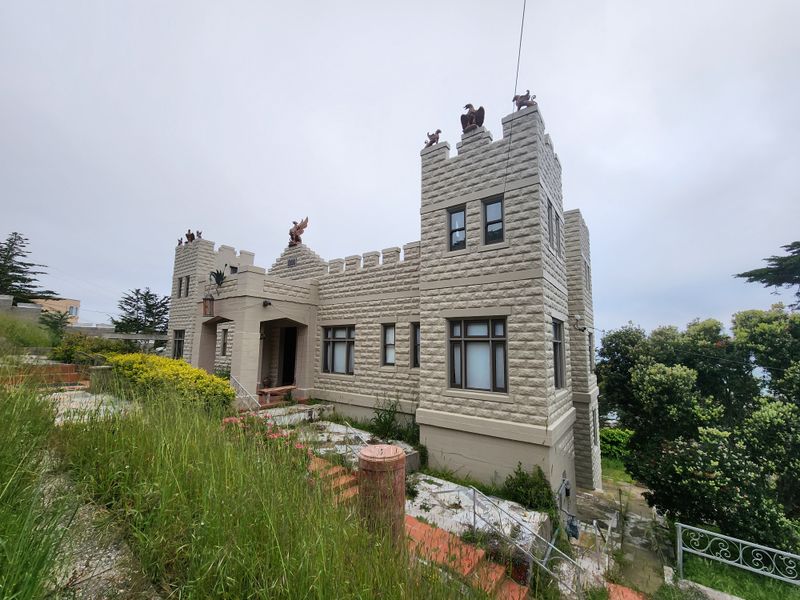
Perched dramatically above the Pacific on windswept coastal cliffs, this white fortress looks like it belongs in a European fairytale rather than along Highway 1.
Built in 1908 by Henry Harrison McCloskey, the castle commands attention the second it comes into view, its bright façade glowing against the deep blues of the ocean below. It sits at 900 Mirador Terraced in Pacifica, a location chosen as much for the scenery as the seclusion.
The property later gained its famous nickname from Sam Mazza, the eccentric mid-century owner known locally for lavish parties and a larger-than-life personality that only added to the castle’s mystique.
Architecturally, the residence leans fully into its storybook image. Corner turrets frame the structure, crenellated rooflines mimic medieval battlements, and arched doorways soften the fortress-like exterior.
From a distance, the silhouette rises sharply from the cliffs, especially striking when coastal fog rolls in around the towers.
The vantage point delivers sweeping ocean panoramas, where crashing waves pound the rocks below and migrating whales occasionally pass offshore during colder months.
Despite decades of exposure to Pacific storms and seismic activity, the structure has held firm, underscoring the durability of its early-20th-century construction.
Still privately owned today, the castle does not offer tours, but it remains one of Pacifica’s most photographed coastal landmarks.
Travelers spot it from scenic pullouts along Highway 1 or from the beach far below, where the clifftop towers feel both mysterious and impossibly cinematic against the California coastline.