Discover The World’s Only Public Museum Dedicated To Ford Mustangs In North Carolina
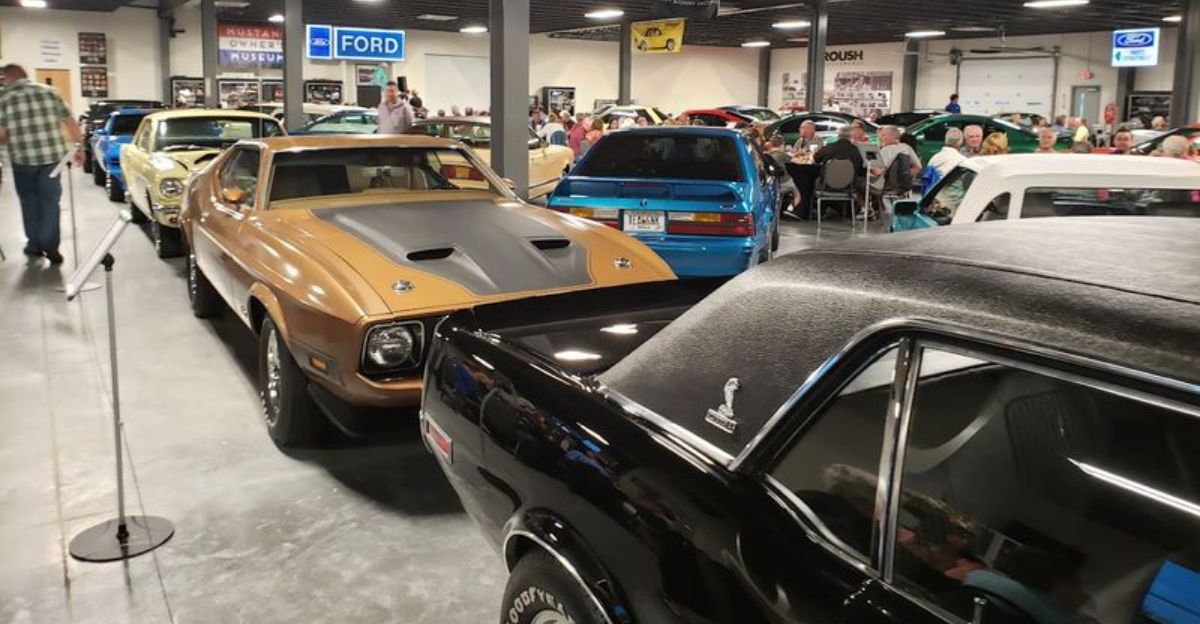
Pony car fans have found their ultimate destination in North Carolina. The Mustang Owner’s Museum stands alone as the only public museum on the planet devoted entirely to Ford’s legendary sports car, and every corner of this space celebrates over six decades of automotive history.
From pristine classics that rolled off assembly lines in the 1960s to modern performance machines that push triple-digit speeds, the collection rotates twice yearly to keep displays fresh and exciting.
Admission costs just ten dollars for adults, making it one of the most affordable automotive attractions in the region, and the friendly staff shares stories that bring each vehicle to life with passion and knowledge that feels genuine rather than rehearsed.
1. The World’s Only Public Mustang-Exclusive Museum
No other museum anywhere dedicates itself exclusively to public displays of Ford Mustangs. Established in 2019, this facility fills a unique niche in automotive preservation by focusing entirely on one of America’s most beloved car models.
The building may appear modest from the street, but step inside and the scope of Mustang history unfolds across multiple rooms. Over 25 vehicles rotate through the collection, ensuring visitors can return months later and discover entirely different displays.
The location near Charlotte Motor Speedway adds racing context that enhances the experience. Staff members greet guests with genuine enthusiasm rather than scripted tours, offering insights about each vehicle’s significance.
The museum operates Monday through Saturday from 10 AM to 5 PM, and Sundays from noon to 5 PM, giving plenty of flexibility for planning visits. Air conditioning keeps the space comfortable year-round, which matters when spending an hour or two examining details on each car.
The admission price remains remarkably reasonable compared to larger automotive museums, making this an accessible destination for families and enthusiasts alike.
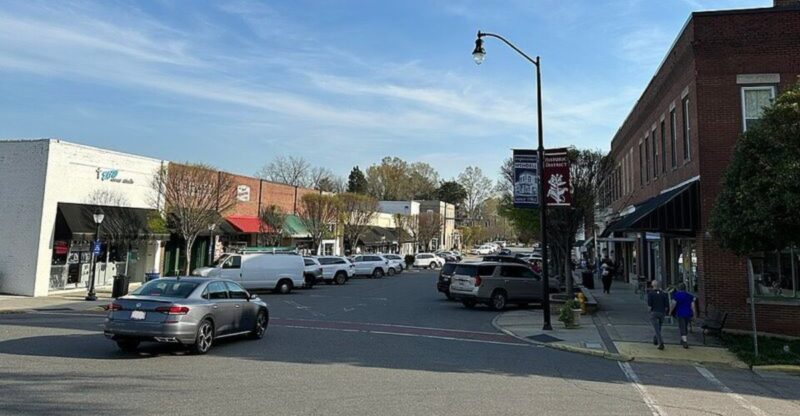
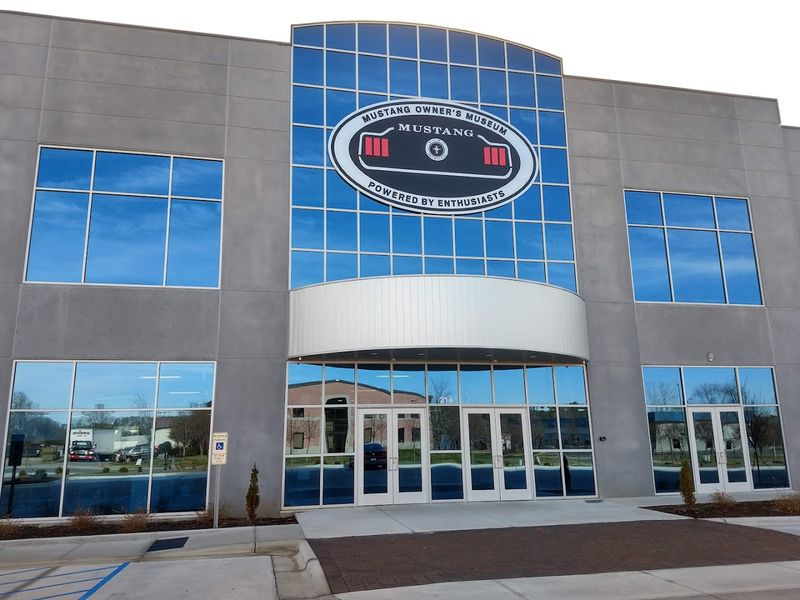
The museum sits at 4001 Dearborn Pl NW, Concord, tucked near Charlotte Motor Speedway in a building that might look unassuming from the outside but houses treasures that make any car lover’s heart race.
2. Rotating Collection Showcasing All Seven Generations
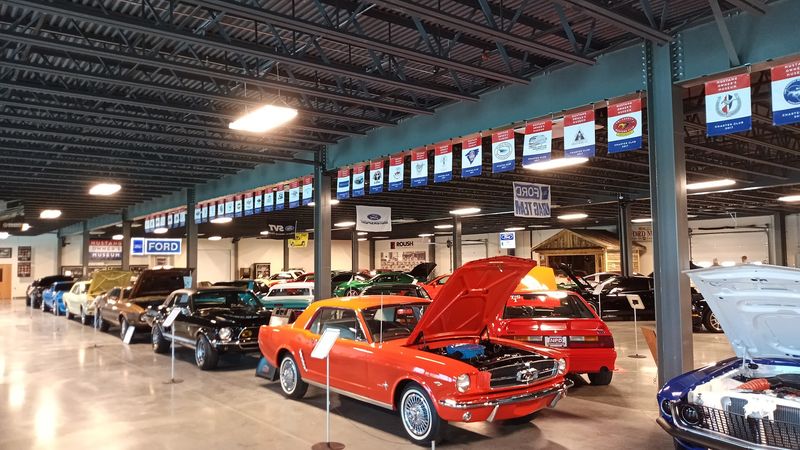
The museum refreshes its vehicle lineup twice annually, swapping cars around Easter and Thanksgiving. This rotation strategy means repeat visitors discover new exhibits rather than seeing identical displays, which keeps the experience dynamic and worth multiple trips.
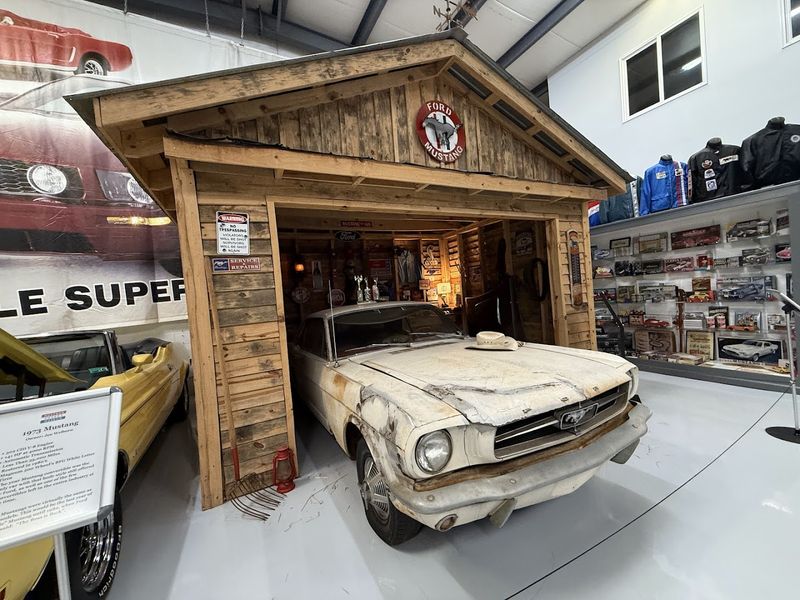
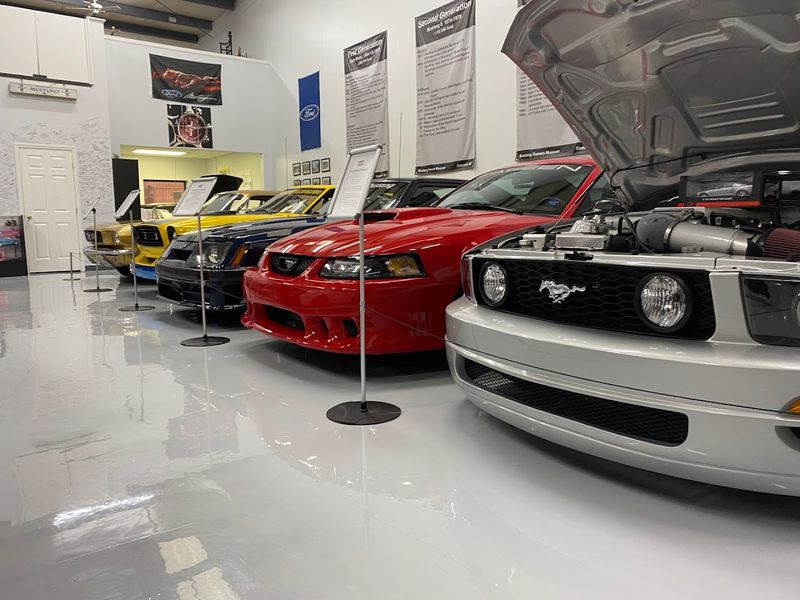
All seven generations of Mustang production appear throughout the year, from first-generation 1964-1973 models through the latest S650 platform. Some vehicles remain as permanent fixtures, including a remarkable barn find 1964½ Mustang that carries decades of authentic patina.
The rotating nature allows the museum to showcase privately owned vehicles that might never appear elsewhere publicly. Owners loan their prized Mustangs for six-month periods, creating partnerships between collectors and the institution.
Each car arrives with documentation explaining its unique features, modifications, or historical significance. The variety spans factory-stock restorations, heavily modified street machines, and rare special editions that Ford produced in limited numbers.
Visitors who time their visits strategically can see dramatically different collections within the same calendar year, essentially getting two museums for the price of membership.
3. Historic 1964 New York World’s Fair Mustang
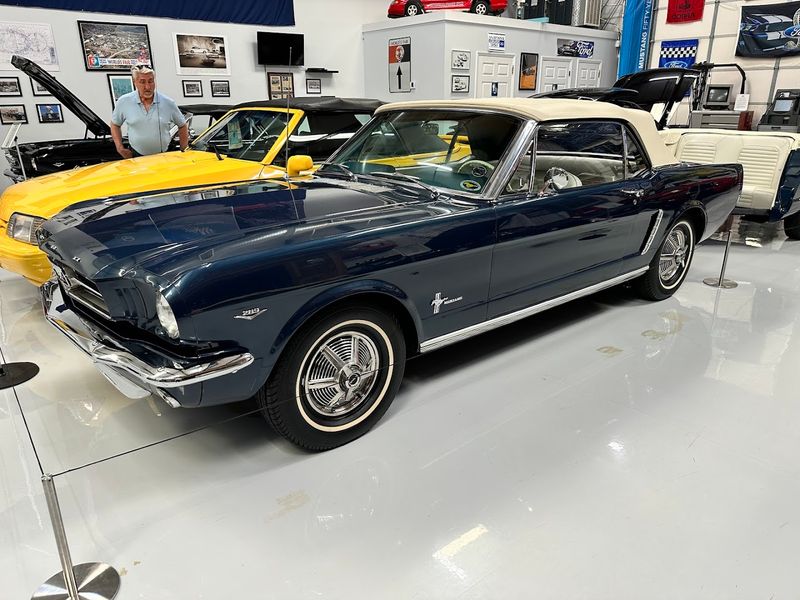
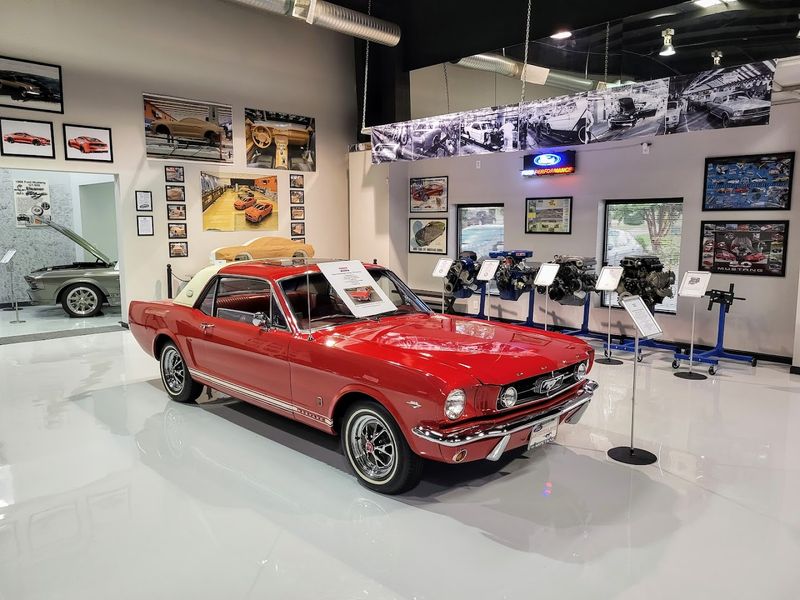
One of the museum’s crown jewels participated in the 1964 New York World’s Fair, where Ford introduced the Mustang to the public for the first time. This particular vehicle carries significance beyond its mechanical components, representing a pivotal moment in automotive marketing history.
The World’s Fair debut created immediate cultural impact that transformed Ford’s fortunes. The Mustang concept resonated with buyers seeking affordable performance wrapped in stylish sheet metal, and this actual display car witnessed that historic reception firsthand.
Standing before this vehicle connects visitors directly to that 1964 excitement. The car’s condition reflects careful preservation rather than over-restoration, maintaining authenticity that tells its story honestly.
Placards provide context about the World’s Fair presentation and the overwhelming public response that followed. Ford executives gambled on the Mustang concept, and this car proves how spectacularly that gamble paid off.
The museum staff can share additional details about how the World’s Fair introduction shaped subsequent marketing campaigns and established the pony car segment that competitors rushed to imitate.
4. Henry Ford II’s 1966 Golden Anniversary Mustang
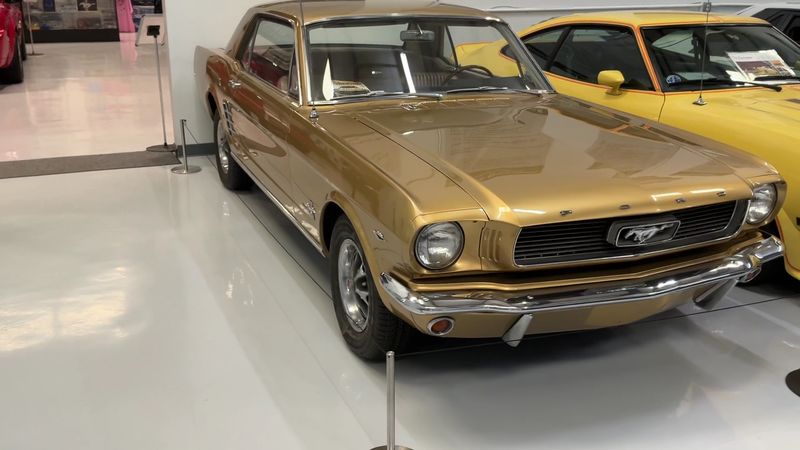
Personal vehicles owned by automotive royalty carry special significance, and this museum, at 4001 Dearborn Pl NW, Concord, displays a 1966 Mustang that belonged to Henry Ford II himself. This Golden Anniversary edition commemorated Ford Motor Company’s milestone while serving as the company chairman’s personal transportation.
The provenance alone makes this vehicle extraordinary. Henry Ford II guided the company through transformative decades, and his choice to drive this particular Mustang speaks to his confidence in the product.
Golden Anniversary models featured special badging and trim that distinguished them from standard production Mustangs. The condition remains exceptional, showing how careful preservation maintains both mechanical integrity and cosmetic appeal across nearly six decades.
Documentation traces the ownership history from Henry Ford II through subsequent caretakers who recognized its historical value. The car represents not just automotive design but also corporate leadership and family legacy within one of America’s most influential business dynasties.
Visitors often spend extended time with this vehicle, appreciating details that connect them to both Mustang history and broader Ford Motor Company heritage.
5. Rare 1964½ Barn Find With Authentic Patina
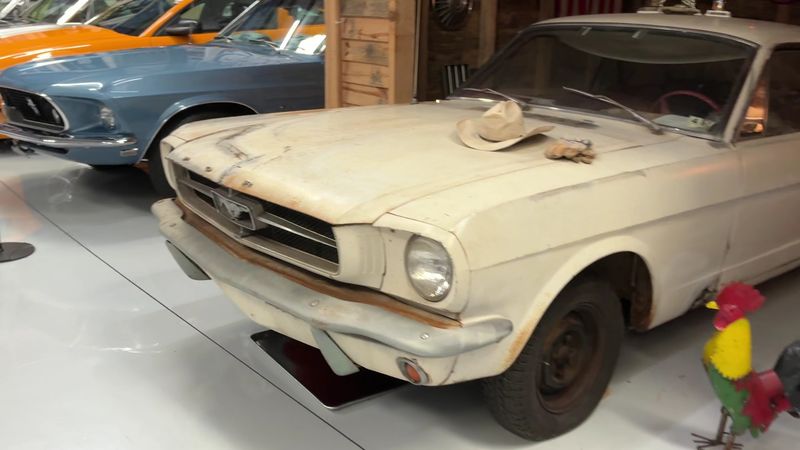
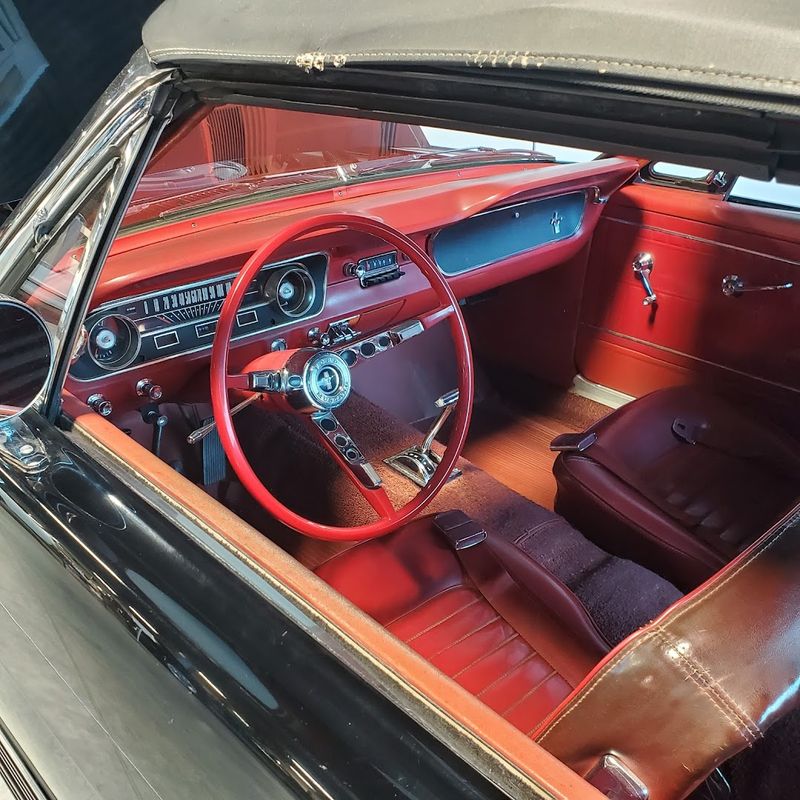
Not every valuable vehicle gleams with fresh paint and chrome. The museum’s barn find 1964½ Mustang wears decades of dust and surface rust as badges of honor, preserved exactly as discovered rather than restored to showroom condition.
Barn finds fascinate enthusiasts because they represent automotive time capsules. Someone parked this Mustang decades ago, and it sat undisturbed until rediscovery brought it back into public view.
The decision to preserve rather than restore maintains historical authenticity that would vanish under sandblasting and new paint. Visitors can see original factory markings, assembly line chalk marks, and details that restoration inevitably erases.
The patina tells stories about where the car lived, what conditions it endured, and how materials age naturally over time. Museum staff explains the barn find phenomenon and why collectors increasingly value preservation over restoration.
The car serves educational purposes by showing what happens when vehicles escape the restoration cycle, offering insights into original manufacturing processes and material choices. Standing before this unrestored example feels like discovering archaeological evidence rather than viewing a polished display piece.
6. Full-Size S650 Clay Design Model From Ford
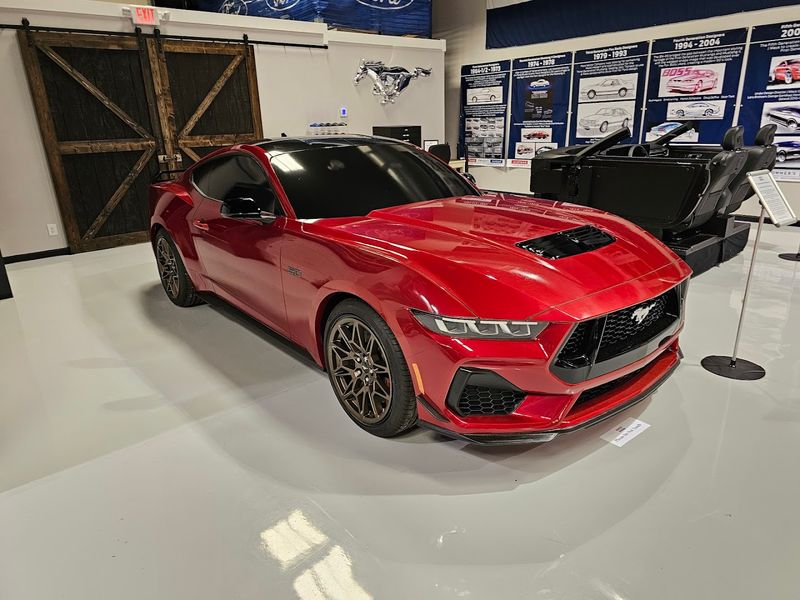
Few museums display actual design studio clay models, making the full-size S650 Mustang clay exceptionally rare. Ford Design provided this model, which represents the sculptural process behind creating modern automotive shapes.
Clay modeling remains central to automotive design despite digital technology advances. Designers shape full-scale clay models to evaluate proportions, surface reflections, and details that computer screens cannot fully reveal.
The model looks startlingly realistic from a distance, appearing to be painted metal and glass until closer inspection reveals the clay’s matte surface. Visitors often express disbelief that the entire structure consists of industrial modeling clay rather than traditional automotive materials.
The interior buck displays similar realism, with clay shaped to mimic leather, plastic trim, and metal surfaces with uncanny accuracy. The museum provides information about the design process and how clay models bridge concepts and production tooling.
Seeing these models reveals the artistic craftsmanship behind vehicles that many people consider purely functional objects. The S650 clay demonstrates how designers iterate through physical forms, making adjustments that photographs and drawings cannot adequately communicate.
7. NASCAR Cup Race Car Piloted By Chris Buescher
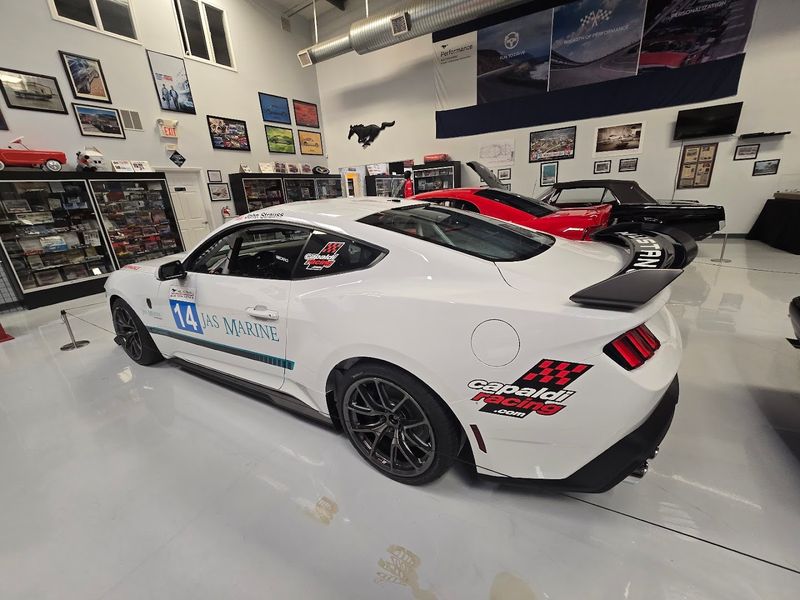
Racing heritage connects directly to Mustang’s performance reputation, and the museum displays a NASCAR Cup car that Chris Buescher piloted in competition. The vehicle brings professional motorsports experience into the collection alongside street-legal examples.
NASCAR Mustangs share little with dealership models beyond basic silhouettes. The race car features tube frame construction, racing suspension, safety equipment, and aerodynamic modifications that transform it into a purpose-built competition machine.
Visitors can examine details that television broadcasts never adequately show. The stripped interior reveals driver controls, safety harnesses, and roll cage construction designed to protect drivers during high-speed impacts.
Sponsor decals cover every surface, documenting the commercial partnerships that fund professional racing. The museum explains how NASCAR regulations dictate specifications while allowing teams to develop competitive advantages through engineering refinement.
Standing beside the car provides perspective on the physical demands drivers face, cramped into safety equipment while managing vehicles at speeds exceeding 180 miles per hour. The race car adds diversity to the collection by showing how Mustang design adapts for different purposes beyond street performance.
8. Signature Walls Featuring Global Enthusiast Messages
Interactive elements enhance museum experiences, and the signature walls invite visitors to leave permanent marks. Enthusiasts from around the world have signed these walls, creating colorful collages that document the museum’s international appeal.
Finding blank space requires careful searching because signatures cover nearly every available inch. The density of names demonstrates how many people have visited since the museum opened, each leaving evidence of their presence.
Reading signatures reveals visitors from dozens of countries and all fifty states. Some people add their Mustang model years or special messages alongside their names, creating personal connections to the larger community.
The walls function as physical social media, showing the global reach of Mustang enthusiasm without requiring digital devices. Families often photograph their signatures, creating souvenirs that commemorate their visits.
The museum embraces this participatory element rather than treating walls as untouchable surfaces, recognizing that visitor engagement strengthens community bonds. Fresh visitors sometimes feel intimidated by the coverage but staff encourages everyone to find spots and add their marks.
The signature walls transform passive observation into active participation, making visitors feel like contributors rather than spectators.
9. Comprehensive Mustang Library And Archive Resources
Research resources extend the museum beyond vehicle displays. The Mustang Library houses books, magazines, and videos that document six decades of Mustang history, providing depth that placards cannot match.
Serious enthusiasts appreciate access to archival materials that might be difficult to find elsewhere. The collection includes factory documentation, enthusiast publications, and recorded interviews with key figures in Mustang development.
Visitors can browse materials at their own pace, diving deeper into specific topics that interest them. The library serves educational purposes for students researching automotive history and provides reference materials for restorers seeking authenticity guidance.
Magazine archives preserve period reviews and road tests that capture contemporary perspectives on new models. Video interviews with designers, engineers, and executives offer firsthand accounts that written materials cannot fully convey.
The library operates during regular museum hours, and staff can direct visitors toward specific resources based on their interests. The space provides quiet areas for reading and note-taking, accommodating different learning styles beyond walking displays.
Researchers working on Mustang-related projects can access materials that might not exist in digital formats, preserving knowledge that could otherwise disappear.
10. Event Space For Gatherings And Private Functions
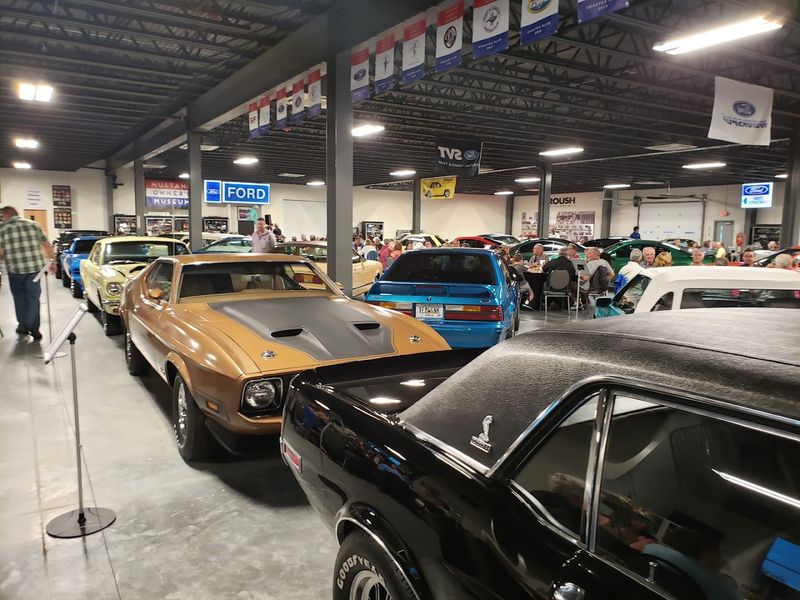
The museum functions as more than a static display facility. Event spaces accommodate weddings, family reunions, car club gatherings, and private meetings, allowing groups to rent the venue for special occasions.
Hosting events among classic Mustangs creates unique atmospheres that conventional venues cannot match. Wedding receptions gain automotive flair when held alongside pristine vehicles, and car club meetings feel appropriate when surrounded by the exact models members own.
The museum provides flexibility for different event types and sizes. Small groups can reserve intimate spaces while larger gatherings can utilize multiple rooms.
Event coordinators work with renters to arrange appropriate setups, whether formal dinners or casual social gatherings. The automotive theme appeals particularly to enthusiasts who want their celebrations to reflect their passions.
Rental fees help support museum operations, creating mutual benefits for event hosts and the institution. The staff handles logistics professionally, ensuring events run smoothly without requiring renters to manage complex details.
Combining celebrations with automotive displays creates memorable experiences that guests discuss long after events conclude. The museum’s location near Charlotte Motor Speedway adds convenience for groups attending racing events who want distinctive gathering spaces.
11. Museum Store With Mustang-Themed Merchandise
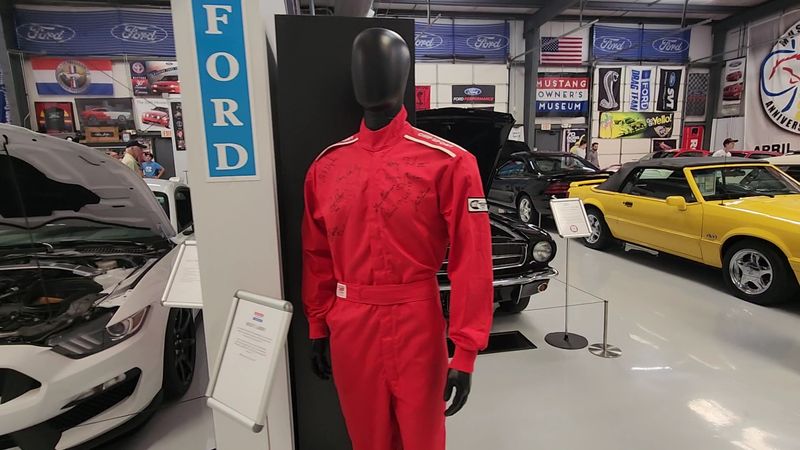
Retail offerings extend visitor experiences beyond admission tickets. The museum store stocks Mustang-themed merchandise including apparel, accessories, and memorabilia, with items available both in-store and through online ordering.
Souvenir shopping allows visitors to take tangible reminders home. T-shirts, hats, and jackets let enthusiasts display their Mustang passion in daily life, while collectibles serve as display pieces for home garages and offices.
The merchandise selection caters to various budgets and preferences. Small items like keychains and stickers provide affordable options while limited-edition collectibles appeal to serious collectors.
The store emphasizes quality over quantity, curating products that reflect genuine Mustang heritage rather than generic automotive items. Online availability extends shopping opportunities beyond physical visits, allowing distant supporters to purchase merchandise and support the museum financially.
Proceeds help fund operations and exhibits, making purchases feel like contributions to preservation efforts rather than pure consumerism. Staff members can recommend items based on visitor interests, whether someone collects diecast models or prefers wearable merchandise.
The store functions as both revenue source and community connection point, strengthening bonds between the museum and the broader Mustang enthusiast network.
12. Membership Benefits And Community Engagement Programs
Annual memberships provide value beyond single-visit admission prices. Members enjoy year-round access, merchandise discounts, advance event notices, and voting privileges for Hall of Fame inductees, creating ongoing relationships with the institution.
The membership structure recognizes that dedicated enthusiasts visit multiple times annually. Unlimited admission pays for itself after just a few visits, making memberships economical for local residents and frequent travelers.
Advance event notifications give members first opportunities to register for popular programs before public announcements. Merchandise discounts reduce costs on apparel and collectibles, adding value that extends beyond admission savings.
The Hall of Fame voting privilege makes members feel like stakeholders rather than passive consumers, involving them in curatorial decisions about which vehicles and individuals deserve recognition. Different membership levels accommodate various commitment levels and budgets, from individual memberships to family plans.
The museum uses membership revenue to fund operations and exhibits, creating sustainable support beyond admission ticket sales. Members receive newsletters and updates that maintain connections between visits, building community among people who might never meet otherwise.
The program transforms casual visitors into invested supporters who help ensure the museum’s long-term viability.
13. Special Events Including Car Shows And Cruises
Regular events bring the Mustang community together throughout the year. The museum hosts car shows, cruises, and themed celebrations including National Mustang Day festivities that feature cruises to nearby attractions and popular vote competitions.
Car shows transform the museum grounds into gathering spaces where owners display their personal vehicles. Participants range from concours-quality restorations to daily drivers, celebrating the full spectrum of Mustang ownership rather than focusing exclusively on pristine examples.
Popular vote awards let attendees determine winners rather than relying solely on judges, creating democratic competitions that value community preferences. Cruises to destinations like Petty’s Garage combine driving enjoyment with automotive tourism, offering experiences beyond static displays.
The events create social opportunities for enthusiasts to connect with like-minded people, sharing stories and technical knowledge. Families attend together, making events accessible rather than excluding non-enthusiasts.
The museum coordinates logistics professionally, ensuring events run smoothly without requiring participants to handle complex planning. Event calendars appear on the museum website, allowing people to plan visits around specific programs.
The combination of indoor exhibits and outdoor events provides variety that appeals to different participation styles, whether someone prefers observing displays or actively showing their own vehicle.