The Home Made Of Sea Shells Exploring The 280-Year-Old Tabby Ruins Of Jekyll Island Georgia
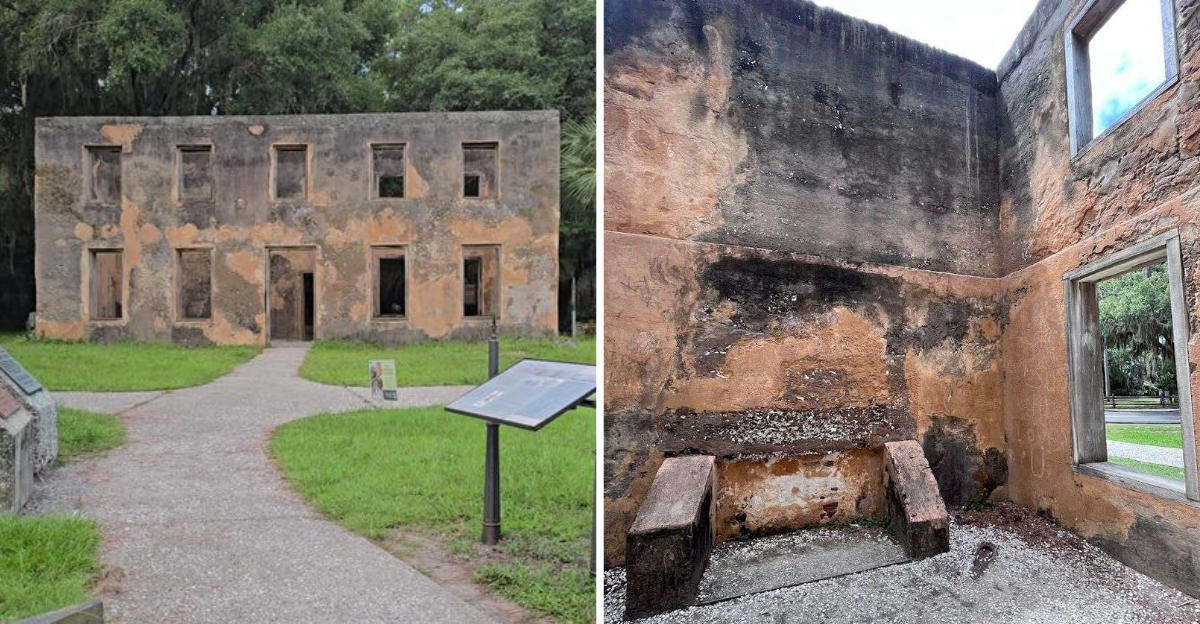
Tucked along the quiet marshes of Jekyll Island, Georgia, the Horton House stands as a rare and fascinating piece of colonial history. Built in 1743 by Major William Horton, this remarkable structure was crafted from tabby, a sturdy material made of oyster shells, lime, sand, and water.
Nearly 280 years later, its weathered walls still rise against the coastal landscape, offering a powerful glimpse into early American life. The house survived war, harsh coastal weather, and centuries of change, becoming one of the oldest surviving tabby buildings in the state. Walking among the ruins, visitors can almost feel the stories embedded in every shell and stone.
Surrounded by sweeping marsh views and peaceful island scenery, the setting adds to the sense of stepping back in time. For history enthusiasts and curious explorers alike, the Horton House delivers an unforgettable coastal experience.
1. What Tabby Construction Actually Is
Long before modern concrete existed, early colonial builders along the Georgia coast found a clever solution hiding right beneath their feet. Tabby is a building material made by burning oyster shells to create lime, then mixing that lime with sand, water, and whole oyster shells. The result is a surprisingly durable concrete-like substance that hardened over time into solid walls.
What makes tabby so fascinating is how it reflects the natural resources of coastal Georgia. Oyster shells were everywhere along the shoreline, making them an accessible and practical choice for construction. Builders would pile shells into kilns, burn them for days, and then carefully mix the resulting lime into the tabby formula.
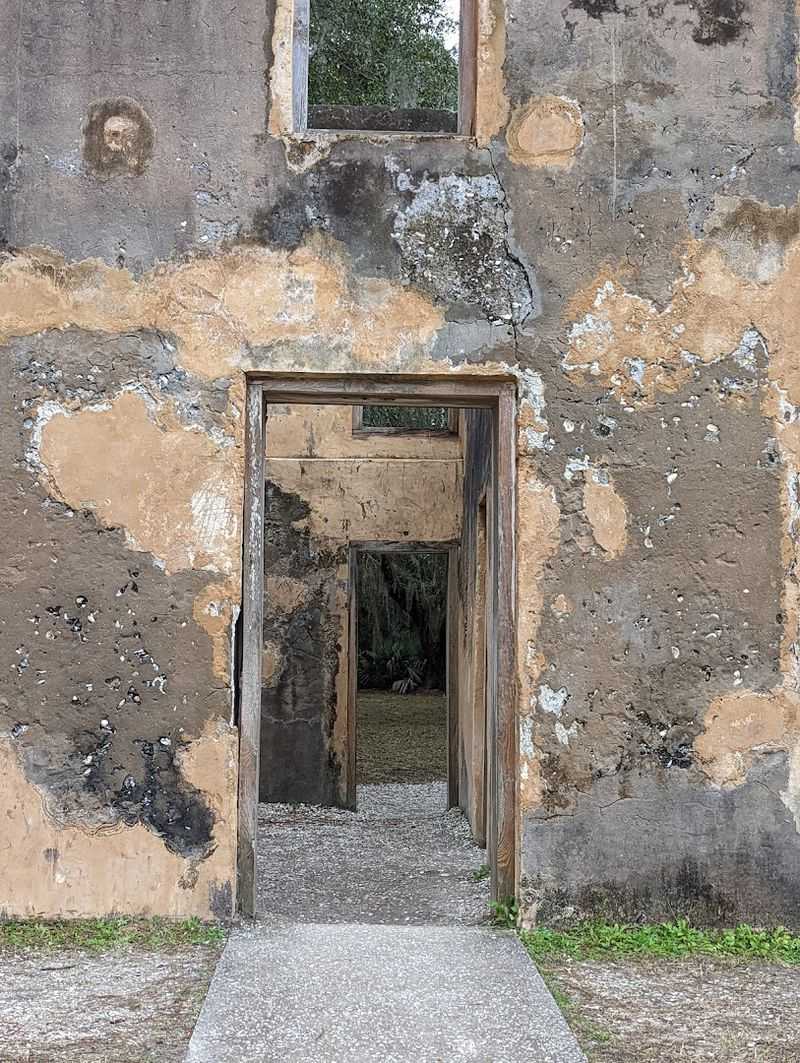
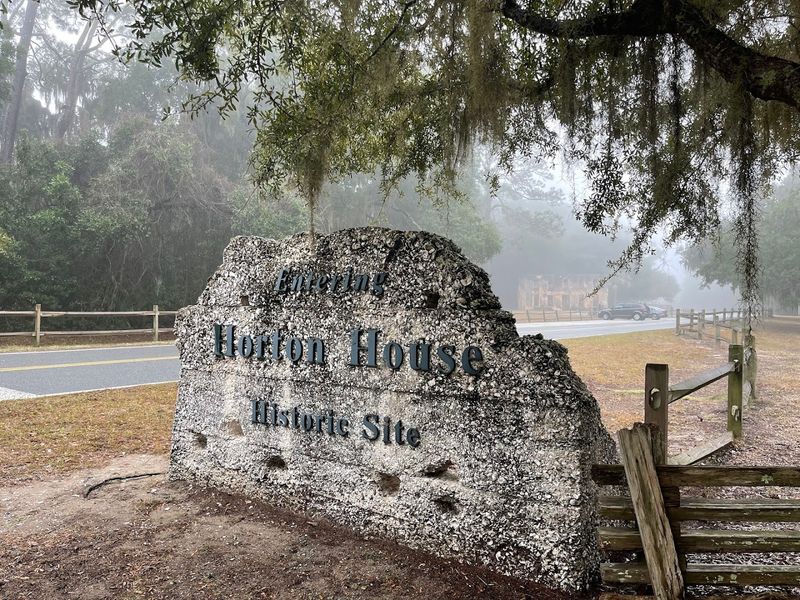
At the Horton House, you can see actual shells embedded right into the walls, frozen in place for centuries. Running a hand along those rough, shell-studded surfaces connects visitors directly to the ingenuity of 18th-century colonial life in a genuinely tangible way.
2. The Spanish Attack That Changed Everything
A dramatic military clash set the stage for the Horton House that visitors see today. In 1742, Spanish forces sailing from Florida launched an attack on the Georgia coast, and Jekyll Island was directly in their path. During this campaign, soldiers burned Major Horton’s original wooden house to the ground.
The Battle of Bloody Marsh, fought on nearby St. Simons Island, ultimately resulted in a British victory that secured Georgia’s southern border against Spanish expansion. Horton played an active role in that defense, making his decision to rebuild on Jekyll Island immediately afterward a statement of defiance and permanence.
Choosing tabby over wood the second time around was no accident. Horton clearly wanted a home that could withstand future threats. That decision to build with such a resilient material is precisely why ruins of his 1743 house survive nearly three centuries later, while countless wooden structures from the same era have completely vanished.
3. How Old The Ruins Actually Are
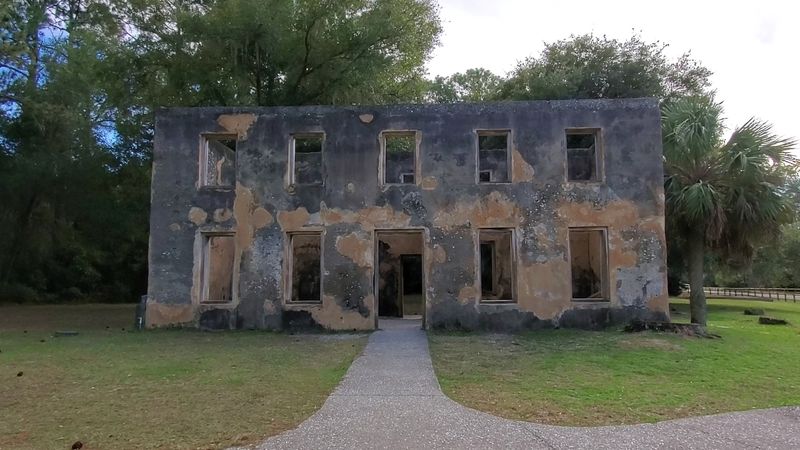
Standing in front of the Horton House, it can be hard to fully grasp just how old those walls are. Built in 1743, the structure is approaching 280 years of age, making it one of the oldest surviving buildings in the entire state of Georgia. Very few colonial-era structures anywhere in the southeastern United States have endured this long.
To put that age into perspective, the house was already over 30 years old when the Declaration of Independence was signed in 1776. George Washington had not yet become president when these tabby walls were already well-established on the Georgia coast.
The durability of tabby construction deserves enormous credit for this survival. While wood rots and brick crumbles under centuries of coastal humidity and storms, the shell-lime mixture of tabby proved remarkably resistant to time. Preservation efforts have also helped protect the site, ensuring that future generations can still walk up to these extraordinary walls and feel history beneath their fingertips.
4. The DuBignon Family’s Chapter In The Story
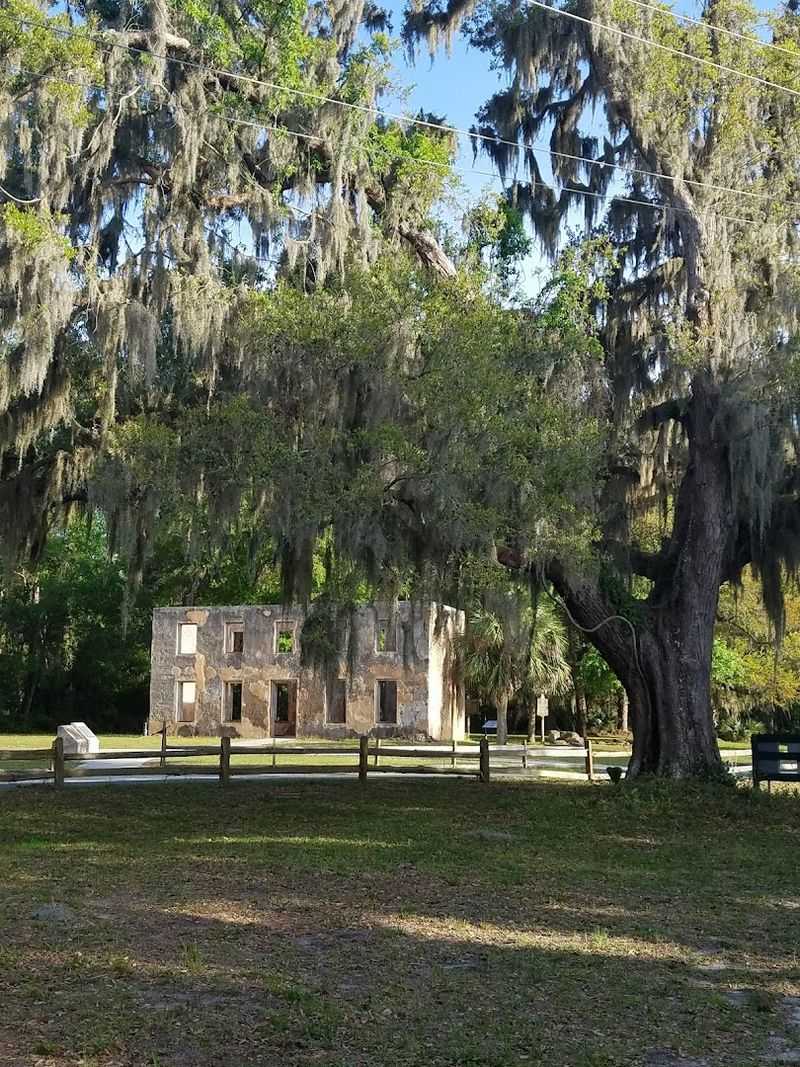
After Major Horton’s era ended, the Horton House did not sit empty for long. In 1794, a French planter named Christophe Poulain DuBignon purchased Jekyll Island and moved his family into the restored tabby house. The DuBignons occupied the property for decades, adding their own chapter to the building’s already layered history.
The DuBignon family managed the island as a plantation during this period, and the house served as their primary residence through the early to mid-1800s. Their tenure represents a significant and complex period in Jekyll Island’s past, tied to the broader history of plantation agriculture in coastal Georgia.
One particularly grim footnote to the DuBignon era involves the Wanderer, an illegal slave ship that landed on Jekyll Island in 1858, one of the last known illegal slave shipments to arrive in the United States. The family’s connection to that event adds a sobering layer of historical weight to an already deeply storied property.
5. The Quiet Cemetery Just Across The Path
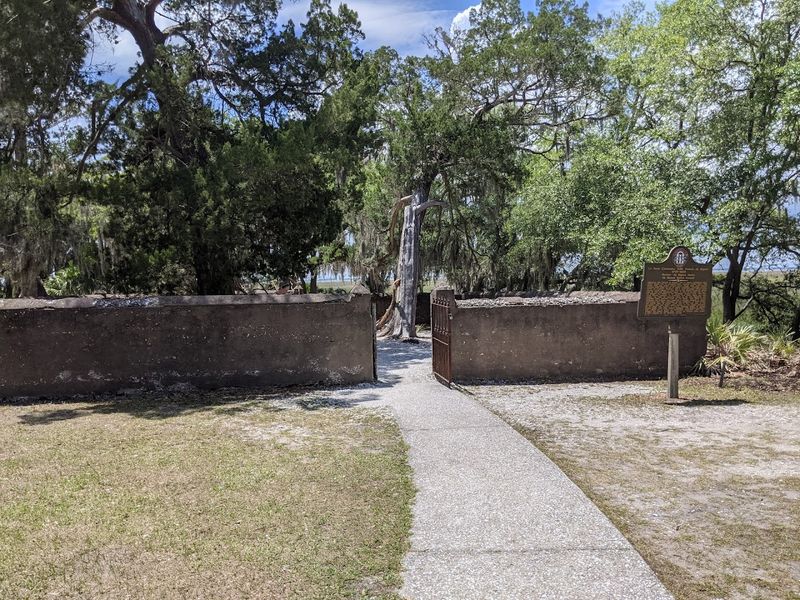
Just a short walk from the Horton House ruins sits a small, enclosed cemetery that most visitors almost miss. A low tabby wall circles the graves of five individuals, creating a somber and quietly moving space that adds another emotional dimension to the site. The enclosure itself is made from the same oyster shell material as the house, tying the two structures together visually.
Among those buried here are members of the DuBignon family, whose long tenure on Jekyll Island is documented throughout the site’s interpretive panels. Also interred here are two hotel employees who tragically drowned in 1912, during the island’s later era as an exclusive retreat for wealthy industrialists.
The cemetery is small enough to take in at a glance, but meaningful enough to linger over. Reading the markers and considering the range of people buried in this modest enclosure, from colonial-era French planters to early 20th-century workers, reminds visitors how many different lives have unfolded on this one small island.
6. Major William Horton: The Man Behind The Walls
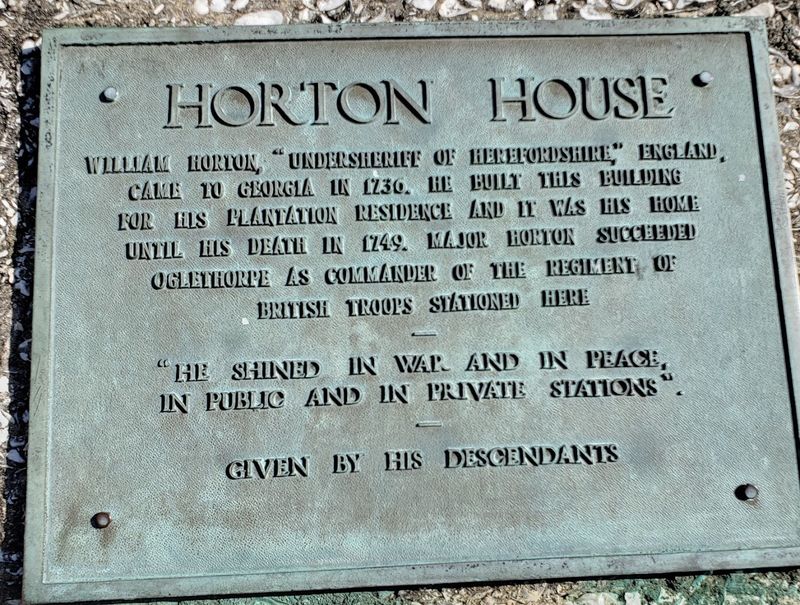
Not every historic ruin comes with such a compelling backstory, but Major William Horton’s life reads almost like an adventure novel. Horton served as a top military aide to General James Oglethorpe, the founder of the Georgia colony, and was granted Jekyll Island in 1735 as a reward for his loyal service.
Horton was far more than just a soldier. He established Georgia’s very first brewery on the island, growing hops and barley to supply troops stationed at nearby Fort Frederica on St. Simons Island. His ambitions extended well beyond military duty, making him one of the most enterprising figures in early colonial Georgia.
After Spanish forces burned his original wooden home during the Battle of Bloody Marsh in 1742, Horton refused to give up. He rebuilt using tabby the following year, creating the structure whose ruins still stand today. His determination is literally baked into every shell-studded wall.
7. National Register Of Historic Places Recognition
Recognition from the National Register of Historic Places is not handed out casually, and the Horton House earned its listing through a combination of architectural rarity and historical significance. Being on this register means the federal government officially acknowledges the site as worthy of preservation for future generations.
The listing helps unlock access to certain preservation grants and protections, which have proven critical for maintaining the site over the years. One notable example is a Save America’s Treasures grant awarded through the National Park Service, which supported stabilization and conservation work on the fragile tabby walls.
For visitors, the National Register designation is a useful signal that a site has been thoroughly researched and documented. Everything at the Horton House has been examined by historians and preservation specialists who have verified its authenticity and importance. Knowing that context makes walking around the ruins feel even more meaningful, because every detail has been carefully studied and protected for a reason.
8. Free Admission And Year-Round Access
One of the most refreshing things about the Horton House is that it costs nothing to visit. The site is open to the public year-round with free admission, making it one of the most accessible historic landmarks in coastal Georgia. There are no ticket lines, no timed entry windows, and no reservations required.
Keep in mind that Jekyll Island itself does charge a parking fee for vehicles entering the island, so budget for that when planning the trip. Once on the island, though, getting to the Horton House does not cost anything extra, and visitors are free to spend as much time there as they like.
Because the ruins are outdoors and open-air, the experience changes with the seasons. Spring and fall tend to offer the most comfortable temperatures for exploring, while summer visits require sunscreen and water since there is limited shade near the ruins. Winter visits are quieter and often surprisingly pleasant along the Georgia coast.
9. Getting There: Location And Parking Tips
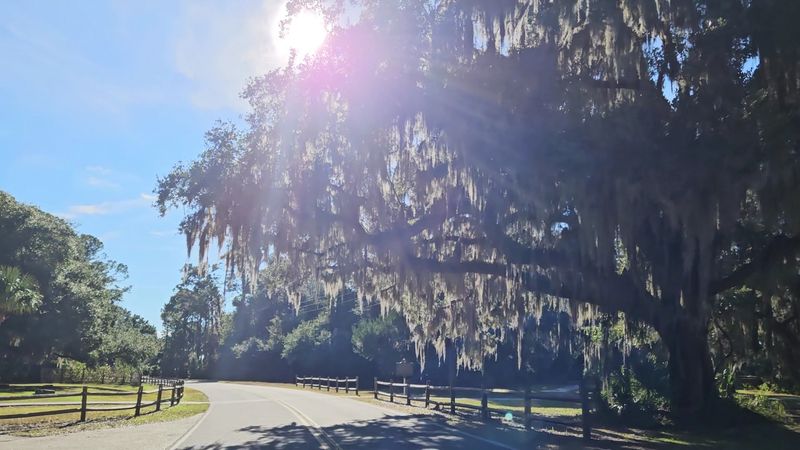
Finding the Horton House is straightforward once on Jekyll Island. The ruins are located along Riverview Drive, a scenic road that runs along the western edge of the island facing the marshes. The address for navigation purposes is Riverview Drive, Jekyll Island, Georgia 31527, and most GPS apps will direct drivers there reliably.
Parking is available nearby, with enough space for multiple vehicles. The site is also easily accessible by bicycle, which is one of the most popular ways to get around Jekyll Island since the island has an extensive network of bike paths. Renting a bike from one of the local outfitters and cycling to the Horton House is a genuinely enjoyable way to experience the island at a relaxed pace.
The terrain around the ruins is relatively flat and manageable for most visitors. Comfortable walking shoes are recommended since the ground around the site can be uneven in spots, particularly closer to the old tabby walls and cemetery area.
10. Reading The Walls: Architectural Details Up Close
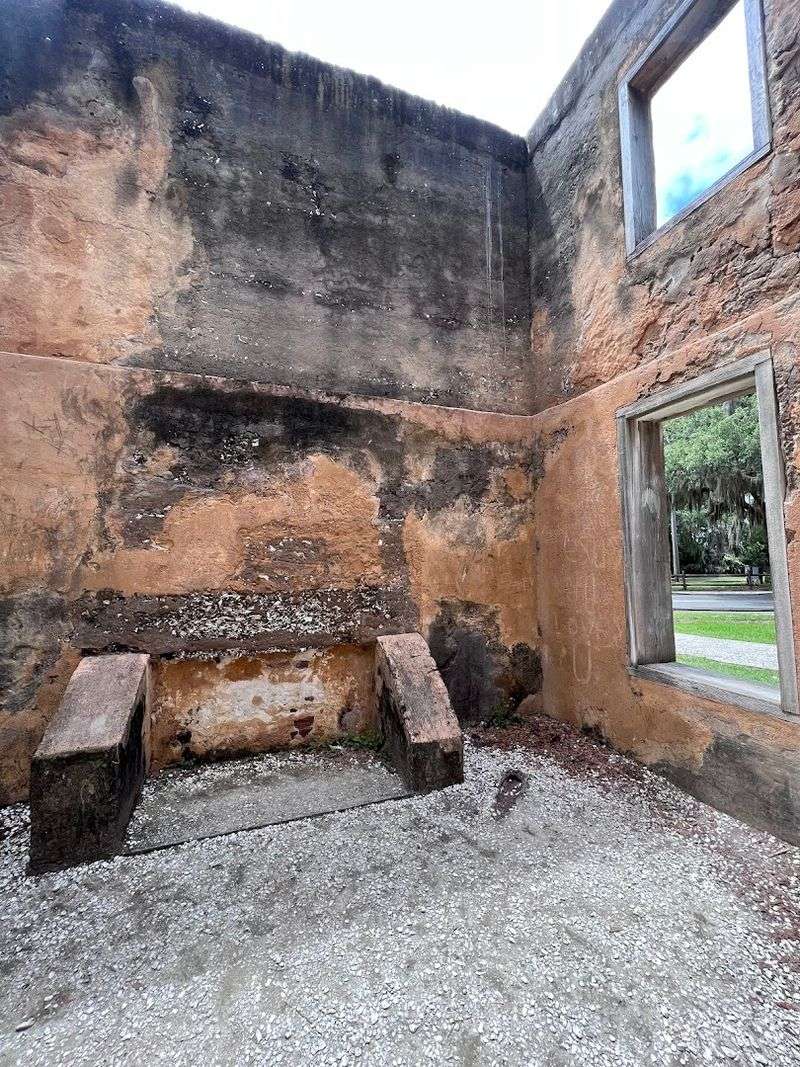
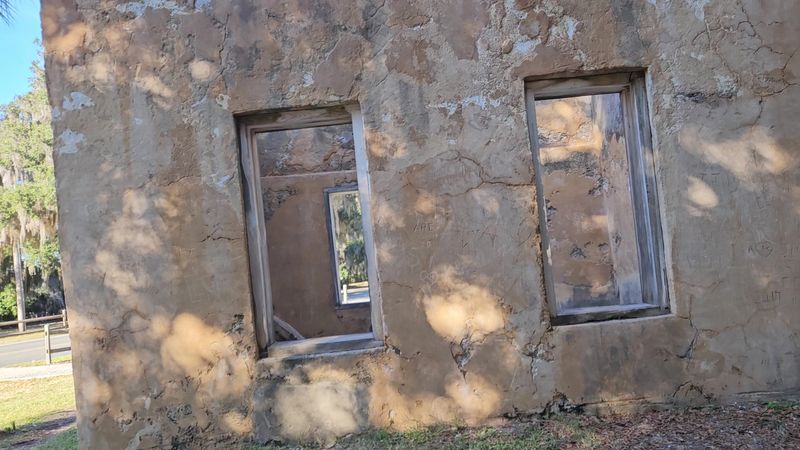
Few historic sites offer visitors such a hands-on connection to construction history as the Horton House. The walls themselves are essentially a time capsule of 18th-century building techniques, with oyster shells visible at every turn. Looking closely at the surface reveals shells of varying sizes pressed into the hardened lime mixture, some still clearly identifiable as oyster valves.
The walls have weathered considerably over nearly three centuries, and that weathering tells its own story. Cracks, erosion patterns, and surface textures all reflect the passage of time, coastal storms, and the slow work of vegetation. Preservation teams have worked carefully to stabilize the structure without erasing this natural aging, which gives the ruins an authentic, unrestored quality that feels genuinely historic.
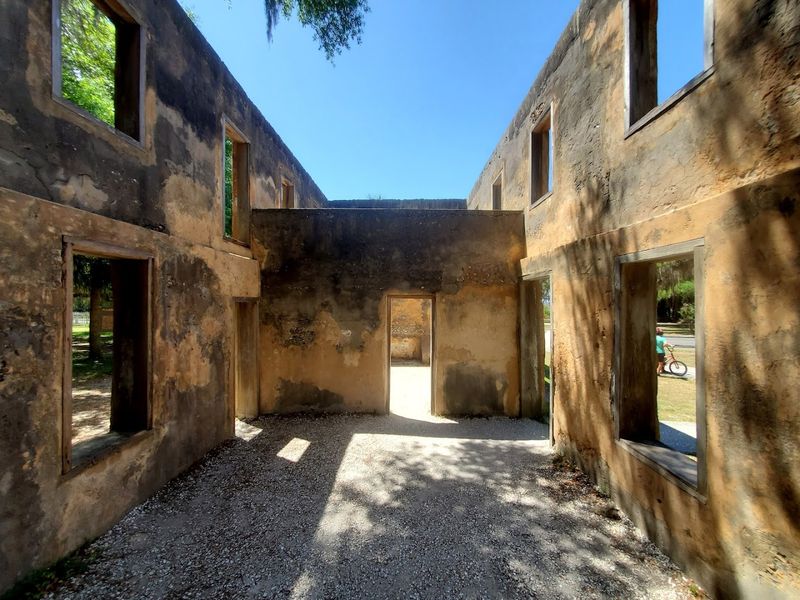
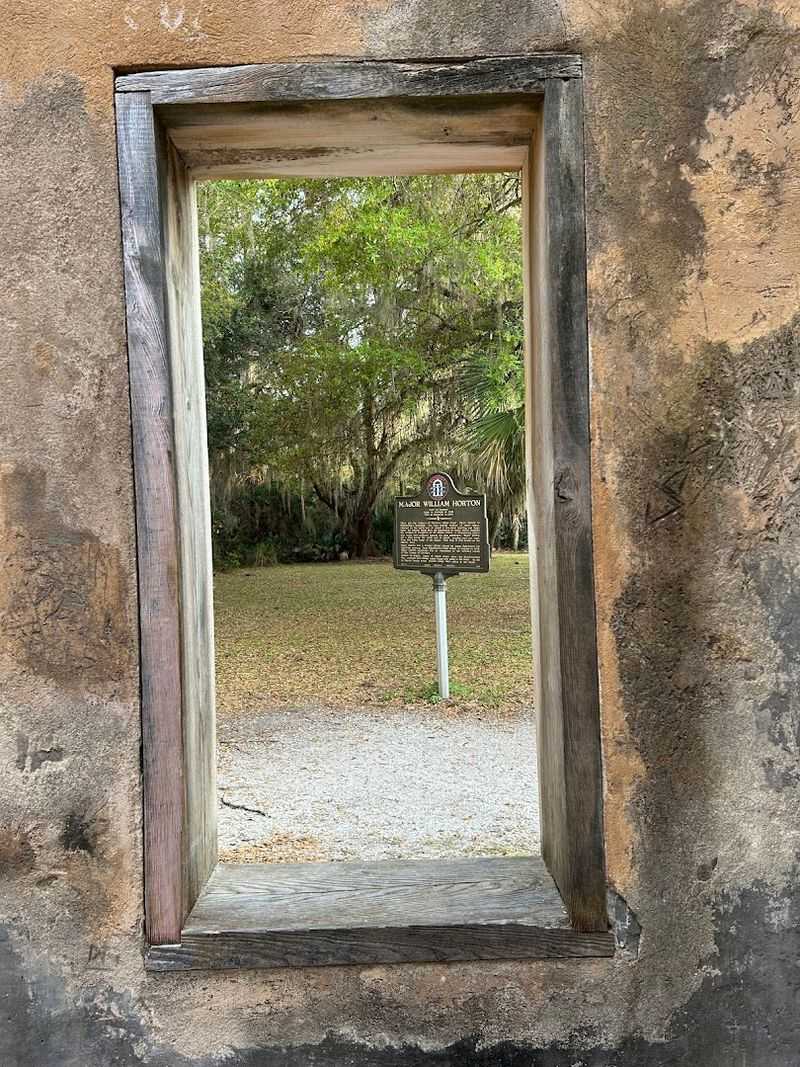
Original window and door openings are still visible in the standing walls, giving a clear sense of the house’s original layout. Imagining the rooms that once existed within those open frames adds a surprisingly vivid human dimension to what might otherwise feel like an abstract pile of old stones.
11. Georgia’s First Brewery Connection
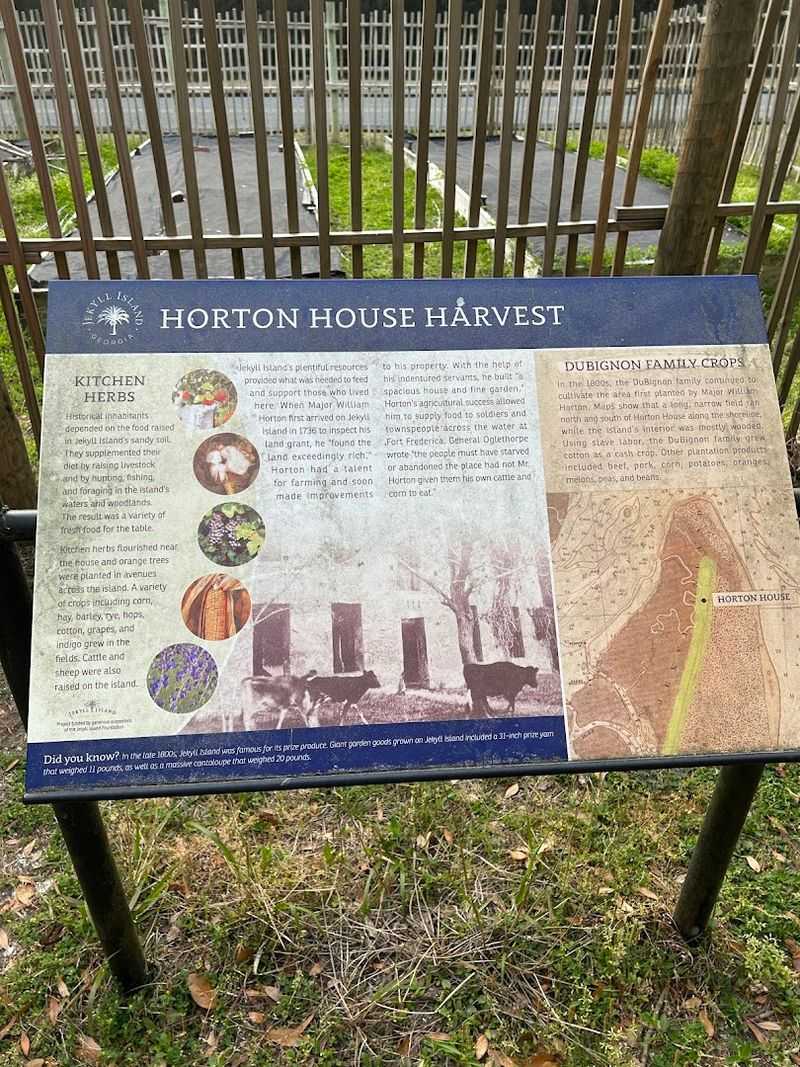
Most people visiting the Horton House focus on the ruins themselves, but there is a fascinating agricultural footnote to Major Horton’s story that deserves attention. Horton established what is widely recognized as Georgia’s first brewery on Jekyll Island, growing hops and barley to produce beer for British troops stationed at Fort Frederica.
In the colonial era, beer was considered a safer beverage than untreated water, especially in warm climates where waterborne illness was a constant threat. Supplying troops with a reliable source of beer was genuinely a military logistics concern, not just a luxury. Horton’s brewery served a practical and important purpose in maintaining the health of Georgia’s colonial defense forces.
No physical remains of the brewery survive today, but interpretive panels at the site mention this history. It adds a surprisingly lively dimension to Horton’s character, painting him as a pragmatic, resourceful figure who understood both military strategy and the everyday needs of the people under his command.
12. Interpretive Panels And Self-Guided Tour Experience
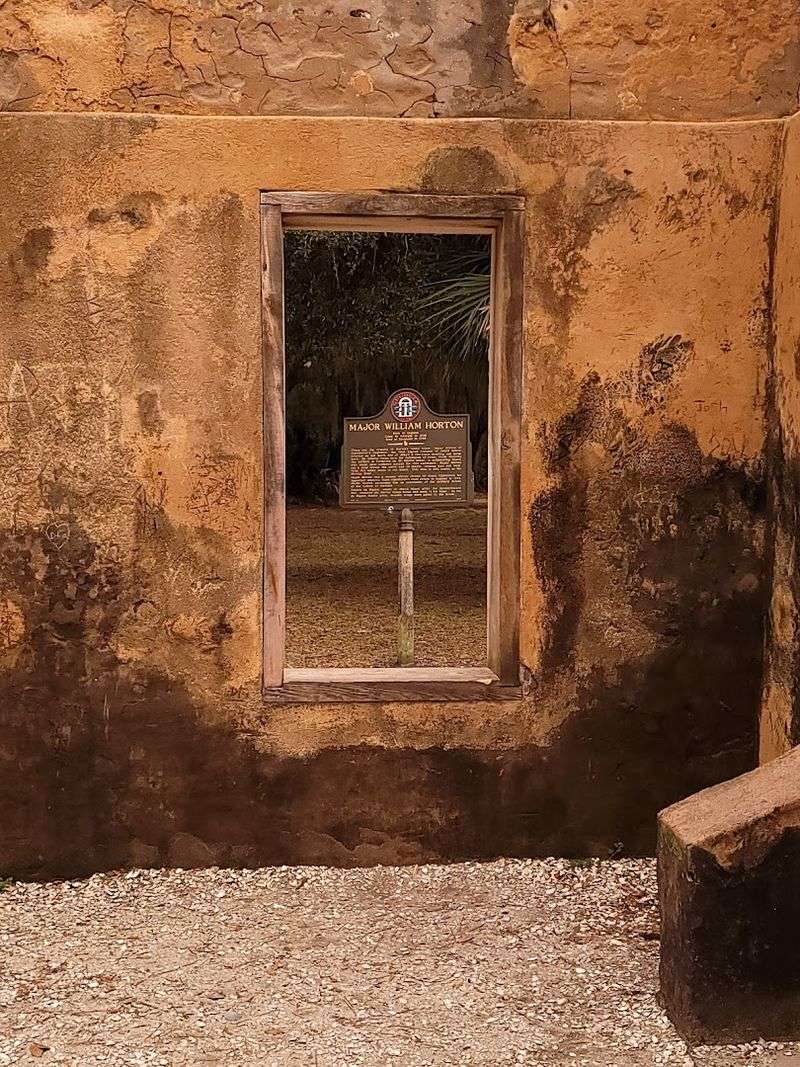
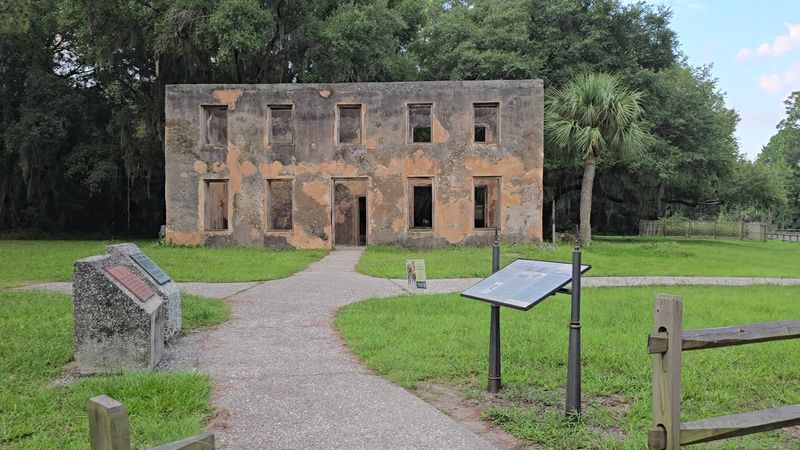
Visitors who show up without a tour guide are not left to guess at the history surrounding them. The Horton House site features well-placed interpretive panels that walk visitors through the key chapters of the property’s history, from Horton’s colonial-era construction to the DuBignon family’s plantation period and beyond.
The panels are written accessibly, making the site genuinely family-friendly. Children and adults alike can follow along without needing a background in colonial history. The information covers topics including tabby construction methods, the Battle of Bloody Marsh, and the diverse communities whose lives intersected with Jekyll Island over the centuries.
Plan to spend at least 30 to 45 minutes at the site to read everything and walk around the ruins and cemetery comfortably. The self-guided format means there is no pressure to rush, and visitors can linger wherever they find something particularly interesting. Early morning visits tend to be quieter and allow for a more reflective, unhurried experience at this genuinely special historic spot.
13. Views Of The Marshes Of Glynn
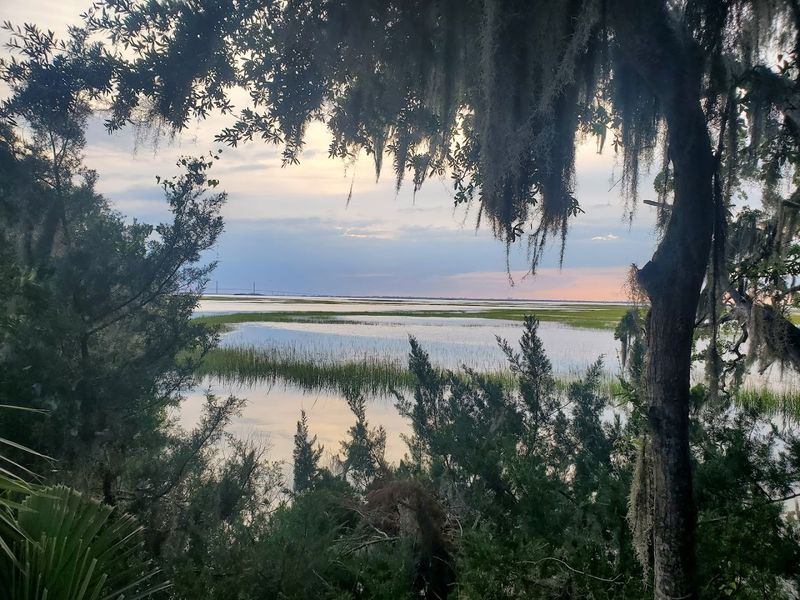
The Horton House does not just offer history. It also sits near one of the most visually striking natural landscapes in all of coastal Georgia. The Marshes of Glynn stretch out along the western side of Jekyll Island, a vast expanse of golden cordgrass, tidal creeks, and open sky that changes character completely depending on the time of day and season.
Standing near the ruins and looking west toward the marsh gives a powerful sense of why early colonists chose this location. The marsh provided food, protected the island’s interior from direct coastal exposure, and offered a natural buffer that early settlers understood and relied upon. Horton himself would have looked out at this same landscape every day.
The marshes are particularly beautiful at sunrise and sunset when the light turns the grass warm amber and gold. Birdwatchers will find plenty of activity along the marsh edge, including herons, egrets, and shorebirds that make the area their year-round home. The combination of history and natural beauty makes this corner of Jekyll Island genuinely memorable.
14. Nearby Attractions Worth Combining With Your Visit
Making a full day of the Jekyll Island experience is easy given how many worthwhile sites sit within a short distance of the Horton House. The Jekyll Island Club Historic District is one of the most compelling nearby stops, centered around the grand Jekyll Island Club Hotel located at 371 Riverview Drive, Jekyll Island, Georgia 31527. The hotel served as a winter retreat for some of America’s wealthiest families in the late 19th and early 20th centuries, including Rockefellers and Vanderbilts.
The Georgia Sea Turtle Center is another excellent option, particularly for families traveling with children. Located at Riverview Dr, Jekyll Island, GA 31527, the center operates as a working sea turtle rehabilitation facility where visitors can learn about sea turtle conservation and sometimes observe patients receiving care.
Combining the Horton House ruins with one or both of these attractions creates a well-rounded Jekyll Island itinerary that blends natural history, colonial heritage, and Gilded Age grandeur into a single satisfying visit without feeling rushed or overloaded.
15. Why The Horton House Matters For Georgia’s Broader History
The Horton House is not just a curiosity for architecture enthusiasts. It stands as a physical anchor point for understanding Georgia’s earliest colonial history, a period that shaped the state’s identity in profound and lasting ways. Georgia was founded in 1733 as the last of the original thirteen colonies, and Jekyll Island was part of its very first generation of settled land.
The site reflects intersecting histories that are easy to overlook in a standard textbook. Indigenous communities, European colonizers, enslaved Africans, free Black Americans, French settlers, and British soldiers all have threads running through the history of this small island and this single building. The Horton House connects those threads in a way that feels immediate and concrete rather than abstract.
For anyone interested in understanding how Georgia became the state it is today, starting with the Horton House offers a grounded and honest entry point. History does not get more tangible than standing inside the walls of a nearly 280-year-old shell-built house and considering everything those walls have witnessed.