This Secret Castle In California Brings Gilded Age Glamour To Life
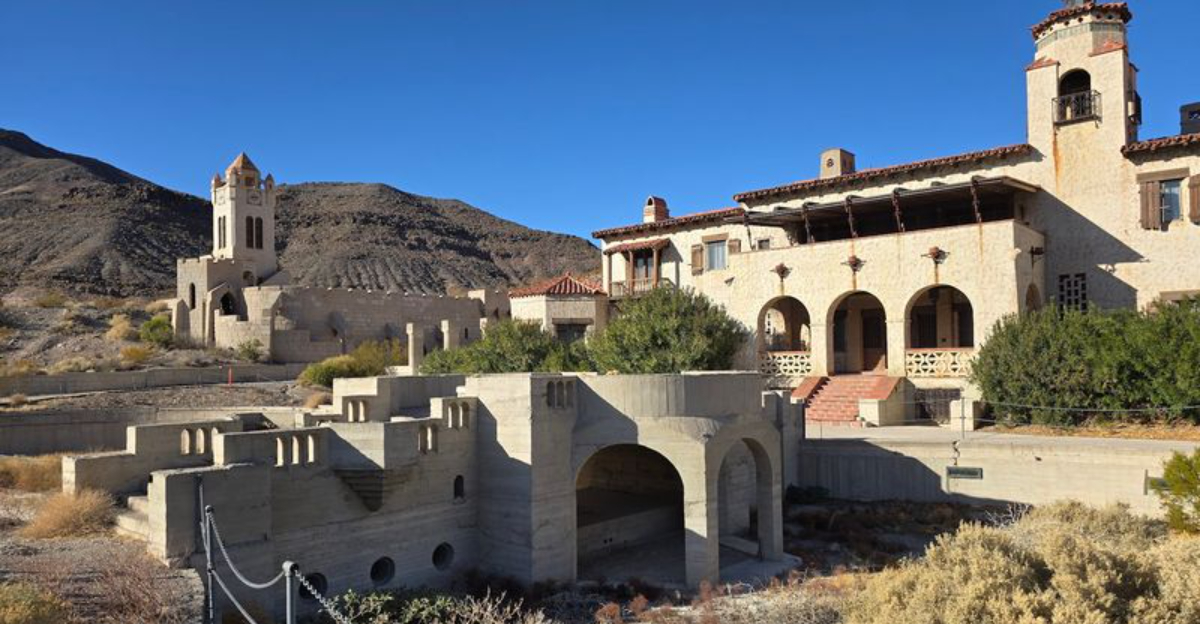
Desert silence stretches for miles. Then, almost without warning, red tile rooftops and pale stucco walls rise against a rugged mountain backdrop.
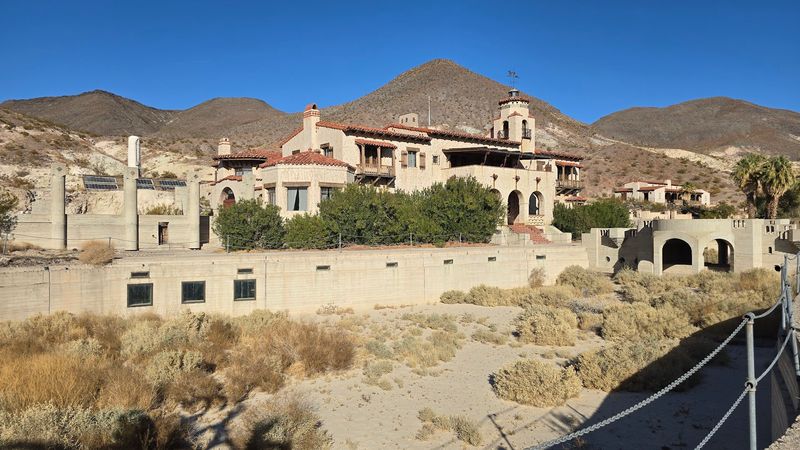
At first glance, the Spanish Colonial Revival estate feels impossibly out of place in the middle of an unforgiving landscape.
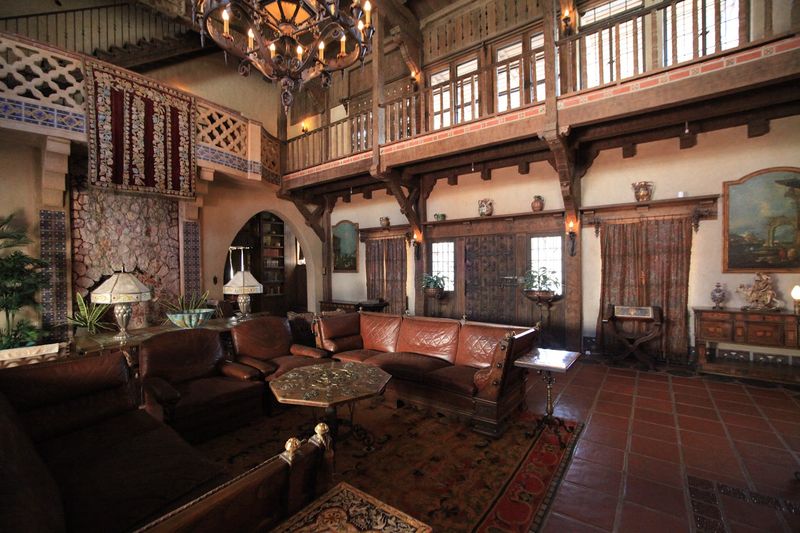
Arched corridors, hand-painted tiles, and carved wood ceilings introduce a level of elegance rarely associated with one of the harshest environments in North America. The contrast alone is enough to stop visitors in their tracks.
Built during the roaring twenties and early thirties, the villa began as a private desert retreat shaped by ambition, engineering ingenuity, and an unexpected partnership that blurred the line between myth and reality.
A charismatic storyteller fueled rumors of hidden gold and claimed the grand property as his own. The stories spread quickly, and the nickname endured.
This is California at its most unexpected. Scotty’s Castle stands deep within the Grapevine Mountains of northern Death Valley, a historic landmark where myth, architecture, and desert extremes meet.
1. The Origin Of Scotty’s Castle
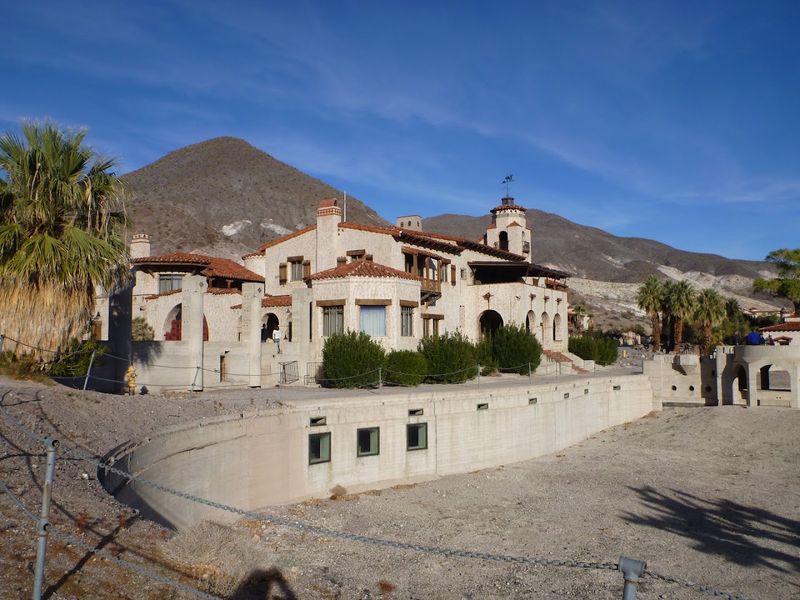
Long before guided tours and steady streams of visitors became part of the routine, a wealthy Midwestern businessman envisioned an elegant desert retreat rising from the stark landscape of Death Valley.
Construction on the estate, officially known as Death Valley Ranch, began in the early nineteen twenties and continued for nearly a decade.
The architectural inspiration came from the sandstone facades and red tile rooftops associated with Stanford University, lending the villa a distinctly academic Mediterranean character set against an otherwise rugged backdrop.
Thoughtful details shaped the interior, from hand-painted ceramic tiles to intricate carved woodwork that added warmth and personality to each room.
Stucco walls gave the exterior a textured glow that blended naturally with the desert light. The property was never meant to serve as a tourist attraction.
It began as a private sanctuary, designed for quiet escapes and long seasonal stays in one of California’s most remote environments.
Over time, however, word spread.nStories circulated. Visitors arrived out of curiosity. Eventually, the estate evolved into one of the most recognized historic sites within Death Valley National Park.
The story behind Scotty’s Castle at 123 Scotty’s Castle Rd, California reflects how a deeply personal vision, built carefully and deliberately, can grow into a landmark that captures the imagination of generations.
2. Showman’s Colorful Con
A charismatic showman once made a career out of grand stories, larger-than-life claims, and the ability to captivate anyone willing to listen.
After time spent performing with traveling Wild West exhibitions, he turned his talents toward convincing investors that a rich gold mine was hidden somewhere in Death Valley.
Several backers financed the venture, only to eventually discover that the promised mine did not exist. What could have ended in scandal or legal trouble instead took an unexpected turn.
Rather than severing ties, one of the primary investors formed an unlikely friendship with the storyteller and welcomed him into the desert estate as a permanent resident.
The showman remained at the property for decades, entertaining visitors with colorful tales that blurred the line between fact and fiction.
He often implied that the grand villa was his own creation, a claim repeated so often that the nickname “Scotty’s Castle” took hold and never faded.
His flair for performance infused the estate with a mythology no architect could have designed.
The unusual bond between a wealthy industrialist and a gifted raconteur became one of the most memorable and endearing partnerships in California’s desert history.
3. Architectural Details Worth Admiring
Few desert buildings anywhere in the American West match the architectural ambition of Scotty’s Castle.
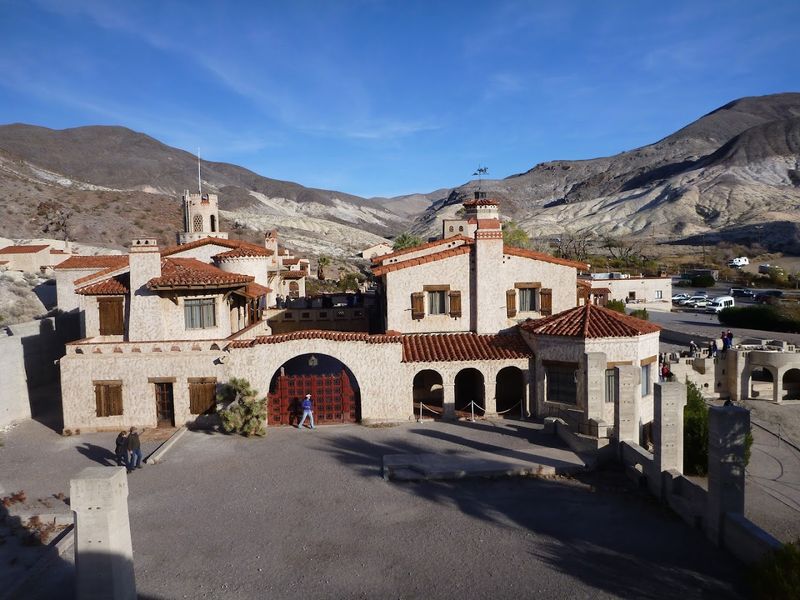
The estate features a prominent clock tower that rises above the valley floor, offering sweeping views of the surrounding landscape.
A weather vane shaped in the likeness of the con man himself spins atop one of the structures, adding a playful personal touch to the otherwise grand design.
Inside, the music room stands as one of the most impressive spaces in the entire estate.
It was designed specifically for entertaining guests and includes a player pipe organ that could fill the room with sound without a musician present.
Arched ceilings and a stained-glass window give the space a cathedral-like quality that feels almost surreal in the middle of a desert.
An unfinished swimming pool on the property tells a quieter story about the financial pressures the owner faced during the Great Depression, when construction slowed and certain projects were simply abandoned.
Every detail of the estate, from the hand-painted tiles to the carved wooden beams, reflects a level of craftsmanship that was rare even for the Gilded Age.
Visiting Scotty’s Castle is less like touring a house and more like walking through an architectural time capsule.
4. A Clever Water And Power System
Operating a luxury estate in one of the hottest and driest landscapes on Earth demanded more than ambition. It required inventive engineering and careful use of the natural environment.
The solution began with springs in nearby Grapevine Canyon, positioned several hundred feet higher in elevation than the villa below. That difference in height made everything possible.
Water flowing downhill generated enough force to spin a Pelton wheel, a turbine designed to convert moving water into usable electricity.
The spinning turbine powered a generator, giving the remote estate its own reliable source of energy at a time when public utility grids were nowhere nearby.
For the early twentieth century, the system reflected remarkably forward-thinking infrastructure. Beneath the house, a bank of nickel-iron batteries stored excess power and provided backup when water flow fluctuated.
The tunnels that housed the equipment added an underground dimension to the property’s already intriguing character.
This self-sufficient energy network demonstrated how thoughtful planning and resourcefulness could transform a remote desert retreat into a fully functional home.
The engineering behind Scotty’s Castle remains one of its most impressive and enduring achievements.
5. The Devastating 2015 Flood
October 2015 brought a powerful rainstorm to Death Valley that few people saw coming with such destructive force.
Flash flooding swept through the region surrounding Scotty’s Castle, pushing walls of mud and debris across the property and destroying the main access road entirely.
The visitor center was buried under several feet of mud, and the surrounding landscape was dramatically reshaped overnight.
Remarkably, the main castle building survived the flooding largely intact, which speaks to the durability of the original construction.
However, the damage to supporting infrastructure was severe enough that the entire property had to be closed to the public immediately following the storm.
Hundreds of thousands of visitors who had planned trips to Death Valley National Park found themselves unable to access one of its most iconic sites.
The road leading to the estate, which winds through rugged canyon terrain, required complete reconstruction rather than simple repairs.
Restoration teams faced the dual challenge of rebuilding damaged structures while also protecting an irreplaceable historic landmark.
The 2015 flood became a turning point in the estate’s modern history, forcing a long-term closure that stretched far beyond what anyone initially anticipated.
It also sparked one of the most ambitious historic preservation efforts in California’s national park system.
6. Limited Tours And Virtual Access
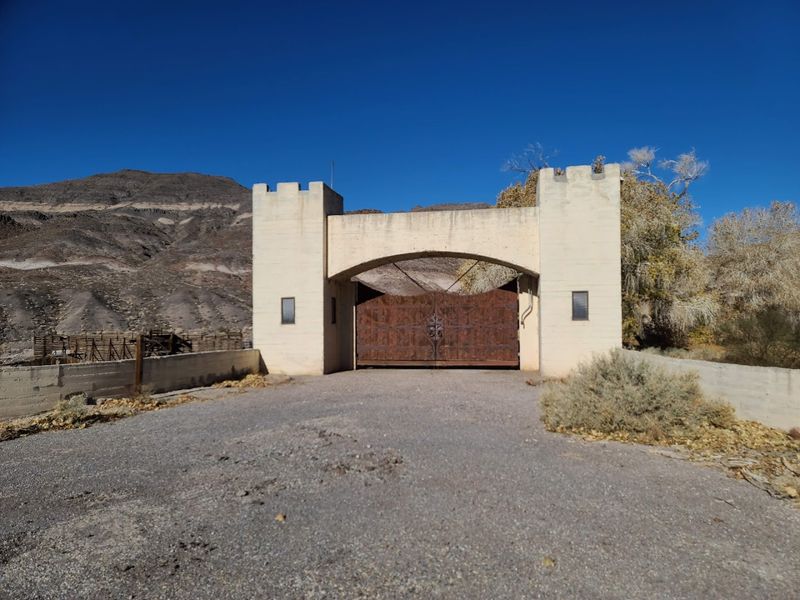
As of January 2026, the National Park Service began offering limited flood-recovery tours of the estate, giving visitors a carefully managed opportunity to step back onto the grounds for the first time in years.
These tours are not the full immersive experience that was available before 2015, but they offer genuine access to the history, architecture, and ongoing restoration story unfolding at the site.
Availability tends to be limited, so checking the official National Park Service website before planning a visit is strongly recommended.
For those who cannot make the trip in person, a 3D virtual tour of Scotty’s Castle is available online, allowing anyone with an internet connection to explore the estate’s rooms and grounds from home.
The virtual experience captures a surprising amount of detail, including the ornate interiors and the dramatic desert setting that surrounds the property.
It serves as both a useful preview for future visitors and a meaningful record of the estate’s condition before restoration work alters certain spaces.
The combination of limited physical access and digital exploration reflects a thoughtful approach to balancing preservation with public engagement.
Scotty’s Castle may not yet be fully open, but the opportunity to experience it in any form remains genuinely worthwhile for history enthusiasts and curious travelers alike.
7. What Visiting Was Like Before Closure
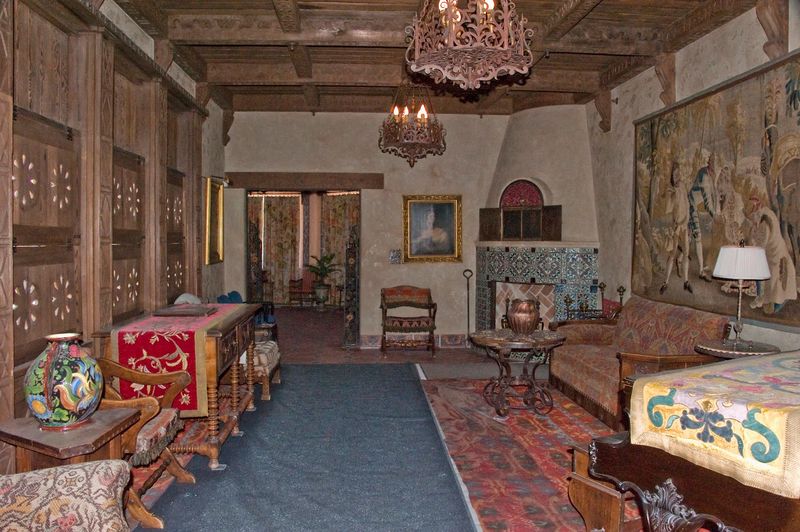
Before the 2015 flood brought everything to a halt, Scotty’s Castle welcomed around 100,000 visitors every single year.
That number reflects just how popular this remote desert estate had become as a destination within Death Valley National Park.
Getting there required a long drive through open desert terrain, which made arriving at the Spanish Colonial Revival villa feel even more surprising and rewarding.
Guided tours were led by costumed park rangers who portrayed characters from the 1930s, bringing the estate’s history to life in a theatrical and engaging way.
Visitors could walk through rooms still furnished with the original belongings of the owners, including clothing, household items, and personal effects that had remained largely untouched for decades.
The effect was less like a museum visit and more like stepping directly into a preserved moment in time.
The music room was a particular highlight, with the player pipe organ occasionally demonstrated during tours to fill the arched space with sound.
Children and adults alike responded to the immersive storytelling approach, which made complex historical narratives feel accessible and human.
The pre-closure visitor experience at Scotty’s Castle set a high standard for how national park historic sites can blend education, entertainment, and authentic preservation into something genuinely memorable.
8. Cultural And Historical Significance
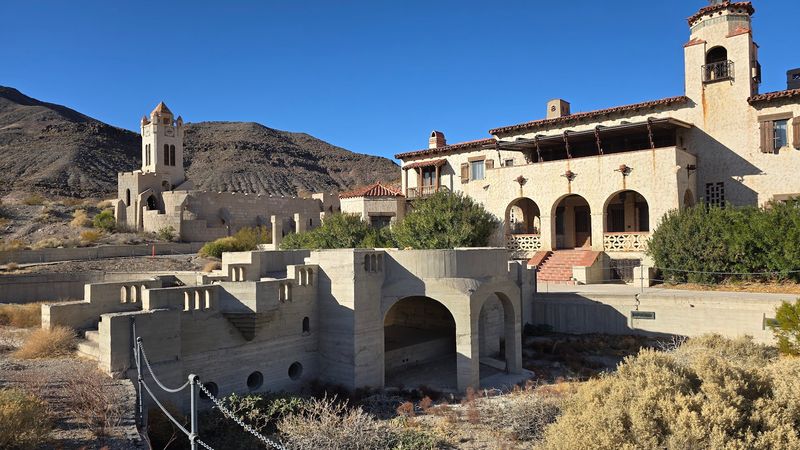
Scotty’s Castle holds a place on the National Register of Historic Places, one of the most meaningful recognitions a historic property in the United States can receive.
That designation acknowledges the estate not only as an architectural accomplishment, but as a cultural artifact that captures a vivid chapter of American ambition and imagination.
The villa stands as physical proof that even the harshest landscapes can become canvases for extraordinary creativity.
Death Valley remains one of the hottest, driest, and lowest places in North America, yet a family chose it deliberately and constructed a retreat designed to endure.
That decision reflects a particular era defined by confidence, engineering optimism, and a willingness to test environmental limits.
Preservationists view the estate as a rare convergence of storytelling, innovation, and architectural vision.
The unlikely partnership at its heart, the ingenuity behind its water-powered systems, and the boldness of building a Mediterranean-style villa in such a remote desert setting all contribute to its legacy.
Scotty’s Castle endures because it represents more than stone and stucco. It embodies aspiration, resilience, and a uniquely American belief that even the most unforgiving terrain can be transformed into something lasting and remarkable.
9. Ongoing Restoration Challenges
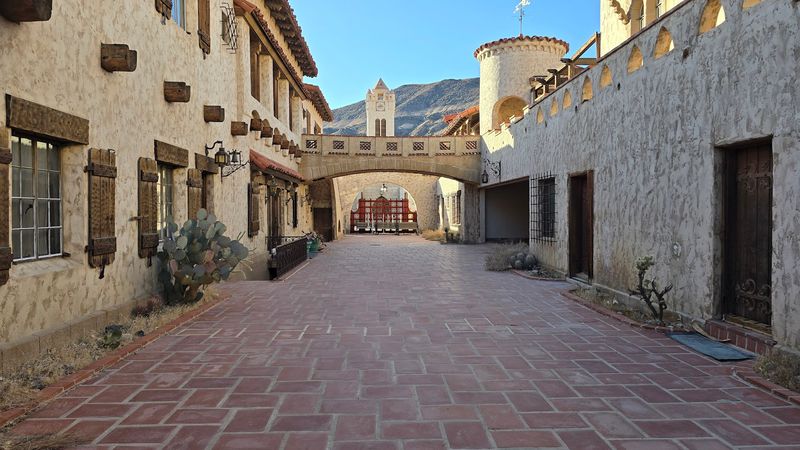
Restoring Scotty’s Castle has proven to be one of the most complex and expensive preservation projects in the history of California’s national parks.
The projected total cost of the restoration effort has climbed to approximately 90 million dollars, a figure that reflects both the scale of the 2015 flood damage and the specialized expertise required to work on a historically designated structure.
Every repair decision must balance modern safety standards with the obligation to preserve original materials and design intent.
A fire in 2021 added another painful setback to the recovery timeline when it destroyed the historic garage and visitor center buildings on the property.
Losing those structures meant that restoration teams had to expand their scope significantly, addressing fire damage on top of the existing flood-related repairs.
The back-to-back disasters tested the resilience of everyone involved in the project.
Despite these compounding challenges, the National Park Service has remained committed to the restoration rather than walking away from it.
Specialized craftspeople, historians, and engineers have all contributed to the effort, working to ensure that what gets rebuilt accurately reflects what was lost.
The restoration of Scotty’s Castle is slow, expensive, and complicated, but the alternative of abandoning it was never seriously considered by those responsible for California’s national park heritage.
10. Future Prospects For Visitors
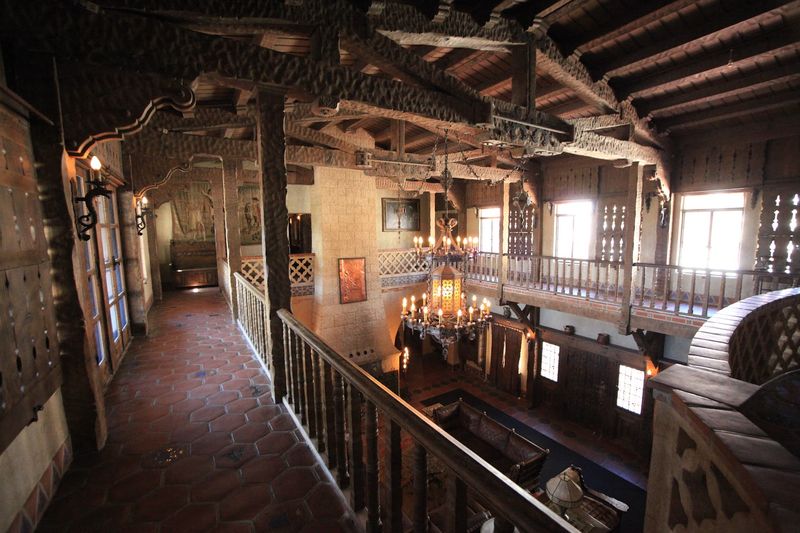
The future of Scotty’s Castle looks cautiously optimistic, with the National Park Service actively working toward a full reopening that will eventually restore the estate to its role as a major visitor destination within Death Valley National Park.
The limited tours that began in early 2026 represent a meaningful first step, signaling that progress is being made even as the larger restoration project continues.
Anyone planning a visit should check the official National Park Service website at nps.gov for the most current and accurate information on tour availability and access.
When the estate does fully reopen, it has the potential to offer an even richer experience than before, with restored spaces and updated interpretive programming that reflects years of additional research and historical study.
The restoration process itself has uncovered details about the original construction that were not previously well documented, giving future tour guides richer material to work with.
Visitors who make the journey to this remote corner of California could find themselves rewarded with one of the most layered and genuinely surprising historic experiences in the American West.
Scotty’s Castle has already survived floods, fires, and decades of desert heat. Its story is far from over, and the passion driving its restoration suggests that the next chapter may be the most compelling one yet.