This Enchanting Central Coast Road Trip Takes You To 12 Of California’s Most Magical Palaces In 2026
The Central Coast has a way of slowing everything down.
Winding roads hug the shoreline, ocean views appear around sudden bends, and quiet hills hide some of the most remarkable historic estates in California.
Driving this stretch of the state often feels like stepping into another era.
Behind iron gates and along old mission paths, grand buildings rise from the landscape with towers, stone walls, and ornate details that look more like something from Europe than the American West.
Some were built by wealthy visionaries who wanted to recreate the elegance of old-world palaces.
Others began as Spanish mission complexes that still stand centuries later, their architecture carrying the weight of California’s earliest history.
The beauty of the California’s Central Coast is that these places are not clustered in a single city.
They are scattered across coastal bluffs, vineyard-covered valleys, and historic towns that make the journey itself part of the experience.
From the dramatic cliffs of San Simeon to the charming communities near Santa Barbara, each stop reveals another castle-like landmark with its own story.
1. Holman Ranch, Carmel Valley
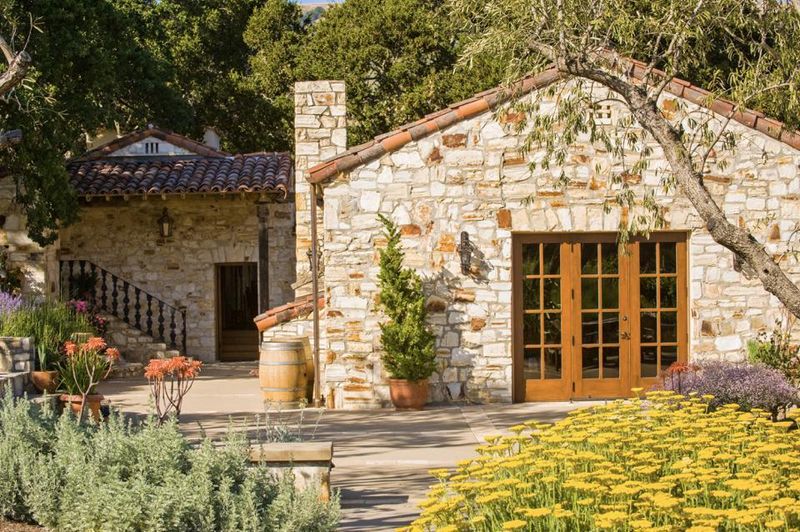
Tucked into the sun-warmed hills of Carmel Valley, Holman Ranch carries a quiet elegance that feels both rustic and refined at the same time.
The property dates back to the 1920s and was originally built as a private retreat, featuring hand-crafted stone buildings that blend naturally into the oak-studded landscape.
Over the decades it has welcomed guests ranging from Charlie Chaplin to Clark Gable, which gives the estate a genuinely storied atmosphere.
Today Holman Ranch operates as an event and hospitality venue, and while it is not a traditional public attraction open daily, the property does host tours and ticketed events that allow visitors to explore the grounds.
The cave cellar, carved directly into the hillside, is one of the most atmospheric spaces on the property.
Stone archways, hand-laid floors, and views across the valley create a sense of stepping back into a quieter era.
Checking the official Holman Ranch website before visiting is strongly recommended to confirm current availability and any scheduled public events.
The surrounding Carmel Valley Road offers excellent scenic driving on its own, making the journey to the ranch feel like part of the experience. It sits at 60 Holman Road, Carmel Valley, CA 93924.
2. Quail Lodge & Golf Club Estate, Carmel Valley
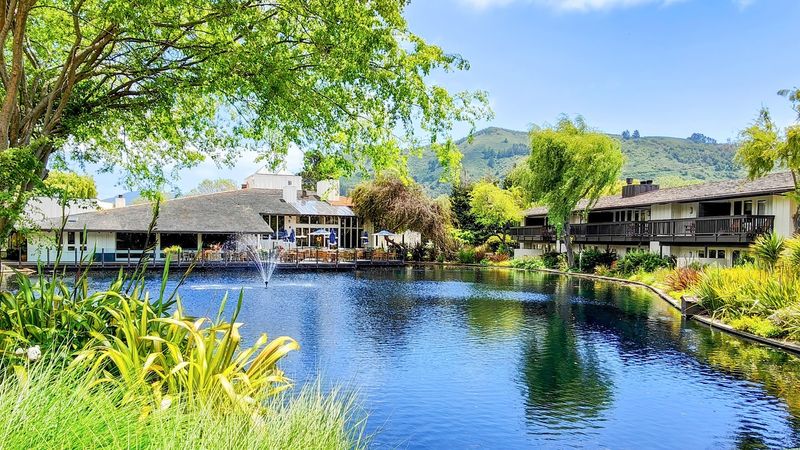
Quail Lodge sits along the gentle curves of Carmel Valley Road like a well-kept secret that locals tend to treasure quietly.
The property at 8205 Valley Greens Drive, Carmel Valley, CA 93923 covers a sprawling estate with a lake, mature trees, and grounds that feel far more expansive than a typical resort.
The architecture leans toward a refined California ranch aesthetic, with low-roofed buildings and natural materials that complement the surrounding landscape rather than competing with it.
The golf course winding through the property adds to the estate-like character, giving the whole place a sense of purposeful design spread across open land.
Guests staying at the lodge can walk the grounds at their own pace, which reveals quiet corners, waterside spots, and views toward the Santa Lucia foothills.
The atmosphere tends to be calm and unhurried, which makes it a welcome contrast to busier coastal stops.
Visiting in spring brings a particularly pleasant experience as wildflowers appear along the fairways and the hills turn a vivid green.
The property is open to guests and visitors using the on-site dining facilities, making it accessible even without an overnight stay.
Quail Lodge offers a grounded, estate-style experience that fits naturally into a Central Coast castle road trip.
3. El Encanto, Santa Barbara
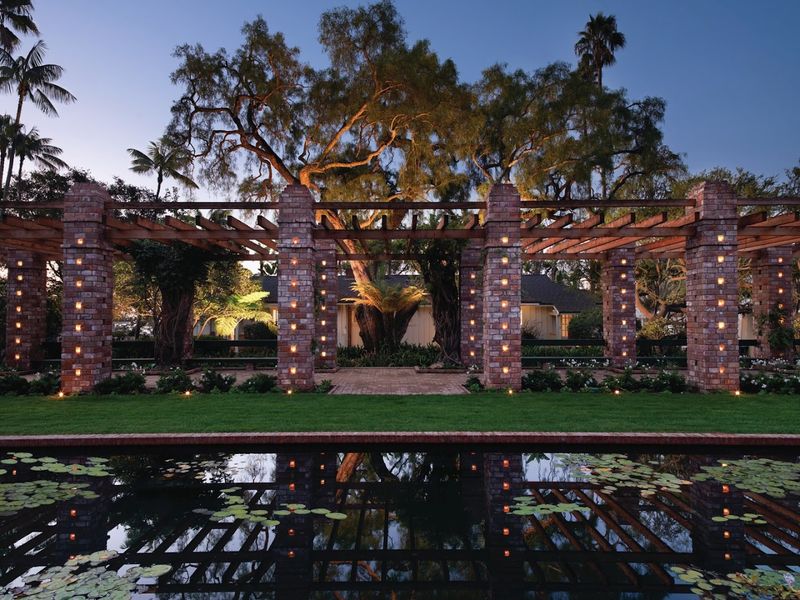
Sitting above the red-tiled rooftops of Santa Barbara with sweeping views toward the Pacific, El Encanto feels like a place that time has treated with unusual kindness.
The hotel at 800 Alvarado Place, Santa Barbara, CA 93103 occupies a hillside garden estate that has been welcoming guests since 1918, making it one of the oldest continuously operating hotels in the region (with a short closing for refurbishment).
The property features a collection of craftsman-style bungalows connected by winding garden paths lined with bougainvillea and mature olive trees.
The grounds are genuinely beautiful in a way that rewards slow walking rather than quick glances, with terraced gardens stepping down the hillside and a heated outdoor pool framed by hedges and flowering plants.
The architecture mixes Spanish Colonial and California Craftsman influences in a combination that feels specific to this part of the coast.
Each bungalow has its own character, with wood-beamed ceilings and fireplaces that add warmth to the interiors.
The infinity-edge pool and lily pond area offer some of the most peaceful outdoor seating on the Central Coast.
Non-staying visitors can access the property for dining at the on-site restaurant, which makes El Encanto approachable without a reservation for a room.
The overall experience leans toward quiet luxury rather than flashy spectacle.
4. Casa Del Herrero, Montecito
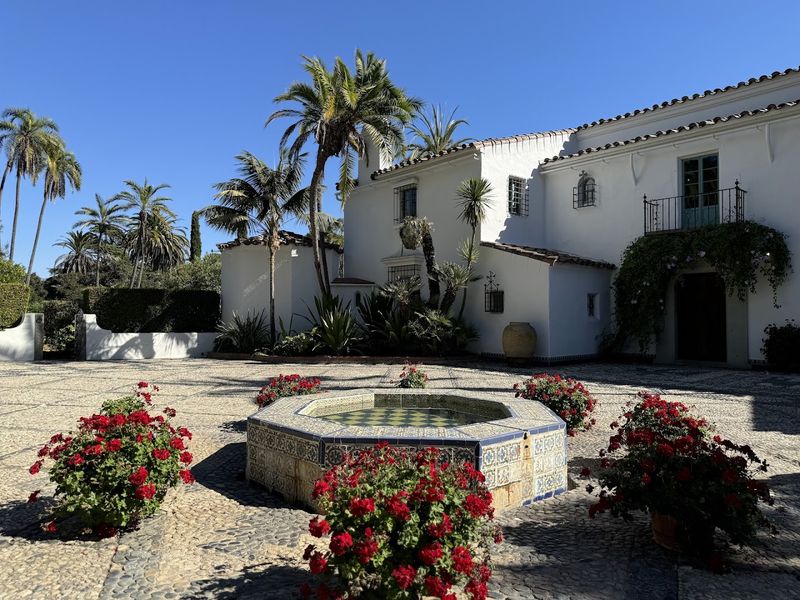
Casa del Herrero translates to House of the Blacksmith, and that name hints at the extraordinary level of hand-crafted detail woven throughout this remarkable Montecito estate.
Built in 1925 for George Fox Steedman, the property at 1387 East Valley Road, Montecito, CA 93108 is considered one of the finest examples of Spanish Colonial Revival architecture in California.
The design was completed by architect George Washington Smith, whose work defined the look of Santa Barbara and its surrounding neighborhoods after the 1925 earthquake.
The estate covers several acres and includes formal gardens with Moorish fountains, wrought iron details, hand-painted tiles, and a carefully curated collection of Spanish antiques.
Tours of the house and gardens are offered on a limited schedule throughout the year, and advance reservations are essential since group sizes are kept intentionally small.
The interiors have been preserved with exceptional care, giving visitors a rare look at how a wealthy California household was actually furnished and used in the 1920s.
The garden design alone is worth the visit, with clipped hedges, citrus trees, and stone pathways creating a series of outdoor rooms that shift in character as visitors move through them.
Casa del Herrero is a National Historic Landmark and one of the most authentically preserved estates anywhere on the Central Coast.
5. Mission Santa Barbara, Santa Barbara
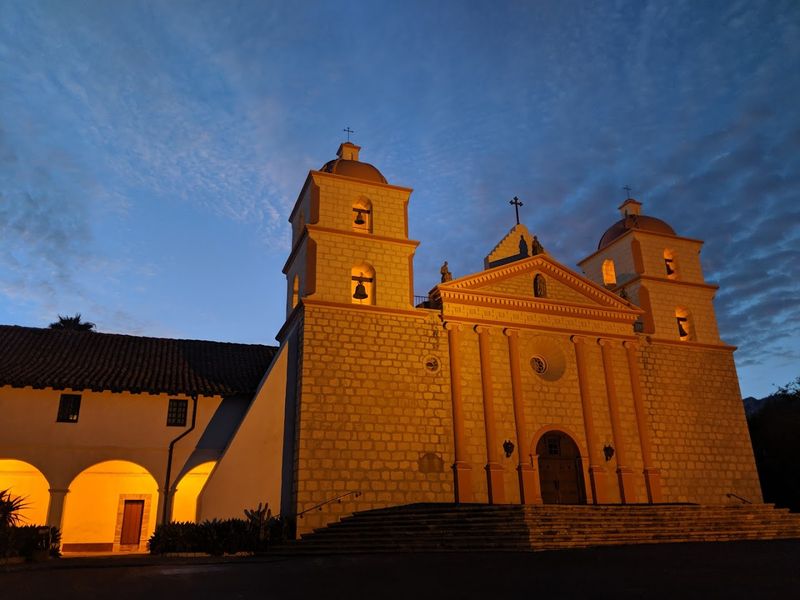
Known as the Queen of the Missions, Mission Santa Barbara carries a sense of authority and grace that sets it apart from every other California mission.
Founded in 1786 and rebuilt multiple times following earthquakes, the current structure at 2201 Laguna Street, Santa Barbara, CA 93105 features twin bell towers that have become one of the most photographed facades in the entire state.
The blush-toned stone walls and red tile roof create a color combination that feels deeply tied to the landscape of Santa Barbara itself.
The mission remains an active parish church while also welcoming visitors to tour the historic cemetery, museum, and gardens on the grounds.
The museum holds an impressive collection of Chumash artifacts, colonial-era religious art, and documents that trace the mission’s complicated history with honesty and detail.
Walking through the rose garden behind the main church is one of the quieter pleasures the property offers.
Admission fees are modest and help support the ongoing preservation of the buildings and collections.
The mission is open most days of the week, though hours can vary around religious observances and special events, so checking ahead is always worthwhile.
Mission Santa Barbara stands as both a living place of worship and a landmark that anchors the city’s architectural identity in a meaningful way.
6. Mission San Miguel Arcángel, San Miguel
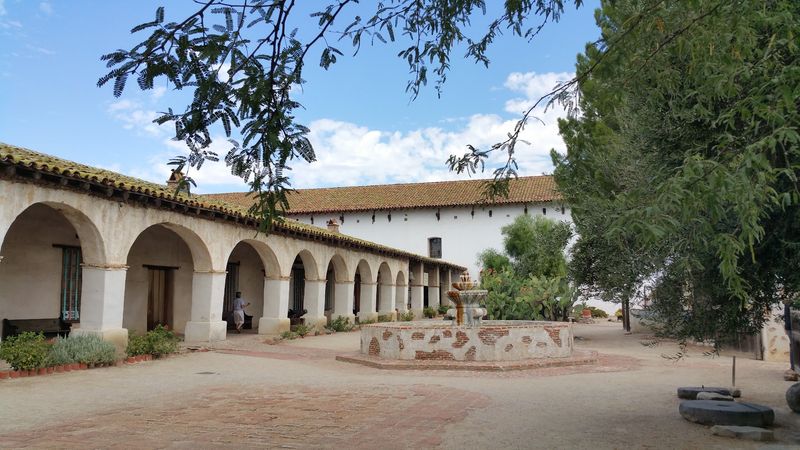
Halfway between San Francisco and Los Angeles, Mission San Miguel Arcángel stands as one of the most authentic and least commercialized of all California’s missions.
Founded in 1797, the mission at 775 Mission Street, San Miguel, CA 93451 retains its original interior murals painted by the Indigenous Salinan people under the guidance of Spanish artist Esteban Munras, making it one of the most visually remarkable mission interiors anywhere in the state.
The colors remain vivid and the detail is extraordinary considering the murals are more than 200 years old.
The surrounding adobe buildings, colonnaded walkways, and simple courtyard garden give the complex a raw, unpolished character that feels very different from more heavily restored missions.
Visiting here tends to feel quieter and more contemplative than stops at larger, more tourist-heavy sites.
The Franciscan friars still maintain a presence at the mission, which continues to function as a place of active ministry and community service.
Tours are available and the small museum on the grounds provides helpful context about the mission’s founding, its relationship with the local Salinan people, and the significant earthquake damage it suffered in 2003 before restoration work was completed.
Mission San Miguel Arcángel is a genuinely moving stop that rewards visitors who take time to look closely at what surrounds them.
7. Mission San Luis Obispo De Tolosa, San Luis Obispo
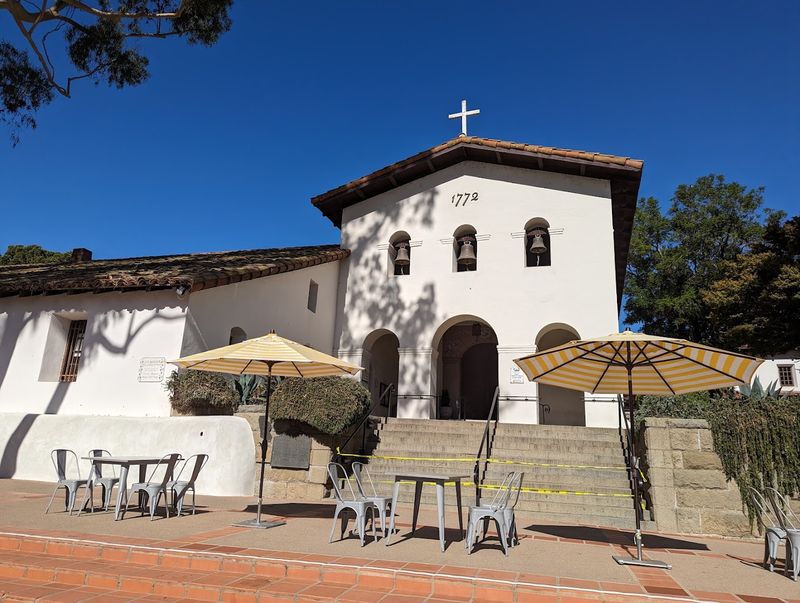
Right in the heart of downtown San Luis Obispo, Mission San Luis Obispo de Tolosa feels less like a museum piece and more like a neighborhood anchor that the city has simply grown up around.
Founded in 1772 by Father Junipero Serra, the mission at 751 Palm Street, San Luis Obispo, CA 93401 is one of the oldest continuously operating Catholic parishes in California.
The building sits beside the lively SLO Creek walk and Mission Plaza, making it one of the most accessible and centrally located missions on the entire road trip route.
The mission’s church interior is open to visitors and features whitewashed walls, wooden beams, and a simple altar that reflects the original Franciscan aesthetic without heavy ornamentation.
A small museum adjacent to the church holds artifacts, documents, and exhibits that trace the mission’s role in the founding of San Luis Obispo as a community.
The surrounding plaza is a popular gathering spot for locals, which gives the site a lively, lived-in energy rather than a purely historical one.
Visiting on a weekday morning tends to offer a calmer experience compared to weekend afternoons when the plaza fills with foot traffic.
The mission is open daily for self-guided visits and the surrounding downtown area makes it easy to combine the stop with lunch or a walk along the creek path.
8. La Purísima Mission State Historic Park, Lompoc
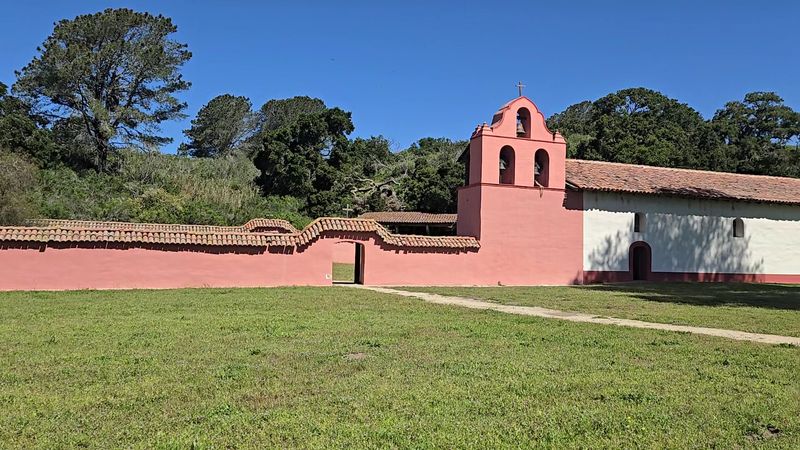
La Purísima Mission State Historic Park offers something that most other California missions simply cannot match: a fully reconstructed mission complex set within open ranchland that gives visitors a realistic sense of how these communities actually functioned in the early 19th century.
Located at 2295 Purisima Road, Lompoc, CA 93436, the park covers more than 1,500 acres and includes restored adobe buildings, period furnishings, livestock areas, and gardens planted with the same crops grown by mission inhabitants two centuries ago.
The scale of the restoration is genuinely impressive.
Walking from building to building across the open grounds, with hills visible in every direction and minimal modern development in sight, creates an immersive quality that smaller urban mission sites cannot replicate.
The park staff and docents are knowledgeable and approachable, often available to answer questions during self-guided visits.
Living history programs are held periodically throughout the year, bringing the site to life with demonstrations of traditional crafts and agricultural practices.
The park is open daily and a modest day-use fee applies for vehicle entry.
Comfortable walking shoes are recommended since the grounds require a fair amount of walking across uneven terrain.
La Purísima is consistently described by visitors as one of the most rewarding and transportive mission experiences available anywhere in California.
9. Hearst Castle, San Simeon
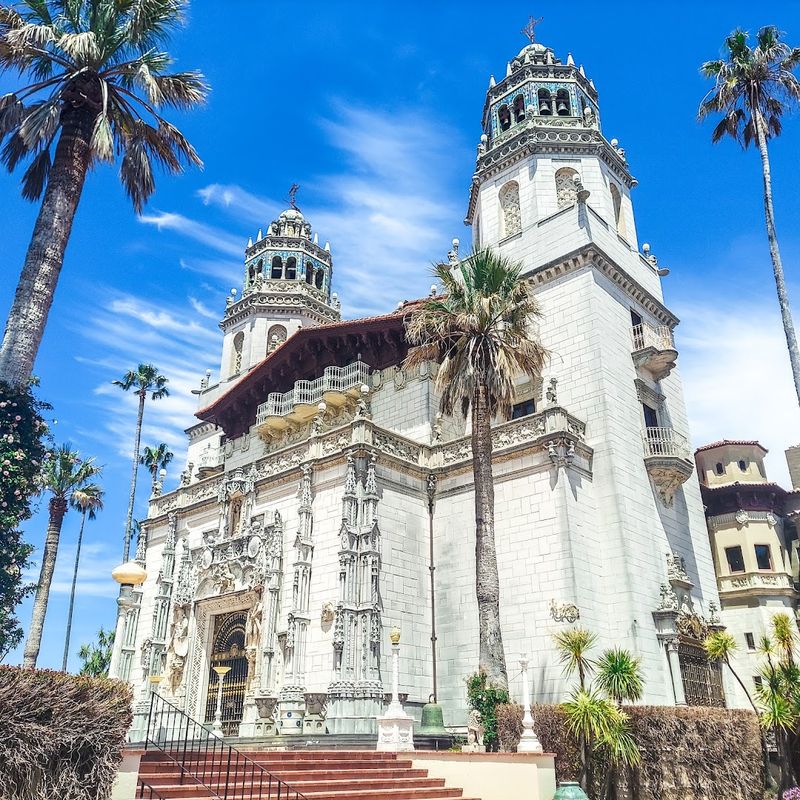
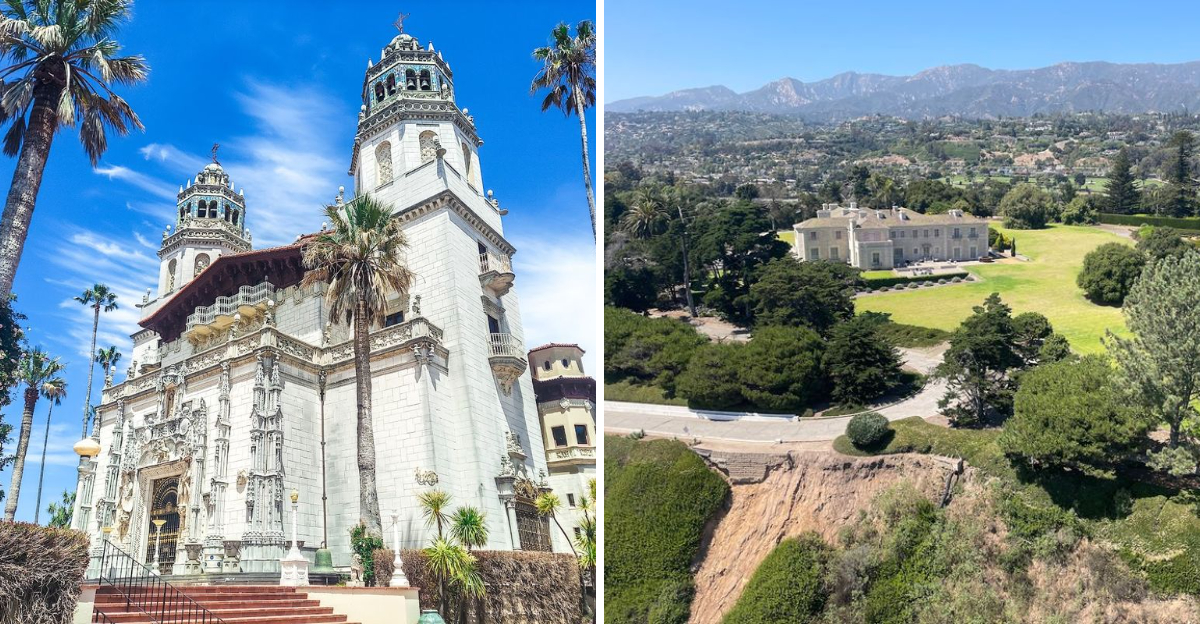
Perched high on a hill overlooking the Pacific Ocean, Hearst Castle is one of the most jaw-dropping estates ever built in the United States.
Located at 750 Hearst Castle Road, San Simeon, CA 93452, the castle was designed by architect Julia Morgan for newspaper publisher William Randolph Hearst starting in 1919.
Construction continued for nearly three decades, resulting in a 115-room mansion surrounded by 127 acres of gardens, terraces, and two spectacular swimming pools.
The Neptune Pool alone is worth the visit, with its classical colonnades and mountain backdrop creating a setting that feels genuinely surreal.
Guided tours are available daily through California State Parks, and different tour options focus on different areas of the estate.
The indoor Roman Pool, decorated with gold and blue mosaic tiles, is another highlight that tends to leave visitors speechless.
Tickets should be booked in advance since tours fill up quickly, especially on weekends and during summer months.
The hilltop location means temperatures can be cooler than the coast below, so bringing a light layer is a practical idea.
Hearst Castle remains one of California’s most recognizable landmarks and a genuinely unforgettable starting point for any Central Coast road trip.
10. Lobero Theatre Historic Building, Santa Barbara
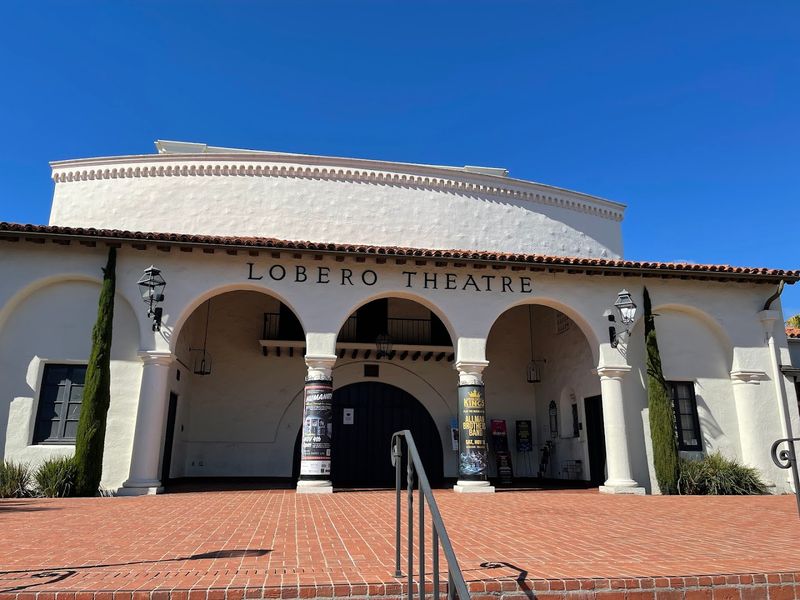
The Lobero Theatre holds the distinction of being the oldest continuously operating theatre in California, a fact that gives even a casual visit a surprising amount of historical weight.
The building at 33 East Canon Perdido Street, Santa Barbara, CA 93101 was originally constructed in 1873 by Italian immigrant Jose Lobero and was rebuilt in its current Mission Revival form in 1924 following the original structure’s deterioration.
The arched entryway and warm plaster walls give the exterior a castle-like quality that fits naturally into Santa Barbara’s Spanish-influenced streetscape.
The theatre seats just under 700 people, which creates an intimate performance atmosphere that larger venues rarely achieve.
Productions range from classical music and dance to contemporary performance and spoken word, making the programming genuinely varied throughout the year.
The interior retains historic architectural details while incorporating modern sound and lighting equipment that supports a high-quality performance experience.
Even visitors not attending a show can appreciate the exterior and the small lobby area during open hours, and the surrounding Canon Perdido Street offers pleasant walking past other historic Santa Barbara buildings.
Checking the Lobero Theatre’s official schedule in advance is the best way to plan a visit around a live performance, which is the most rewarding way to experience this landmark.
The building itself tells a story of cultural continuity that few California venues can claim.
11. Bellosguardo Foundation (Clark Estate), Santa Barbara
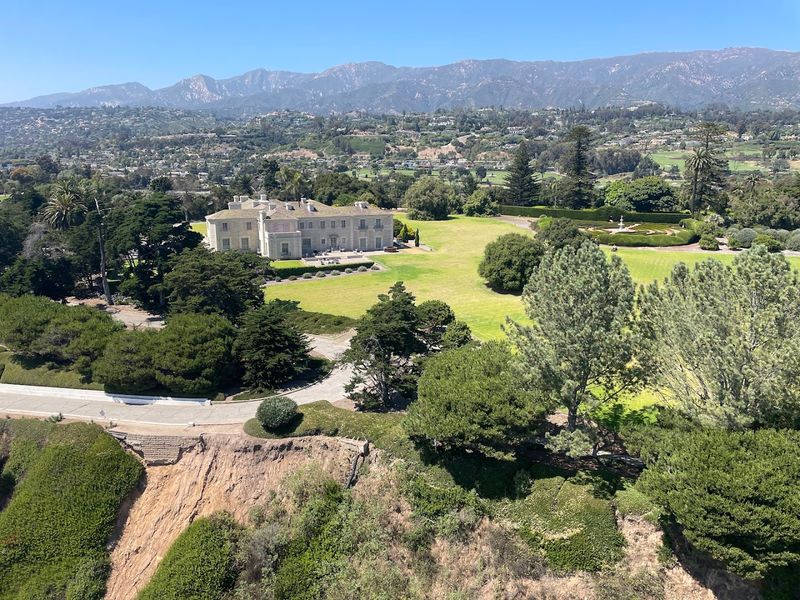
Bellosguardo sits on a coastal bluff above Santa Barbara with the kind of commanding presence that makes it easy to understand why opera legend Huguette Clark chose it as her primary California residence for decades.
The estate at 1407 E Cabrillo Blvd, Santa Barbara, CA 93108 covers approximately 23 acres and includes a grand mansion, formal gardens, and sweeping views toward the Channel Islands on clear days.
Clark left the property to a foundation upon her death in 2011, and the estate has since been opened for public access and preservation.
As of recent updates, plans have been developed to open portions of the estate to the public, though the timeline and specific access arrangements have continued to evolve, so checking current status before visiting is strongly recommended.
The mansion itself is a substantial structure with Mediterranean influences, high-ceilinged rooms, and period details that reflect the early 20th century wealth that built it.
The gardens, which include mature cypress trees and formal plantings, are among the most dramatic private landscapes on the California coast.
Bellosguardo represents a rare type of estate where architectural grandeur, natural beauty, and a genuinely unusual personal history converge in one place.
Keeping an eye on announcements from the Bellosguardo Foundation is the most reliable way to stay informed about public access opportunities as they develop.
12. Mission Santa Inés, Solvang
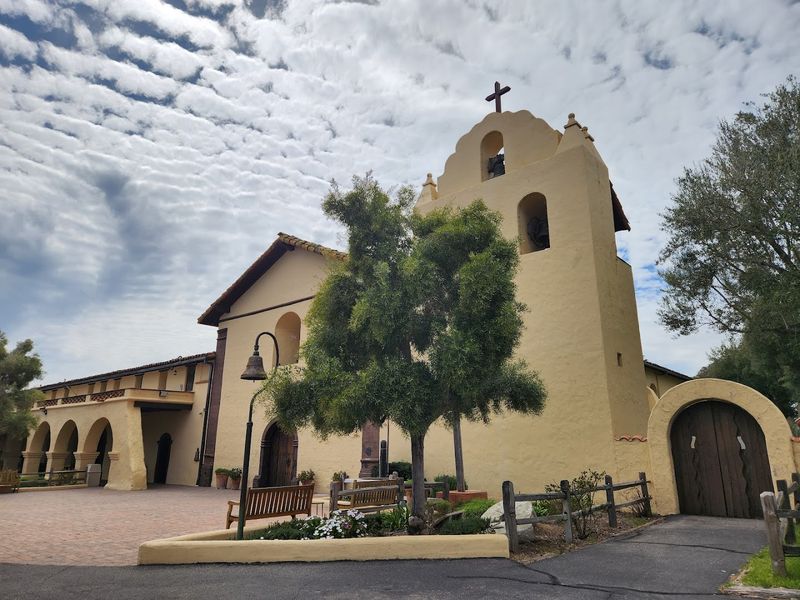
Nestled at the edge of the charming Danish-influenced town of Solvang, Mission Santa Inés offers a striking contrast of California mission history set against a backdrop of European-style architecture and rolling Santa Ynez Valley hills.
Founded in 1804 and located at 1760 Mission Drive, Solvang, CA 93463, the mission is one of the later California missions and features a graceful white facade with a single bell tower that frames beautifully against the blue skies typical of the Santa Ynez Valley.
The surrounding gardens include roses and native plantings that bloom reliably in spring.
The mission museum holds a notable collection of vestments, manuscripts, and religious art that span several centuries and provide genuine insight into both Spanish colonial culture and Chumash history in the region.
Unlike some of the more heavily trafficked missions, Santa Inés tends to draw a quieter crowd, which makes lingering in the courtyard or the small chapel feel genuinely peaceful.
The mission remains an active parish, and the atmosphere reflects a community that still values the site as a living place of faith.
Solvang itself is worth exploring before or after the mission visit, with bakeries, shops, and a walkable town center that make for an enjoyable afternoon.
Mission Santa Inés is an ideal final stop on a Central Coast castle road trip, offering reflection, history, and a warm sense of arrival.