These 11 Abandoned Places In North Carolina Feel Like Stepping Into Another World
North Carolina has a way of holding onto its ghosts.
From crumbling mill villages to eerie mountaintop theme parks, this state is full of places time forgot.
And that’s exactly what makes them so fascinating. No gift shops.
No parking fees. Just pure, untold stories waiting to be explored.
I’ve driven some seriously sketchy back roads and hiked through more poison ivy than I care to admit, all in the name of finding the real stories behind these forgotten places.
If you’re the kind of person who gets more excited by a rusted gate than a velvet rope, you’re in the right place.
1. Ghost Town In The Sky, Maggie Valley
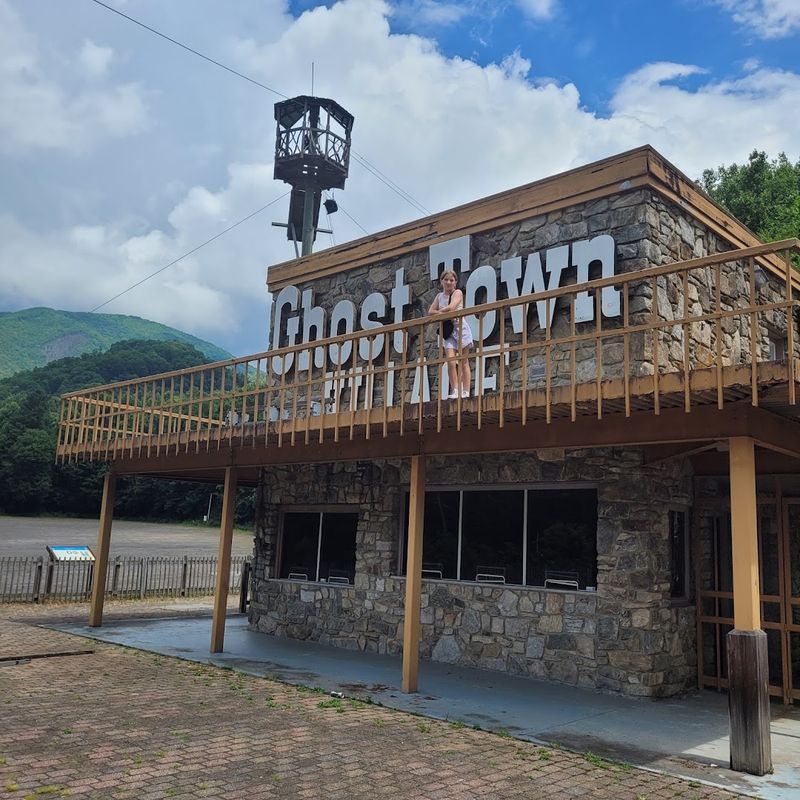
High above Maggie Valley, North Carolina, at about 4,600 feet on Buck Mountain, sits one of the boldest attractions the state has ever attempted: Ghost Town in the Sky in Maggie Valley.
The name alone sounds almost unreal. A Wild West theme park built on a steep mountain in western North Carolina?
It feels like someone looked at an almost vertical slope and said, “Let’s put it up there.” And somehow, they did.
When the park opened in 1961, visitors reached it by chairlift or funicular railway. There was no casual drive to the top.
The journey up was part of the thrill. You didn’t just arrive, you rose into a mountaintop version of the Old West.
For decades, families strolled wooden boardwalks, watched staged gunfights, and rode amusement rides with sweeping mountain views in every direction. It was quirky. A little dramatic. Completely memorable.
Today, the official address – 16 Fie Top Rd, Maggie Valley, NC 28751, still marks the spot, even though the gates aren’t welcoming crowds the way they once did.
After multiple closures and attempted revivals, the property now sits quiet above the valley. The rides remain in place, slowly weathering in the mountain air.
Saloon facades and the old jailhouse set still line the dusty main street, but there’s no music drifting through the hills. Just wind.
And fog that rolls across the ridge without warning. Over the years, new owners have promised to bring it back. Some tried.
None fully restored its former life. From the valley floor, you can still spot the outline of the structures on clear days, a faint silhouette against the mountains.
There’s something strangely emotional about it. It doesn’t feel completely abandoned. It feels paused. Like it’s waiting for either a dramatic comeback or one final goodbye.
In a state full of unusual roadside stories, Ghost Town in the Sky might be the most fittingly named of them all.
2. Henry River Mill Village, Hildebran
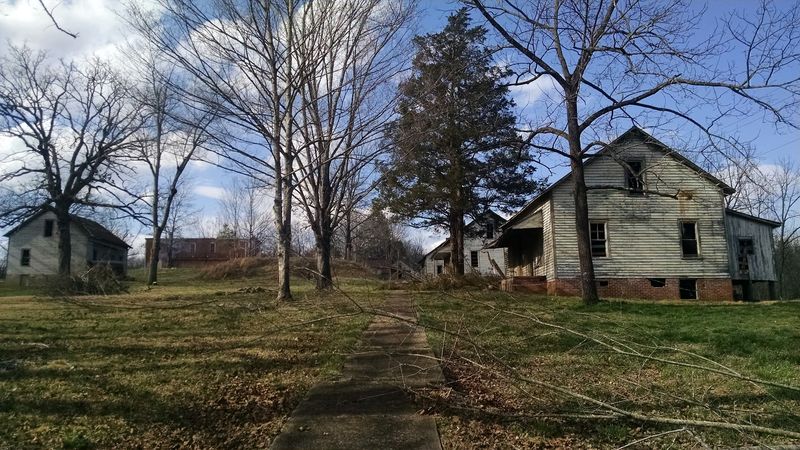
Most people have seen Henry River Mill Village without even knowing it. It’s District 12 from The Hunger Games.
The 2012 film used this abandoned textile village in Hildebran, North Carolina, as the backdrop for Katniss Everdeen’s hometown. And honestly, the crew didn’t have to change much.
The place already looked the part.
The mill shut down in the 1970s. Since then, the company houses, general store, and factory buildings have mostly been left alone.
Walking through the village feels strange in a quiet way. The houses are small and nearly identical, lined up along a dirt road.
Peeling paint. Sagging porches. Windows that haven’t seen light in years.
The official address is 4255 Henry River Road, Hickory, NC 28602, just outside Hildebran in Burke County. The layout is still easy to recognize.
The old general store sign is still there. Nothing looks dramatically destroyed.
It’s more like the town slowly ran out of energy and never recovered.
There have been some efforts to stabilize and preserve the buildings, which is good news if you want to see it before time does more damage. The village sits beside the Henry River, and that setting adds to the mood.
It’s quiet. Still. A little heavy. If you visit, be respectful. Don’t wander where you shouldn’t.
Don’t take anything with you. And maybe take a second to appreciate how this forgotten North Carolina mill town ended up on the big screen. It was the perfect choice.
3. The Road To Nowhere, Bryson City
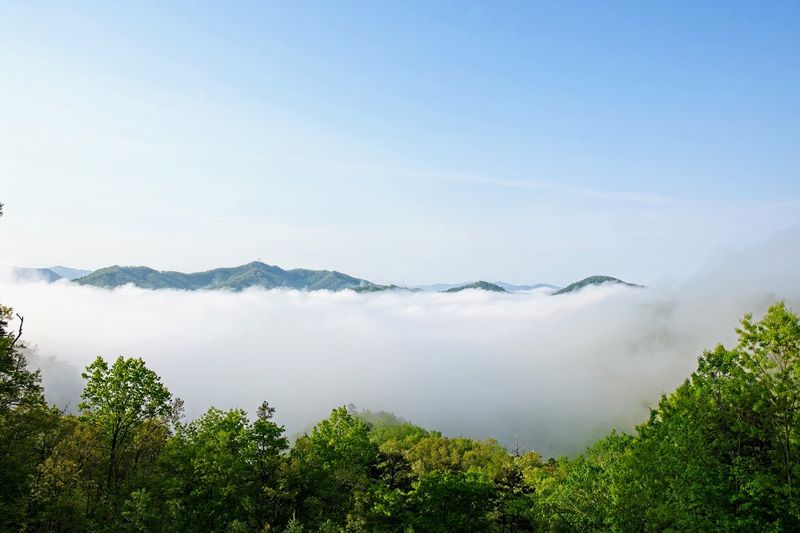
There’s something strange about driving a mountain road that just… stops.
The first time I followed Lakeview Drive out of Bryson City, North Carolina, my GPS insisted the road continued. It didn’t.
Instead, I ended up staring at a dark tunnel carved into the mountain. No overlook. No dramatic sign. Just the quiet entrance to a story that was never finished.
The Road to Nowhere is located inside Great Smoky Mountains National Park, about six miles north of Bryson City via Lakeview Drive, also known locally as Fontana Road.
The pavement runs through beautiful mountain scenery and then abruptly ends at a 1,200-foot tunnel.
On the other side? Not another highway. Just dense forest. It feels surreal the first time you see it.
The backstory makes it even more complicated. When Fontana Lake was created in the 1940s, rising water flooded the only road that connected Swain County families to their ancestral cemeteries.
The federal government promised to build a replacement. Construction began.
Then it stopped. Environmental concerns and funding issues slowed everything down, and the dispute dragged on for decades.
Swain County eventually accepted a financial settlement, but the road was never completed.
The asphalt still ends at that same tunnel, like a sentence left unfinished. Walking through the tunnel is its own experience. It’s dark, damp, and completely unlit.
Water drips from the ceiling. Every step echoes back at you. Bring a flashlight. And maybe a friend if you’re not a fan of enclosed spaces.
Once you step out the other side, hiking trails lead into quiet backcountry that sees far fewer visitors than the park’s main areas. It’s peaceful in a way that feels almost unexpected after the strange approach.
What began as a broken promise has become one of North Carolina’s most unusual and atmospheric stops. It’s simple. A little odd. And somehow unforgettable.
4. Land Of Oz, Beech Mountain
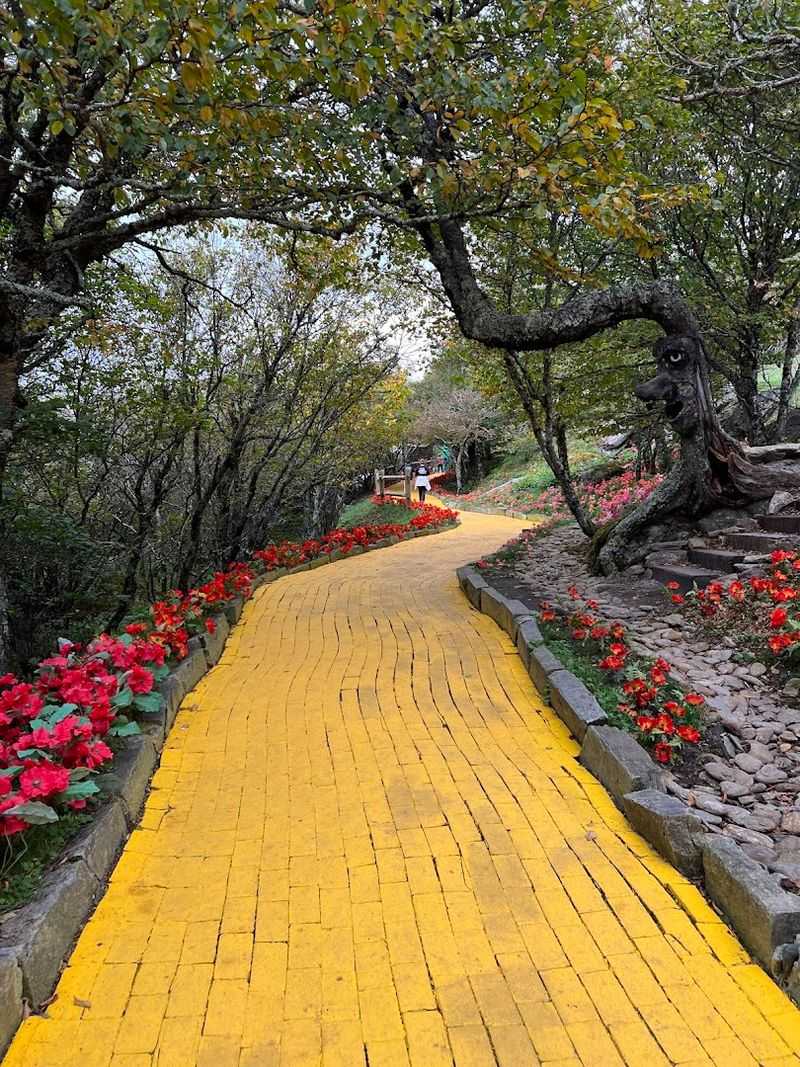
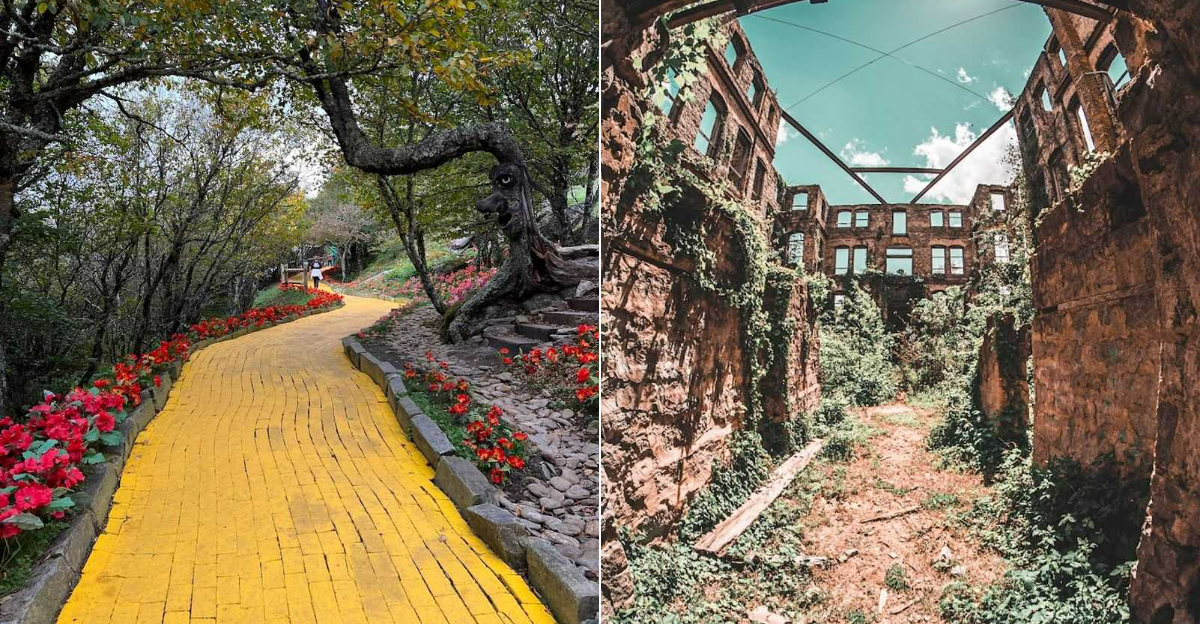
Somewhere high on Beech Mountain in western North Carolina, a yellow brick road still winds through the trees.
The Land of Oz opened here in 1970, sitting at more than 5,500 feet above sea level. Families once rode to the top for a full Wizard of Oz experience.
There was Dorothy’s farmhouse, the Emerald City, costumed characters, and mountain views that stretched for miles.
Then a fire tore through the park in 1980. It never truly recovered. By the end of that year, it was closed.
Today, the property sits near Beech Mountain Ski Resort at 1007 Beech Mountain Parkway in Beech Mountain, North Carolina. It’s privately owned, so this isn’t a place for spontaneous exploring.
The mountain is steep, and security is taken seriously. But once a year, the gates open.
Every fall, the owners host “Autumn at Oz,” a ticketed event where actors return, the sets are refreshed, and the old story comes back to life for a few days. It’s nostalgic.
A little surreal. And honestly, a bit emotional if you grew up with the film. The yellow brick road is still there. Cracked. Faded. Slowly being reclaimed by the forest.
The paint clings stubbornly to the bricks, like it refuses to let the memory disappear.
If you visit during the festival, you’ll walk past Dorothy’s farmhouse and through the Emerald City gates with the mountains rising behind you. It feels strange in the best way.
Go in October. Buy a ticket. And be ready for something slightly offbeat.
North Carolina does unusual very well.
5. Castle Mont Rouge, Rougemont
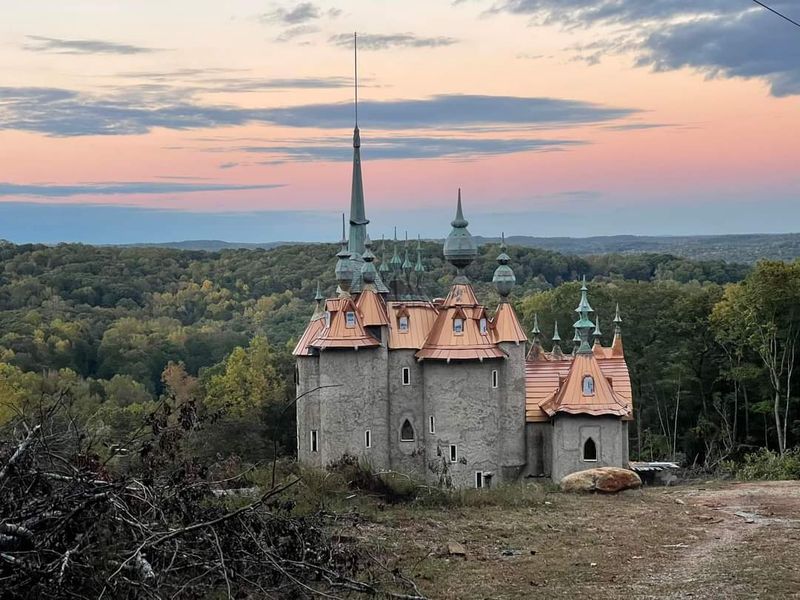
Sculptor Robert Mihaly began building a castle in Rougemont, North Carolina. And then he stopped.
What remains is Castle Mont Rouge, located at 100 Castle Mont Rouge Road in Rougemont, NC. It rises out of the trees like it drifted in from another continent.
Stone towers. Arched openings. Thick walls that look far older than they are.
It was never fully completed, but it was never truly abandoned either.
For years, the unfinished walls became a canvas for graffiti artists. Layers of spray paint covered the stone, adding color to the gray structure.
It gave the place an unexpected personality. Not polished. Not pristine. Just raw and oddly compelling.
The turrets and archways have real presence. This isn’t a backyard project thrown together on a whim. There was a clear vision behind it. The scale alone tells you that.
Over time, there have been reports of construction starting up again, then going quiet. The castle seems to exist in a constant in-between state.
Not finished. Not forgotten.
It sits on private property, so wandering up to it isn’t advised. But from the road, you can catch glimpses of the towers through the trees.
And honestly, that partial view makes it even better. It feels hidden. Almost secret.
If you’re driving through the Piedmont region of North Carolina, detouring through Rougemont just to see it from a respectful distance is worth it. There’s nothing else quite like it in the state.
6. St. Agnes Hospital, Raleigh
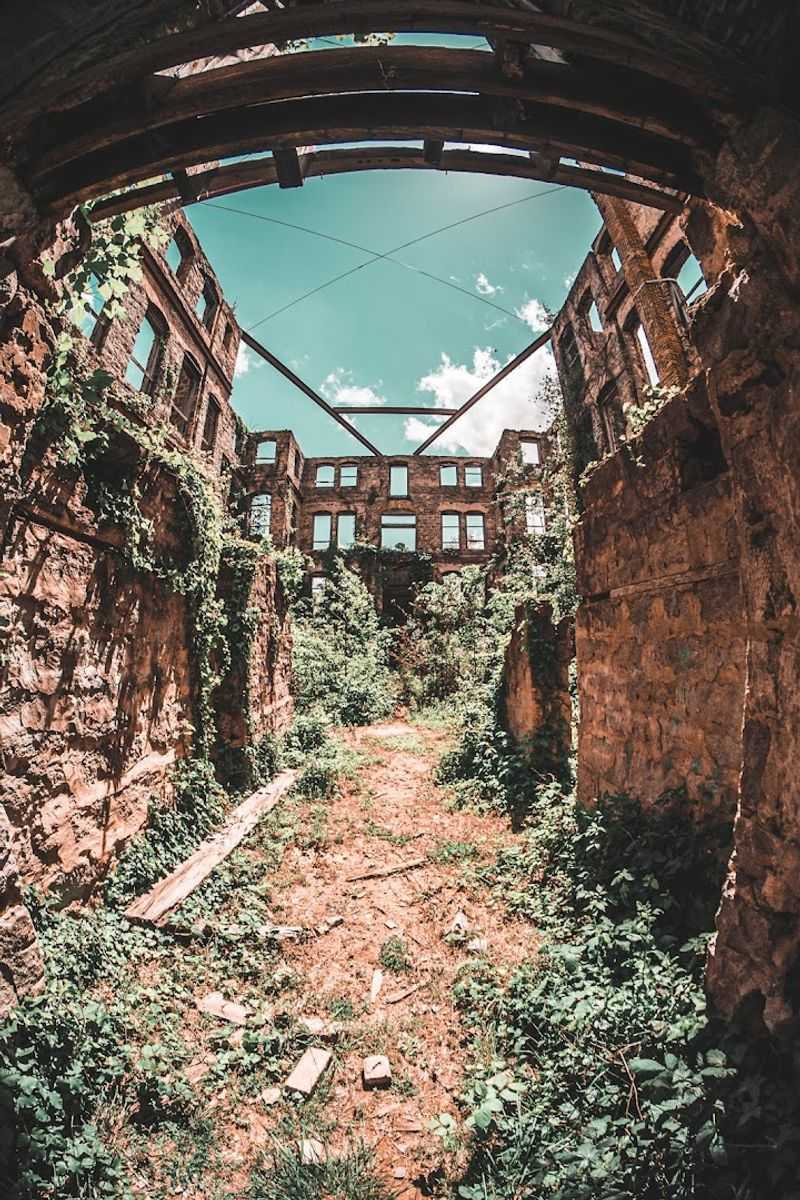
St. Agnes Hospital in Raleigh, North Carolina, wasn’t just a hospital. It was a lifeline.
Opened in 1896 on the campus of St. Augustine’s University, it was one of the few medical facilities in the Southeast that treated African American patients with dignity during the era of segregation.
At its peak, it was the leading Black hospital in the region, training nurses and doctors when virtually every other institution in the state refused to.
It closed in 1961, and the stone shell of the building has been standing on the St. Augustine’s campus ever since, slowly deteriorating but stubbornly refusing to disappear. The Gothic stone walls still command attention; this wasn’t a small operation.
Walking past the empty window frames and weathered stonework, you get a real sense of what was lost when the doors closed.
Preservation efforts have been ongoing, with advocates pushing to have the building recognized and restored as a monument to African American medical history in North Carolina.
The ruins carry real weight, not just photogenic decay, but a physical record of resilience and injustice. They deserve recognition.
If you’re in Raleigh, the St. Augustine’s campus is open, and the hospital ruins are visible from the grounds at 1300 Sarah Hunter Lane, Raleigh, NC 27610. Read up on its history first.
Then go see it for yourself.
7. Stonewall Jackson Training School, Concord
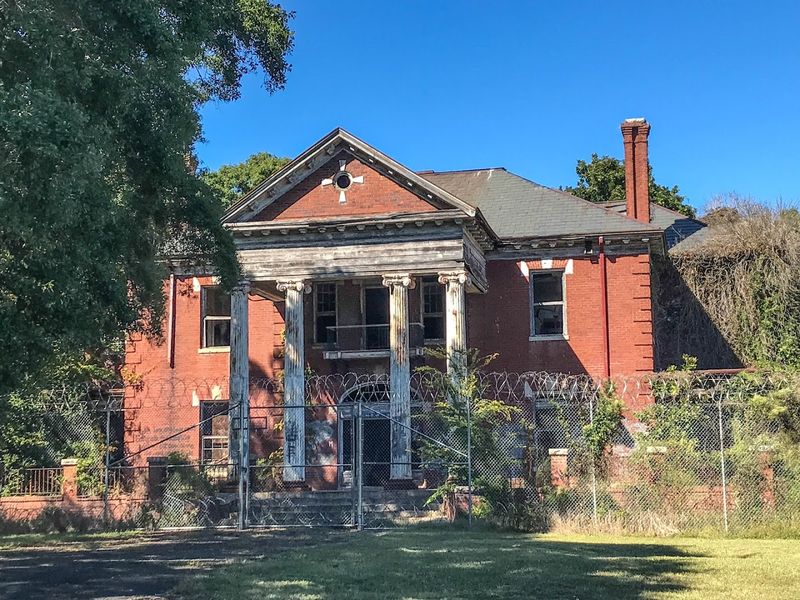
The name sounds almost respectable, until you learn what it really was: a reform school for boys with a history that can make your stomach turn.
Stonewall Jackson Training School in Concord, North Carolina, operated as a juvenile correctional facility, and the stories from its decades of operation show an institution that leaned far more toward punishment than rehabilitation.
The sprawling red-brick campus looks exactly as you’d expect: imposing, institutional, and deeply unsettling. The buildings are massive, multi-story structures with high windows and thick walls, surrounded by overgrown grass and rusted chain-link fences.
Nature has been reclaiming the campus for years, pushing through cracks in the pavement and climbing the brick walls with quiet determination.
Some buildings have been repurposed or demolished, but large sections of the original campus remain.
Located at Southern Rlwy #1157, Concord, NC 28027, it sits in a town better known for NASCAR and outlet shopping, a contrast that makes the site even more jarring.
Urban explorers have documented the interiors extensively online, and the photos are as grim as you’d imagine.
Stonewall Jackson Training School is more than just abandoned buildings, t’s a stark, physical reminder of a difficult chapter in North Carolina’s history, one that deserves attention and reflection, not just curiosity.
8. Endor Iron Furnace, Cumnock
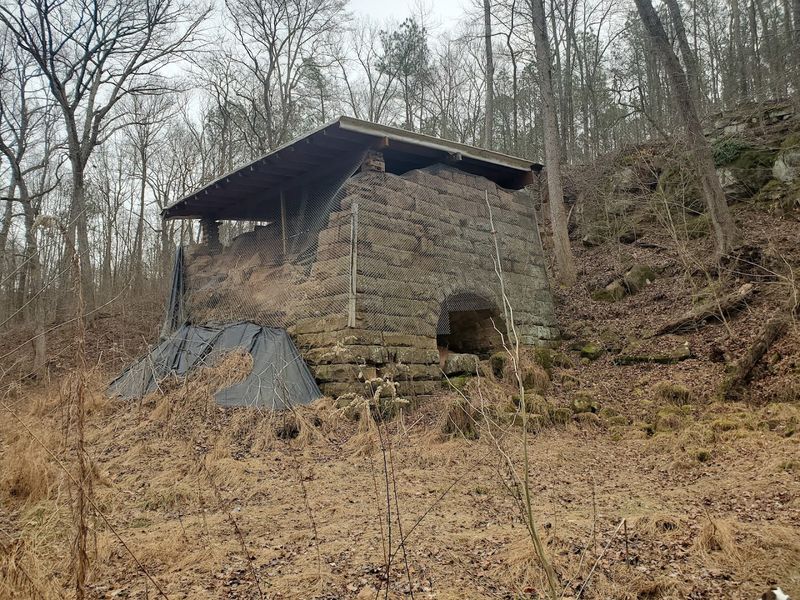
Standing 35 feet tall along the Deep River in Cumnock, North Carolina, the Endor Iron Furnace looks like something out of a fantasy novel. This massive sandstone tower, draped in moss, sits alone in a quiet nature preserve, almost as if it’s been there since the beginning of time.
It hasn’t, but 1862 is close enough. Built to produce pig iron during the Civil War, the furnace is one of the oldest industrial ruins in the state.
The scale surprises most visitors. You expect a crumbling foundation or a few scattered bricks.
Instead, you get this enormous, intact structure rising out of the forest floor like it’s daring you to figure out its story. The sandstone has weathered beautifully over 160-plus years, and the moss gives it that perfect green hue that makes industrial ruins feel both ancient and alive.
Access is easy. The furnace sits within a small preserve managed by Chatham County, with a short trail from the parking area.
There’s no admission fee, no crowds, and no gift shop selling pig iron souvenirs, just the furnace, the river, and the wind rustling through the trees.
For both industrial history fans and casual explorers, Endor Iron Furnace at 175 Endor Iron Furnace Rd, Cumnock, NC 27235 offers a striking, almost magical experience that feels effortless to enjoy.
9. Brunswick Town, Southport
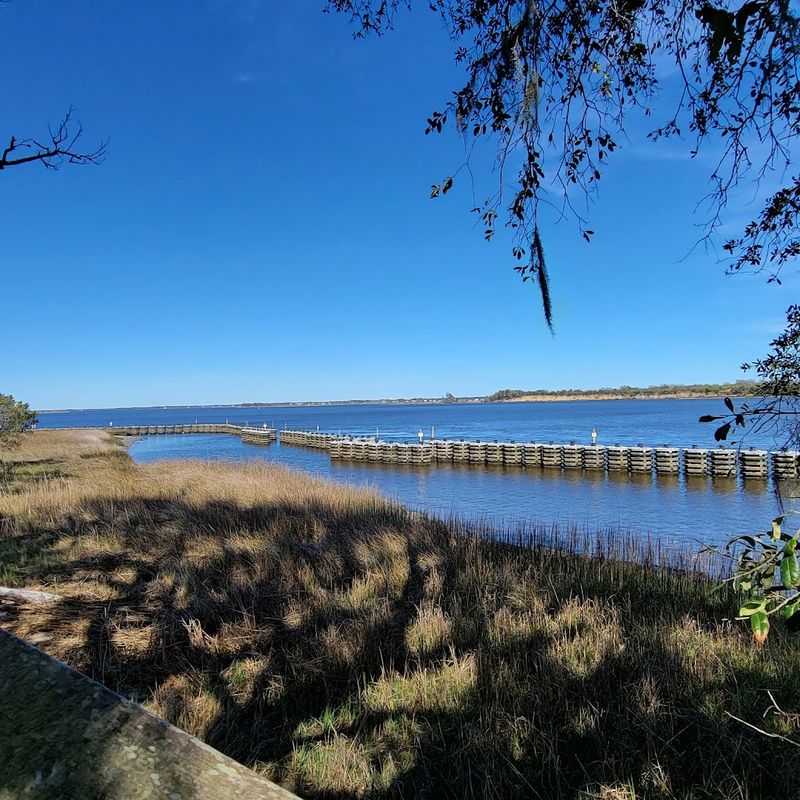
Brunswick Town had one of the rougher endings in North Carolina colonial history: the British burned it in 1776, the residents scattered, and nobody ever bothered to rebuild.
The town that was once a major colonial port and the seat of the Royal Governor just ceased to exist, leaving behind stone foundations that sat quietly in the coastal soil for nearly two centuries before archaeologists started paying attention.
The site near Southport is now managed by the North Carolina State Historic Sites program, which means it’s properly accessible and well-documented without being over-developed.
You can walk among the exposed foundations of 18th-century homes and commercial buildings, reading the outlines of rooms and streets in the stonework. It’s the kind of place where the ground itself tells the story.
The Civil War added another layer, Confederate soldiers built Fort Anderson’s earthworks directly over the colonial ruins, which means the site carries two distinct historical chapters in the same soil.
The earthworks are still impressively intact, rising in long grassy mounds across the landscape. Standing between the colonial foundations and the Confederate fortifications, you get a compressed sense of how much happened on this particular patch of North Carolina ground.
Admission is free, the grounds are open year-round, and the on-site museum provides enough context to make the whole visit genuinely educational rather than just a walk through an overgrown field. Brunswick Town rewards curious visitors who show up ready to actually look.
10. Portsmouth Island Village, Outer Banks
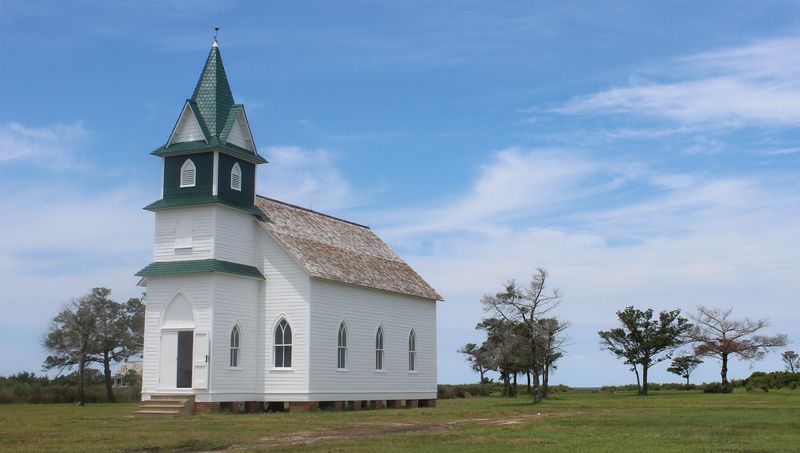
Portsmouth Island Village on the Outer Banks of North Carolina is the kind of place that makes you feel like the last person on Earth, in the best possible way.
Once a thriving maritime community in the 1800s, Portsmouth was a major shipping hub where cargo was transferred between large ships and shallow-draft boats headed inland.
By 1971, the last two residents finally packed up and left, leaving behind a ghostly collection of preserved homes, a church, and a post office frozen in time.
The Cape Lookout National Seashore maintains the buildings today, which means the village walks a perfect line between eerie and carefully protected.
You can wander past whitewashed houses with sagging porches, peek into the Methodist church with its simple wooden pews, and imagine what it must have felt like to ride out a storm here with nothing but marsh and water in every direction.
There are no restaurants, no souvenir shops, and definitely no cell service worth speaking of, just wind, dunes, and the creak of old wood in the salt air.
Getting here requires a small ferry or private boat, which honestly just adds to the whole dramatic adventure. When you step off onto the sand, it feels less like visiting a tourist site and more like time travel.
The paths between buildings are soft underfoot, and the silence has weight to it. If you go, bring everything you need, pack out everything you bring, and move through the village like a respectful guest in someone else’s forgotten world.
Portsmouth doesn’t perform for visitors; it simply exists, quietly, at the edge of the Atlantic.
11. Occoneechee Speedway, Hillsborough
Before NASCAR became polished and corporate, it was raw, loud, and a little chaotic. Occoneechee Speedway was right in the middle of it all.
This mile-long dirt track hosted races from 1949 to 1968, drawing huge crowds to the banks of the Eno River. Then, suddenly, the engines went quiet, and the forest slowly started taking back what people left behind.
The track sits at Hillsborough, NC 27278, United States.
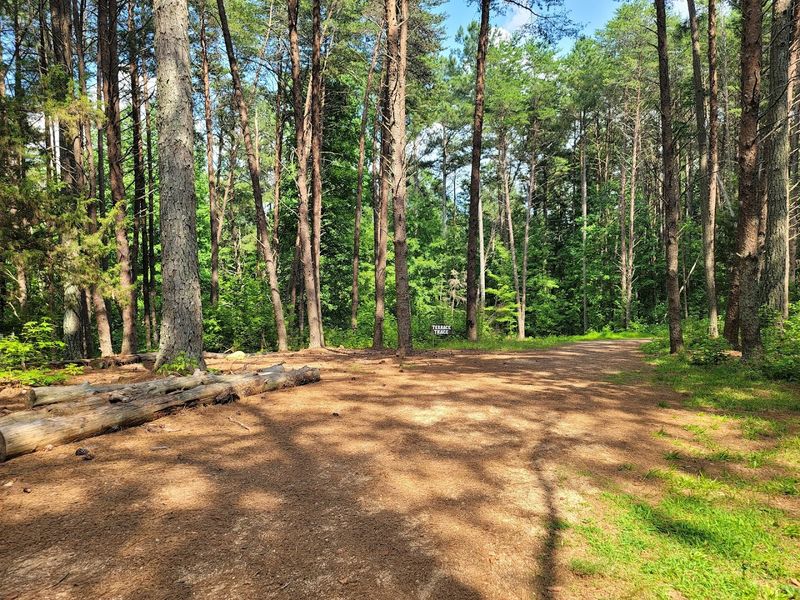
Today, it’s preserved as part of the Historic Occoneechee Speedway Trail. Walking the oval perimeter feels almost surreal.
The old banking peeks through a blanket of leaves. Concrete grandstands hide among the trees.
Rusted fencing and remnants of old infrastructure hint at the thousands of fans who once yelled themselves hoarse. Legends like Richard Petty and Junior Johnson raced here, and if you let your imagination run, you can almost hear the engines again.
The site is easy to access, right off the Hillsborough trail system, yet it still feels untouched. Interpretive signs tell the story, but the forest does most of the work.
Everything draped in green gives the place a calm, almost magical atmosphere. It’s part sports history, part nature walk, and part ghost town for gearheads.
If you’ve ever wondered what happens when a cathedral of speed is abandoned, Occoneechee Speedway quietly shows you, still standing, still impressive, deep in the North Carolina woods.