This Handcrafted Bottle Village Made From Thousands Of Glass Bottles Is Unlike Anything You’ve Seen
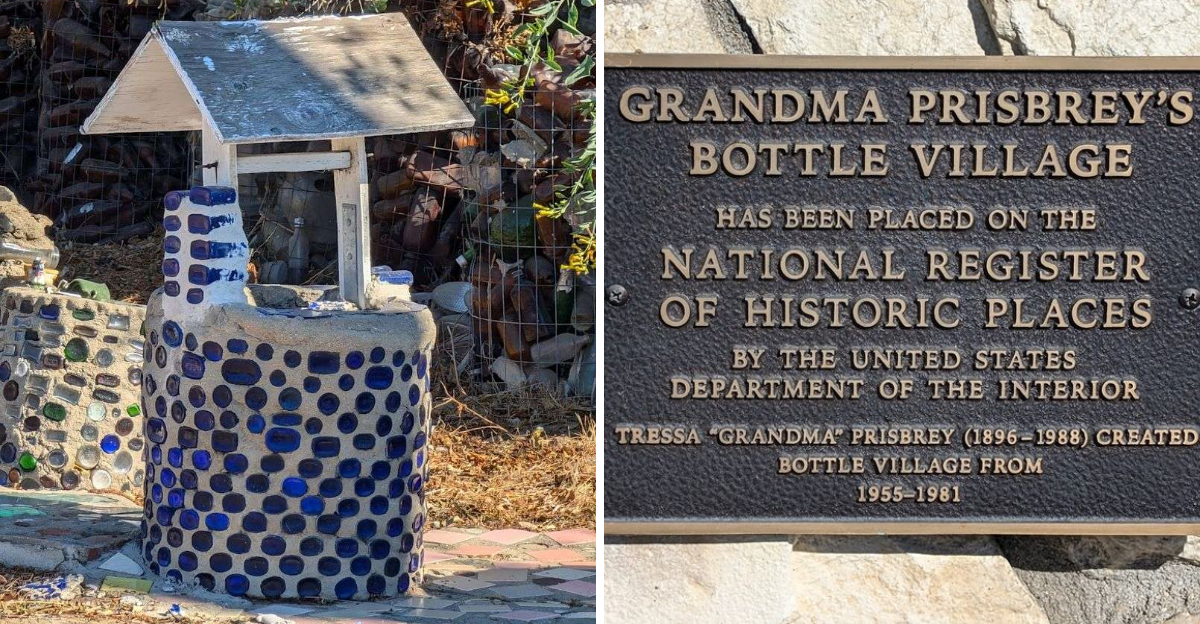
Few places look like this. Glass bottles stacked into walls. Colorful paths twisting between tiny handmade buildings. Every corner reveals something unexpected.
You slow down without realizing it. Then you start looking closer.
The details keep pulling you in. Old bottles catching the sunlight. Little sculptures tucked beside walkways. Pieces of everyday objects turned into something completely new.
California still hides places like this where creativity turns the ordinary into something unforgettable.
The story behind it makes the experience even better. One woman decided she wanted to build something of her own. She started collecting discarded bottles. Hundreds turned into thousands.
Little by little, a strange and beautiful village began to appear.
Thirteen small buildings. Mosaic paths. Handmade towers and sculptures rising from what once looked like scraps and leftovers.
That incredible place is Grandma Prisbrey’s Bottle Village in Simi Valley, one of the most unusual landmarks you can find anywhere in California.
Every wall, path, and structure reflects the imagination and determination of Tressa “Grandma” Prisbrey, who began building the village in the 1950s.
Walking through it feels less like visiting a museum and more like stepping inside someone’s imagination. The kind of place that makes you stop, look around, and wonder how something so unexpected ever came to life.
1. Visiting Bottle Village: What To Know Before You Go
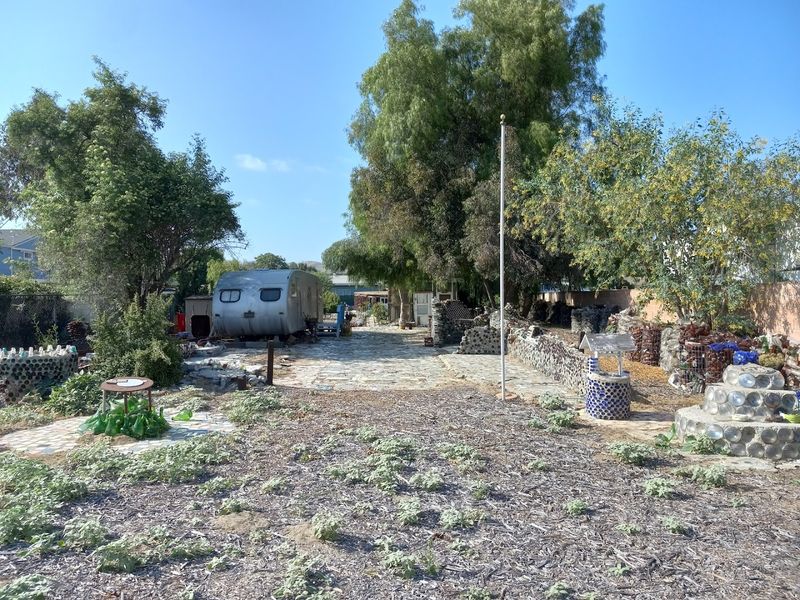
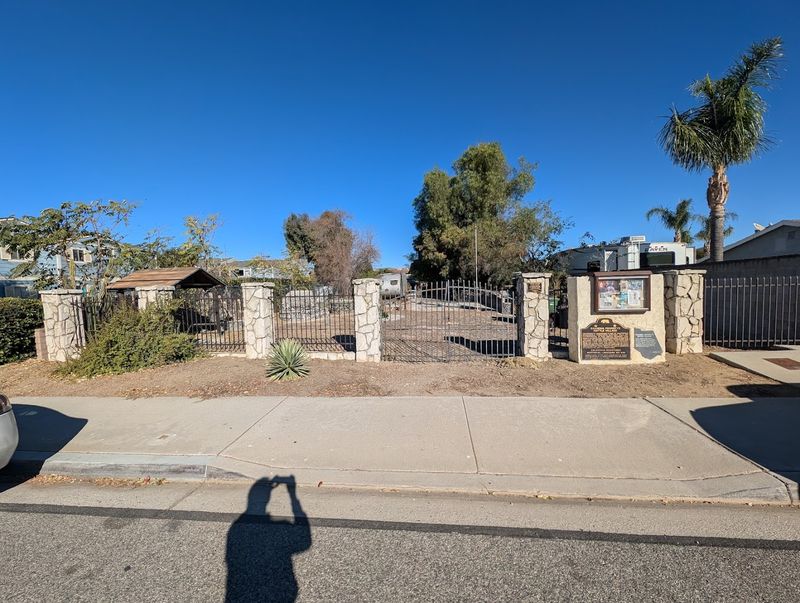
Bottle Village is located at 4595 Cochran Street in Simi Valley, California, and tours are available by appointment through the Preserve Bottle Village Committee.
Reaching out in advance is essential since walk-in visits are not reliably accommodated, and scheduling ahead ensures that a knowledgeable guide is available to explain the history and context of what visitors are seeing.
Checking the committee’s current contact information before planning a trip is strongly recommended since availability can change.
The site is best suited for visitors who enjoy slow, attentive exploration rather than a quick walk-through.
The details in the walls, walkways, and sculptures reward patience, and rushing through the space means missing much of what makes it remarkable.
Comfortable walking shoes are a practical choice since the mosaic surfaces underfoot are uneven in places.
Photography is a natural impulse at Bottle Village, and the interplay of light through the glass bottle walls creates genuinely striking images at different times of day.
Morning light tends to produce softer effects through the colored glass, while midday sun brings out stronger contrasts.
Beyond the visual appeal, the visit carries a reflective quality that many people find unexpectedly affecting, leaving with a sense of what one determined person in California can build when creativity and stubbornness work together.
2. The Woman Behind The Village: Who Was Tressa Prisbrey?
Not every legend starts with a grand plan, and Tressa “Grandma” Prisbrey is proof of that.
Born in 1896, she was a practical, resourceful woman who had lived through hard times long before she ever picked up a glass bottle and decided to build something with it.
By the time she started constructing her village in 1956, she was already 60 years old, an age when most people slow down rather than start a massive building project.
What drove her to begin was surprisingly simple: she needed a place to store her enormous collection of 17,000 pencils.
Unable to afford traditional building materials, she turned to the local landfill and started pulling out discarded glass bottles, hauling them home, and setting them into concrete.
The result was something far beyond a storage shed. Her personality, humor, and vision leaked into every wall and walkway she created.
Tressa continued building well into the 1970s, adding structures, sculptures, and decorative details year after year. She often gave tours herself, cracking jokes and explaining her work with genuine warmth.
California has produced many artists, but few with her particular blend of wit, grit, and hands-on creativity that turned trash into a landmark.
3. A Pencil Collection That Started It All
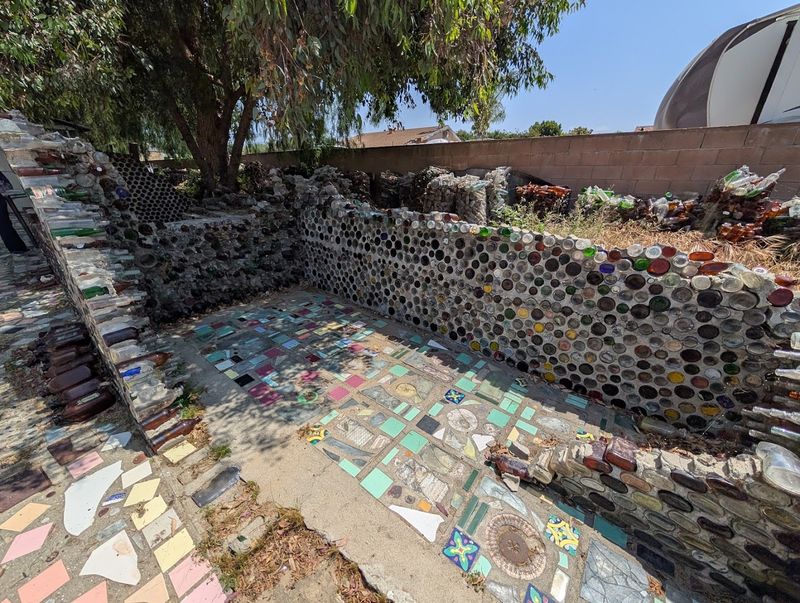
Most people collect stamps or coins, but Tressa Prisbrey collected pencils, around 17,000 of them.
That number might sound unbelievable, but it was completely real, and it created a storage problem that ended up changing folk art history in California forever.
She needed somewhere to keep them all, and buying or renting a proper building was out of the question on her limited budget.
So she did what came naturally to her: she improvised.
Salvaged glass bottles from the local dump became her building blocks, and the Pencil House became the very first structure in what would eventually grow into an entire village.
The walls were made by pushing glass bottles into wet concrete, leaving the bottoms facing outward and creating a surface that caught and filtered light in unexpected ways.
The pencil collection itself has not survived intact over the decades, but the building it inspired still stands as part of the larger village.
Visitors who learn this backstory tend to find it both funny and oddly moving, because it shows how a completely ordinary problem led to an extraordinary solution.
Sometimes the most remarkable creative journeys begin with something as humble as needing a little extra shelf space.
4. Thousands Of Glass Bottles Set Into Concrete Walls
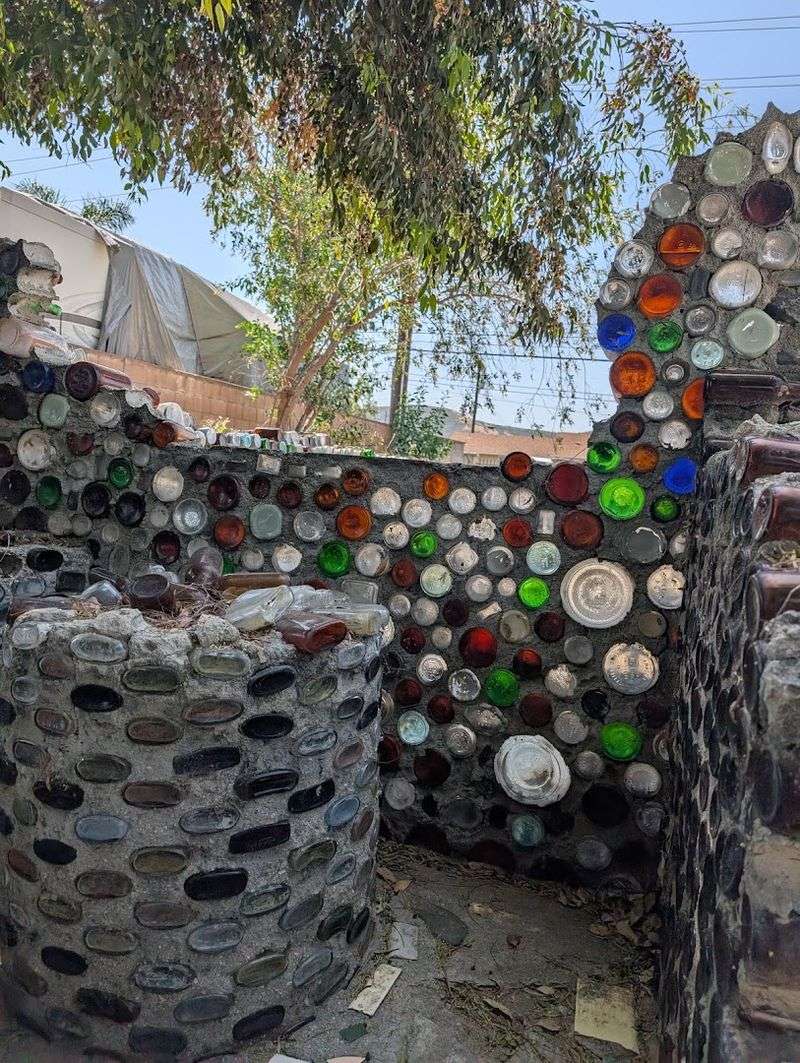
Walking up to the walls of Bottle Village, the first thing that registers is color.
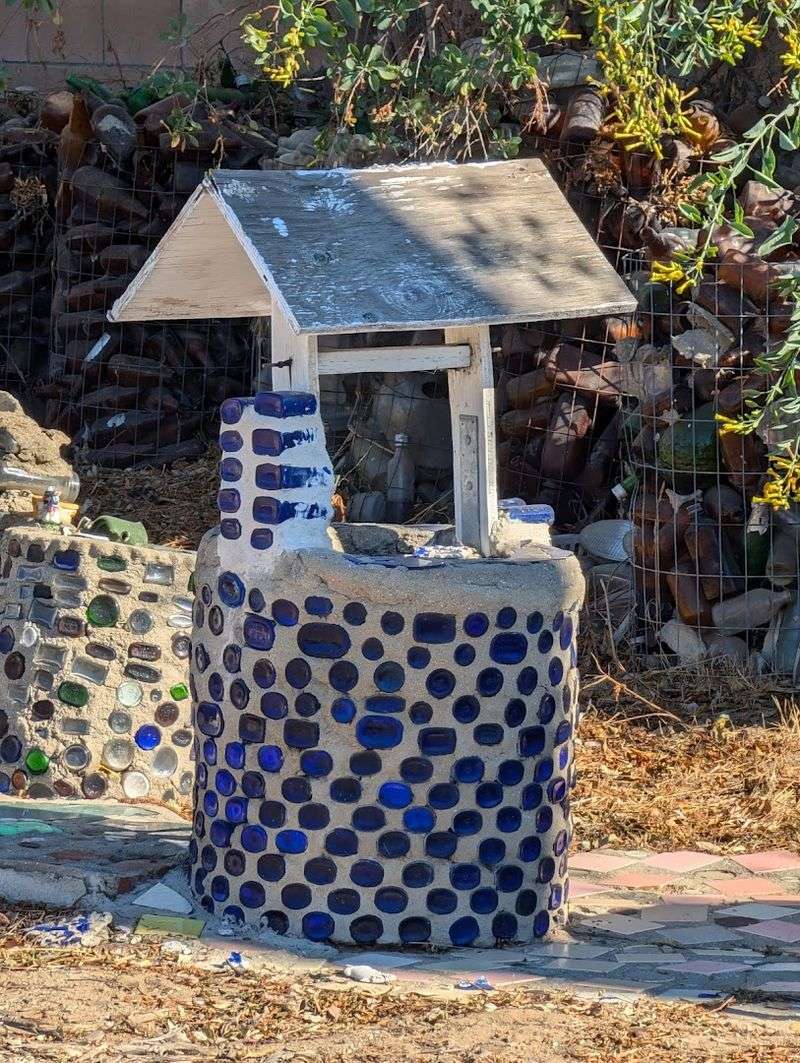
Hundreds of glass bottles are pressed into concrete with their bases facing out, creating a surface that looks almost like a mosaic from the outside.
Step inside one of the structures on a sunny day, and the effect becomes something closer to a stained glass window, with light filtering through green, brown, blue, and clear glass in shifting patterns.
Tressa sourced her bottles almost entirely from the local landfill, which meant the supply was unpredictable but always varied.
She used whatever she could find, from standard soda and medicine bottles to larger containers, arranging them by color and size to create patterns that felt deliberate even when they were partly improvised.
The concrete she mixed herself, setting each bottle carefully before moving on to the next row. The technique was entirely self-taught, with no architectural training or formal instruction behind it.
Engineers who have studied the structures since have noted that while they are unconventional, they held together remarkably well for decades.
The 1994 Northridge earthquake eventually caused serious damage, but the basic construction method proved more durable than many expected from a self-taught builder working alone in her backyard in California.
5. The 16 Ornamental Structures And Their Quirky Names
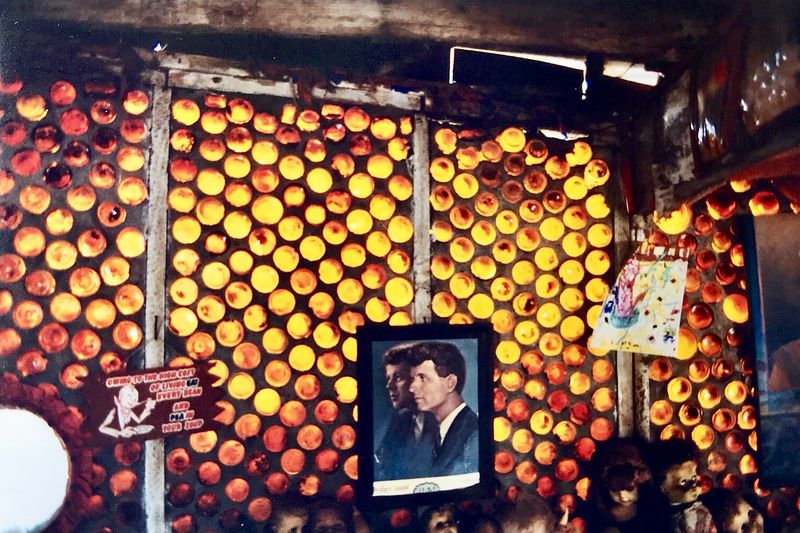
Thirteen separate buildings make up the village, and each one has a name that gives away a little of Tressa’s personality.
The Pencil House came first, but she kept going, adding structures like Cleopatra’s Bedroom, the Doll House, the Shell House, and the Leaning Tower of Bottle Village, a name that makes the nod to Pisa pretty clear.
Each building served a different purpose or housed a different part of her ever-growing collection of found objects.
Cleopatra’s Bedroom, for example, was decorated with particular care, featuring more deliberate color choices and decorative elements that gave it a theatrical, almost ceremonial feel.
The Doll House held a collection of dolls that Tressa had gathered over the years, many of them worn or broken, which gave the interior an atmosphere that visitors tended to describe as both charming and slightly eerie.
None of the buildings are large by conventional standards, but together they create a sense of a miniature neighborhood with its own logic and rhythm.
Moving from one structure to the next along the mosaic walkways, visitors get the feeling of traveling through someone’s very personal interior world made physical.
California has no shortage of unusual attractions, but few feel as genuinely handmade and deeply personal as this one.
6. Mosaic Walkways Filled With Found Objects
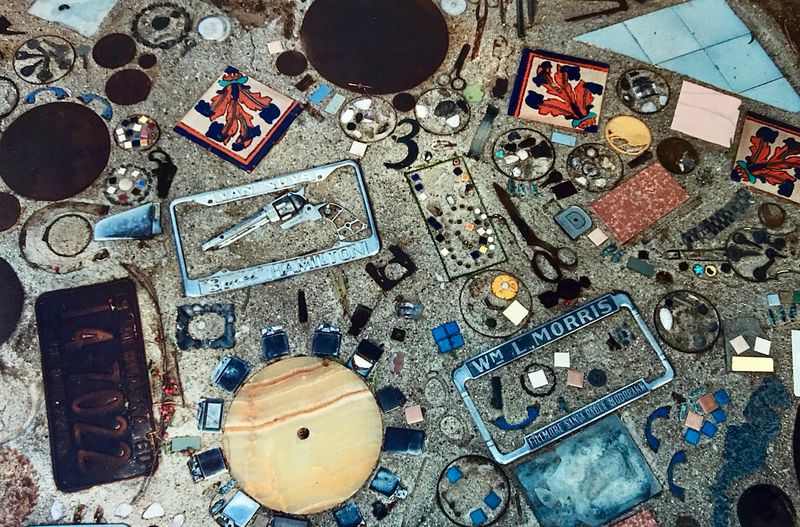
The walkways connecting the buildings at Bottle Village are just as remarkable as the structures themselves.
Tressa embedded all kinds of found objects directly into the concrete paths, creating mosaics that function as a kind of visual diary of everything she had collected or salvaged over the years.
Combs, scissors, curlers, nails, nuts, bolts, old jewelry, and even toy guns were pressed into the surfaces, creating textures that reward close inspection.
Each section of walkway tends to cluster similar objects together, giving different stretches of path their own character.
A section dense with hardware tools sits near one filled with personal grooming items, and the contrast creates an almost accidental commentary on the range of objects people discard.
Tressa never described her work in those terms, but art historians and folklorists have spent considerable time analyzing exactly these kinds of juxtapositions in her work.
Walking the paths slowly is the best way to take them in, since many of the embedded objects are small and easy to miss at a normal pace.
Children who visit often crouch down to examine individual items, turning a short walk into a long scavenger hunt.
The walkways alone would make Bottle Village worth visiting even if the glass bottle buildings did not exist, which says a great deal about the depth of creativity Tressa brought to every corner of her California property.
7. A California Historical Landmark And National Register Listing
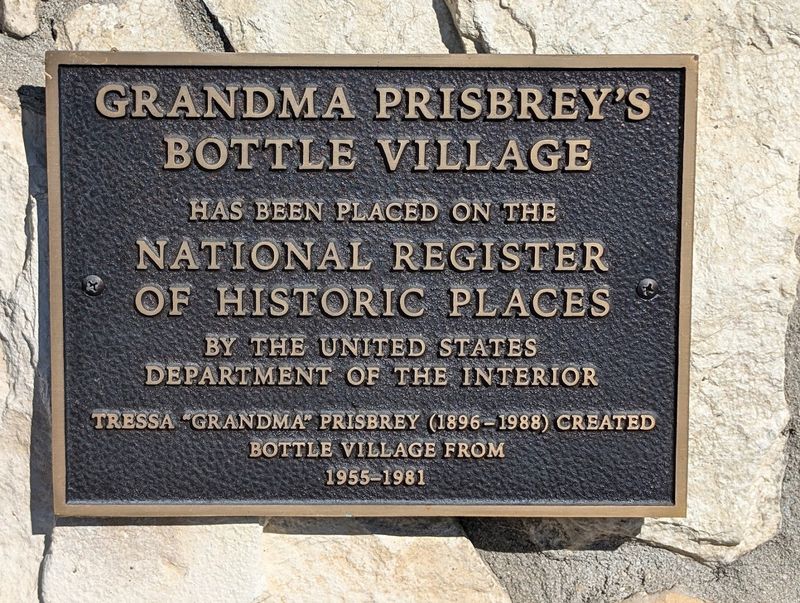
Recognition from the state and federal government is not something that typically gets attached to a backyard art project, but Bottle Village earned exactly that.
The site holds the designation of California Historical Landmark No. 939, a title that places it alongside major historical sites across the state.
Beyond that, it is also listed on the National Register of Historic Places, which reflects its recognized cultural and artistic significance at a national level.
Getting both of these designations required advocates to make a formal case for the site’s importance, documenting its history, its construction methods, and its place within the broader tradition of American folk art and outsider art environments.
The effort succeeded, and the designations have since provided a stronger legal and cultural foundation for preservation work at the site.
For visitors, these designations add a layer of context that makes the experience feel different from simply wandering through an unusual backyard.
Knowing that historians, preservationists, and government bodies have formally recognized Bottle Village as worth protecting changes how the site reads.
California has thousands of official landmarks, but very few of them were built by a single self-taught woman in her sixties using materials she pulled from the local dump, which makes this particular listing feel especially meaningful.
8. The 1994 Northridge Earthquake And Its Devastating Impact
On January 17, 1994, the Northridge earthquake struck the greater Los Angeles area with a magnitude of 6.7, causing widespread destruction across Southern California.
Bottle Village, located in Simi Valley not far from the epicenter, suffered serious damage. Walls cracked, structures partially collapsed, and sections of the mosaic walkways were disrupted.
What Tressa had spent nearly two decades building was significantly compromised in a matter of seconds.
Tressa herself had passed away in 1988, six years before the earthquake hit, so she never witnessed the destruction of her life’s work.
The damage left the village in a fragile and precarious state, raising genuine questions about whether the remaining structures could survive without immediate and sustained intervention.
Some sections were deemed unsafe for visitors, and the overall condition of the site deteriorated further in the years that followed.
The earthquake became a turning point in the history of the village, pushing the question of preservation from a background concern to an urgent priority.
Volunteers, preservationists, and folk art advocates began rallying around the site in the aftermath, recognizing that without organized effort, the entire village could be lost permanently.
The damage was devastating, but it also sparked a level of community attention and formal preservation organizing that the site had never previously received in California.
9. The Preserve Bottle Village Committee And Ongoing Restoration
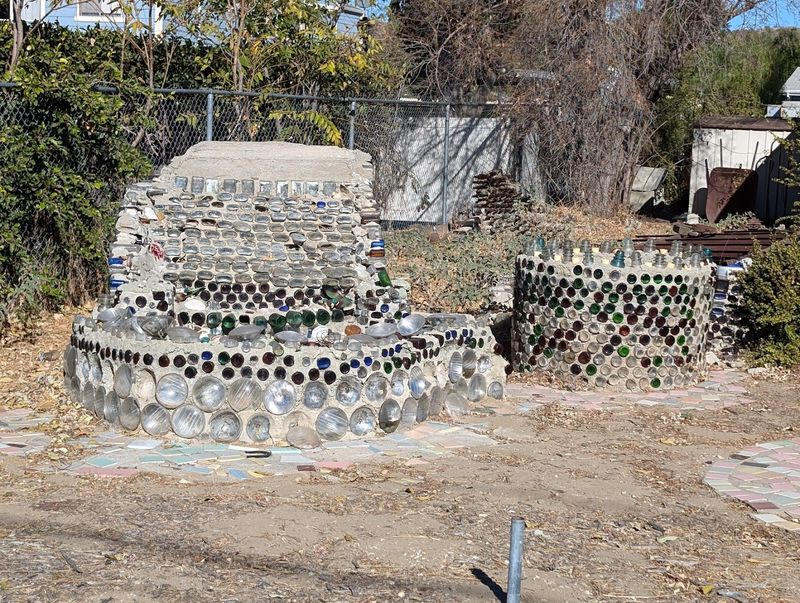
The Preserve Bottle Village Committee is the non-profit organization that has taken on the long and complicated work of restoring and maintaining the site since the earthquake damage of 1994.
The committee was formed by community members and folk art advocates who recognized that without organized effort, the village would continue to deteriorate beyond recovery.
Fundraising, volunteer coordination, and careful restoration planning have all been central to their work over the years.
Restoration at a site like Bottle Village is not straightforward.
The materials Tressa used were unconventional, and the construction methods she employed were entirely her own invention, which means that restoring damaged sections requires matching her original techniques as closely as possible rather than applying standard building practices.
Specialists in folk art conservation have been involved in advising the committee on how to approach different types of damage without altering the character of the original work.
Progress has been gradual, shaped by the availability of funding and volunteer labor, but the committee has managed to stabilize and restore meaningful portions of the village over the decades.
Tours by appointment allow visitors to see the ongoing work firsthand while also contributing to the financial sustainability of the project.
For anyone who cares about preserving California’s unusual cultural heritage, supporting the Preserve Bottle Village Committee is a tangible way to help.
10. Pop Culture Recognition: The Wall Of Voodoo Connection
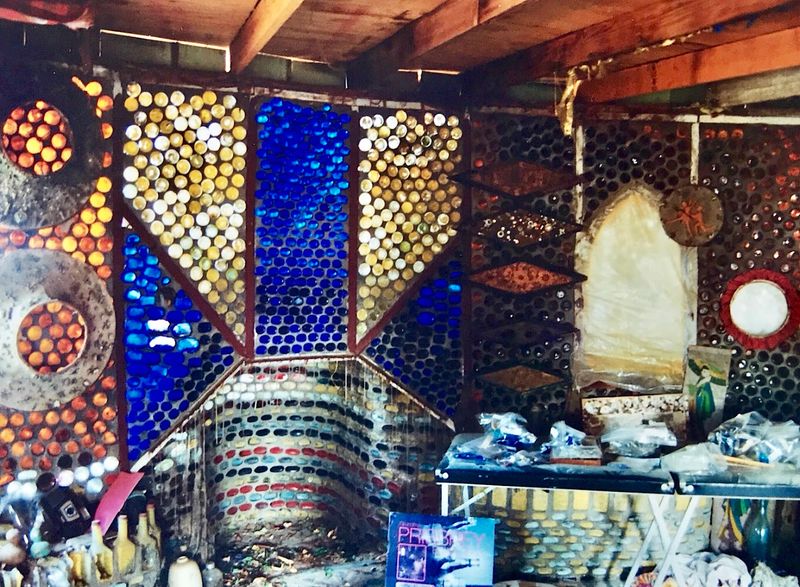
Few folk art sites can claim a connection to the new wave music scene of the early 1980s, but Bottle Village has exactly that.
The cover of Wall of Voodoo’s 1982 single “Mexican Radio” featured imagery connected to Grandma Prisbrey’s Bottle Village, bringing the site into contact with a music audience that likely had no idea what they were looking at.
Wall of Voodoo was a Los Angeles-based band, so the choice of a Southern California folk art landmark had a certain regional logic to it.
“Mexican Radio” became one of the band’s most recognizable songs, receiving significant airplay on early MTV and reaching a wide audience across the United States.
The single’s cover art introduced Bottle Village to people far outside the folk art world, creating a small but real moment of mainstream visibility for a site that was otherwise known mainly to enthusiasts of outsider art and California roadside attractions.
The connection is a fun piece of trivia that tends to surprise visitors during tours, especially those old enough to remember the song.
It also illustrates how folk art environments can cross into unexpected cultural spaces, picking up associations and audiences that their creators never anticipated.
Tressa almost certainly had no idea her bottle walls would end up on a record sleeve sold in music shops across California and beyond.