These Beautiful Mountain Towns In North Carolina Are The Perfect Escape From City Life
Some places make you slow down the moment you arrive. North Carolina’s mountain towns have that effect.
Up in the Blue Ridge and the Great Smoky Mountains, life moves at a different rhythm. Mornings start with cool mountain air and long views across forested ridges.
Afternoons are made for wandering small downtown streets, finding local cafés, and discovering shops filled with handmade crafts.
Each town has its own personality. Some are lively with art galleries and breweries, while others feel quiet and hidden among the trees.
What they all share is something that is getting harder to find in big cities: space, calm, and scenery that never gets old.
If you are looking for fresh mountain air, charming streets, and a break from the noise of everyday life, these North Carolina towns are the perfect place to start.
Asheville
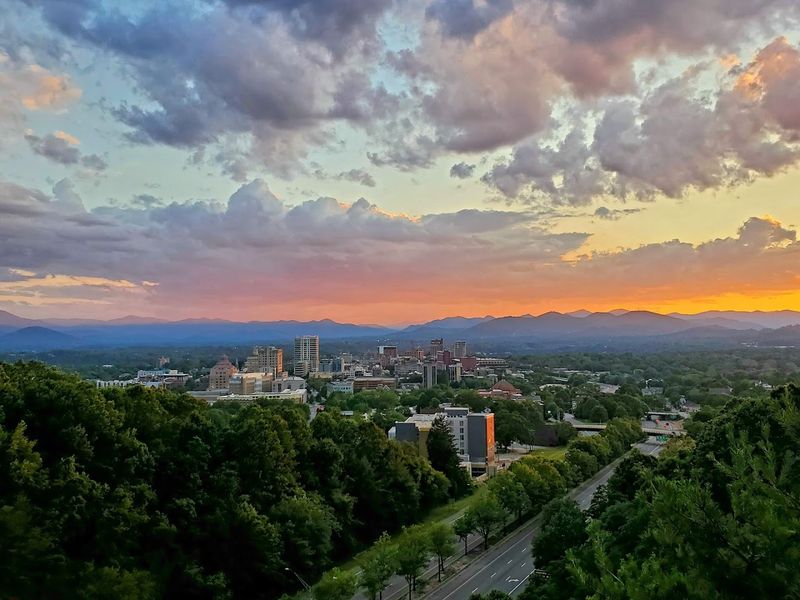
Few places in the American South feel as creative as Asheville, North Carolina. You notice it the moment you arrive downtown.
Murals on brick walls, live music drifting from open doors, and the smell of roasting coffee beans mixing with mountain air. Asheville feels like a small town with a lively creative scene.
The River Arts District alone could keep you busy for an entire day. Dozens of working artists have studios here, and you can watch glassblowers, painters, and sculptors at work without spending a dime.
Food is a big part of Asheville too, with farm-to-table restaurants tucked between vintage bookstores and indie boutiques.
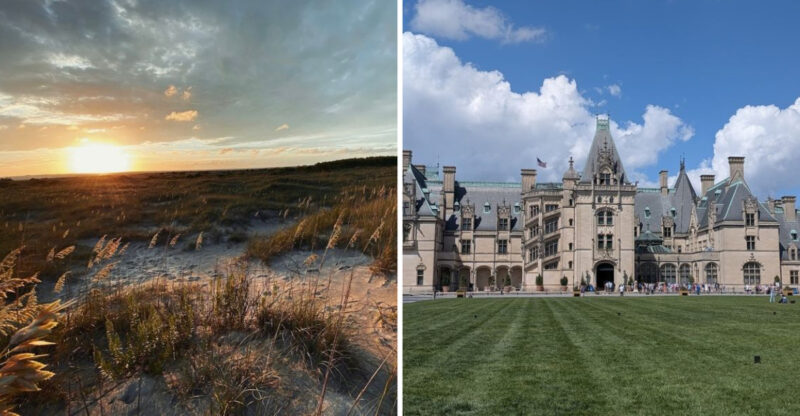
Biltmore Estate sits just south of downtown, an 8,000-acre property with a 250-room mansion that still feels unreal no matter how many times you see it. I remember standing on the front lawn and genuinely not believing a private home could be that grand.
Asheville is best explored slowly. So give yourself more time than you think you need.
Blowing Rock
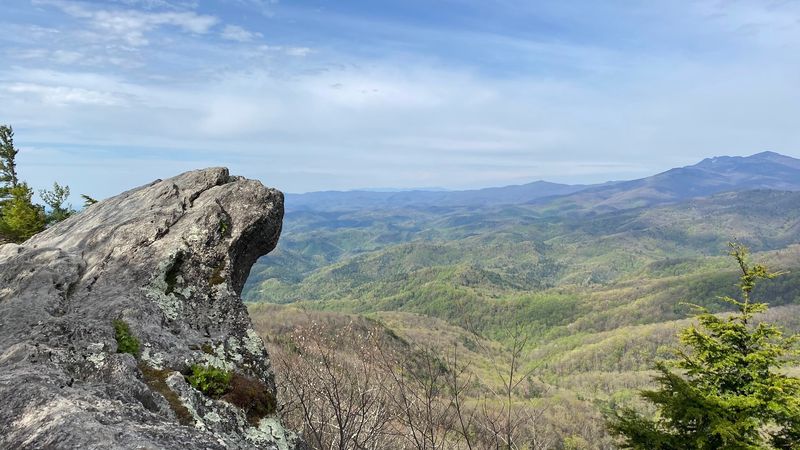
Blowing Rock takes its name from a rocky cliff where strong winds can blow light objects back upward. The town sits at around 4,000 feet, so even summer afternoons feel cooler here than in the lower parts of the state.
Main Street makes you slow down. Boutique shops sell handmade jewelry, local pottery, and mountain-themed artwork.
Restaurants here lean into seasonal menus, and you’ll find everything from hearty Southern comfort food to surprisingly creative small plates. The street feels tidy and well cared for by locals.
Moses H. Cone Memorial Park sits just outside town along the Blue Ridge Parkway, offering miles of carriage trails through open meadows and forest.
The old Cone manor house now serves as a craft center where you can browse traditional Appalachian crafts. Blowing Rock proves that a small town can still feel special.
Boone
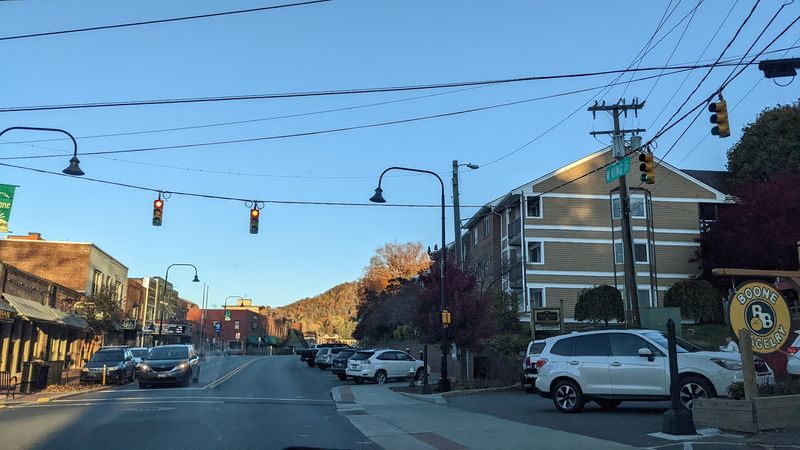
Boone, North Carolina blends college energy with deep Appalachian roots and easy access to the outdoors. Appalachian State University brings students and events to town, yet Boone still feels closely tied to its mountain setting.
King Street is the center of activity. Restaurants, record shops, craft breweries, and galleries line the street, while students, hikers, and weekend visitors move easily through the lively sidewalks.
Outdoor adventures are always close by. Grandfather Mountain sits a short drive away, and the Blue Ridge Parkway nearby offers some of the most scenic drives in the eastern United States.
Scenic overlooks, hiking trails, and cool mountain air make it easy to spend hours exploring the surrounding landscape. Boone works well for active travelers and anyone looking for fresh mountain views.
Bryson City
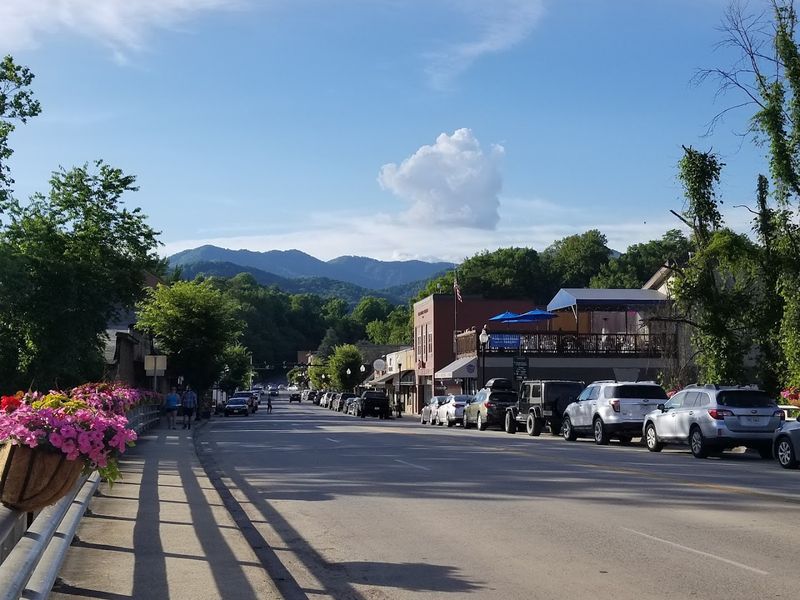
Many gateway towns are places people simply pass through. Bryson City, North Carolina tends to make visitors slow down and stay longer.
Set along the Tuckasegee River near Great Smoky Mountains National Park, it feels more grounded and less polished than many tourist towns.
The Great Smoky Mountains Railroad departs right from downtown, offering scenic rides through river gorges and mountain tunnels. Watching the forest and water pass by from an open-air car is one of those simple experiences that stays with you.
Outdoor adventure is easy to find nearby. Paddling, whitewater rafting, and fly fishing all start close to town.
Downtown itself is small but full of character, with local diners, a good bookstore, and murals reflecting the area’s Cherokee history. Bryson City doesn’t try to be flashy, and that honesty is exactly what makes it appealing.
Highlands
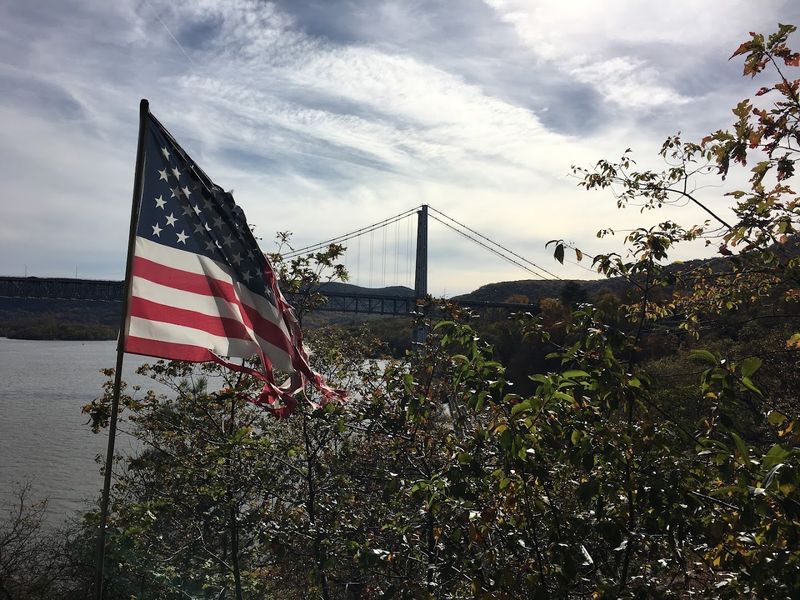
High in the mountains at 4,118 feet, Highlands, North Carolina is known for its refined mountain atmosphere. The town blends scenic nature with a polished feel where fine dining and hiking trails fit naturally side by side.
Main Street is lined with art galleries, boutiques, and restaurants known for high-quality food. The Highlands Playhouse, operating since 1938, remains one of the longest-running community theaters in the Southeast.
Nature is always close. Waterfalls sit just minutes from town, including Dry Falls, where a path leads behind the cascade, and Cullasaja Gorge with dramatic roadside views.
Despite its upscale reputation, Highlands never feels unwelcoming. Crisp mountain air and an unhurried pace give the town a calm, satisfying rhythm.
Banner Elk
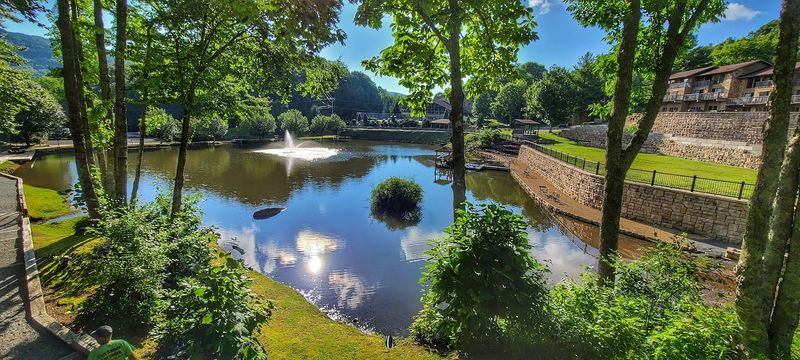
Located between Beech Mountain and Sugar Mountain in the High Country of North Carolina, Banner Elk is a great place to escape everyday routines.
With a population of fewer than 1,500 people, the town offers far more than its small size suggests in terms of charm, outdoor access, and community character.
In winter, Banner Elk transforms into a ski-town hub, with both Beech Mountain Resort and Sugar Mountain Resort just minutes away. The après-ski vibe carries into the local restaurants and pubs, where warm meals and mountain conversation come naturally.
But Banner Elk is just as appealing when the snow melts. Wildflower meadows, trout streams, and miles of hiking trails take over as the main attraction.
The Elk River runs right through the valley, and fly fishing here is genuinely excellent. Lees-McRae College gives the town a subtle academic energy that softens the rough edges in the nicest way.
A handful of local shops and bakeries fill the small commercial area, and the annual Woolly Worm Festival in October draws crowds from across the region. Banner Elk rewards visitors who take their time.
The slower you explore Banner Elk, the more you notice.
Brevard
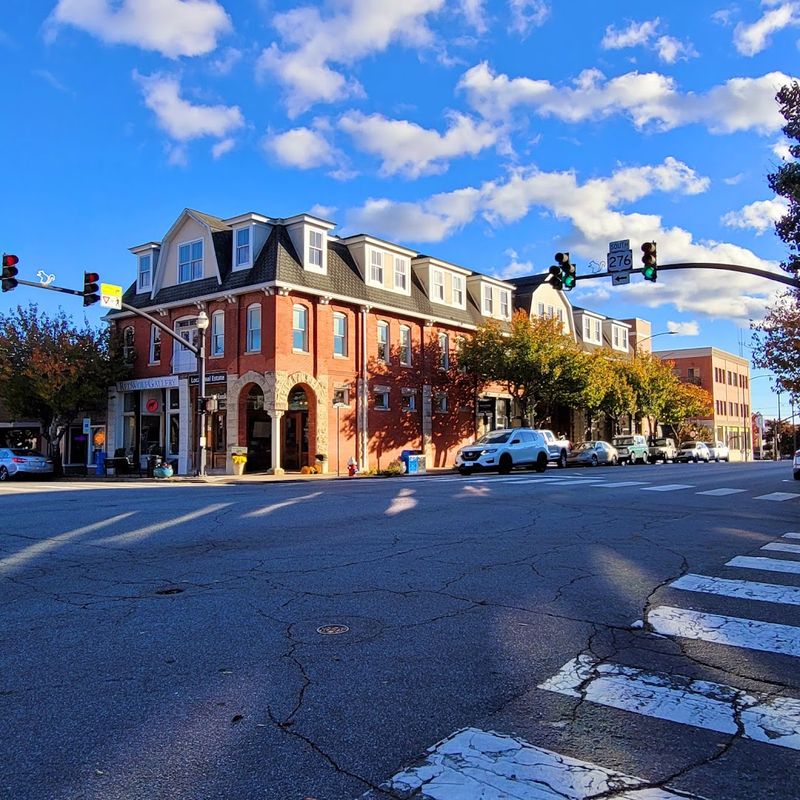
Brevard, North Carolina is known for an unusual mascot: the white squirrel. A small population of these rare squirrels lives here, and the town celebrates them with festivals, sculptures, and plenty of local pride.
Downtown Brevard is walkable and full of independent shops that reflect the town’s creative spirit. Music plays a big role too, especially during the Brevard Music Center’s summer festival that brings world-class performers to the mountains.
Pisgah National Forest borders the town, offering miles of trails, waterfalls, and the famous Sliding Rock natural waterslide. Nearby Looking Glass Falls is one of the most photographed waterfalls in North Carolina.
Nature around Brevard is easy to explore, which is exactly what keeps visitors coming back.
Waynesville
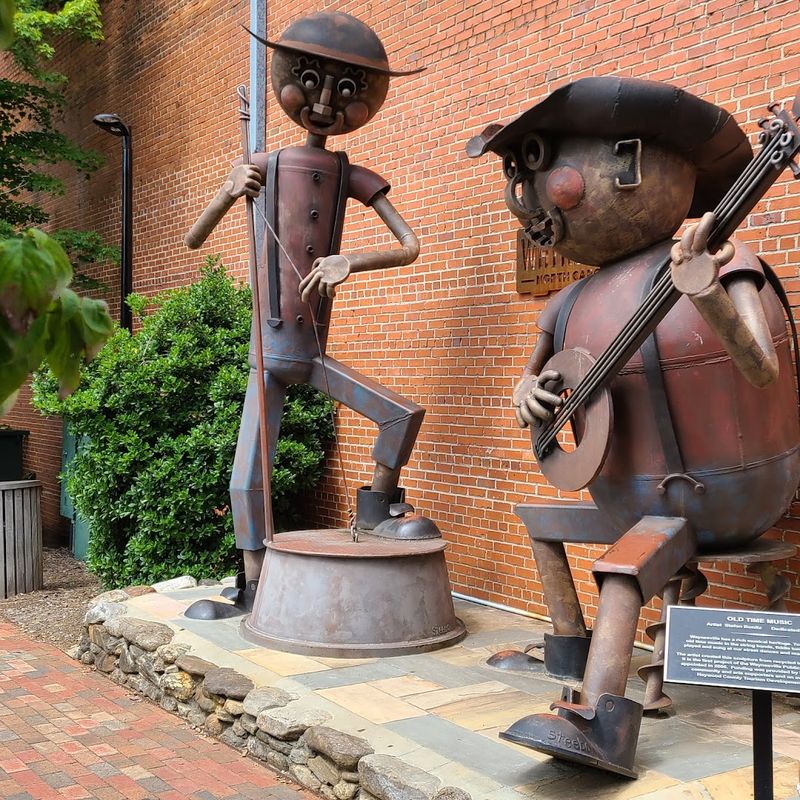
About 30 minutes east of the Great Smoky Mountains National Park entrance, Waynesville, North Carolina sits in a wide valley surrounded by forested mountain ridges on all sides.
The town has a Main Street that feels genuinely alive, not manufactured for tourists, but built by locals who actually use it.
Haywood County’s arts community has made Waynesville a regional hub for craft and creativity. Galleries here showcase everything from traditional Cherokee pottery to contemporary Appalachian photography.
The surrounding terrain is ideal for leaf-peeping in autumn, when the hillsides above town glow in shades of amber, crimson, and gold. Waterrock Knob, accessible via the Blue Ridge Parkway, offers one of the best sunset views in the Southern Appalachians.
I watched the sun go down from there once and didn’t say a word for several minutes, some views just require silence. Waynesville is unpretentious, warm, and rooted in a mountain culture that feels authentic rather than performed.
Sylva
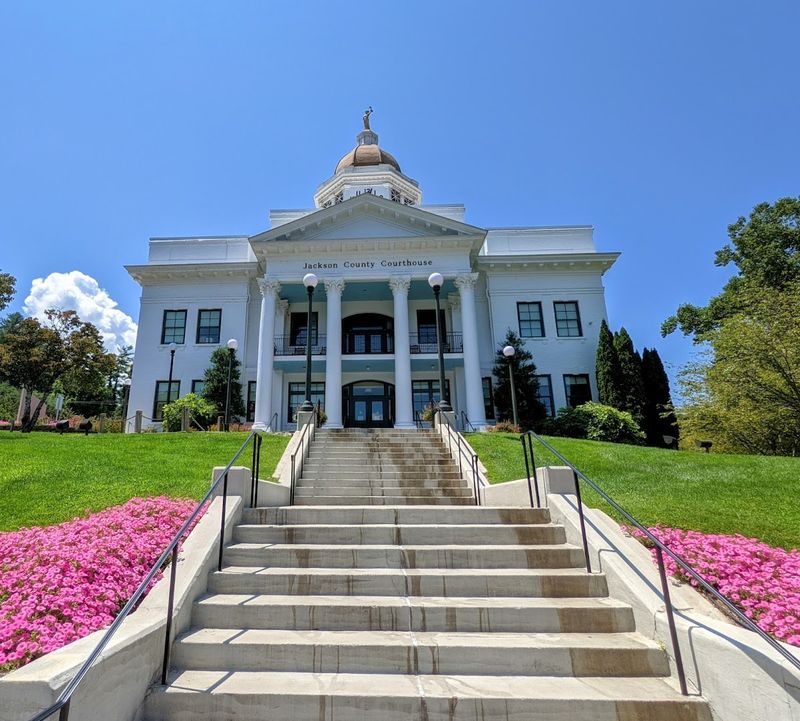
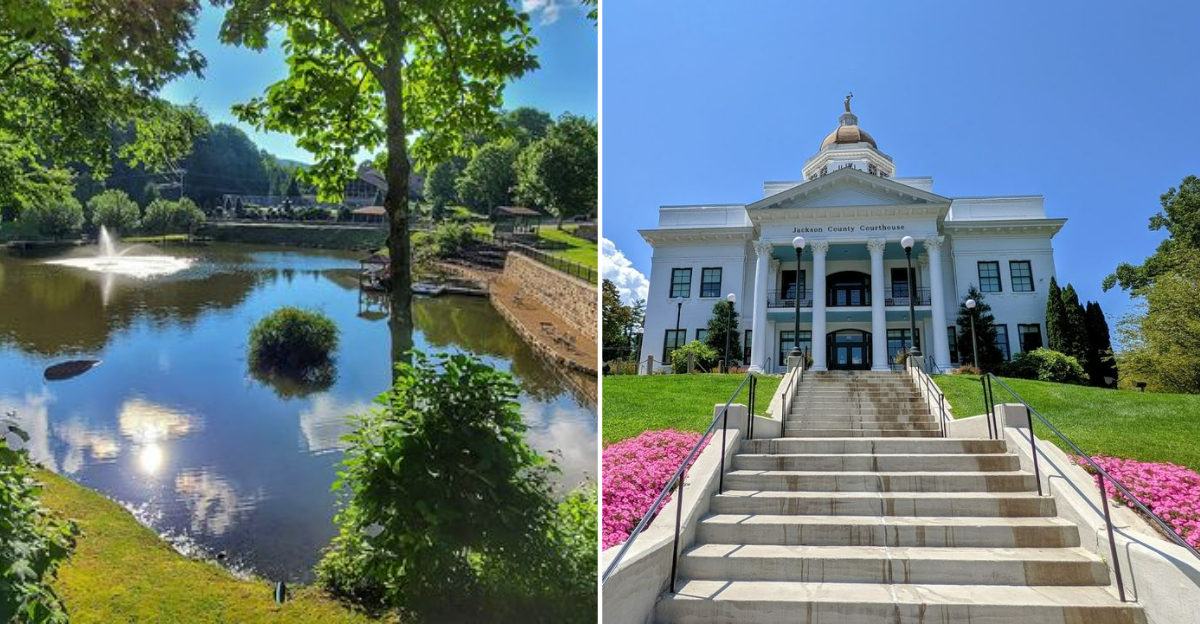
Many visitors discover Sylva unexpectedly while exploring the mountains. The town sits in a narrow river valley in Jackson County, with a historic courthouse perched dramatically on a hill above the main street.
It’s the kind of architectural moment that makes you reach for your camera before you’ve even parked.
Downtown Sylva has cultivated a creative, independent spirit that feels organic rather than curated. Small bookstores, vinyl record shops, local breweries, and artist-owned galleries cluster along a compact but walkable main drag.
There’s a genuine mix of longtime residents and newer arrivals, and the two groups seem to coexist in a way that enriches rather than divides the community.
Western Carolina University brings students, events, and cultural activity to the area. The Tuckasegee River runs through the valley, offering kayaking and fishing opportunities within easy reach.
Autumn is spectacular here. The mountains surrounding Sylva turn vivid shades that feel almost too beautiful to be real.
I’ve heard locals describe Sylva as Asheville’s quieter cousin, and having spent time in both, I think that comparison does it justice.
Burnsville
Some mountain towns still feel undiscovered, and Burnsville, North Carolina quietly holds onto that feeling. The town square is one of the most charming in the state, a classic green surrounded by local shops, a historic inn, and buildings dating back to the 1800s.
Yancey County, where Burnsville serves as the county seat, has a strong craft tradition. The Toe River Arts community connects visitors with working artists across the region.
Open studio tours let you meet potters, weavers, painters, and woodworkers in their own studios. It feels far more personal than a typical gallery visit.
Mount Mitchell, the highest peak east of the Mississippi River, sits a short drive from town. On clear days the summit offers wide views across the mountains of North Carolina.
Burnsville itself feels small but lively. Something is usually happening at the local coffee shop or community theater.
The town rewards visitors who enjoy real conversations more than crowded overlooks.
Cashiers
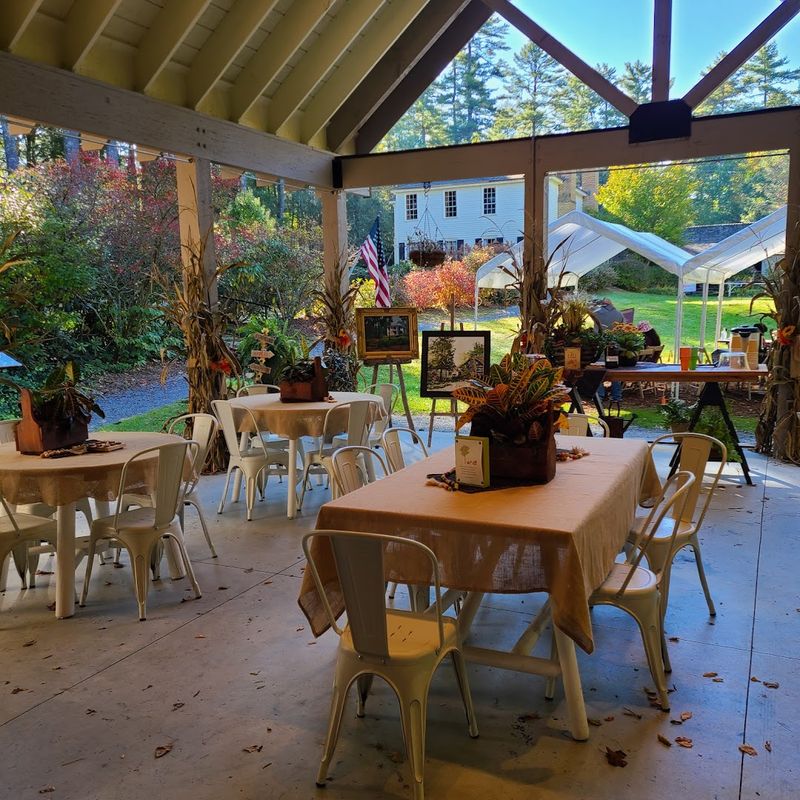
Cashiers, North Carolina sits on a plateau about 3,500 feet above sea level in the southwestern corner of the state.
The elevation keeps summer temperatures pleasantly cool, which explains why the town has been a warm-weather retreat for families from the Carolinas and Georgia for more than a century.
The village center is small and intentionally low-key. A few quality restaurants, specialty shops, and art galleries surround the crossroads that forms the heart of town.
Cashiers has built a reputation for quiet simplicity. There are no chain restaurants or big box stores, just a calm, relaxed atmosphere.
Silver Run Falls is a short hike from the road and leads to one of the most peaceful swimming holes in western North Carolina.
Nearby Whiteside Mountain rises 750 feet above the forest with sheer granite cliffs, one of the most dramatic landscapes in the region.
Cashiers is the kind of place where slowing down feels natural. The soft plateau light in late afternoon gives the mountains a calm, almost timeless feel.
Hendersonville
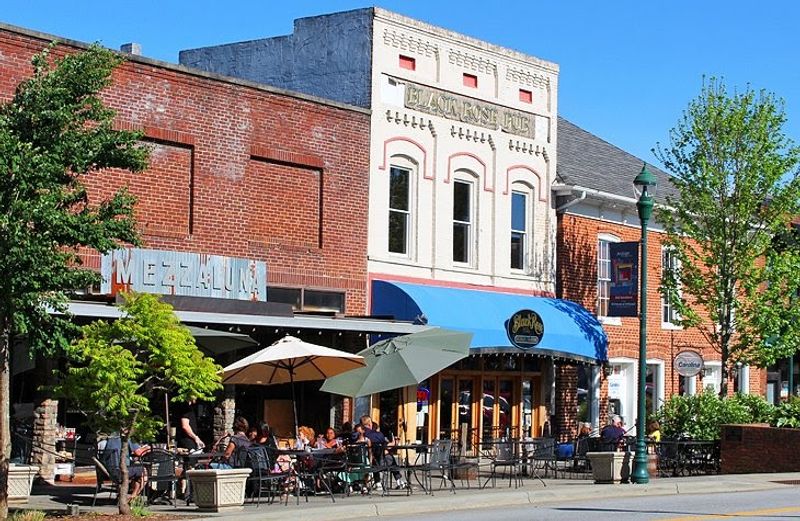
Apple orchards, Victorian architecture, and a Main Street that seems to go on longer than you expect, Hendersonville, North Carolina packs a surprising amount of personality into a town of roughly 15,000 people.
Henderson County produces more apples than any other county in North Carolina, and the orchards surrounding town are especially beautiful in late summer when the trees hang heavy with fruit.
Main Street is the town’s crown jewel. Wide sidewalks, well-maintained historic buildings, independent restaurants, antique shops, and ice cream parlors create an atmosphere that feels welcoming to everyone from young families to retirees.
The North Carolina Apple Festival held each Labor Day weekend transforms the street into one of the most festive events in the western part of the state.
Flat Rock, a small community just south of Hendersonville, is home to the Carl Sandburg Home National Historic Site, where the famous poet and Lincoln biographer spent the last 22 years of his life farming and writing.
Hendersonville is approachable, diverse in what it offers, and remarkably easy to love from the very first stroll down its storied main street.