15 Historic Landmarks In North Carolina That Reveal The State’s Most Fascinating Stories
North Carolina is packed with history around every corner, and sometimes the best way to understand a place is to stand exactly where the past happened.
Imagine walking through a battlefield where decisions shaped a nation, or stepping inside a home that’s stood for centuries and heard stories that textbooks can’t capture.
I remember visiting one of these sites as a kid and feeling like I had stepped into a time machine. The old walls, the quiet grounds, and the stories my guide shared made history feel alive in a way no textbook ever could.
From hidden Revolutionary War landmarks to grand estates that witnessed pivotal moments, North Carolina holds sites that shaped not just one region, but the entire country.
Exploring them offers a deeper connection to the stories that built America. Some are famous, others are tucked away off the beaten path, waiting for you to discover them.
Whether you are a history buff, a road trip adventurer, or just love a good story brought to life, these sites are worth every mile.
Trust me, after visiting them, you’ll be seeing North Carolina through a whole new lens.
1. Thomas Wolfe Memorial State Historic Site, Asheville
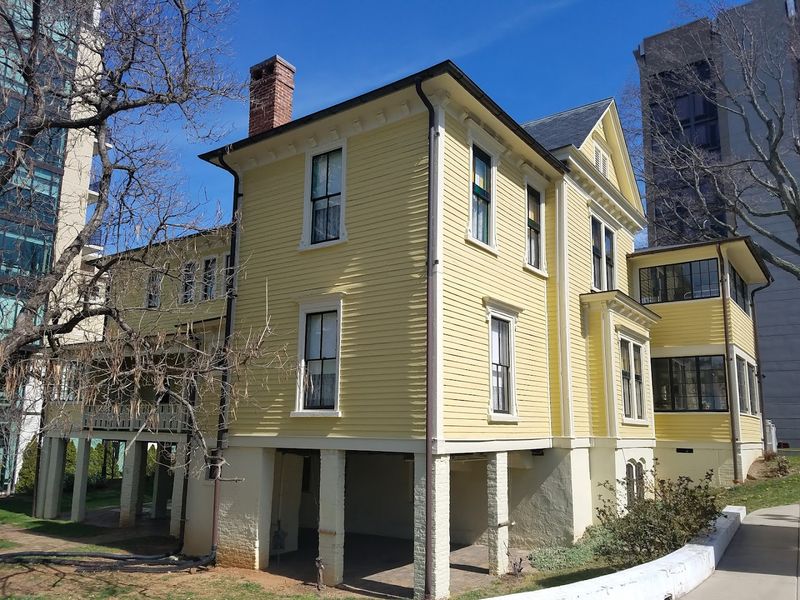
Few authors captured the feeling of growing up in a small American town quite like Thomas Wolfe. This Asheville birthplace is the perfect place to feel that connection firsthand.
The Thomas Wolfe Memorial Museum preserves the actual house where Wolfe was born in 1900. Known as the Old Kentucky Home boardinghouse run by his mother.
Walking through its rooms feels like stepping directly into the pages of his famous novel, Look Homeward, Angel. The house is a National Historic Landmark and one of the most visited literary sites in North Carolina.
A visitor center next door offers exhibits, personal artifacts, and photographs that tell Wolfe’s life story in vivid detail. Rangers and guides bring his journey to life with stories that even non-readers find surprisingly gripping.
What makes this site special is how personal it feels. You can see the actual furniture, the cramped hallways, and the modest rooms that shaped one of America’s great literary voices.
Wolfe wrote about longing, identity, and belonging. Those are themes that still resonate today.
The museum is located at 52 N. Market St., Asheville, NC 28801.
Admission is affordable, and guided tours run regularly throughout the week.
If you are visiting Asheville for its arts scene or mountain views, add this stop to your itinerary. It adds a meaningful layer of storytelling to any trip through western North Carolina.
2. Chowan County Courthouse, Edenton
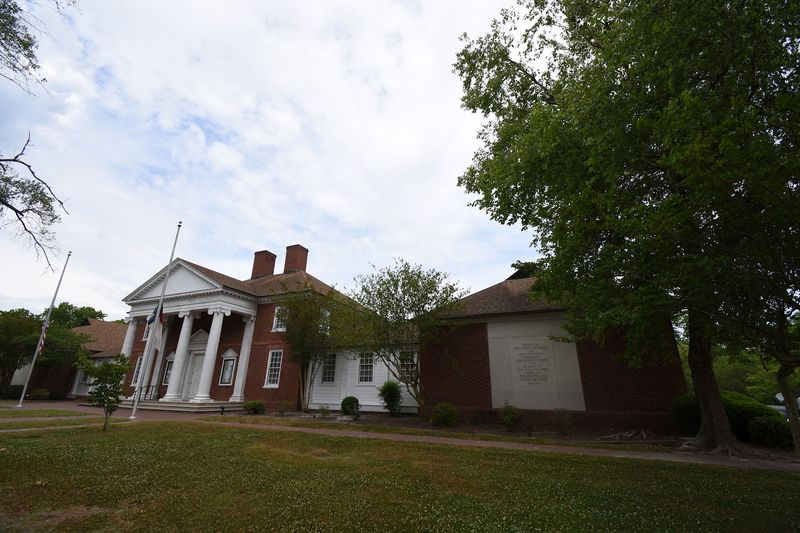
Built in 1767, the Chowan County Courthouse in Edenton is one of the oldest and best-preserved colonial courthouses still standing in the United States.
This building has been serving its community for over 250 years, making it a true architectural treasure. Its Georgian-style brick design is elegant yet sturdy, a reflection of the serious civic purpose it was built to serve.
The courthouse witnessed some of the most pivotal legal and political moments in early North Carolina history. Colonists gathered here to debate taxes, land rights, and eventually independence from British rule.
Standing inside its courtroom, you can almost hear the echoes of those heated debates that helped shape a new nation.
What is remarkable is how intact the building remains. Many structures from the 1700s have been lost to time, fire, or neglect, but this courthouse stands as a proud exception.
Preservation efforts over the centuries have kept its original character beautifully maintained.
The courthouse can be found at 101 S Broad St, Edenton, NC 27932, United States. It sits in the heart of Edenton’s historic district, making it easy to combine with other nearby landmarks.
Visitors can tour the building and learn about colonial-era law and governance in a hands-on, engaging way. For anyone interested in American legal history or early architecture, this stop is absolutely worth the drive to northeastern North Carolina.
3. James Iredell House, Edenton
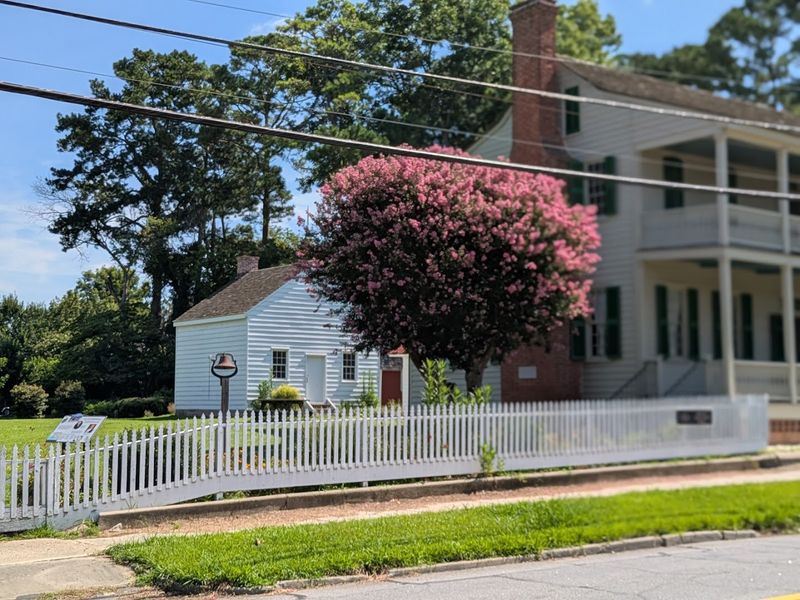
James Iredell was one of the youngest justices ever appointed to the original U.S. Supreme Court, and his home in Edenton tells a story that most Americans have never heard.
The James Iredell House State Historic Site preserves the residence where this influential legal mind lived, worked, and shaped early American constitutional thinking. It is a quieter landmark compared to some, but the stories inside are anything but small.
Iredell was appointed to the Supreme Court by President George Washington in 1790. He was known for his sharp legal reasoning and his strong belief in an independent judiciary.
Those ideas still influence how courts operate today. His home reflects the life of a well-educated colonial professional, with period furnishings and personal items that give visitors a real sense of who he was.
The house itself is a well-preserved example of late 18th-century domestic architecture.
Its rooms have been carefully restored to reflect the period, and costumed interpreters sometimes bring the era to life during special events. The surrounding grounds are peaceful and picturesque, adding to the overall experience.
Feel free to stop by this address: 107 E Church St, Edenton, NC 27932, United States. It’s free to visit and open most days of the week.
Since it sits in the same historic district as the Chowan County Courthouse, combining both visits in one afternoon is easy and rewarding. This is one of North Carolina’s most underrated historical gems.
4. Alamance Battleground State Historic Site, Burlington
Long before the American Revolution became a household story, a different kind of uprising was brewing in the North Carolina backcountry.
The Battle of Alamance, fought on May 16, 1771, pitted frontier farmers known as Regulators against the colonial government’s militia. Some historians consider it one of the first armed rebellions against government authority in American history.
And this quiet green site is where it all unfolded.
The Regulators were ordinary colonists fed up with corrupt local officials, unfair taxes, and a government that seemed indifferent to their struggles.
Their decision to take a stand here cost many of them dearly, but their spirit of resistance echoed forward into the revolutionary era that followed just a few years later. Visiting this site gives that larger story a powerful, personal dimension.
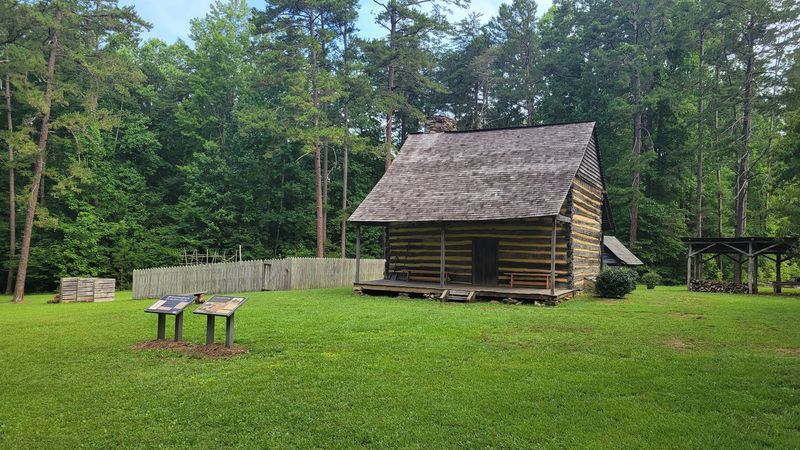
The grounds include a reconstructed log house, monument markers, and a visitor center with exhibits that explain the conflict in clear, engaging detail.
Walking the field where the battle took place is a surprisingly moving experience, especially when you understand what was at stake for those ordinary farmers.
Alamance Battleground State Historic Site is located at 5803 S. NC Hwy 62, Burlington, NC 27215.
Admission is free, and the site is open Tuesday through Sunday.
Rangers are available to answer questions and offer deeper context. For North Carolina residents and visitors alike, this is a powerful reminder that the push for freedom started well before 1776.
5. Bennett Place, Durham
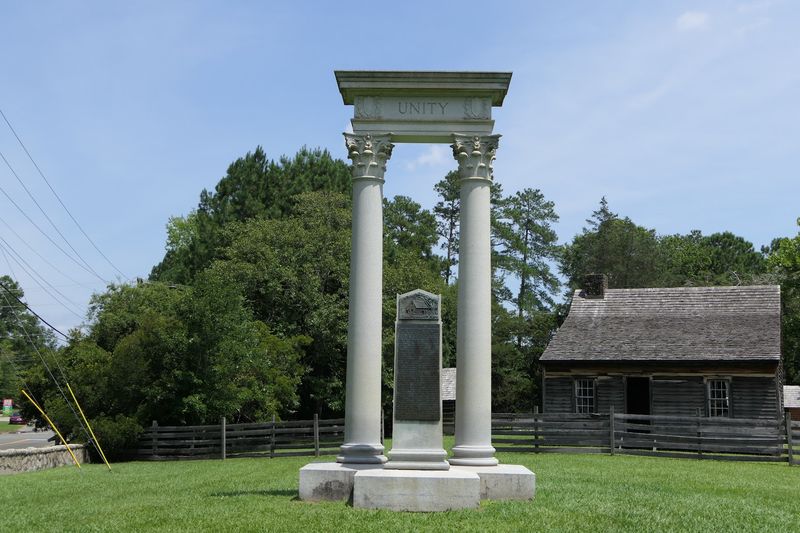
April 26, 1865 is the date that marks one of the most significant moments in American history, and it happened right here on a modest North Carolina farm.
Bennett Place is where General Joseph Johnston surrendered the largest Confederate force of the entire conflict to Union General William Sherman. He effectively ended major fighting in the eastern theater.
More troops were surrendered here than at Appomattox, yet far fewer people know this story.
The Bennett family’s simple farmhouse became the setting for negotiations that stretched over several days. The two generals met multiple times before terms were finally agreed upon.
What makes this site so compelling is the contrast between the humble surroundings and the enormous historical weight of what took place here.
Today, the reconstructed farmhouse and kitchen stand on the original foundations. A well-designed visitor center provides exhibits, maps, and personal stories that bring the final days of the conflict to life in an accessible, respectful way.
Living history events held throughout the year add even more depth to the experience.
Bennett Place State Historic Site is at 4409 Bennett Memorial Rd., Durham, NC 27705. It is open Tuesday through Sunday, and admission is free.
Durham is a vibrant city with plenty to explore, making this historic site an excellent addition to any visit.
6. Bentonville Battlefield State Historic Site, Four Oaks
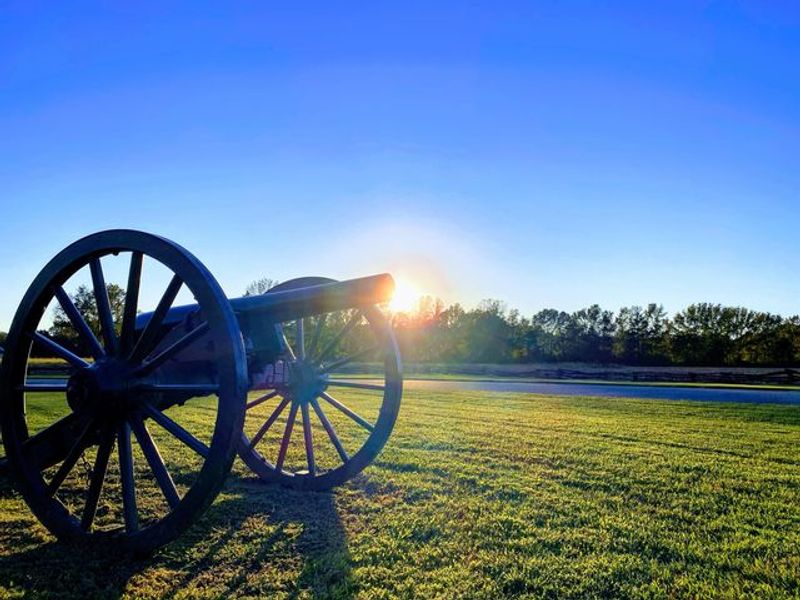
March 1865 was a desperate month, and nowhere was that desperation more visible than at the Battle of Bentonville. It was the largest Civil War engagement ever fought on North Carolina soil.
Confederate General Joseph Johnston launched a bold attack on Union forces hoping to stop Sherman’s march northward, but after three days of intense fighting, the outcome was clear.
The battlefield today is hauntingly beautiful, a rolling landscape that holds stories of courage and sacrifice on both sides.
What sets Bentonville apart from many other battlefield sites is how much original ground has been preserved. You can walk actual trench lines, explore earthworks, and visit the Harper House, which served as a field hospital during the battle.
The Harper House alone is worth the visit because its story is both sobering and deeply human. The visitor center does an excellent job of explaining the broader strategic picture while also focusing on individual soldiers and their experiences.
Interactive exhibits and well-written panels make the history accessible for all ages, including younger visitors who might be learning about this period for the first time.
Bentonville Battlefield State Historic Site is located at 5466 Harper House Rd., Four Oaks, NC 27524.
Admission is free, and the site is open Tuesday through Sunday.
7. Brunswick Town/Fort Anderson Historic Site, Winnabow
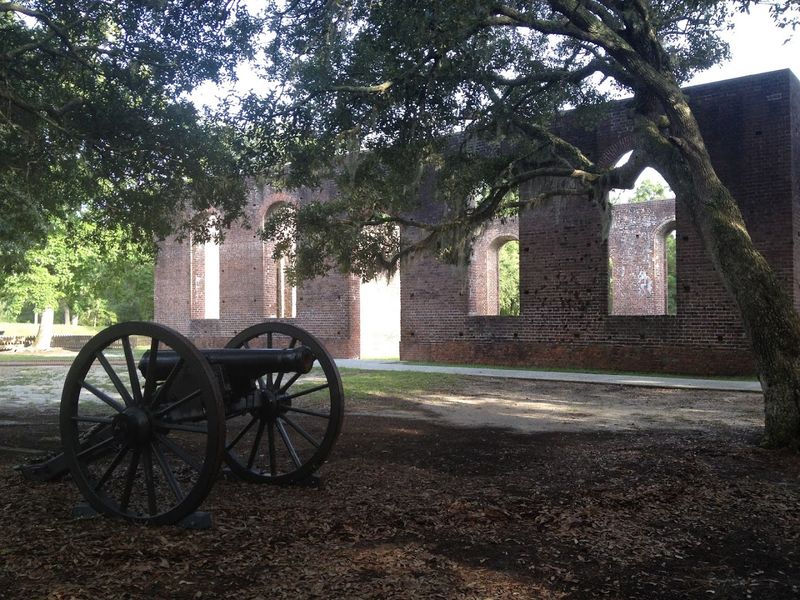
Standing among the tabby ruins of Brunswick Town feels like finding a ghost. The town that once thrived, then vanished, leaving only foundations and silence behind.
Founded around 1726, Brunswick Town was one of colonial North Carolina’s most important port settlements.
It served as the colony’s capital for a time and was a hub of trade, politics, and ambition before being burned and abandoned during the Revolutionary period.
Decades later, the site took on new significance when Confederate forces built Fort Anderson atop the old colonial ruins during the Civil War. The fort played a key role in protecting Wilmington, one of the last major supply ports still open to Confederate forces.
When Union troops finally captured it in February 1865, the strategic impact was enormous.
Today, visitors can walk among the layered history, literally stepping from the 18th century into the 19th century as they move across the grounds.
Archaeological excavations have revealed fascinating artifacts, and interpretive signs help connect the dots between the two very different eras that share this same piece of land.
Brunswick Town/Fort Anderson Historic Site can be found at 8884 St. Philips Rd. SE, Winnabow, NC 28479.
It is free to visit and open Tuesday through Sunday. This is one of North Carolina’s most layered and rewarding historic destinations definitely worth visiting!
8. North Carolina Historic Bath, Bath
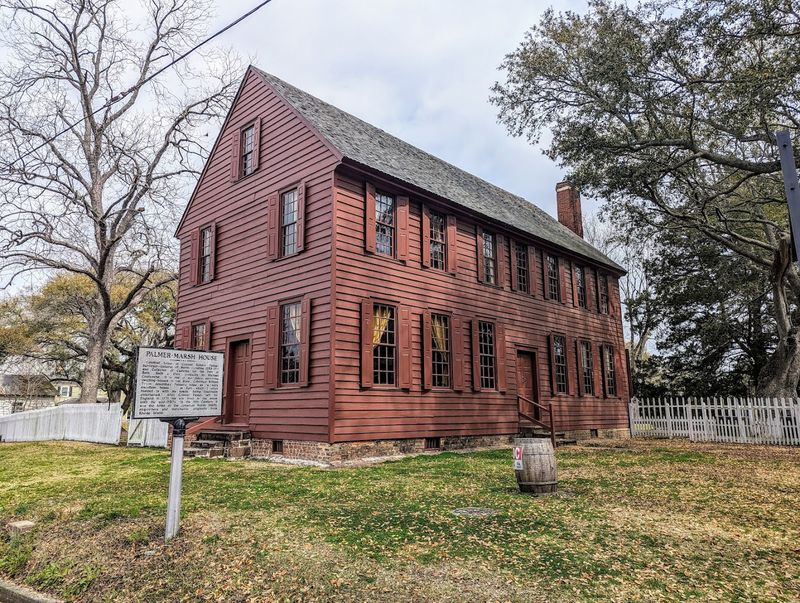
Established in 1705, Bath holds the proud distinction of being North Carolina’s very first incorporated town. That alone makes it worth visiting, but the stories layered into this tiny waterfront community go far beyond a simple founding date.
Blackbeard the pirate reportedly made Bath his home base for a time, attending church services and even receiving a pardon from the colonial governor. Yes, that Blackbeard.
Walking through Bath today feels like stepping back into the early 18th century. Several original colonial structures still stand, including the Palmer-Marsh House and the Bonner House, both of which are open for tours.
The St. Thomas Episcopal Church, built in 1734, is the oldest surviving church in North Carolina and remains an active congregation to this day.
The Historic Bath Visitor Center provides guided tours that weave together stories of pirates, colonial politics, and everyday life in early America. The guides here are genuinely passionate about the town’s history, and their enthusiasm is contagious.
Even visitors who consider themselves casual history fans tend to leave feeling genuinely fascinated.
Historic Bath is located at 100 Harding St, Bath, NC 27808, United States.
The town is small but perfectly preserved, and the surrounding Beaufort County landscape adds a serene, unhurried quality to any visit.
Admission to the visitor center is low-cost, and tours run regularly.
If you have never heard of Bath before, that is exactly why you should go! It is one of North Carolina’s best-kept historical secrets.
9. Fort Fisher State Historic Site, Kure Beach
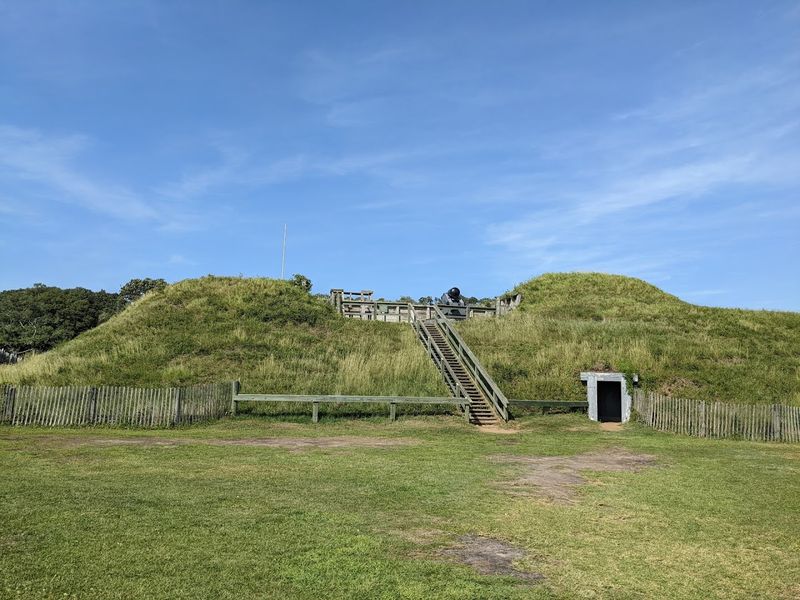
Imagine a fort so massive and so strategically vital that it took two separate Union naval bombardments to finally bring it down. Fort Fisher was the last major Confederate coastal stronghold.
Its fall in January 1865 effectively sealed off the last open supply line to Confederate forces and accelerated the end of the conflict. The fort’s earthwork construction was revolutionary for its time.
Rather than traditional brick walls, it used massive mounds of sand and earth that absorbed cannon fire far more effectively. Engineers and military historians still study its design as an example of innovative wartime thinking.
Walking along the remaining earthworks today, you can feel the sheer scale of what was built here.
The visitor center at Fort Fisher is excellent, featuring a large collection of artifacts recovered from the site and surrounding waters. Cannons, weapons, personal items, and detailed dioramas bring the story to life in ways that resonate with visitors of all ages.
The nearby North Carolina Aquarium shares the grounds, making it a great family destination.
Fort Fisher State Historic Site is located at 1610 Fort Fisher Blvd. S., Kure Beach, NC 28449.
It is open Tuesday through Sunday, and admission is free. The coastal setting is stunning, and the combination of natural beauty and profound history makes this one of the most memorable stops!
10. Charlotte Hawkins Brown Museum, Sedalia
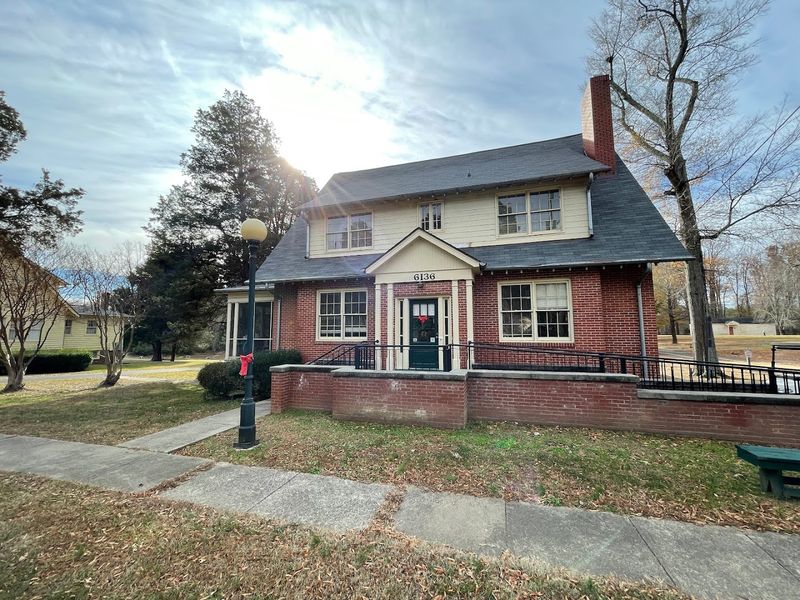
Charlotte Hawkins Brown was a woman who refused to accept limits. The campus she built in Sedalia, North Carolina, stands as living proof of what determination and vision can accomplish.
Founded in 1902, the Palmer Memorial Institute became one of the most respected preparatory schools for African American students in the entire country.
Brown started it with almost nothing and grew it into a nationally recognized institution over five decades of tireless work.
Brown was also a prominent social activist and one of the founders of the National Council of Negro Women.
She moved in the same circles as Eleanor Roosevelt and Mary McLeod Bethune, advocating for education, civil rights, and dignity at a time when such advocacy required genuine courage.
Her story is one of the most inspiring in North Carolina history, yet it remains far too little known.
The museum today preserves several original campus buildings and tells Brown’s story through photographs, documents, and personal artifacts.
The Canary Cottage, her personal residence on campus, is especially moving to tour. Interpretive exhibits are thoughtfully designed to engage visitors of all ages and backgrounds.
The Charlotte Hawkins Brown Museum’s location is at 6136 Burlington Rd., Sedalia, NC 27342.
It is open Tuesday through Sunday and free to enter. Guilford County is easy to reach from Greensboro or Burlington.
Visiting this museum is not just a history lesson, it is an experience that leaves you inspired!
11. CSS Neuse Museum, Kinston
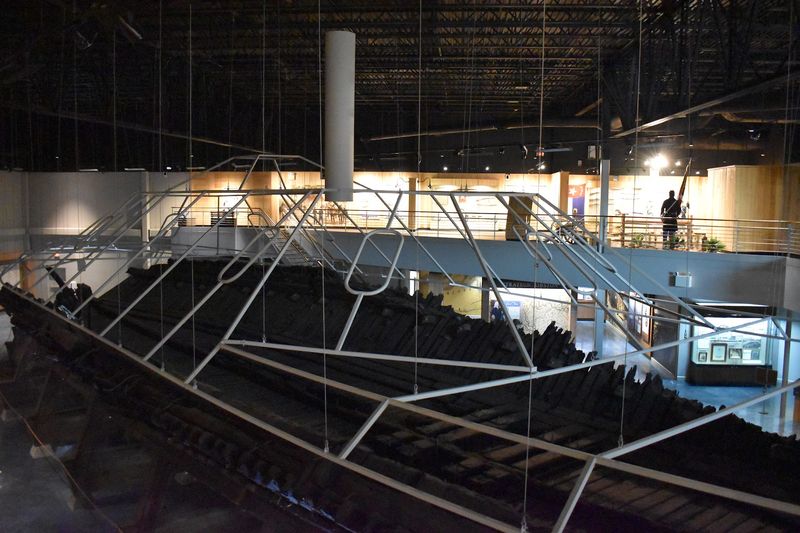
Located in downtown Kinston, the CSS Neuse Civil War Museum is one of the most fascinating historic attractions in eastern North Carolina.
The museum, located at 100 N. Queen St., Kinston, NC 28501, preserves the remains of the Confederate ironclad warship CSS Neuse.
It also tells the story of Civil War naval history in the region. Visitors can see the salvaged hull of the ironclad along with thousands of artifacts recovered from the ship.
The museum is typically open Tuesday through Saturday from 9 a.m. to 5 p.m. It serves as an official North Carolina State Historic Site dedicated to preserving the legacy of this rare Civil War vessel.
Kinston is a charming small city with a growing food and arts scene, making it a great spot for a full day of exploration!
12. Duke Homestead State Historic Site, Durham
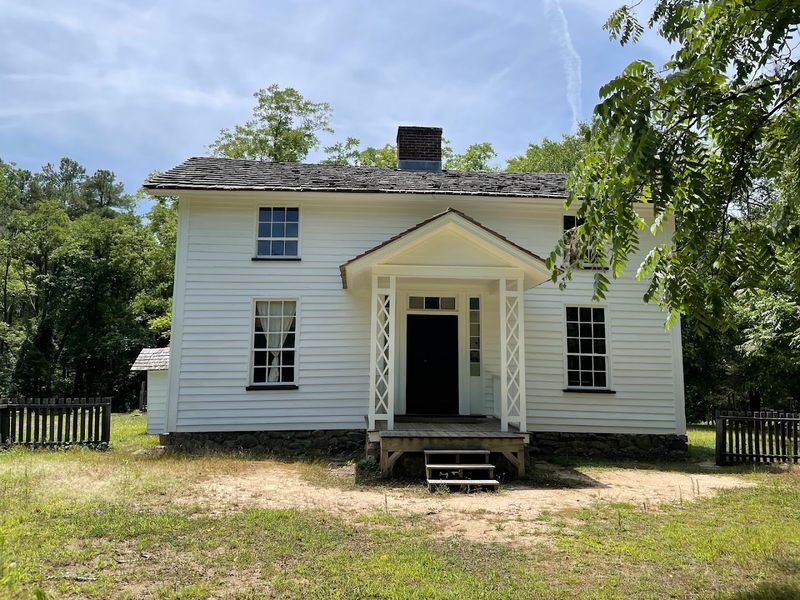
Before Duke University, before Duke Energy, before one of the wealthiest family dynasties in American history, there was a small Durham County farm. That’s where Washington Duke and his sons began curing and selling tobacco after the Civil War.
The Duke Homestead is where that empire started, and visiting it gives you a surprisingly humble and human perspective on how enormous fortunes can grow from very modest beginnings.
Washington Duke returned home from the war to find his farm in rough shape and his options limited. He began processing tobacco by hand, selling it from a wagon, and building a reputation for quality one customer at a time.
His son James Buchanan Duke later transformed that small operation into the American Tobacco Company, one of the most powerful corporations of the late 19th century.
The site includes the original family home, several tobacco processing buildings, and a fascinating museum dedicated to the history of tobacco farming and manufacturing in North Carolina.
The exhibits are honest and educational, exploring both the economic impact and the broader social history tied to the crop. It is a story that shaped the state in profound ways.
Duke Homestead State Historic Site is located at 2828 Duke Homestead Rd., Durham, NC 27705.
It is open Tuesday through Sunday and free to visit.
Located just a short drive from Duke University’s famous campus, combining both stops makes for a rich and rewarding day in the Durham area.
13. Fort Dobbs State Historic Site, Statesville
Most people think of the French and Indian War as a conflict fought far to the north, in the forests of Pennsylvania and New York.
North Carolina had its own frontier battles during that era, and Fort Dobbs was right at the center of them.
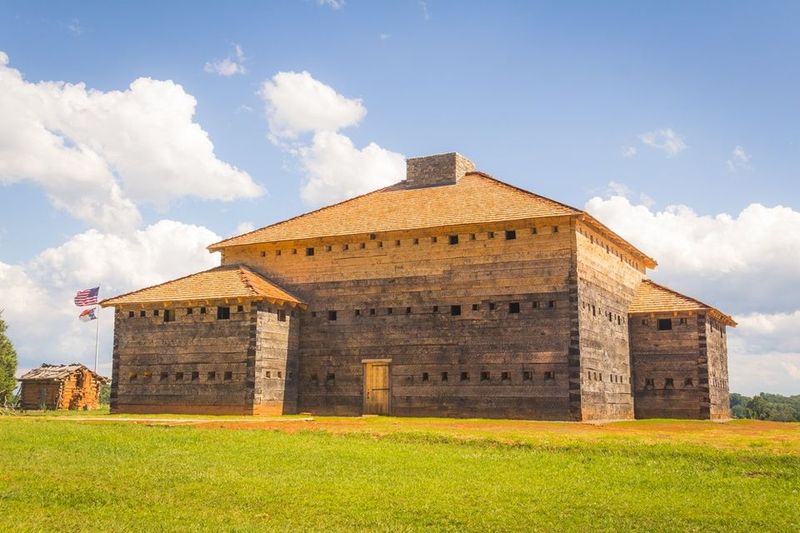
Built in 1756 near present-day Statesville, the fort served as the westernmost defensive outpost.
Named after Royal Governor Arthur Dobbs, the fort was a modest but critical structure. Archaeological excavations beginning in the early 2000s revealed the fort’s original footprint and produced a remarkable collection of artifacts.
For example musket balls, tools, ceramics, and personal items that paint a vivid picture of frontier life. The discovery was a major find for North Carolina historians.
A reconstructed section of the fort now stands on the original site, giving visitors a tangible sense of what the structure looked like.
The visitor center features the excavated artifacts alongside exhibits that explain the broader conflict and its impact on the Carolina backcountry. Living history programs and special events make the site especially engaging for families.
Location of Fort Dobbs State Historic Site is at 438 Fort Dobbs Rd., Statesville, NC 28625. It is open Tuesday through Sunday and free to visit.
For anyone curious about the earliest chapters of North Carolina’s colonial story, Fort Dobbs delivers a compelling and underappreciated experience.
14. Edenton Historic District
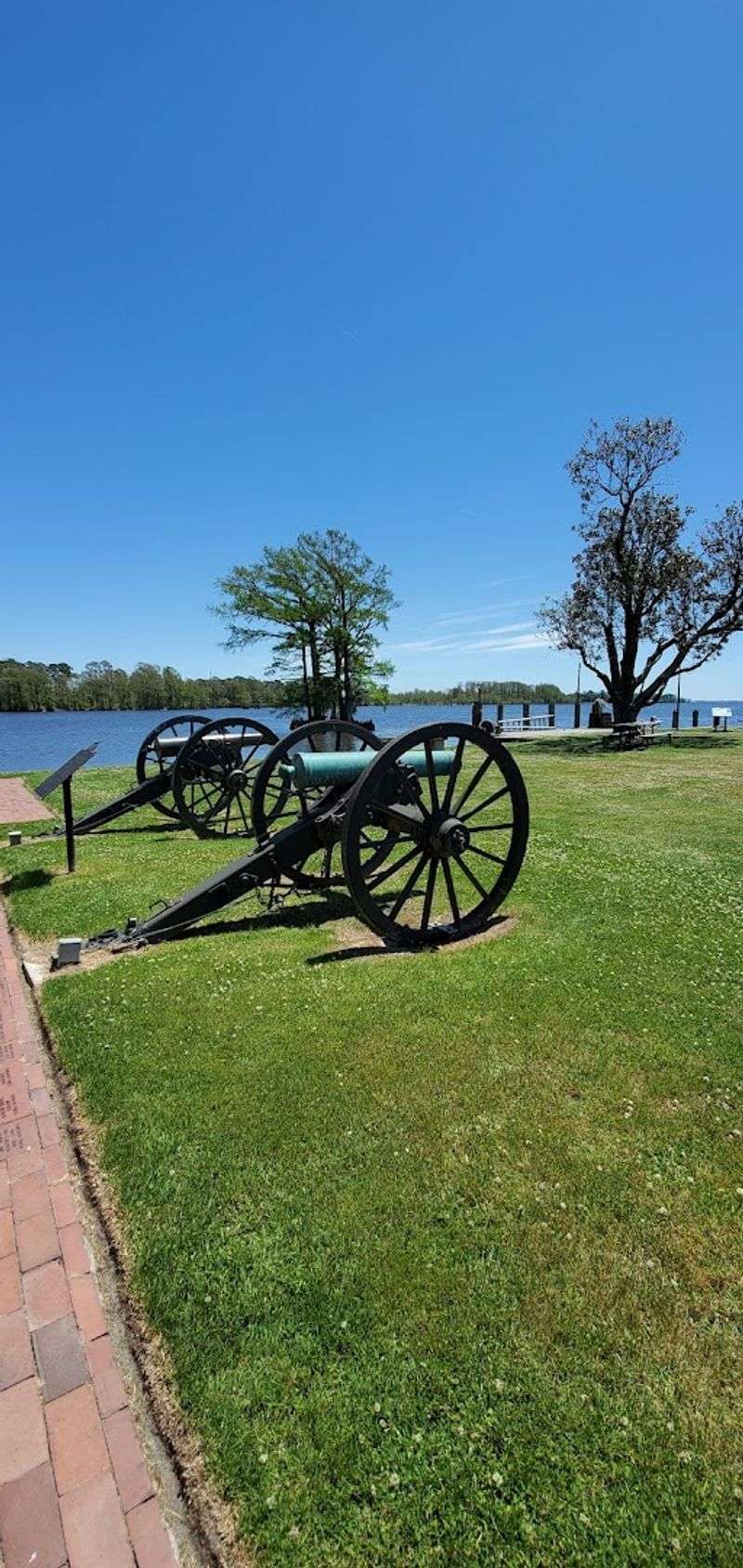
Edenton might be the most beautiful small town in North Carolina, and it also happens to be one of the most historically significant.
Established in the early 1700s and serving as the colonial capital for a time, it was a hub of political activity, commerce, and civic life long before the United States officially existed.
Its waterfront setting on Albemarle Sound adds a natural elegance that makes every visit feel like a postcard come to life.
The town is perhaps best known for the Edenton Tea Party of 1774, when a group of local women signed a resolution pledging to boycott British goods. It was one of the first organized political actions by women in American history.
A remarkable story that deserves far more recognition than it typically receives.
A historic marker and exhibits throughout the town celebrate this act of principled resistance.
Historic Edenton’s walking tour takes visitors past dozens of well-preserved 18th and 19th-century structures, including the Chowan County Courthouse, the James Iredell House, and St. Paul’s Episcopal Church, one of the oldest churches in the state.
The Penelope Barker House Welcome Center is the perfect starting point for any visit.
Historic Edenton is located at 108 N. Broad St., Edenton, NC 27932, along the Albemarle Sound in Chowan County.
The welcome center is free to visit, and guided tours are available for a modest fee.
If you are looking for a North Carolina destination that combines stunning scenery with layers of authentic history, Edenton should be at the very top of your list.
15. Halifax State Historic Site
On April 12, 1776, North Carolina made history by becoming the first colony to instruct its delegates to vote for independence from Britain.
That bold decision, known as the Halifax Resolves, was made right here in the small riverside town of Halifax. It helped set the entire American Revolution on its final course.
Visiting Historic Halifax means standing in the place where one of the most consequential votes in American history was cast.
Halifax was a thriving political and commercial center throughout the 18th and early 19th centuries, thanks to its location on the Roanoke River.
Merchants, lawyers, politicians, and planters all called this town home at various points, and their stories are woven into every building that remains.
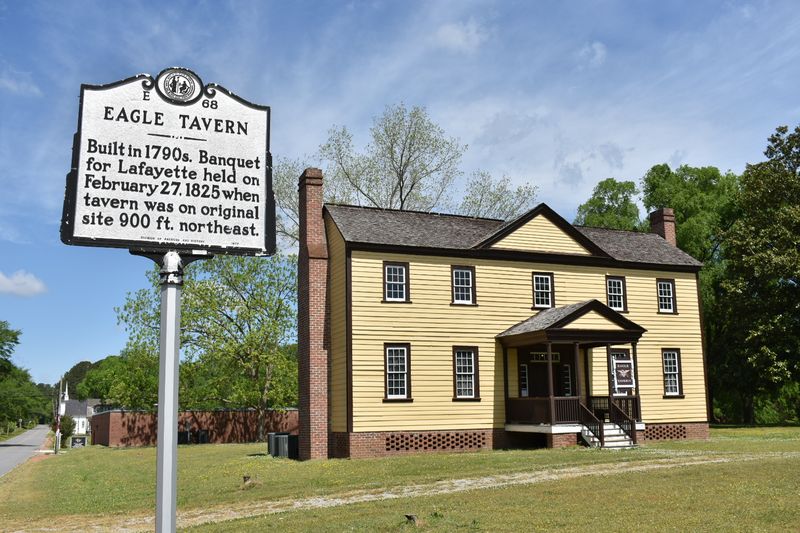
The preserved historic district includes the Owens House, the Eagle Tavern, the Tap Room, the Clerk’s Office, and the Halifax County Jail.
Costumed interpreters bring the colonial and early republic eras to life during guided tours, making the experience vivid and memorable for visitors of all ages.
The site does an excellent job of presenting multiple perspectives on life in early Halifax, including voices that are often left out of traditional historical narratives.
Historic Halifax State Historic Site is located at 25 St. David St., Halifax, NC 27839. It is open Tuesday through Sunday and free to visit.
Halifax County is in northeastern North Carolina, making it a natural stop on a broader regional history tour.
For anyone serious about understanding how American independence took shape, this site is absolutely essential!