This Hidden Peaceful Garden In Los Angeles, California Feels A World Away From The City
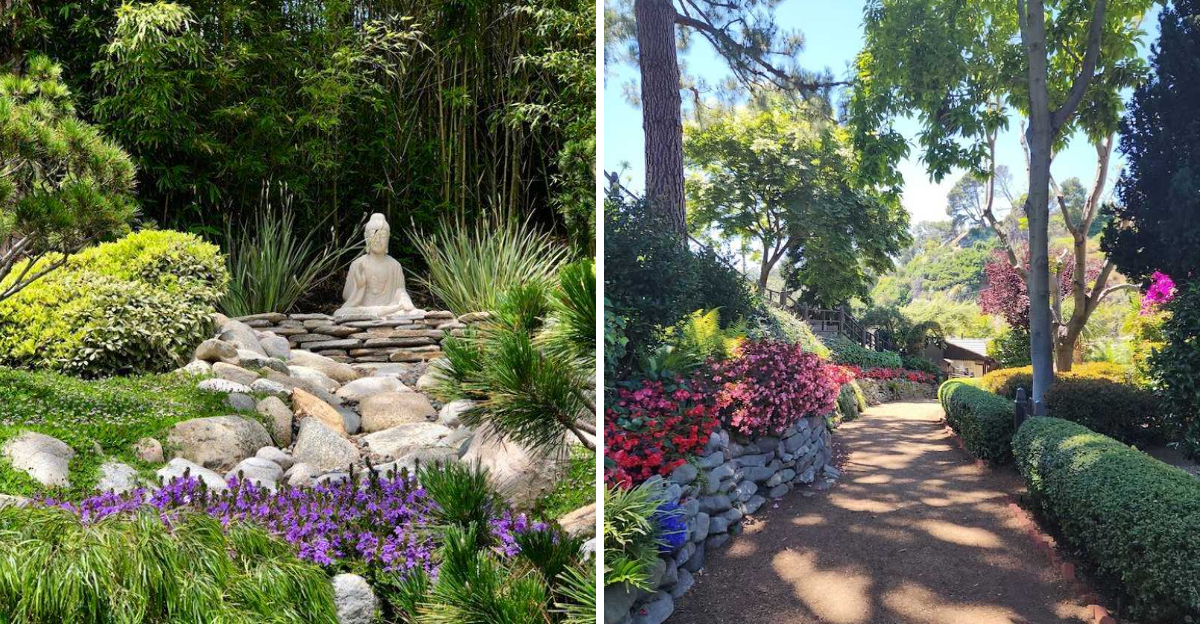
City noise fades fast here. The air feels different within a few steps of the entrance. Calm settles in before visitors even reach the water.
A quiet path winds past trees and gardens. Swans glide across the lake. Water trickles gently from small waterfalls that echo through the grounds.
The setting feels far removed from the rush of everyday life. Visitors slow their pace without thinking about it. Phones stay in pockets. Conversations turn softer.
Places like this feel rare in California.
The lake reflects the hills around it. Koi fish move slowly beneath the surface while shaded benches invite people to sit for a while and simply breathe. The atmosphere encourages stillness more than sightseeing.
Spiritual teacher Paramahansa Yogananda established this peaceful retreat in 1950. The property covers about ten acres and welcomes visitors from many different backgrounds.
The quiet sanctuary known as the Self-Realization Fellowship Lake Shrine in Pacific Palisades near Los Angeles continues to offer one of the most unexpectedly serene experiences in California.
1. Free Admission With A Required Reservation
Admission to the SRF Lake Shrine is free, which makes it one of the more accessible spiritual and natural spaces in the greater Los Angeles area.
However, a reservation is required in advance, and entry without one is not permitted.
Reservations can be made through the official website or via Eventbrite, and the process is straightforward enough that most visitors complete it without any difficulty.
The reservation system was put in place to manage visitor numbers and protect the peaceful atmosphere that makes the Lake Shrine worth visiting in the first place.
Without it, the grounds could easily become overcrowded, particularly on weekends.
The current setup keeps the space calm and ensures that everyone who arrives has enough room to move and sit without feeling pressed by crowds.
The Lake Shrine at 17080 Sunset Blvd, Pacific Palisades, CA 90272 is open Wednesday through Sunday from 10 AM to 11:30 AM and from 1 PM to 3 PM and is closed on Mondays and Tuesdays.
Arriving on time matters, as late arrivals may find the gates closed for that session.
Parking is available on the premises at no additional charge, which removes one of the more common logistical headaches associated with visiting anywhere in Los Angeles.
Planning even a day ahead is usually sufficient to secure a spot.
2. Founded In 1950
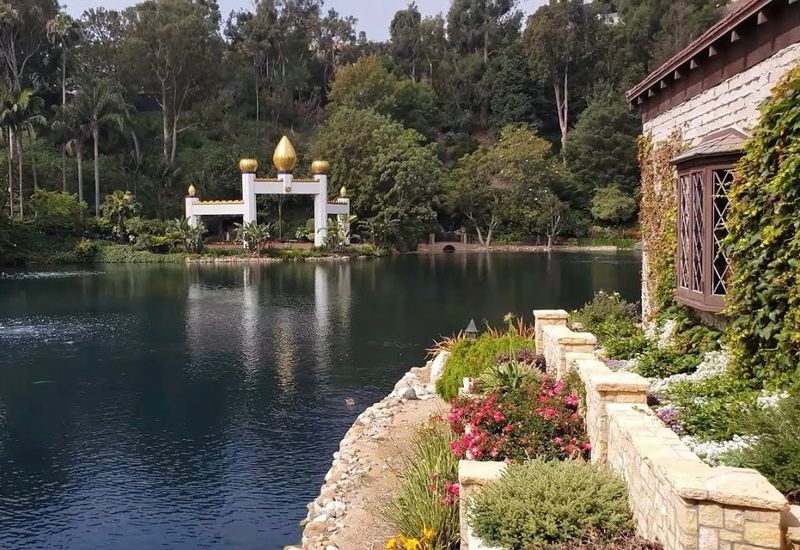
Wellness retreats may feel like a modern idea, yet a peaceful refuge like this existed decades before the phrase became popular.
A quiet sanctuary took shape in the hills of Pacific Palisades during 1950 with a simple purpose. The space offered people a place to pause, reflect, and step away from the noise of everyday life.
The founder believed inner peace should never belong to just one tradition or belief system. The grounds were designed to welcome anyone searching for a moment of stillness.
Visitors could arrive from completely different backgrounds and still feel equally at home walking the paths around the lake.
That welcoming spirit remains easy to notice today. Many visitors describe a surprising sense of calm as soon as they enter the property.
Carefully placed gardens, water features, and quiet walking paths encourage a slower pace almost immediately.
The sanctuary known as the Self-Realization Fellowship Lake Shrine in Pacific Palisades near Los Angeles continues to carry forward that same vision.
The organization that maintains the grounds still preserves the peaceful atmosphere that shaped the retreat more than seventy years ago.
3. A Spring-Fed Lake At The Heart Of Everything
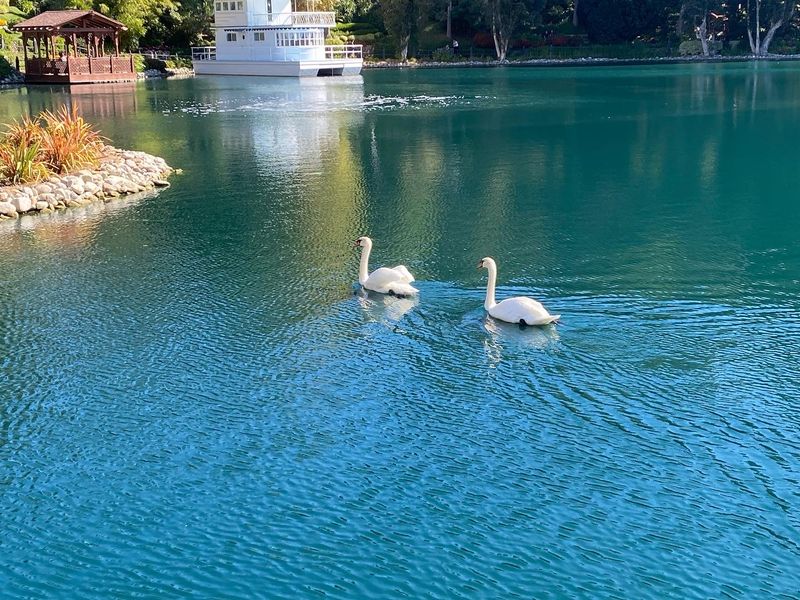
The spring-fed lake at the center of the grounds is the first thing most visitors notice, and it tends to hold their attention for a long time.
The water stays remarkably calm, and its surface often mirrors the surrounding trees and sky in a way that feels almost unreal.
Koi fish in striking shades of orange, white, and gold drift just below the surface, and turtles can frequently be spotted sunning themselves along the edges.
White swans and ducks move across the lake with a kind of unhurried ease that sets the tone for the entire visit.
The loop path around the lake is not long, and most people could walk it in about 15 minutes, but the pace here naturally slows down.
Benches and small alcoves are placed along the path at regular intervals, giving visitors plenty of spots to stop, sit, and simply watch the water.
The sounds of waterfalls and fountains feed into the lake from different points along the path, creating a soft and consistent background sound that helps muffle the noise from Sunset Boulevard nearby.
The lake is genuinely the heartbeat of the Lake Shrine experience and the reason so many visitors return.
4. The Mahatma Gandhi World Peace Memorial
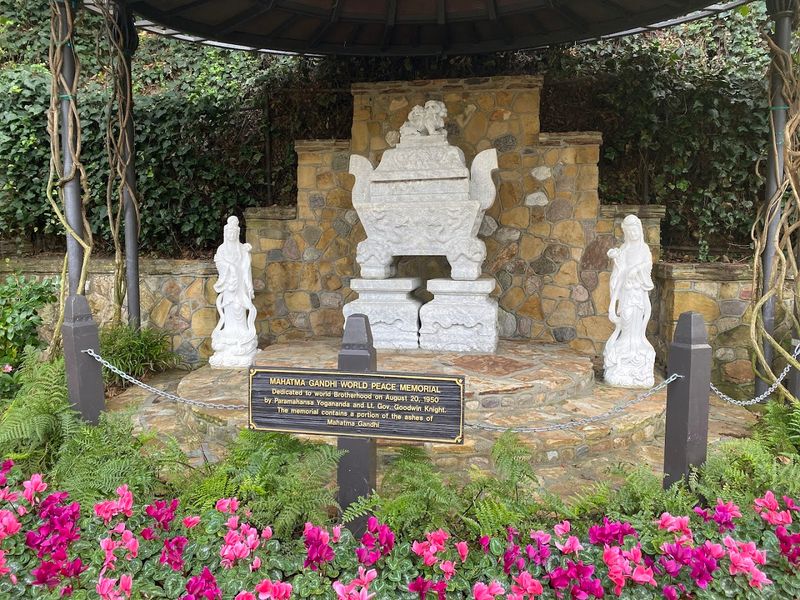
One of the most historically significant features of the Lake Shrine is the Mahatma Gandhi World Peace Memorial, which sits beneath the Golden Lotus Archway near the lake.
The memorial houses a portion of Gandhi’s ashes inside a 1,000-year-old Chinese sarcophagus, making it one of the few places outside of India where his ashes are enshrined.
The site carries a weight that visitors often describe as deeply moving.
Gandhi was assassinated in 1948, and a portion of his ashes were sent to the Self-Realization Fellowship as a tribute to the spiritual connection between Yogananda’s teachings and Gandhi’s own values of nonviolence and unity.
The memorial was dedicated shortly after the Lake Shrine opened in 1950.
Standing near it tends to prompt quiet reflection even for those who arrive without any particular spiritual intention.
The Golden Lotus Archway frames the memorial beautifully and adds a visual gravity to the space that makes it feel set apart from the rest of the grounds.
Many visitors spend extended time here, and some describe the area as the most powerful spot on the entire property.
A visit to the Gandhi Memorial alone makes the trip to the Lake Shrine worthwhile.
5. The Court Of Religions Honors Five World Faiths
Visitors entering the Lake Shrine grounds first pass through the Court of Religions, a thoughtfully designed space that honors the five principal world religions: Hinduism, Christianity, Judaism, Buddhism, and Islam.
Plaques and symbolic iconography representing each faith are displayed along the pathway, setting an immediate tone of inclusion and mutual respect.
The arrangement is not accidental but a deliberate expression of Yogananda’s belief that all sincere spiritual paths lead toward the same truth.
For many visitors, the Court of Religions is a surprisingly affecting introduction to the grounds.
People of different faiths have noted feeling genuinely welcomed rather than simply tolerated, which is not always easy to achieve in a spiritual space.
The visual display communicates a message without requiring any explanation, and that quiet clarity tends to land well with a wide range of guests.
The Court of Religions also functions as a kind of orientation point for the visit, helping newcomers understand what the Lake Shrine is and what it stands for before they move deeper into the grounds.
Groups with diverse religious backgrounds often find it to be a natural conversation starter.
The space manages to be both informative and emotionally resonant at the same time, which is a difficult balance to strike.
6. A 16th-Century Dutch Windmill Converted Into A Chapel
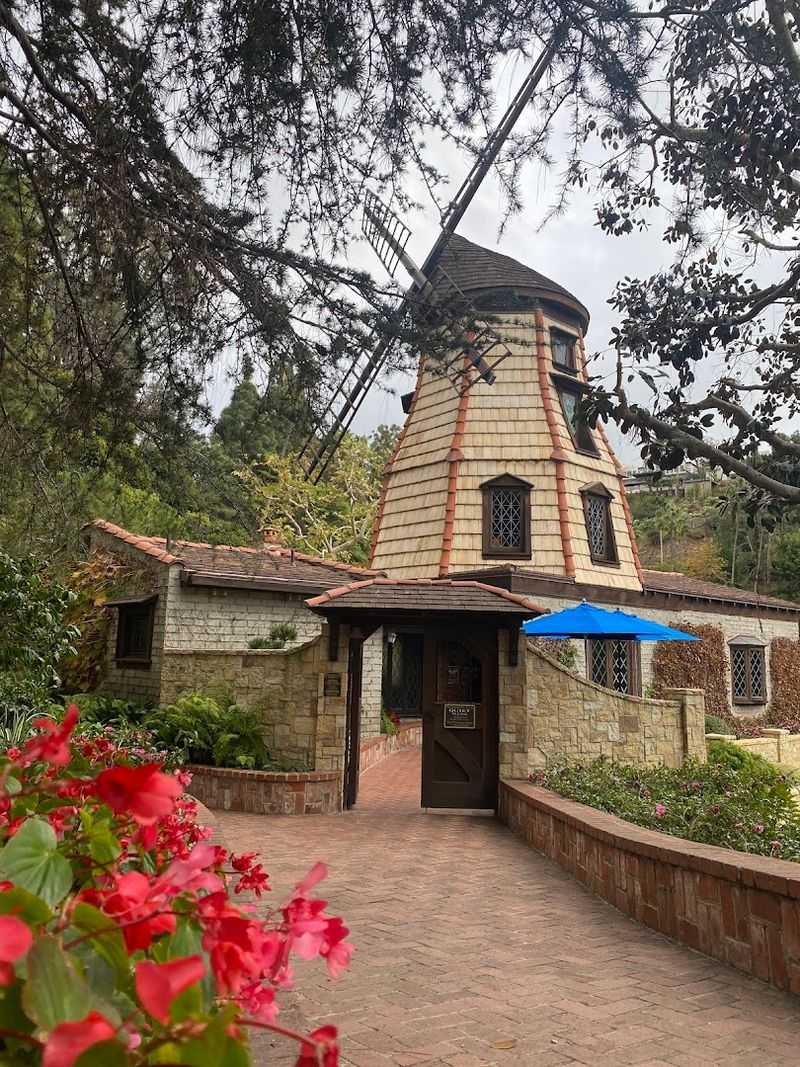
Few architectural details at the Lake Shrine surprise visitors more than the windmill chapel tucked into the grounds.
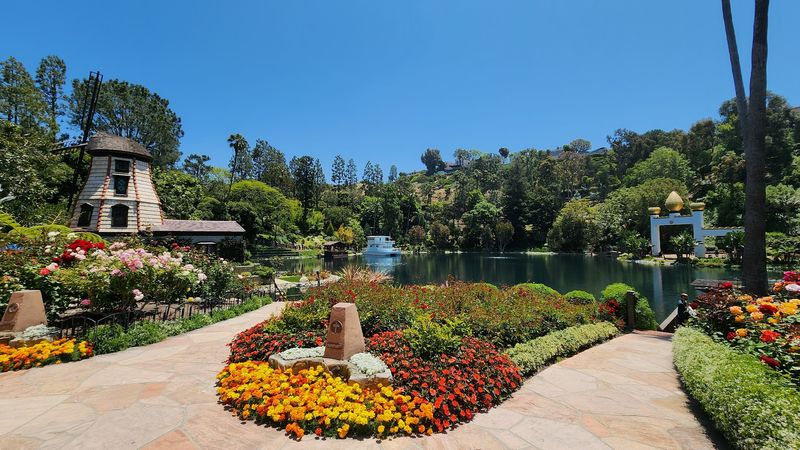
An authentic 16th-century Dutch windmill on the property was converted into a small chapel used for meditation and services.
The structure is genuinely old, and its presence in a garden beside a lake in Pacific Palisades creates a visual contrast that feels both unexpected and oddly fitting.
The windmill chapel is not large, but its interior is designed to support quiet and focused reflection.
Services and meditations are held there on a regular basis, and visitors who happen to attend describe the experience as unusually intimate.
The low ceilings and the soft light that filters through the windows contribute to a sense of being enclosed and protected from the outside world.
From the outside, the windmill is one of the most photographed features of the Lake Shrine, and it tends to draw visitors toward it naturally.
The blades are no longer functional but remain intact as part of the original structure.
Standing near it while looking out toward the lake offers one of the more picturesque views on the property, and many people choose this spot to sit quietly before moving on to the rest of the grounds.
7. Historic Houseboat On the Lake
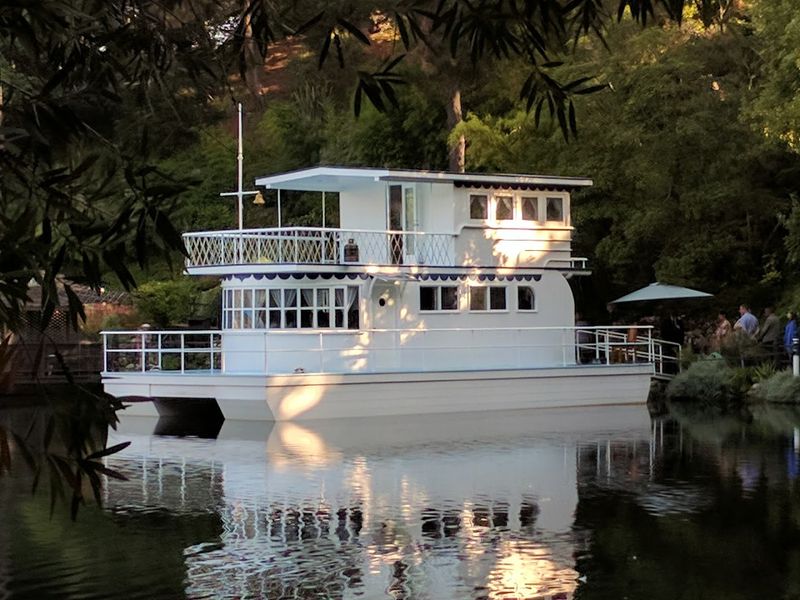
Moored quietly along the edge of the lake sits a historic houseboat that once served as a private place for meditation and overnight retreat.
The small vessel remains preserved as part of the Lake Shrine experience, and visitors occasionally have the opportunity to step inside and spend a few moments in quiet reflection.
That direct connection to the origins of the sanctuary gives the houseboat a presence that many people notice immediately.
The interior remains simple and uncluttered, reflecting the contemplative purpose it served decades ago.
Soft light filters through the windows while the water moves gently outside, creating a peaceful atmosphere that feels even more focused than other areas of the grounds.
Visitors often describe the space as calm, intimate, and surprisingly powerful for such a modest structure.
The houseboat also adds a strong sense of history to the lakeshore.
Its weathered exterior and quiet position on the water draw attention without needing anything dramatic.
Many guests pause nearby even if they never step inside, simply taking in the stillness that seems to surround it.
The structure offers one of the most tangible links to the spiritual beginnings of the shrine that visitors can still experience today.
8. The Hilltop Temple Opened In 1996
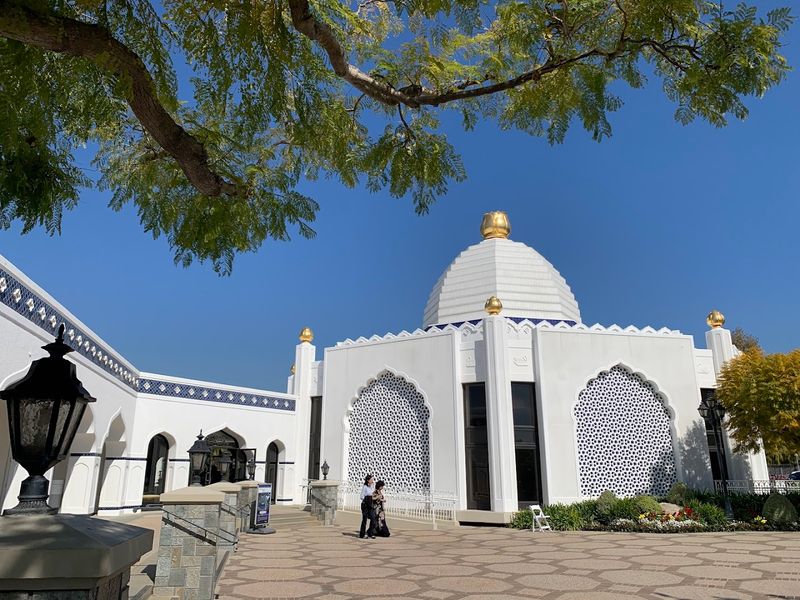
Overlooking the lake from an elevated position on the property, the hilltop temple at the Lake Shrine was opened in 1996 and has served as a gathering space for weekly inspirational services and group meditations ever since.
The building sits above the main garden path, and the view from its entrance looking down toward the water is one of the more striking perspectives available on the grounds.
The temple’s position gives it a sense of quiet authority without feeling imposing.
Services held at the temple are open to visitors of all faiths and follow a format rooted in the teachings of Self-Realization Fellowship.
Attendance is not required to enjoy the rest of the grounds, but those who do participate often describe leaving with a noticeably settled feeling.
The interior is clean and simply decorated, with the emphasis placed firmly on stillness rather than spectacle.
The walk up to the temple from the lake path is short but noticeable, and the change in elevation provides a slightly different relationship to the surrounding landscape.
Trees and garden plantings frame the approach, and benches near the entrance offer a place to rest and take in the view before or after a service.
The temple represents the more formal spiritual dimension of the Lake Shrine experience for those who seek it.
9. Wildlife Living Freely Around The Lake
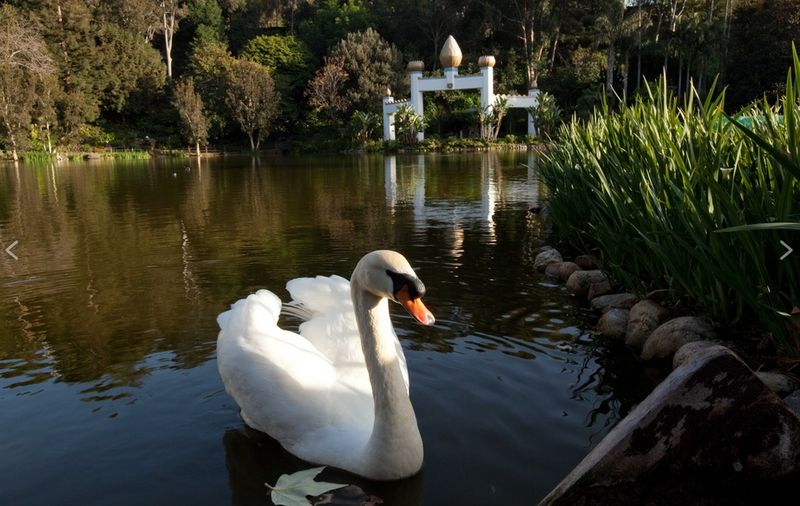
The wildlife at the Lake Shrine is not incidental but genuinely central to the atmosphere of the place.
White swans, ducks, large koi fish in vivid colors, and turtles all share the lake and its surrounding areas, moving with the kind of ease that suggests they have been there for a long time.
Watching them from the benches along the path is one of the most commonly mentioned experiences in visitor reviews, and it requires nothing more than patience and a willingness to slow down.
The koi fish are notably large, and their presence just below the surface of the clear water makes the lake feel alive in a way that a purely ornamental garden pond typically does not.
Turtles can be spotted basking on rocks or logs near the water’s edge, particularly in the warmer parts of the day.
The swans move across the lake with an unhurried dignity that fits the overall tone of the grounds almost perfectly.
Visitors can feed the animals, which helps maintain their rhythms, though they have to be careful to keep the environment clean.
The wildlife adds a layer of sensory richness to the visit that photographs only partially capture.
Sitting quietly near the water and simply observing the animals tends to produce a kind of focused calm that is difficult to find in most urban settings.
10. Lush Gardens With Waterfalls And Flower Beds
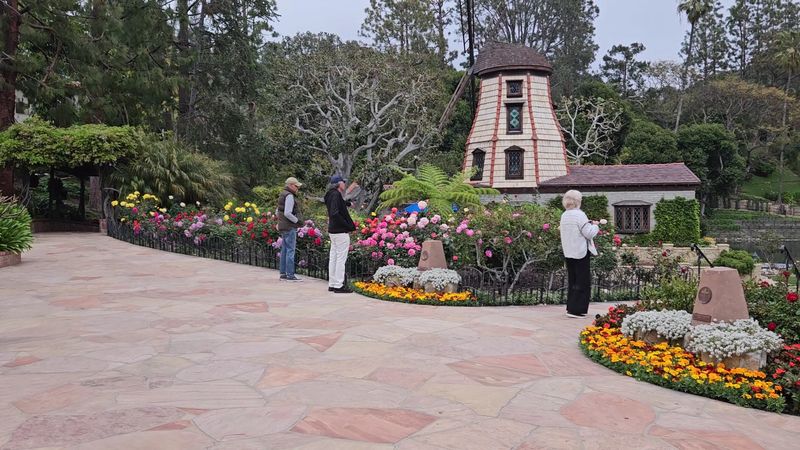
The gardens at the Lake Shrine are maintained with a level of care that is immediately obvious to anyone walking the grounds.
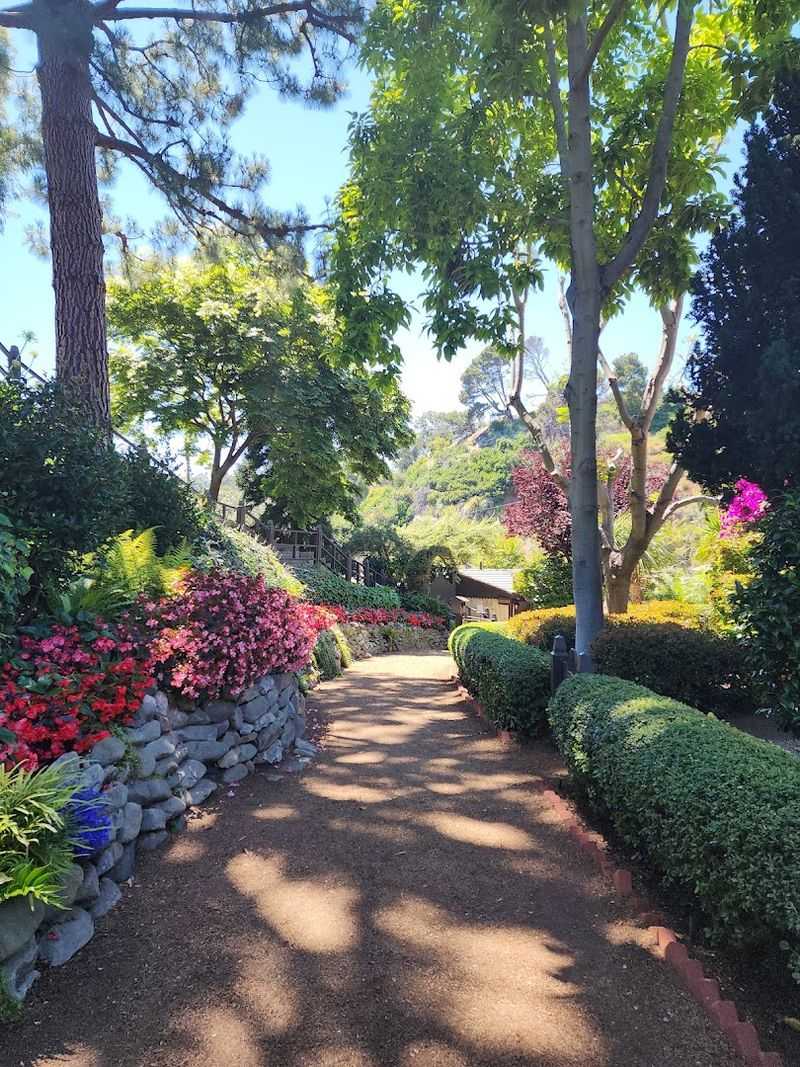
Flower beds in a wide range of colors line the paths, and tropical plants create a sense of density and enclosure that makes the space feel separated from the surrounding neighborhood.
Cascading waterfalls feed into the lake at several points, and the sound of moving water is present throughout most of the walk.
The planting choices reflect a mix of California-native and tropical species, giving the garden a lush quality that feels slightly exotic without being overdone.
The brick paths wind gently through the greenery, and the combination of texture underfoot and color at eye level creates a sensory experience that is grounding rather than overwhelming.
Every turn along the path tends to offer a slightly different view, which rewards visitors who take their time rather than rushing through.
Benches and small seating areas are distributed throughout the garden in spots that seem chosen for their particular views or sense of enclosure.
Some visitors prefer the open areas near the lake while others gravitate toward the quieter corners shaded by larger trees.
The gardens are well-maintained year-round, and the overall effect is of a space that has been tended with genuine affection rather than simply managed for appearance.
11. Open To Visitors Of All Faiths And Backgrounds
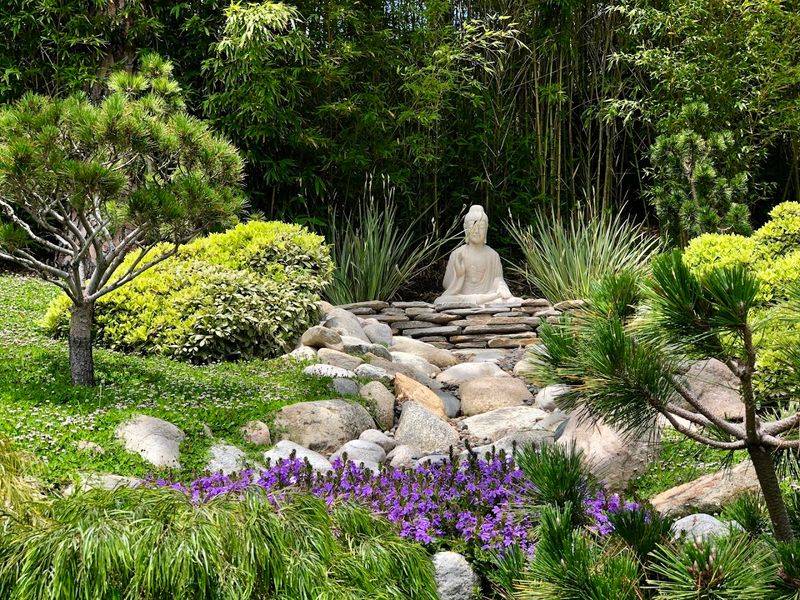
The Lake Shrine has welcomed visitors of all faiths since the day it opened, and that openness remains one of its most defining characteristics.
There are no religious requirements for entry, no expectations around belief, and no pressure to participate in any services or practices.
The space is designed to be genuinely accessible to anyone who wants to spend time in a calm and thoughtfully maintained natural environment.
Visitors from Christian, Muslim, Jewish, Hindu, and Buddhist backgrounds have all described feeling at home here, which is a reflection of the intentional design of the Court of Religions and the broader philosophy of the Self-Realization Fellowship.
The grounds attract people who come for spiritual reasons as well as those who simply want a quiet place to walk and think.
Both groups tend to coexist easily, united by the shared expectation of respectful and unhurried behavior.
Because the Lake Shrine functions as a meditation garden, visitors are encouraged to keep noise levels low and to be mindful of others who may be in a deeper state of reflection.
Children are welcome but are asked to remain calm and quiet out of consideration for fellow guests.
That mutual respect tends to reinforce the peaceful atmosphere rather than restrict it, and most visitors find the etiquette easy to follow once they experience the tone of the space firsthand.